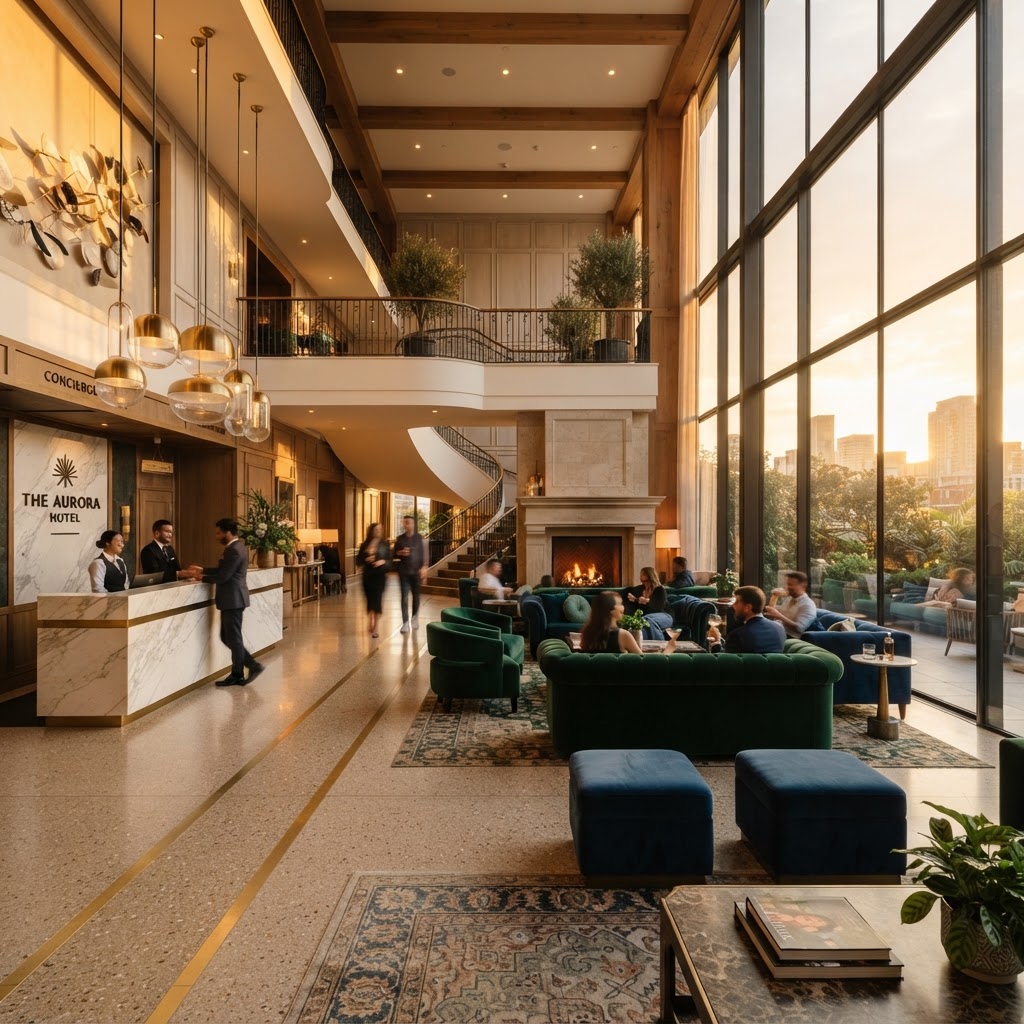
7 Hotel Lobby Design Trends That Will Leave Your Guests Speechless
First impressions matter more than ever in the hospitality industry. Discover how to transform your hotel lobby into a breathtaking space that guests will want to share on social media immediately.
The Power of Biophilic Design
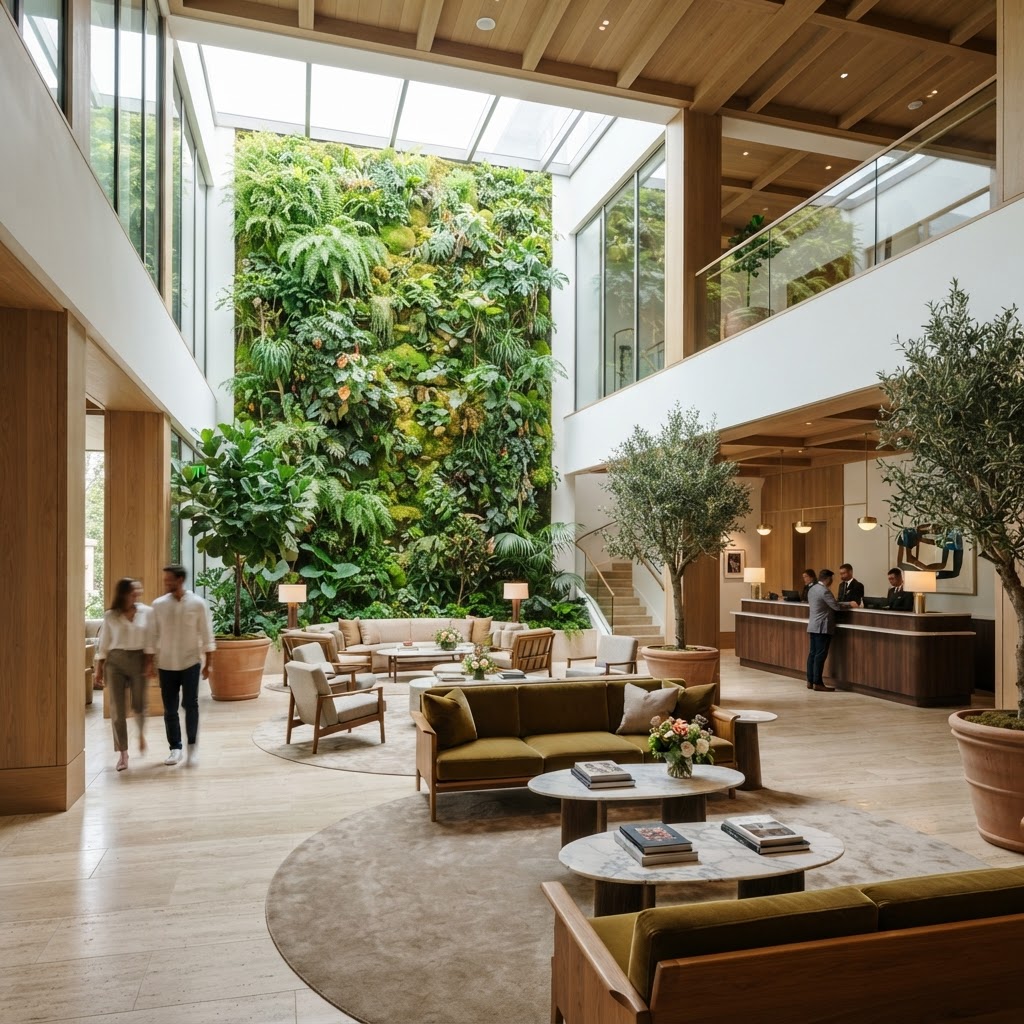
Honestly, if there's one trend that has completely taken over high-end hotel lobbies in the last few years, it's biophilic design. And look, I get it. After spending so much time in sterile, over-air-conditioned spaces, guests are craving something that feels alive. Something that reminds them they're still part of the natural world. Hotels that have figured this out are absolutely winning right now.
Biophilic design is more than just throwing a few potted plants near the front desk. Real talk, it's a whole philosophy. It's about integrating natural materials like raw stone, reclaimed wood, and woven fibers into the architecture itself. It's about water features that you can actually hear, moss walls that double as living art, and skylights that flood the space with the kind of light no LED fixture can truly replicate. When it's done well, guests walk in and immediately feel their shoulders drop. That stress response just melts away.
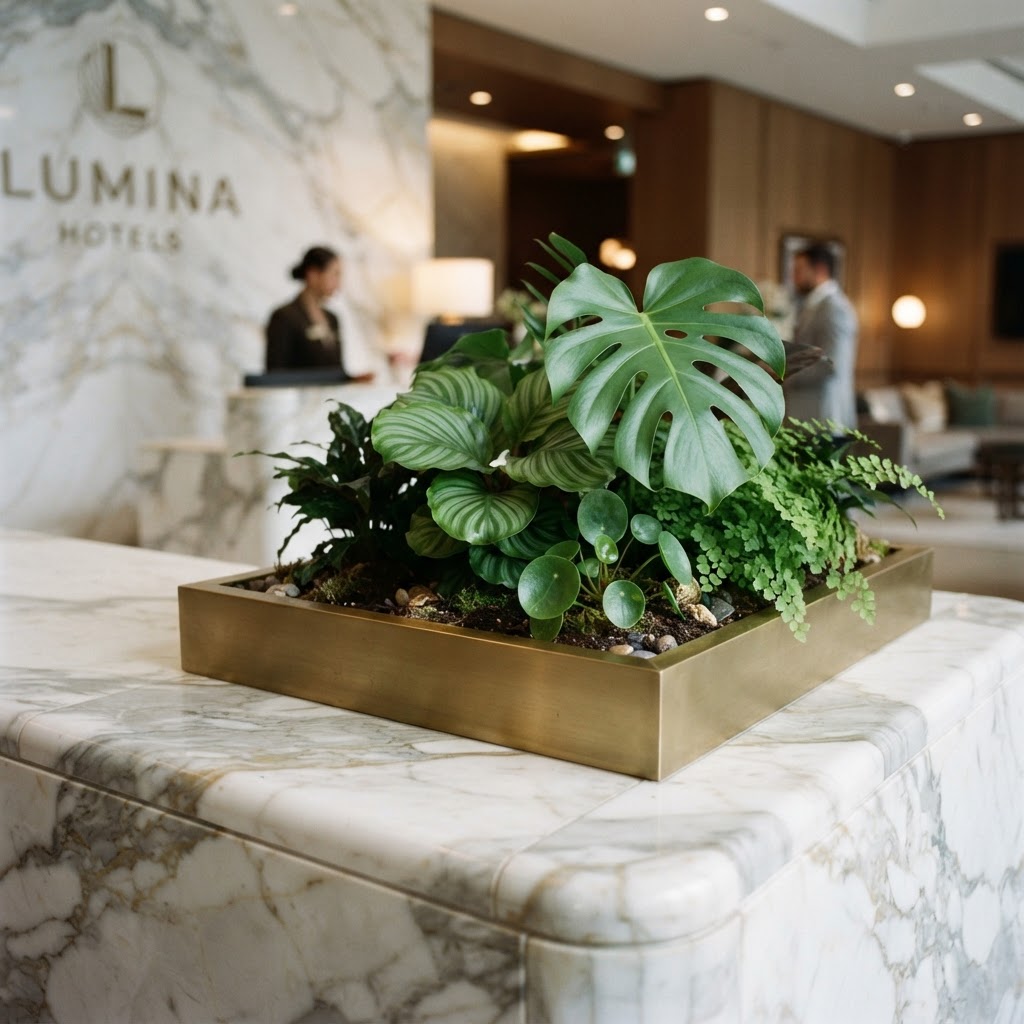
The science backs this up too. Studies consistently show that exposure to natural elements reduces cortisol levels and improves mood almost immediately. For a hotel, that means a guest's first impression is already a positive one before they've even checked in. That's powerful stuff. Some of the most talked-about lobbies right now, from Singapore to Copenhagen, lean heavily into vertical gardens and indoor tree installations that reach two or three stories high.
Here's the thing though: execution matters enormously. Biophilic design done poorly just looks like a sad ficus in a corner. You need real commitment, a proper irrigation system, a maintenance plan, and ideally a designer who has worked with living materials before. The investment is real, but so is the return. Guests photograph these spaces and post them everywhere, which is basically free marketing at a scale no ad budget can compete with.
Statement Lighting Fixtures
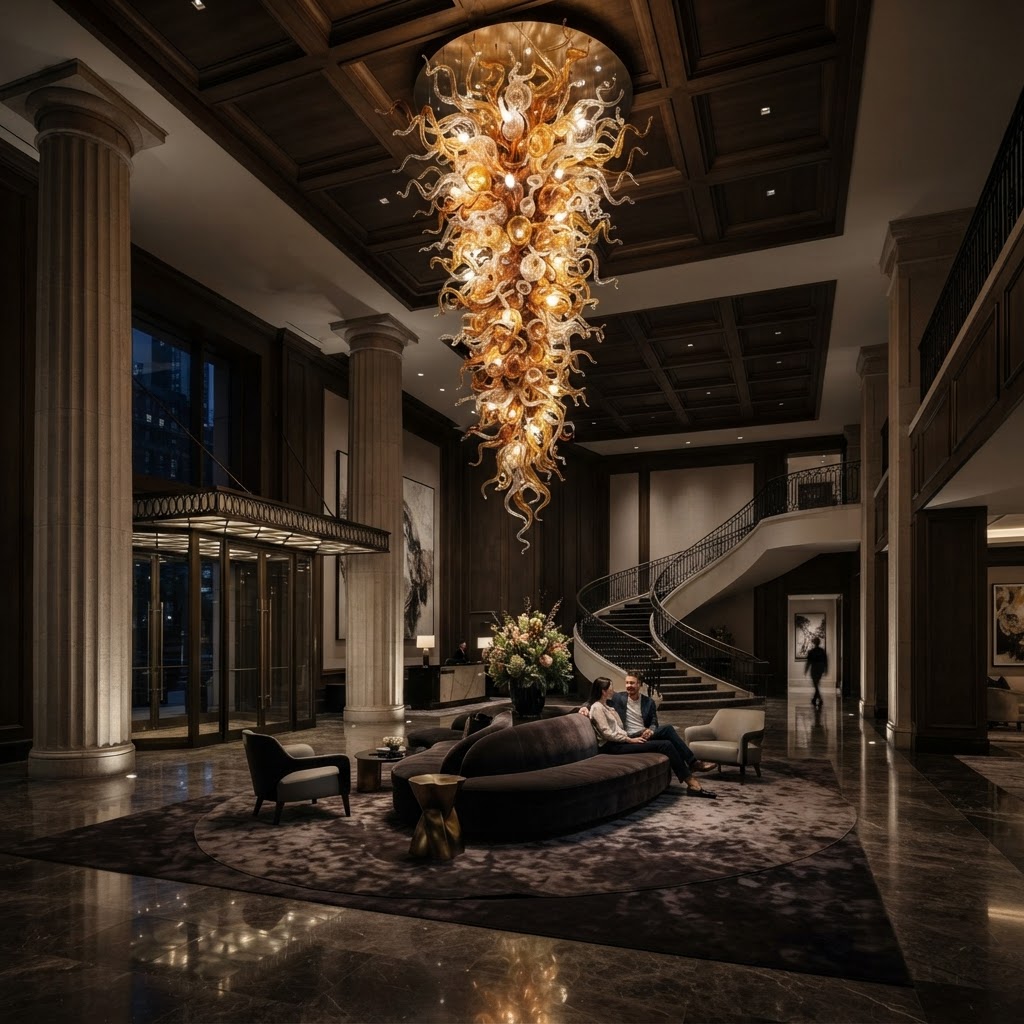
Let's talk about lighting, because this is honestly the most underestimated design element in any lobby space. People think about furniture, they think about flooring, they obsess over the reception desk. But the lighting? It's what ties everything together and sets the emotional tone from the second someone walks through the door. And right now, statement lighting fixtures are having a serious moment.
We're not talking about a nice chandelier, though a beautiful chandelier is never a bad idea. We're talking about sculptural, architectural lighting pieces that are essentially art. Think cascading hand-blown glass installations that drip from a double-height ceiling. Think custom woven rattan pendants the size of a compact car. Think geometric metal frameworks with hundreds of individual bulbs that create a constellation effect overhead. These pieces are conversation starters before a guest has even said hello to the front desk staff.
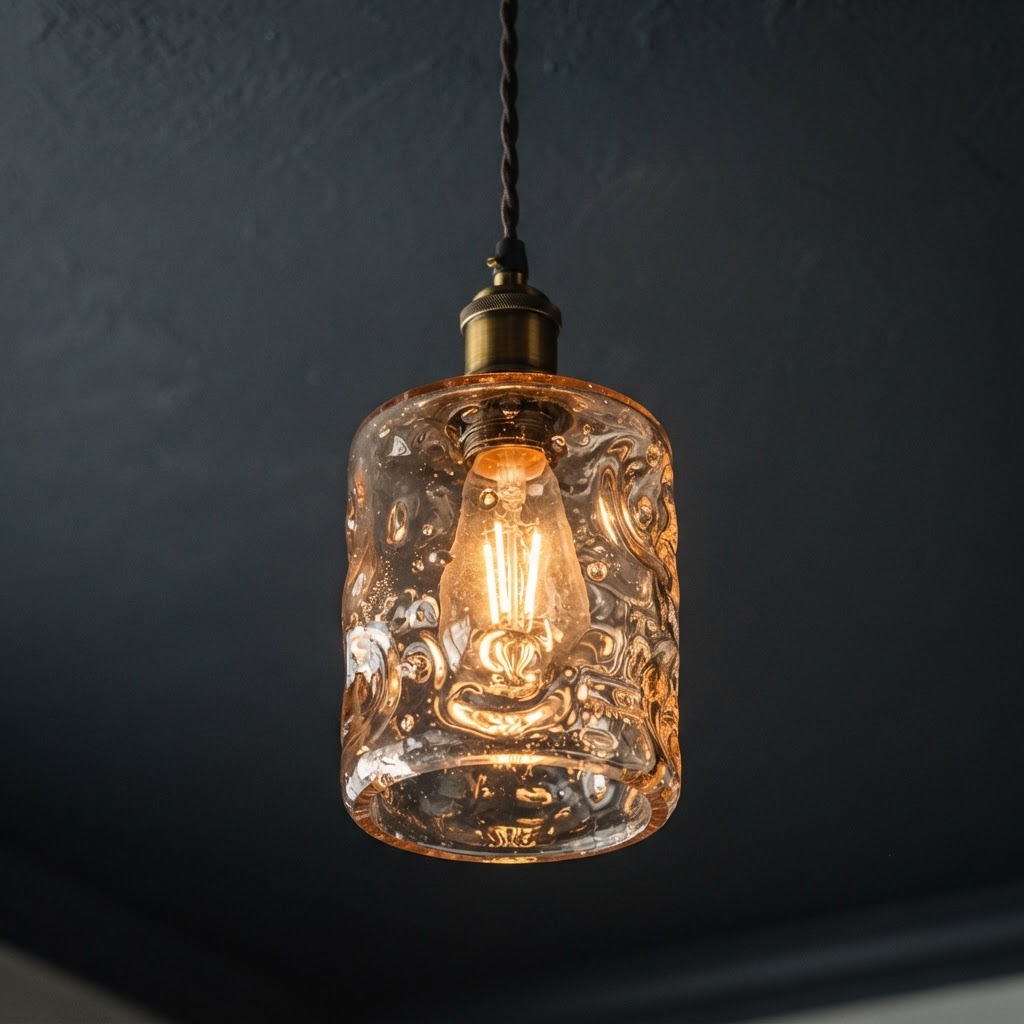
Trust me on this: the key to making statement lighting work is layering. You cannot rely on one big dramatic fixture and call it done. The best designers pair that hero piece with thoughtful ambient lighting underneath, warm accent lighting on walls and architectural details, and task lighting that's practical without being clinical. It's a whole system, and when it works, the lobby feels like it has a soul at any hour of the day.
There's also a real opportunity here to tie lighting back to the hotel's location or identity. A coastal property might commission lighting inspired by sea glass and ocean waves. A mountain resort might go for something that references pine forests or geological formations. This kind of intentionality is what separates a beautiful lobby from an unforgettable one. Guests pick up on it even when they can't articulate exactly why the space feels so cohesive.
- Scale up: In double-height lobbies, lighting needs to be bold enough to fill the vertical space without looking lost
- Commission custom work: Off-the-shelf fixtures rarely have the presence that a statement lobby demands
- Think about color temperature: Warmer tones in the 2700K to 3000K range create instant comfort and luxury
- Plan for maintenance access: A stunning fixture that can't be cleaned or serviced is a nightmare down the road
Textured Zoning for Social Spaces
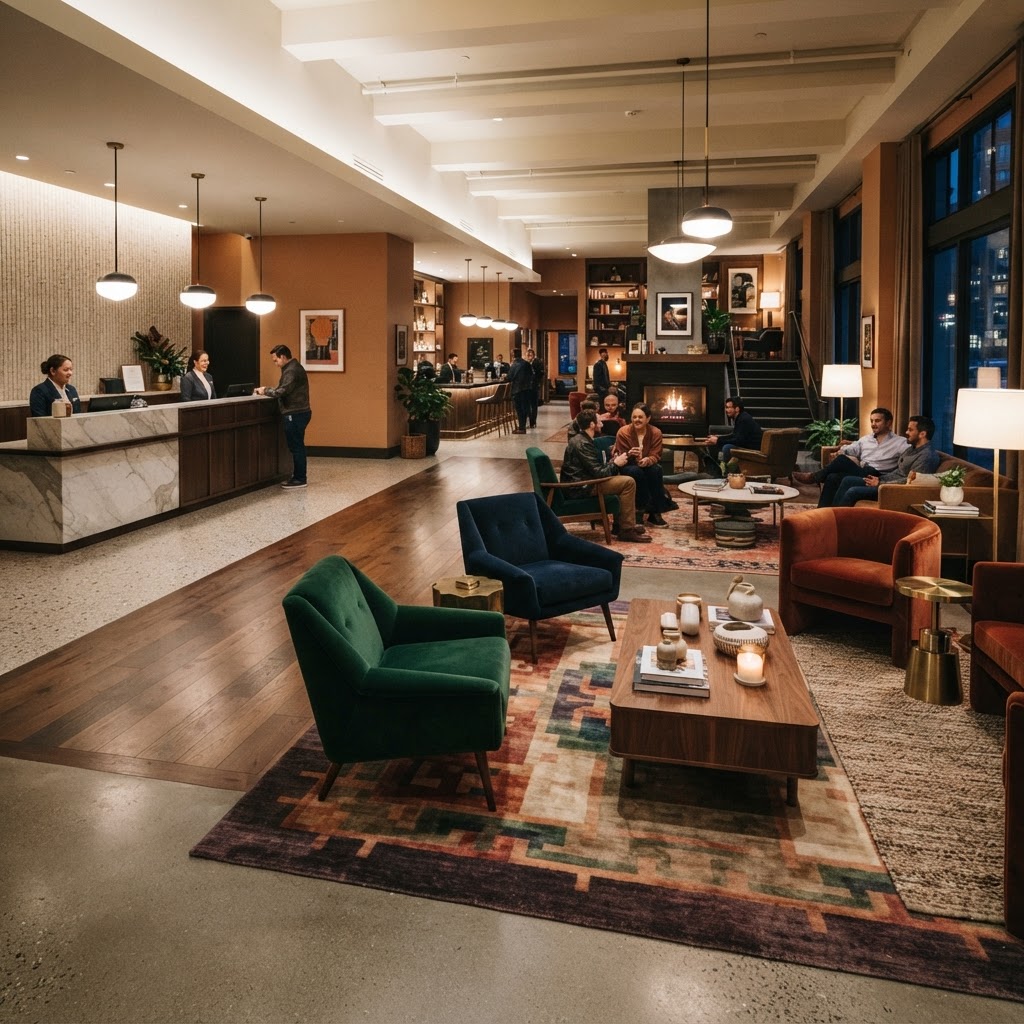
Modern hotel lobbies have a job that's frankly way more complicated than they used to. They're not just a place you walk through to get to the elevator anymore. They're co-working spaces for remote workers, social hubs for local creatives, pre-dinner cocktail spots, and quiet reading nooks all at once. Getting all of that to coexist in one open floor plan without feeling chaotic? That's where textured zoning comes in, and honestly, it's one of the most sophisticated tools in a commercial designer's toolkit right now.
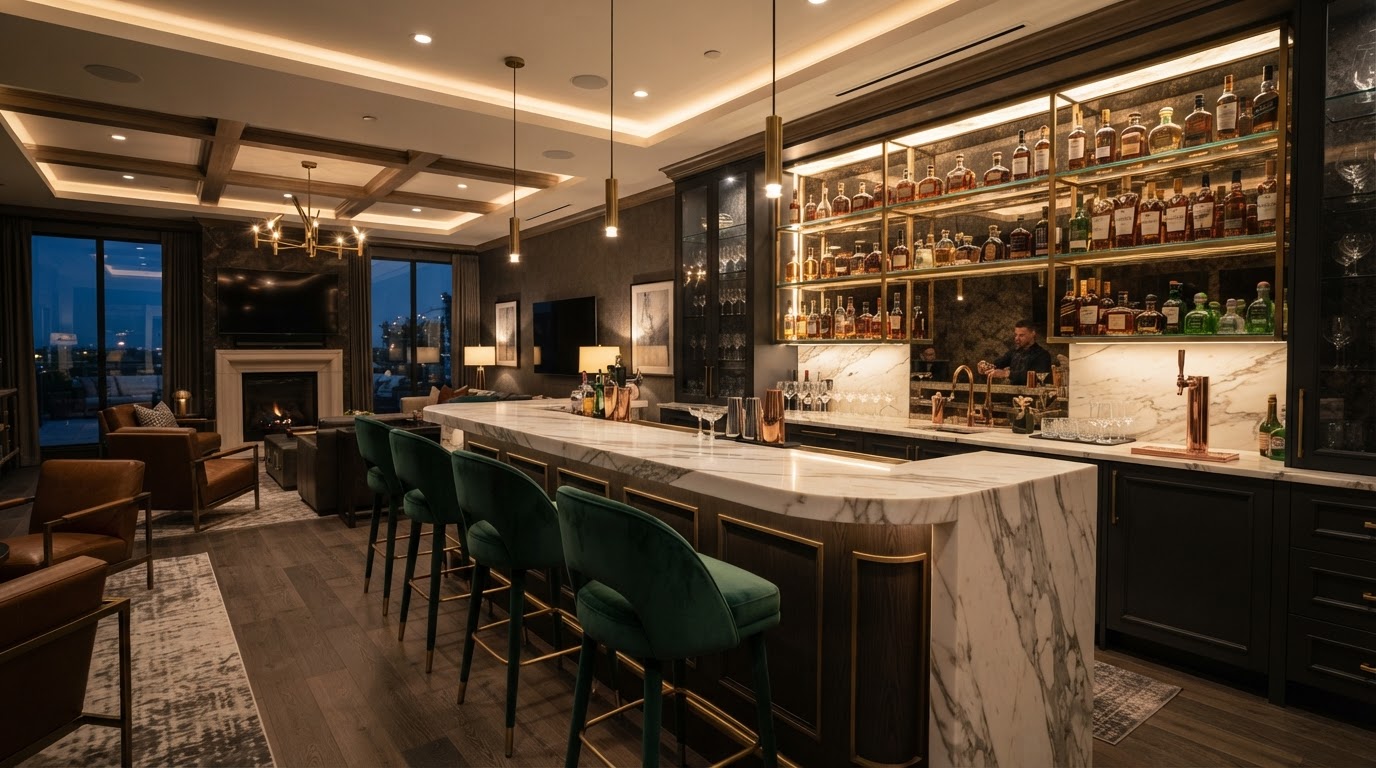
The idea is to define distinct zones within an open space using material and texture rather than walls or partitions. A conversation area might be anchored by a deeply tufted area rug and surrounded by low-slung velvet seating. A more energetic social bar zone might feature exposed concrete, metal bar stools, and polished stone counters. A quieter work-friendly corner might use acoustic panels, warm timber, and softer upholstered chairs. Each zone has its own sensory identity, and guests naturally self-select based on what they need in that moment.
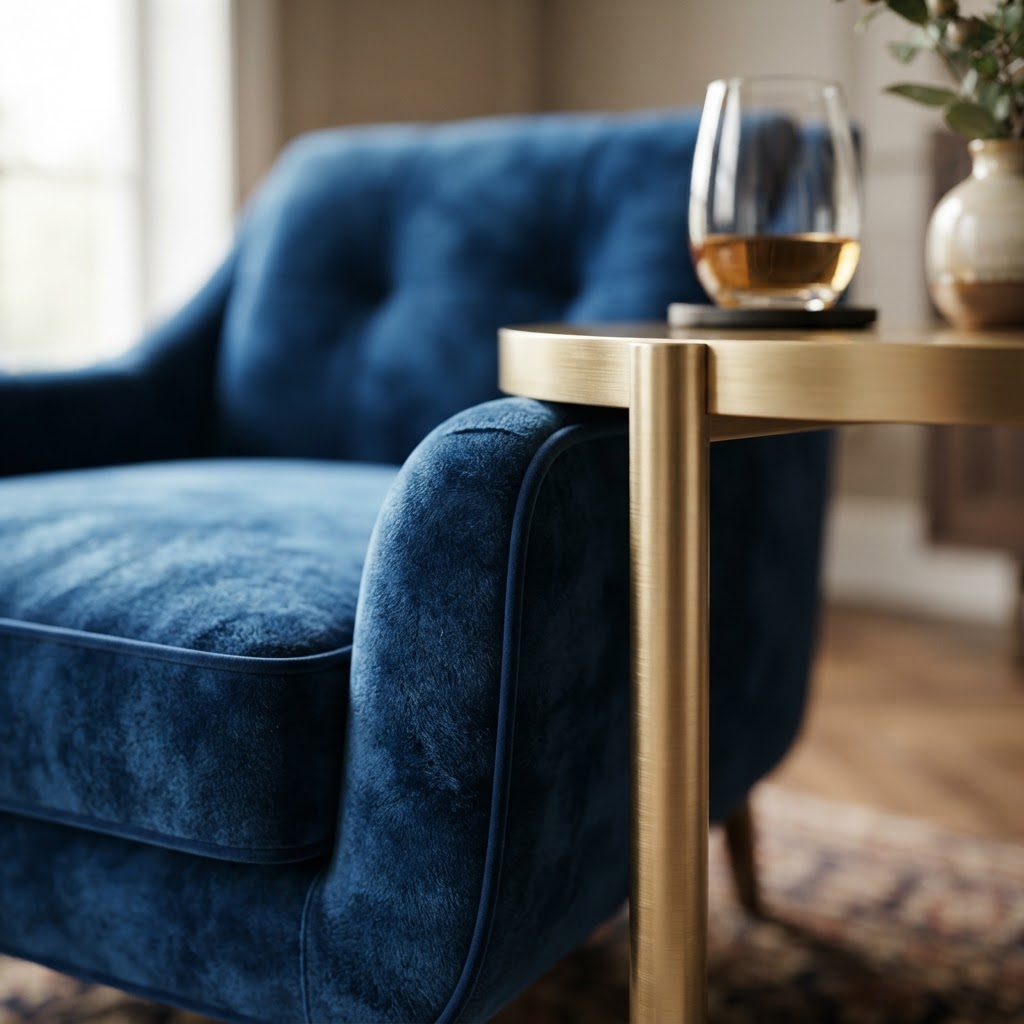
Here's the thing about this approach: it also solves a huge acoustics problem. Open lobbies can get loud fast, and noise bleed from one area to another is one of the most common complaints in boutique hotel reviews. By building texture into the zoning, you're also building in sound absorption. Layered rugs, upholstered panels, and soft furnishings all do double duty. It's smart design that works on multiple levels at once.
And from a visual standpoint, the contrast between different textures is what gives a lobby its richness and depth. Smooth marble next to rough-hewn timber next to nubby linen creates a tactile narrative that draws the eye across the space. It feels curated and considered rather than just decorated. That distinction is everything when you're trying to create a lobby that guests remember and return to.
Bold Art Installations
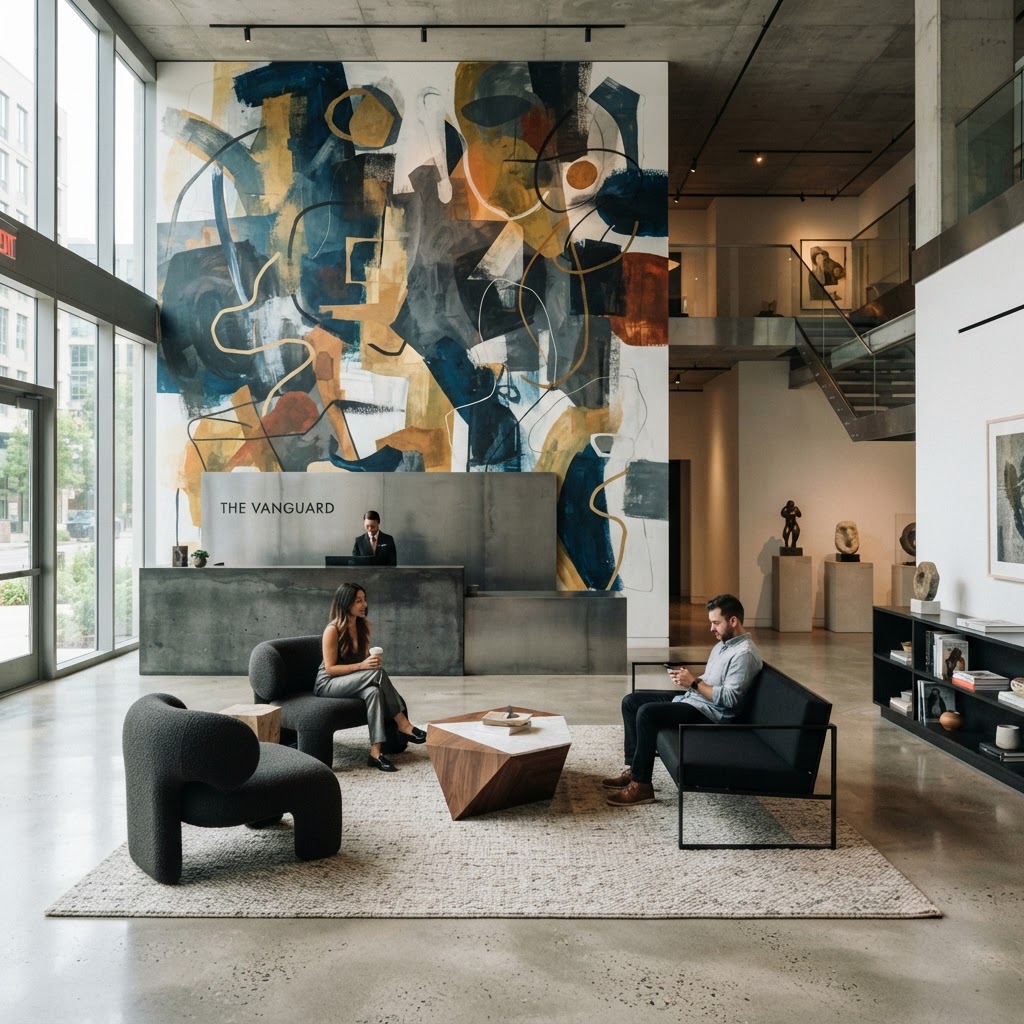
Real talk: a generic lobby with a few framed prints on the wall is forgettable. Full stop. In 2024 and beyond, the hotels that are generating real buzz are the ones treating their lobbies like gallery spaces, commissioning bold, site-specific art installations that are impossible to ignore. And I'm not just talking about luxury five-star properties either. Mid-scale boutique hotels have figured out that a single jaw-dropping art piece can define their entire brand identity.
What makes an art installation work in a hotel lobby context is specificity. The piece needs to feel like it belongs to that building, that city, that brand. A hotel in New Orleans might commission a massive ceramic tile mural referencing jazz culture and Creole architecture. A property in Tokyo might feature an immersive neon installation that plays with kanji and contemporary street culture. When the art has a genuine connection to place, it gives guests something to engage with intellectually, not just visually. It sparks conversation. It creates memory.
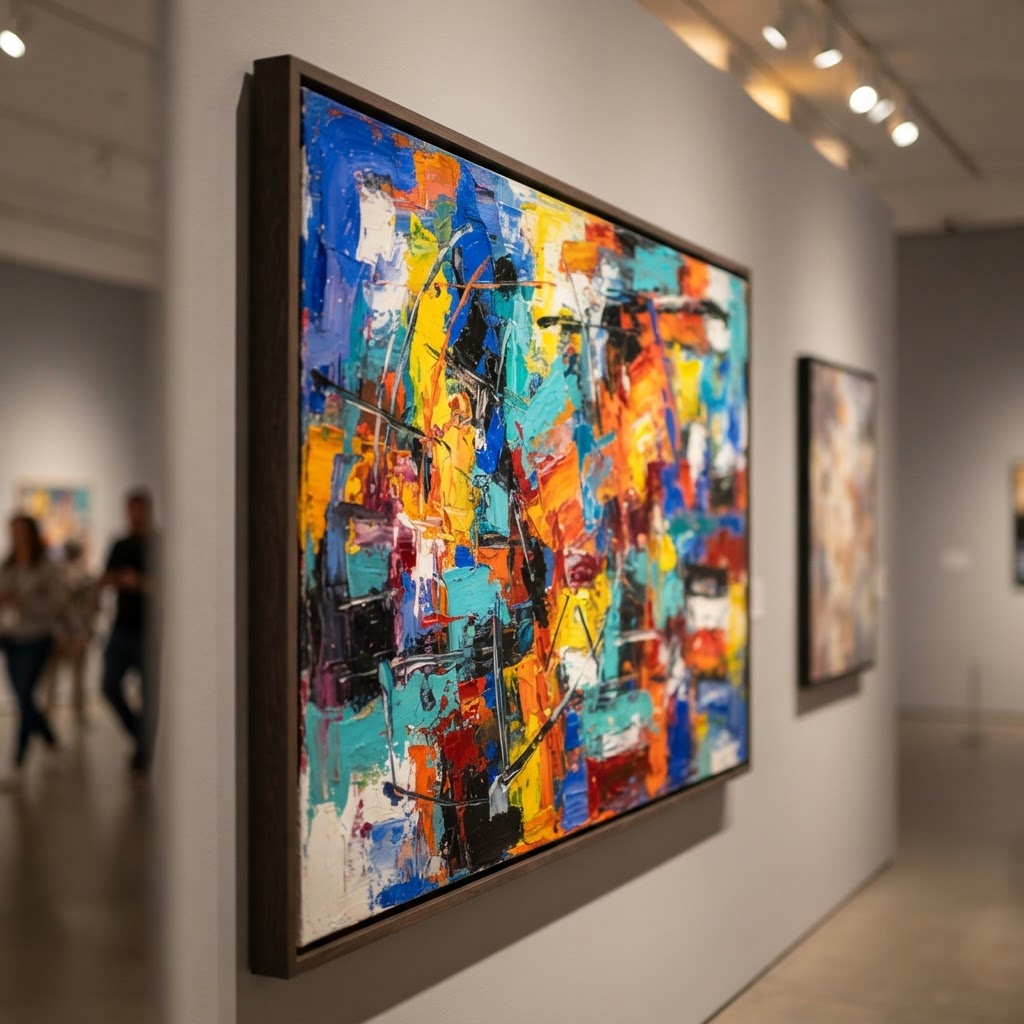
There's also a practical angle here that designers and hotel operators sometimes overlook. Bold art installations are incredibly shareable on social media. A striking sculpture or an immersive light installation becomes a photo destination in its own right. Guests are not just checking in, they're creating content. And that content travels far beyond their own followers. I've seen lobbies go viral literally on the strength of one well-placed art piece.
The process of commissioning site-specific art also opens doors to authentic community relationships. Working with local or emerging artists connects the property to its neighborhood in a way that feels genuine rather than performative. That authenticity resonates with today's travelers, who are increasingly skeptical of brand messaging but deeply moved by real human creativity and craftsmanship.
The Tech-Integrated Reception Experience
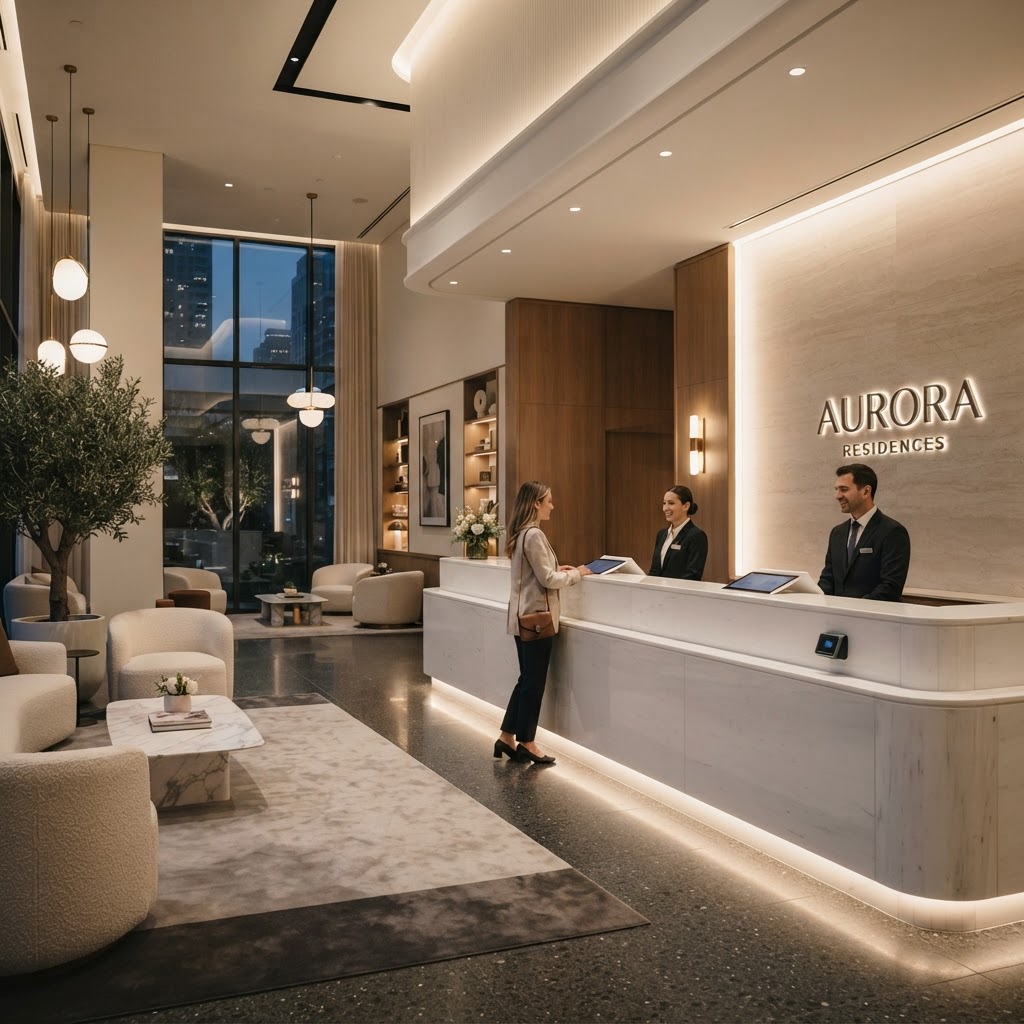
Okay, here's where it gets really interesting. Technology in hotel lobbies has historically been handled pretty clumsily. You'd have a clunky kiosk bolted to the floor, or a massive screen playing promotional content that nobody watches. But the new wave of tech-integrated reception design is something genuinely different. It's subtle, it's smart, and when it's done right, it actually enhances the human experience rather than replacing it.
The trend right now is toward seamless integration. Think reception desks with embedded digital surfaces that look like natural stone from a distance. Think app-based check-in flows that allow guests to completely skip the desk if they want, while still having the option of warm human interaction if they prefer. Think environmental control systems that guests can adjust from their phones before they've even arrived, so the lobby temperature and ambient music are already calibrated to their preferences when they walk in. That level of personalization used to be reserved for ultra-luxury properties. It's becoming more accessible every year.
And honestly, the design challenge here is really interesting: how do you incorporate all this technology without making the space feel cold or transactional? The answer, almost universally among the best designers working in this space right now, is to lead with material warmth and let the tech disappear into the background. Screens that look like art when they're not in use. Interfaces that respond to touch with soft haptic feedback. Ambient soundscapes controlled by AI that shift subtly throughout the day. The technology is there, working hard, but the guest experience feels effortless and human.
- Mobile check-in and digital keys: Reducing friction at arrival without eliminating the human touchpoint entirely
- Interactive concierge displays: Beautiful screens that double as local guides and event boards
- Sensor-driven environments: Lighting and temperature that adjust automatically based on occupancy and time of day
- Integrated charging infrastructure: Wireless charging built discreetly into furniture and surfaces throughout the lobby
- Digital art displays: Large-format screens that rotate curated content and respond to guest presence
Final Thoughts
Hotel lobbies have always mattered, but they matter in a fundamentally different way now. They're not just the space between the front door and the elevator anymore. They're the first full sensory experience a guest has with your brand, and they're increasingly functioning as destinations in themselves. The trends we've covered here, from biophilic design and statement lighting to bold art and seamless technology, all point in the same direction. Guests want spaces that feel alive, intentional, and genuinely connected to something real.
The good news is that you don't have to do all of this at once. Even committing deeply to one or two of these ideas can transform the feel of a lobby entirely. Start with what aligns most naturally with your brand identity and your guests' expectations. And if you take nothing else from this, take this: people remember how a space made them feel. Design for that feeling first, and everything else will follow.
More in Commercial
Stay Inspired
Subscribe for new essays on architecture, design, and the spaces that shape us.