7 Genius Office Design Tweaks That Will Actually Make You More Productive
Is your current workspace holding you back from your best work. We are sharing simple design strategies that transform any desk area into a high performance creative hub that you will never want to leave.
The Power of Biophilic Design

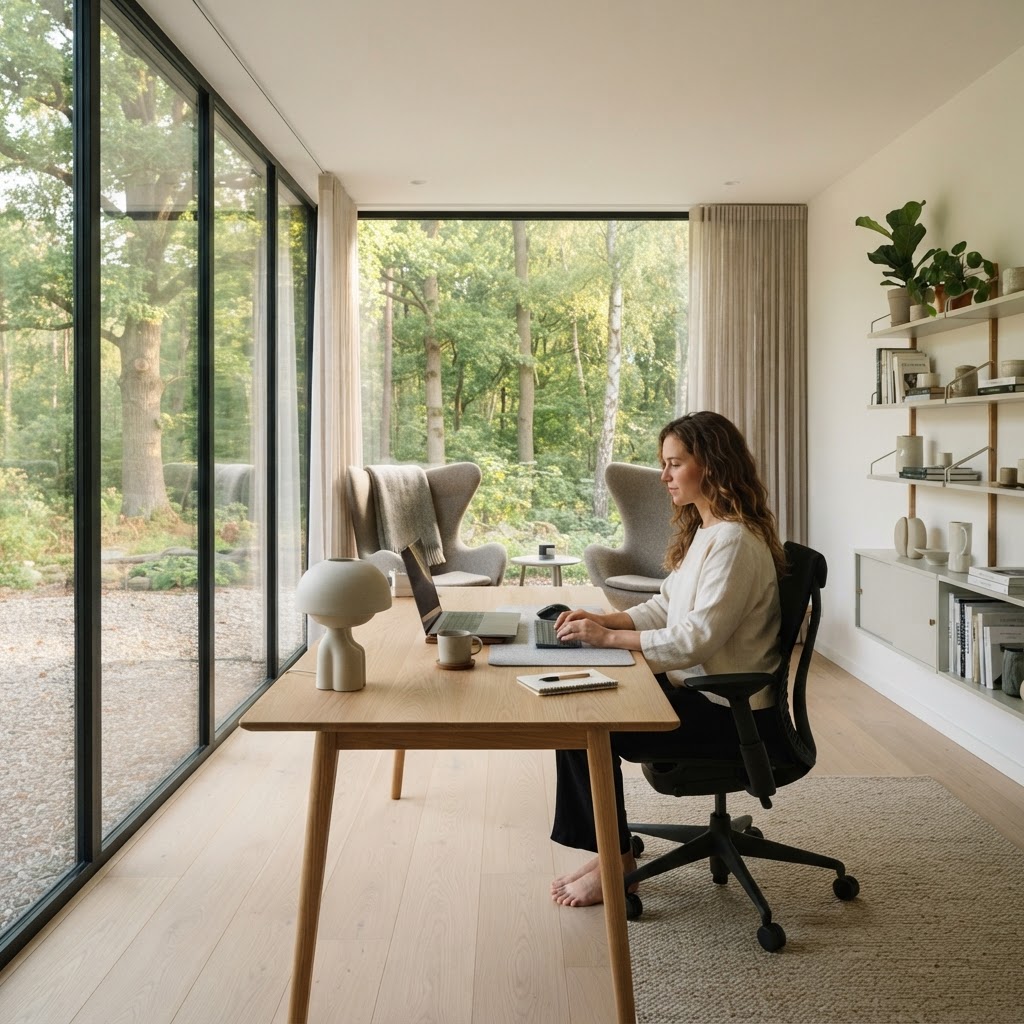
Honestly, if there's one design trend I wish every office would adopt yesterday, it's biophilic design. And before you roll your eyes and think this is just about sticking a sad succulent on your desk, let me stop you right there. Biophilic design is so much bigger than that. It's about intentionally weaving natural elements into the fabric of your workspace in a way that actually affects how your brain functions. We're talking plants, yes, but also natural materials, water features, views of the outdoors, organic textures, and even patterns that mimic what you'd find in nature.
Here's the thing: humans evolved spending the vast majority of their existence outside. Our nervous systems are literally wired to feel calmer, more alert, and more creative when we're surrounded by natural elements. When you strip that away completely and put people under fluorescent lights in a beige box with zero connection to the outside world, you're basically fighting biology. No wonder everyone feels drained by 2pm.

The research on this is genuinely compelling. Studies have shown that employees working in offices with natural elements report a 15% higher level of wellbeing, a 6% jump in productivity, and a 15% increase in creativity. Those are not small numbers for something as accessible as adding a few well-placed plants and swapping out laminate surfaces for wood or stone. For commercial office spaces, a living wall can be a dramatic and beautiful focal point that also genuinely improves air quality. For smaller offices or home setups, even clustering a few larger plants near workstations makes a measurable difference.
When planning your biophilic approach, think about layering. Natural light is the foundation, and we'll dig into lighting more in the next section. But beyond light, consider natural wood desks and shelving, stone or terrazzo surfaces, rattan or woven accent pieces, and artwork that features landscapes or organic forms. The goal is to create an environment where, even subconsciously, your brain registers its surroundings as safe, stimulating, and alive. Trust me on this one: it changes the entire atmosphere of a room in ways that are hard to fully articulate until you experience it yourself.
Mastering Your Lighting Scheme
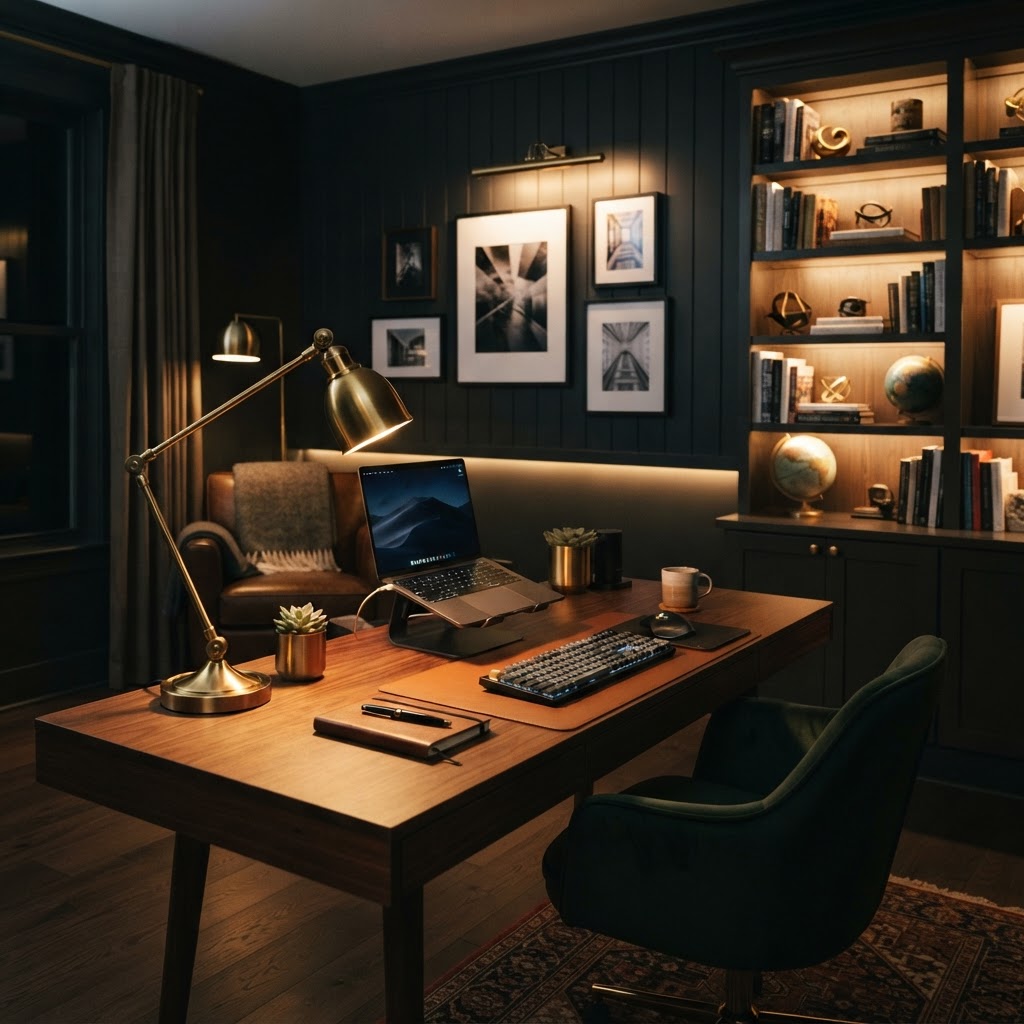
Look, bad lighting is probably the single most underestimated productivity killer in any office. It's one of those things that people just accept because it's always been that way, but real talk, it doesn't have to be. Harsh overhead fluorescents that hum and flicker are not just annoying, they contribute to eye strain, headaches, fatigue, and even mood disruption over the course of a full workday. Getting your lighting right is honestly one of the highest-return investments you can make in a commercial workspace.
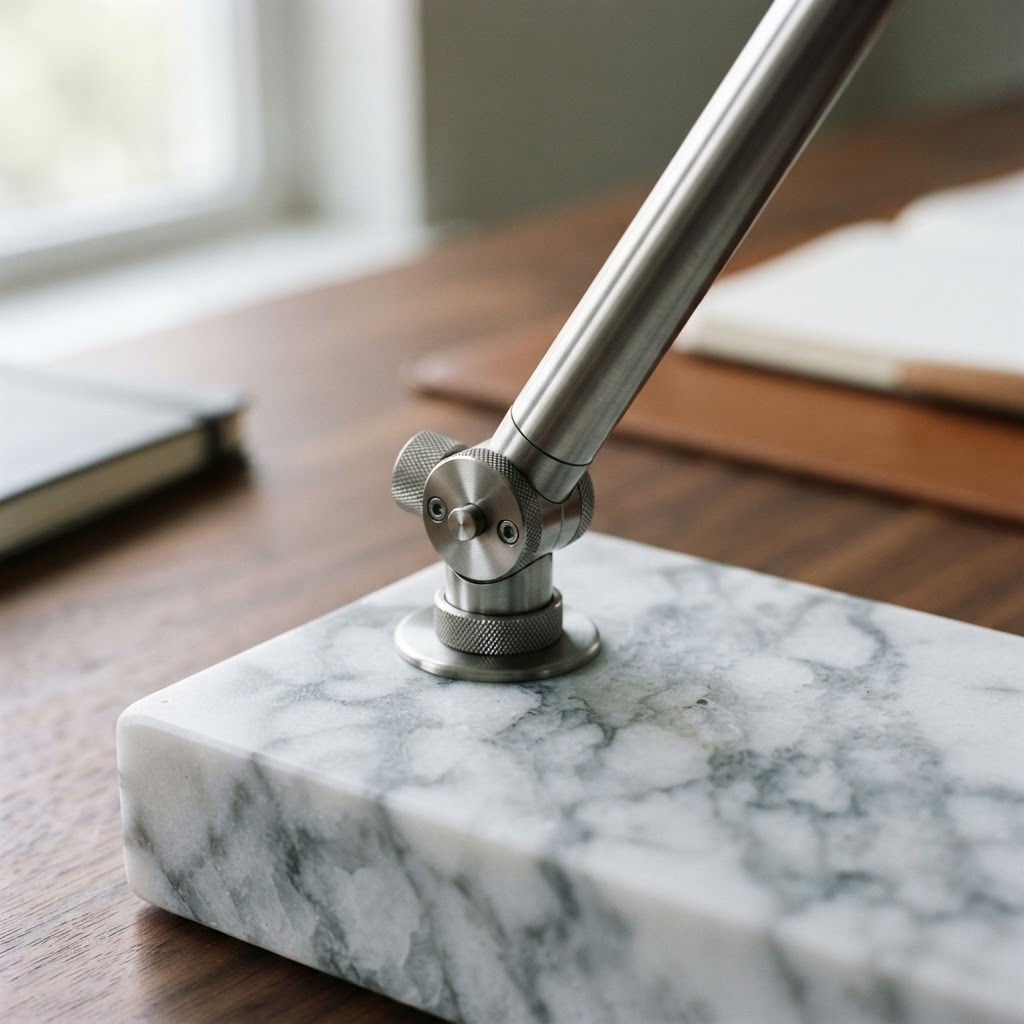
The key concept here is layered lighting. You want to think in three tiers: ambient lighting that fills the whole room, task lighting that's focused and adjustable for individual workstations, and accent lighting that adds warmth and depth to the space. Most offices only think about the first layer and call it a day. That's a mistake. Task lighting at individual desks reduces eye strain dramatically because people can adjust the direction and intensity of light based on what they're actually doing, whether that's reading documents, working on a screen, or sketching ideas.
Color temperature is another piece of this puzzle that doesn't get nearly enough attention. Light is measured in Kelvin, and the difference between a 2700K warm white and a 5000K cool daylight bulb is enormous in terms of how a space feels and how your brain responds. For focused, heads-down work, cooler temperatures in the 4000K to 5000K range actually improve alertness and concentration. For collaborative spaces, meeting rooms, or lounge areas, warmer tones create a more relaxed, conversational atmosphere. Smart offices are now using tunable LED systems that shift color temperature throughout the day to align with natural circadian rhythms. It sounds fancy, but the technology is more accessible than ever.
And please, maximize your natural light wherever humanly possible. Position desks perpendicular to windows rather than directly facing them or with them directly behind the screen, which reduces glare without sacrificing that beautiful daylight. If your space is limited on windows, daylight-mimicking bulbs and skylights can do a lot of the heavy lifting. Good lighting isn't glamorous to talk about, but it will change how your team feels every single day they walk through the door.
Ergonomic Furniture That Actually Looks Good
For the longest time, ergonomic furniture had a reputation for being ugly. You know what I'm talking about. Those bulky mesh chairs with seventeen adjustable levers that looked like they belonged in a NASA control room rather than a thoughtfully designed office. And honestly, for a while, that reputation wasn't entirely unfair. But the furniture design world has caught up in a huge way, and right now there is absolutely no reason to choose between a space that looks incredible and a space that protects your team's bodies.
Here's the thing about ergonomics in a commercial setting: it's not a luxury, it's a necessity. When people are physically uncomfortable, their ability to concentrate drops off a cliff. Back pain, wrist strain, neck tension, these aren't just physical problems. They're productivity problems, morale problems, and over time, serious liability problems for employers. Getting the furniture right is one of the smartest business decisions a company can make, and it communicates genuine care for the people who work there, which matters more than most executives realize.
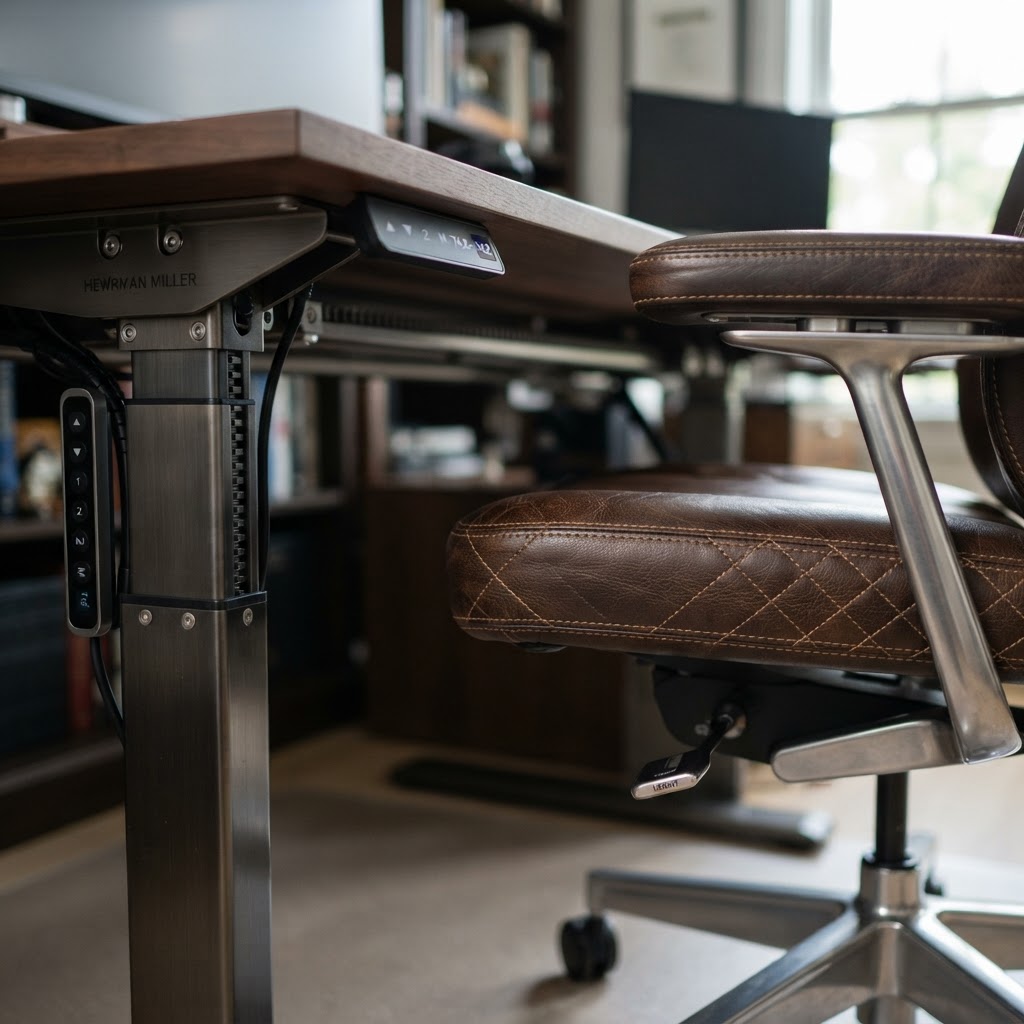
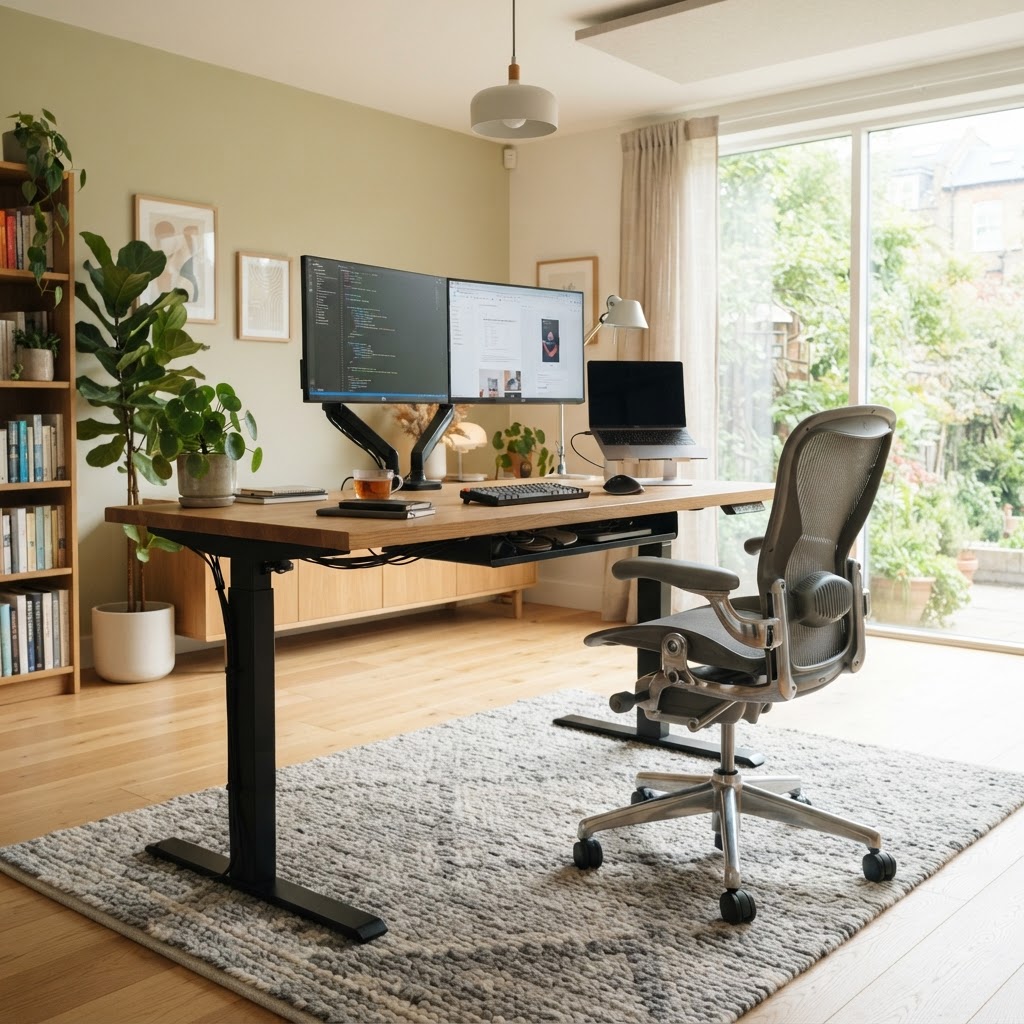
The must-haves for any serious commercial office fit-out right now include height-adjustable sit-stand desks, chairs with genuine lumbar support and adjustable armrests, and monitor arms that allow for proper screen positioning. Brands like Herman Miller, Humanscale, and Steelcase have been killing it aesthetically for years now, producing pieces that are genuinely beautiful as well as functional. If those budgets feel steep, there are mid-range options from companies like Branch or Autonomous that offer a lot of the same ergonomic benefits at a more accessible price point.
- Sit-stand desks: Allowing people to alternate between sitting and standing throughout the day reduces fatigue and back discomfort significantly.
- Lumbar-supportive seating: Look for chairs with adjustable lumbar support that fits different body types, not a one-size-fits-all approach.
- Monitor positioning: Screens should sit at roughly arm's length and at eye level to prevent the neck strain that comes from looking up or down all day.
- Keyboard and mouse placement: Wrists should rest in a neutral position. An ergonomic keyboard tray can make a surprisingly big difference for people who type all day.
The aesthetic side of this has truly come a long way. Warm wood finishes on sit-stand desks, sleek upholstered task chairs in rich tones, and minimalist monitor arms that look intentional rather than industrial are all completely achievable now. You don't have to sacrifice your design vision for your team's comfort. That trade-off is officially off the table.
Color Psychology for Focused Work
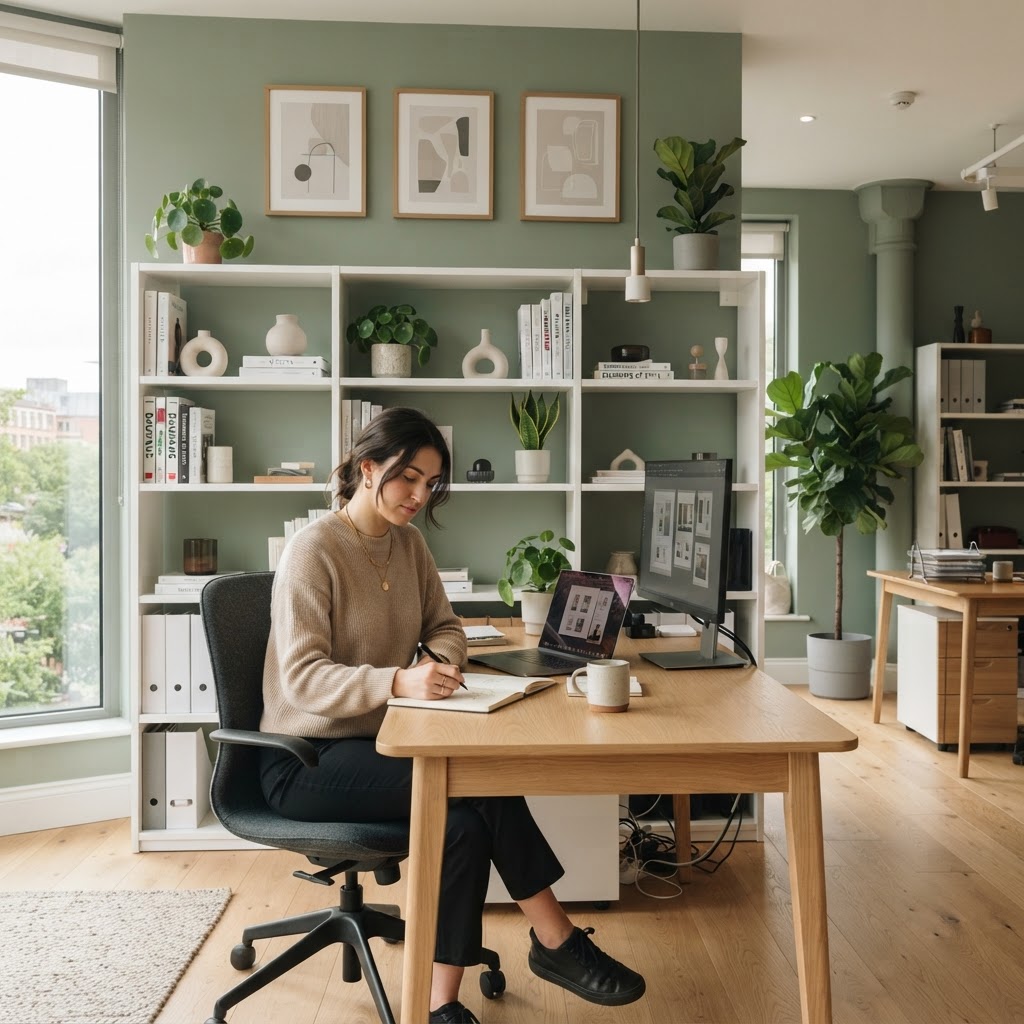
Color is one of those things that operates almost entirely below the level of conscious awareness, which is exactly what makes it so powerful and so easy to get wrong. Most offices default to white or gray because they feel "safe" and "neutral," and look, I get it. But safe doesn't always mean effective. The colors surrounding us while we work have a genuine, documented impact on our cognitive performance, mood, and energy levels throughout the day. Understanding even the basics of color psychology can completely transform a workspace without changing a single piece of furniture.
Blue tones are consistently associated with focus, calm, and intellectual performance. That's why you see so much blue in tech companies, financial institutions, and anywhere that demands sustained concentration. It's not a coincidence. Green carries similar calming properties while also connecting back to those biophilic principles we talked about earlier. It reduces eye strain and creates a sense of balance that's genuinely conducive to long work sessions. Yellow, used carefully and in smaller doses, sparks creativity and optimism, making it a great choice for collaborative or brainstorming areas rather than individual focus zones.

Red is the one to handle with care. It increases heart rate and creates a sense of urgency, which sounds like it could be useful but in practice leads to stress and anxiety in a sustained work environment. Small doses of red as an accent can add energy without overwhelming the space, but walls of red in a workspace are almost universally a bad idea. And all-white spaces, while they feel clean and minimal, can actually lead to feelings of sterility and disengagement over time.
The smart approach for commercial offices is to use color intentionally across different zones. Deep, saturated blues or rich greens in individual work areas for focus. Warmer, more energetic tones in collaboration spaces and creative rooms. Softer, more muted palettes in break rooms and lounge areas for genuine mental recovery. Think of color as a tool for guiding behavior and emotion throughout the building, because honestly, that's exactly what it is.
Strategic Zoning for Creative Flow
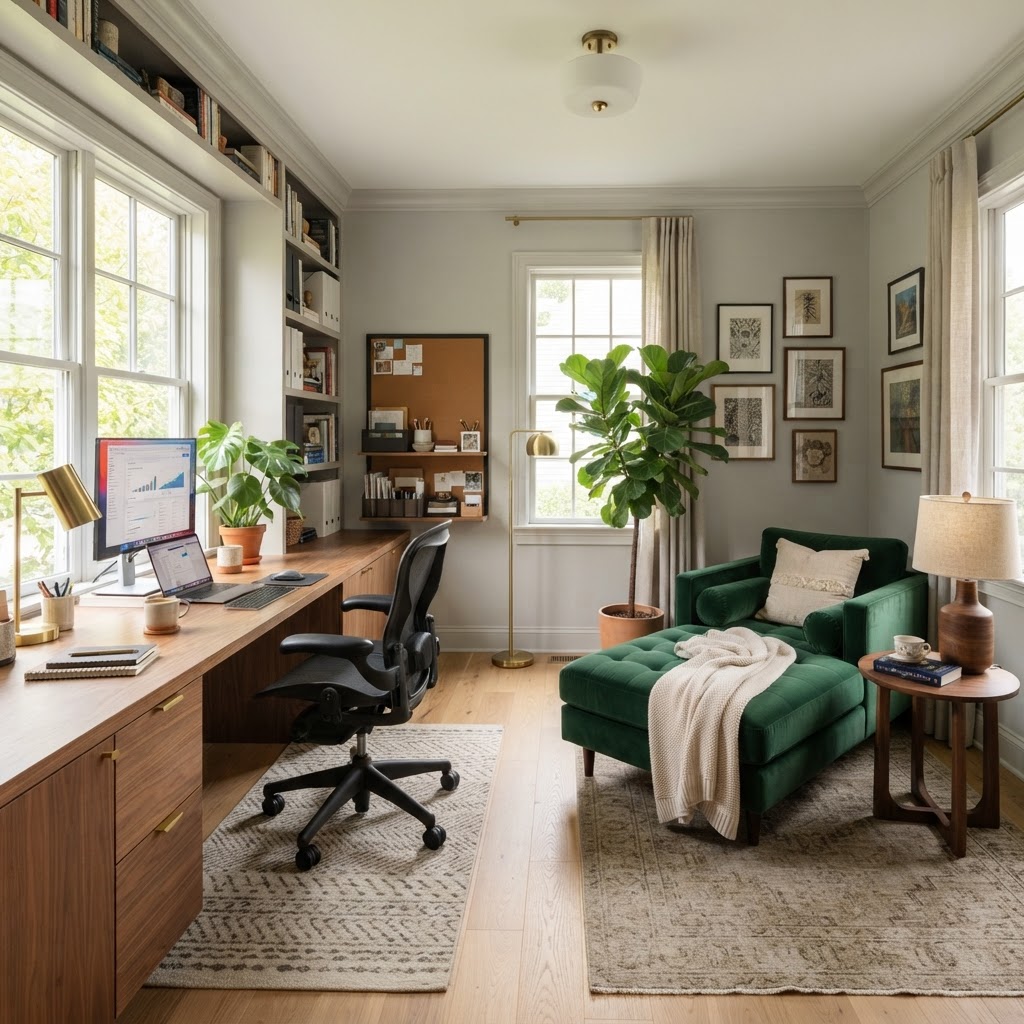
Here's something that I think is fundamentally misunderstood about productivity in office environments: not all work is the same, and treating every type of task the same way is a design failure. Deep focus work, collaborative ideation, casual catch-ups, phone calls, video conferences, taking a proper mental break, all of these require completely different physical environments to happen well. Strategic zoning is about designing a space that acknowledges this reality and gives people actual options throughout their day.
The open plan office revolution was well-intentioned but honestly went too far. Yes, breaking down walls increased visibility and some kinds of collaboration, but it also destroyed the quiet, focused environments that certain types of work absolutely require. The pendulum is swinging back toward a more balanced middle ground, and the smartest commercial offices right now are blending open collaborative areas with enclosed focus pods, phone booths for calls, and semi-private zones that offer some acoustic separation without full isolation.
Acoustic design is a massive part of making zoning work properly. It's not enough to physically separate areas if sound bleeds freely between them. Acoustic panels, sound-absorbing ceiling tiles, soft furnishings, and carpeting in key areas all contribute to a space where the zones actually function as intended. Nothing breaks focus faster than hearing fragments of someone else's conversation, and nothing inhibits collaboration more than people feeling self-conscious about being overheard.
- Deep focus zones: Enclosed or semi-enclosed spaces with minimal visual distraction, good acoustic separation, and personal control over lighting.
- Collaboration areas: Open, flexible spaces with moveable furniture, writable walls, and technology for screen sharing and group ideation.
- Informal meeting spaces: Comfortable lounge-style seating for casual conversations that don't need a formal meeting room setting.
- Recharge zones: Properly equipped break areas that encourage genuine mental rest, not just a different place to keep working.
The goal of strategic zoning is to give employees agency over their own work experience. When people can choose an environment that matches what they need to accomplish in any given moment, productivity goes up naturally. It also communicates trust, which is its own kind of motivator. Real talk: the offices that get this right are the ones where people actually want to come in. And right now, that matters more than it ever has.
Final Thoughts
None of these tweaks exist in isolation. The magic really happens when you start layering them together, when your biophilic elements work alongside your lighting scheme, when your color choices reinforce your zoning strategy, when your ergonomic furniture supports the varied activities happening across different areas of the space. Good office design is a system, and every element either adds to or subtracts from the whole.
The thing I want you to take away from all of this is that investing in your workspace is investing in your people. The physical environment shapes mood, energy, creativity, and focus in ways that are profound and often invisible until something changes. Whether you're planning a full commercial fit-out or just looking for high-impact tweaks to an existing space, start with one of these areas and notice the difference it makes. I promise you won't stop at one.
More in Commercial
Stay Inspired
Subscribe for new essays on architecture, design, and the spaces that shape us.