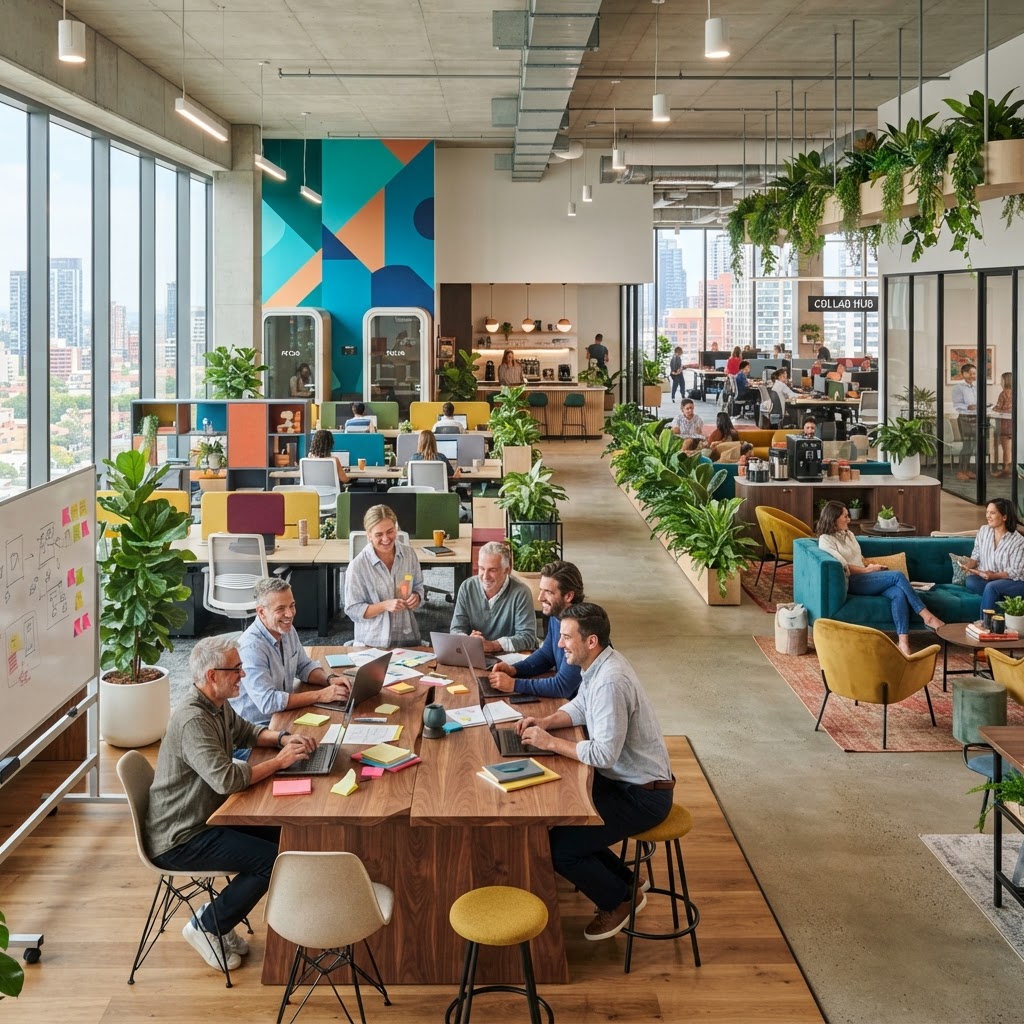
Transform Your Workspace: Office Design Ideas to Boost Productivity
Ready to elevate your workspace? Discover innovative office design ideas that not only look good but also enhance productivity for you and your team. Let's create an inspiring environment that fuels creativity and efficiency.
1. Embrace Open Spaces for Collaboration
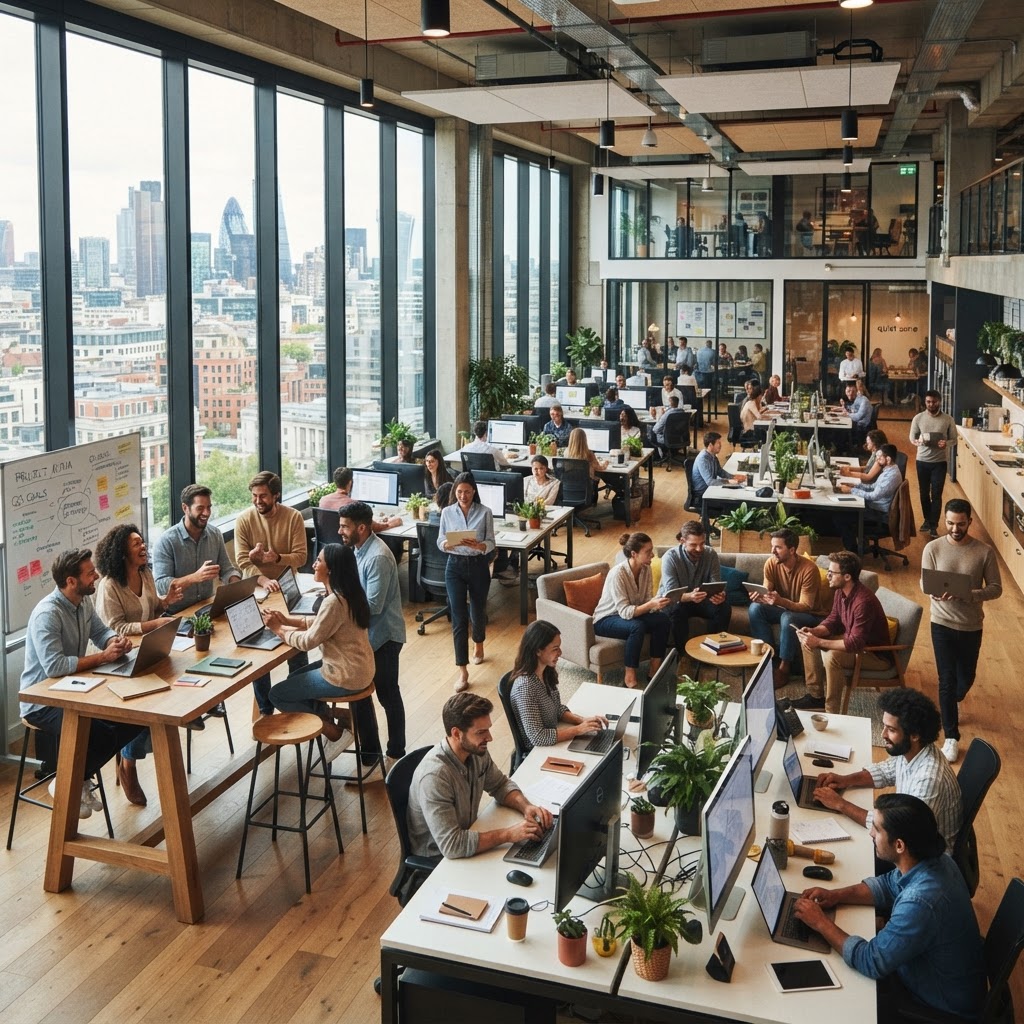
Honestly, the open office concept gets a bad rap sometimes. Yes, it was definitely overdone in the early 2010s when everyone just ripped out walls and called it a day. But when it's done right, an open workspace can genuinely transform how teams communicate and collaborate. The key is intentionality. You're not just removing walls for the sake of it. You're creating a layout that invites people to actually talk to each other.
Think about it this way. When people are tucked away in cubicles or isolated offices, casual conversations don't happen. Those little impromptu chats where someone mentions a problem and a colleague overhears and suddenly has the perfect solution? That's the stuff open spaces are built for. Serendipitous collaboration is a real thing, and your office layout either encourages it or kills it.

Here's the thing though. Open spaces work best when they're paired with smart acoustic design. Nobody wants to sit in a wide-open room where every phone call and keyboard click echoes. Acoustic panels, rugs, upholstered furniture, and even strategically placed bookshelves can absorb sound without closing the space off visually. It's a balance, and finding that balance is where most offices either succeed or completely miss the mark.
Some practical things to consider when designing for collaboration:
- Use low-profile furniture that keeps sightlines open across the floor
- Create informal gathering spots with lounge seating, not just formal conference tables
- Incorporate writable surfaces like whiteboards or glass walls for brainstorming
- Make sure the layout allows for natural circulation so people move through the space organically
- Keep communal areas close to coffee and snack stations because honestly, that's where half the good conversations happen anyway
Real talk, the companies that have gotten this right tend to see genuine improvements in team morale and creative output. It's not magic. It's just good design doing what it's supposed to do.
2. Incorporate Nature with Biophilic Design
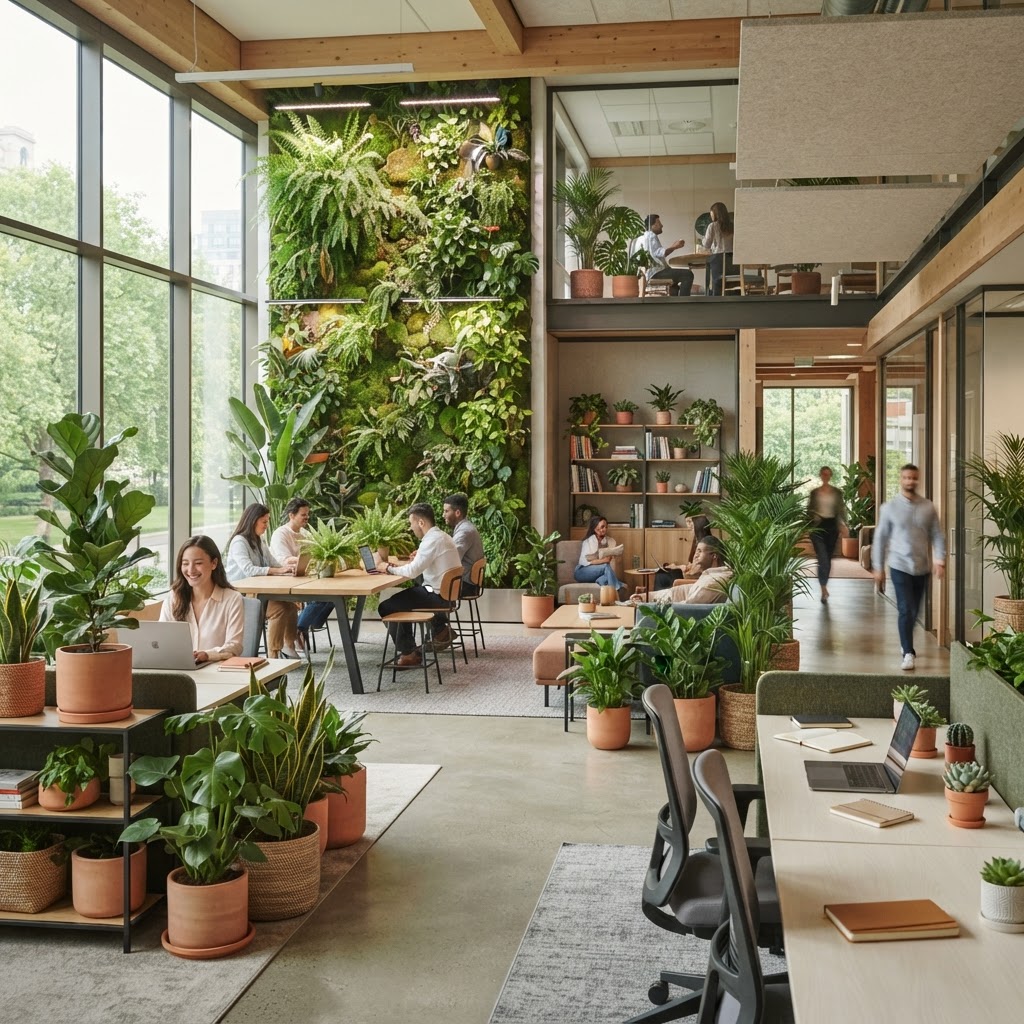
Biophilic design is one of those concepts that sounds fancier than it actually is. At its core, it just means bringing nature into the built environment. And look, humans have spent most of their existence outdoors. We're wired to respond to natural elements, whether that's greenery, natural light, water, or organic textures. Putting people in sterile, artificially lit boxes and expecting them to be energized and creative is kind of working against biology.
The research on this is genuinely compelling. Studies have consistently shown that workers in offices with natural elements report lower stress levels, higher job satisfaction, and better concentration. We're talking about a meaningful difference, not just a marginal uptick. One well-known study found that employees in offices with natural light slept an average of 46 minutes more per night than those without it. That kind of data is hard to ignore when you're thinking about how to design a workspace that actually performs.
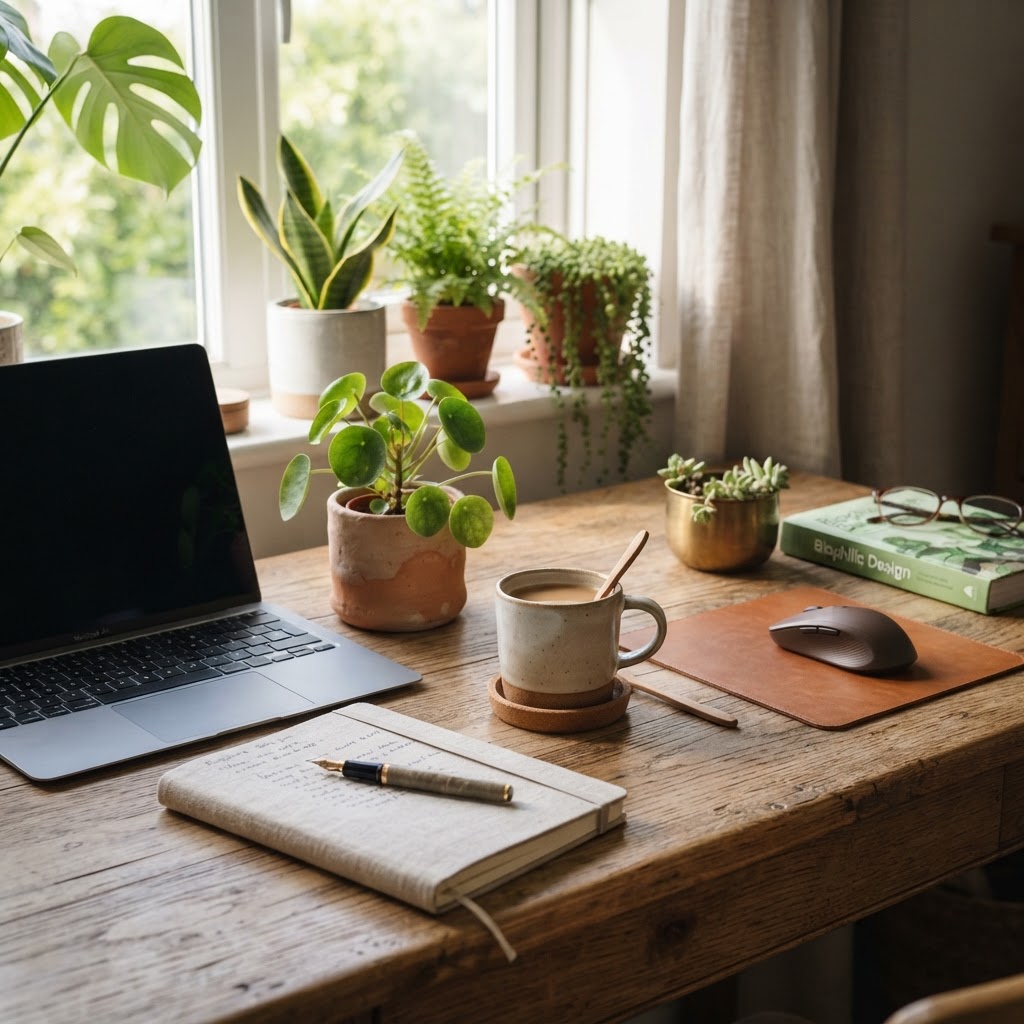
Now, biophilic design doesn't mean you need to turn your office into a jungle. Although, honestly, some of the best offices I've seen are pretty close to that. It can be as simple as:
- Adding potted plants to desks and common areas
- Installing a living wall or vertical garden as a focal point
- Choosing materials like wood, stone, and linen that echo natural textures
- Maximizing views to the outside wherever possible
- Using earthy, nature-inspired color palettes rather than harsh corporate grays and whites
One thing people overlook is the psychological effect of caring for plants in an office. When employees feel ownership over their environment, even in small ways like watering the desk plant, it builds a sense of connection to the space. That matters more than you'd think. Trust me on this, it's one of those low-cost, high-impact moves that clients are always surprised by after the fact.
If budget is tight, start with a few hardy, low-maintenance plants like pothos, snake plants, or ZZ plants. They're nearly impossible to kill and they look genuinely great. From there, you can build up to more ambitious installations as the appetite grows.
3. Flexible Furniture for Dynamic Work Habits
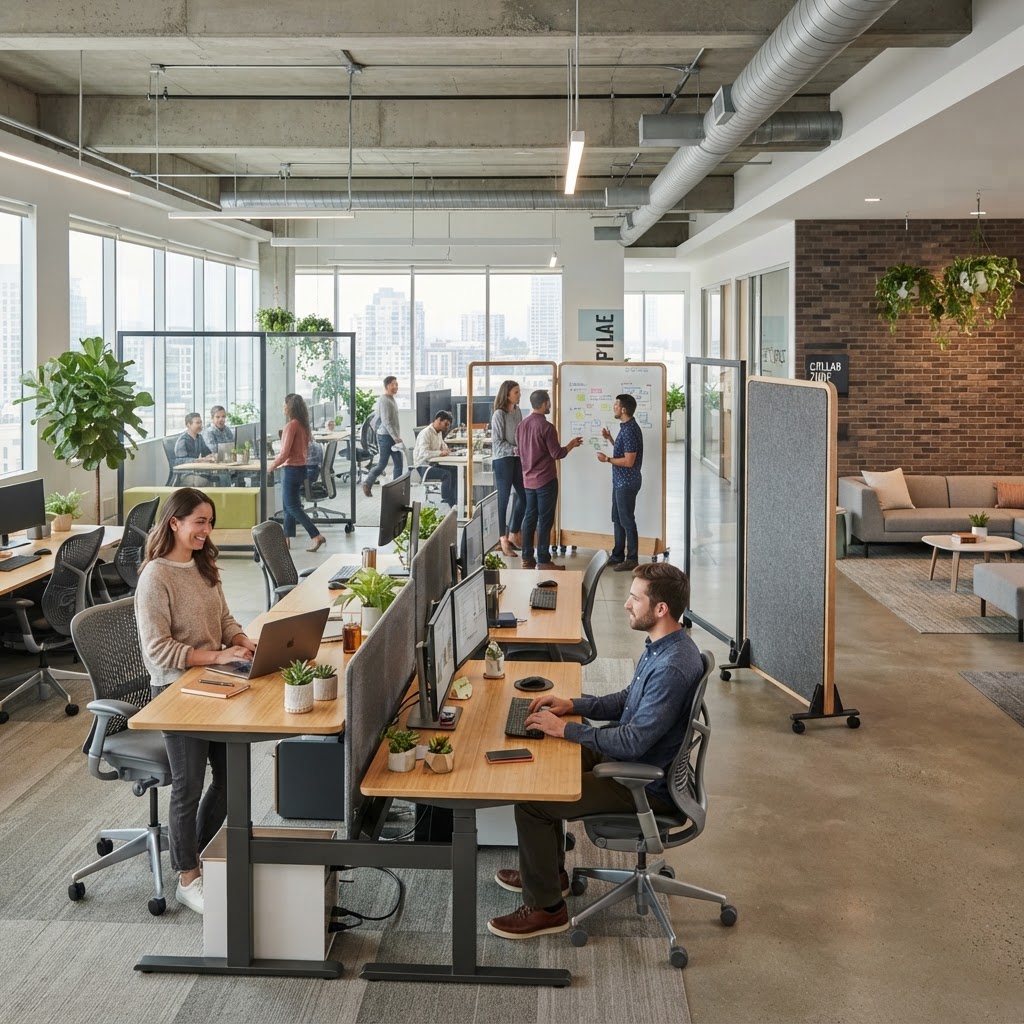
Here's the thing about modern work habits. They're not predictable. One day your team needs a wide-open space for a workshop. The next day everyone needs to be heads-down doing individual focused work. The day after that, a client comes in and you need something that looks polished and professional. A rigid, fixed office layout simply cannot accommodate all of that. Flexible furniture is not a luxury at this point. It's a necessity.
The good news is that the market for flexible commercial furniture has exploded in the last decade and the options are genuinely impressive. We're talking modular desking systems that can be reconfigured in minutes, lightweight lounge chairs that can move from a collaborative zone to a quiet corner easily, height-adjustable desks that shift from sitting to standing positions, and foldable tables that disappear when you need floor space. The quality has also come a long way. This stuff doesn't look cheap or temporary anymore.
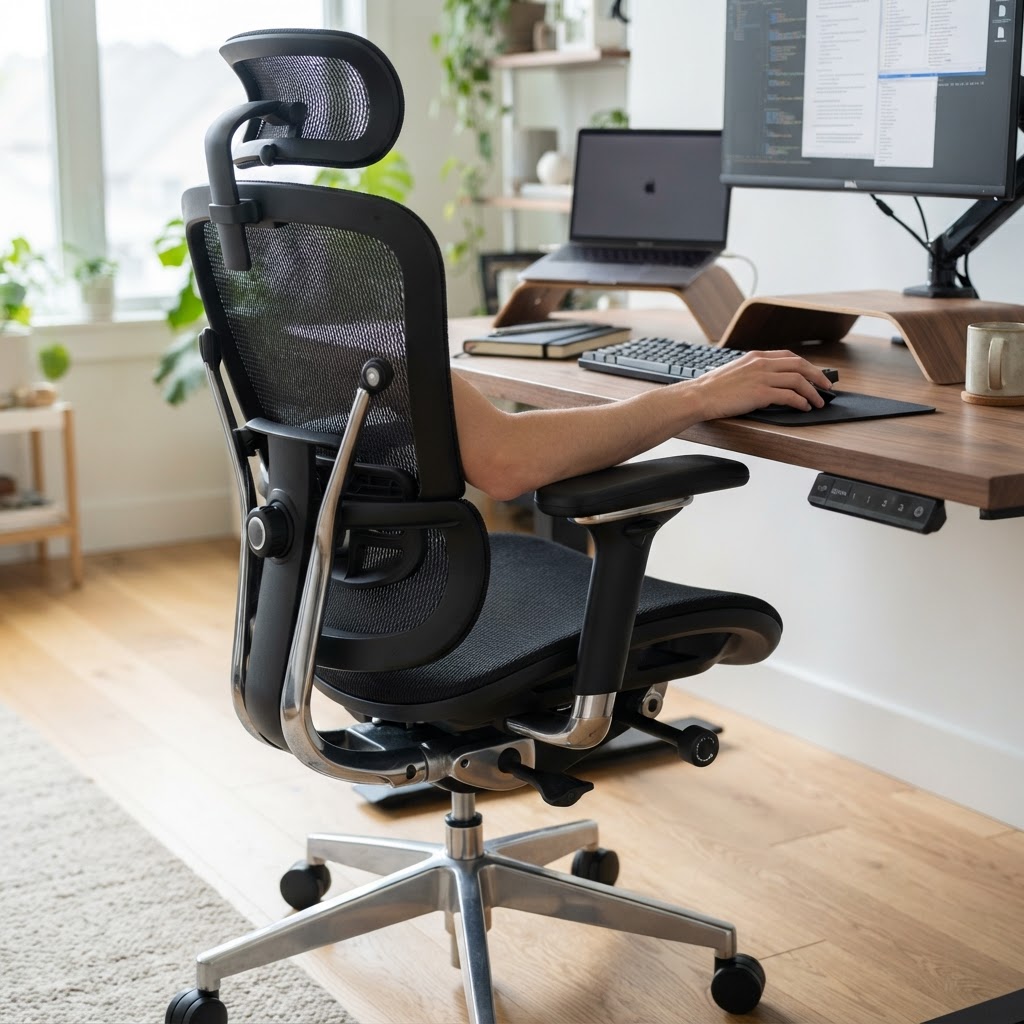
Standing desks deserve a special mention here. The evidence that prolonged sitting is genuinely bad for health is overwhelming at this point. And honestly, when people have the option to stand, they often feel more alert and engaged. Even alternating between sitting and standing throughout the day can make a noticeable difference in energy levels by mid-afternoon, which is traditionally when productivity tanks. Investing in sit-stand desks is one of the highest-return design decisions you can make for employee wellbeing.
When selecting flexible furniture, keep these principles in mind:
- Prioritize pieces that are genuinely easy to move, not just theoretically movable
- Choose a cohesive palette so reconfigured layouts still look intentional
- Think about storage, because flexible spaces can get messy fast without smart storage solutions
- Invest in quality casters and locking mechanisms so furniture stays put when it needs to
And look, don't underestimate the psychological impact of giving employees agency over their environment. When people can arrange their workspace to suit what they're working on, they feel more in control. That sense of autonomy is directly tied to motivation and output. It's a win on every level.
4. Create Zones for Focused Work and Relaxation
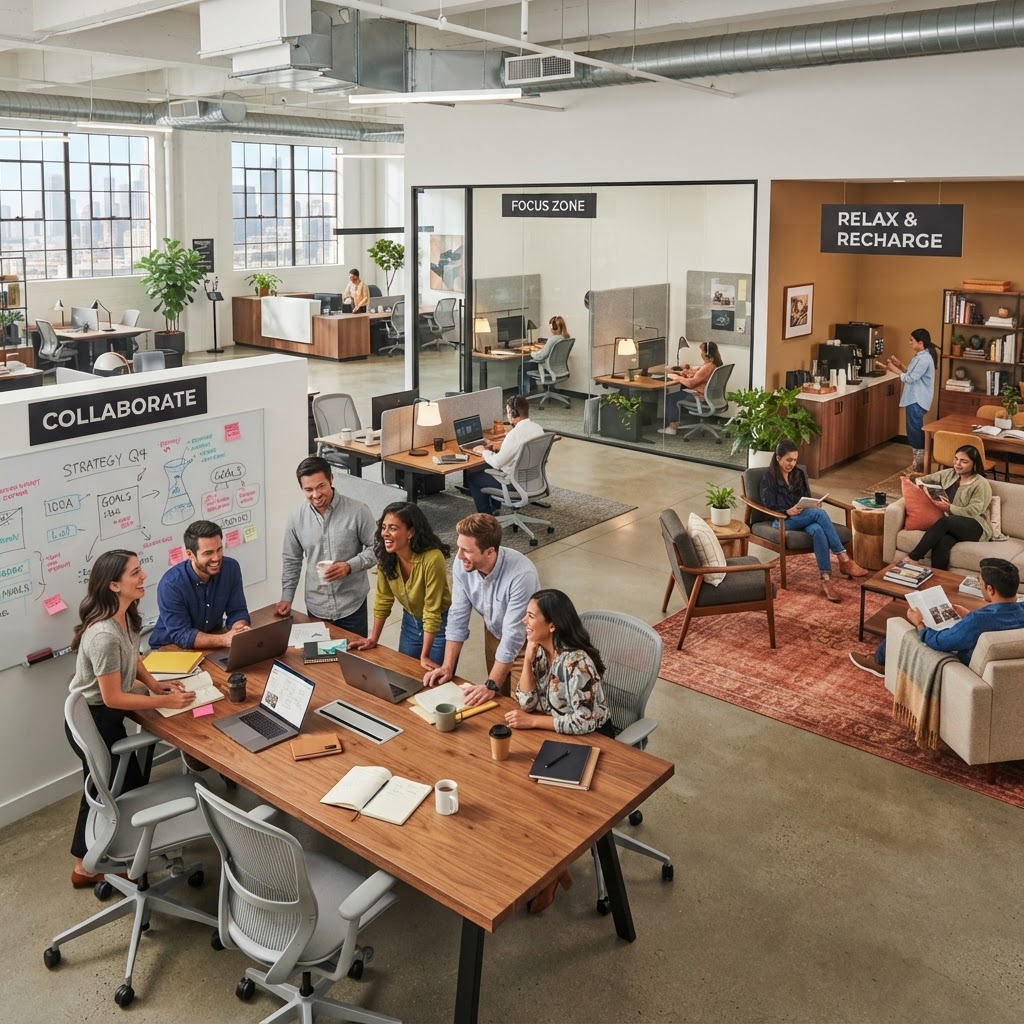
One of the biggest mistakes I see in office design is treating the entire floor plan as one undifferentiated space. Everything looks the same, functions the same, feels the same. And when that happens, people tend to do everything mediocrely because the space doesn't support any particular type of work especially well. Zoning your office, even in subtle ways, is one of the most powerful things you can do to actually improve how people work.
The basic premise is simple. Different tasks require different environments. Deep, focused work requires quiet, reduced visual distraction, and a sense of enclosure. Collaborative work benefits from openness, energy, and easy access to tools and technology. Rest and recovery need comfort, a change of scenery, and permission to step away from screens. When your office has designated areas for each of these modes, people can move through their day more intentionally.
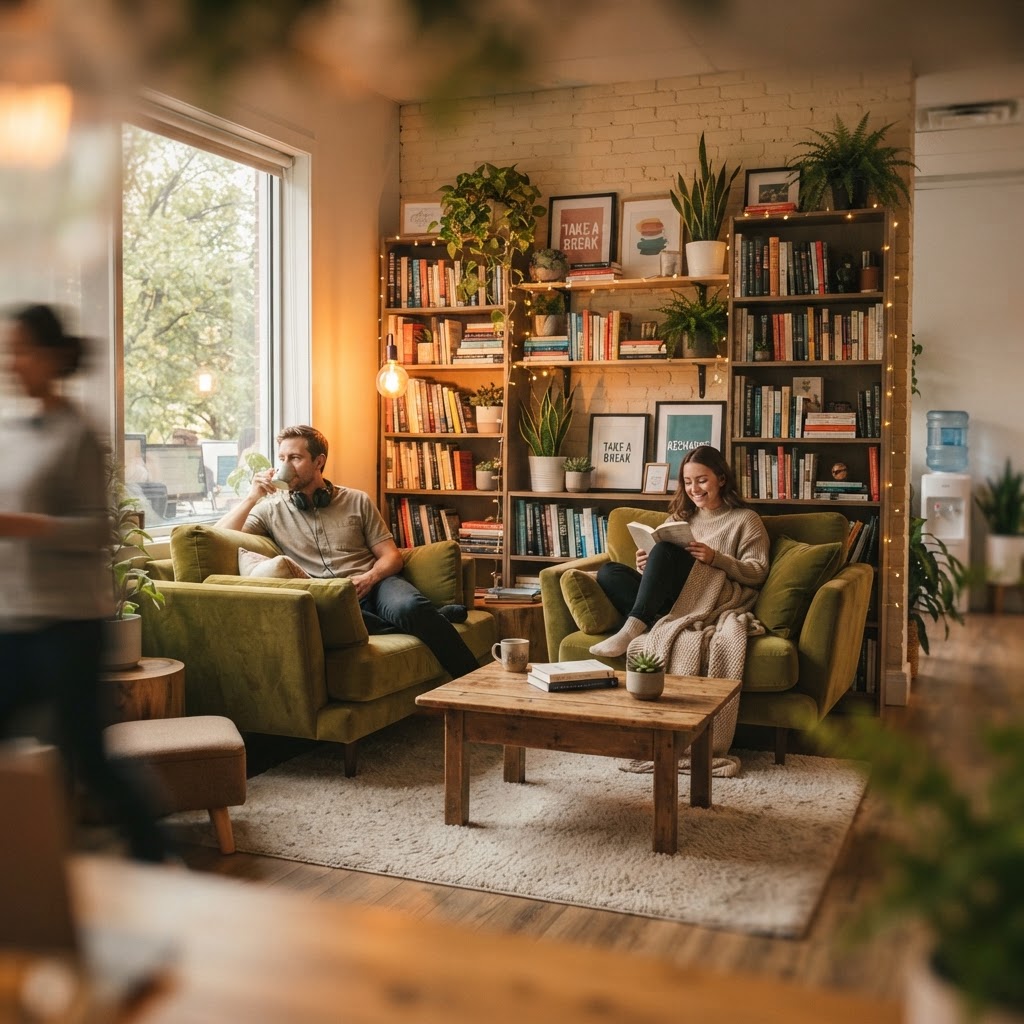
Focus zones are particularly important and often underserved. These can be small acoustic pods, enclosed phone booths, or even just a designated quiet area with a clear social contract that noise is kept to a minimum. The point is that employees need somewhere to go when they need to genuinely concentrate without putting on headphones and hoping for the best. The presence of a proper focus zone signals that the company takes deep work seriously. That cultural message matters.
On the other side of the spectrum, relaxation and social zones are equally important. Burnout is real and it costs companies enormous amounts of money in turnover and lost productivity. A well-designed break area with comfortable seating, good coffee, maybe a game or two, gives people a genuine mental reset. Not a vending machine in a fluorescent-lit corner. An actual inviting space that people want to spend time in.
"The best offices I've worked with understand that rest is part of productivity, not the opposite of it. When you design for the whole human, the whole human shows up to work."
Zone differentiation can be achieved through flooring changes, ceiling treatments, lighting shifts, color variation, or furniture style changes. You don't need walls to create a zone. Sometimes just a different rug and a couple of pendant lights is enough to make a space feel like a completely different environment.
5. Optimize Lighting for Better Performance
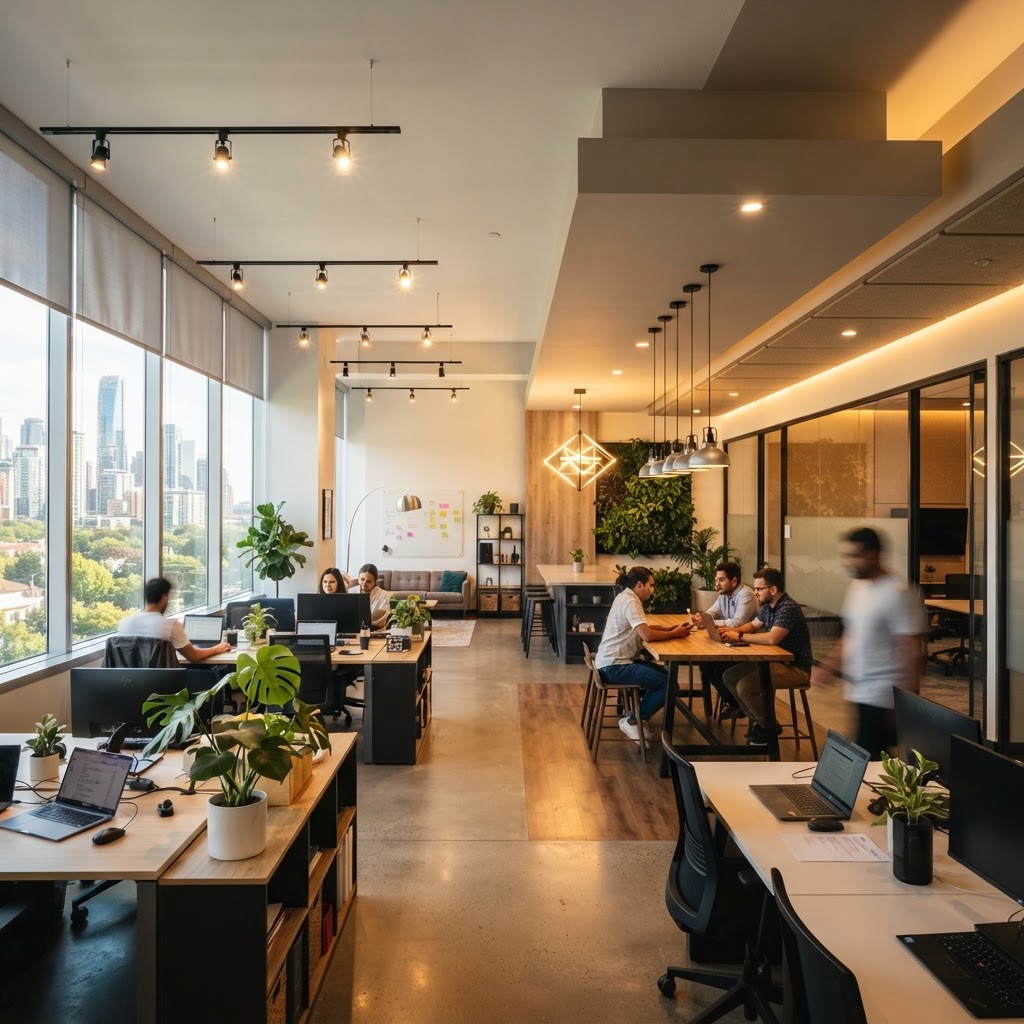
Lighting is one of those things that most people don't consciously notice until it's wrong. And in commercial spaces, it's wrong a lot of the time. Harsh, flat fluorescent overhead lighting that makes everyone look slightly ill and feel vaguely miserable. It's so common and so unnecessary at this point. Good lighting design is not wildly expensive to implement and the impact on how a space feels and how people perform in it is enormous.
Let's start with the obvious. Natural light is always the goal. We covered this a bit in the biophilic section, but it bears repeating in the context of lighting specifically. Natural light regulates our circadian rhythms, improves mood, reduces eye strain, and makes spaces look genuinely beautiful. If you have windows, maximize them. Use light-filtering rather than blackout treatments. Position workstations to benefit from natural light without creating glare on screens. This sounds simple but it requires careful thought about orientation and the position of the sun at different times of day.
When it comes to artificial lighting, the key is layering. A single type of light source doing all the work is never going to give you the best result. Think about it in three layers:
- Ambient lighting: The general, overall illumination of a space. Should be warm enough to be comfortable but bright enough to work by
- Task lighting: Directed light at specific work surfaces, like desk lamps or under-cabinet lights. This is where you want higher intensity and cooler color temperatures for focus
- Accent lighting: Decorative and atmospheric, used to highlight architectural features, artwork, or create visual interest. This is what makes a space feel designed rather than just functional
Color temperature is a detail that people often get wrong or don't consider at all. Cooler, bluer light in the 5000K to 6500K range promotes alertness and is great for focus areas. Warmer light in the 2700K to 3000K range is relaxing and works better in social and break areas. Matching color temperature to the intended function of a zone is a subtle but genuinely effective way to reinforce how people should use a space.
Honestly, one of the best investments any commercial space can make right now is in smart lighting systems with human-centric lighting capability. These systems can automatically shift color temperature and intensity throughout the day to mirror the natural light cycle, keeping people more alert in the morning and gradually transitioning to warmer tones in the afternoon. It sounds like a small thing. It's not. The difference in energy levels and mood over the course of a workday is significant, and it's the kind of upgrade that people feel without necessarily being able to articulate why.
Final Thoughts
Look, designing a workspace that genuinely supports the people using it is not about following trends or spending a lot of money on flashy furniture. It's about being thoughtful. It's about asking what your team actually needs to do their best work and then designing an environment that delivers exactly that. Open spaces for connection, nature for wellbeing, flexible furniture for adaptability, zones for different modes of work, and lighting that supports rather than undermines everything else. These five principles work together. They're not isolated fixes.
The offices that get this right tend to see real, measurable improvements in retention, productivity, and employee satisfaction. And honestly, the ones that don't often chalk up their struggles to management issues or culture problems when the answer was literally in the walls around them the whole time. Your environment shapes behavior more than most people give it credit for.
If you're planning an office redesign or building out a new space, start with the fundamentals here and build from there. You don't have to do everything at once. Even incremental improvements in one or two of these areas can make a noticeable difference. And trust me on this, once people start experiencing a workspace that was genuinely designed with them in mind, there's no going back.
More in Commercial
Stay Inspired
Subscribe for new essays on architecture, design, and the spaces that shape us.