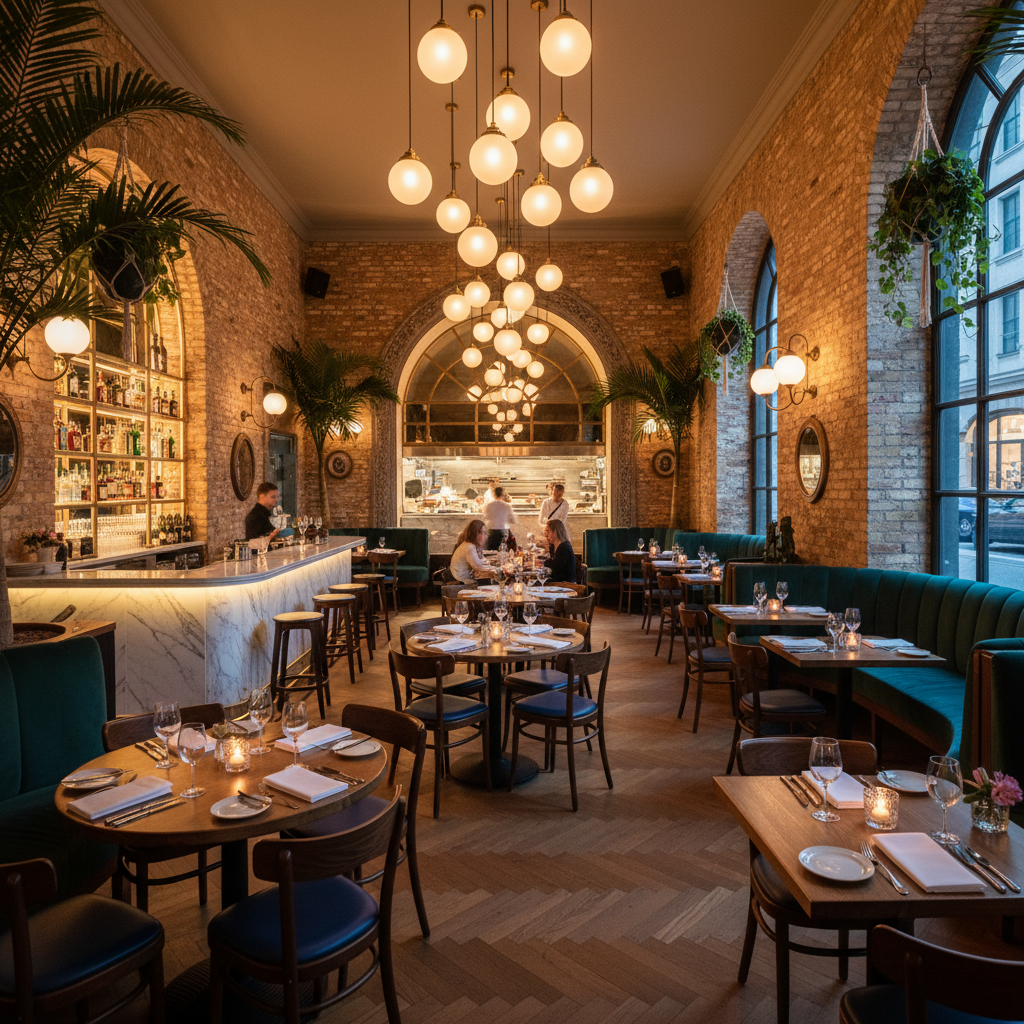
Restaurant Lighting Ideas that Set the Perfect Mood
Looking to create an unforgettable atmosphere in your restaurant? The right lighting can transform your space and elevate the dining experience. Discover these inspiring lighting ideas to set the perfect mood for your guests.
1. Warm and Inviting: The Power of Ambient Lighting
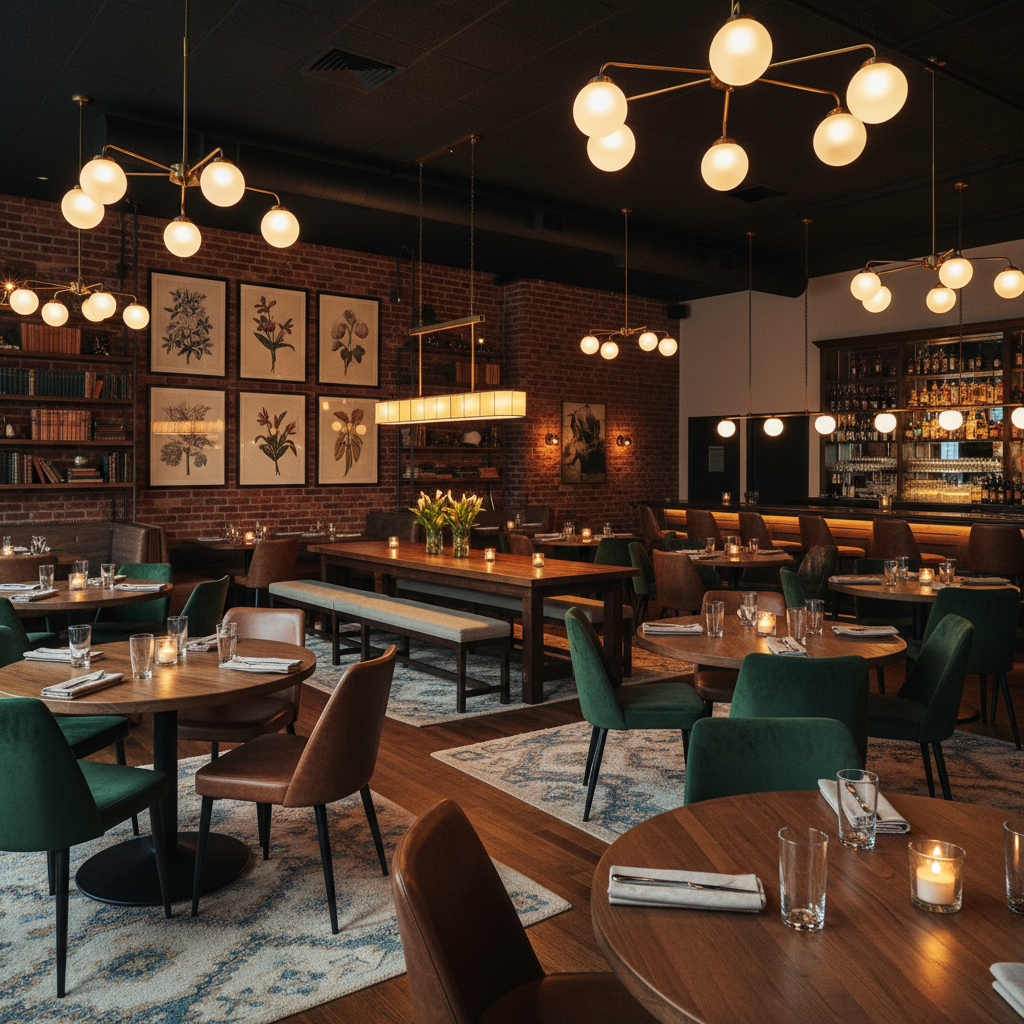
Honestly, if there's one thing that separates a forgettable restaurant from one people rave about to their friends, it's the lighting. And ambient lighting is where everything starts. It's the baseline, the foundation, the thing that tells your guests the second they walk through the door: relax, you're in the right place. Get it wrong and no amount of gorgeous plating or incredible service will fully save the experience. Get it right and you've already done half the work.
Ambient lighting is essentially your general, overall illumination. Think of it as the mood setter rather than the spotlight. The goal is to fill the space with a soft, even glow that doesn't feel harsh or clinical. Warm color temperatures, typically in the 2700K to 3000K range, are your best friends here. They make skin tones look flattering, food look appetizing, and the whole room feel like somewhere people actually want to linger over a second glass of wine.
Here's the thing about dimmers: they are non-negotiable. A restaurant that runs its ambient lighting at full blast during a romantic Friday night dinner is making a serious mistake. Dimmer systems let you shift the mood from bright and buzzy at lunch service to low and intimate in the evening without changing a single fixture. It's one of the smartest investments you can make during a fit-out, and it costs a fraction of what you'd spend rethinking your lighting scheme after opening.
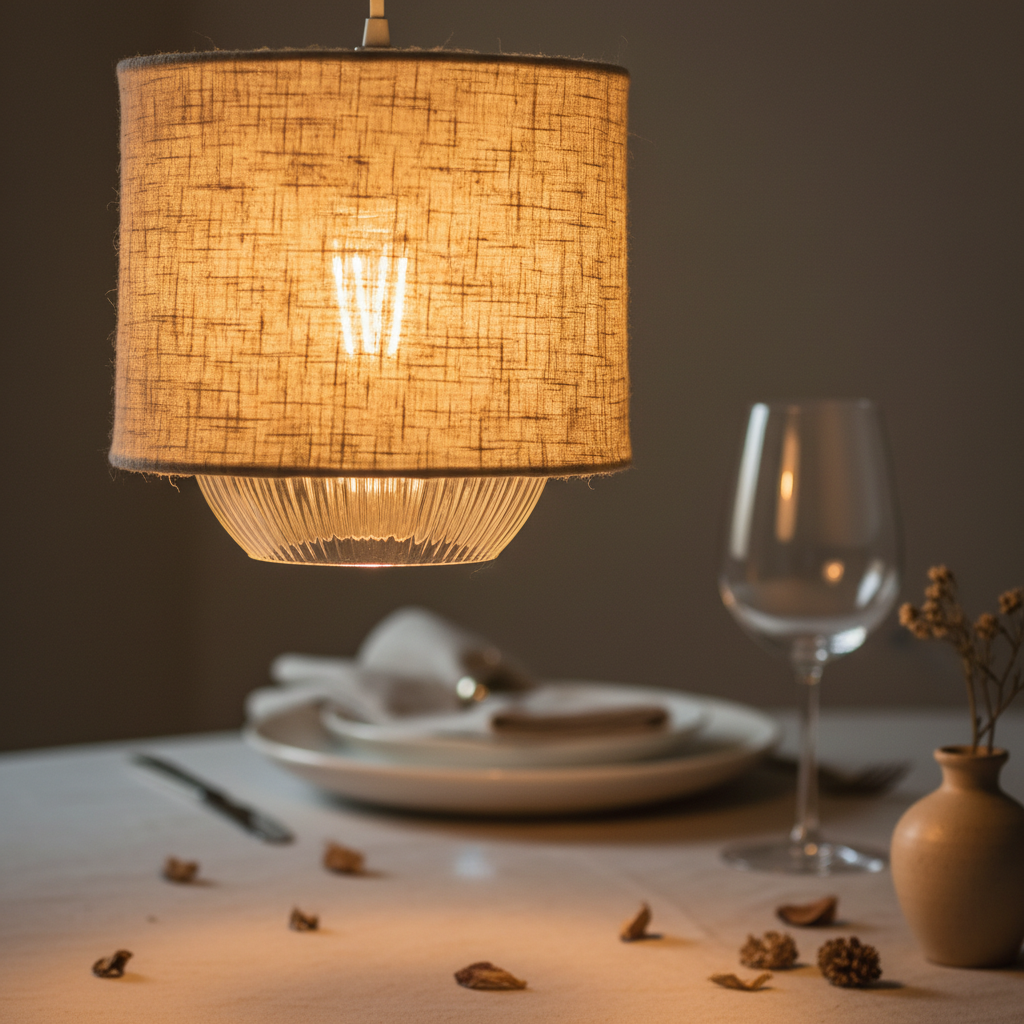
Popular choices for ambient lighting in restaurants include recessed downlights on dimmer circuits, pendant clusters hung at varying heights, and wall sconces that bounce light softly off the walls. A lot of designers lean heavily on Edison bulb pendants right now, and honestly, when done well, they're gorgeous. Just be careful not to overdo it. Too many exposed filament bulbs can start to feel like a theme park version of cozy rather than the real thing.
Real talk: the texture of your walls and ceiling matters more than most restaurant owners realize when it comes to ambient light. Rough plaster, exposed brick, or warm timber all absorb and scatter light in ways that feel rich and layered. Flat painted white walls, on the other hand, can make the same warm bulb feel cold and institutional. So think about your ambient lighting and your interior finishes as a team, not as separate decisions.
2. Accent Lighting: Highlighting Key Features
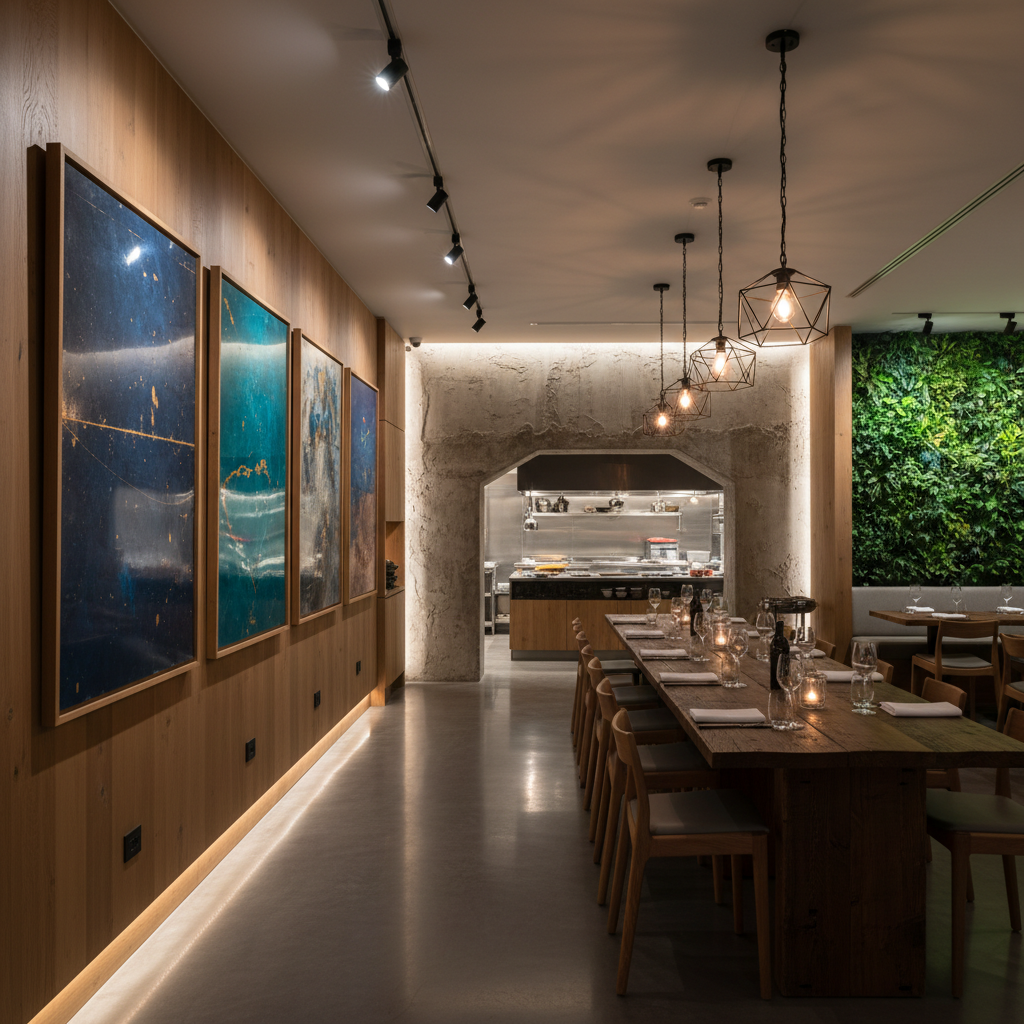
Once you've got your ambient lighting sorted, accent lighting is where you get to have some real fun. This is the layer of your lighting scheme that adds drama, depth, and personality. It's the difference between a room that looks okay and one that looks like a professional designer spent serious time on it. And look, it doesn't have to be complicated. Sometimes a few well-aimed adjustable spotlights on a track system can completely transform a space.
The purpose of accent lighting is to draw the eye to things you want people to notice. That could be a stunning piece of artwork on the back wall, the architectural bones of an exposed brick arch, a beautifully curated open wine rack, or even a dramatic floral installation above the bar. You're essentially directing your guests' attention, creating focal points that give the room visual interest and depth. Without it, even a beautifully designed space can feel a little flat.
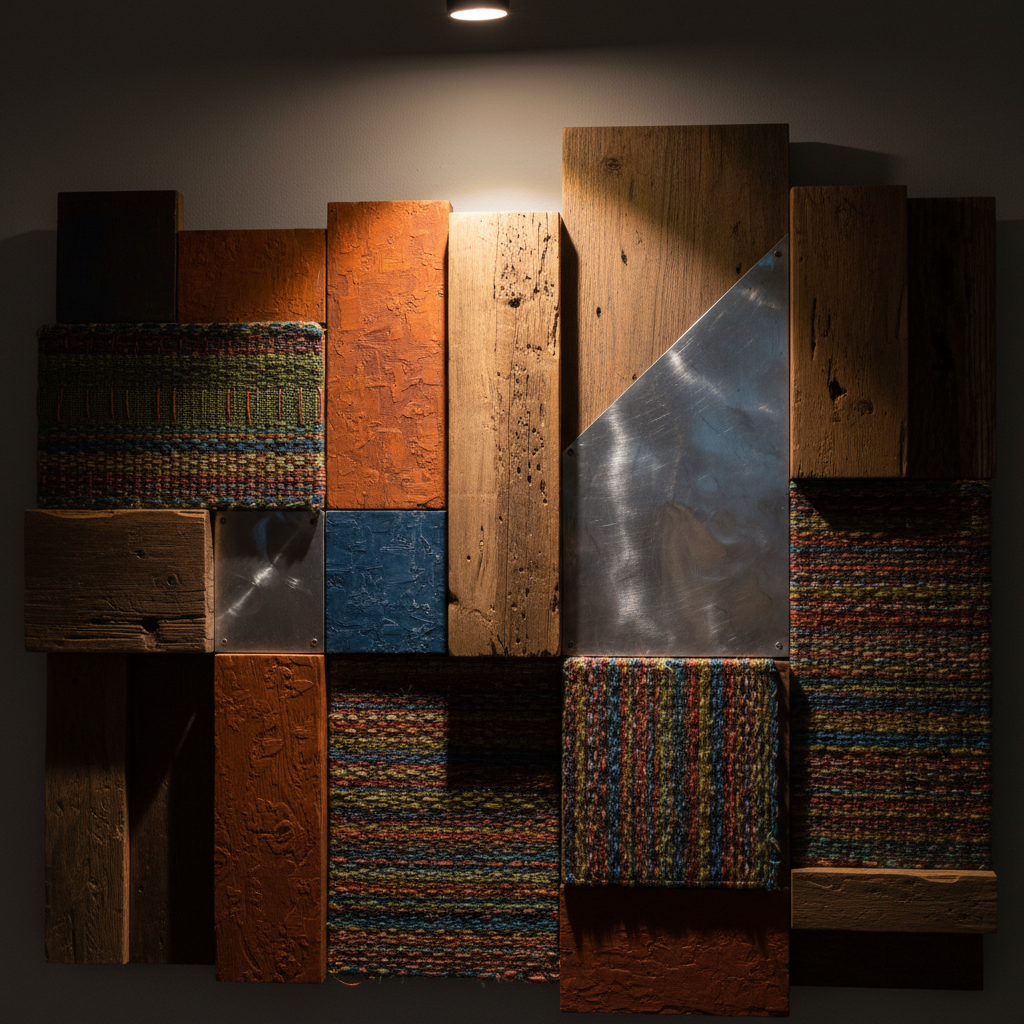
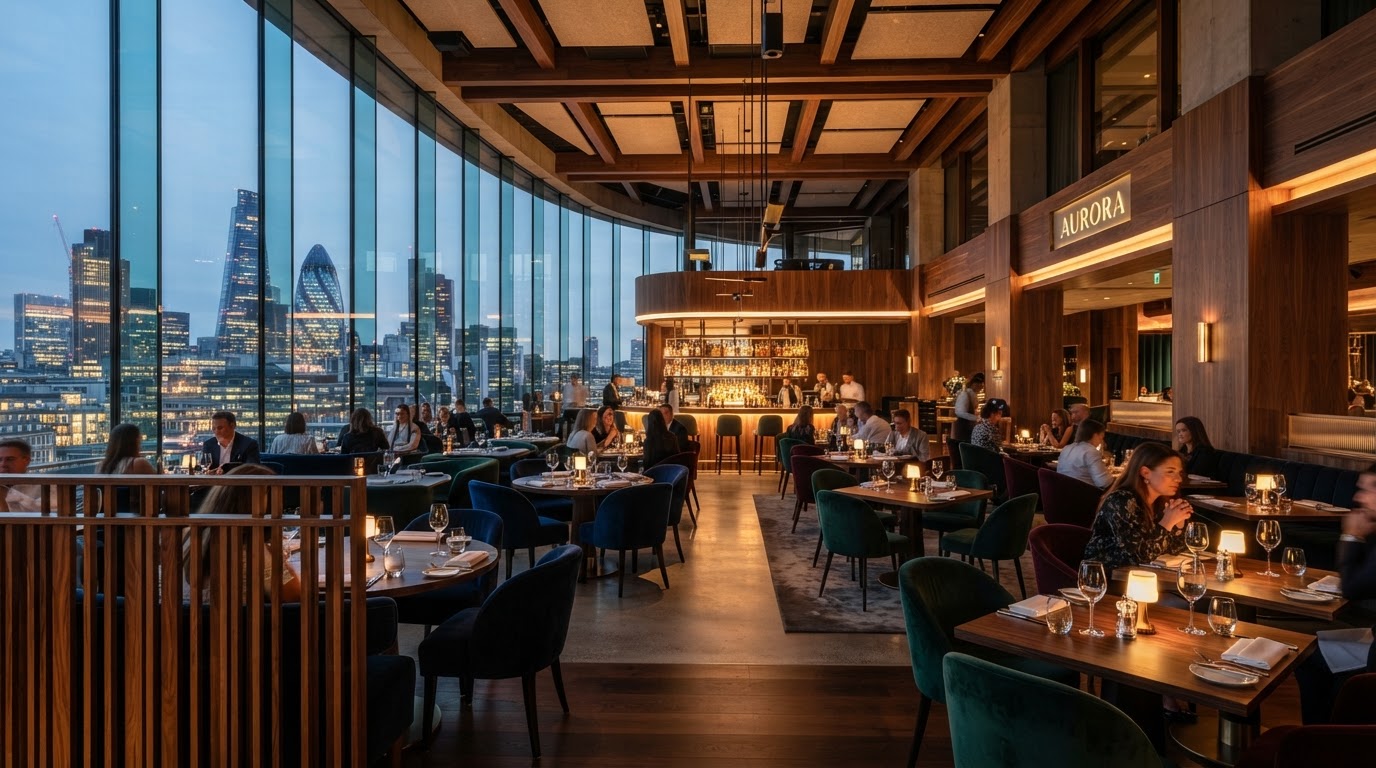
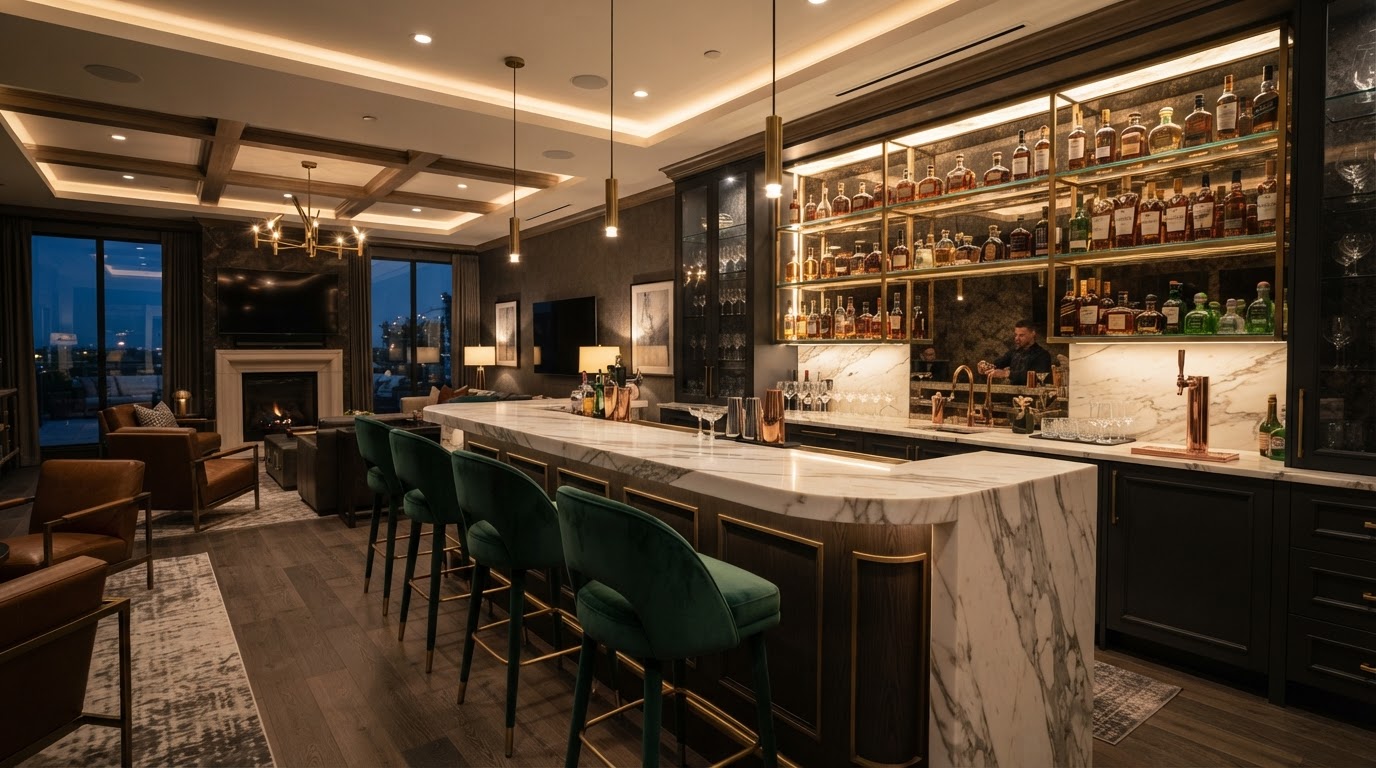
One of my favorite accent lighting tricks in restaurants is under-shelf lighting behind the bar. When you light a back bar from below or behind the bottles, you get this incredible warm glow that makes the whole space feel theatrical and high-end. It's relatively inexpensive to install, but the visual payoff is massive. Restaurants do this constantly in upscale venues and there's a very good reason for it.
- Adjustable track lighting: Flexible, affordable, and lets you redirect the beam as your layout changes over time
- Picture lights: Classic and elegant for restaurants with an art-forward interior concept
- Cove lighting: Hidden strip lights in architectural recesses that create a gorgeous halo effect around features
- Illuminated shelving: Works brilliantly for wine displays, spirits collections, or decorative objects
- Uplighting: Placed at floor level to graze texture up a stone or brick wall, creating incredible depth
The key with accent lighting is restraint. You don't want to highlight everything, because then nothing stands out. Pick your three or four hero moments in the space and light those deliberately. Everything else should recede into the warm ambient glow. That contrast is what creates visual excitement and, honestly, it's what makes guests instinctively reach for their phone to take a photo. Which is free marketing, so trust me on this one.
3. Task Lighting: Ensuring Functionality without Losing Ambiance
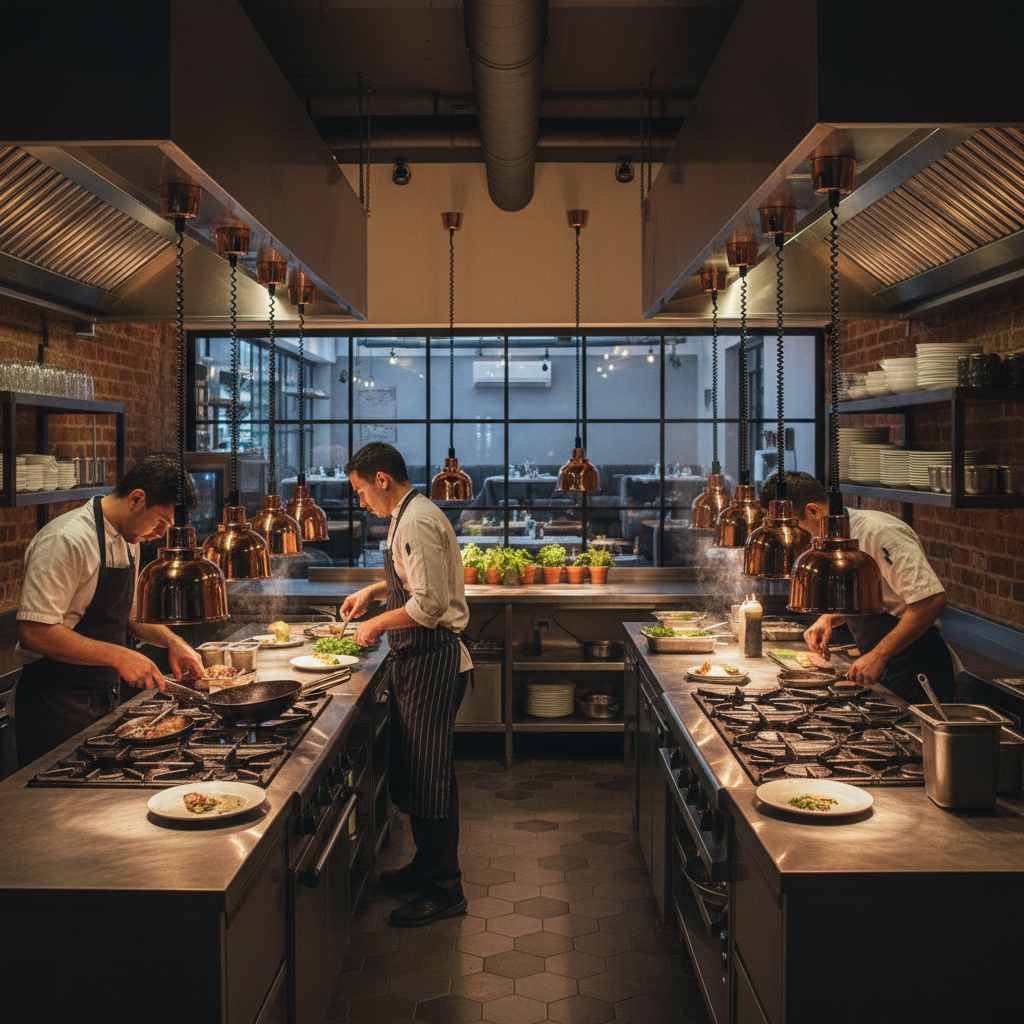
Here's the thing that trips up so many restaurant lighting plans: forgetting about the people who actually work in the space. Task lighting is the practical layer, the lighting that helps your staff do their jobs safely and efficiently. And it's genuinely tricky to get right, because you need enough light for someone to read a check, mix a cocktail, or navigate a tight service corridor, without flooding the dining room with harsh functional light that kills the mood you worked so hard to create.
The kitchen is obviously where task lighting does most of its heavy lifting. Bright, high-CRI (Color Rendering Index) lighting over prep areas and cook stations isn't just a preference, it's a safety and food quality issue. Chefs need to see the true color of proteins, the doneness of a sauce, the precision of a cut. This is one area where you don't want to compromise on brightness or color accuracy. The good news is that it's physically separated from the dining room, so you can go as bright as you like back there without affecting the guest experience.
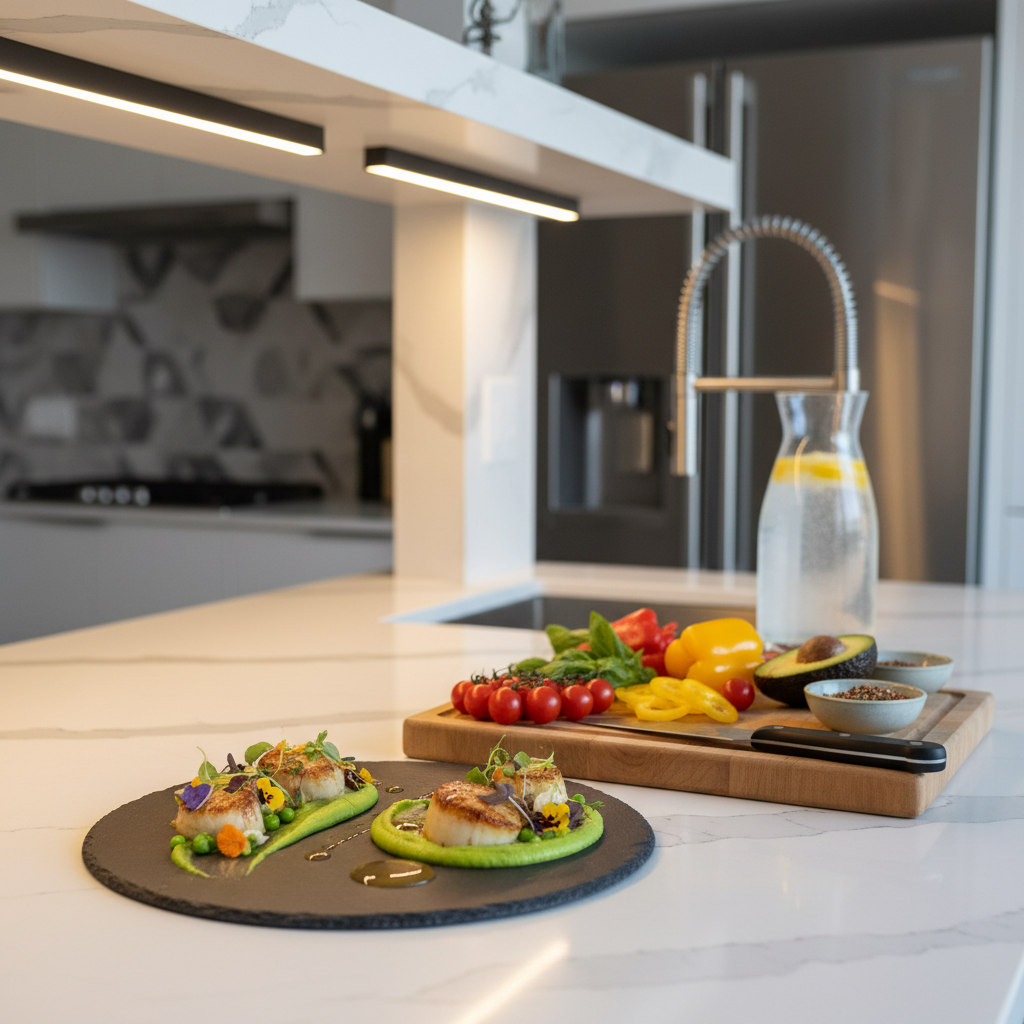
The bar is where task lighting gets more nuanced. Bartenders need sufficient light to measure pours, read labels, and handle glassware without breaking anything. But the bar is also often a visual centerpiece of the restaurant, so you want that task light to feel intentional, not just an afterthought. Recessed low-voltage downlights positioned directly over the work surface, combined with the ambient and accent lighting of the back bar, usually strikes the right balance.
Don't neglect the small things, either. Things like low-level aisle lighting for stairs or changes in floor level, subtle path lighting near restrooms, and adequate light in coat check areas are all task lighting considerations that affect both staff efficiency and guest safety. A guest who trips on an unlit step has a very different evening than one who doesn't, and the liability implications are real. Good task lighting is about hospitality as much as it is about function.
4. Outdoor Dining: Embracing Natural and Decorative Lighting
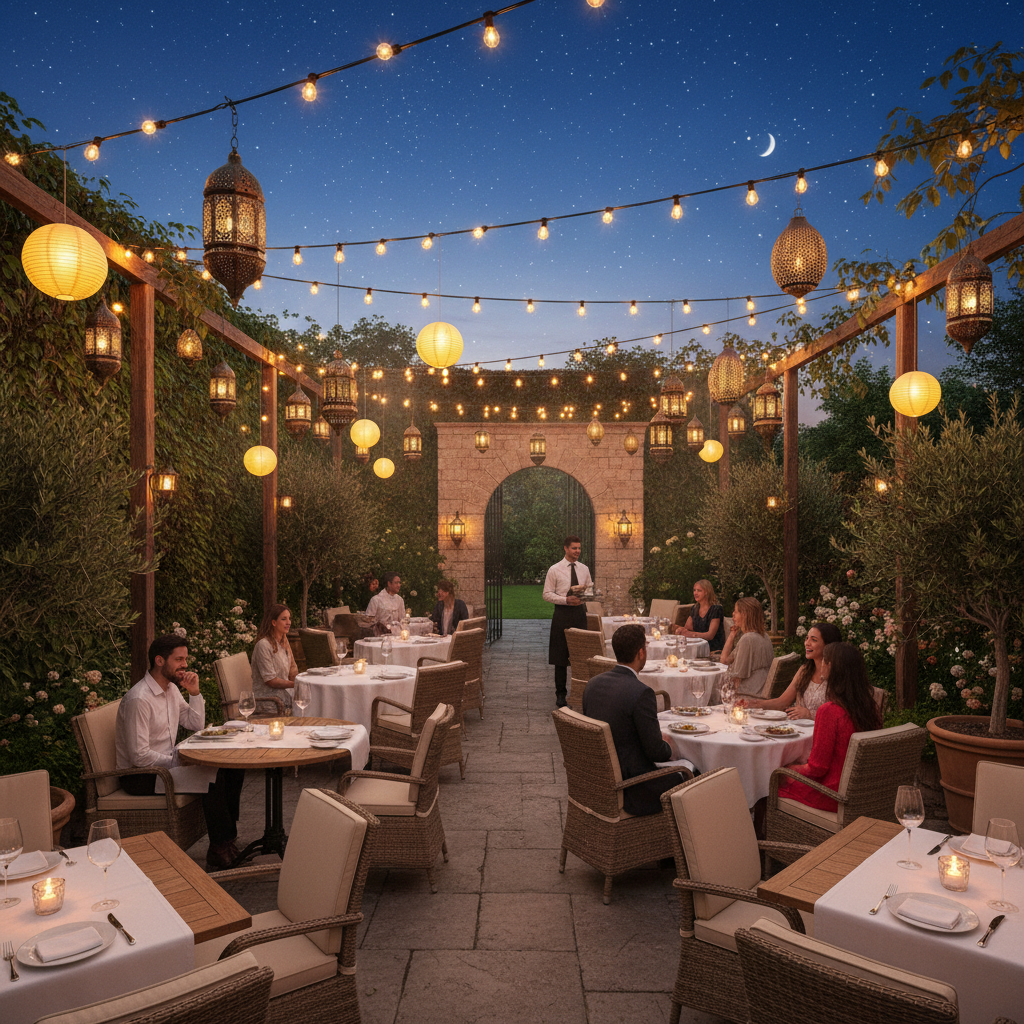
Outdoor dining is one of the most exciting lighting design challenges in the restaurant world, and honestly, it's also one of the most forgiving. Nature does a huge amount of the work for you. Golden hour sunlight through a pergola, the soft blue of early dusk, the natural darkness of a clear night sky with candles on every table, these things are just beautiful and they cost you nothing. Your job is to complement what's already there and carry the experience gracefully into the evening hours.
String lights are probably the most overused tool in outdoor restaurant lighting, but let's be honest, they're overused because they work. A well-strung arrangement of warm Edison bulbs or globe lights overhead creates an instant sense of occasion. The trick is in the installation. Lazy, drooping strings hung between two poles feel like a backyard barbecue. Thoughtfully tensioned lines at consistent heights, layered with other lighting elements, feel like a destination. The difference is entirely in the execution.
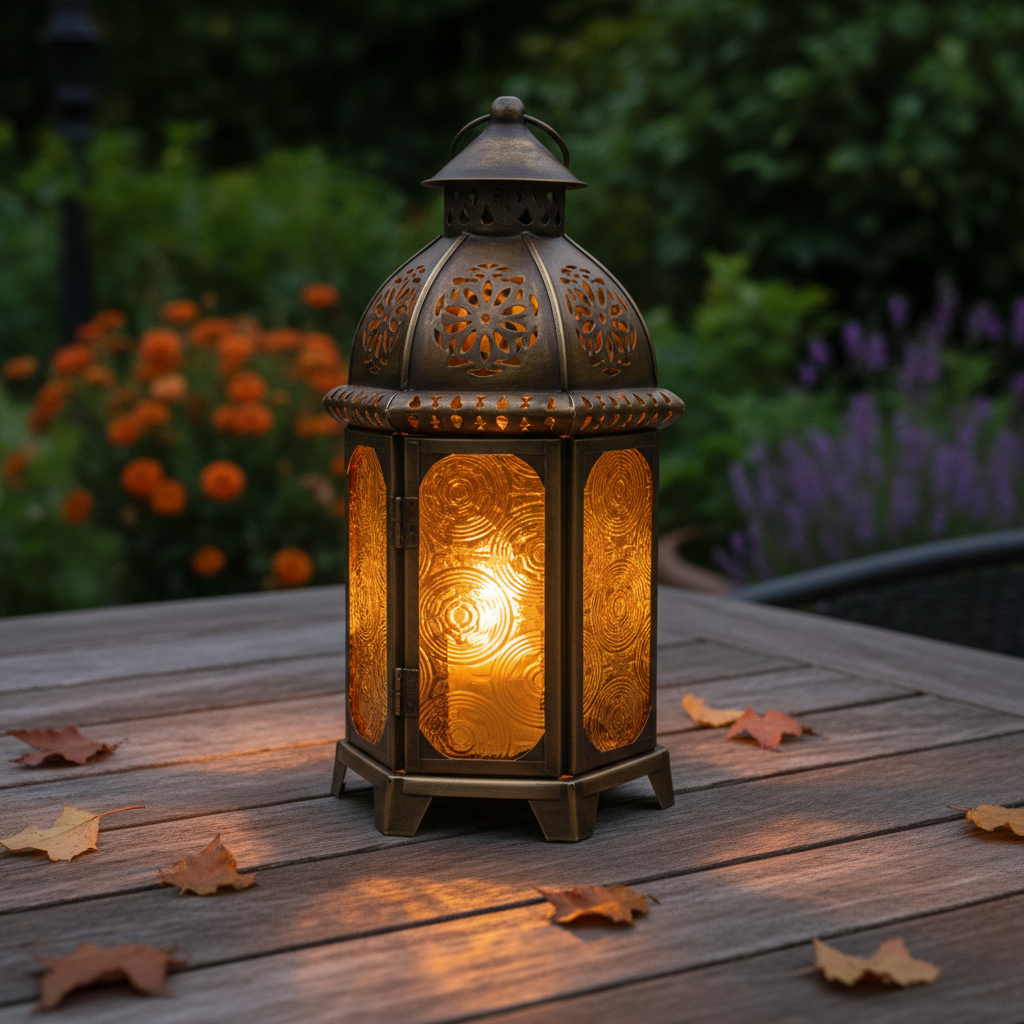
For outdoor dining, layering is even more important than indoors because you're working against a much larger, darker canvas. Consider combining overhead string lights or festoon lighting with low-voltage path lighting along the perimeter, candles or votives on tables, and perhaps some uplighting on surrounding trees or architectural elements. That combination creates a sense of warmth and intimacy that makes guests feel like they're in a little bubble of magic, cut off from the street outside.
- Festoon and string lights: Overhead warmth that defines the dining zone and creates instant ambiance
- Lanterns and candles: Low table-level light that flatters faces and adds romance
- Garden uplighting: Makes surrounding landscaping feel lush and intentional after dark
- Wall-mounted sconces: Functional and decorative, they anchor the perimeter and add architectural interest
One thing to keep in mind for outdoor spaces: weatherproofing. Every fixture you use outdoors needs an appropriate IP (Ingress Protection) rating. This isn't just a nice-to-have, it's a genuine safety issue and in many jurisdictions it's a code requirement. Work with a licensed electrician on outdoor installations and don't cut corners. A flooded junction box or a short circuit during a busy Friday night service is nobody's idea of a good time.
5. Seasonal Changes: Adapting Your Lighting Throughout the Year
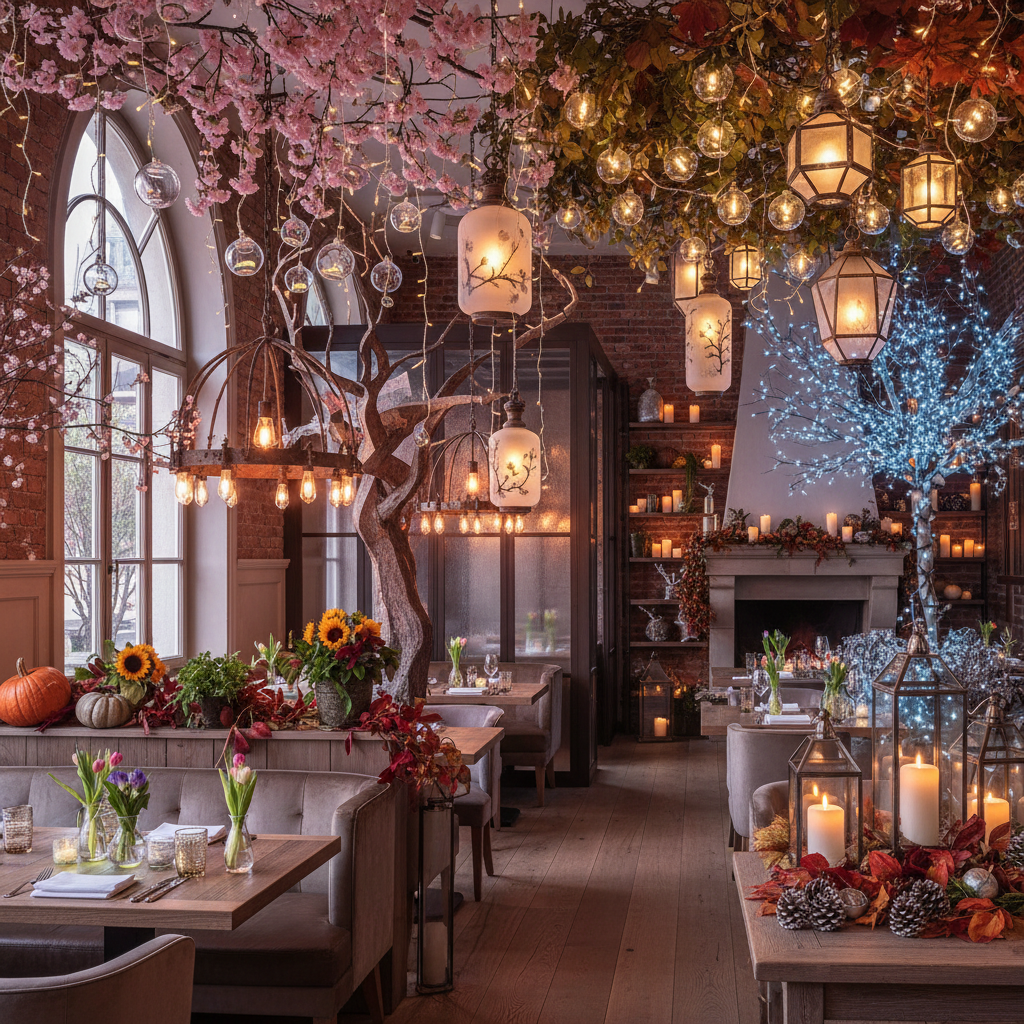
This is the one section that most restaurant owners completely skip over when thinking about lighting, and it's a genuine missed opportunity. Your restaurant doesn't exist in a vacuum. It exists in a time, a climate, and a cultural moment. The way natural light behaves in summer versus winter is completely different. The emotional associations guests bring with them change throughout the year. And your lighting scheme, if it's clever, should respond to all of that.
Think about it from a practical standpoint first. In summer, especially in restaurants with large windows or open frontages, natural daylight floods in well into the evening in many parts of the world. That changes everything about how your ambient lighting reads. The warm glow that feels intimate and cozy in January can look almost yellowish and underwhelming in July when competing with natural light. This is another reason why smart dimmer systems and programmable lighting controls are so valuable. You can program different scenes for different seasons and simply call them up as needed.
From a more atmospheric standpoint, there's real value in updating your decorative lighting elements seasonally. This doesn't have to mean a full redesign. Swapping out candle holders for different seasonal textures, adding lanterns with seasonal foliage during autumn, introducing softer candlelight-only centerpieces for winter holiday dining, these are small moves that create a sense of curation and intention. Guests who visit regularly will notice, and they'll appreciate it more than you might expect.
- Summer: Lean into natural light during the day, use programmable controls to increase warmth as evenings get brighter longer
- Autumn: Introduce deeper amber tones, bring in more candlelight, use uplighting on seasonal foliage or dried arrangements
- Winter: Go low and intimate. Maximize the cozy factor with dimmed overhead lighting and heavy reliance on candle and table-level warmth
- Spring: Lighten things up slightly, maximize daylight access, and consider bringing outdoor string lights back into service
And honestly, seasonal lighting changes tie beautifully into your broader marketing. A restaurant that shares updated atmospheric photography in each season looks alive, evolving, and worth revisiting. It gives people a reason to come back even if they've already been. In an industry where repeat business is everything, that's not a small thing. It's a real differentiator, and it starts with something as simple as thinking about your lighting not as a one-time decision, but as a living, breathing part of your brand.
Final Thoughts
Look, lighting in a restaurant isn't just about being able to see your food. It's about how the space makes people feel from the moment they walk in to the moment they reluctantly leave. It's one of the most powerful tools in your entire design arsenal, and the best part is that it's incredibly flexible. Unlike knocking down walls or refinishing floors, your lighting can evolve with your concept, your seasons, and your guests' expectations.
If you take one thing away from all of this, let it be the importance of layering. Ambient, accent, task, decorative: none of these systems work in isolation. They work together, each one doing a specific job, and the magic happens in how they combine. Get those layers right, invest in good dimmer controls, and think carefully about color temperature, and your restaurant will feel like a place people genuinely want to be. And in the restaurant business, that feeling is worth everything.
More in Commercial
Stay Inspired
Subscribe for new essays on architecture, design, and the spaces that shape us.