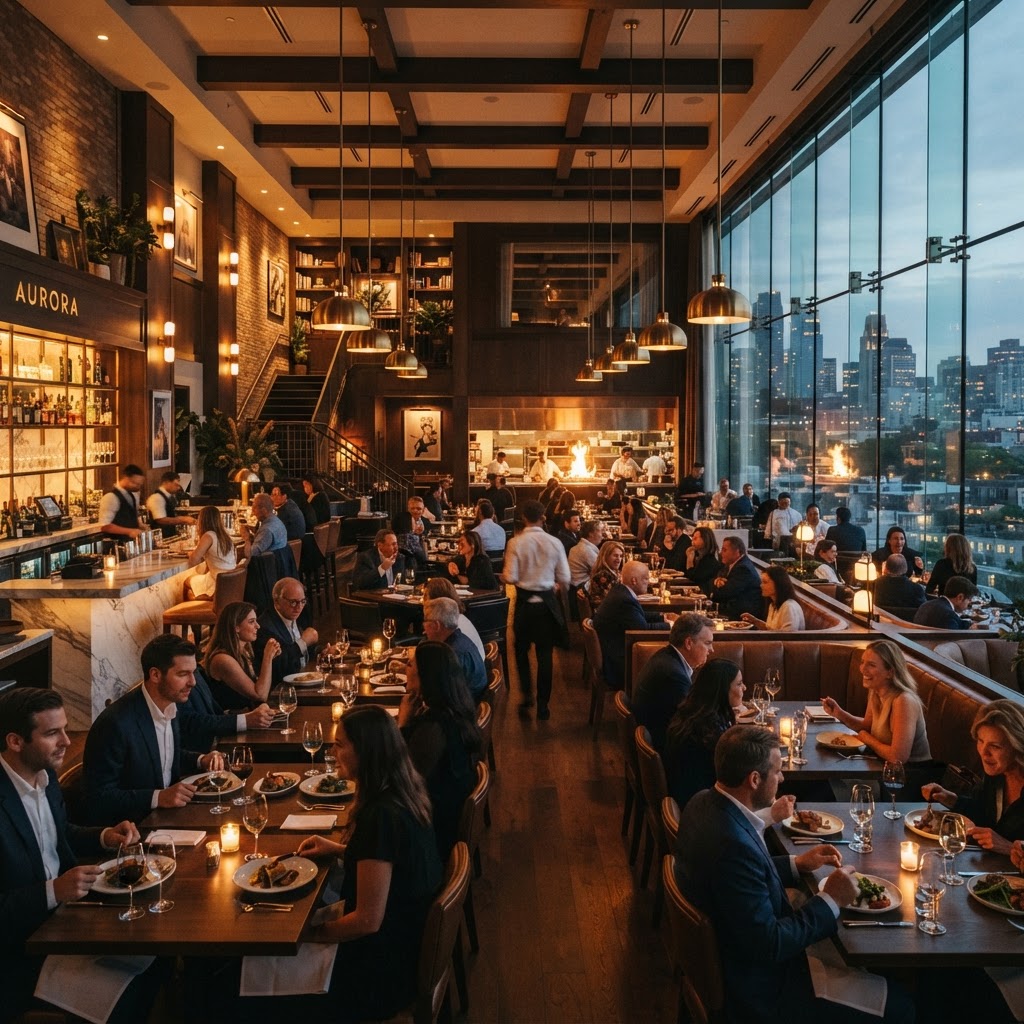
Set the Mood: 5 Restaurant Lighting Secrets That Keep Customers Coming Back
Lighting is the secret ingredient to any successful dining space. Discover how the right fixtures and warmth can transform your restaurant from a basic eatery into an unforgettable destination.
The Power of Layered Lighting
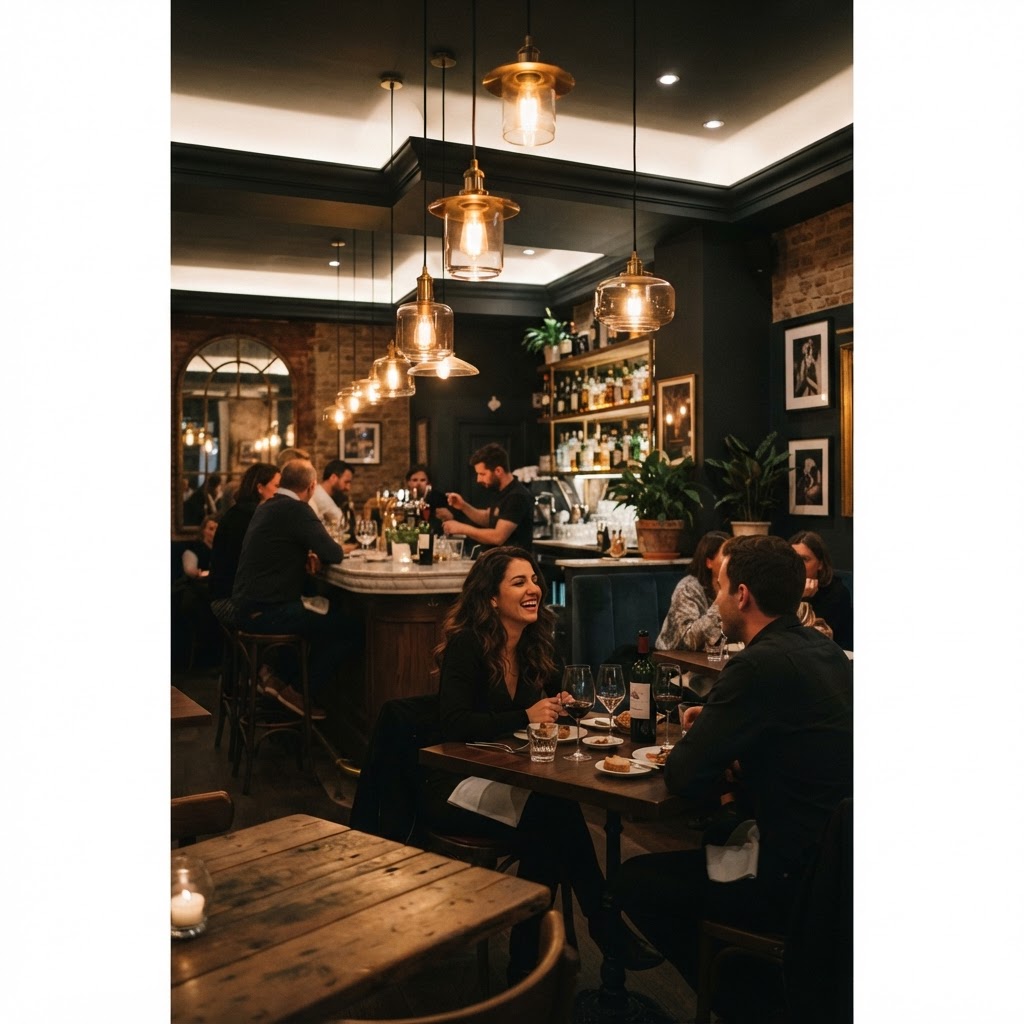
Honestly, if there's one thing I wish more restaurant owners understood before they opened their doors, it's this: a single light source is basically a death sentence for atmosphere. I've walked into so many beautiful restaurants with stunning furniture, incredible food, and then, bam, flat overhead lighting that makes the whole place feel like a cafeteria. It kills the vibe instantly.
Layered lighting means you're working with at least three distinct layers simultaneously. You've got your ambient lighting, which is the general fill light that lets people see where they're walking. Then there's task lighting, the stuff that actually helps guests read menus and servers do their jobs without squinting. And finally, accent lighting, which is where the magic really happens. It's the layer that creates drama, highlights textures, and makes a space feel intentional rather than just lit.
Here's the thing: the goal isn't to have a lot of lights, it's to have the right lights working together. Think of it like a great playlist. Each song on its own is fine, but when they're sequenced together properly, the whole experience becomes something you remember. A well-layered lighting scheme does exactly that for a restaurant. Guests can't always articulate why they love a space, but I promise you, lighting is almost always a huge part of it.
When I consult on restaurant projects, I always start by asking owners to walk through their space at night with everything turned off, then turn on one layer at a time. It's genuinely eye-opening. You start to understand what each layer contributes and where the gaps are. Most spaces need way more accent work than they're getting, and way less reliance on those harsh downlights doing all the heavy lifting.
- Ambient layer: Keep it soft and indirect wherever possible
- Task layer: Pendant lights over tables are your best friend here
- Accent layer: Use directional spots, shelf lighting, and candles to add depth
- Decorative layer: Exposed bulbs, neon signs, and sculptural fixtures that are part of the visual story
Real talk, most restaurant lighting failures come from skipping layers, not from bad individual fixtures. Build your lighting like you build a good dish. Multiple components, balanced together, each one serving a purpose.
Using Warm Temperatures for Intimacy
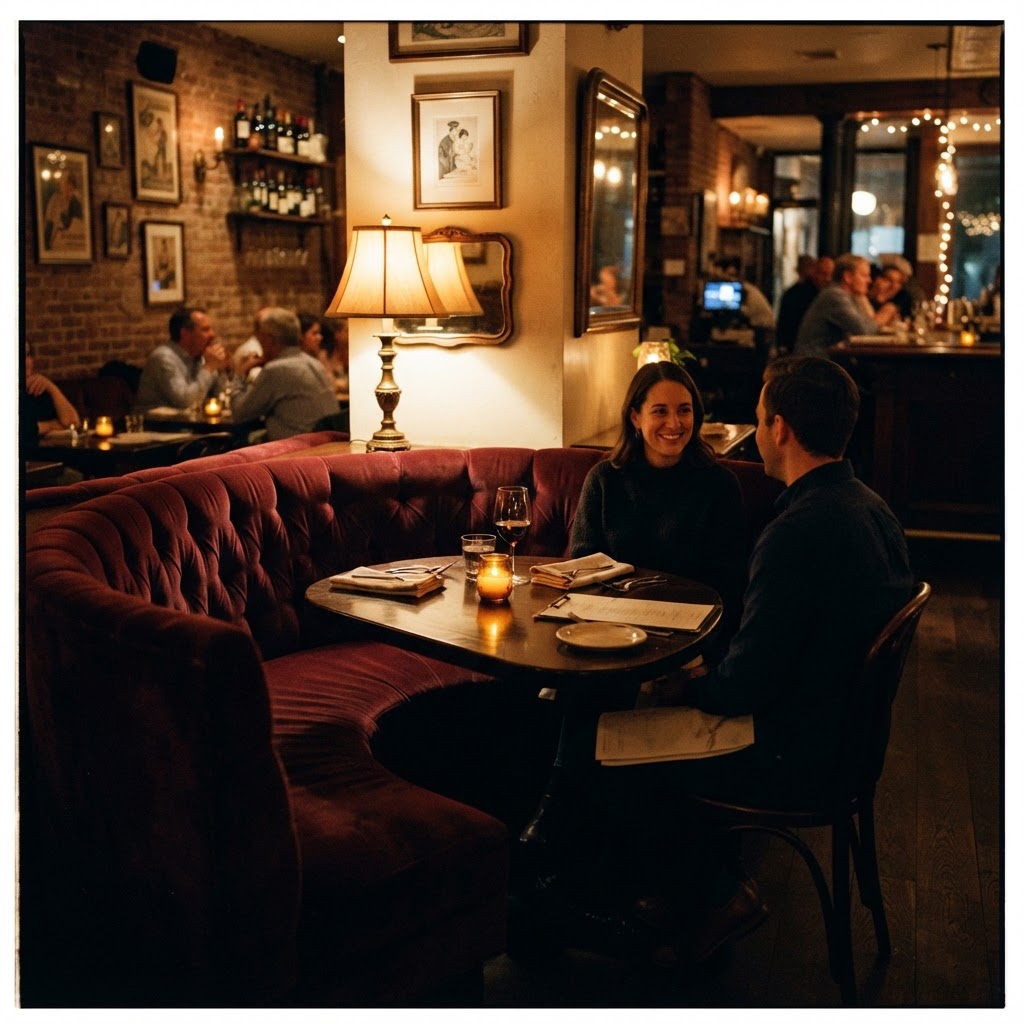
Color temperature is one of those things that sounds technical but is actually pretty simple once you get it. It's measured in Kelvins, and the lower the number, the warmer and more amber the light looks. Higher numbers push into cool, bluish white territory. For restaurants, and honestly for most hospitality spaces in general, warm is almost always the right call.
Look, there's a reason candlelit dinners have been romantic forever. Warm light is flattering to skin tones. It makes people look good, and when people feel like they look good, they relax. They order another glass of wine. They linger. They come back. I'm not being dramatic here, this is genuinely backed by research on dining behavior. Cooler, brighter lighting has been shown to increase table turnover because people feel more alert and less relaxed. That might work for a fast-casual lunch spot, but for a dinner-focused restaurant trying to build loyal regulars? Warm light all the way.
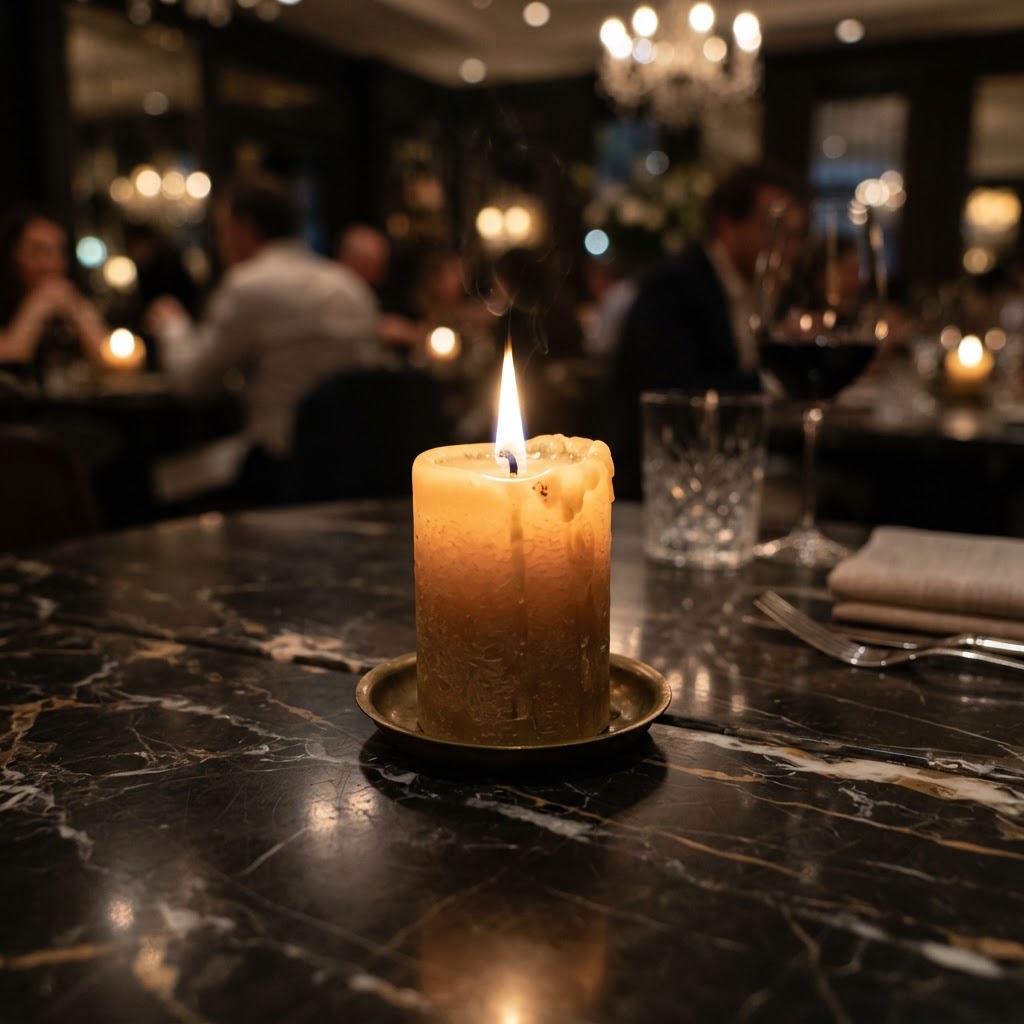
The sweet spot for most full-service restaurants is somewhere between 2700K and 3000K. That range gives you that golden, candlelike warmth without going so amber that food starts looking weird or guests struggle to see their plates. Trust me on this, food presentation matters enormously under warm light. A good steak under 2700K looks incredible. That same steak under 4000K office-grade lighting looks significantly less appetizing.
One thing I see a lot is restaurant owners mixing color temperatures without realizing it. They've got warm pendants over the tables, but then cool white LEDs under the bar or in the kitchen pass-through, and the result feels visually chaotic even if you can't put your finger on why. Consistency matters. Pick a temperature family and stick with it throughout the dining room. Small variations are fine, but wild swings between warm and cool will undermine the whole mood you're trying to build.
"The right color temperature doesn't just change how a space looks. It changes how people feel inside it, and that feeling is what drives them back through the door."
The Dramatic Impact of Statement Fixtures
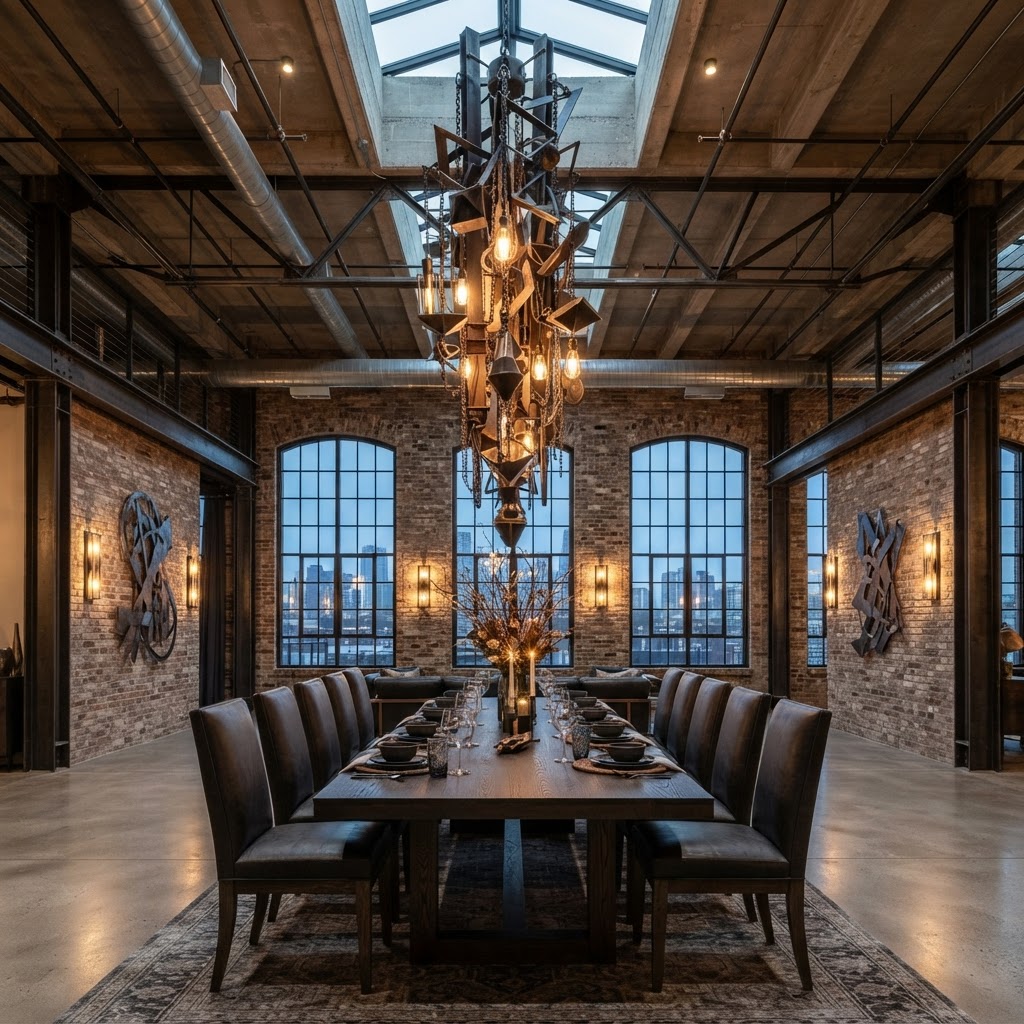
Here's where things get fun. Statement fixtures are the jewelry of a restaurant interior. They're the thing guests photograph, the detail that ends up on Instagram, the visual anchor that makes the whole room feel designed rather than decorated. And honestly, they do double duty because they're both functional lighting and art at the same time.
A great statement fixture doesn't have to be massive or expensive. I've seen a cluster of simple Edison bulbs on varying-length cords do more for a space than a chandelier that cost ten times as much. What matters is that the fixture feels intentional and that it belongs to the story the restaurant is telling. A reclaimed wood and iron industrial chandelier over a farm-to-table bistro makes total sense. That same fixture in a sleek modern sushi bar would be a disaster. The fixture has to be in conversation with everything else in the room.
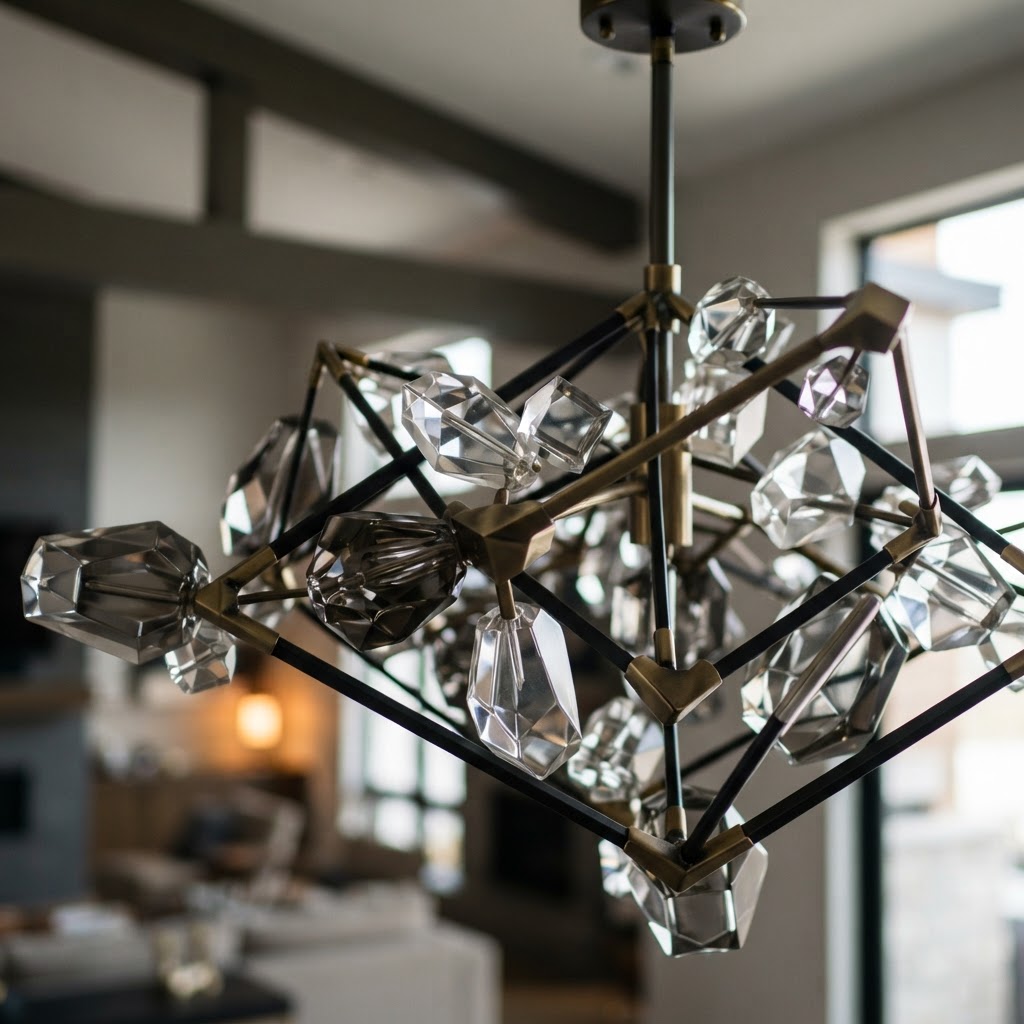
Placement is everything with statement fixtures. You want them at the visual heart of the space, or at transition points where the eye naturally travels. Above the bar is almost always a winner. So is a central installation in a double-height dining room. The fixture should draw the eye upward and make the space feel taller, more expansive, more special.
And look, don't sleep on custom work here. If your budget allows for even a modest custom piece, the payoff in terms of brand identity and guest perception is enormous. A fixture that exists nowhere else in the world tells guests that this restaurant takes its environment seriously. That perception of care and craft transfers directly to how they feel about the food and service, even before they've tasted anything.
- Scale your fixtures to ceiling height. Low ceilings need lower-hanging, more intimate fixtures
- Cluster multiple smaller fixtures instead of one large one for a more dynamic look
- Make sure the fixture's finish plays well with other metals in the space
- Always, always check the light output. Beautiful fixtures that don't actually light the space are a wasted opportunity
Accentuating Architecture with Wall Washers
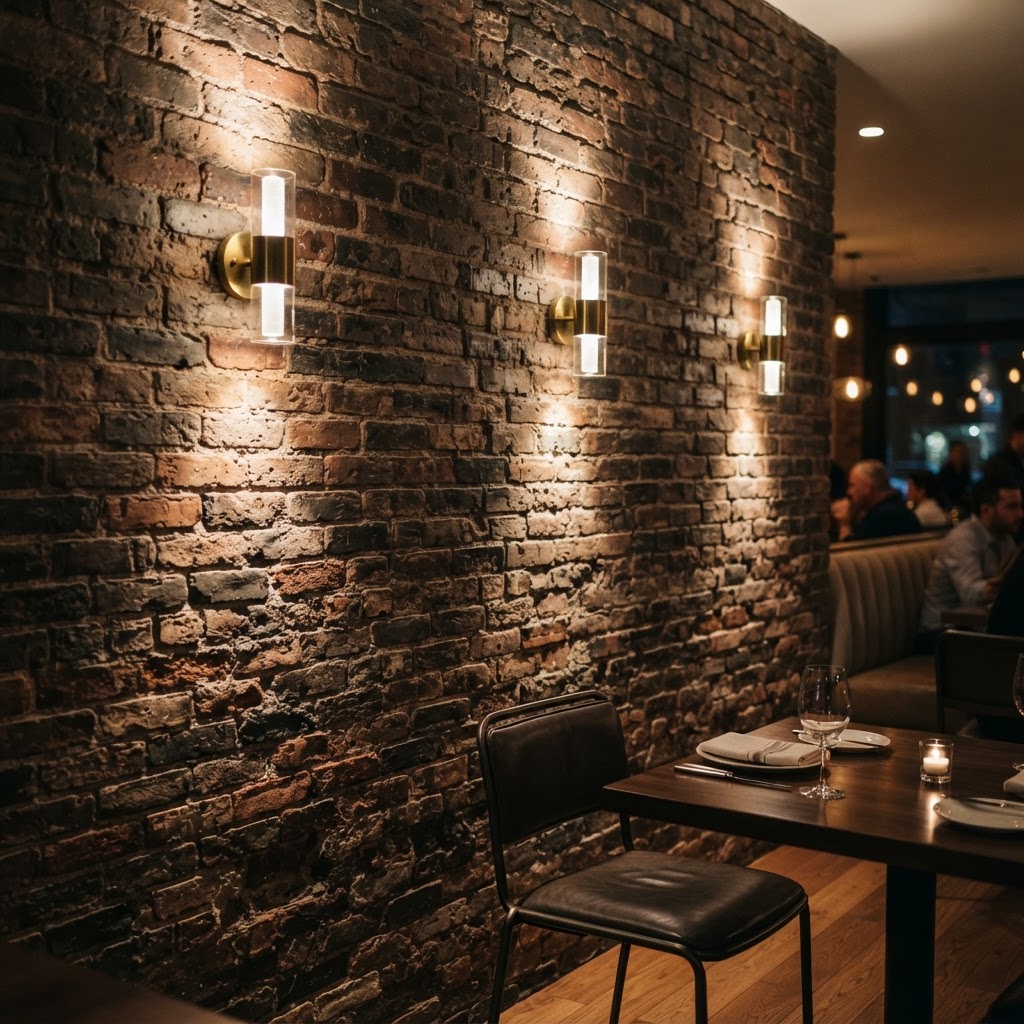
Wall washers are one of those tools that designers love and most restaurant owners have never heard of. And that's honestly such a shame because they're one of the most effective ways to make a space feel bigger, richer, and more visually interesting without touching the furniture or decor at all.
A wall washer is essentially a light that's positioned to graze or wash across a vertical surface, whether that's a brick wall, a plaster finish, a wood panel, or a curtain. The result is a soft gradient of light that reveals texture and depth in a way that overhead lighting never can. Brick walls that look flat and dull under general lighting suddenly show every ridge and shadow when you wash them from below or from the side. It's genuinely one of those before-and-after moments that makes clients gasp.

Beyond texture, wall washers serve a really practical purpose: they raise the perceived brightness of a room without actually increasing the harshness of the light. When walls are lit, the room feels brighter and more open, but because the light source is indirect and spread out, it doesn't have that aggressive, overhead glare quality. Guests feel comfortable and well-lit without feeling like they're under a spotlight.
For restaurants with exposed brick, stone, or any kind of textured surface, grazing lights positioned close to the wall and angled slightly toward it will do incredible things. For smoother walls, a traditional wall washer positioned further back creates a beautiful sweep of even light. Either way, you're adding a layer of visual warmth that makes the entire dining room feel more considered and more alive.
Smart Controls for Every Time of Day
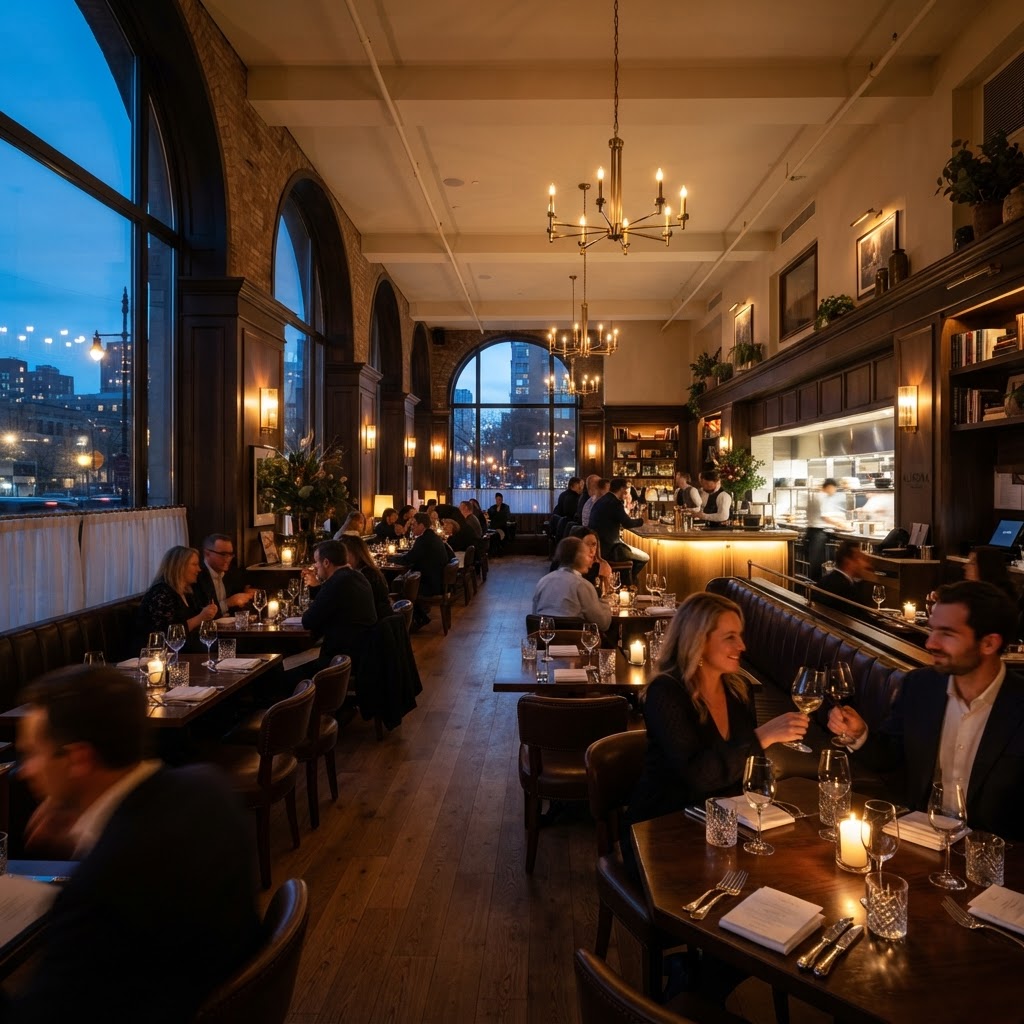
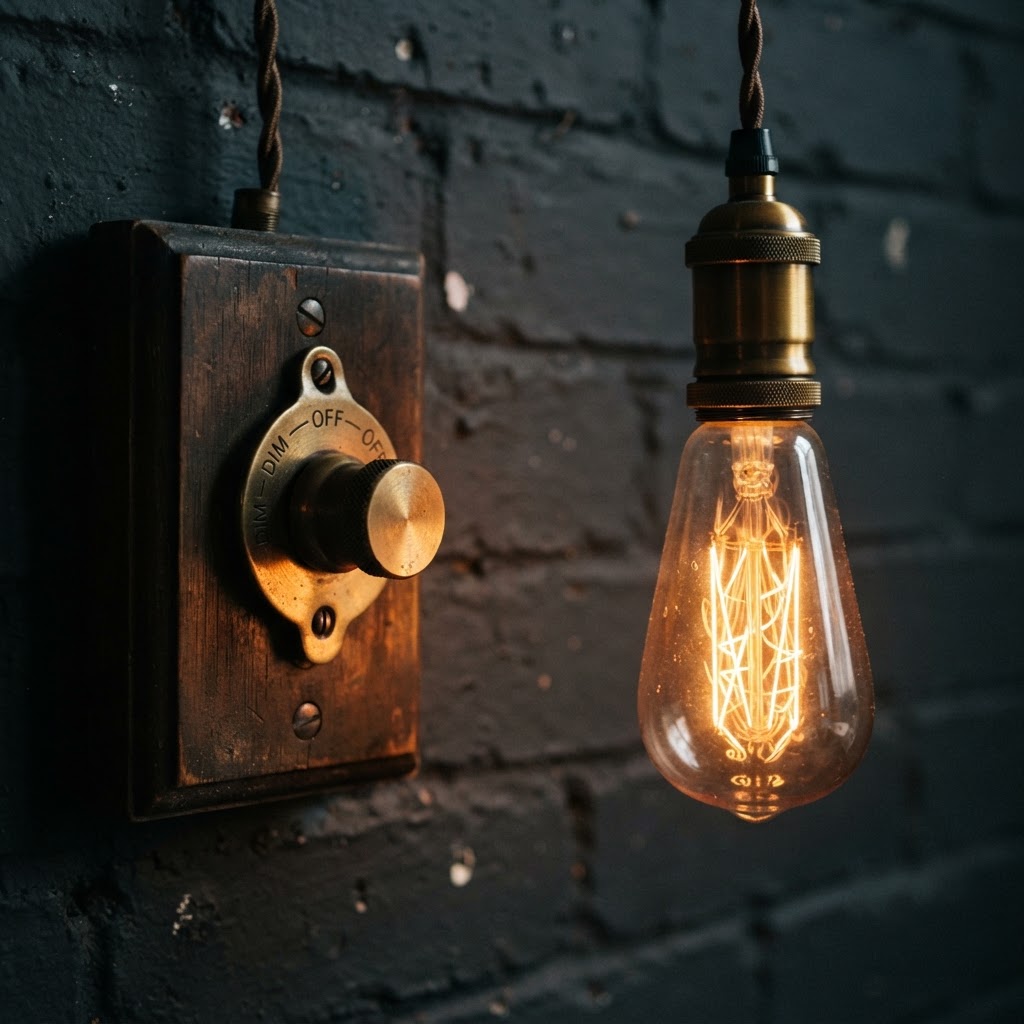
Okay, real talk: you can have the most beautifully designed lighting scheme in the world, and if you're running it all on a single switch, you're leaving so much on the table. Smart lighting controls are, without question, one of the highest-return investments a restaurant can make. They're not just a luxury anymore. They're a genuine operational and experiential tool.
Think about how different a restaurant needs to feel at noon on a Sunday versus 9pm on a Friday. Brunch service wants energy, visibility, a slightly livelier feel. Dinner service wants intimacy, warmth, a slower pace. These are completely different lighting scenarios, and trying to achieve both with fixed settings is basically impossible. Smart controls let you program scenes for every service period and transition between them automatically or with the touch of a button. Staff don't have to think about it. The room just shifts into the right mood at the right time.
Modern systems can also adjust individual zones independently, so the bar area can stay bright and energetic while the back dining room dims down for a more intimate feel. You can highlight a private dining room differently from the main floor. You can bring up the lights slightly during peak turnover hours to subtly encourage the pace without being obvious about it. It's a level of control that used to be reserved for high-end hotel restaurants, but the technology has become accessible enough that most mid-range restaurants can implement it without a massive budget.
- Program at least three to four distinct scenes: lunch, early dinner, late night, and private event
- Use gradual transitions between scenes so the shift feels natural rather than abrupt
- Integrate with your music system for a fully synchronized atmosphere change
- Make sure staff are properly trained on the system so the scenes actually get used
- Build in override options for special events and seasonal changes
And honestly, beyond the guest experience, smart controls save real money on energy costs. Being able to dim lights during slow periods and schedule automatic shutoffs adds up significantly over a year of operation. It's one of those rare design decisions that pays for itself while simultaneously making the space better. I genuinely don't understand why more restaurants aren't doing this already.
Final Thoughts
Lighting is one of those things that works best when nobody notices it. When it's done right, guests just feel good. They feel relaxed, they feel flattered, they feel like the restaurant cares about them. They can't explain exactly why, but they know they want to come back. And that feeling, that inexplicable sense of comfort and pleasure, is what separates the restaurants people visit once from the ones that become part of someone's regular rotation.
The five secrets we've covered here, layering your light sources, choosing warm color temperatures, investing in statement fixtures, using wall washers to bring surfaces to life, and installing smart controls for flexible scenes, aren't complicated in isolation. But together, they form a lighting philosophy that genuinely transforms a dining room into an experience. And in a competitive restaurant market, experience is everything.
If you take nothing else from this post, take this: don't treat lighting as an afterthought. It's not the last thing you figure out after the furniture arrives. It's one of the first conversations you should be having with your designer. Get it right, and everything else in the room looks better for it.
More in Commercial
Stay Inspired
Subscribe for new essays on architecture, design, and the spaces that shape us.