6 Secrets to Creating a Cafe Interior That Keeps Customers Coming Back
Designing the perfect coffee shop is about more than just good lighting and a nice espresso machine. We are breaking down the essential design elements that turn a standard cafe into a local hotspot.
Prioritize Flow and Functional Layout
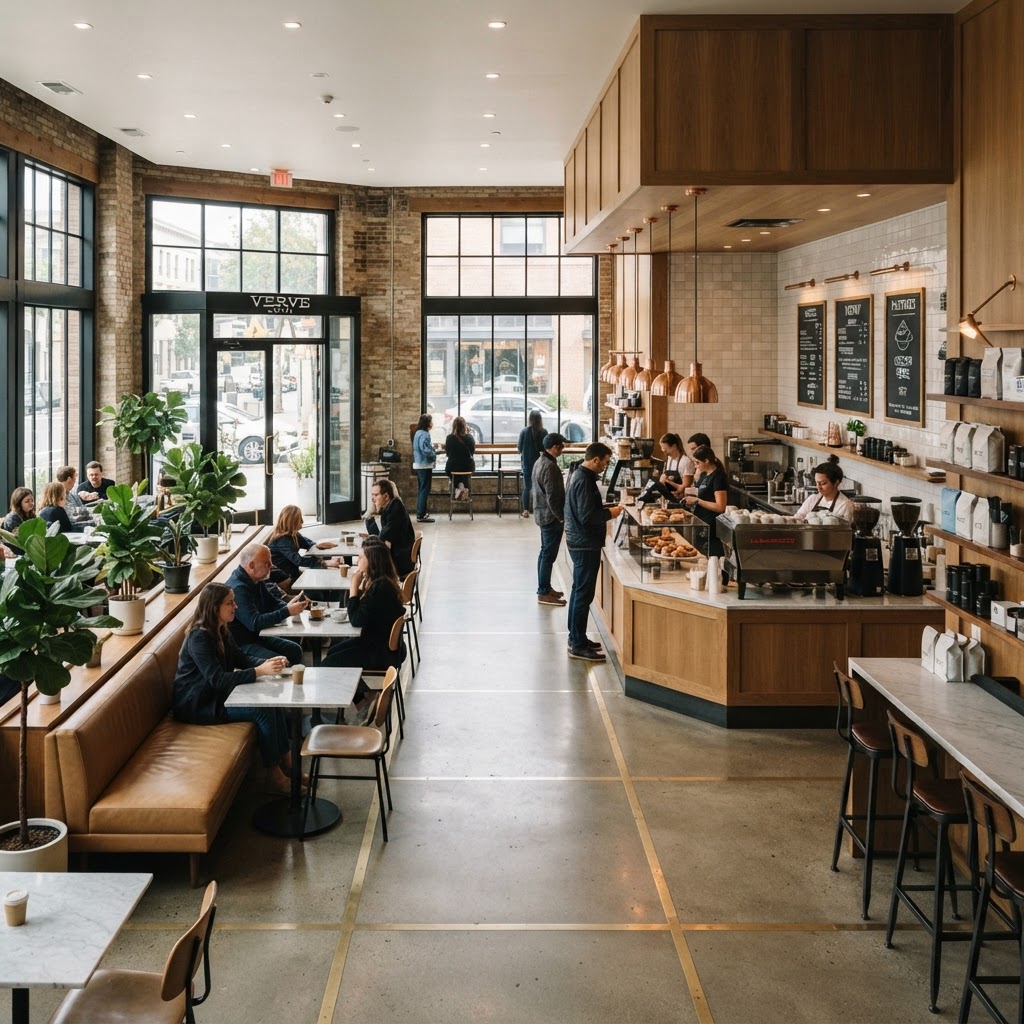
Honestly, this is where most cafe owners get it wrong from the very beginning. They fall in love with a certain aesthetic, start ordering furniture, and then realize six months into operation that their baristas are practically doing gymnastics behind the counter just to hand someone a flat white. Layout is not glamorous. It's not the thing you post on Instagram. But it is absolutely the foundation everything else sits on.
The golden rule is this: your layout should serve three groups simultaneously. Your customers need to move through the space without bumping into each other, find a seat without feeling lost, and reach the counter without confusion. Your staff need clear sightlines, logical workflow behind the bar, and enough room to actually do their jobs without constant collisions. And then there's the space itself, which needs to feel alive and inviting rather than cramped or weirdly empty.
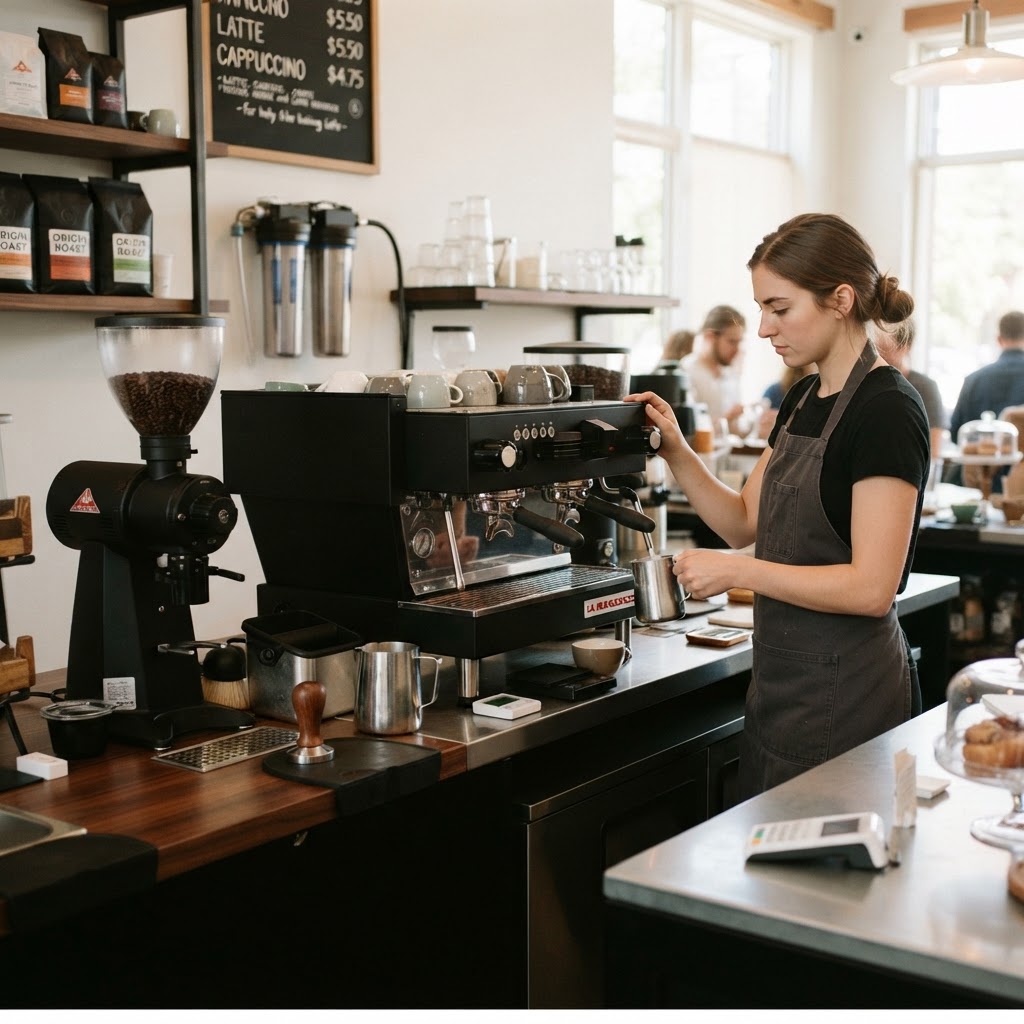
One thing I always recommend is walking through your space as if you're a first-time customer. Where does your eye go? Is the ordering point obvious? Are there weird dead zones where nobody wants to sit? Real talk, a queuing area that blocks the entrance or forces people to awkwardly squeeze past seated guests is a dealbreaker. People will leave before they even order. Think carefully about entry, queue, order, wait, and seat as a sequence of moves that should feel completely natural.
Here's the thing about furniture density too. More seats does not mean more revenue if those seats make people feel uncomfortable. A slightly less packed room where guests feel relaxed and stay longer will almost always outperform a cramped space that turns people off on arrival. Leave at least 90 centimeters of clearance on main pathways. And for the love of good coffee, make sure there's a logical spot for people to wait for takeaway orders that doesn't create chaos during the morning rush.
Mastering the Art of Ambient Lighting
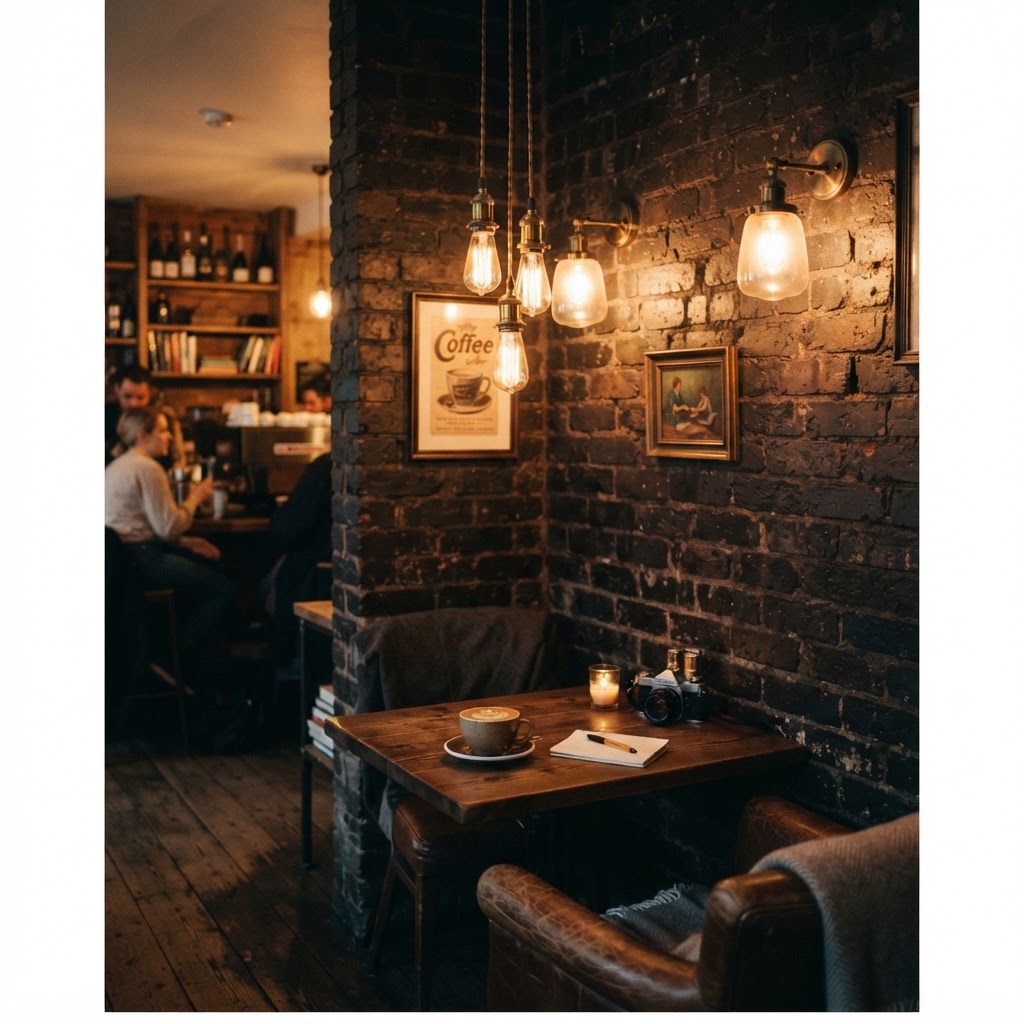
Lighting is one of those things that people feel without realizing they feel it. Walk into a cafe with harsh overhead fluorescents and something in your body just tenses up slightly. Walk into one with warm, layered lighting and you immediately exhale. That subconscious reaction is exactly what you're designing for, and it's why I think lighting deserves way more attention and budget than most cafe owners give it.
The key word here is layered. You want ambient light that fills the whole space at a comfortable level, task lighting over work surfaces and reading areas, and accent lighting that highlights specific features like a beautiful brick wall, a plant installation, or your menu board. When those three layers work together, the room feels rich and dimensional rather than flat. It also means you can adjust the mood throughout the day, which is genuinely important. A cafe should feel energetic and bright in the morning and more intimate and relaxed by the afternoon.
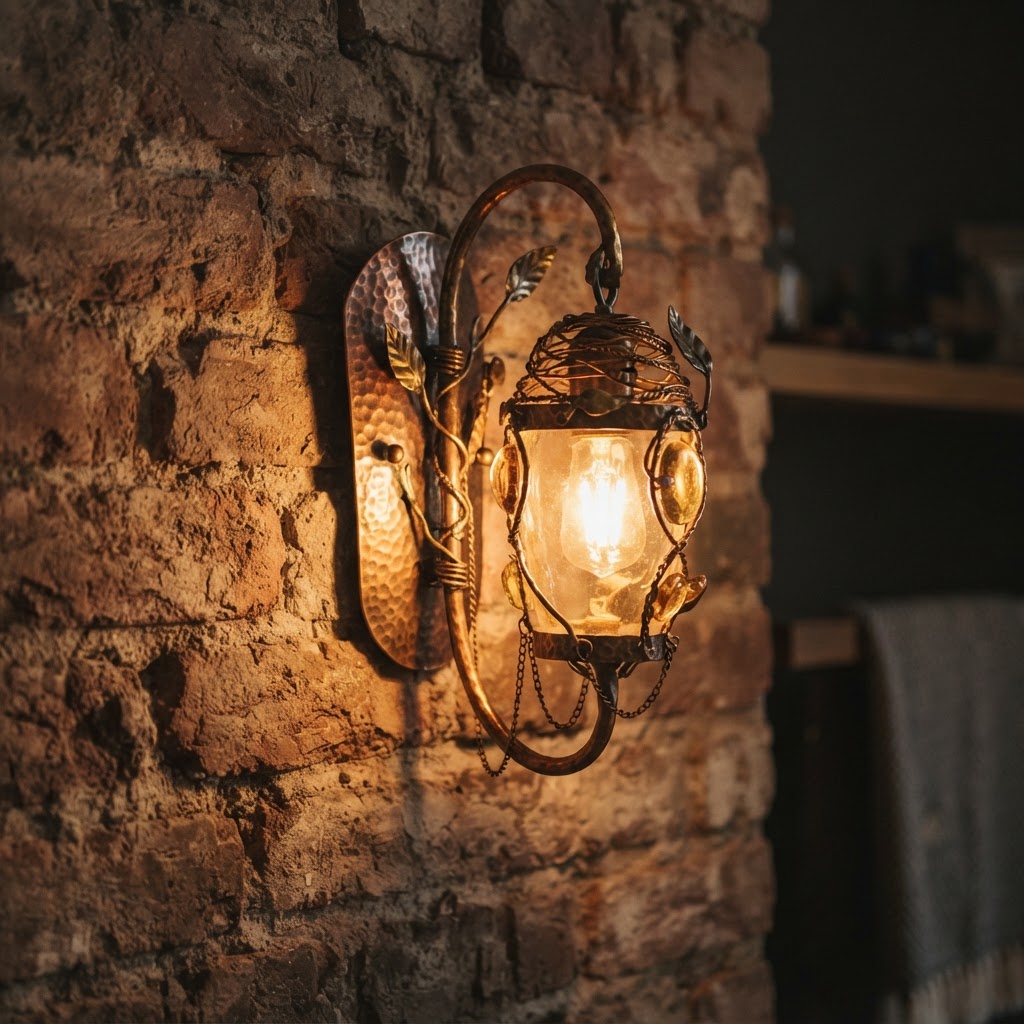
Trust me on this: always go warmer than you think you need to. Color temperatures in the 2700K to 3000K range are almost universally flattering and cozy for cafe environments. They make the food look better, they make people look better, and they just feel good. Anything cooler than that starts edging into office territory, which is not the vibe you're going for unless you're running a very specific kind of co-working cafe concept.
Also, dimmers. Please, install dimmers everywhere you possibly can. The ability to shift your lighting levels as the day progresses is one of the cheapest and most effective tools in your entire design arsenal. And don't underestimate natural light either. If your space has great windows, design around them. Let the sun do its thing during the day and supplement thoughtfully as it fades.
- Warm bulbs (2700K to 3000K) for an inviting, relaxed feel
- Pendant lights over tables to create intimacy and define zones
- Dimmable circuits so you can shift the mood throughout the day
- Accent lighting to highlight texture, artwork, or architectural features
The Power of Textures and Materials
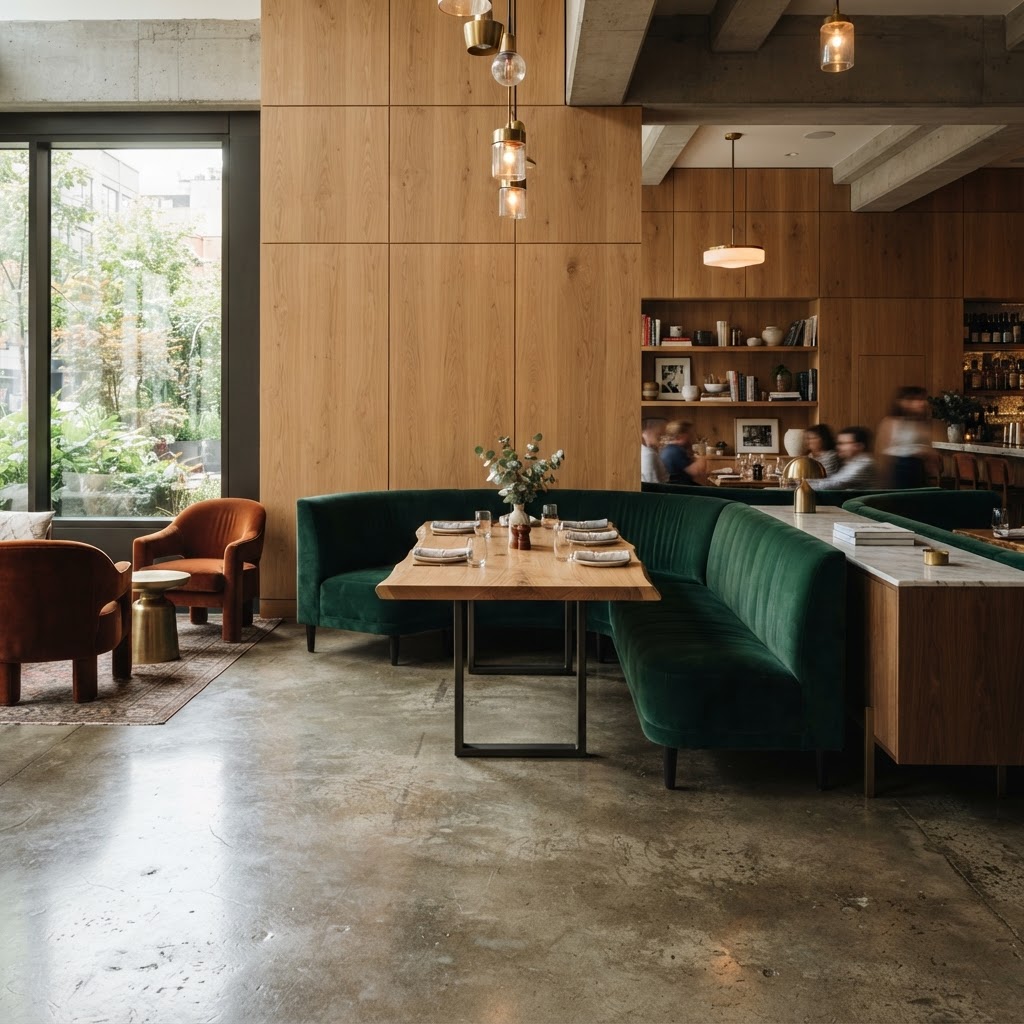
Here's the thing about materials: they're what makes a space feel real. Photographs don't fully capture it. You have to be in a room to feel the difference between a cold laminate surface and a worn timber tabletop that has a little weight and warmth to it. That tactile quality is a huge part of why people feel comfortable somewhere, and it's something that the most memorable cafes understand deeply.
The most effective cafe interiors I've ever walked into use what I'd call intentional contrast. Rough against smooth. Raw against refined. Hard against soft. Think exposed concrete walls paired with velvet cushions. Reclaimed timber floors under polished marble benchtops. Wrought iron details next to linen curtains. These combinations create visual interest and sensory richness without feeling chaotic, as long as there's a clear color palette or tonal range tying everything together.
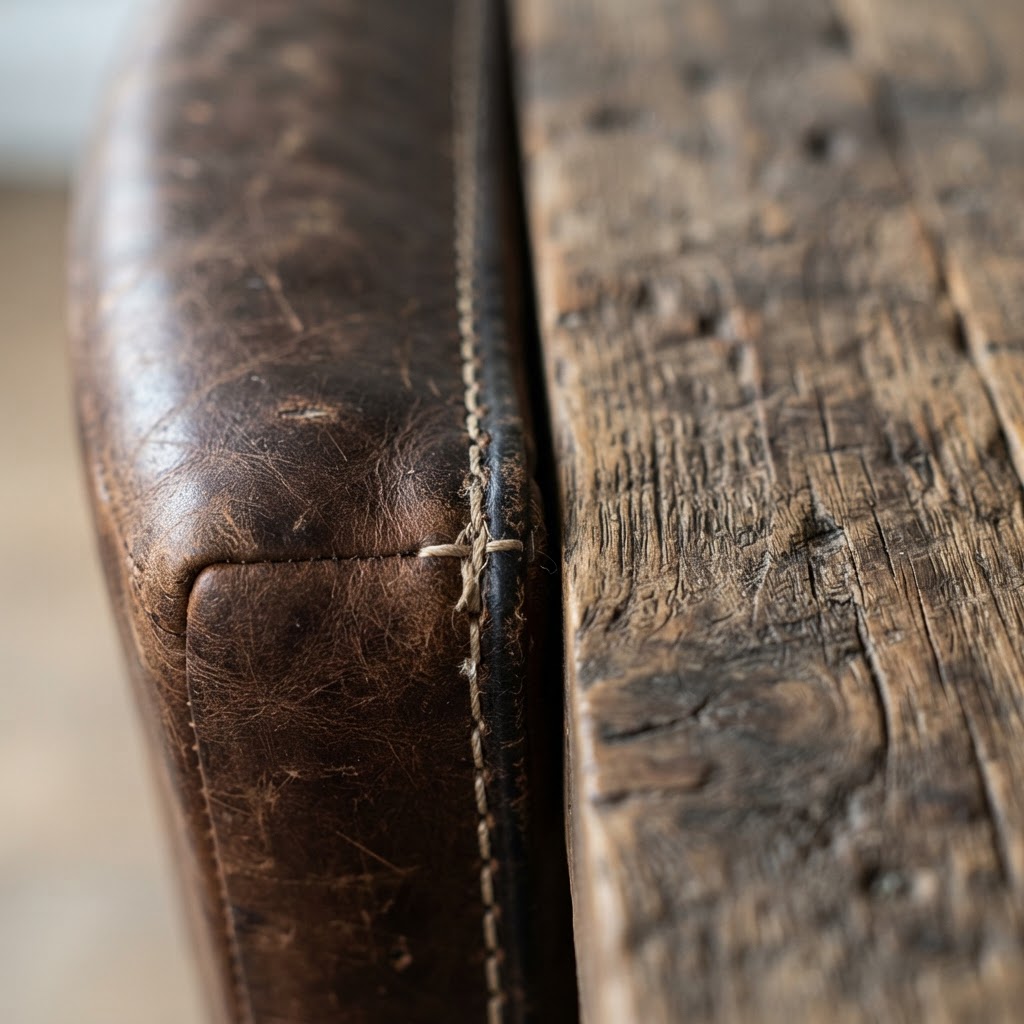
Honestly, one of my biggest tips here is to invest in your surfaces. Tabletops especially. People sit at tables for extended periods of time and their hands are literally on that surface. A cheap, plasticky tabletop communicates something about your brand whether you intend it to or not. Solid timber, stone, or even a well-made terrazzo can completely shift how premium and considered your space feels. It doesn't have to cost a fortune either. Reclaimed materials often cost less and look infinitely more interesting than their brand-new equivalents.
Acoustics are part of this conversation too, and they're something designers sometimes forget until it's too late. Hard surfaces everywhere means noise bounces around relentlessly and the cafe becomes exhausting to sit in, especially during busy periods. Soft materials like upholstered seating, curtains, rugs, and even acoustic panels disguised as art can dramatically improve the sound environment and make people want to stay rather than escape.
Creating Nooks for Every Type of Guest
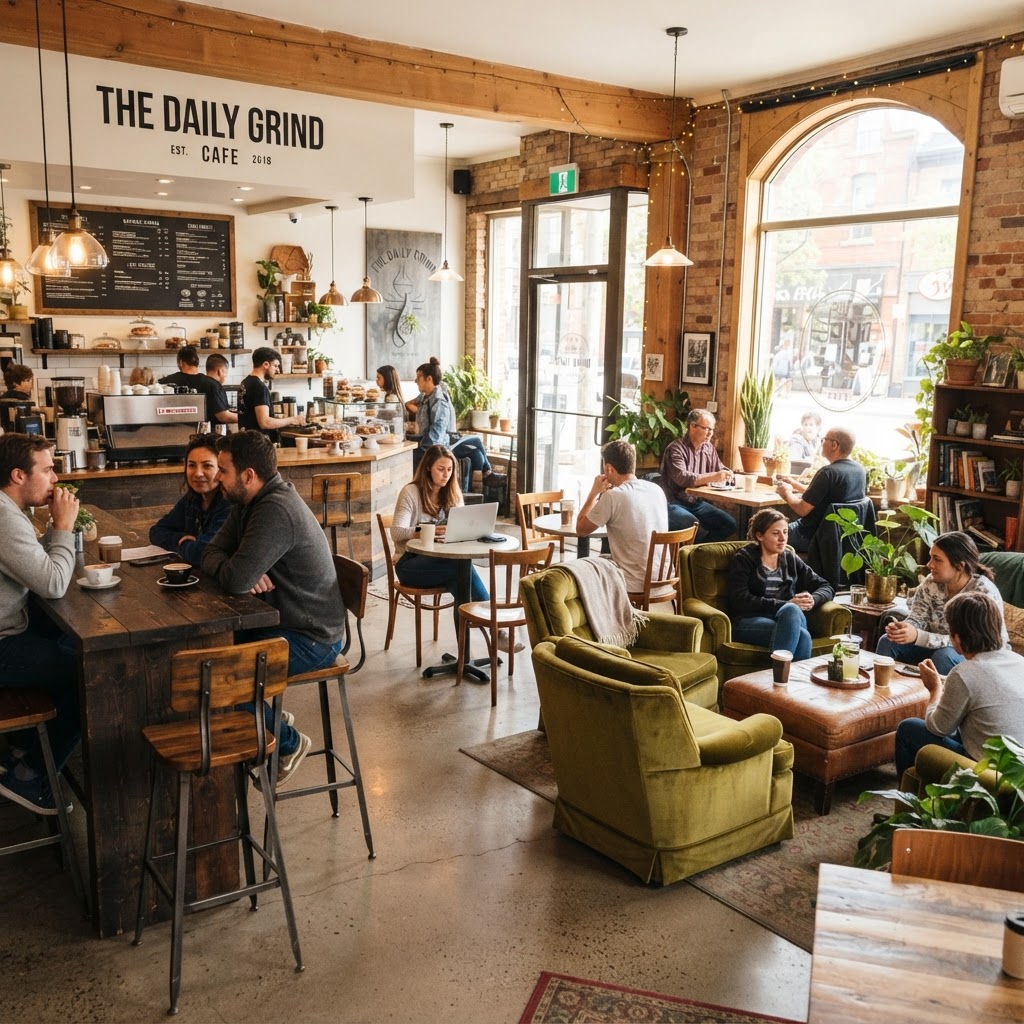
Not everyone who walks into your cafe is there for the same reason. Some people want to catch up with a friend over a long brunch. Some want a quiet corner to work for two hours with their laptop. Some are on a first date and need a bit of privacy. Some are just grabbing a quick solo coffee between meetings. The cafes that truly nail their interiors are the ones that somehow accommodate all of these people simultaneously, and the way you do that is through seating variety and spatial zoning.
Think about your seating in categories. You want communal or bar-style seating for solo guests who like the buzz of activity around them. You want two-seater tables tucked slightly apart from the main flow for couples or close conversations. You want larger group tables for four to six people. And ideally, you want at least one or two genuinely cozy, semi-enclosed spots, a booth with a high back, a window seat with a curtain, a corner with a low ceiling, anything that creates that feeling of being in your own little world.
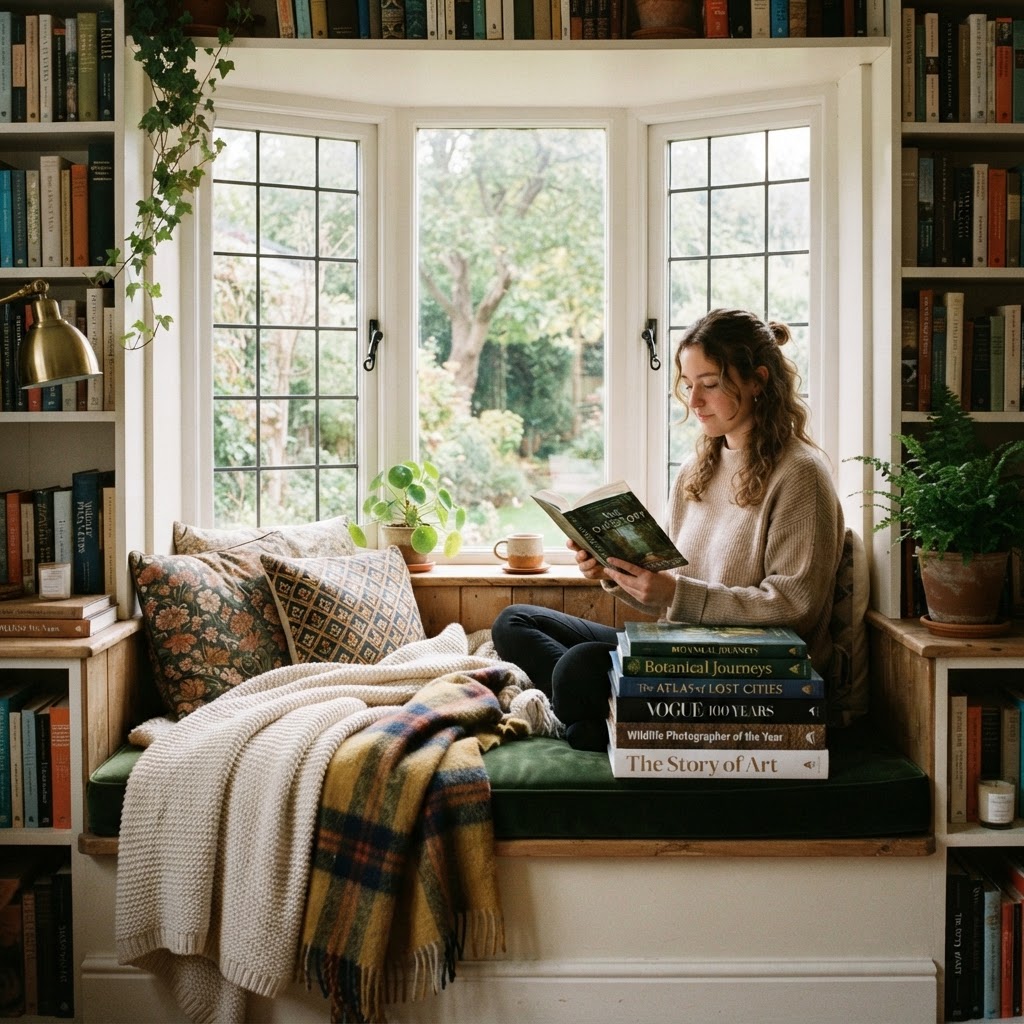
Look, this is also just smart business. When people can find their ideal spot consistently, they start to feel ownership over it. "Their table" becomes a real thing, and that emotional connection is incredibly powerful for building a loyal customer base. The cafe becomes part of their routine not just because of the coffee but because of how it makes them feel to be there.
"The best cafe interiors don't just look good in photos. They make every single person who walks in feel like there's a spot that was made for them."
Varying seat heights also adds to this sense of variety without requiring a massive footprint. Counter stools at a window bar, standard dining height tables in the main area, and maybe some lower lounge chairs in a reading corner can create three completely different experiential zones within the same room. It keeps the space visually interesting and gives guests genuine options.
Infusing Personality with Biophilic Design
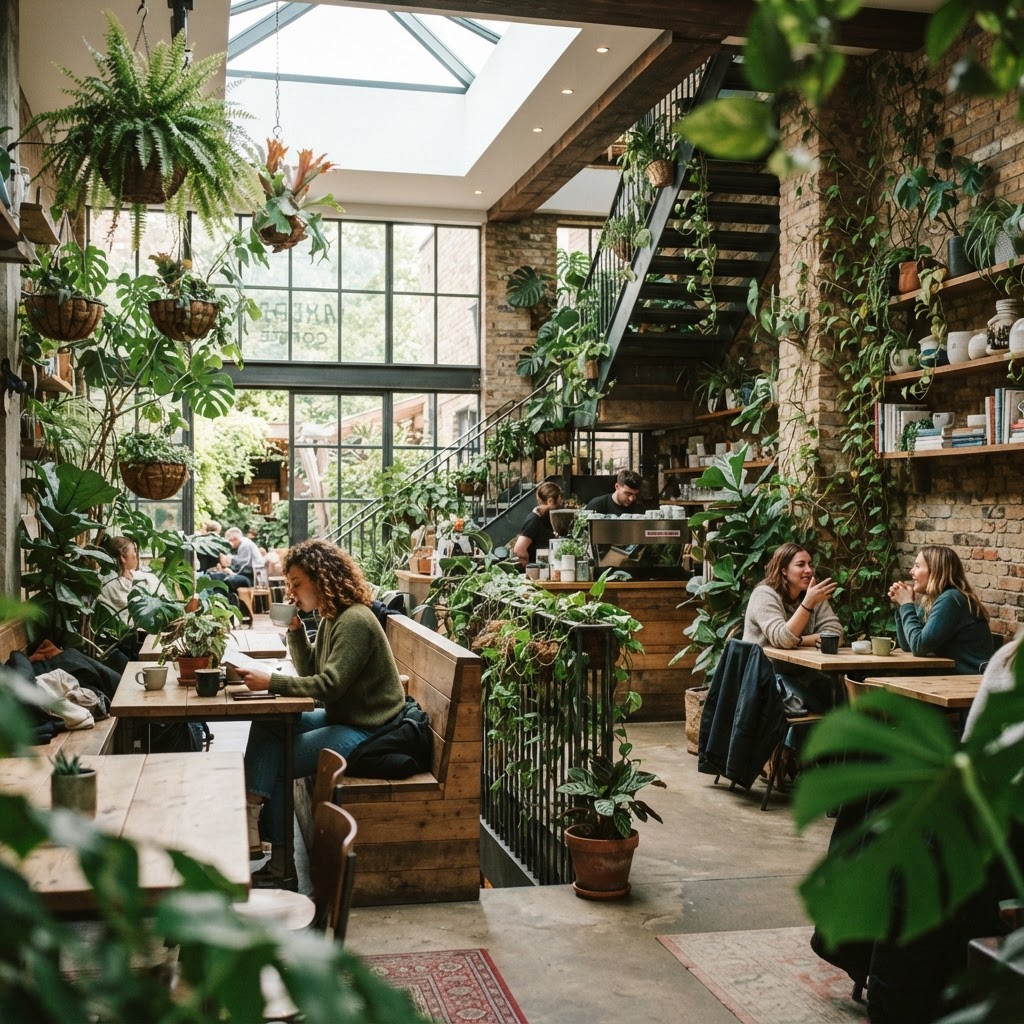
Biophilic design is one of those terms that gets thrown around a lot right now, but honestly, the core idea is incredibly simple. People feel better when they're around natural elements. Plants, natural light, water features, organic shapes, raw materials. We're wired for it on a pretty deep level, and when a space incorporates these things thoughtfully, it just feels noticeably more pleasant to be in.
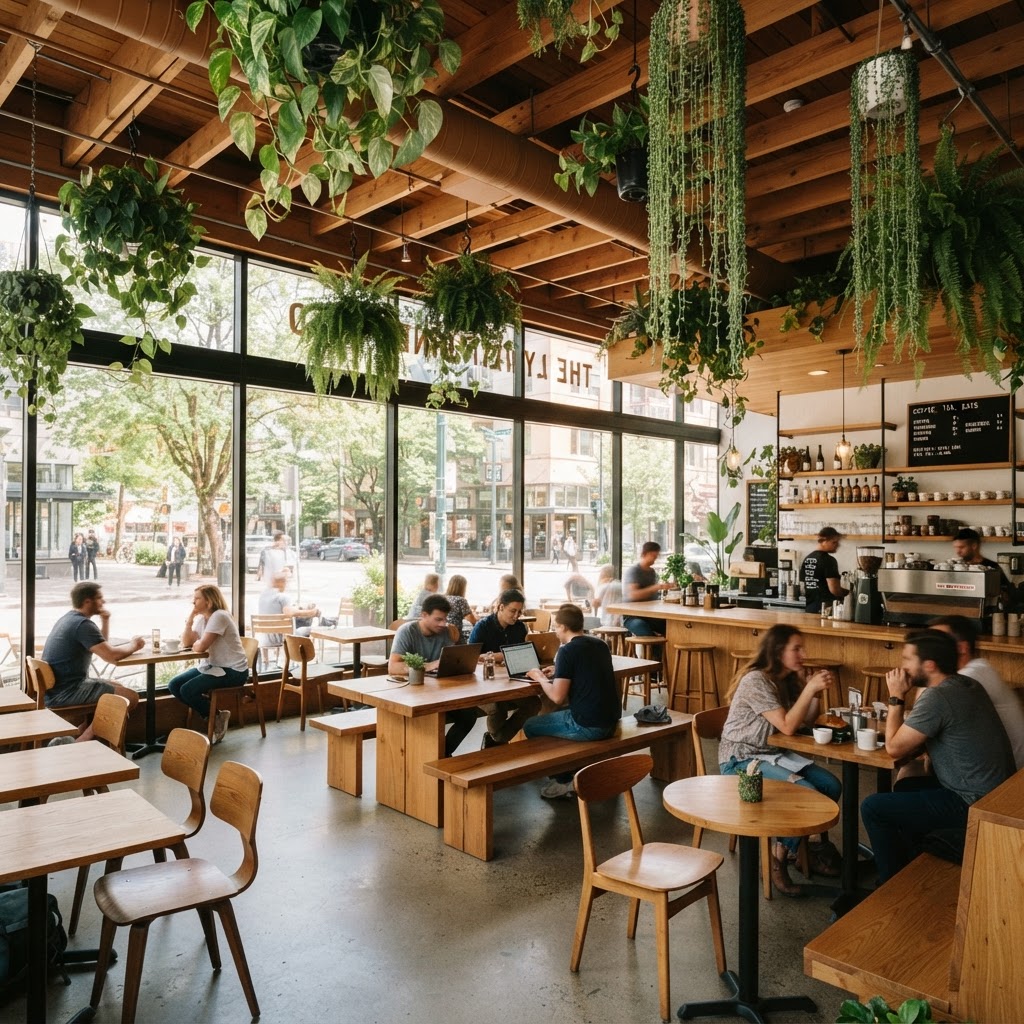
For cafes specifically, plants are the most accessible and impactful entry point. And I'm not talking about one sad little succulent on the counter. I mean genuinely committing to greenery as part of your design language. A living wall as a feature behind the seating area. Trailing plants hanging from the ceiling. Large statement plants like a fiddle-leaf fig or a monstera placed in key corners. Clusters of smaller plants on shelves and windowsills. When done well, plants bring color, texture, and life to a space in a way that no piece of furniture or wallpaper can replicate.
Here's a practical consideration though: think carefully about the maintenance reality before you commit to a jungle. High-maintenance plants in a busy cafe can quickly start looking sad and neglected, which has the opposite effect of what you want. Either hire someone to care for them properly, stick to hardier species that can handle the environment, or explore high-quality artificial options for areas with poor light. Real talk, a well-maintained interior with a few perfectly healthy plants beats an ambitious botanical disaster every single time.
Beyond plants, biophilic design also shows up in material choices like wood, stone, rattan, and linen, all of which we touched on earlier. Natural shapes in furniture design, curved edges instead of sharp corners, organic forms in light fixtures, even artwork featuring landscapes or botanical prints all contribute to this feeling. It doesn't have to be literal or heavy-handed. Sometimes it's just a timber ceiling, a woven pendant light, and a couple of well-placed plants, and that's honestly enough to shift the whole energy of a room.
- Living walls or statement plants as focal points that draw the eye
- Natural materials including wood, stone, rattan, and linen throughout the space
- Organic shapes in furniture and lighting rather than purely geometric forms
- Maximizing natural light as the most powerful biophilic element available
- Realistic maintenance planning so your greenery always looks intentional and cared for
Final Thoughts
If there's one thing I want you to take away from all of this, it's that great cafe design is not about picking a trend off Pinterest and copying it wholesale. It's about deeply understanding how people move, feel, and behave in a space, and then designing specifically to support those experiences. Flow, lighting, materials, seating variety, and natural elements aren't separate decisions. They all feed into each other and together they create that ineffable quality that makes people choose your cafe on a Tuesday morning when they could have gone anywhere else.
Honestly, the cafes I keep going back to are never the flashiest ones. They're the ones where I always find a seat that feels right, where the light hits just so in the afternoon, where the textures and sounds and smells all add up to something that just feels good. That's the goal. Not perfection, but genuine warmth and thoughtfulness. Get those foundations right and the rest will follow.
More in Commercial
Stay Inspired
Subscribe for new essays on architecture, design, and the spaces that shape us.