5 Unique Cafe Designs That Will Inspire Your Next Visit
Looking for a caffeine kick and a dose of design inspiration? These five cafes stand out not just for their coffee but for their exceptional and innovative interiors. Join us as we explore the unique concepts that are transforming the cafe experience.
1. The Eco-Friendly Cafe: Reimagining Sustainability
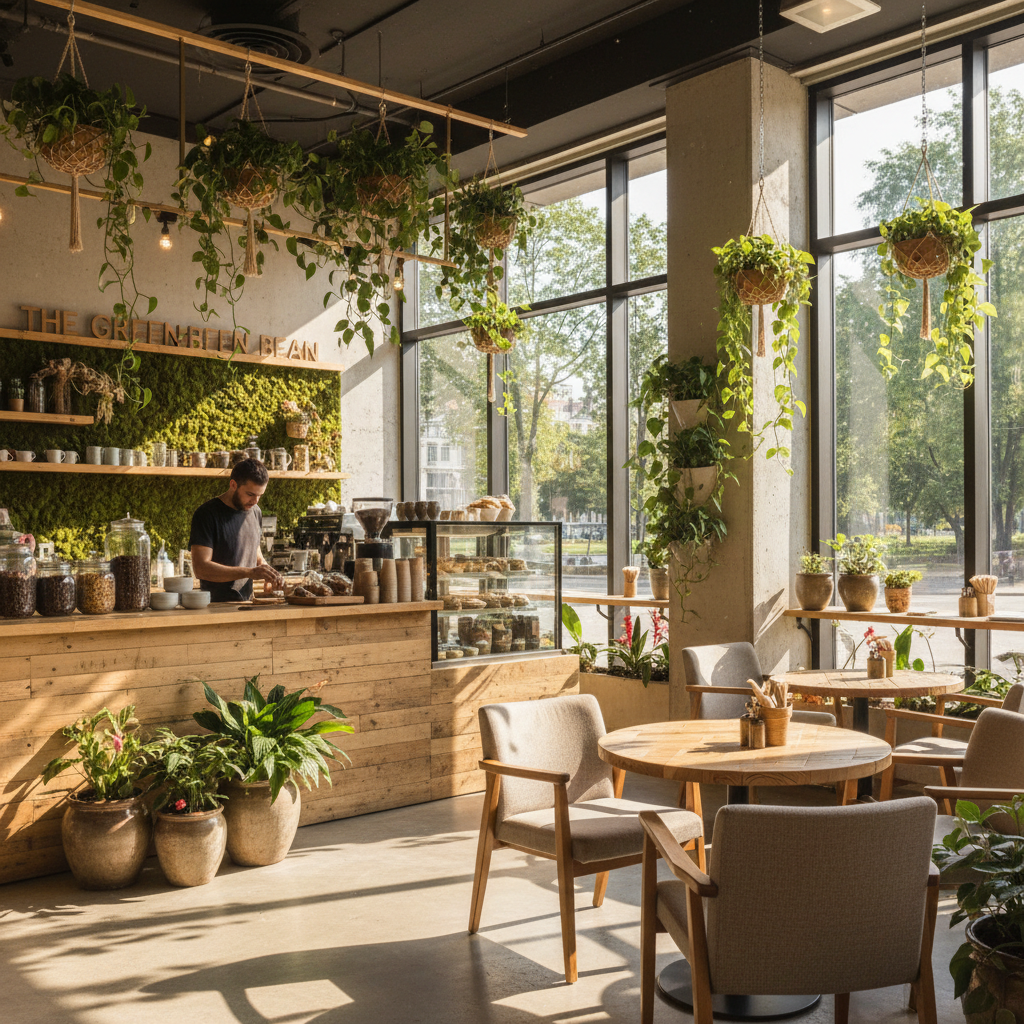
Honestly, when I first walked into a cafe designed around true sustainability principles, I didn't expect to be moved by it. I thought it would feel like a health food store with bad lighting and a compost bin near the door. I was completely wrong. Eco-friendly cafe design has grown into something genuinely beautiful, and the best ones are proving that doing right by the planet doesn't mean sacrificing style.
Here's the thing about sustainable cafe design: it works on multiple levels at once. You've got materials sourced responsibly, like reclaimed wood tabletops, bamboo shelving, and furniture made from recycled plastics that you genuinely cannot tell apart from the premium stuff. Then you layer in living walls, herb gardens growing right behind the counter, and natural light pouring through massive windows. The result is a space that feels alive. Not in a gimmicky way. In a way that makes you want to sit down, breathe, and stay for two hours longer than you planned.
Some of the most forward-thinking eco cafes are also rethinking their layouts entirely. Instead of a traditional counter-and-seating arrangement, they're designing around natural airflow so the building barely needs mechanical ventilation. Skylights do double duty, brightening the space while powering solar panels above. Even the color palettes lean into the natural world, earthy greens, warm terracottas, and soft creams that feel grounding rather than stark. Trust me on this: once you've sat in a space that feels genuinely connected to the environment outside, a regular cafe can feel a little flat by comparison.
What I love most is how these designs invite conversation. There's something about a space built with intention and care that softens people. I've watched strangers share tables and strike up full conversations in eco cafes in a way that rarely happens in the sleek, minimalist spots. The design itself communicates values, and customers who share those values feel an instant sense of belonging. That's not something you can fake with a recycling bin by the door.
- Reclaimed and recycled materials give surfaces a warmth and texture that new materials rarely match
- Living plant walls improve air quality while creating a genuinely stunning focal point
- Natural lighting strategies reduce energy consumption and make the space feel open and honest
- Local artisan furniture supports communities and adds one-of-a-kind character
- Zero-waste design thinking extends to everything from packaging stations to compostable cup dispensers
Real talk: this isn't just a trend. Sustainable cafe design is becoming the standard that other commercial spaces are measured against. If you're an architect or interior designer working on a cafe project right now, the eco-friendly direction isn't the "alternative" option anymore. It's the one clients are increasingly choosing first, and for very good reason.
2. Industrial Chic: Where Urban Meets Cozy
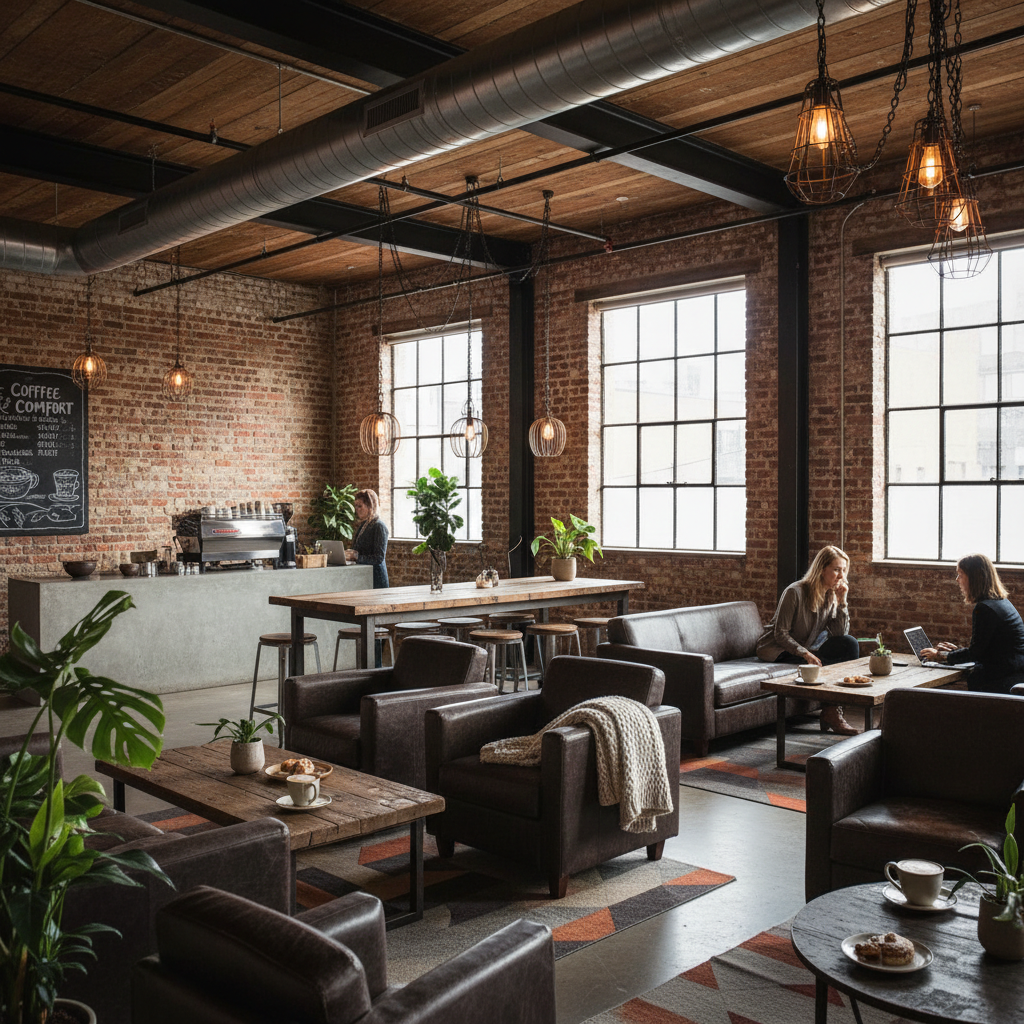
Look, I know what you're thinking. Industrial design? Exposed pipes, concrete floors, bare Edison bulbs? That ship has sailed, right? And honestly, you'd be partially right to feel a little fatigued by it. But here's the thing: when industrial chic is done well, and I mean really well, it creates something genuinely magnetic that no other design style quite replicates.
The cafes that are nailing this aesthetic right now aren't just slapping some raw brick on a wall and calling it a day. They're working with the tension between hard and soft, rough and refined. Think exposed ductwork overhead paired with plush leather banquettes below. Polished concrete floors softened by handwoven rugs in warm rust and ochre tones. Steel-framed windows with deep sills that become the most coveted seats in the house because they're lined with cushions and you can watch the street below like it's a movie.
The lighting is where industrial chic cafes often win or lose the room. A cold, harshly lit space with exposed bulbs feels like a mechanic's garage. But warm, layered lighting using pendant clusters, under-counter strips, and candlelight on the tables? That's the sweet spot. It takes a space that could feel harsh and makes it feel intimate. Cozy, even. The contrast is the whole point, and the best designers understand that better than anyone.
Color plays a bigger role here than people give it credit for. Industrial spaces lean heavily on neutrals, but the smart ones introduce warmth through deep navy walls, forest green cabinetry, or mustard yellow accents. These choices anchor the rawness of the materials without trying to cover it up. The wood bar top gets to be proud of its grain. The brick wall doesn't need a coat of white paint. Everything earns its place in the room.
"The best industrial cafe designs don't feel like a set. They feel like a building that has been loved for decades, even if they opened last year."
This style also photographs incredibly well, which matters more than designers sometimes admit in polite company. A well-executed industrial cafe draws people in through social media before they've ever stepped foot inside. That kind of organic marketing is worth a lot, and it starts entirely with intentional, brave design choices.
3. Tech-Integrated Spaces: The Future of Coffee Shops
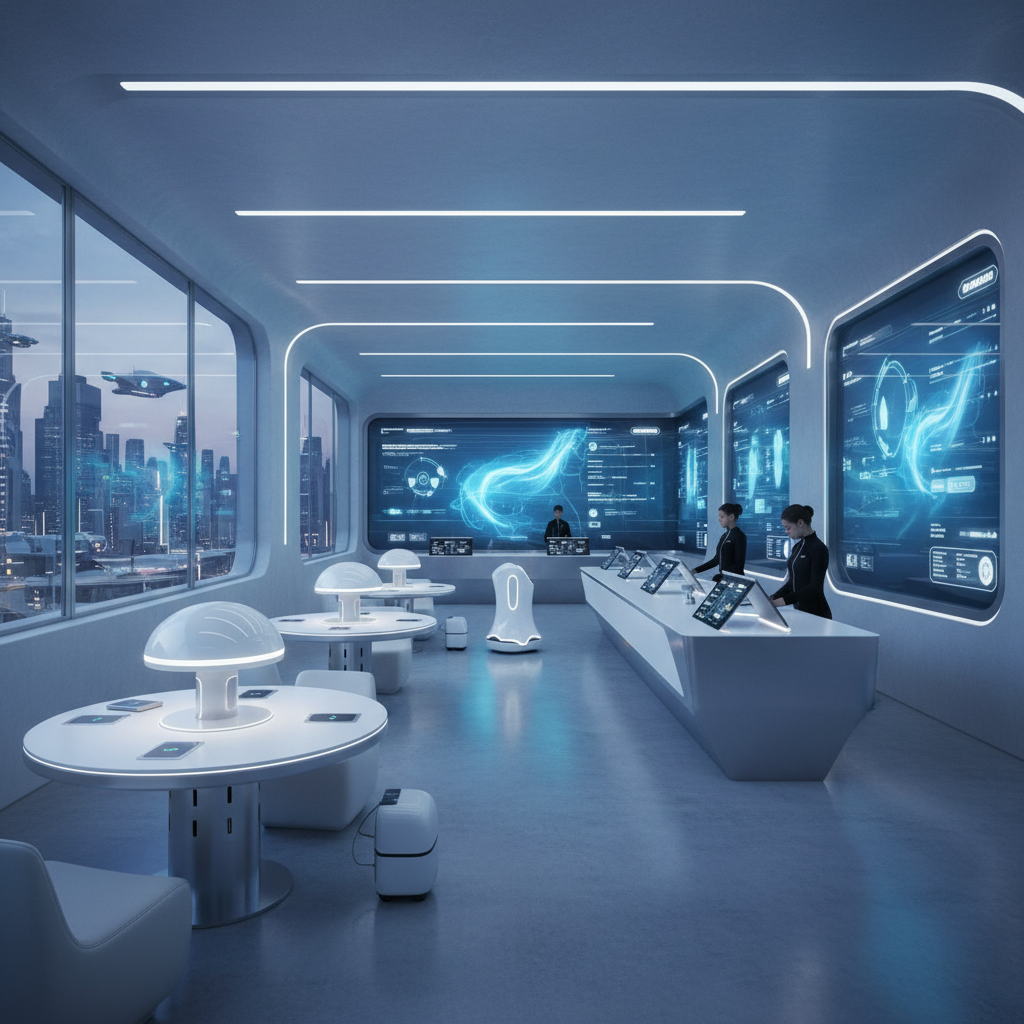
Okay, so this one gets people fired up in both directions. Some folks hear "tech-integrated cafe" and immediately picture some cold, sterile pod situation where you order from a screen and a robot hands you a latte without any human interaction. And look, I get that fear. But the cafes that are genuinely doing this well are not that. Not even close.
Here's what good tech integration actually looks like in a cafe setting. It's wireless charging pads built seamlessly into tabletops so they're flush with the surface and invisible until you need them. It's ambient sound systems that read the room and adjust the music tempo and volume throughout the day, louder and more energetic during the morning rush, softer and slower in the afternoon lull. It's smart lighting that shifts from cool and focused during the day to warm and atmospheric in the evening without anyone touching a switch.
Some forward-looking cafes are integrating digital art installations that respond to foot traffic or even to the noise level in the room. Imagine a wall-sized display that shifts through calming animations when the space is quiet but becomes more dynamic and colorful as the energy in the room builds. That kind of interactive environment design is genuinely thrilling from a creative standpoint. It means the cafe is never quite the same experience twice, which keeps people coming back just to see what the space feels like today.
The seating and furniture in these spaces is designed with work in mind, because the reality is that cafes are offices for a huge portion of their customers now. Ergonomic seating, adjustable-height tables, and smart power management are all part of the design brief. But here's the critical balance: the tech serves the human experience rather than replacing it. The barista is still very much the heart of the space. The conversation, the craft, the handwritten name on the cup, none of that goes away. The technology just removes friction everywhere else.
- Integrated wireless charging keeps devices powered without cluttering the table with cables
- Smart lighting systems create the right atmosphere for every time of day automatically
- Digital menus and ordering systems reduce wait times while freeing staff to focus on craft
- Acoustic technology manages sound levels so the space stays comfortable even when crowded
Honestly, the cafes getting this right are setting a template for the whole hospitality industry. The future of commercial interior design is going to involve a lot more of this quiet, invisible technology woven into spaces in ways that make life easier without shouting about it.
4. Art-Inspired Cafes: Blending Creativity with Coffee
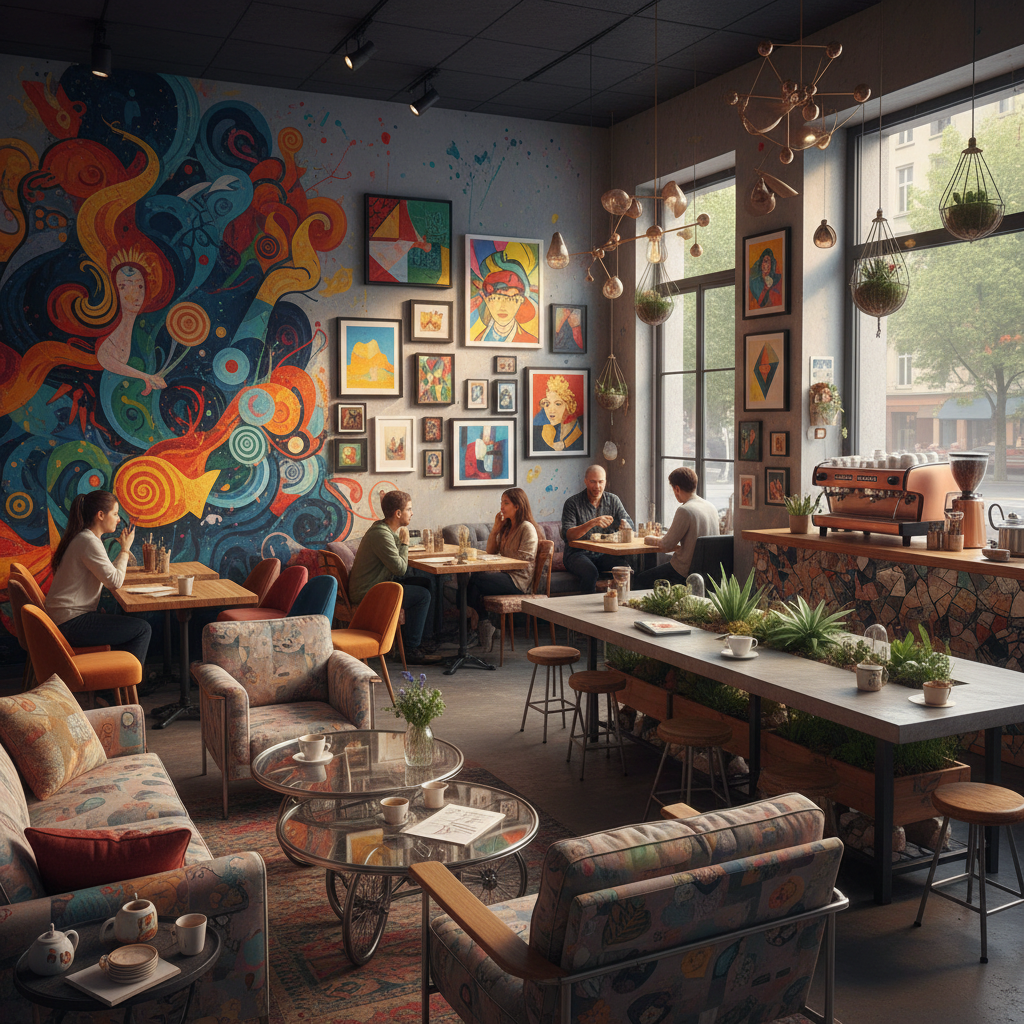
There's a version of an art cafe that I want to address right up front, and that's the one where some generic prints got framed and stuck on a beige wall and the owner called it "art-inspired." That's not what we're talking about here. The cafes that genuinely blend art and design into something cohesive are doing something much more considered, and the result is a completely different kind of experience.
Real art-inspired cafe design treats the whole space as a canvas. The commission of a muralist to transform an entire wall isn't a decoration choice, it's an architectural one. The mural becomes structural to how the room feels, how people orient themselves when they walk in, and where they choose to sit. I've been in cafes where the artwork was so central to the space that moving it would have essentially destroyed the room. That's powerful design.
The best art cafes also rotate or evolve their installations over time, creating a living gallery experience that gives regulars a reason to keep paying attention. Some partner with local art schools or emerging artists, which adds a layer of community connection that you simply cannot buy. The walls are constantly telling a story about the neighborhood and the people in it. That kind of design decision creates loyalty that goes way beyond good coffee.
Color in these spaces tends to be bolder and more intentional than in almost any other cafe style. A designer working on an art-inspired brief gets to take genuine risks. A ceiling painted in deep cobalt blue. Terrazzo floors with a custom pattern that references the artist's work. Furniture in shapes that echo the visual language of whatever movement is being celebrated. Every element contributes to a total aesthetic experience rather than just a background for drinking coffee.
"A well-designed art cafe doesn't just display creativity. It produces it. Something about being surrounded by intentional beauty makes people want to sketch, write, and think."
And that's the magical thing about these spaces. They attract creative people, who in turn make the space feel even more alive. Writers nursing a flat white for three hours, illustrators sketching in the corner, people having the kinds of conversations that need a lot of gesturing. The design becomes self-fulfilling. Build a space that honors creativity, and creativity will fill it.
5. Cultural Fusion: A Global Coffee Experience
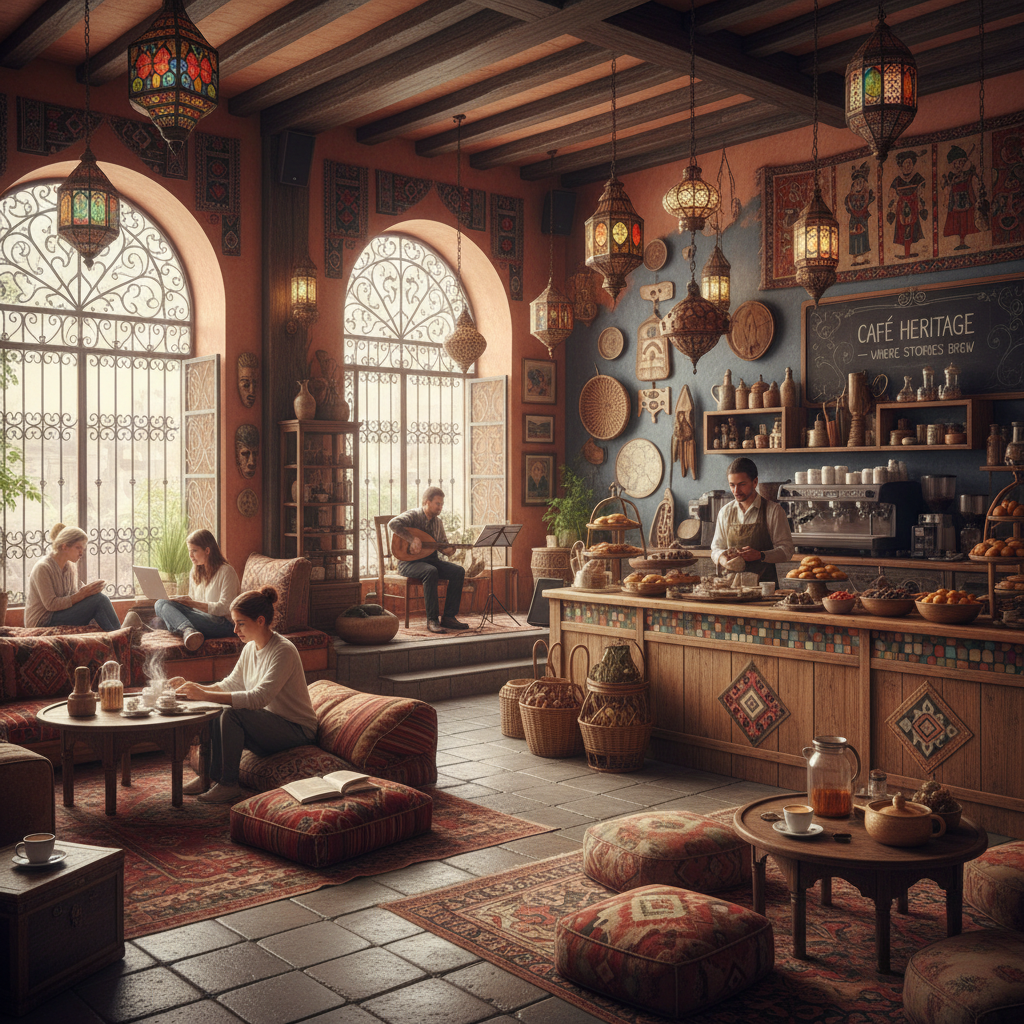
This is the one that gets me most excited, honestly. Cultural fusion cafes are doing something that feels genuinely radical in the world of commercial interior design: they're taking the visual and material languages of multiple cultures and weaving them together into something that doesn't belong to any single tradition. Done clumsily, it can feel like a theme park. Done with real sensitivity and knowledge, it's breathtaking.
Think about what it means to walk into a space where Moroccan zellige tilework wraps the lower half of the counter, Japanese joinery techniques shaped the wooden ceiling structure, and the seating arrangement borrows from the communal long-table tradition of Scandinavian design. These aren't random choices thrown together. A skilled designer has found the thread connecting these traditions, perhaps a shared value of craftsmanship, or a similar relationship to natural materials, and built a space around that conversation between cultures.
The textile choices in cultural fusion cafes are often where you feel it most viscerally. Cushion covers in West African wax print fabrics. Hand-knotted rugs from Central Asia on polished concrete floors. Embroidered linen napkins that reference Central American weaving traditions. These are tactile connections to somewhere else, to someone else's hands and history, and they make a cafe feel rich in a way that has nothing to do with expense. It has everything to do with meaning.
What the best designers in this space understand is the importance of research and genuine connection to the cultures being referenced. It's the difference between appreciation and appropriation, and the cafes that get it right often have owners or design teams with real personal ties to the traditions they're drawing from. You can feel the difference immediately. There's an authenticity that either exists or it doesn't, and customers are more perceptive about this than ever.
- Traditional craftsmanship from multiple cultures can coexist beautifully when connected by a shared material or value
- Textiles are one of the most effective ways to introduce warmth and cultural depth into a space
- Menu and design should work together, a culturally inspired space feels most complete when the coffee program reflects the same global curiosity
- Lighting inspired by traditional lanterns or screens from different cultures can create extraordinary atmosphere
- Authentic sourcing and storytelling about the design choices helps customers connect more deeply with the space
There's also something politically hopeful about these spaces, and I don't think that's an overstatement. A cafe that treats global cultures as sources of genuine beauty and wisdom rather than exotic novelty is making a quiet argument about how we should see the world. Good design can do that. It can change the temperature of a room, and sometimes, of a conversation.
Final Thoughts
Here's what these five very different cafe design approaches have in common: they all start with a genuine point of view. They're not trying to please everyone or blend into the background. They take a position, commit to it, and trust that the right people will respond. And they do.
Whether it's the deep respect for the natural world in an eco-friendly space, the bold tension of an industrial interior, the quiet intelligence of a tech-integrated room, the creative generosity of an art-inspired cafe, or the beautiful complexity of a cultural fusion concept, what you're really looking at in each case is a designer who cared. Who thought hard. Who made choices instead of compromises.
If you're planning a cafe project, or if you're just someone who spends a lot of time in coffee shops and has started to notice what makes some of them feel different, I hope this gives you a new lens to look through. Because honestly, a great cafe is a great piece of architecture. It shapes how we feel, how we interact, and how we move through our days. That's worth paying attention to.
More in Commercial
Stay Inspired
Subscribe for new essays on architecture, design, and the spaces that shape us.