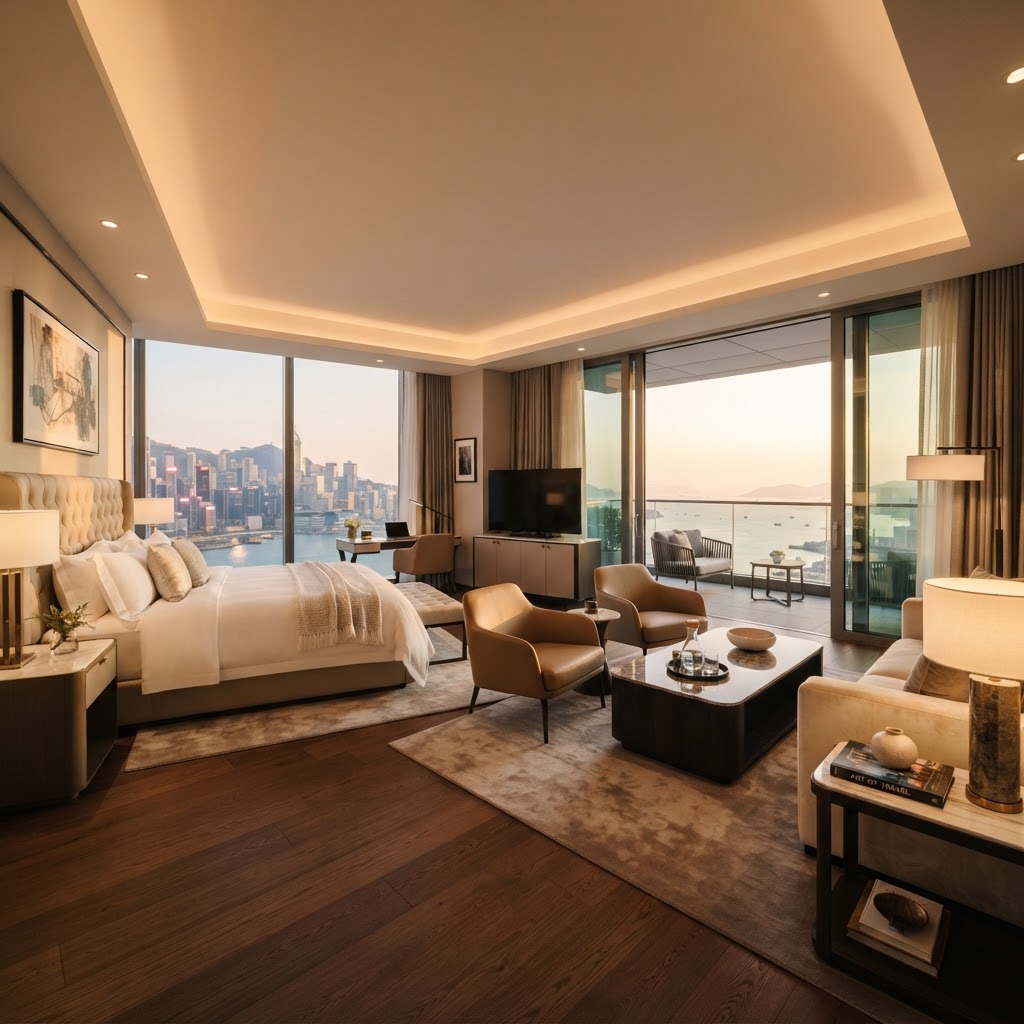
The Secrets of a Five Star Stay: What Actually Makes a Hotel Room Feel Luxurious
Have you ever wondered why some hotel rooms feel like a dream while others fall flat. We are breaking down the essential design elements that separate an ordinary stay from a truly five star experience. These small details make all the difference in creating a sanctuary away from home.
The Art of Sensory Lighting
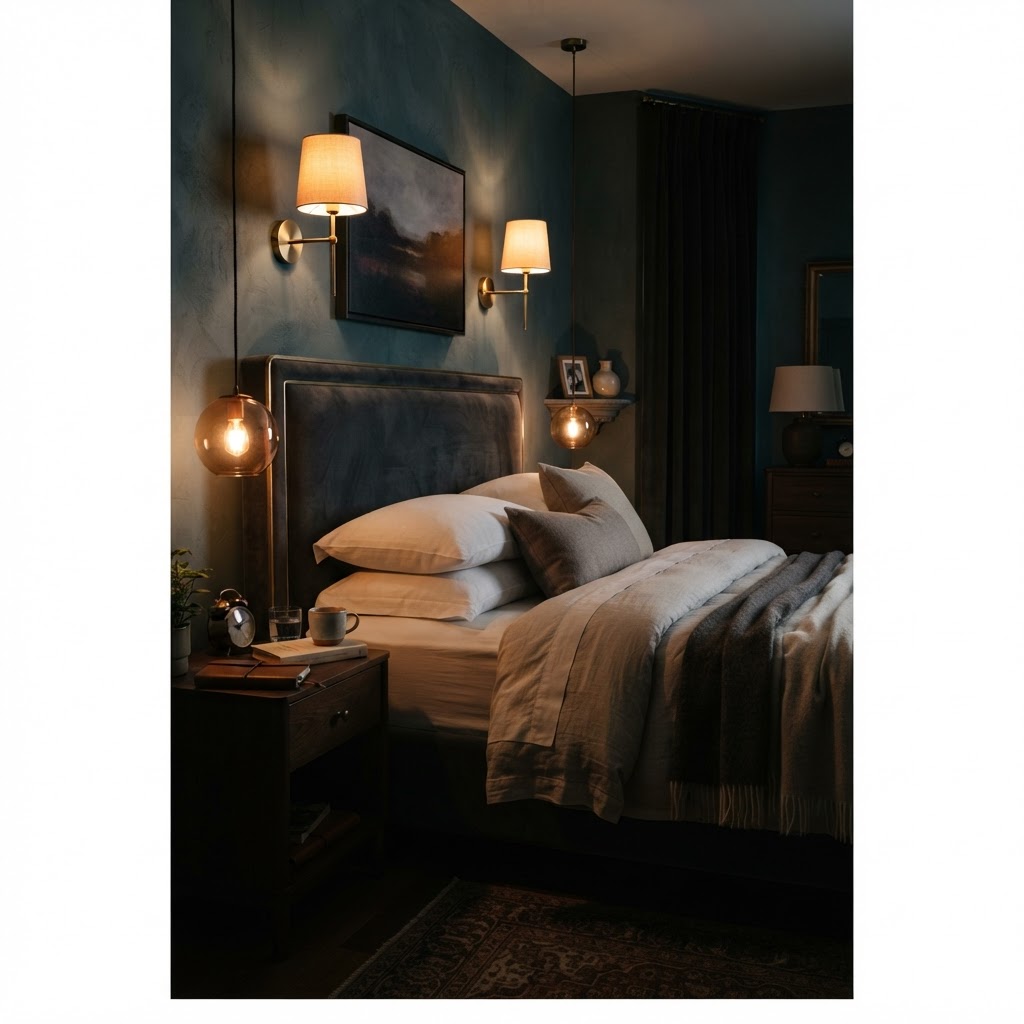
Walk into any truly great hotel room and before you even register what you're looking at, you feel something. That soft, warm glow that hits you the second the door opens? That's not an accident. Lighting is honestly the single most powerful tool in a luxury hospitality designer's toolkit, and most people never even consciously notice it. Which is exactly the point.
Here's the thing about lighting that the average homeowner gets completely wrong: it's not about brightness. A five-star room is almost never flooded with harsh overhead light. Instead, designers layer multiple light sources at different heights and intensities to create what's called sensory lighting. You've got ambient light washing the ceiling, warm task lighting at the bedside, maybe a glowing lamp in the corner, and subtle accent lighting highlighting artwork or architectural details. Together, these sources work like a symphony. Separately, none of them would be enough.
The color temperature is a huge deal too. Luxury hotels almost universally stick to warm white bulbs in the 2700K to 3000K range. That golden warmth is deeply associated with comfort, intimacy, and relaxation. Cooler, bluer light, even if it's the same wattage, reads as clinical. Real talk, that single switch from cool to warm lighting can completely transform how a space feels without changing a single piece of furniture.
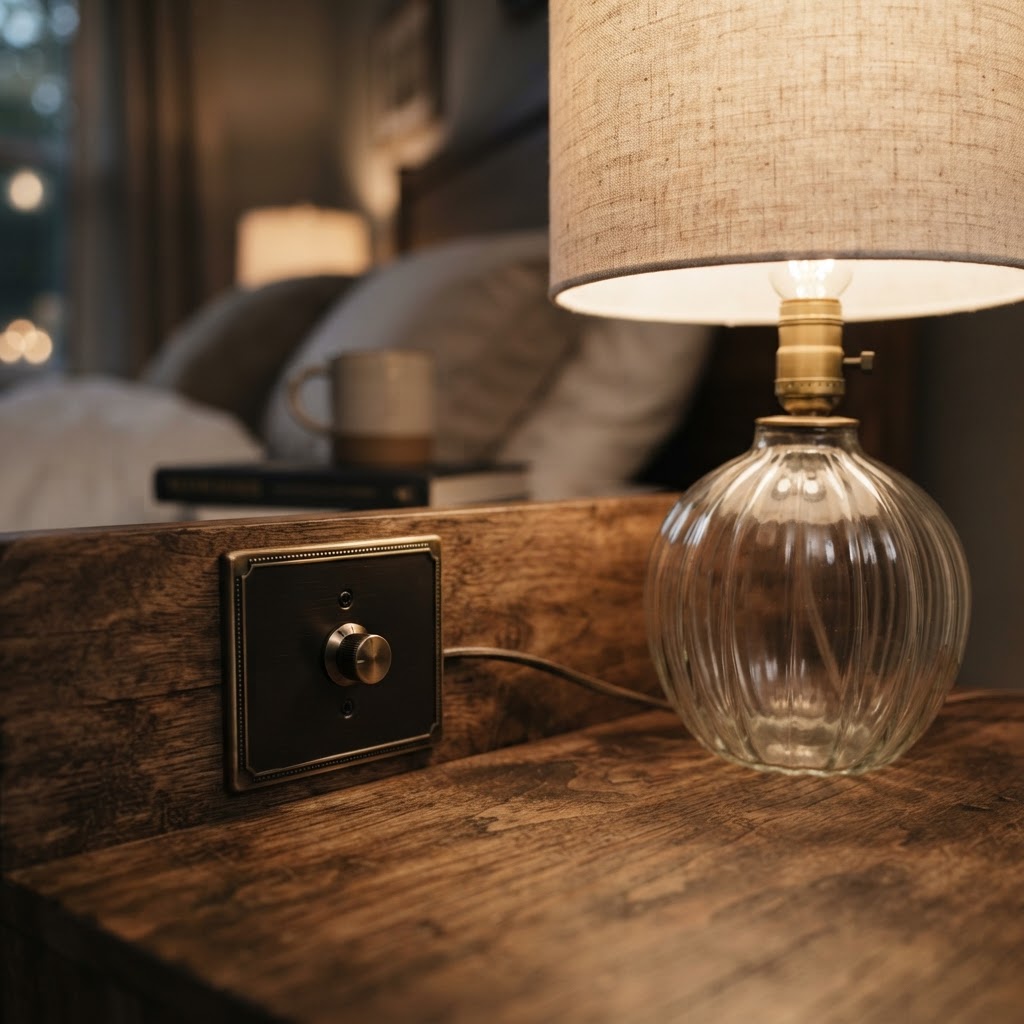
And then there's control. Every luxury room I've ever stayed in had dimmers. Not just one dimmer, multiple dimmers. The ability to dial the light up or down depending on what you're doing, reading, winding down, getting ready, is something guests value enormously even when they can't articulate why. It hands control back to the person in the room, and that feeling of control is deeply tied to the feeling of luxury.
If you're taking notes for your own home or a hospitality project you're working on, start here. Replace any overhead fixtures that cast flat, even light. Add floor lamps. Add table lamps. Add a strip of warm LEDs under a floating vanity or behind a headboard. Layer, layer, layer. And please, for the love of good design, put everything on a dimmer.
Textiles That Elevate the Experience
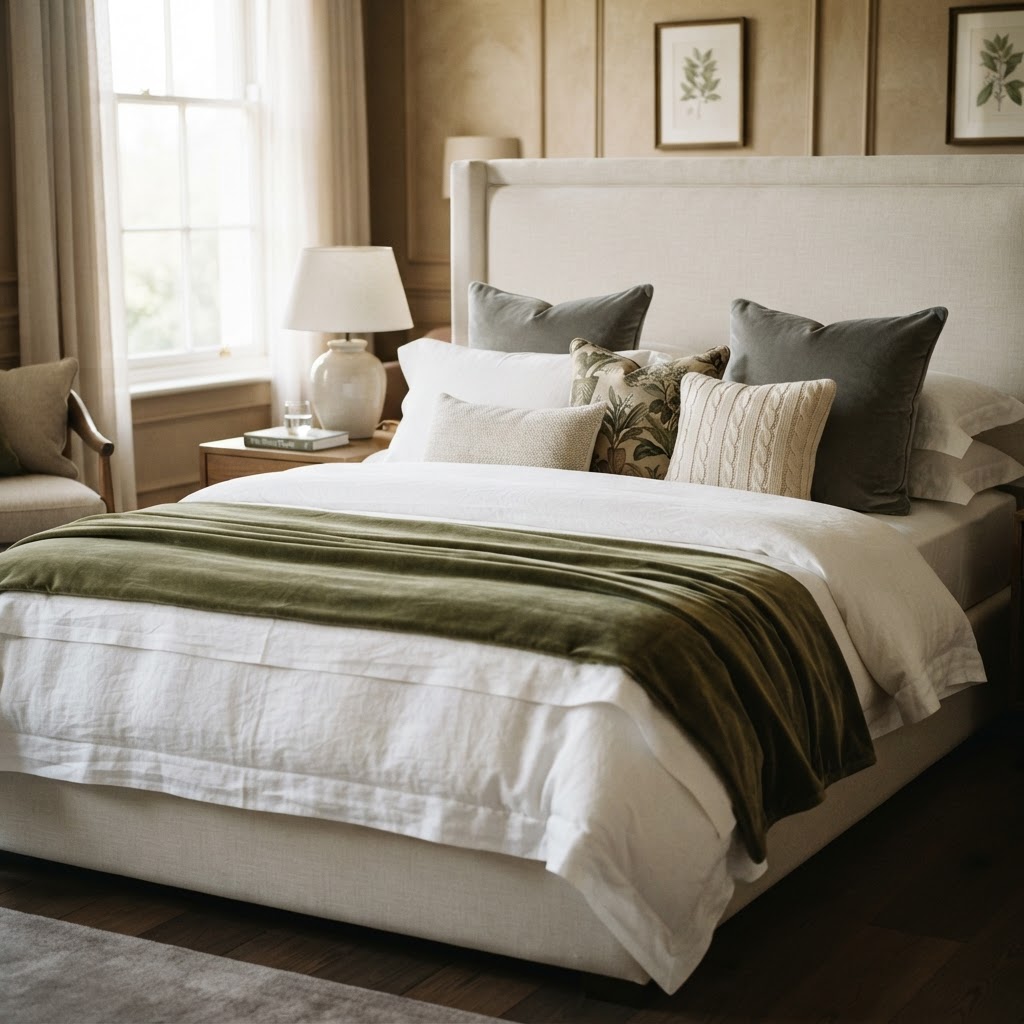
Touch is wildly underrated in interior design conversations. We talk about what we see constantly, but the way a space feels physically, the weight of the bedding, the softness of the carpet underfoot, the way a robe wraps around you, that's what people actually remember. Honestly, it's what separates a room that looks luxurious in photos from a room that genuinely feels luxurious when you're inside it.
Luxury hotels invest heavily in their bed linens, and trust me on this, it shows. We're talking 400 to 600 thread count Egyptian cotton sheets with a sateen weave, crisp but somehow impossibly soft. The duvet is filled generously, not just for warmth but for that satisfying weight that settles over you. There are usually at least four pillows per person, often a mix of firm and soft. And that perfectly folded turndown with the crisp white edge peeking out? Pure theater, and it works every single time.
Beyond the bed, look at what's on the floor. Luxury hotel rooms rarely have hard flooring throughout. There's almost always a substantial area rug, something with real pile and weight, positioned so your feet land on it the moment you step out of bed. That sensory moment, cold tile versus warm, plush rug, is a deliberate design choice. The windows usually have both sheer curtains and heavy blackout drapes, layered so you can control light and privacy while also adding visual softness and acoustic absorption to the room.
Upholstery matters just as much. The armchair in the corner of a great hotel room is never a piece of flat, scratchy fabric on a thin frame. It's deep, it's cushioned, it's covered in something that feels expensive to touch. Velvet, boucle, high-quality linen blends. These fabrics add tactile richness and also do something visually important, they break up the crisp, hard surfaces and keep the room from feeling cold or sterile.
If you want that hotel feel at home, start with your bedding. It's one of the highest-return investments you can make in your bedroom. You don't have to spend a fortune, but do prioritize thread count and natural fibers over anything synthetic. Layer a fitted sheet, a flat sheet (yes, bring back the flat sheet, it matters), a duvet, and a throw. Add an extra pillow or two. The effect is immediate and honestly a little life-changing.
The Spa Inspired Bathroom Oasis
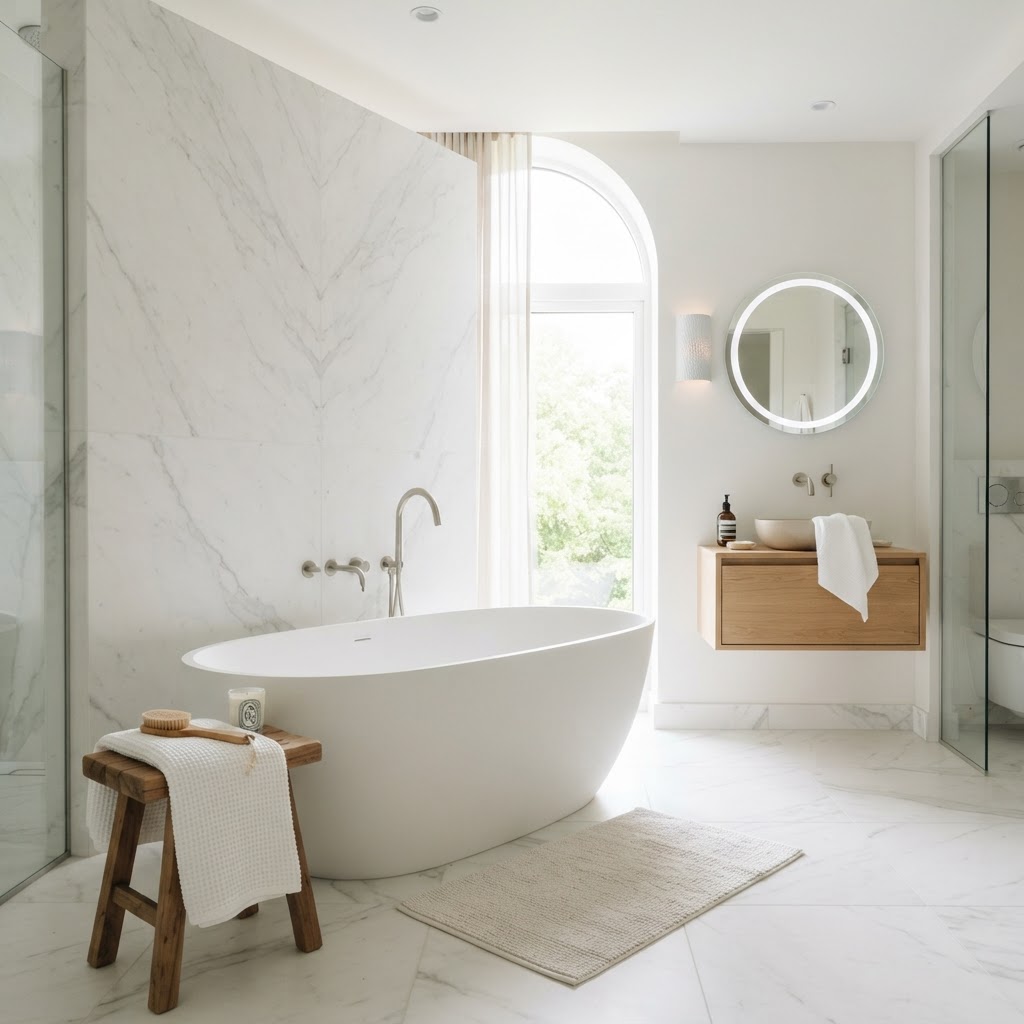
Here's the thing about luxury hotel bathrooms: they're never just functional. They're destinations. You don't go in there to quickly shower and get out. You go there. You linger. And that shift in how guests relate to the space is entirely engineered through design choices that are replicable, even on a budget, if you understand what's driving them.
The big ticket items are obvious. Natural stone surfaces, freestanding soaking tubs, rainfall showerheads, heated floors. Those things are wonderful and if you can incorporate them, absolutely do. But honestly, the details are what really sell it. The quality and weight of the towels is enormous. Hotel towels are thick, they're plush, and there are a lot of them. Hanging neatly on a heated rail, they signal abundance and care. It's a small thing that telegraphs a huge amount about the overall standard of the space.
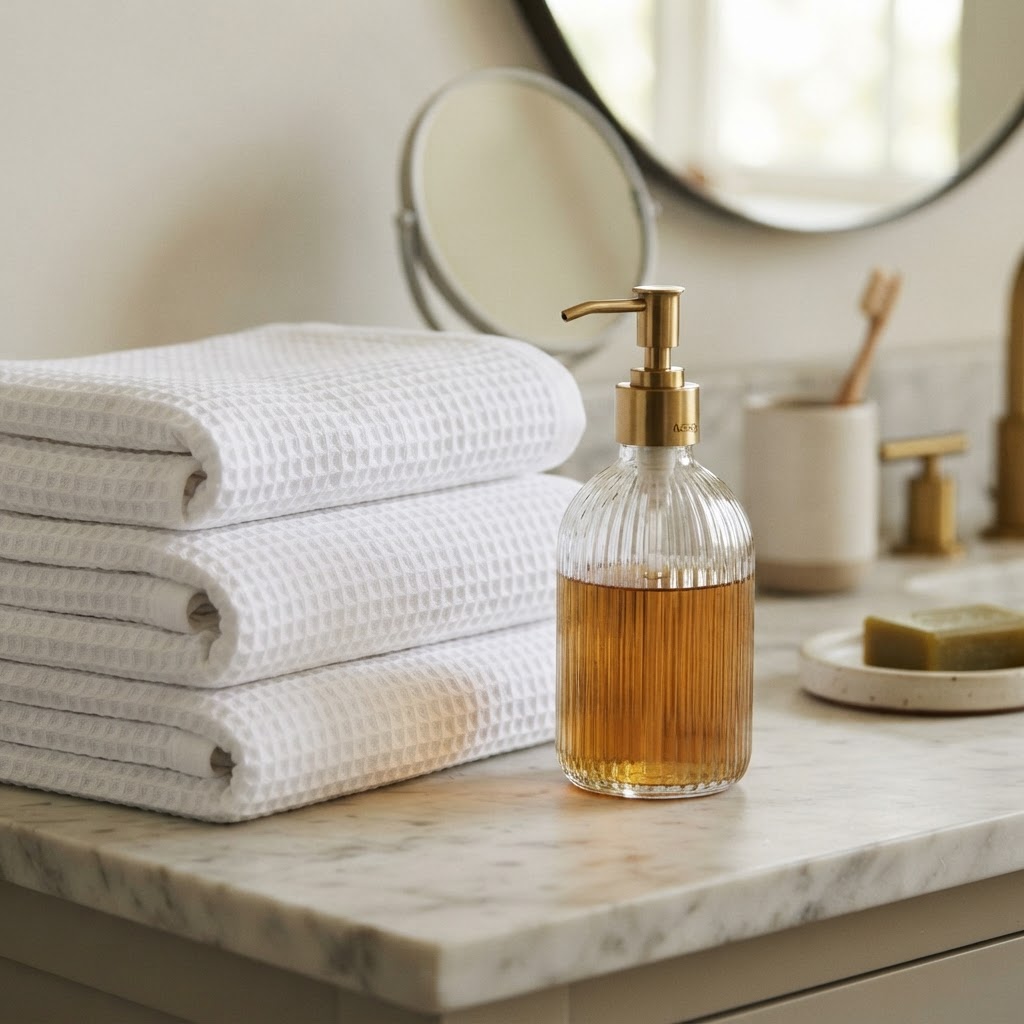
Lighting in the bathroom follows similar rules to the main room. Warm, layered light around a mirror, never a single harsh overhead source that makes everyone look like they're being interrogated. Scent plays a role too. Whether it's a signature candle, a reed diffuser, or quality toiletries with a distinctive fragrance, luxury hotels understand that smell is processed differently in the brain. It's visceral, immediate, and deeply tied to memory. A bathroom that smells amazing feels cleaner, newer, and more expensive regardless of the actual fixtures.
Organization and presentation matter enormously. Toiletries lined up neatly. Towels folded with precision. A wooden tray holding a candle and a small plant. These aren't just aesthetic choices, they communicate that someone cares deeply about this space, and that care transfers to how the guest feels about themselves while they're in it. That psychological component is what people are really paying for in a five-star stay.
Strategic Storage and Clutter Control
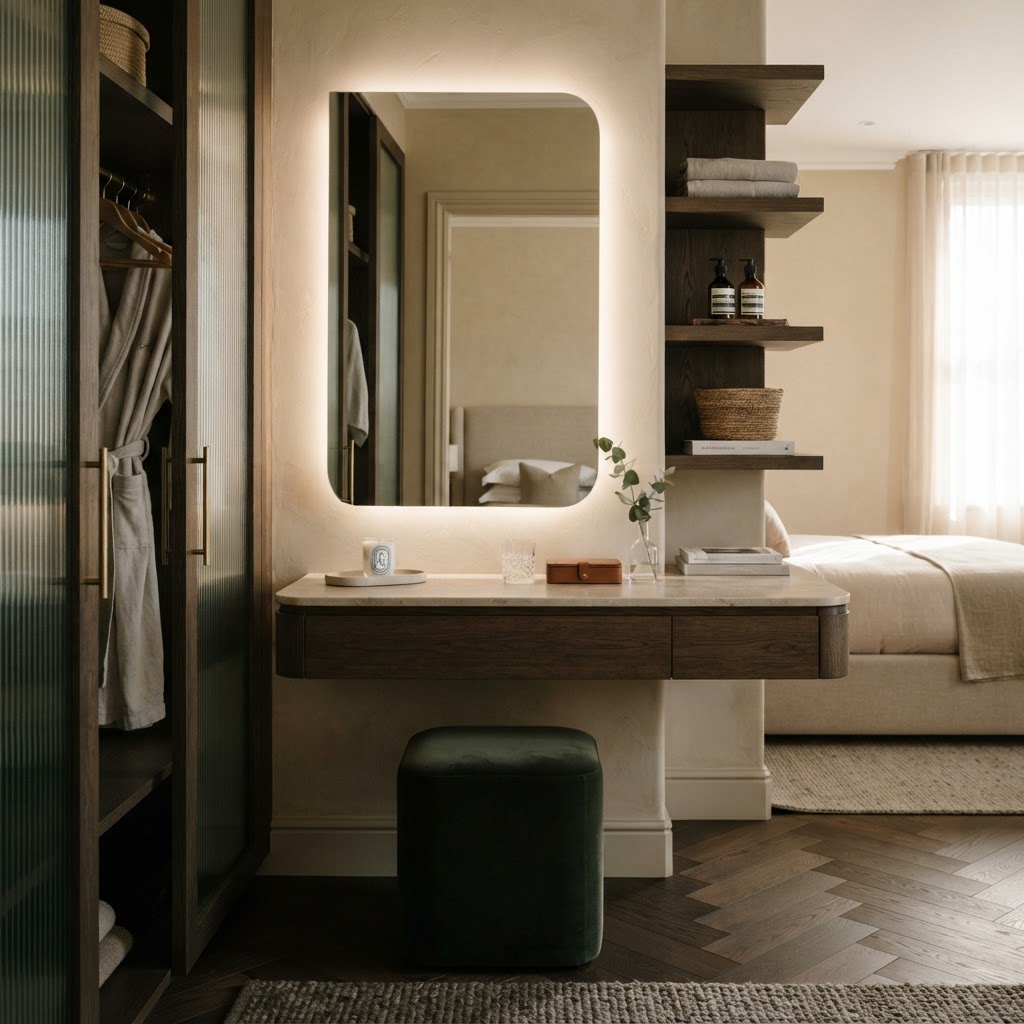
This one doesn't get talked about nearly enough, and it might be the most practically useful secret on this entire list. Look at any luxury hotel room photo, what do you notice about the surfaces? They're clear. The nightstand has a lamp, maybe a book, a glass of water. The desk has a single elegant lamp and maybe a notepad. There are no cords snaking across the floor, no random objects piled on the dresser, no visible suitcases or bags unless they're neatly placed on a dedicated luggage rack. The whole room breathes.
That feeling of spaciousness isn't just about square footage. It's about visual quietude. Our brains process clutter as noise, and that noise creates low-level stress and anxiety that we often can't name but definitely feel. Luxury hotel designers know this. They build in deep wardrobes with thoughtful organization systems, luggage racks so bags are lifted off the floor, charging solutions that keep cables out of sight, and furniture with hidden storage built in. Every potential source of visual clutter has a home.
There's also something to be said for the way technology is handled. Cords are the enemy of luxury. In the best hotel rooms, USB ports and power points are built into the bedside tables. The television is mounted flush or recessed. The minibar is integrated into cabinetry. Nothing juts out awkwardly or creates a tangle of wires. It takes a lot of planning to make a room look that effortless, which is kind of the whole point.
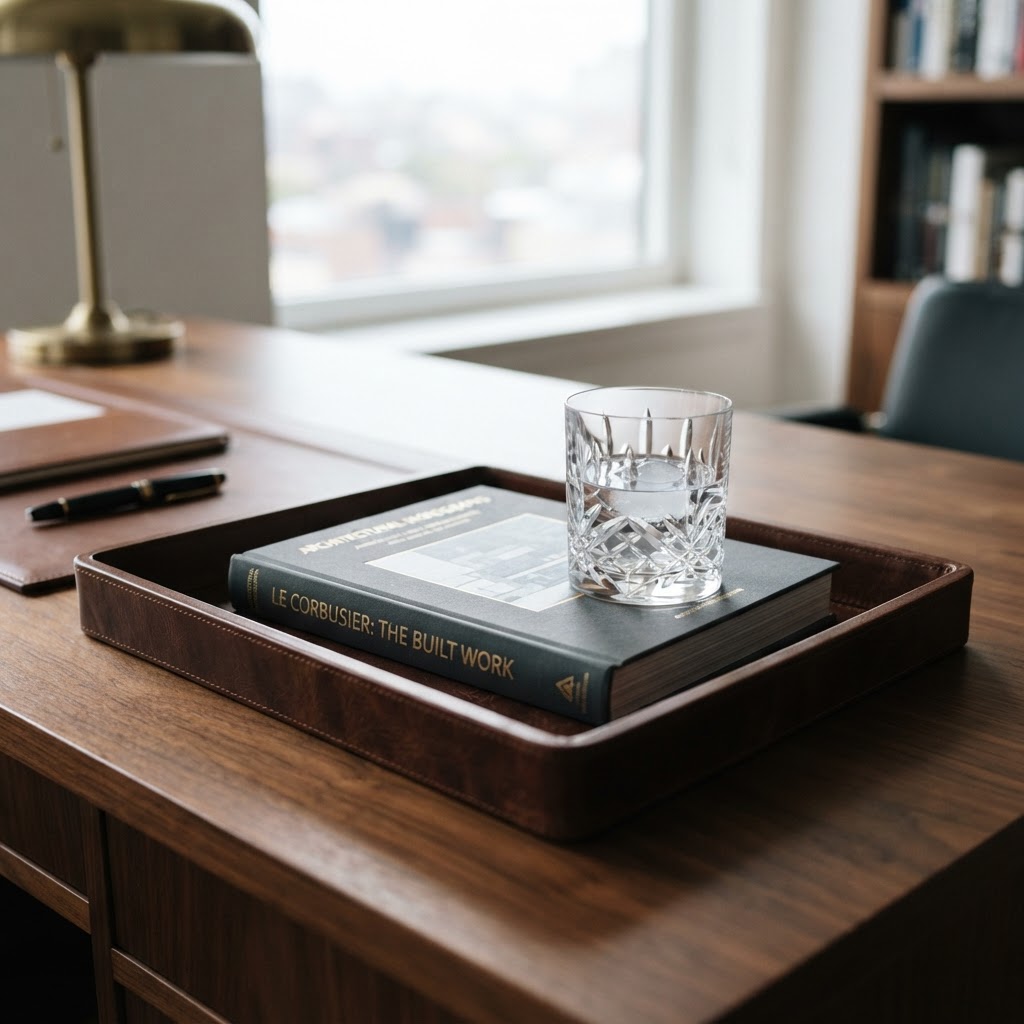
For home applications, this principle is honestly more accessible than any of the others. You don't need a renovation budget to declutter. Start by removing anything from visible surfaces that doesn't serve a purpose or bring genuine joy. Invest in a few good baskets, trays, or boxes to corral the stuff that has to be out. One tray on a dresser containing your everyday items looks intentional. The same items scattered around the surface just looks messy. The objects haven't changed, only their organization has, but the psychological effect is enormous.
Curated Views and Nooks
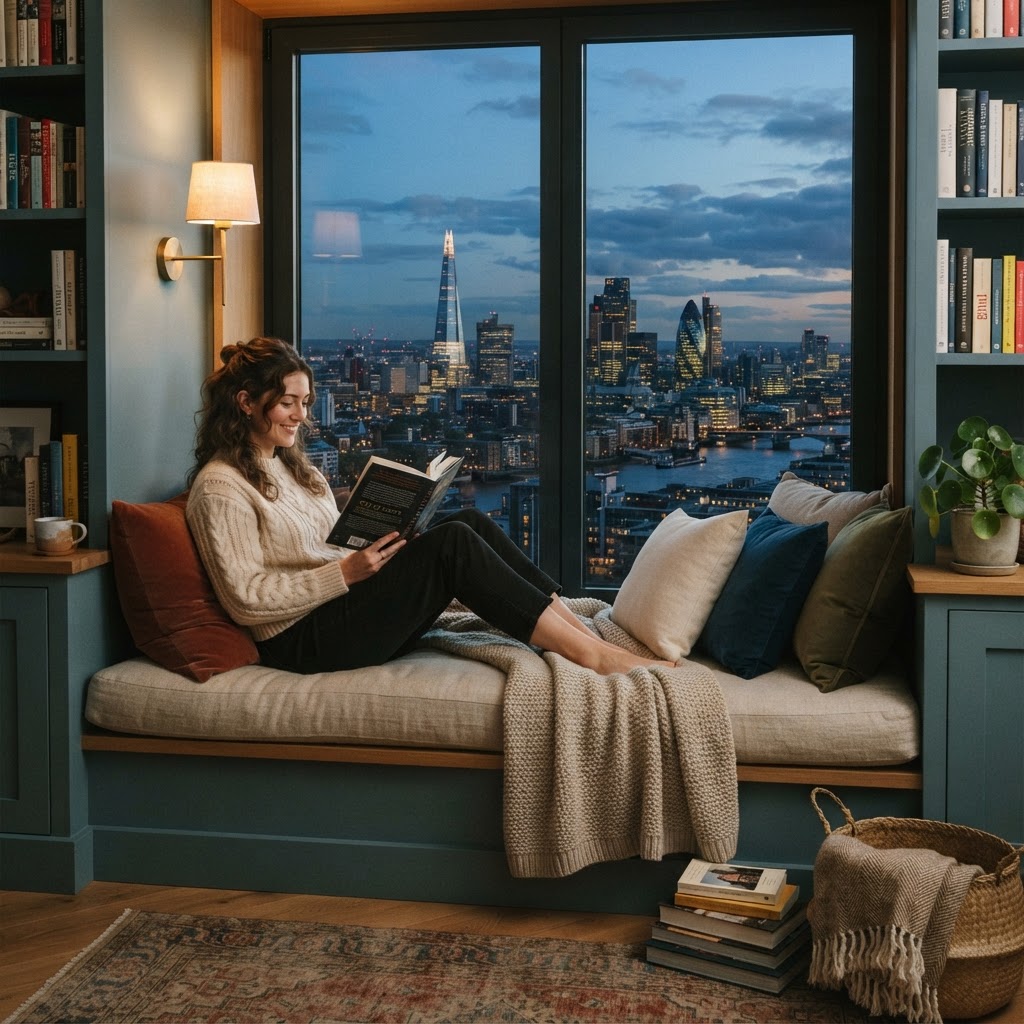
Okay, this is the one that really gets me. When a hotel room is designed well, it doesn't just give you a place to sleep. It gives you places, plural. There's the bed, obviously. But there's also the armchair angled toward the window. The window seat with its cushion and throw. The small writing desk positioned to catch natural light. Each of these spots creates a micro-environment, a little world within the room where a guest can do something specific and feel completely at home doing it.
This concept of creating distinct zones within a single room is one of the most sophisticated things a designer can do, and it requires real intention. It's not about cramming in more furniture. It's about understanding how a person actually lives in a space and designing for each of those modes. Relaxing. Working. Reading. Getting ready. Each activity has its own ideal environment, and a truly luxurious room accommodates all of them without feeling busy or over-furnished.
The window view itself is treated as a design element in the best hotels. The furniture is positioned to frame and celebrate it. Curtains are hung high and wide so as much of the window is exposed as possible. A seating arrangement near the glass turns the exterior into a living artwork. Even when the view isn't spectacular, this relationship between interior and exterior creates a sense of connection to something bigger, and that openness is fundamentally luxurious.
Nooks specifically deserve a mention because they tap into something very primal. We love enclosed spaces that face out onto open ones. A window seat with a view, a reading chair tucked beside a bookshelf, even a small table for two set into an alcove. These spots feel safe and special at the same time, and guests gravitate toward them instinctively. Hotels that incorporate them score higher on guest satisfaction almost across the board. At home, even carving out a single dedicated reading chair with a lamp and a side table accomplishes something similar. It tells the people in your home that this is a place where you can just be.
Final Thoughts
Here's what I want you to take away from all of this: luxury isn't really about expense. It's about intention. Every element we've talked about, the layered lighting, the tactile textiles, the spa-worthy bathroom, the clutter-free surfaces, the curated nooks, all of it comes down to designers asking a single question: how do we want this person to feel?
When you design with feeling as the goal rather than aesthetics or budget or ticking boxes, the results are transformative. You end up making choices that seem small but land big. A dimmer switch. A heavier duvet. A tray on a dresser. A chair positioned to face the window. None of these things cost the earth but all of them contribute to that ineffable feeling of walking into a room and thinking, yes, this is exactly right.
The best hotel rooms feel like the best version of home. And honestly, that's something all of us can work toward, whatever our budget, whatever our space. Start with one room. Pick one principle from this list. Make one deliberate change. That's how luxury thinking takes root, and trust me, once it does, you won't look at a room the same way again.
More in Commercial
Stay Inspired
Subscribe for new essays on architecture, design, and the spaces that shape us.