5 Beautiful Ways to Style Open Shelving in Your Kitchen
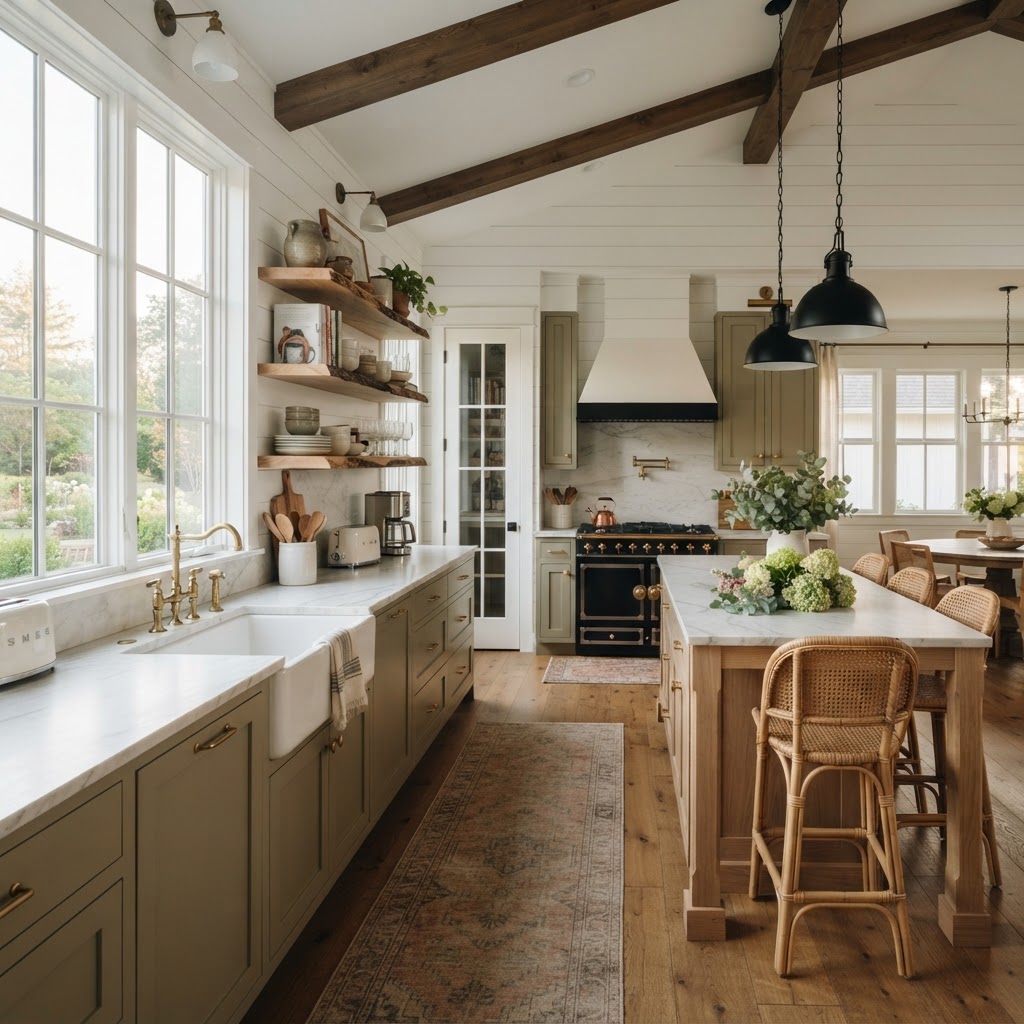
Open shelving can completely transform the look of your kitchen by creating an airy and open feel. We are sharing five clever ways to style these shelves to keep your space functional and stylish.
The Monochromatic Minimalist
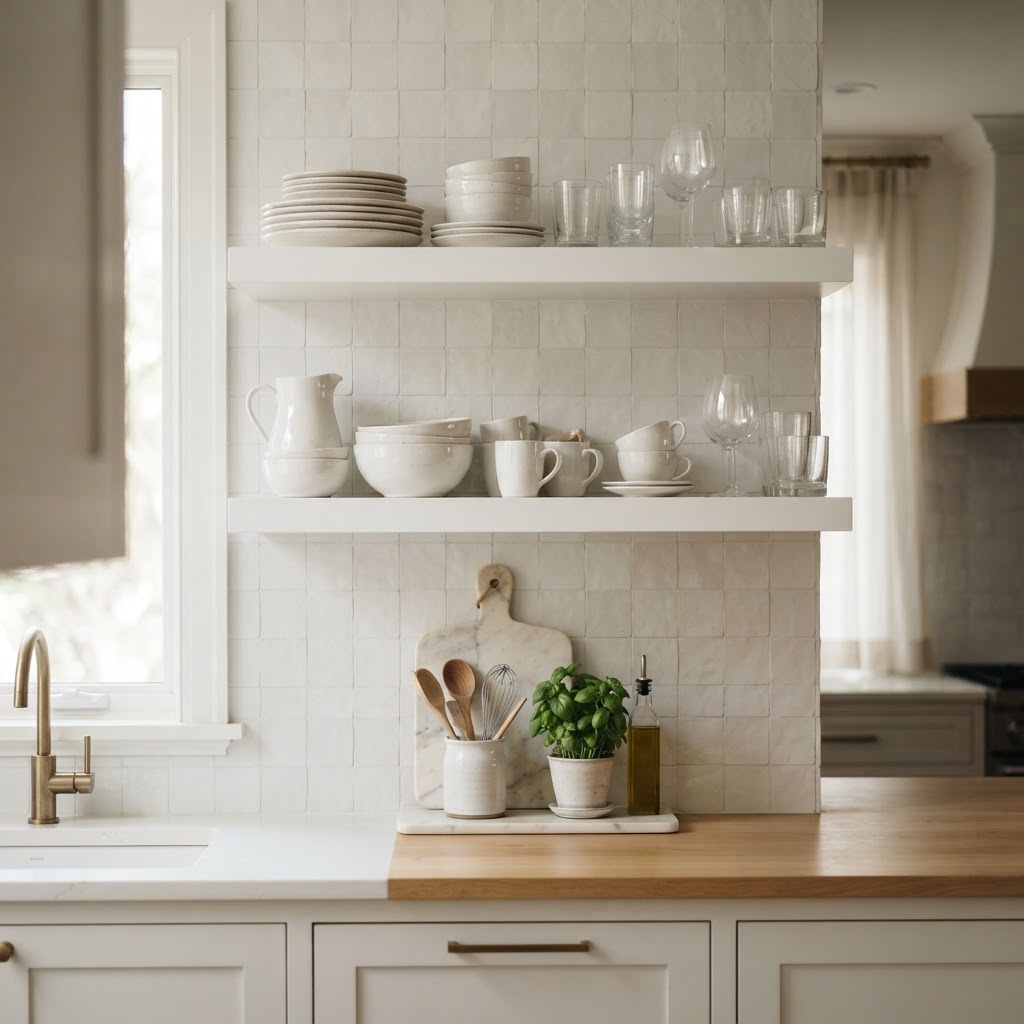
Okay, let's start with the one that honestly never gets old. The monochromatic minimalist approach is exactly what it sounds like: you pick one color family, usually whites, creams, soft greys, or warm taupes, and you commit. Everything on the shelf lives within that palette. Your dishes, your mugs, your little ceramic bowls, even the small plants you tuck in between. It all speaks the same visual language, and the result is this incredibly calm, pulled-together look that makes your kitchen feel twice as expensive as it actually is.
Here's the thing about monochromatic styling that a lot of people get wrong. They think it means boring. They think it means cold and sterile and magazine-perfect in a way that doesn't feel lived in. But that's only true if you forget about texture. When everything is the same color, texture becomes your best friend. Think matte ceramic next to a glossy vase, a rough linen towel folded neatly beside smooth white plates. The variation in surface finish is what keeps the eye moving and gives the whole arrangement life. Mix your materials generously, just keep the tones consistent.
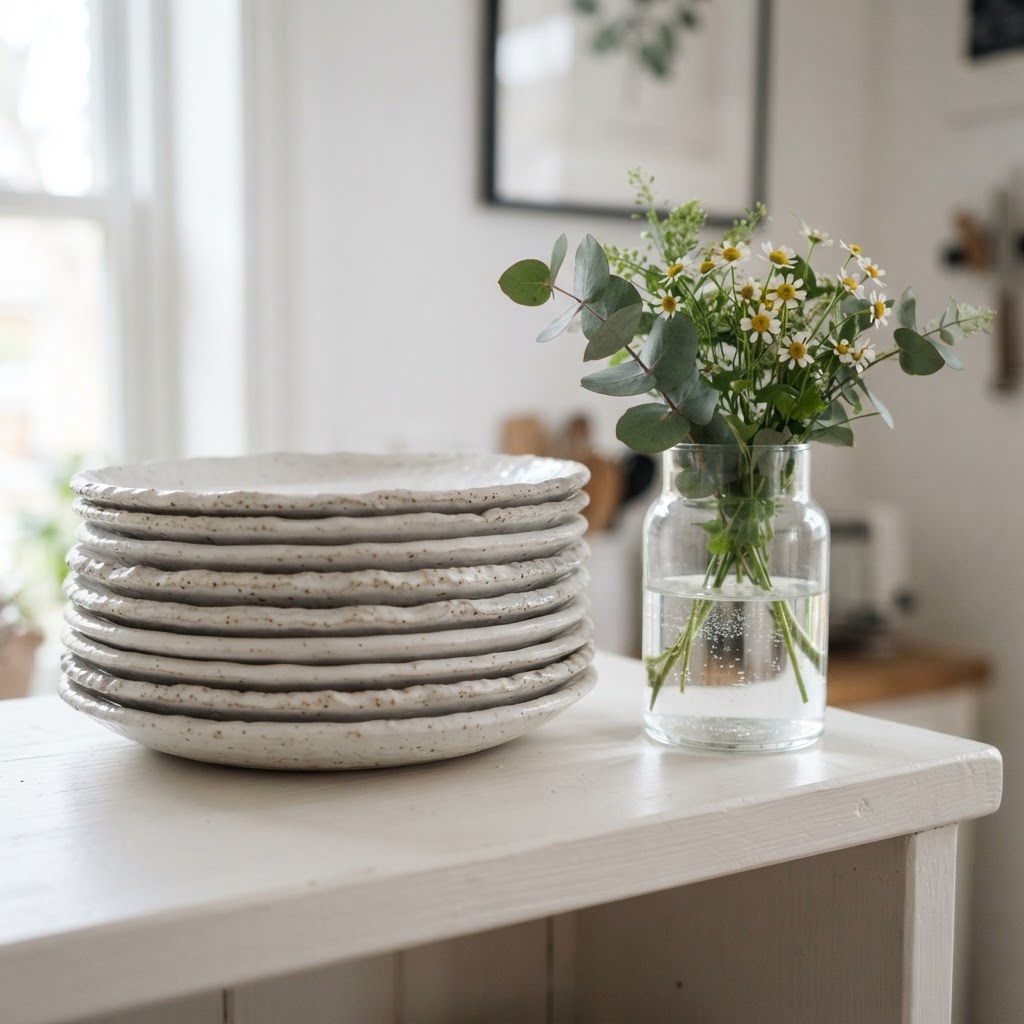
Real talk: this style works especially well in smaller kitchens. When you have limited shelf space, going monochromatic prevents the shelves from looking cluttered even when they're pretty full. The uniformity of color tricks the eye into reading the whole shelf as one cohesive unit rather than a collection of random stuff. It's a genuinely smart visual hack. And if you're worried about it looking too stark, bring in a single trailing plant, something like a pothos or a small eucalyptus stem in a simple white vase. That little hit of green grounds everything without breaking the palette.
- Stick to three or four tones within the same color family, not just one flat shade
- Vary heights deliberately, tall items at the back, shorter ones in front
- Group items in odd numbers, threes and fives feel more natural to the eye than even pairs
- Use a single trailing plant to add softness without breaking the color story
The maintenance is also worth mentioning because, honestly, open shelving in general requires you to actually keep things tidy. But with a monochromatic setup, any stray item that doesn't fit the palette becomes immediately obvious. In a weird way, it enforces discipline. You'll stop leaving random colorful packets of stuff out on the shelf because they'll look wrong. That's not a bad thing at all.
Rustic Wood and Brass
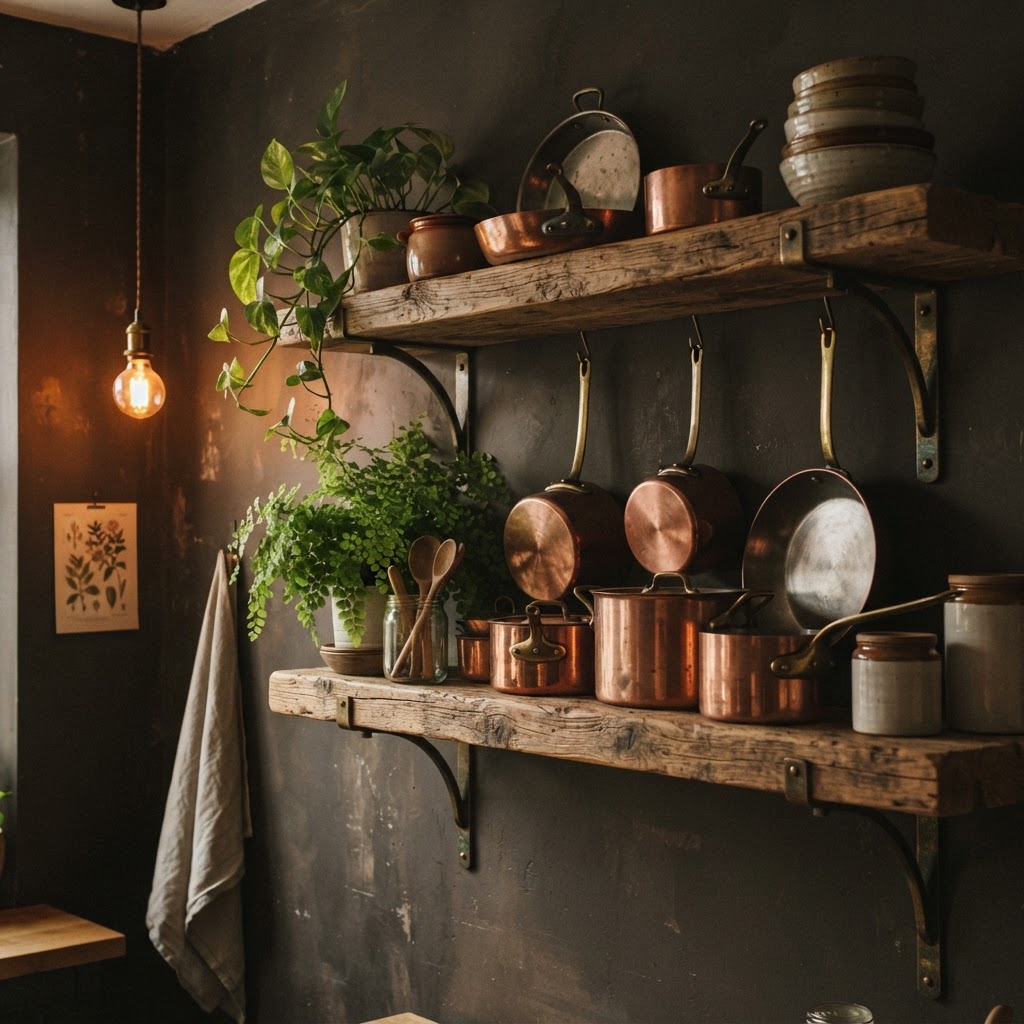
If monochromatic minimalism is the cool, quiet type, then rustic wood and brass is the warm, inviting one who always has something delicious on the stove. This combination has been having a serious moment in kitchen design for a few years now, and honestly, I don't see it going anywhere. There's something about the warmth of natural wood grain paired with the golden glow of brass that just feels genuinely cozy. Not in a cutesy farmhouse-overdone way, but in a real, textured, this-kitchen-has-a-soul kind of way.
The shelf itself matters a lot here. Ideally you want real wood, or at least something with a convincing grain, in a warm walnut, oak, or even a slightly darker espresso tone. The brackets and hardware should be brass or antique gold, nothing too shiny and new-looking. Brushed brass is actually the sweet spot. It has enough warmth to feel intentional but enough restraint to avoid looking flashy. If you can find vintage brass brackets at a flea market or antique store, even better.
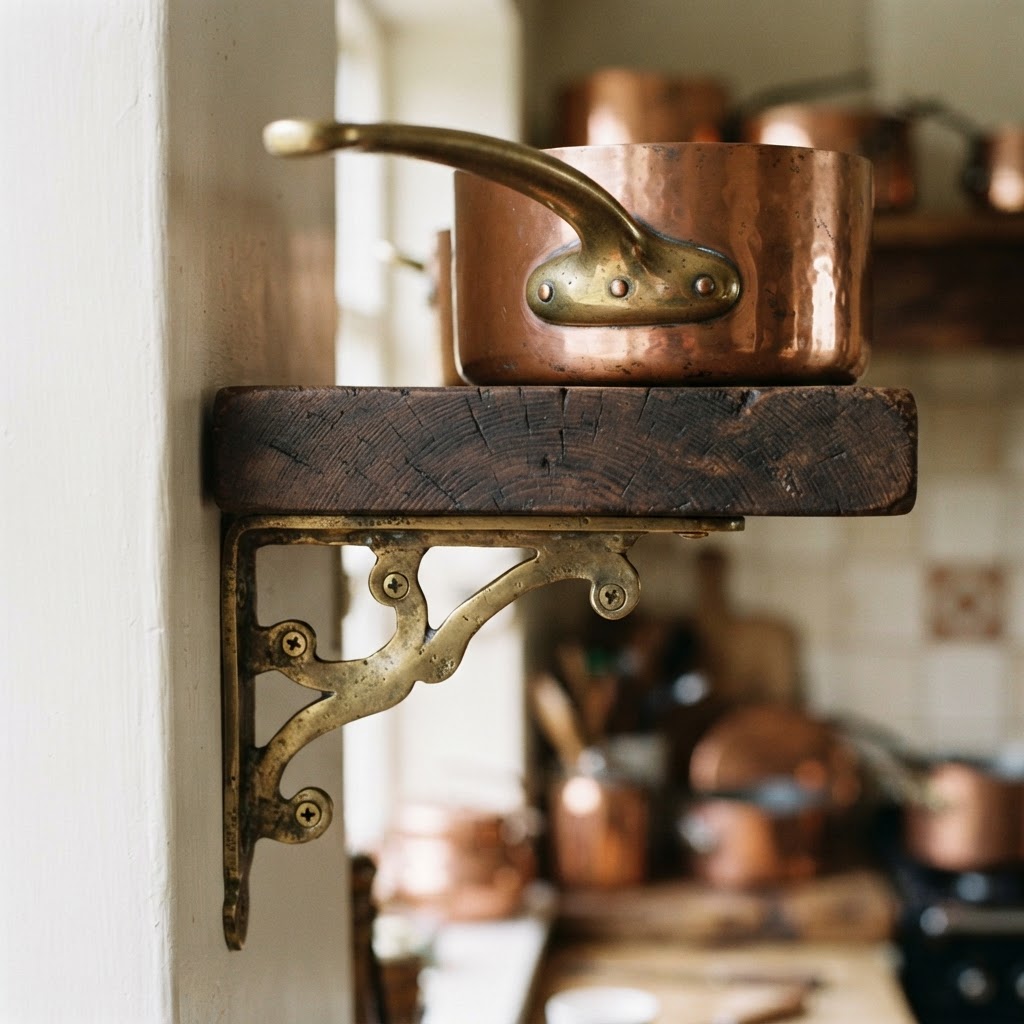
For what you put on these shelves, think earthy and organic. Terracotta pots, stoneware in warm browns and creams, glass jars filled with dried pasta or grains, a small wooden cutting board leaned against the wall. Fresh herbs in terracotta planters are absolutely perfect here. You're building a vibe that says "I cook real food and I enjoy doing it," and everything on the shelf should support that narrative. Avoid anything too sleek or modern, chrome finishes, very white ceramics, or plastic containers will feel out of place immediately.
One thing I always tell people about this style: don't over-curate it into oblivion. The rustic aesthetic thrives on a little bit of imperfection and lived-in-ness. It's okay if the jars aren't all perfectly aligned. It's okay if one mug is slightly different from the others. That looseness is what makes it feel real rather than staged. Trust me on this, some of the most beautiful rustic shelves I've ever seen had that slight "someone actually uses this kitchen" quality to them that no amount of careful arrangement can fake.
- Choose brushed or antique brass hardware over polished or chrome finishes
- Layer in organic materials like terracotta, linen, and unfinished wood
- Fill glass jars with pantry staples for both function and visual texture
- Let fresh herbs in small pots do the heavy lifting in terms of life and color
- Allow a little natural imperfection, it's part of the charm
The Functional Coffee Station
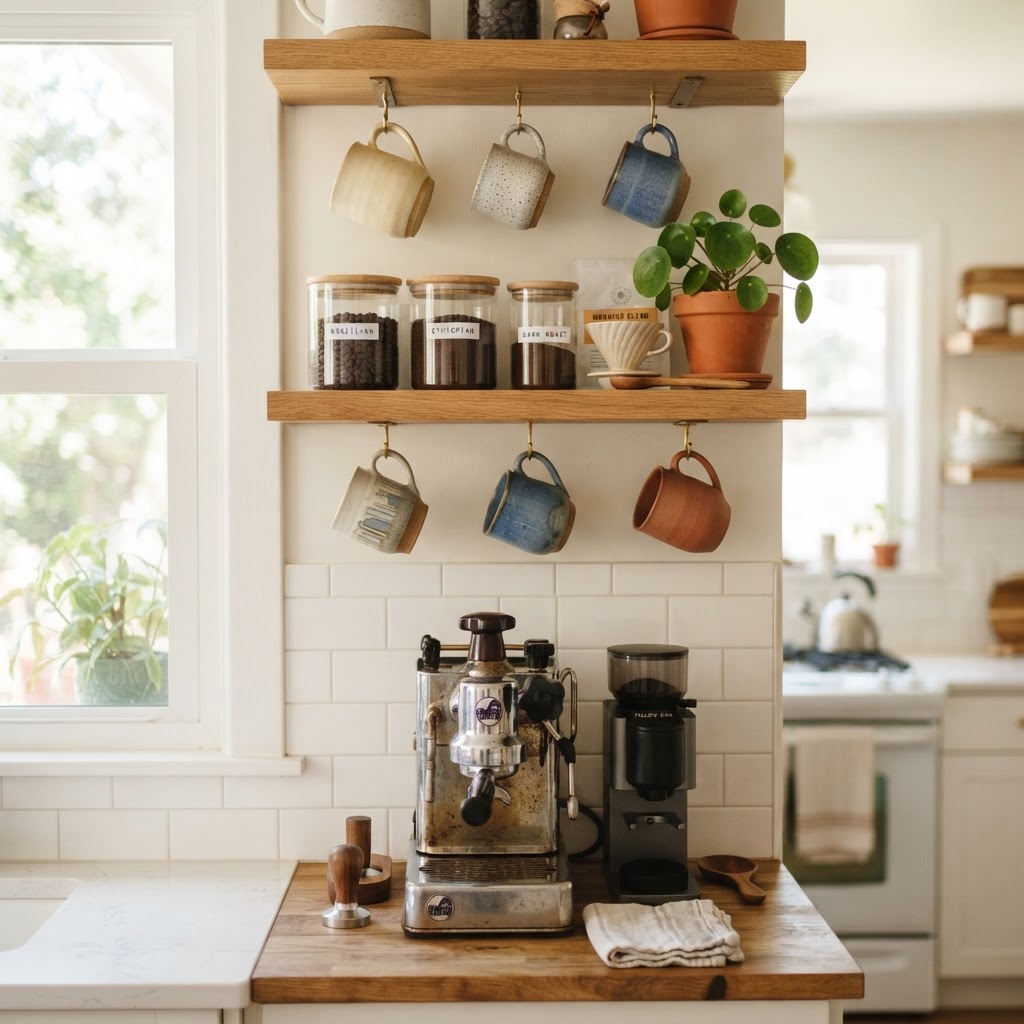
Look, I'm going to be upfront: this one has a special place in my heart. Dedicating a set of open shelves entirely to a coffee station is one of those ideas that sounds indulgent but is actually incredibly practical. And when it's done well, it looks like something straight out of a specialty coffee shop, which is never a bad thing. The concept is simple. You're not trying to style a general-purpose shelf. You have one purpose: everything here is about the ritual of making and enjoying coffee.
The key to making this work is thinking in zones. Your top shelf can hold your mugs, ideally displayed with some visual interest rather than just shoved in a row. Stack a couple, hang some from small hooks installed on the underside of the shelf above, or arrange them by color if you have a collection with variety. The middle shelf is your working zone: your coffee maker, your grinder, your pour-over equipment, whatever your preferred brewing method calls for. The bottom shelf or the counter surface directly below handles your supplies, coffee beans in a nice canister, filters, a small sugar bowl, maybe a little tray to corral the everyday items.
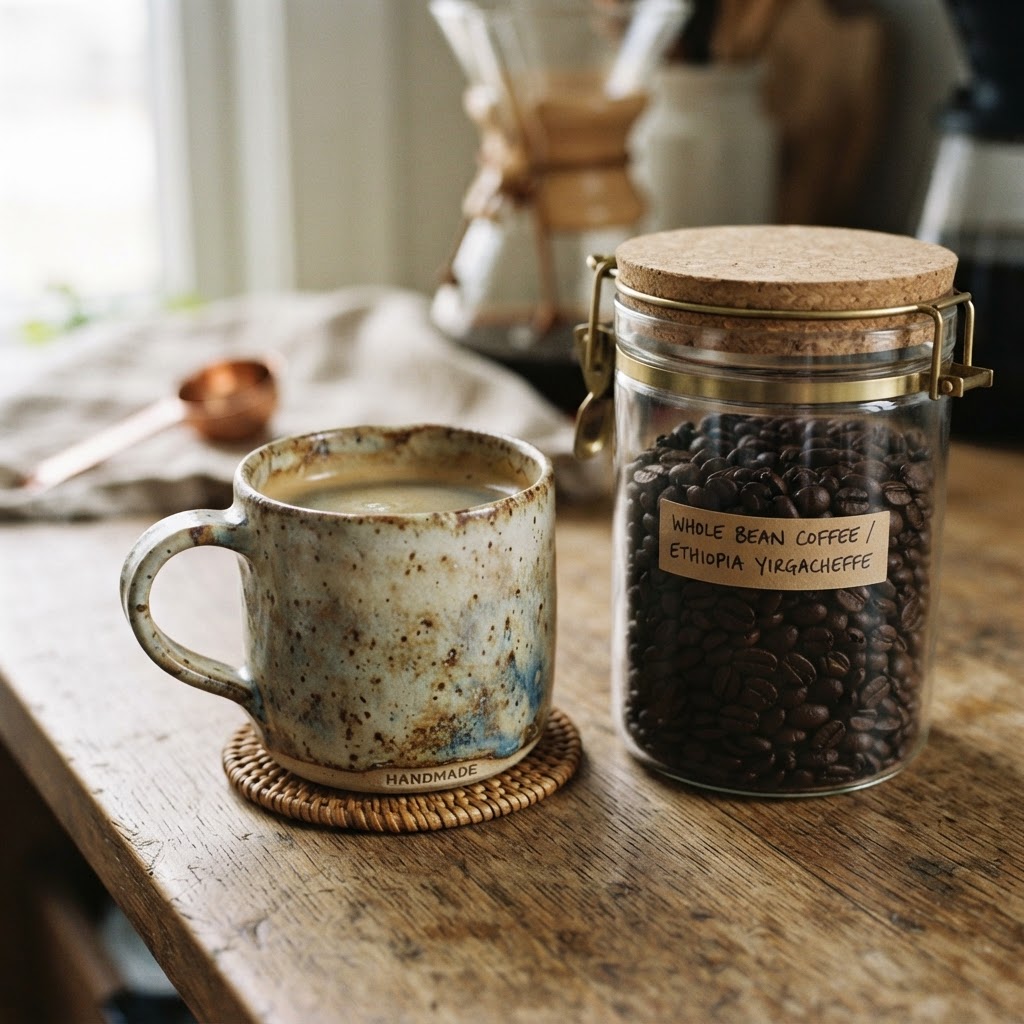
And honestly, the styling almost takes care of itself here because the objects involved are inherently beautiful. A good espresso machine, a wooden-handled pour-over kettle, handmade ceramic mugs, a glass canister of whole beans. These things have real visual appeal when grouped together thoughtfully. You don't need to add a lot of decorative filler. The function IS the decoration. That's what makes this approach so satisfying. It's genuinely one of the most "design-forward" things you can do with a set of shelves without trying very hard at all.
One practical note: keep it edited. The temptation with a coffee station is to put everything coffee-related on the shelf, including your giant Costco bag of beans, the box of 200 coffee pods, and three different half-used canisters. Don't do that. Decant things into attractive containers, keep the bulk storage somewhere else, and let the shelf show only what's beautiful and immediately useful. A little restraint goes a long way here.
Floating Shelves as a Gallery
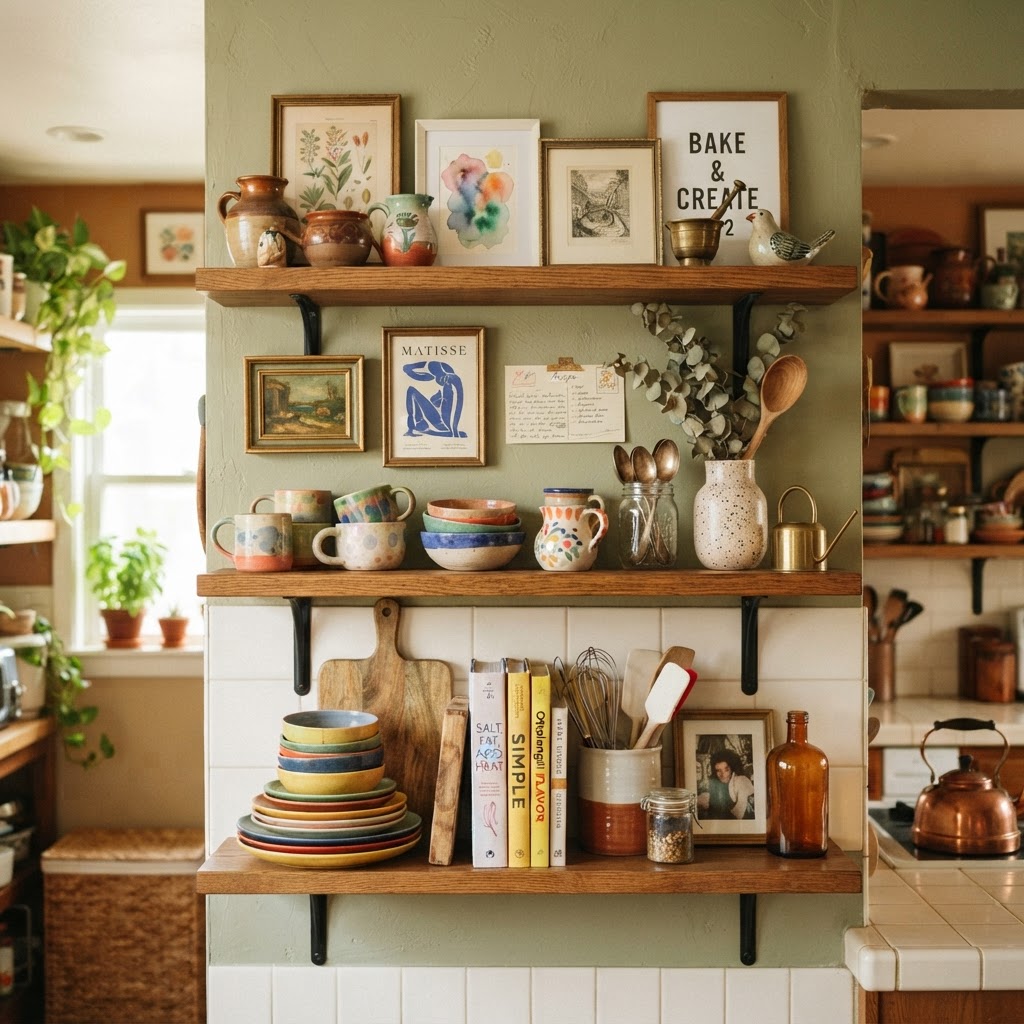
Here's where things get genuinely fun. Treating your floating kitchen shelves as a gallery wall is a concept that more people should embrace, and honestly, it's probably the most personal and expressive approach on this list. The idea is that your shelves aren't just for dishes and pantry items. They're a display space, like a wall in a gallery, where the things you love get to live in a way that tells your story. Small framed prints, ceramics you've collected on travels, a beautiful cookbook propped open or leaned facing out, a sculptural vase, a handmade bowl you couldn't leave at the market.
The styling principles here borrow heavily from actual gallery curation. You want a mix of two-dimensional and three-dimensional objects to create visual depth. Lean a small print or a postcard against the back wall of the shelf, then layer a small object in front of it. Vary the heights dramatically, low flat dishes beside a tall narrow vase, a small stack of books under a trailing plant. The eye should have somewhere interesting to go at every point along the shelf, not just sweep straight across.
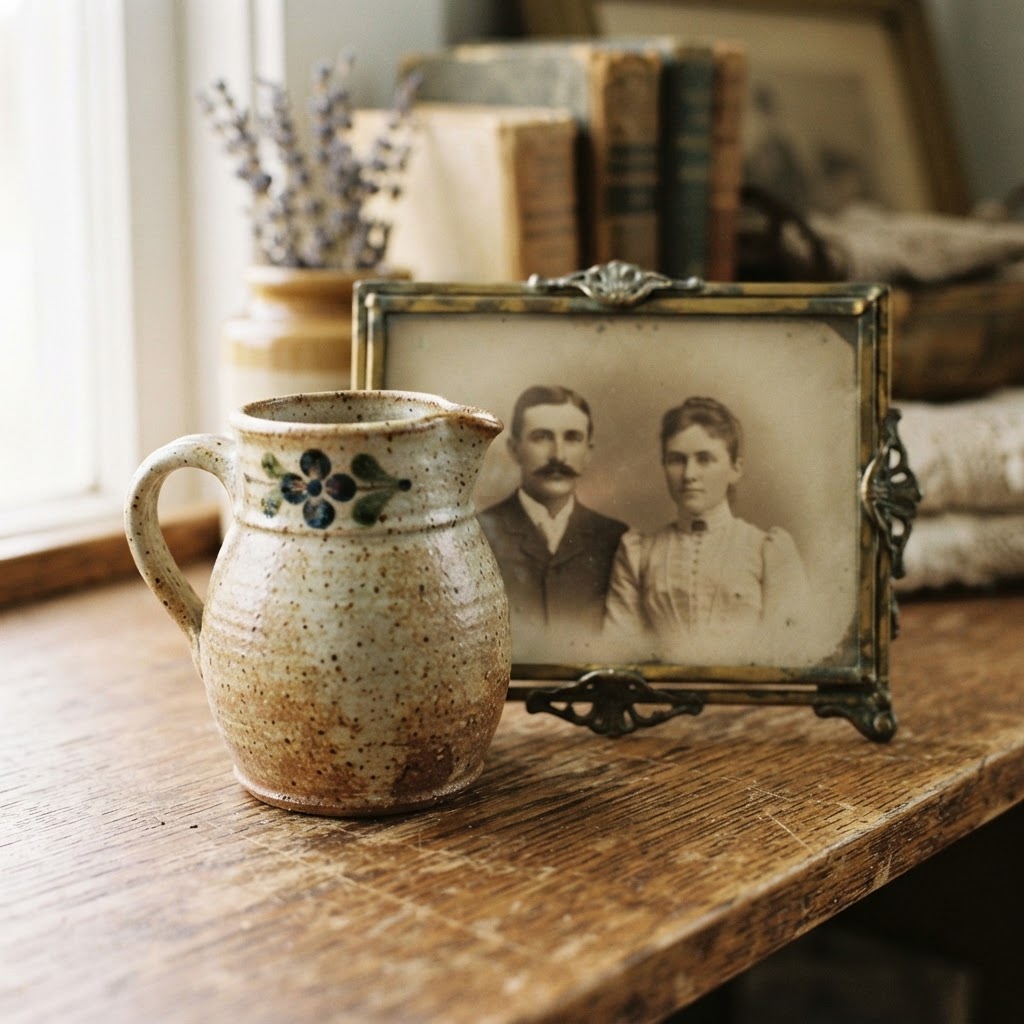
Color coordination is more important here than in any other style on this list. Because you're mixing functional items with decorative ones, and because the objects are more varied in nature, you need something to tie them together. A consistent color palette does that job. You don't have to be as strict as the monochromatic approach, a palette of two or three colors works beautifully. Terracotta, cream, and forest green. Navy, white, and warm wood. Pick your combination and shop and style within it.
The beauty of this approach is also its challenge: it requires you to actually have things worth displaying. If you don't yet have a collection of interesting objects, start small and build it slowly. One good ceramic piece, one small framed piece of art, one beautiful plant. Over time, this shelf becomes a genuine reflection of who you are, and that's something no amount of perfectly matched dish sets can replicate. It's the most alive version of open shelving, and it rewards people who are curious collectors by nature.
- Mix two-dimensional items like prints with three-dimensional objects for depth
- Lean items against the back wall rather than hanging everything
- Keep a consistent color palette across all the varied objects
- Build the collection slowly with pieces that actually mean something to you
- Let trailing plants soften the edges and add movement
Industrial Metal Grids
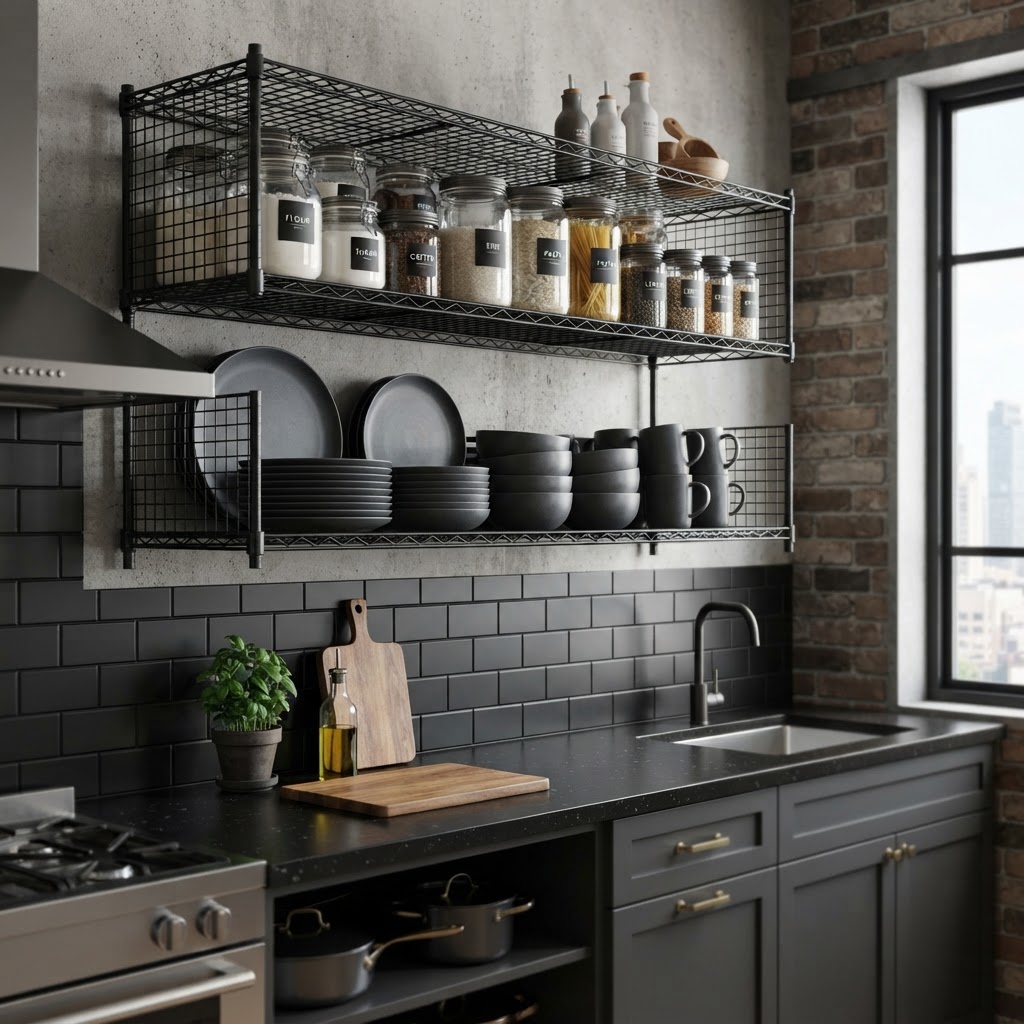
Okay, this one is for the people who want their kitchen to feel a little edgy, a little New York loft, a little "I have strong opinions about design." Industrial metal grid shelving, the kind with flat iron frames, wire mesh panels, or open grid structures, is a completely different beast from wood floating shelves, and it deserves its own styling approach. The material itself is making a statement. It's raw, it's structural, it's unapologetically functional-looking. Your job is to lean into that rather than fight it.
One of the best things about metal grid systems is the flexibility they offer. Most come with attachable hooks, small baskets, and clip-on containers, which means you can hang things like utensils, small pots of herbs, scissors, and dish towels directly from the grid itself. This vertical hanging capability is genuinely useful in a kitchen, especially if you're short on counter and drawer space. It turns the shelf from a display surface into a fully three-dimensional storage and display system, and that's actually a very smart use of a kitchen wall.
Styling-wise, the contrast principle does a lot of work here. The harshness of the metal grid looks incredible when you soften it with organic materials. A small terracotta pot hanging from one of the hooks. A woven basket tucked into a shelf section. A handful of dried herbs bundled together. These soft, natural elements make the metal feel intentional and curated rather than just utilitarian. Without that contrast, a metal grid shelf can start to look like you're running a storage facility rather than living in a home, and that's the line you want to stay on the right side of.
Real talk: this style is also the easiest to keep organized because the grid structure essentially forces you to assign homes to things. Each hook has a purpose, each basket has a designated category. It's the most systems-thinker-friendly option on this list, and if you're someone who genuinely struggles with keeping open shelves from becoming chaotic, the inherent structure of the grid format might actually solve that problem for you. Form and function come together in a way that few other shelving styles manage quite as naturally.
- Use the built-in hooks for hanging utensils, herbs, and small tools
- Soften the metal with organic materials like terracotta, linen, and dried botanicals
- Assign a specific purpose to each hook and basket to keep things from becoming cluttered
- Keep the color palette around the grid simple so the structure itself stays as the focal point
Final Thoughts
Open shelving is one of those design choices that can genuinely transform a kitchen, but only if you approach it with some intention. The five styles above cover a pretty wide range of personalities and aesthetics, from the quiet calm of the monochromatic minimalist to the bold structure of industrial metal grids. There's something here for almost every kind of kitchen and almost every kind of person who cooks in one.
The honest advice I'd leave you with is this: don't try to copy any of these looks exactly. Use them as a starting point, a framework, and then fill them with the things that actually belong to your life. The best-styled shelves I've ever seen aren't the ones that look like a showroom. They're the ones where you can tell a real person actually lives there, cooks there, and cares about the space they've created. Start with one shelf, one idea, and give yourself permission to adjust and evolve it over time. That's how the good stuff happens.
More in Interior
Stay Inspired
Subscribe for new essays on architecture, design, and the spaces that shape us.