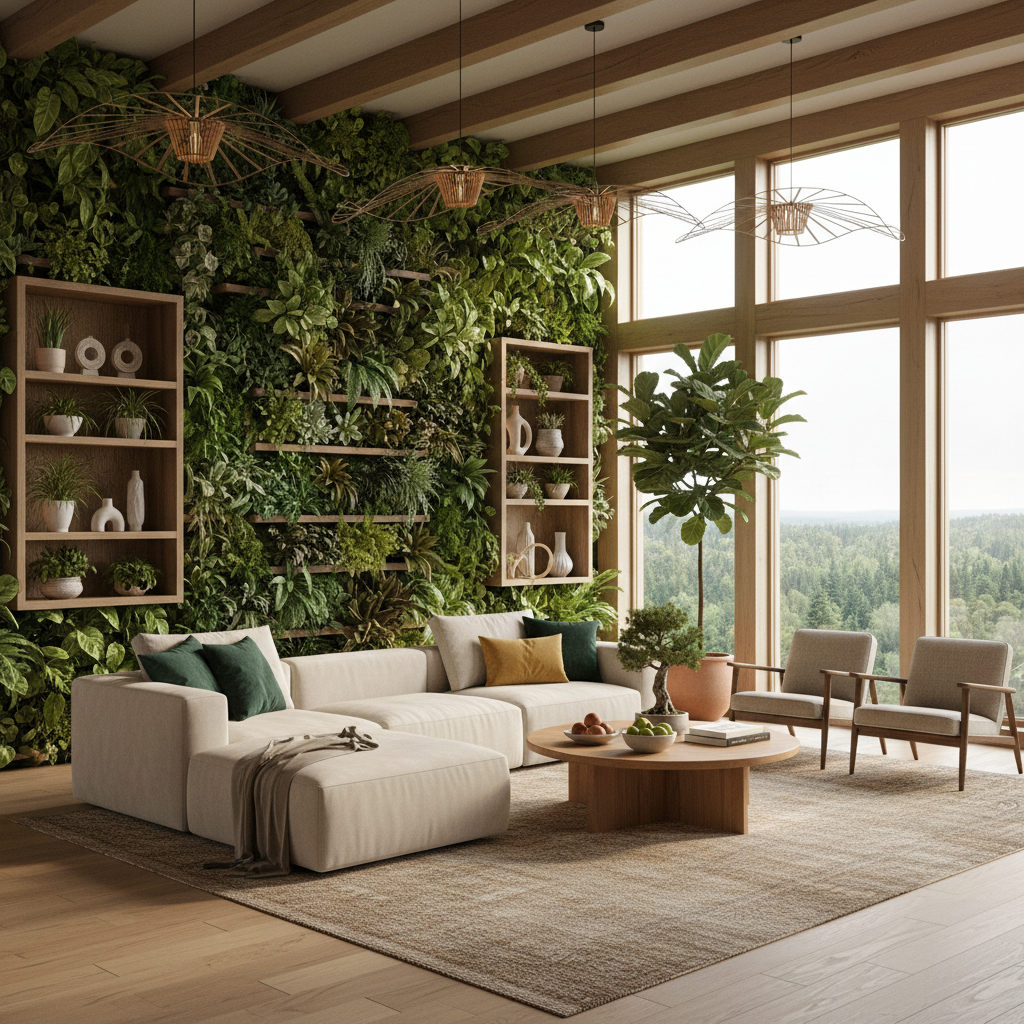
5 Stunning Green Wall Ideas to Transform Your Interiors
Are you looking to bring a touch of nature into your home? These five green wall ideas will not only enhance your space but also improve air quality and elevate your aesthetic. Let's dive into these inspiring options that will breathe life into any room!
1. Living Plant Wall Art
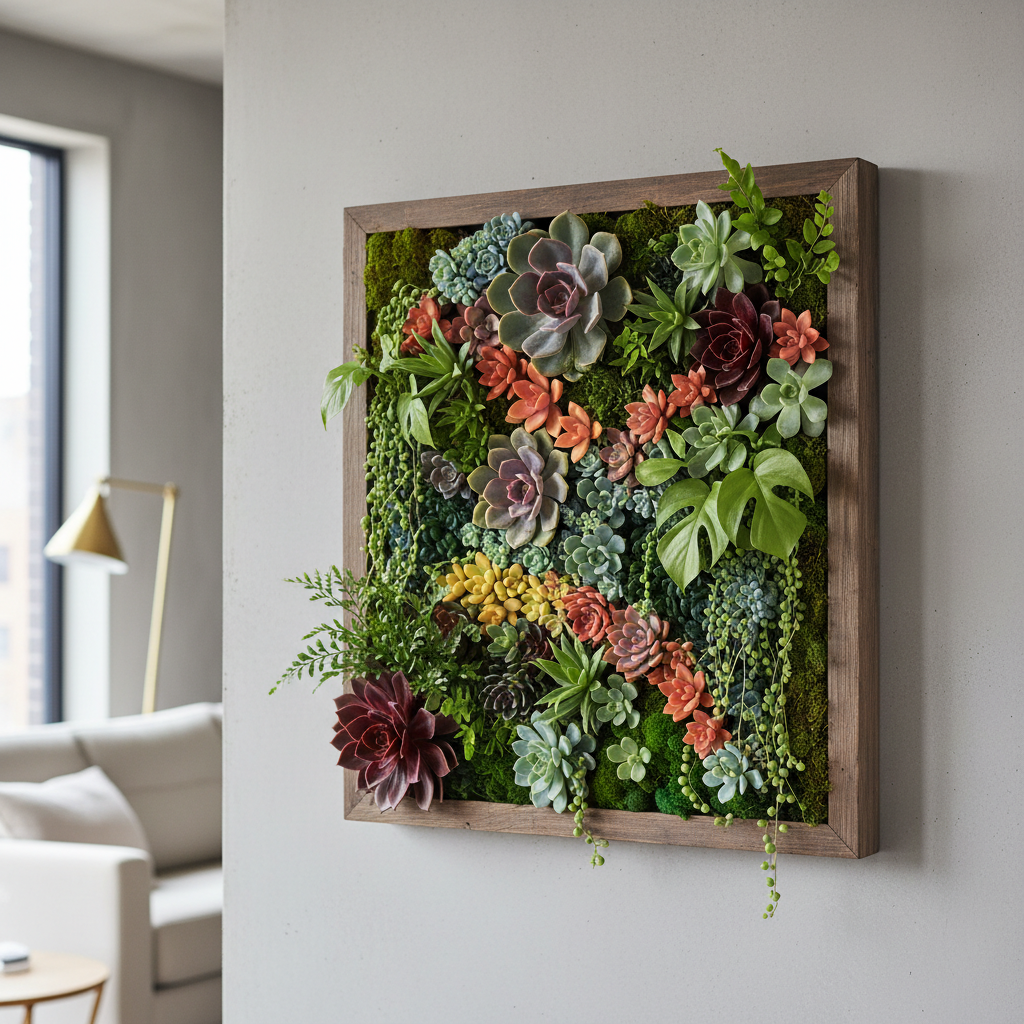
Honestly, the first time I walked into a room with a full living plant wall, I just stopped. Like, completely stopped mid-sentence and stared. There is something about a wall covered in lush, layered greenery that hits differently than any painting or gallery wall ever could. It is alive. It breathes. It changes over time. And that is exactly what makes it so compelling as a design choice.
Living plant wall art is basically the idea of turning an entire wall, or a large section of one, into a curated display of plants. Think ferns, pothos, philodendrons, moss, and even small-leafed vines all arranged in a modular panel system or a custom built frame. The result looks like nature decided to reclaim your living room, and honestly, let it. The visual texture you get from mixing different leaf shapes, sizes, and shades of green is something no wallpaper can replicate.
Here's the thing though, this is not just about aesthetics. Living walls actually improve air quality by filtering toxins and releasing oxygen. Studies have shown that having greenery indoors can reduce stress and boost mood. So you are literally decorating your home with something that is also making you feel better. That is a rare win in interior design, where you usually have to sacrifice function for beauty or vice versa.
When it comes to installation, you have a few options. You can go with a pre-made modular panel system, which is honestly the easiest route if you are a beginner. These systems have built-in pockets or trays for individual plants and often include an integrated irrigation setup. On the more custom end, some designers build freestanding frames with growing medium inserted directly into the wall structure. Both approaches work beautifully, but the modular route is way more forgiving if you decide to swap plants around or move things later.
My advice? Start with plants that are known to be resilient. Pothos and heartleaf philodendrons are practically indestructible and thrive in lower light. If your wall gets good natural light, you can get adventurous with ferns, string of pearls, or even small orchids tucked in for drama. Do not feel like you need to fill every inch right away. Start with a composition you love and let the plants fill in naturally over time. Trust me on this, the wall will look even better after six months than it does on day one.
2. Vertical Garden in the Entryway
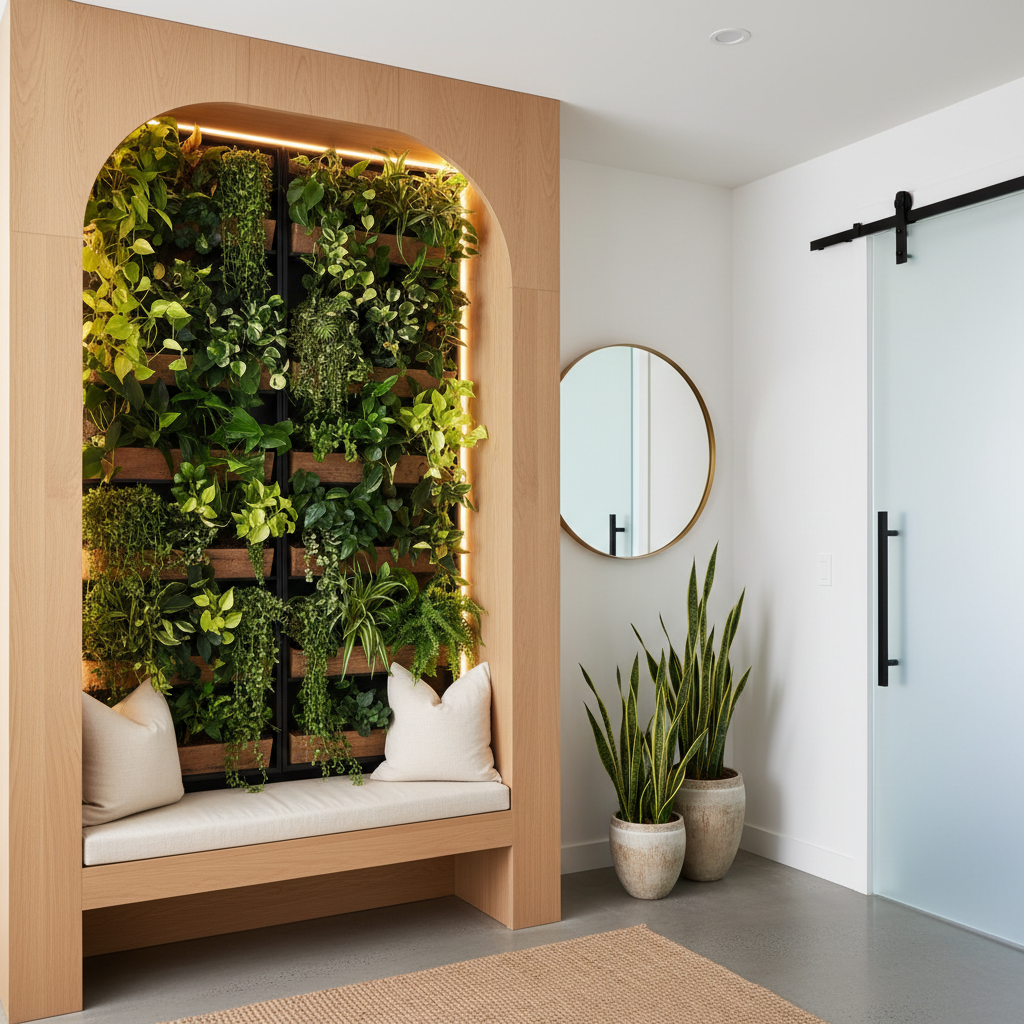
Real talk, your entryway is doing so much more work than most people give it credit for. It is the very first impression anyone gets of your home, including you, every single time you walk through the door. So why are so many entryways just, like, a coat hook and maybe a bench? You can do so much better. A vertical garden in the entryway is one of those choices that immediately tells guests, yes, this person has taste.
The beauty of putting a vertical garden right at the entrance is that it creates an instant atmosphere shift. You walk in from the noise and chaos of the outside world and you are immediately greeted by greenery, texture, and the subtle earthy scent of living plants. It is grounding. It signals that the home beyond is a place of calm and intention. I have seen this done in everything from a narrow New York City apartment hallway to a sprawling farmhouse foyer, and it works every single time.
From a practical standpoint, entryways can be tricky because they often do not get a ton of natural light. Here's the thing, that is totally solvable. Integrated grow lights have come such a long way in the last few years. You can get sleek, low-profile LED strips that tuck right into the frame of your vertical garden and are virtually invisible. They provide the spectrum of light plants need without looking clinical or weird. Some of them even come with timers so you are not thinking about it at all.
For plant selection in the entryway, I lean toward a mix of trailing plants and compact upright varieties. Something like a ZZ plant for structure, cascading pothos for movement, and maybe a few ferns for that lush, layered look. If your entryway has a side table or console, you can even extend the green theme down to the surface with a couple of standalone pots that coordinate with your wall. The visual continuity this creates is chef's kiss, very cohesive, very intentional.
One thing to keep in mind is moisture management. Entryways see a lot of foot traffic, temperature fluctuations from doors opening and closing, and sometimes drafts. Make sure your irrigation system, whether it is a drip setup or manual watering, is not going to create puddles or water damage near your flooring. A small drip tray behind each panel is usually enough to handle runoff. A little planning upfront saves a lot of headaches later. The payoff, though, is absolutely worth it. Walking into a home and being greeted by a wall of living green is genuinely one of the nicest things you can do for yourself.
3. Kitchen Herb Wall
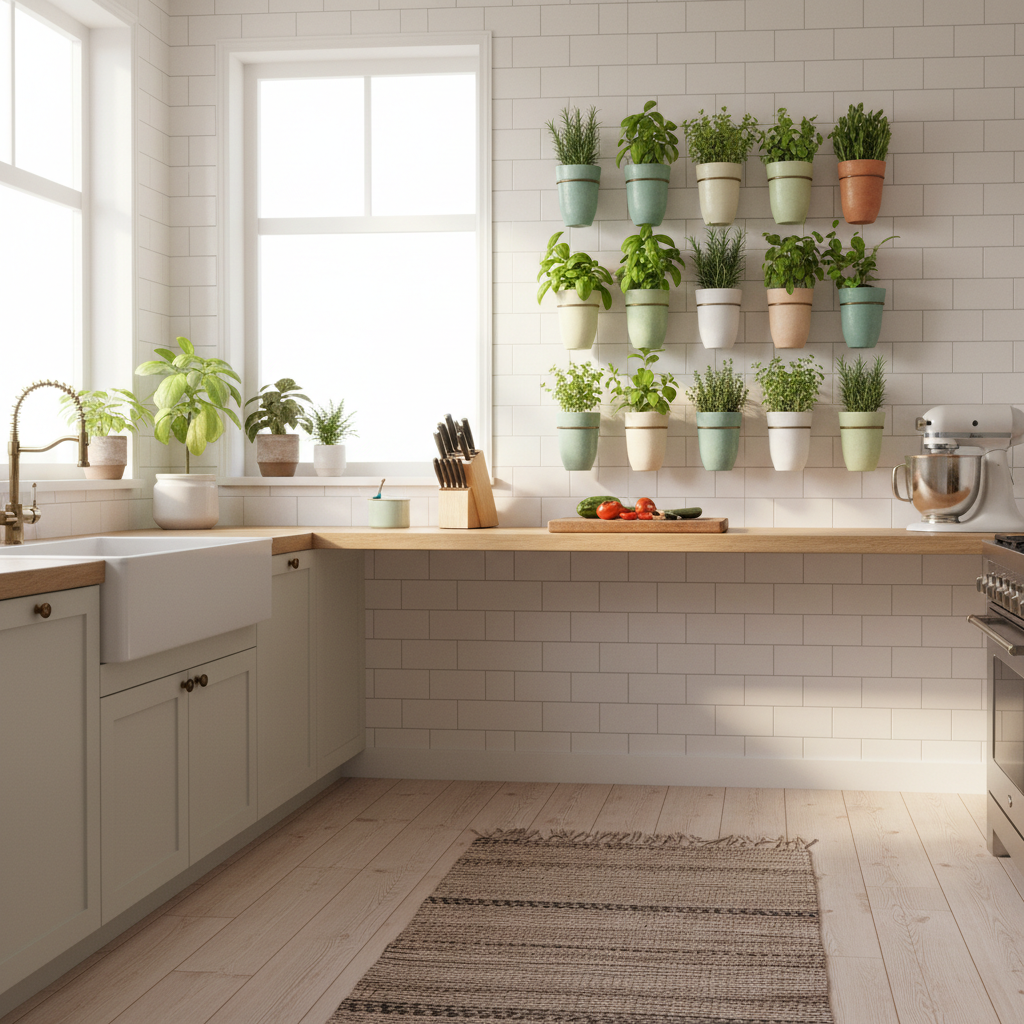
Okay, this one is my personal favorite and I will absolutely die on this hill. A kitchen herb wall is the intersection of form and function at its absolute best. You get the visual beauty of a green wall, but every single plant on it is actually useful. Fresh basil, rosemary, thyme, mint, parsley, chives growing right there on your kitchen wall, ready to grab while you cook. It is practical, it is gorgeous, and it smells incredible.
Look, we have all bought a bunch of fresh herbs at the grocery store, used like three sprigs, and watched the rest turn into a sad, wilted pile in the fridge a week later. Having a live herb wall completely eliminates that problem. You grow what you use, you use what you grow, and the act of snipping herbs fresh right before you cook them makes the whole experience feel so much more intentional and honestly just more delicious. The flavor of freshly cut herbs versus week-old grocery store herbs is not even a competition.
When designing a kitchen herb wall, placement is everything. You want it close enough to your prep area that it is actually convenient to use, but not so close to the stove that steam and heat are going to stress the plants. A wall adjacent to a window is ideal since most culinary herbs are sun lovers. Basil, in particular, needs at least six hours of light to really thrive, so do not tuck it in a dim corner and wonder why it keeps dying. A south-facing kitchen wall is basically herb heaven.
The design possibilities here are genuinely fun. You can go rustic with wooden planks and terracotta pots for a farmhouse look. You can go sleek and modern with a matte black wall-mounted grid and white ceramic planters. You can even mix in a chalkboard section nearby so you can note which plants are in season or jot down recipes. The herb wall can serve as a total focal point in an otherwise functional kitchen space, giving it personality without cluttering the counter.
A quick practical note on maintenance: herbs grow fast, and some of them, mint especially, will try to take over if you let them. Keep your herb wall tidy by harvesting regularly and trimming back any plants that are getting leggy or bolting. This actually encourages bushier, more productive growth, so it is genuinely a win for both aesthetics and yield. Also, rotate your herbs seasonally. Basil is a summer plant. In winter, swap it out for hardier options like thyme, rosemary, or sage. Your wall stays looking full and intentional all year round.
4. Office Green Wall for Productivity
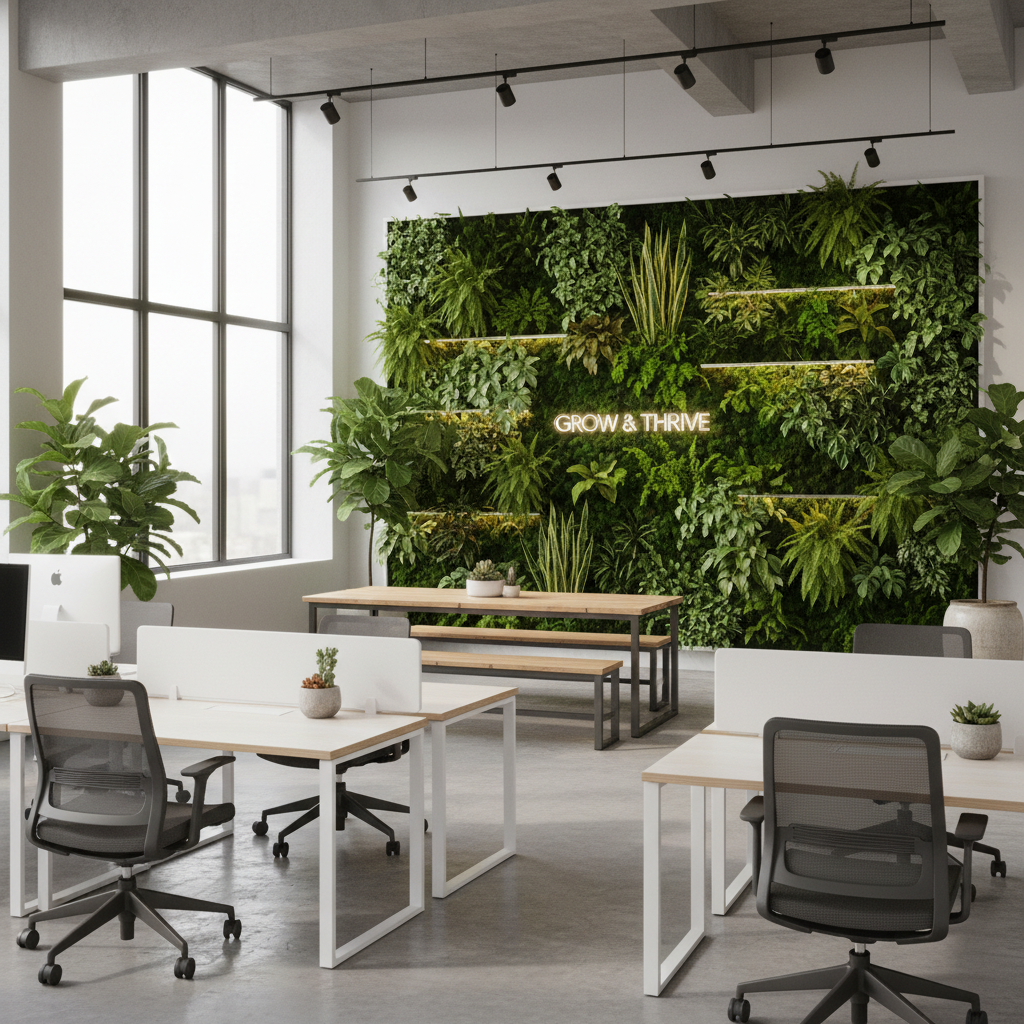
Here's the thing about working from home or even just having a dedicated home office space: the environment you work in has a massive impact on how productive and creative you actually feel. And honestly, a green wall in your office is not just a pretty backdrop for your video calls, though it absolutely is that too. It is a legitimate productivity tool backed by actual research. Studies from places like the University of Exeter have found that employees in offices with plants are something like 15 percent more productive than those without. That is not nothing.
The psychological effect of greenery in a workspace is pretty fascinating. Plants create what researchers call a "restorative environment," meaning they give your brain micro-moments of rest as your eye naturally wanders to them. When you are deep in focus work, your visual cortex occasionally needs a break. Glancing at a green wall gives it that break in a way that staring at a blank white wall or scrolling your phone does not. You come back to your screen feeling subtly refreshed rather than mentally drained.
For a home office green wall, I would recommend focusing on low-maintenance plants that do not require a lot of fussing. The last thing you want when you are trying to meet a deadline is to realize your wall garden needs attention. Pothos, snake plants, peace lilies, and ZZ plants are all incredibly forgiving and can handle the kind of inconsistent watering and imperfect lighting conditions that most home offices deal with. Keep it lush but low drama. You want the wall to work for you, not the other way around.
From a design perspective, consider using the green wall as a backdrop directly behind your desk and monitor. Not only does it look stunning on video calls, which, if you work remotely, matters more than people admit, but it also creates a clear visual boundary between your work zone and the rest of the room. This is especially valuable if your office is in a multi-use space like a bedroom or living area. The green wall anchors the desk area and makes it feel like its own intentional environment.
And real talk, noise reduction is a genuine bonus here that most people do not even consider. Dense green walls, especially those with a thick growing medium, can absorb sound and reduce echo in a room. If you are doing a lot of video meetings or podcast recording, a green wall behind you is not just good looking, it is acoustically helpful. That combination of beauty, function, and psychological benefit makes the office green wall one of the smartest investments you can make in your home workspace. The return on that investment shows up every single workday.
5. Outdoor-Indoor Patio Connection
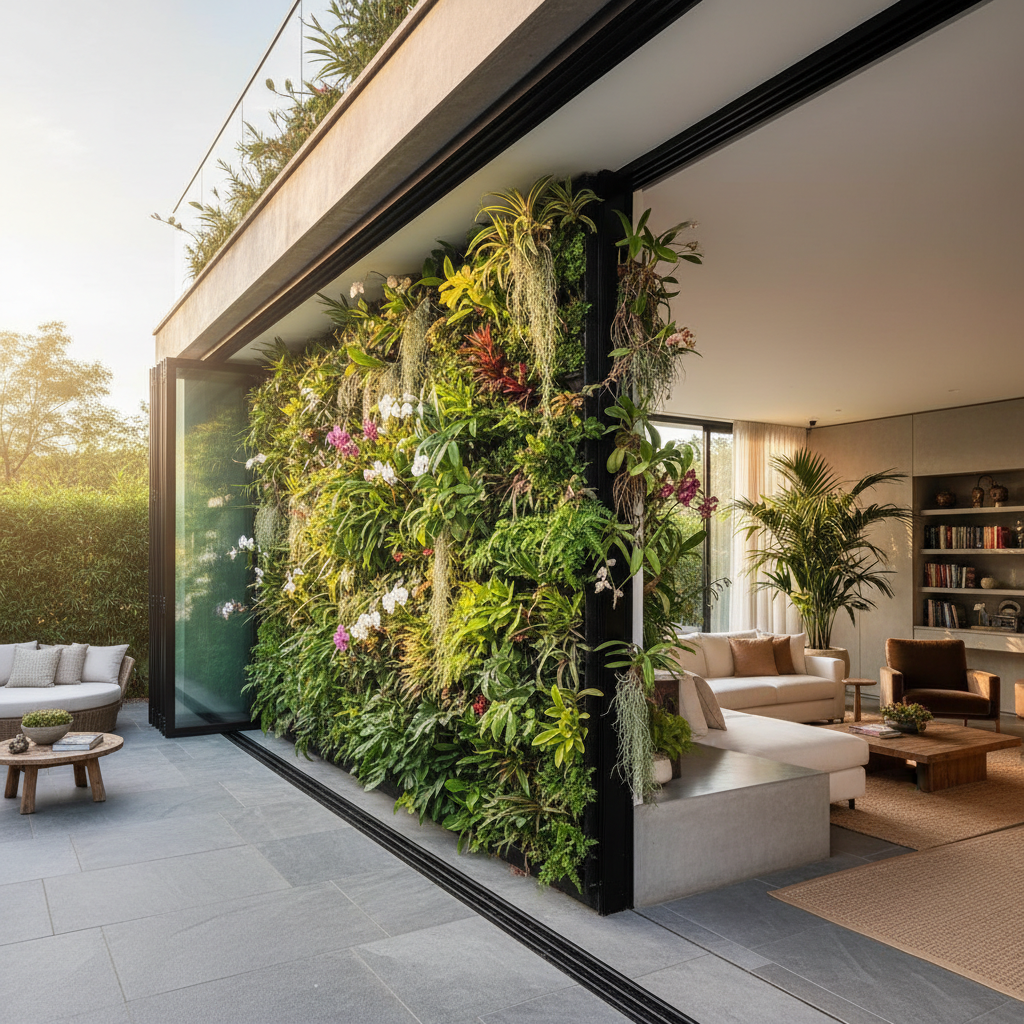
One of the most sought-after things in modern interior architecture is that seamless flow between indoor and outdoor living. Sliding glass doors, continuous flooring materials, matching color palettes, all of these help blur the boundary between inside and outside. But honestly, nothing creates that connection more powerfully and naturally than a green wall positioned at the transition point between your patio and your interior. It is like the wall itself becomes the bridge between two worlds.
The concept here is to use a vertical garden on either the interior wall adjacent to your outdoor space or on an exterior wall that faces inward toward the living area. When you have large sliding or folding doors that open up, the green wall becomes a lush visual anchor that ties the two spaces together. The plant life continues the natural language of the outdoor garden into the interior, so the whole thing feels cohesive rather than like two separate rooms with a door between them.
For this particular application, plant selection needs to account for some pretty different conditions than a purely indoor wall. Plants on or near a patio wall will experience more temperature variation, stronger light exposure, and potentially wind. Succulents, certain ferns, native grasses, and hardy climbing plants like star jasmine or even small-leafed ivy can work beautifully here depending on your climate. If the wall is partially sheltered, you can mix in more tender varieties like philodendrons that might not survive fully exposed outdoor conditions.
Think about how this wall interacts with your outdoor furniture arrangement and your interior layout simultaneously. A green wall that is visible from both the sofa inside and the outdoor seating area creates a visual anchor for both spaces. It becomes the thing your eye is drawn to from multiple angles, which is exactly the kind of layered, thoughtful design that makes a home feel truly considered rather than just decorated. I have seen this done spectacularly well in small city apartments with tiny balconies, where the green wall on the balcony railing-facing side makes the whole space feel three times larger through visual trickery.
Lighting is worth thinking about carefully here too. If your patio gets evening use, consider adding some warm-toned outdoor lighting behind or around the green wall. The way soft light filters through plant leaves at night is genuinely magical and creates an atmosphere that no overhead light fixture can match. String lights woven subtly through the foliage, uplights hidden at the base, or even recessed wall lights behind a freestanding green panel can transform your evening outdoor space into something that feels like a private garden restaurant. And that, honestly, is the whole dream.
Final Thoughts
Look, green walls are not a passing trend. They have been part of sophisticated design language for decades, from the iconic living walls of Patrick Blanc to the herb gardens of Japanese restaurant interiors, and they are not going anywhere. What is exciting right now is that the technology, the plant availability, and the design knowledge have all caught up to the point where you can do this in your own home without a massive budget or a horticulture degree.
Whether you go all-in with a full living wall in your living room or start small with a kitchen herb display above your counter, the point is to bring life into your space in a literal, tangible way. Plants change the energy of a room in a way that is hard to fully articulate until you experience it. They soften hard lines, add texture, improve air quality, and remind you that you are part of a natural world that exists beyond your screens and schedules.
Start somewhere. Pick one idea from this list that excites you most and commit to it. You can always expand later. Trust the process, do your research on plant care, invest in a decent irrigation setup if you can, and give yourself permission to learn as you go. The plants will be forgiving. And the result will be a home that genuinely feels different, warmer, more alive, more like you.
More in Interior
Stay Inspired
Subscribe for new essays on architecture, design, and the spaces that shape us.