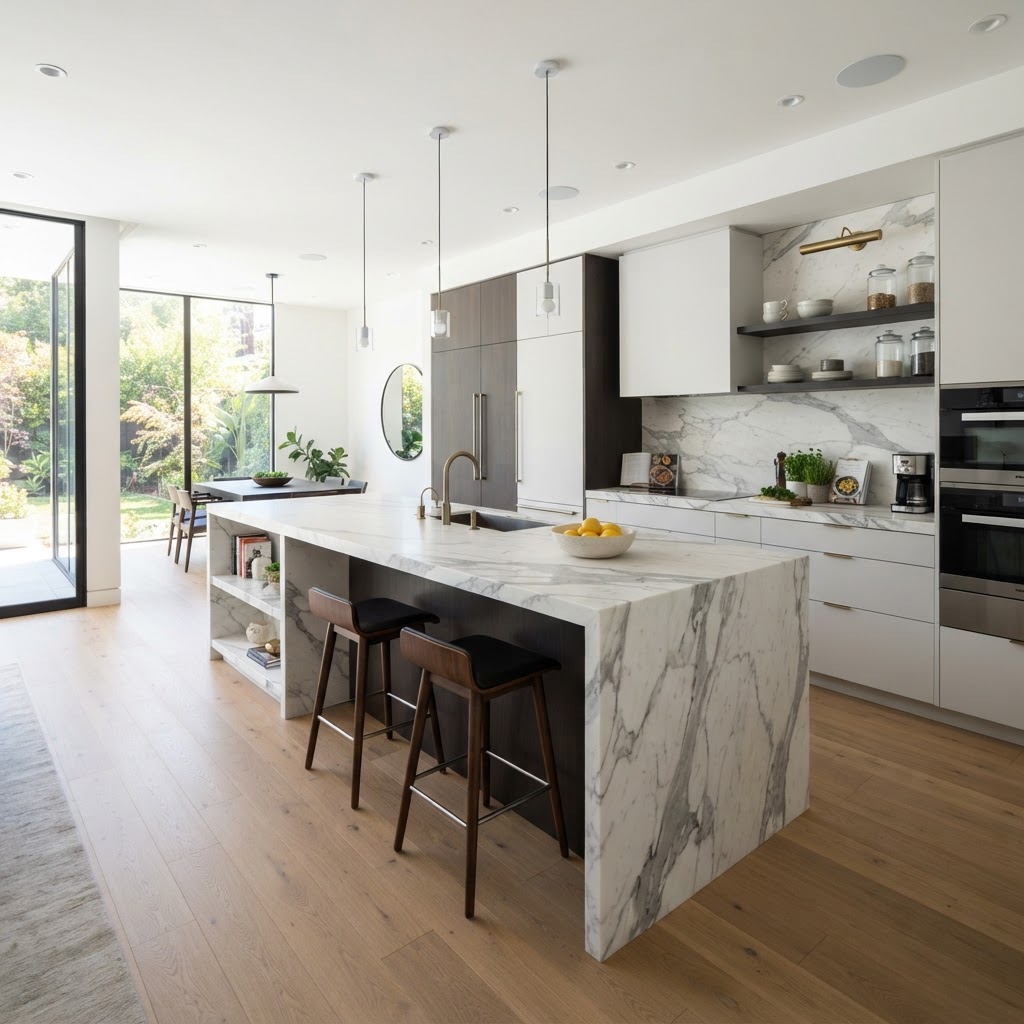
5 Kitchen Island Designs That Will Completely Transform Your Space
Upgrading your kitchen island is the fastest way to give your home a high end look. We have gathered five stunning designs that perfectly balance style and functionality for your next renovation project.
1. The Statement Waterfall Island
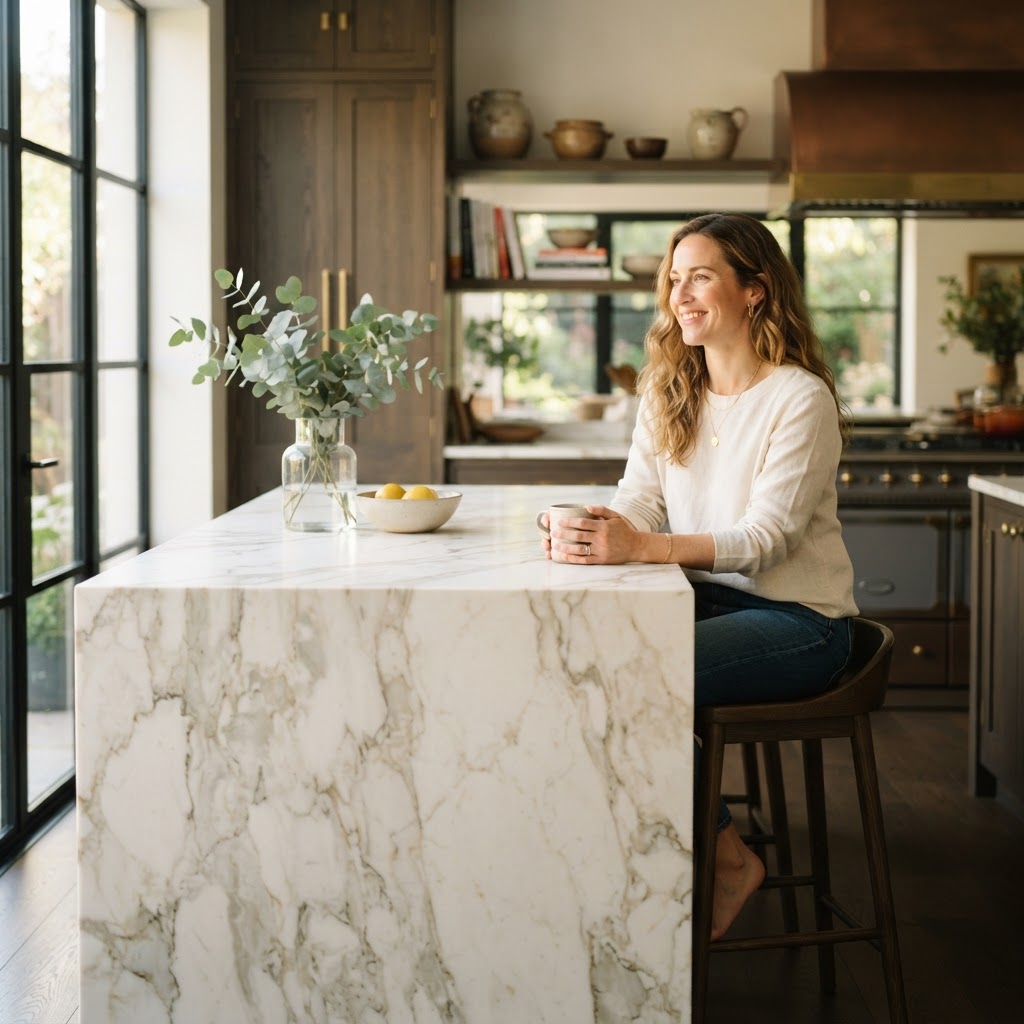
Okay, let's start with the one that makes people stop dead in their tracks when they walk into a kitchen. The waterfall island. If you've scrolled through any design inspiration lately, you've seen it, and honestly, there's a reason it keeps showing up. It's one of those designs that somehow manages to feel both timeless and completely of-the-moment at the same time.
Here's the thing about a waterfall island: the magic is in the continuous surface. The countertop material, whether that's marble, quartz, quartzite, or even a rich engineered stone, flows seamlessly over the edge and down the sides of the island all the way to the floor. No exposed cabinetry on the ends. No visible seam breaking the visual flow. Just one uninterrupted, gorgeous plane of material that turns your kitchen island into something closer to a sculpture than a piece of furniture.
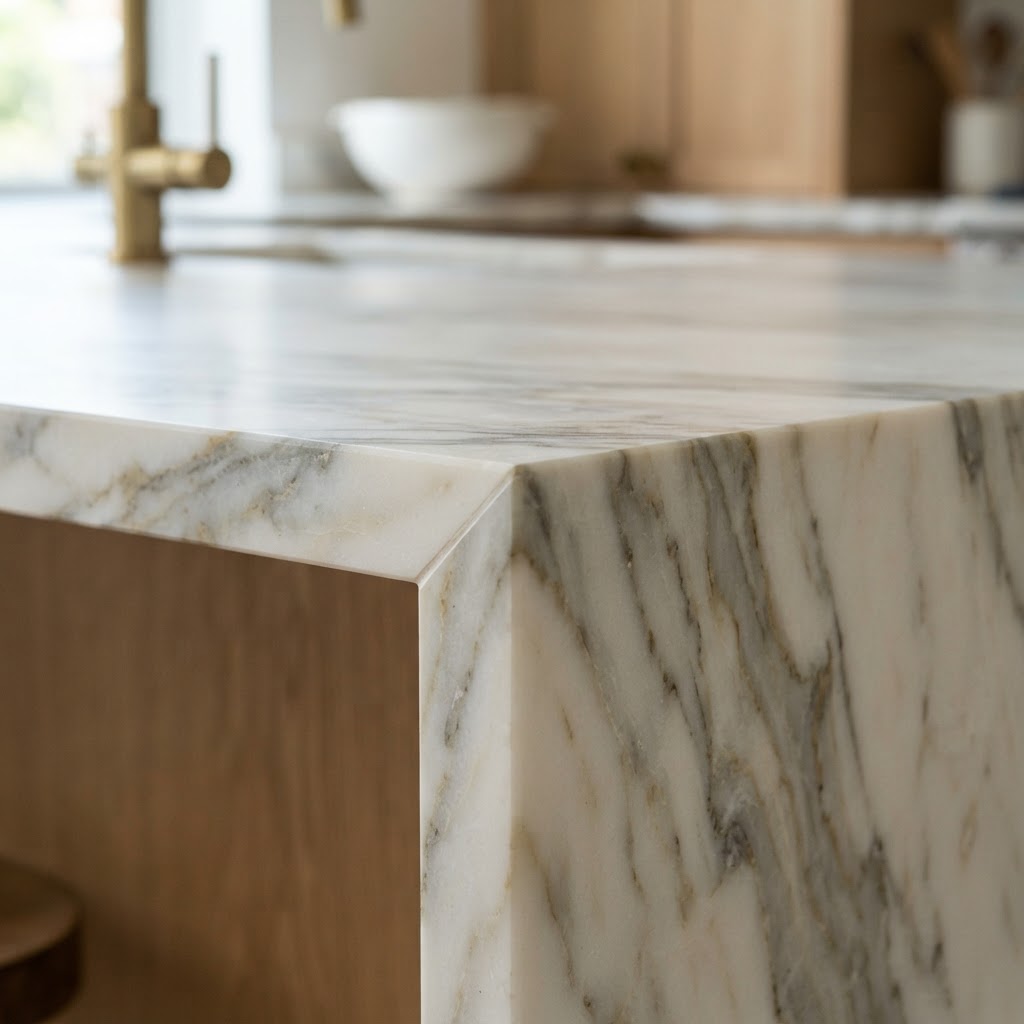
Now, real talk: this is not a budget option. Getting the material to wrap properly, especially with a stone that has veining you want to match, requires real craftsmanship. A good fabricator will work hard to book-match the stone so the veining mirrors itself at the corner, which creates this almost symmetrical, butterfly effect. When it's done well, it's breathtaking. When it's done poorly, it just looks like someone ran out of ideas at the edge. So if you go this route, spend the money on a fabricator who knows what they're doing.
What works especially well with a waterfall island is pairing it with flat-front cabinetry and minimal hardware. The island is already doing a lot of talking. You don't want busy upper cabinets competing with it. Keep the rest of the kitchen relatively calm and let the island be the star. Pendants overhead should be simple, maybe something linear or geometric, nothing too fussy. And if you can swing it, a slightly contrasting countertop on the perimeter versus the island creates this intentional layering that looks incredibly considered and deliberate.
- Best materials: Calacatta marble, book-matched quartzite, sintered stone like Dekton, or even a moody black granite
- Works best in: Contemporary, transitional, and minimalist kitchens
- Pro tip: Ask your fabricator about mitered edges for the thinnest, most elegant look possible
- Watch out for: Matching the veining at the corner seam, this is where quality fabrication really matters
2. Warm Wood and Open Shelving
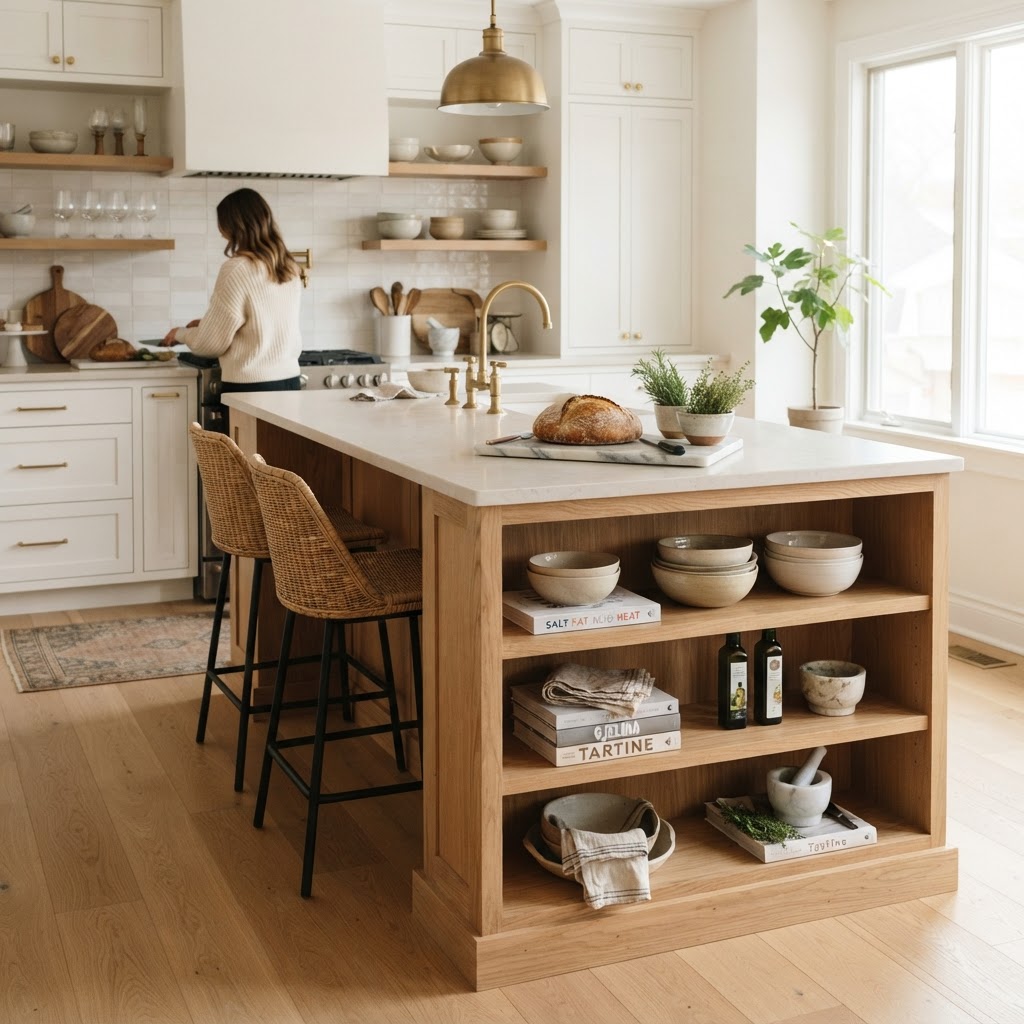
Not everyone wants a cold, slick, magazine-perfect kitchen. Some of us want a kitchen that feels like it actually belongs to a human being. That's where the warm wood island with open shelving comes in, and honestly, I have a serious soft spot for this one. There's something about a beautifully grained wood base with open shelves underneath that makes a kitchen feel genuinely lived-in and welcoming, without looking sloppy or unfinished.
The key here is in the wood selection and the finish. You're not looking for something that screams "pine from a big-box store." You want something with real character, think white oak, walnut, or even a painted base with a natural wood floating shelf element incorporated into the design. The grain matters. The finish matters. A matte or satin finish will always look more intentional than anything glossy, which can cheapen the whole effect fast.
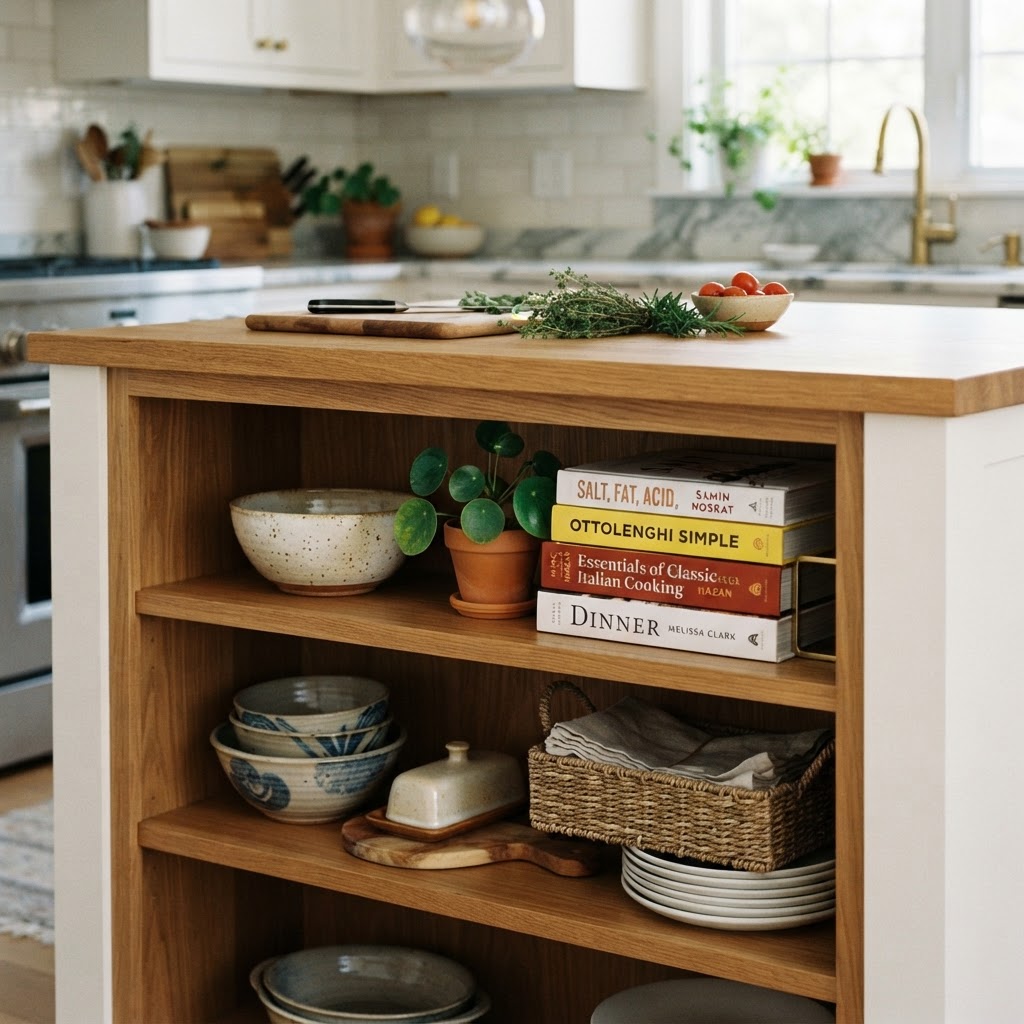
Open shelving on the island base is one of those things that people either love or feel intimidated by. And look, I get it. Open shelves mean what's on them is on display, always. But that's also kind of the whole point. You get to show a little personality. Stack some beautiful cookbooks, a few ceramic bowls, a wooden cutting board leaning casually against the back. It doesn't have to be a styled photoshoot situation every day. It just has to feel like you.
What really elevates this design is pairing the wood island with a contrasting countertop, something lighter if the wood is dark, or a honed marble or butcher block surface that complements the warmth. Butcher block tops on a wood-base island can be incredible, especially in a farmhouse or Scandinavian-influenced kitchen. Just be honest with yourself about maintenance. Butcher block needs some attention, regular oiling and the occasional light sanding, but if you're someone who actually cooks and uses your kitchen, it ages beautifully and tells a story over time.
- Best wood species: White oak, walnut, hickory, or painted MDF with wood accents
- Countertop pairings: Honed marble, butcher block, white quartz, or soapstone
- Open shelf styling tips: Mix textures, keep it loose, not too precious
- Works best in: Farmhouse, Scandinavian, transitional, and cottage-style kitchens
3. Industrial Metal and Concrete
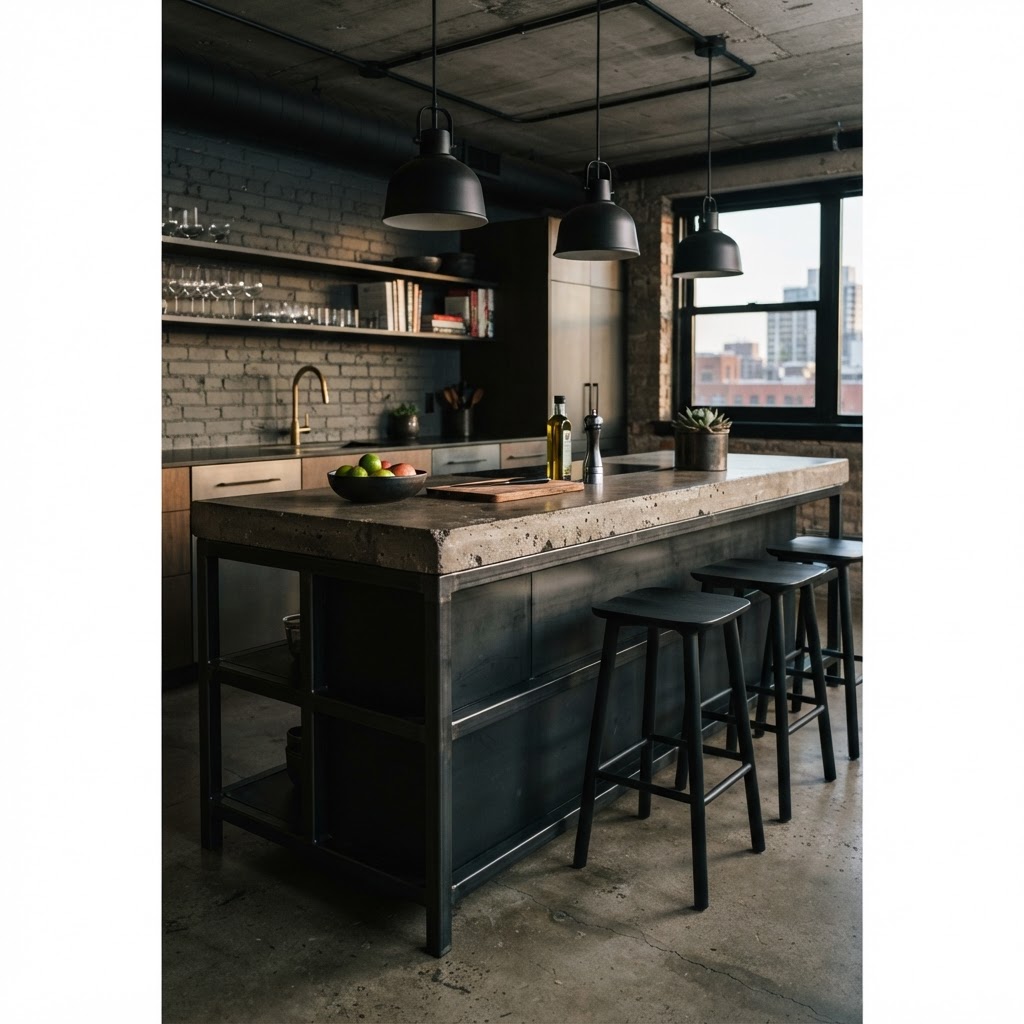
This one is not for everyone, and that's exactly why I love it. An industrial island built around metal and concrete is bold, uncompromising, and absolutely stunning when it's executed with intention. It's the kind of design that makes a kitchen feel less like a showroom and more like a serious, purposeful space where real cooking actually happens.
Concrete countertops have had a moment for a while now, but they're genuinely worth it if you understand what you're getting into. Concrete is porous, it can crack if not sealed and maintained properly, and it will develop a patina over time. Here's the thing though: that patina is the whole point. A concrete top that's been used and loved for a decade looks incredible in a way that a pristine quartz slab never will. It has personality. It has history. If you seal it properly with a good penetrating sealer and re-seal every year or two, it's honestly pretty manageable.
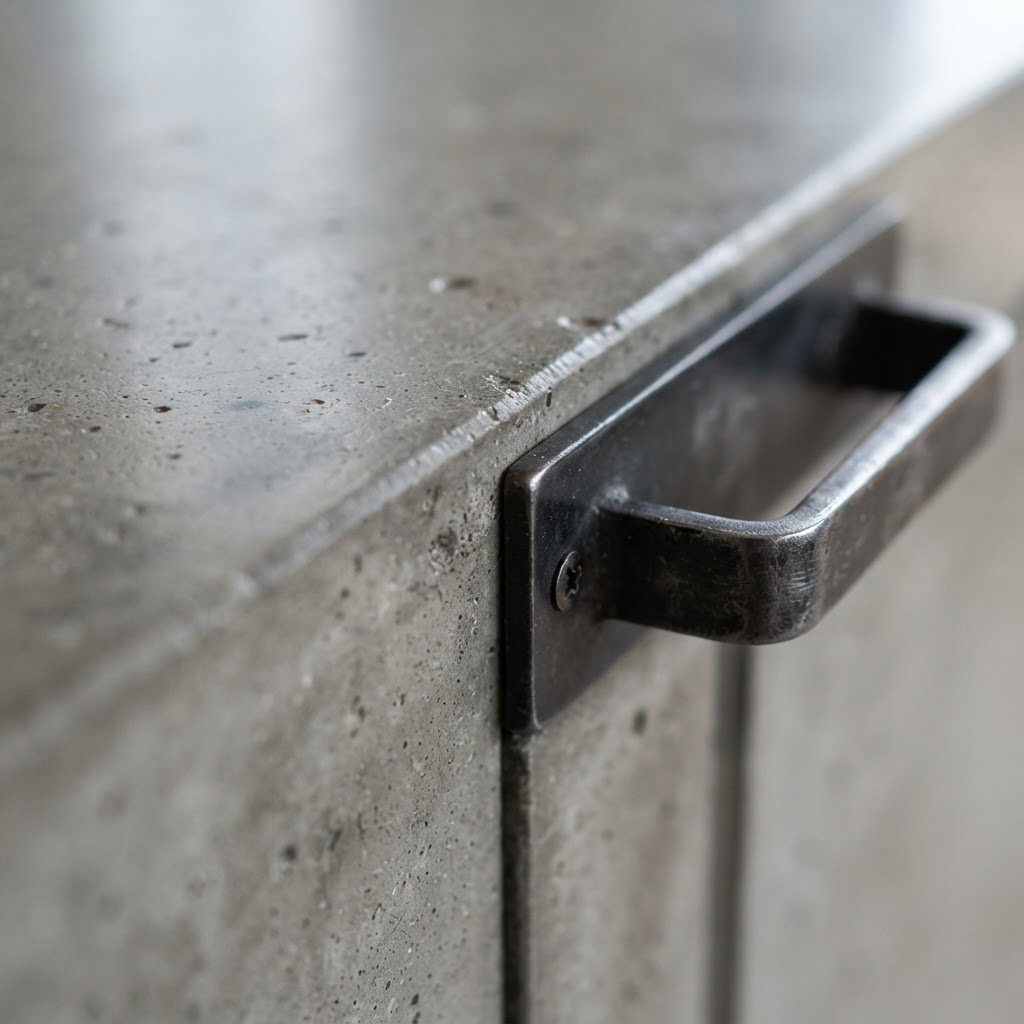
The metal element in an industrial island can show up in a few different ways. Some designers use a full blackened steel or raw iron base structure, almost like the island is sitting on a metal frame. Others use metal edge banding on the countertop, metal drawer pulls and hardware in a matte black or aged brass finish, or even incorporate metal mesh or perforated panel accents into the cabinetry doors. Any of these approaches work well, and mixing them can be really effective as long as you stay in the same tonal family. Don't mix your warm and cool metals in an industrial kitchen, it tends to look confused rather than curated.
Lighting is especially important with this style. You want something that reinforces the aesthetic, think exposed Edison bulbs, cage pendants, or minimalist matte black fixtures. Warm-toned bulbs are a must here. Cool white light will make concrete and metal look harsh and institutional, not in a good way. Get the lighting right and this kitchen will look like something out of a Brooklyn loft. Get it wrong and it'll just look cold.
- Key materials: Cast concrete, blackened steel, raw iron, honed granite as an alternative
- Hardware finish: Matte black, aged iron, or dark bronze
- Lighting recommendation: Warm Edison or cage-style pendants in black or bronze
- Works best in: Industrial, modern loft, urban contemporary, and raw-material-focused interiors
4. The Integrated Dining Extension
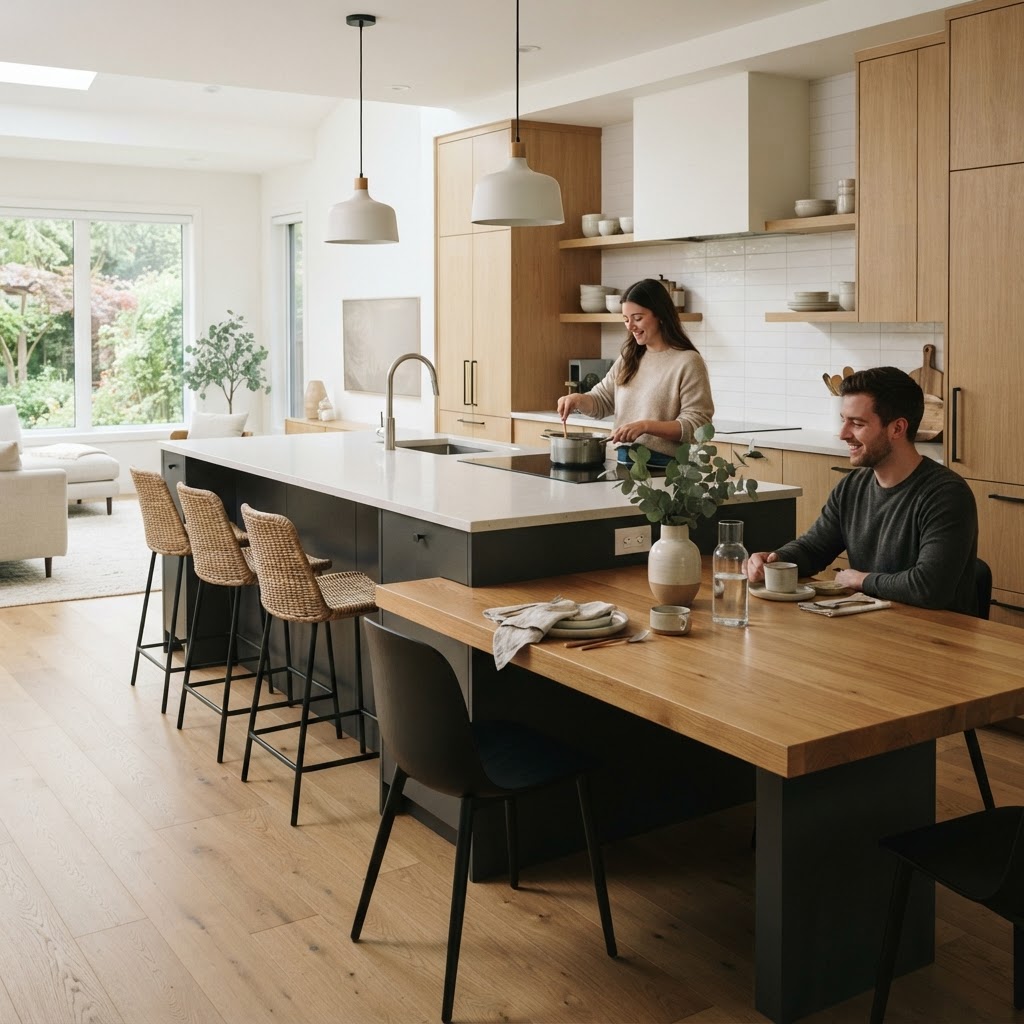
Okay, this is the practical one, and honestly, it might be the most life-changing of all five. The integrated dining extension island is exactly what it sounds like: an island that extends out on one or more sides to create a built-in dining or breakfast bar area. No separate table needed. No awkward zone in the kitchen where you can't quite figure out where eating ends and cooking begins. Everything flows together, and it works incredibly well for how most of us actually live.
The extension can be a simple overhang on one end, where bar stools tuck underneath, or it can be a full-on raised dining ledge on one side with a lower prep surface on the other. The two-tier version used to be everywhere in the early 2000s and it became a bit of a cliche, but done well and with modern materials, it's actually really functional. The single-level extension, where the entire island sits at one consistent counter height and the dining area just extends out to accommodate seated diners, is the cleaner, more contemporary approach and I'd lean that way if you're designing from scratch now.
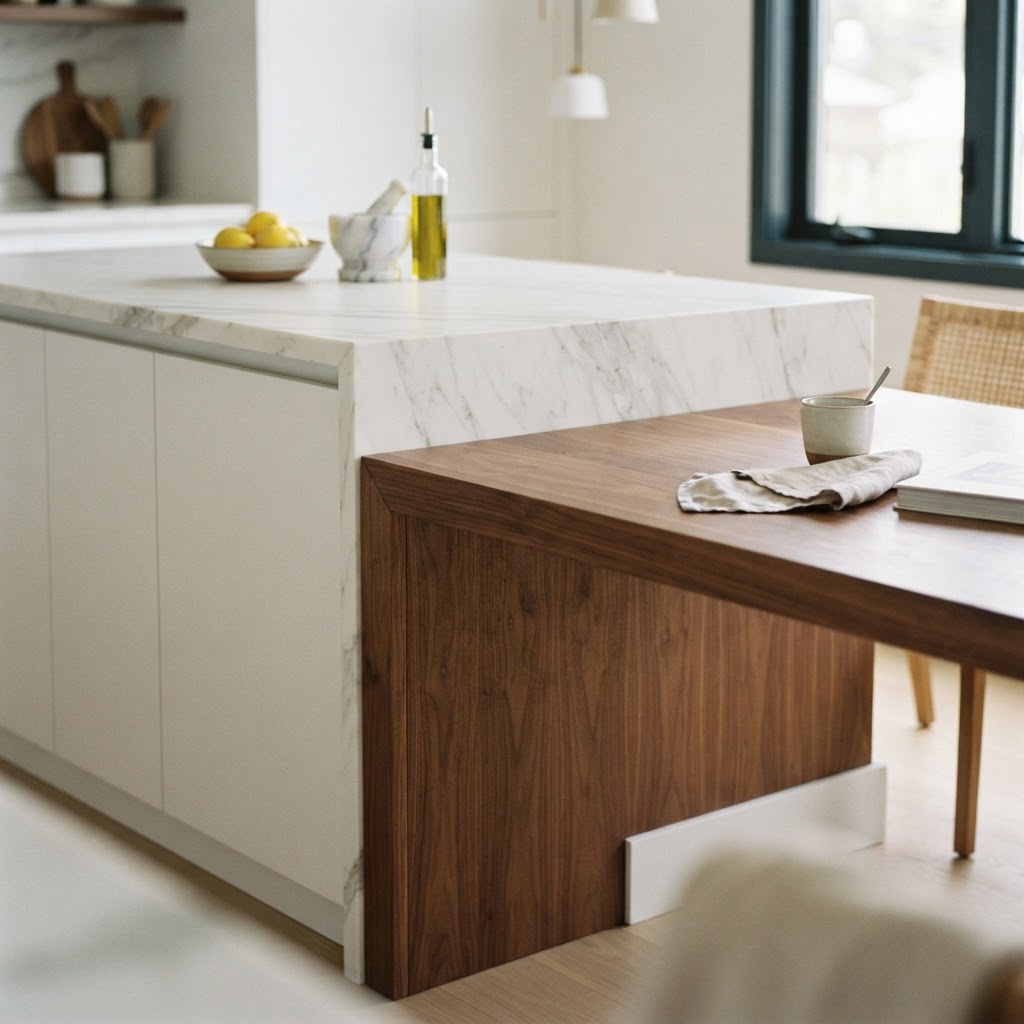
Stool selection is genuinely important here and gets overlooked way too often. The stool height needs to match your counter height, which sounds obvious but you'd be surprised how many people get this wrong. Standard counter height is around 36 inches, so you want a counter-height stool at about 24 to 26 inches. If you've raised the dining ledge to bar height, around 42 inches, you need bar-height stools at 28 to 30 inches. Get this wrong and nobody will ever want to sit there because it'll be uncomfortable.
Beyond function, the dining extension changes the social dynamic of your kitchen in a really meaningful way. Suddenly there's a place where someone can sit and talk to you while you cook without being in the way. Kids can do homework while you make dinner. Guests can have a glass of wine and feel involved in the meal prep without crowding the workspace. Trust me on this one: if your layout allows for it, this design earns its keep every single day.
- Counter height options: Standard 36-inch with counter stools, or raised 42-inch bar with bar stools
- Best stool styles: Backless for a cleaner look, or low-back for more comfort
- Overhang minimum: At least 12 inches for knee clearance, 15 inches is better
- Works best in: Open-plan kitchens, family homes, and any space where the kitchen is the social hub
5. Dramatic Dark Toned Elegance
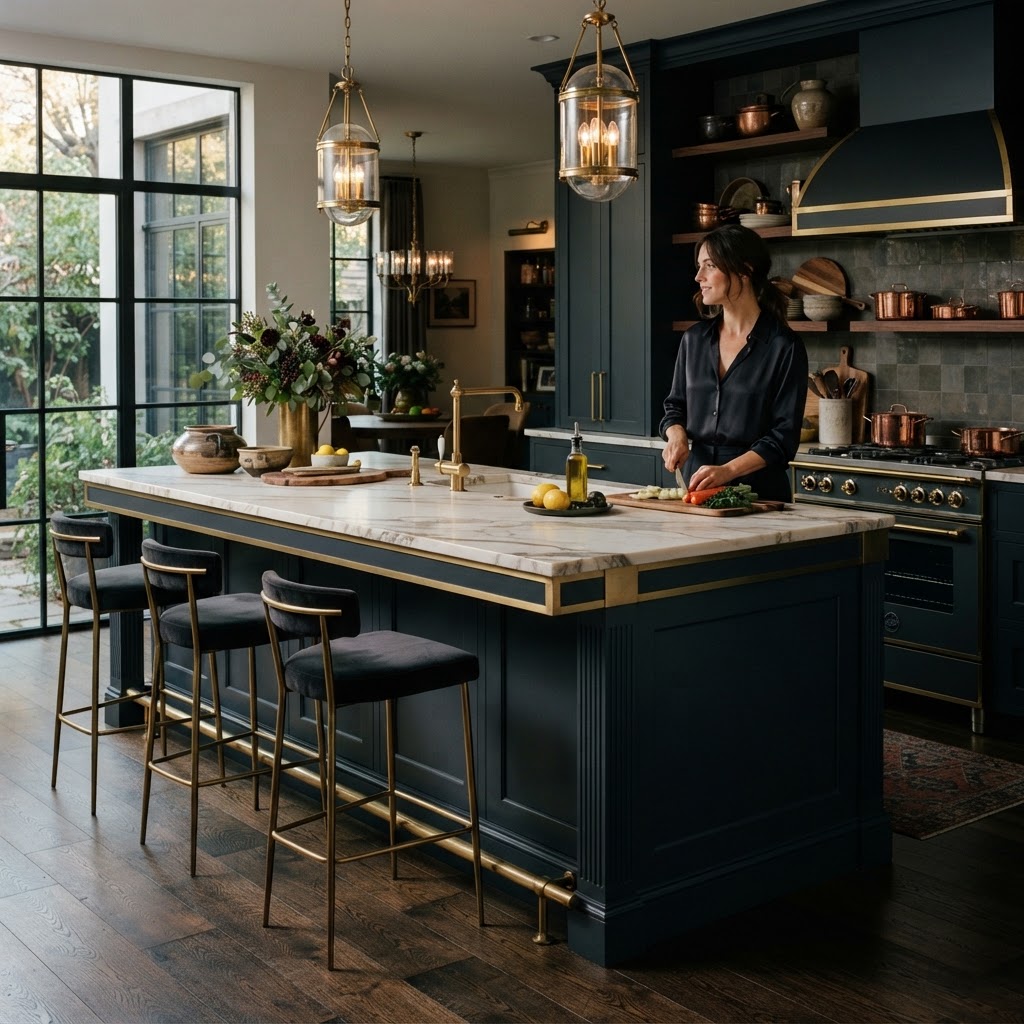
Let's talk about going dark, because this is one trend that I genuinely believe has staying power. A dark-toned island, whether we're talking deep navy, forest green, charcoal, near-black, or even a rich burgundy, does something to a kitchen that lighter options simply can't. It creates weight. It creates drama. It makes the island feel like an intentional piece of furniture rather than just a built-in afterthought.
The fear most people have with dark cabinetry is that it'll make the space feel smaller and heavier. And look, if your kitchen is already tiny and dark, then yes, an all-black kitchen might not be your best move. But here's the thing: an island is contained. You're not committing to dark cabinets on every wall. You're grounding one central element in a rich, deep tone while keeping the perimeter lighter, and that contrast is actually what makes both elements look better. The light walls pop more next to the dark island. The dark island looks more intentional next to the light cabinetry. It's a win-win.
The finish matters enormously with dark tones. A matte or flat finish on a dark island looks incredibly sophisticated and hides fingerprints and smudges much better than you'd expect. High gloss in a dark color can look stunning in the right setting but it shows every single fingerprint and requires constant wiping down, especially if you have kids or you actually cook. Satin is a nice middle ground. It has a little sheen without being a fingerprint magnet.
Countertop and hardware choices can really push this design in different directions. A dark island with a white or cream countertop gives you that classic contrast look. Pair the same dark island with a dark countertop in a slightly different texture and you get something much more moody and enveloping. Brass or gold hardware on a dark navy or forest green island is genuinely one of the most beautiful combinations in kitchen design right now. It feels rich without being over the top, and it photographs beautifully if that matters to you.
- Best dark colors: Deep navy, forest green, charcoal, near-black, aged sage, or rich burgundy
- Finish recommendation: Matte or satin for everyday practicality
- Hardware pairings: Brushed brass, unlacquered brass, or matte black
- Countertop contrast ideas: White marble for drama, honed black for depth, warm wood for softness
- Works best in: Traditional, transitional, moody contemporary, and eclectic kitchens
"A dark island in an otherwise light kitchen is one of the simplest ways to add sophistication and visual weight to a space that might otherwise feel a little flat or predictable."
Final Thoughts
Here's what I want you to take away from all of this: there is no single "best" kitchen island design. There's only the one that fits your life, your space, your aesthetic, and honestly, your budget. The waterfall island is breathtaking but it costs real money. The warm wood with open shelving is more approachable and deeply personal. Industrial concrete and metal is for the fearless. The dining extension is for the practical realist who wants their kitchen to actually work hard every day. And the dark-toned island is for anyone ready to commit to a little drama.
What all five of these have in common is intentionality. Every one of them works because someone made a deliberate choice about materials, proportion, and how the island relates to the rest of the kitchen. That's the real secret. It's not about following trends blindly, it's about understanding why a design works and then applying those principles to your specific situation. Take your time, look at a lot of inspiration, and don't be afraid to go with the option that makes your stomach do a little flip when you imagine it in your home. That's usually the right one.
More in Interior
Stay Inspired
Subscribe for new essays on architecture, design, and the spaces that shape us.