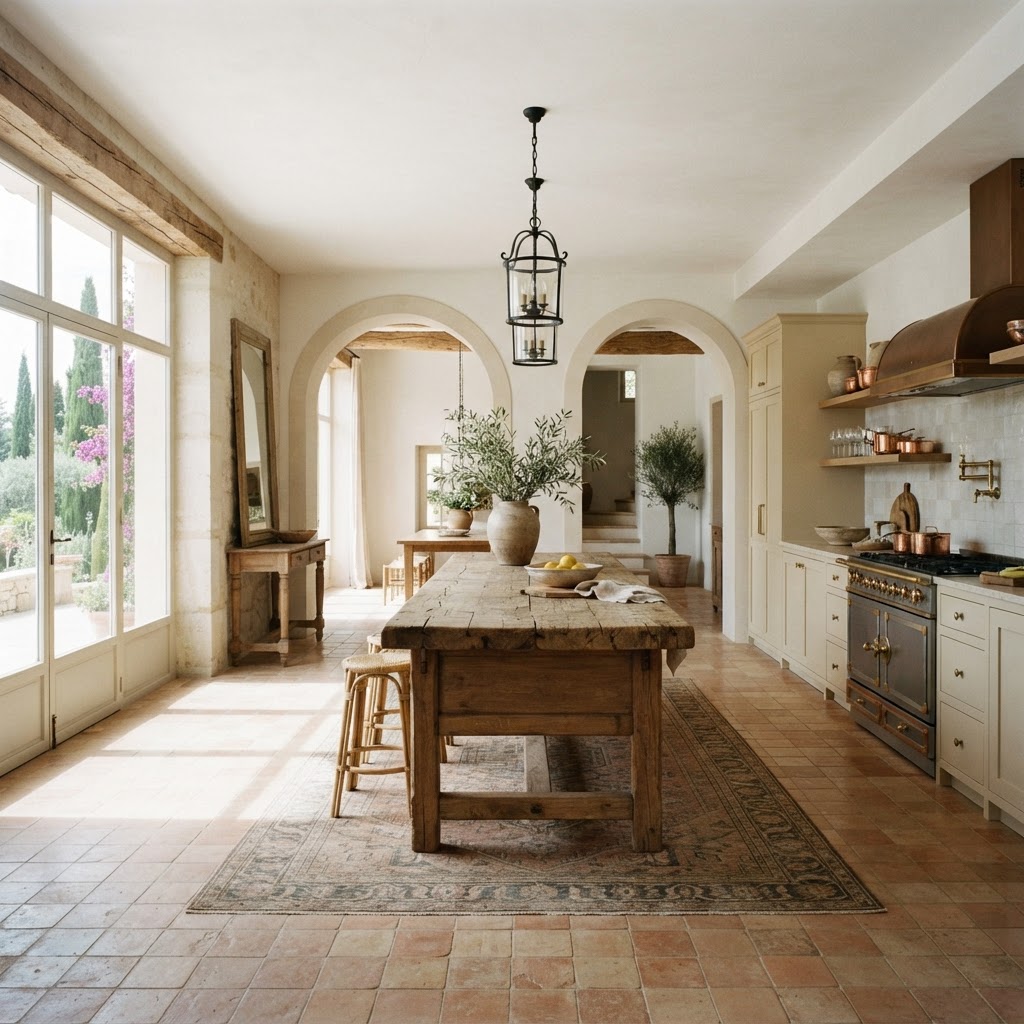
5 Mediterranean Kitchens That Will Make You Want to Renovate Immediately
Bring the warmth and charm of the coast into your home with these stunning Mediterranean kitchen designs. We have curated five distinct looks that blend rustic textures with modern functionality to inspire your next remodel.
1. The Terracotta Haven
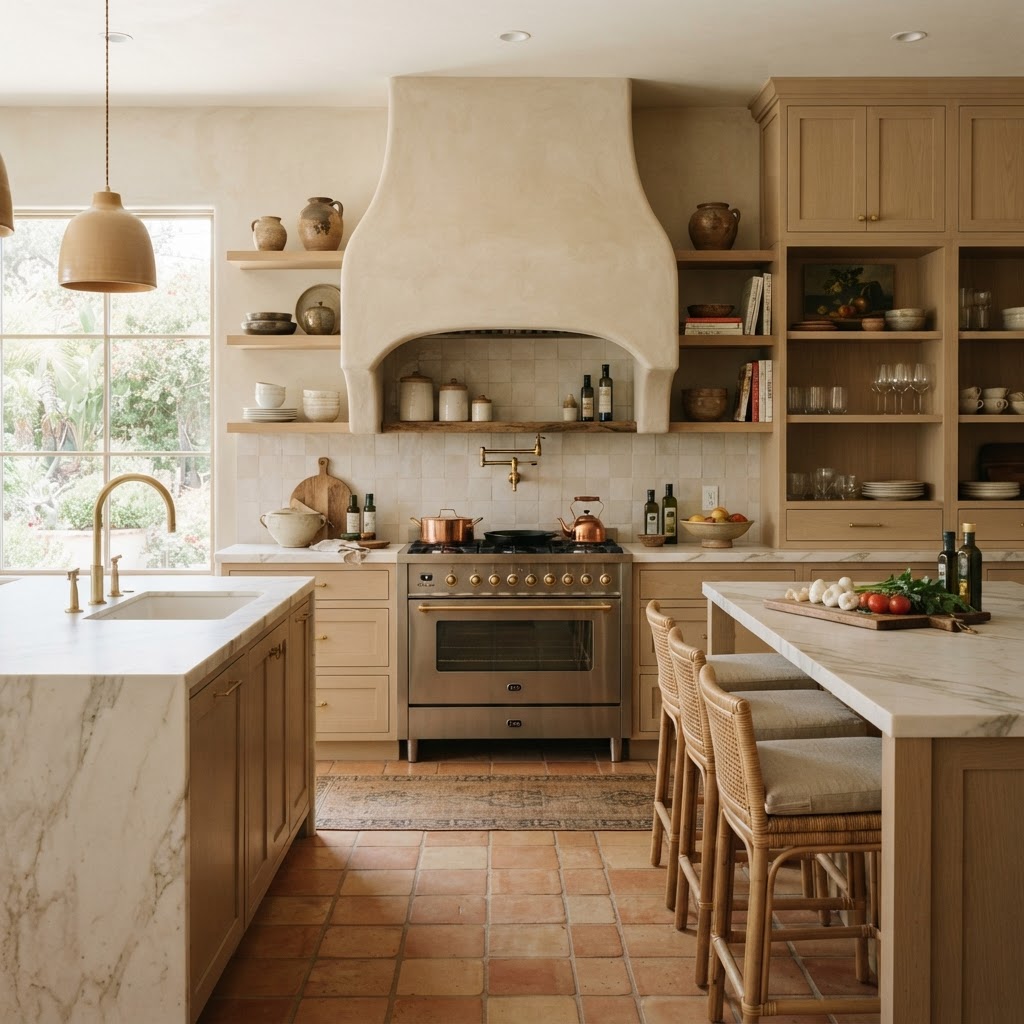
Honestly, if there's one color that captures the entire spirit of Mediterranean living, it's terracotta. That warm, sun-baked reddish-orange that you see on rooftops in southern Italy, on hand-painted tiles in Moroccan souks, on clay pots lining a Greek village courtyard. It's earthy, grounded, and somehow makes you feel like dinner is already going to taste better just by being in the room.
The terracotta haven style of kitchen design leans hard into this palette. We're talking floor tiles in warm burnt sienna, hand-plastered walls in sandy ochre, and cabinetry in deep earthy browns or muted olive greens. Nothing is too polished. Nothing is too perfect. And that's exactly the point. Real talk, the slight imperfections in terracotta tile grout lines, the uneven texture of a lime-washed wall, that stuff is not a flaw, it's the feature. It's what gives this style its soul.
Here's the thing about pulling this off in your own home: you don't need to go all-in overnight. Start with the floor. A terracotta tile floor, even in a modest kitchen, immediately transforms the energy of the space. Pair it with open wooden shelving stained in a warm walnut tone, hang some copper pots, throw in a few hand-thrown ceramic dishes in amber and cream, and suddenly you've got something that feels genuinely special rather than just Instagrammable.
Lighting matters enormously in this kind of kitchen. You want warm, amber-toned bulbs. No harsh white light. Think wrought iron pendant lights or even simple clay pendants. The warmth of the light plays off the terracotta tiles and makes the whole space glow in a way that is genuinely hard to walk away from. Trust me on this, once you experience cooking in a well-lit terracotta kitchen at golden hour, you'll wonder how you ever tolerated cold fluorescent light anywhere near your food.
- Key materials: Unglazed terracotta floor tiles, lime-washed plaster walls, solid wood shelving
- Color palette: Burnt sienna, ochre, deep olive, warm cream
- Accent pieces: Copper cookware, hand-thrown ceramics, woven baskets
- Lighting: Wrought iron pendants with warm amber bulbs
This is one of those kitchen styles that feels genuinely timeless. It's not chasing a trend. Terracotta has been a building material around the Mediterranean for literally thousands of years. You're not decorating your kitchen, you're connecting it to something much older and more honest than whatever was popular last season on Pinterest.
2. Modern Coastal Minimalism
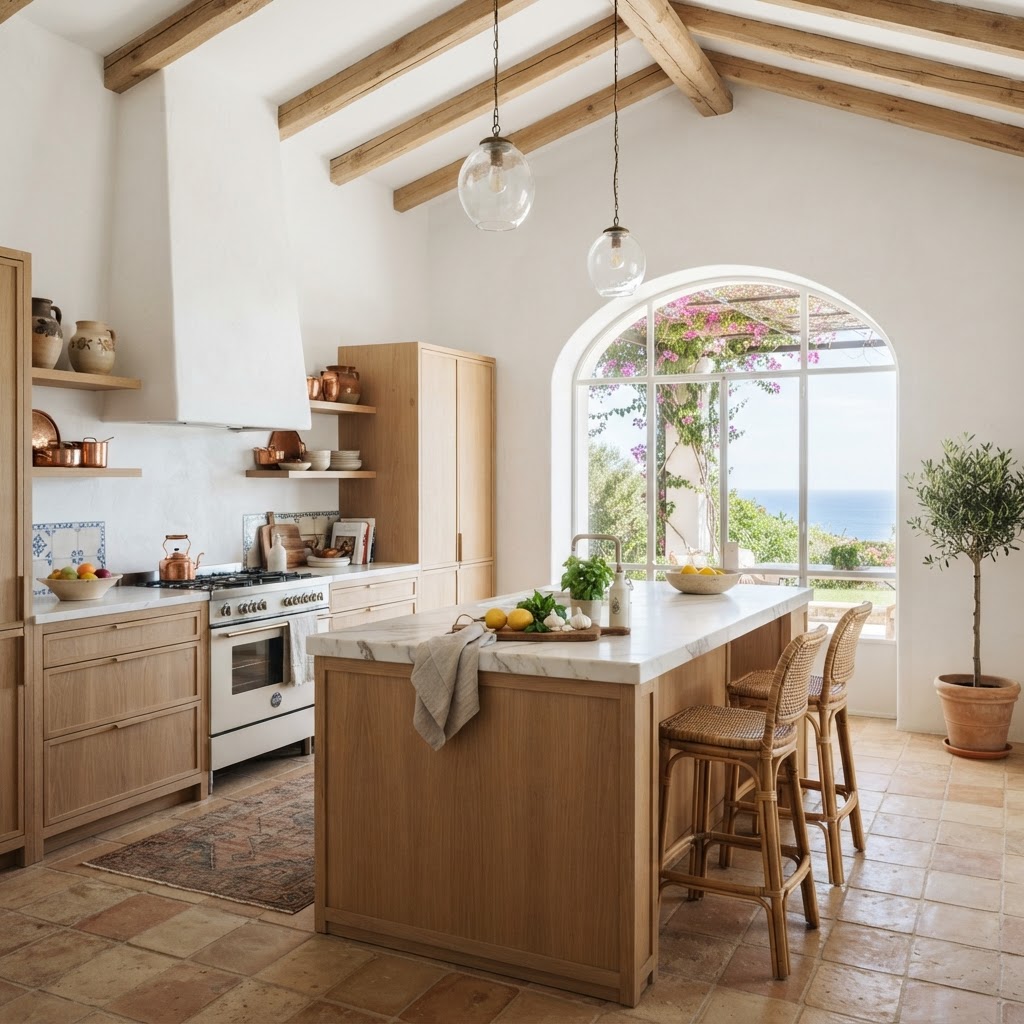
Look, I know what you're thinking. Minimalism and Mediterranean don't exactly sound like natural companions. Mediterranean design is usually associated with abundance, texture, warmth, a kind of cheerful clutter of hanging herbs and overflowing fruit bowls. But here's the thing, when you strip that aesthetic back and run it through a modern filter, what you get is genuinely breathtaking.
Modern coastal minimalism takes the bones of Mediterranean design, the natural materials, the connection to light and sea, the preference for organic forms over industrial ones, and pares everything down to just the essentials. Cabinetry in soft white or pale sand. Countertops in honed limestone or brushed concrete. Simple bar handles in matte brass. Large windows or glass doors that pull the outside in. The whole point is that nothing fights for attention, so everything just breathes.
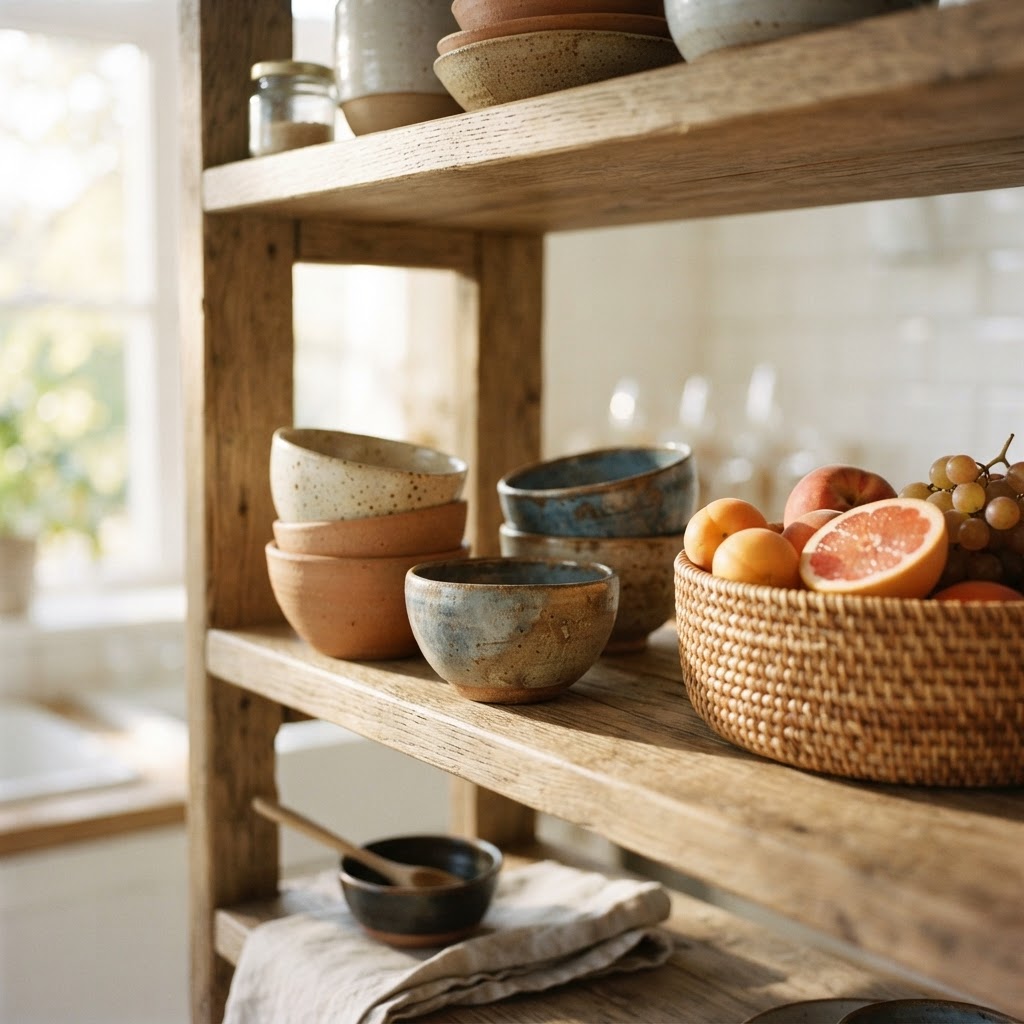
The genius of this approach is that it ages incredibly well. Trends come and go but a well-executed minimalist coastal kitchen from ten years ago still looks sharp today. The secret is committing to quality materials rather than lots of stuff. A single piece of honed Calacatta marble as a backsplash does more work than an entire wall of busy pattern tiles. One beautiful wooden island does more for the room than five accent pieces cluttering the shelves.
"The Mediterranean coast is not fussy. It's salt air and bleached stone and light bouncing off water. Your kitchen should feel the same way."
Honestly, if you're someone who finds clutter stressful but still wants warmth in your kitchen, this is probably your style. You get all the visual softness of natural materials, the connection to something organic and real, without any of the heaviness that can sometimes come with more maximalist Mediterranean approaches. It's a genuinely smart way to live.
3. Rustic Stone and Ironwork
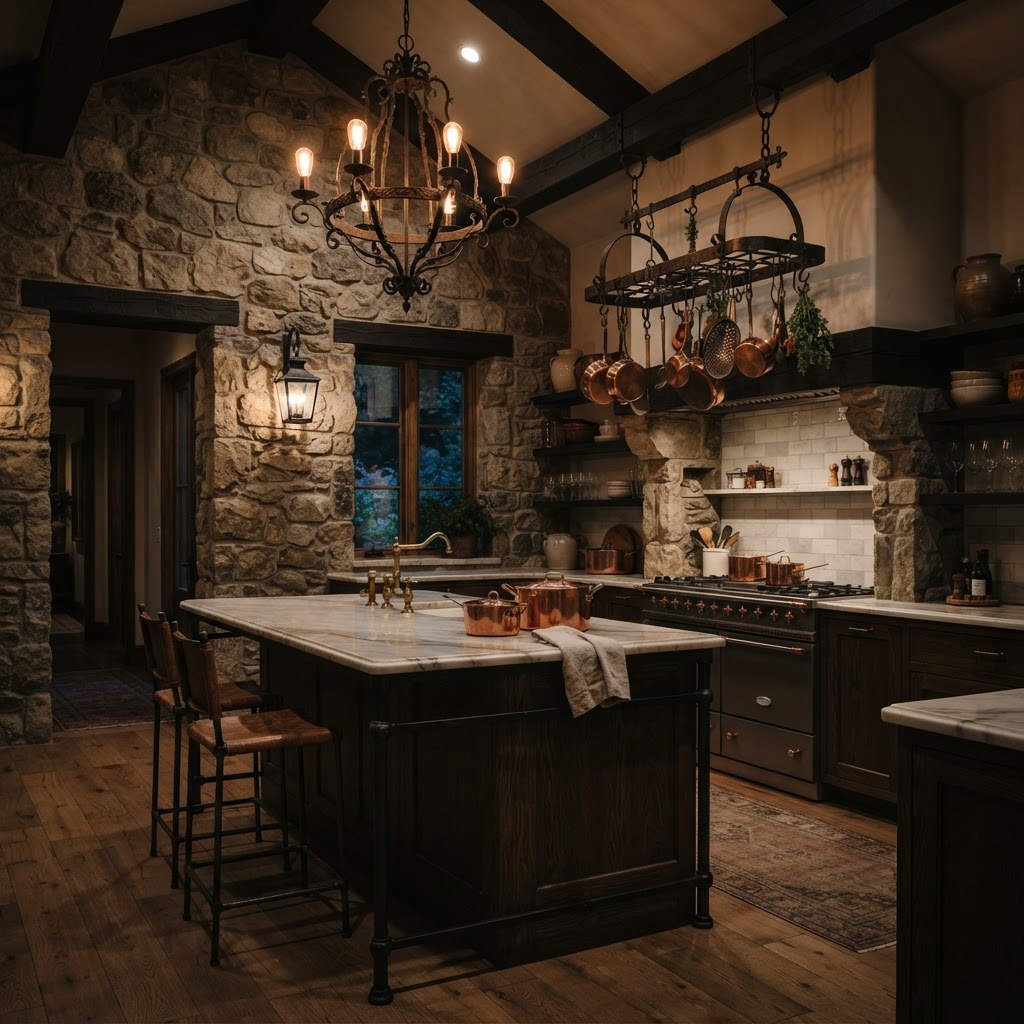
This is the one that makes people stop scrolling. The rustic stone and ironwork kitchen is dramatic in the best possible way. We're talking exposed stone walls, heavy wooden beams overhead, forged iron hardware on thick cabinet doors, a farmhouse sink carved from a single piece of stone. It looks like it's been there for three hundred years, and honestly that's the highest compliment you can give this kind of kitchen.
The key to making this work without it feeling like a movie set or a themed restaurant is restraint in the right places. Yes, go heavy on the stone and the raw wood. Yes, invest in genuine hand-forged iron fixtures if you can, they make an enormous difference over cast iron reproductions. But keep the countertop surfaces relatively simple. A thick slab of natural limestone or even a well-oiled butcher block can let the walls do the talking without everything competing.
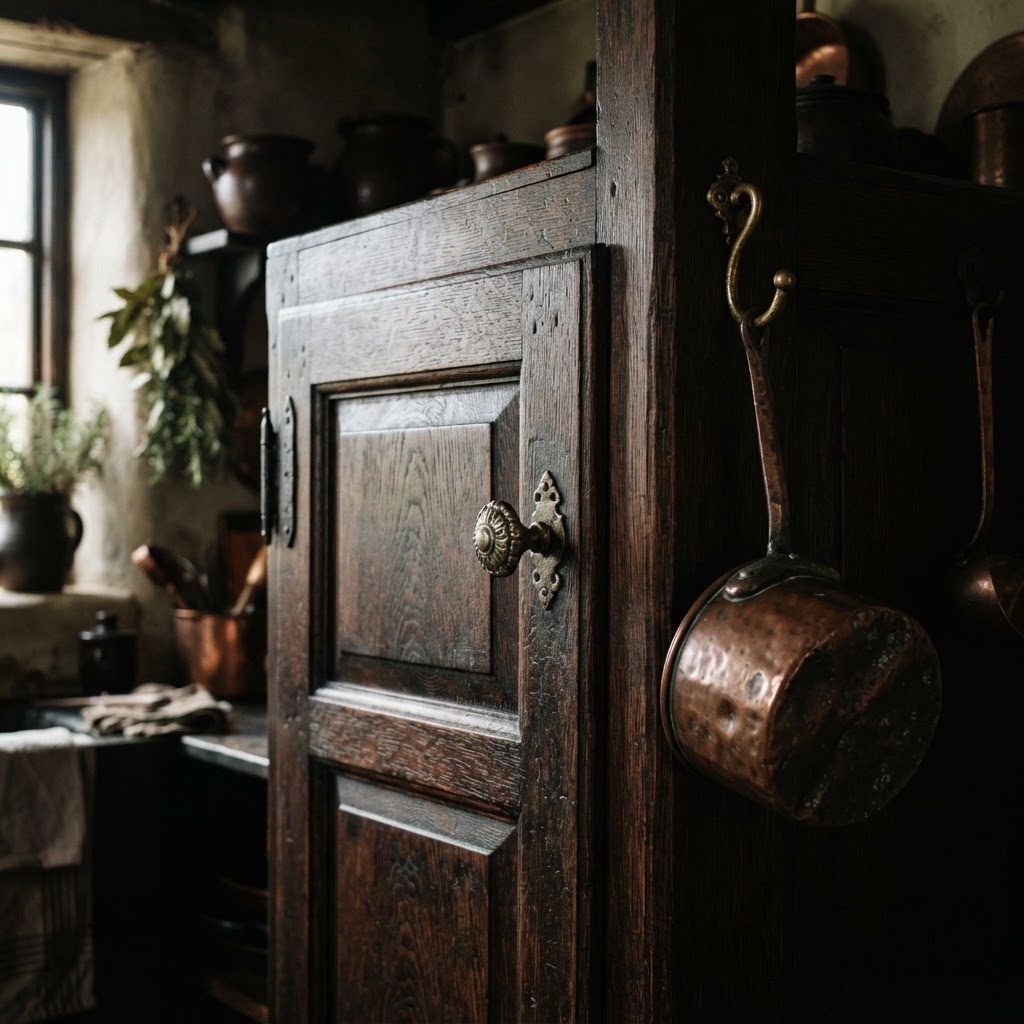
And honestly, the ironwork detail is what separates this style from just being a "rustic farmhouse" kitchen. Iron window grilles, a pot rack suspended from the ceiling by iron chains, cabinet hinges in blackened steel, a built-in range hood clad in hammered metal. These elements tie the whole thing together and give it that specifically Mediterranean quality that feels ancient and intentional at the same time.
- Must-have elements: Exposed stone or rough plaster walls, wooden ceiling beams, hand-forged iron hardware
- Counter and surface choices: Honed limestone, thick butcher block, stone sink
- Lighting approach: Wrought iron chandeliers, candle sconces, warm Edison bulbs
- Where to splurge: Genuine hand-forged iron fixtures, the hardware is absolutely worth the investment
This kitchen style is genuinely not for everyone, and that's fine. It asks a lot of a space. You need ceiling height, you need good natural light to prevent it from feeling like a cave, and you need to be someone who actually appreciates that kind of rugged beauty. But if you're the person who has always secretly wanted to cook in a Tuscan farmhouse, this is as close as you're going to get without actually moving to Italy.
4. The Blue and White Escape
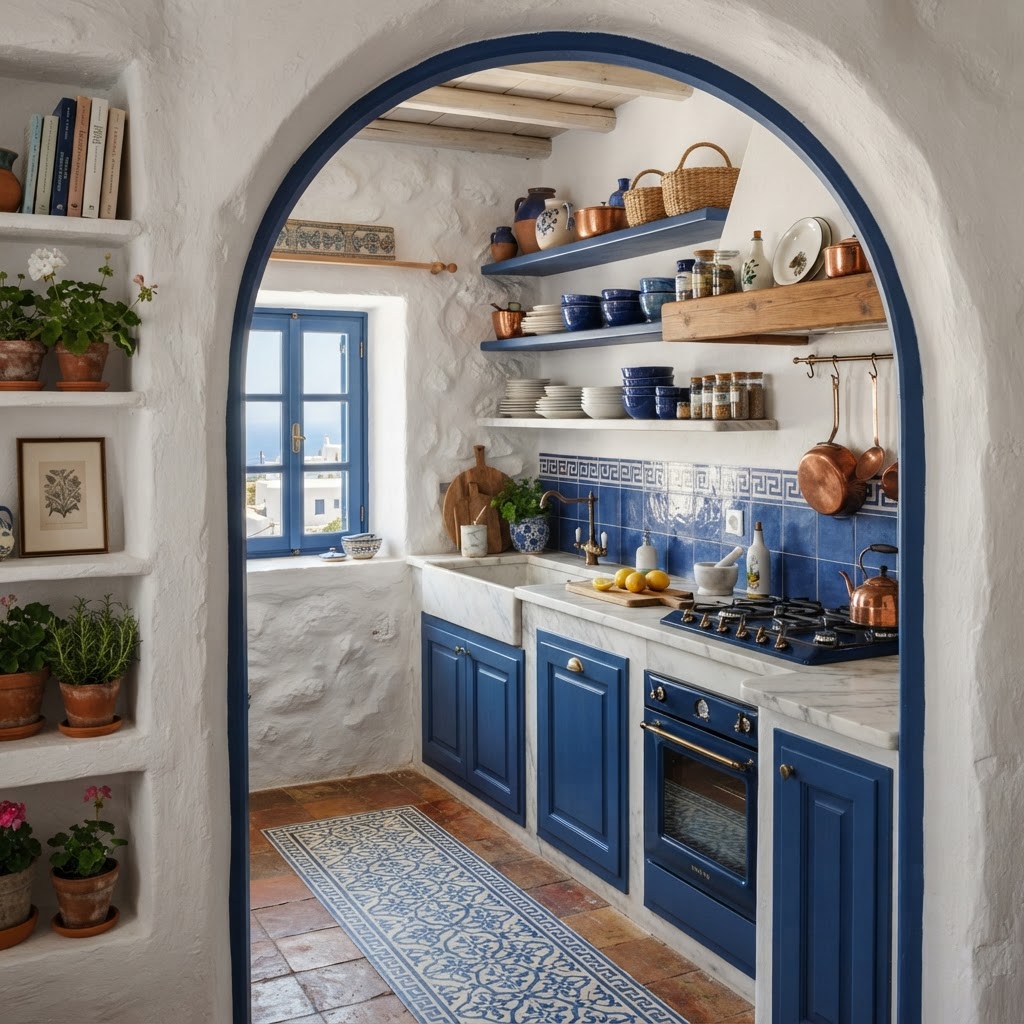
There's a reason the blue and white palette has been synonymous with Mediterranean style for centuries. It's not arbitrary. Think about it, cobalt blue against whitewashed walls in Santorini, hand-painted blue tiles on a Portuguese azulejo facade, deep navy shutters on a white stucco house in Provence. Blue and white in the Mediterranean context is the visual shorthand for sea and sky, for clean air and clear water, for a life lived close to beautiful things.
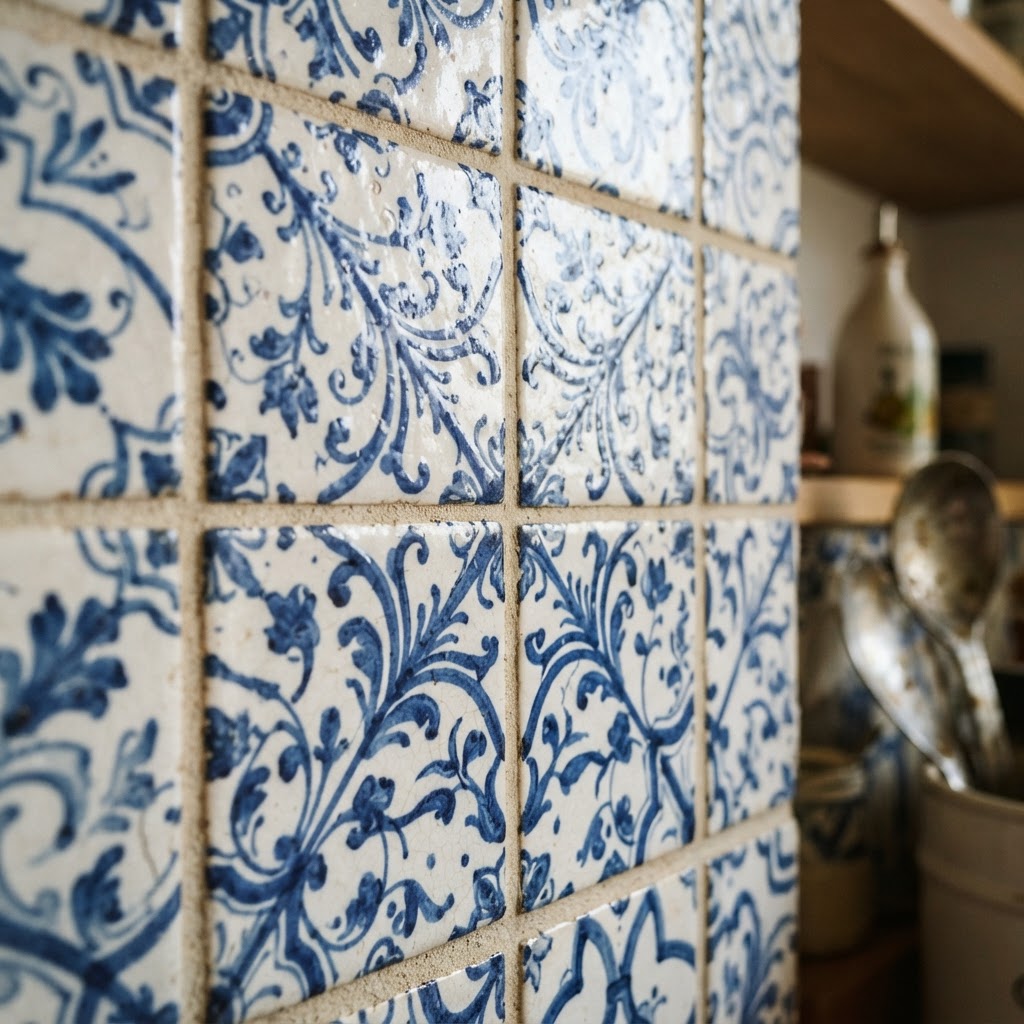
In a kitchen, this palette works in a few different ways. The most classic approach is to use hand-painted blue and white ceramic tiles as a backsplash, either in a traditional geometric pattern or the more organic hand-painted style you'd find in Portuguese or Spanish tile-making traditions. This alone can define an entire kitchen. Pair those tiles with white cabinetry, white walls, white counters, and then let the blue of the tiles carry all the visual weight.
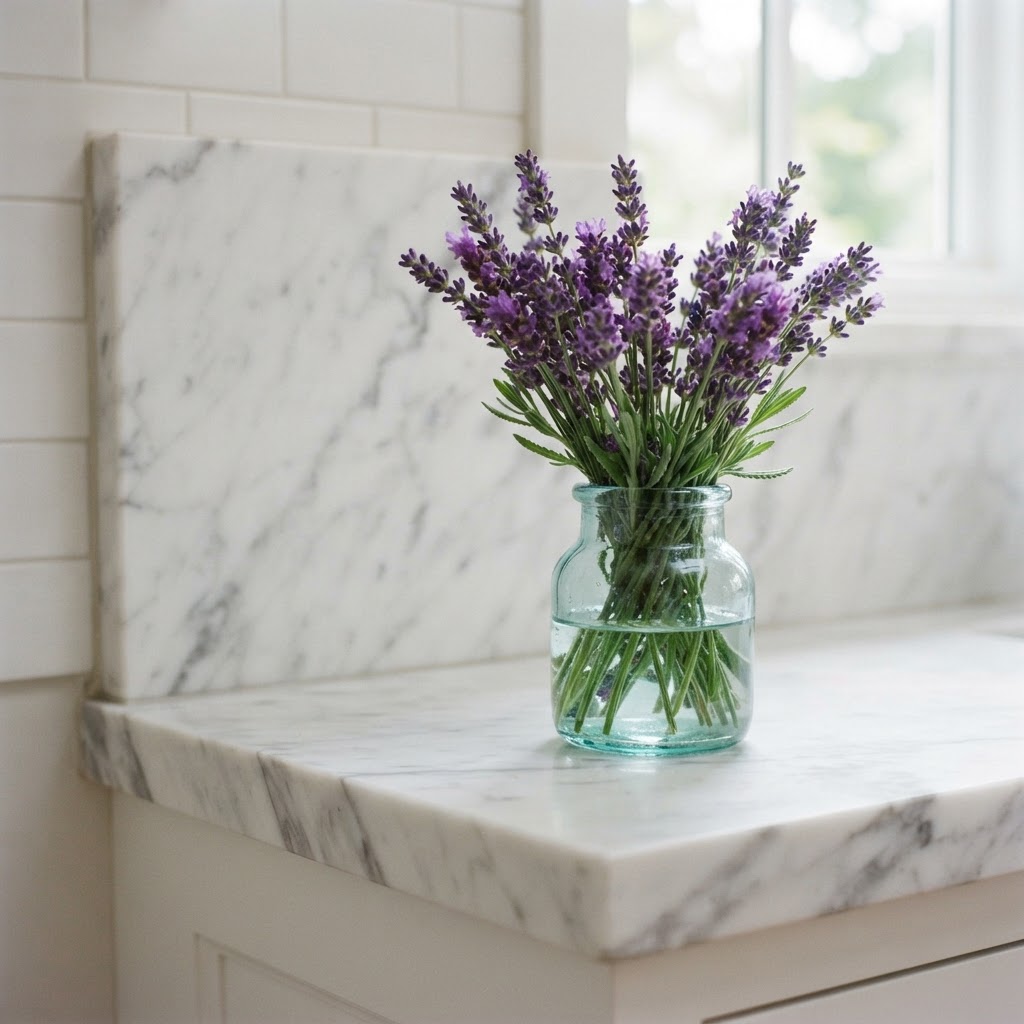
Here's the thing though, the more interesting version of this style goes beyond just the backsplash. What if the island is painted in a deep, moody navy while everything else stays white? Or what if you go with cobalt blue open shelving displaying white dishes and clear glass? The interplay of blue and white at different scales and in different finishes, matte versus glossy, painted versus tiled, ceramic versus fabric, is where this kitchen really comes alive.
The accents are everything in a blue and white kitchen. Blue and white ceramic canisters, a collection of indigo-dyed linen tea towels, a hand-thrown blue glazed fruit bowl on the counter, dried lavender in a white pottery vase. These things cost almost nothing individually but together they build a narrative. They make the room feel curated in the best sense, not stiff or museum-like, just thoughtfully assembled by someone who genuinely loves beautiful things.
"Blue and white is not a trend. It's a tradition that stretches back thousands of years across dozens of cultures. In the kitchen, it brings that same quiet authority."
5. Organic Earthy Texture
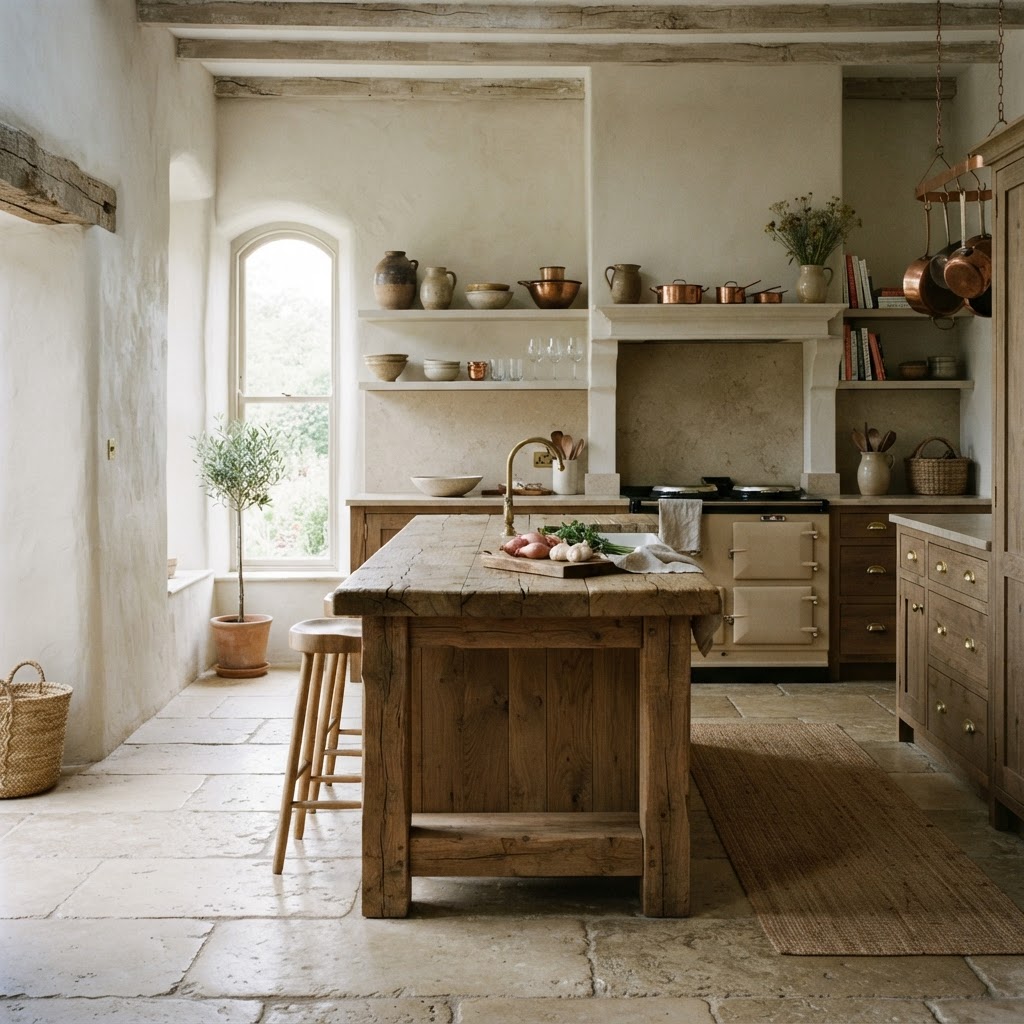
This last one might be my personal favorite, and look, I know that's a bold claim after everything we've covered. But the organic earthy texture kitchen hits something that the others, beautiful as they are, sometimes miss. It feels like the earth itself got invited inside. And not in a precious, carefully curated way but in a genuinely warm, lived-in, deeply comfortable way.
We're talking rough-textured plaster walls in warm putty or pale taupe, zellige tile in uneven, handmade shapes in shades of sand and warm white, solid wood cabinets with visible grain left completely natural. Countertops in raw-edge stone or even poured concrete with natural aggregate showing through. Everything has a texture you want to run your hand across. Nothing is flat, nothing is shiny, nothing looks like it came out of a factory mold and that's entirely the point.
The Mediterranean tradition of using local, natural materials is what this style is really about at its core. In Tunisia they use bejmat tile, small handmade rectangular terracotta bricks. In Morocco it's tadelakt, a waterproof lime plaster with an almost leathery texture. In Spain and Portugal you find azulejo alongside rough-hewn stone walls. These are materials that came directly from the land around them, and that connection to place is exactly what makes them feel so grounded and honest.
- Texture is the point: Rough plaster, handmade tile, natural wood grain, raw stone, every surface should have something to say
- Color stays neutral: Warm whites, sandy taupes, pale terracottas, mushroom tones
- Avoid: Anything too smooth, too glossy, or too uniform, that will kill the vibe immediately
- Layer thoughtfully: Woven seagrass baskets, linen curtains, handmade ceramic bowls all add to the organic feel
- Plants help enormously: Potted herbs on the windowsill, a trailing plant above the cabinets, fresh or dried flowers, living things belong in this kind of kitchen
Real talk, this style of kitchen is also surprisingly forgiving to maintain. Unlike high-gloss surfaces that show every fingerprint or white marble that stains if you look at it wrong, these organic textures tend to age gracefully. A small chip in a handmade tile actually looks intentional. A water mark on rough plaster becomes part of the patina. You're not constantly battling the kitchen to keep it looking pristine. You're just living in it, and it keeps getting more beautiful as you do.
Final Thoughts
Honestly, going through these five kitchens has reminded me why Mediterranean design endures in a way that so many other trends simply don't. It's not about following rules or chasing a look. It's about materials that come from the earth, colors that echo the landscape, and spaces that feel genuinely welcoming rather than just visually impressive.
Whether you're drawn to the warmth of terracotta, the clean serenity of coastal minimalism, the drama of stone and iron, the classic beauty of blue and white, or the raw honesty of organic texture, there's a version of Mediterranean style that can work in your kitchen. You don't need a complete gut renovation to feel the shift. Sometimes it starts with one good tile choice, one honest material, one copper pot hanging where it can catch the light. Start there and see where it takes you. Trust me, you won't regret it.
More in Interior
Stay Inspired
Subscribe for new essays on architecture, design, and the spaces that shape us.