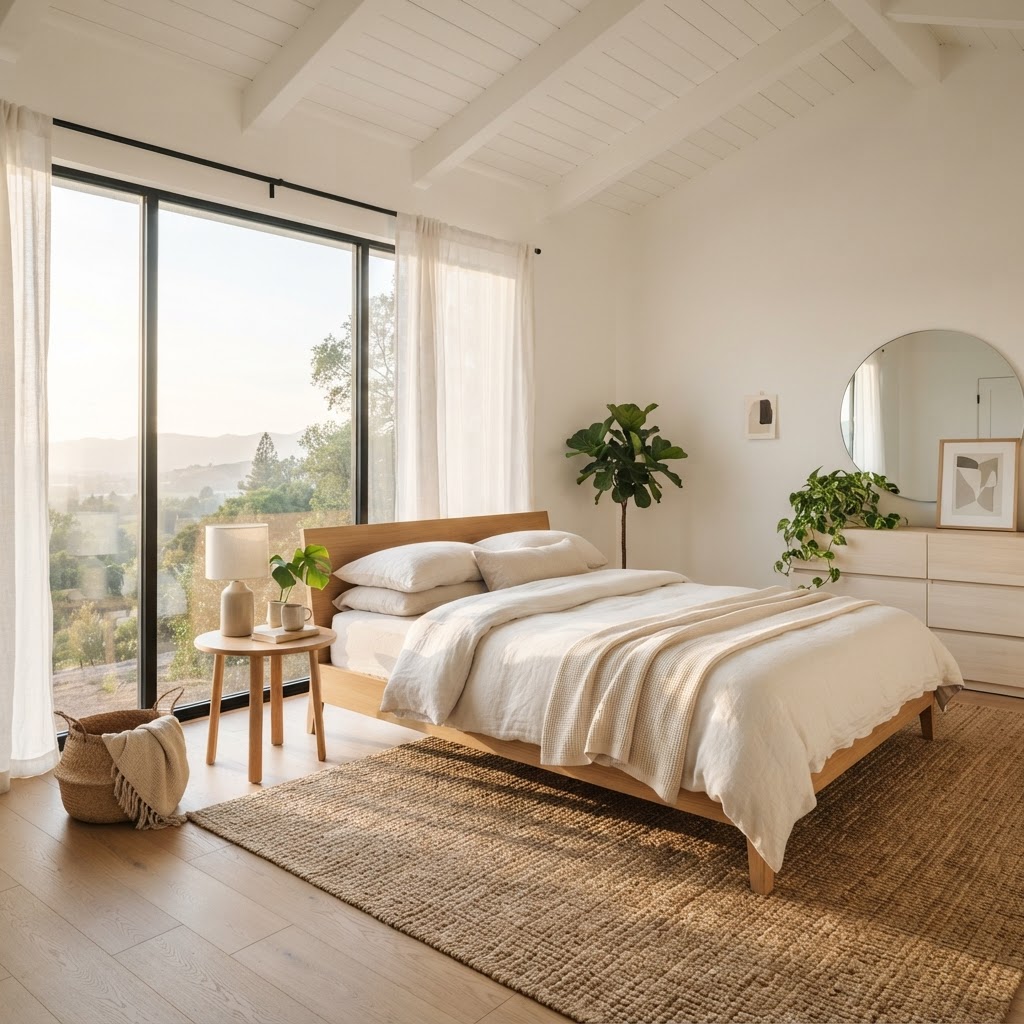
5 Genius Tricks to Make Your Small Bedroom Look Massive
Struggling with a tiny bedroom that feels cramped and cluttered. These five design hacks will help you maximize your square footage and create a sanctuary that feels open and airy without sacrificing style.
1. Choose Low-Profile Furniture
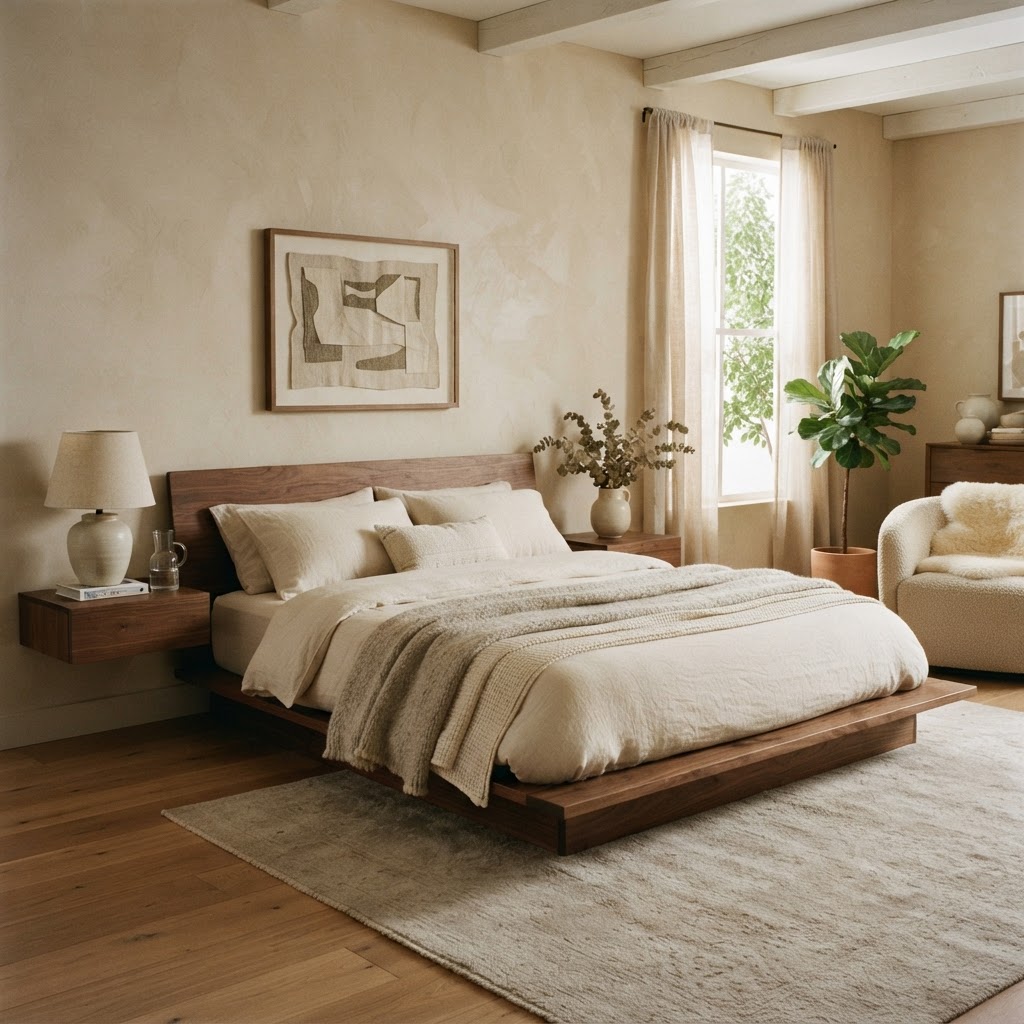
Honestly, this is the single biggest mistake I see people make in small bedrooms. They bring in this giant, towering bed frame with a dramatic headboard that practically touches the ceiling, and then they wonder why the room feels like a closet. Here's the thing: the taller your furniture, the lower your ceiling feels. It's just basic visual psychology, and once you understand it, you can't unsee it.
Low-profile furniture, think platform beds, low-slung dressers, and streamlined nightstands, keeps the visual weight of the room anchored close to the floor. That leaves a huge expanse of wall above the furniture line completely open, which tricks your brain into perceiving a lot more air and space than there actually is. It sounds simple because it is, but the effect is genuinely dramatic.
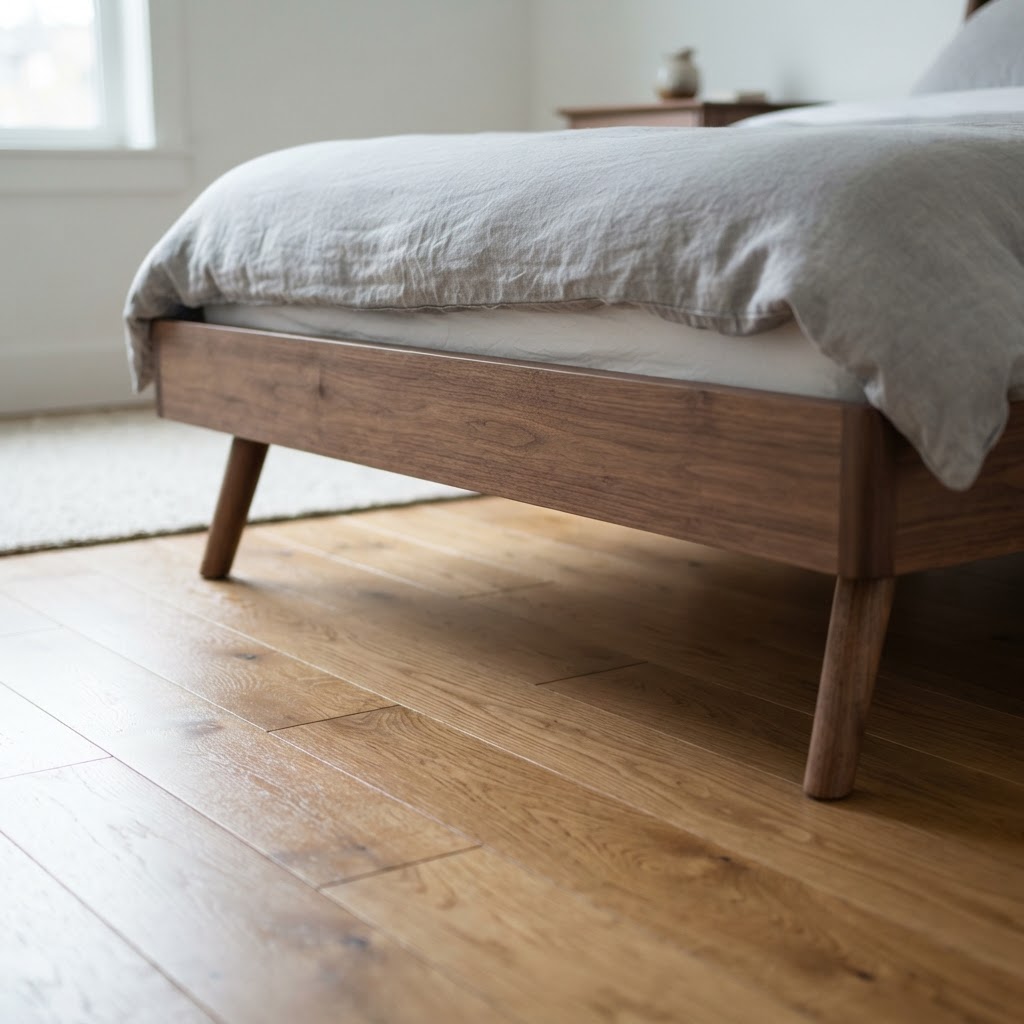
When you're shopping, aim for a bed frame that sits no more than 18 inches off the ground. Pair it with nightstands that match that height rather than ones that tower above the mattress. For dressers, go wide instead of tall. A long, low six-drawer dresser gives you just as much storage as a taller chest of drawers, but it keeps that ceiling-to-furniture gap wide and airy.
Real talk: you might have to let go of some furniture you love. That chunky sleigh bed you've had since college? It might be the thing making your room feel suffocating. Replacing it with something more minimal and low-slung could genuinely transform the entire space. Think of it as an upgrade, not a sacrifice.
One more thing worth mentioning: furniture with exposed legs is your best friend in a small room. When light can pass underneath a dresser or a chair, the floor looks continuous and unbroken, which reads as more space. Solid, boxy furniture that sits flush to the floor cuts the room up visually and makes everything feel heavier and more cramped. Go for legs wherever you can.
2. Utilize Vertical Storage Solutions
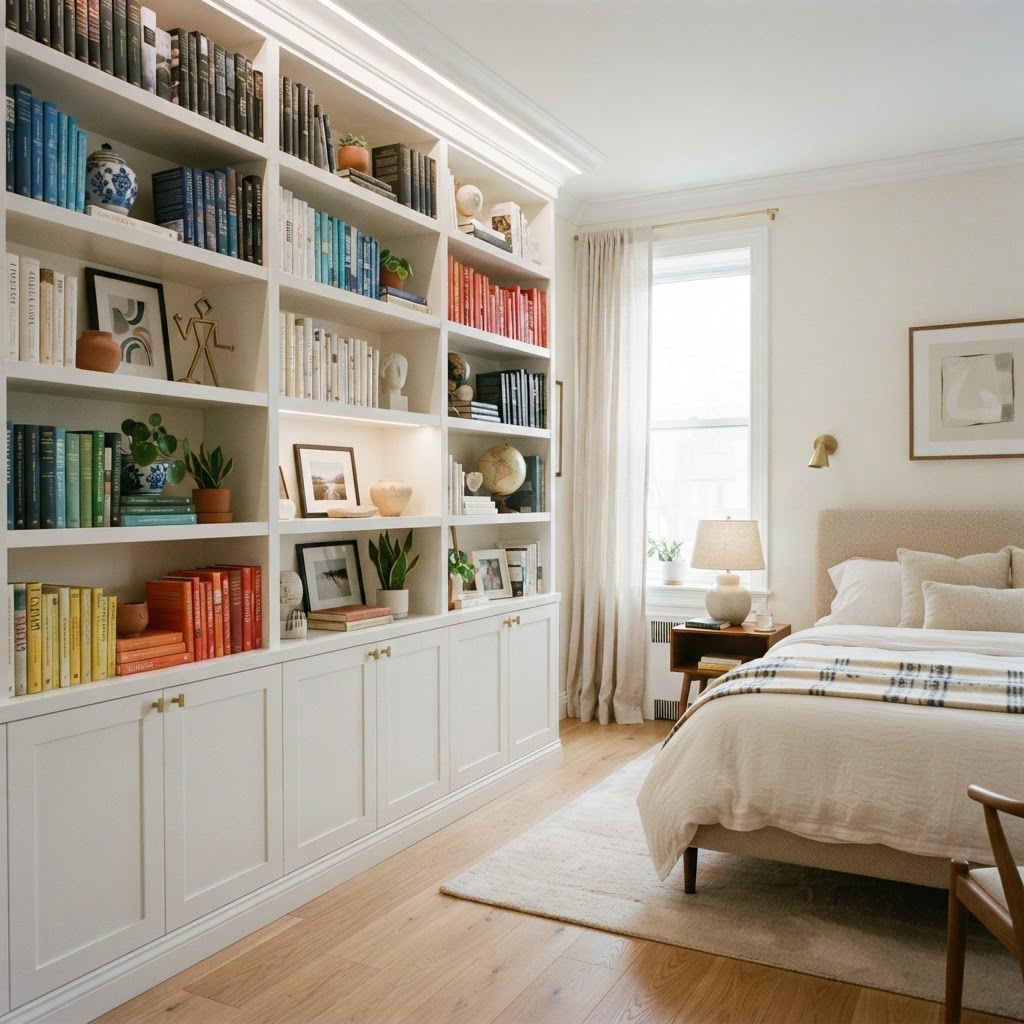
Look, if you're not using your walls all the way up to the ceiling, you are leaving square footage on the table. Or I guess, cubic footage. Either way, you get what I mean. Most people hang shelves at eye level or just above the bed and call it a day, but in a small bedroom, that approach wastes a massive amount of potential storage and visual real estate.
The trick with vertical storage is twofold. First, you get actual functional storage without consuming any floor space, which is obviously huge. Second, and this is the part people don't talk about enough, tall storage draws the eye upward. When someone walks into your room and their gaze naturally travels up toward the ceiling, the room feels taller. It feels grander. It feels like more than it is, and that's exactly what we're going for here.
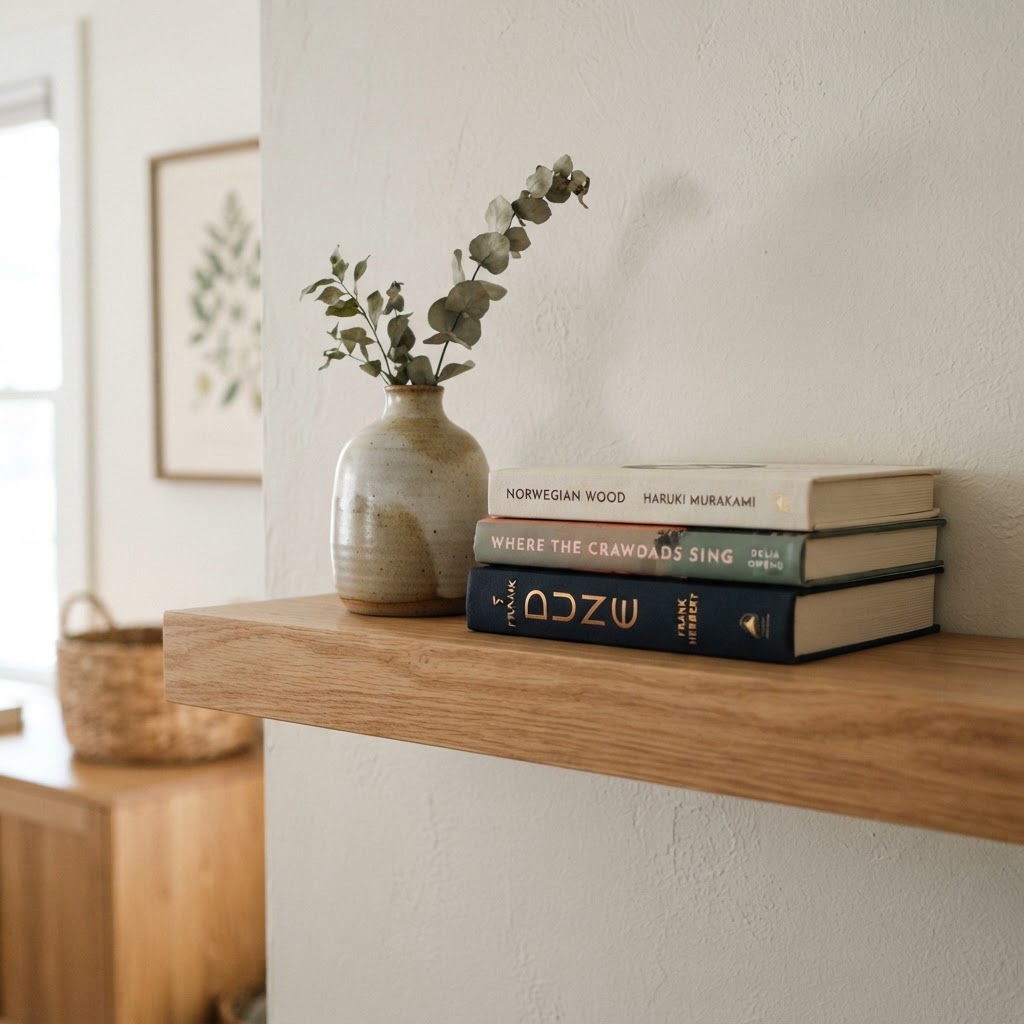
Consider installing floating shelves that run from about waist height all the way up to the ceiling. Use the lower shelves for everyday items and books, and treat the upper shelves as a place to display a few curated objects or baskets. You don't need to cram every shelf full. Leaving some breathing room up there actually makes the room feel more intentional and spacious rather than cluttered.
Another move I absolutely love is flanking the bed with two tall, narrow shelving units instead of traditional nightstands. You get storage, you get a place for your lamp and your book, and you get that vertical line that pulls the room up. Some people even run a shelf across the top connecting the two units, almost like a built-in headboard situation, and honestly it looks incredibly sophisticated for something that doesn't cost a fortune.
- Use baskets or boxes on upper shelves to store things you don't need daily without adding visual clutter
- Choose shelves that match the wall color so they blend in and don't chop the wall into segments
- Consider pegboards or wall-mounted organizers inside closet doors to free up shelf and drawer space inside the room
- Look for beds with built-in storage drawers underneath to handle bulky items without taking up an inch of floor space elsewhere
3. Incorporate Large Scale Mirrors
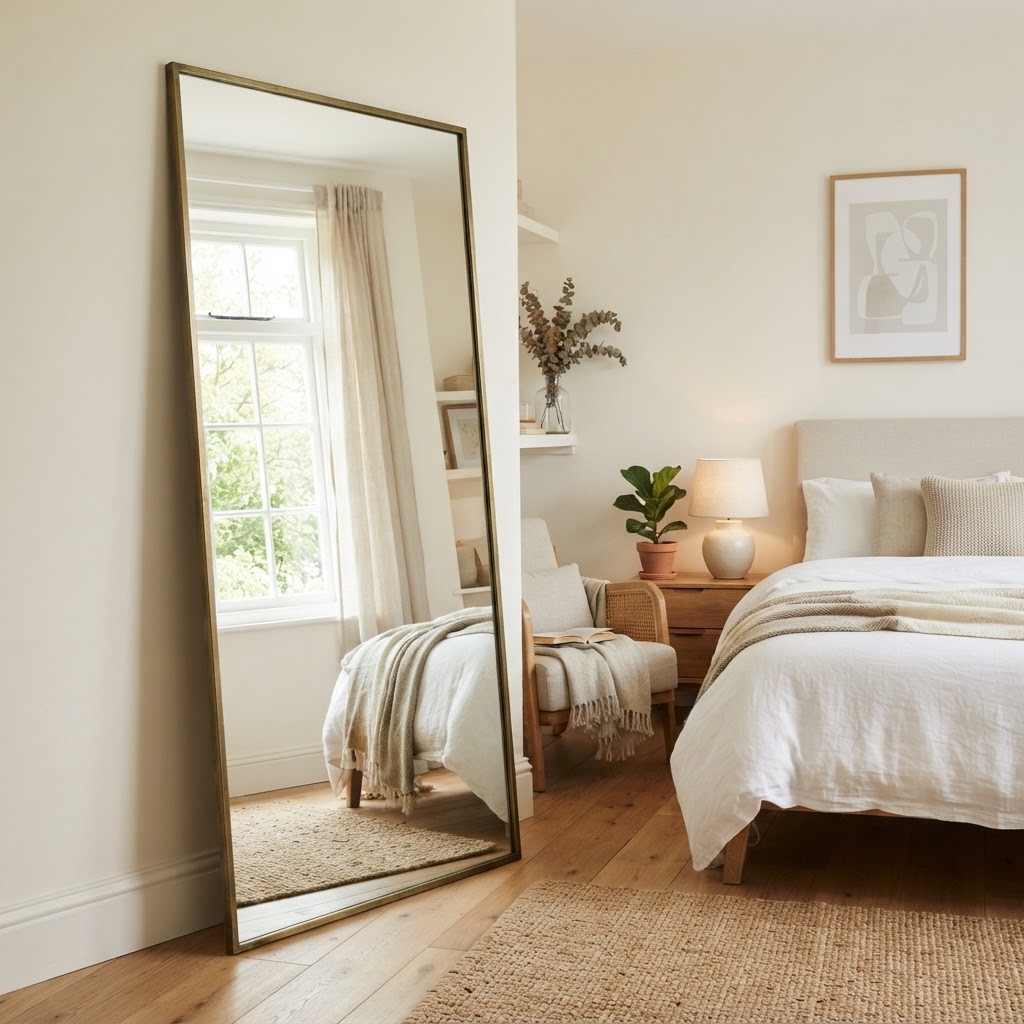
This one is not a secret, but I think people underestimate how much of a difference it makes when you go big with mirrors. A small decorative mirror above a dresser is cute. It does basically nothing for the perceived size of your room. But a large, floor-to-ceiling mirror or a wide mirror spanning most of a wall? That genuinely makes a room feel like it doubled in size. No exaggeration.
Here's the thing about mirrors: they don't just reflect light, they reflect the room itself. When you position a large mirror across from a window, it bounces natural light all the way back through the space, and it also creates the visual impression that there's another room beyond the wall. Your brain gets a little confused in the best possible way. The space feels open-ended rather than boxed in.
One of the best investments you can make in a small bedroom is replacing plain wardrobe doors with mirrored sliding doors. You get a full-length mirror that takes up zero extra floor space, and the entire wall becomes a reflective surface that essentially doubles your room visually. It's practical, it looks sleek, and the impact is enormous. I've seen rooms that felt borderline claustrophobic completely transform with this one change.
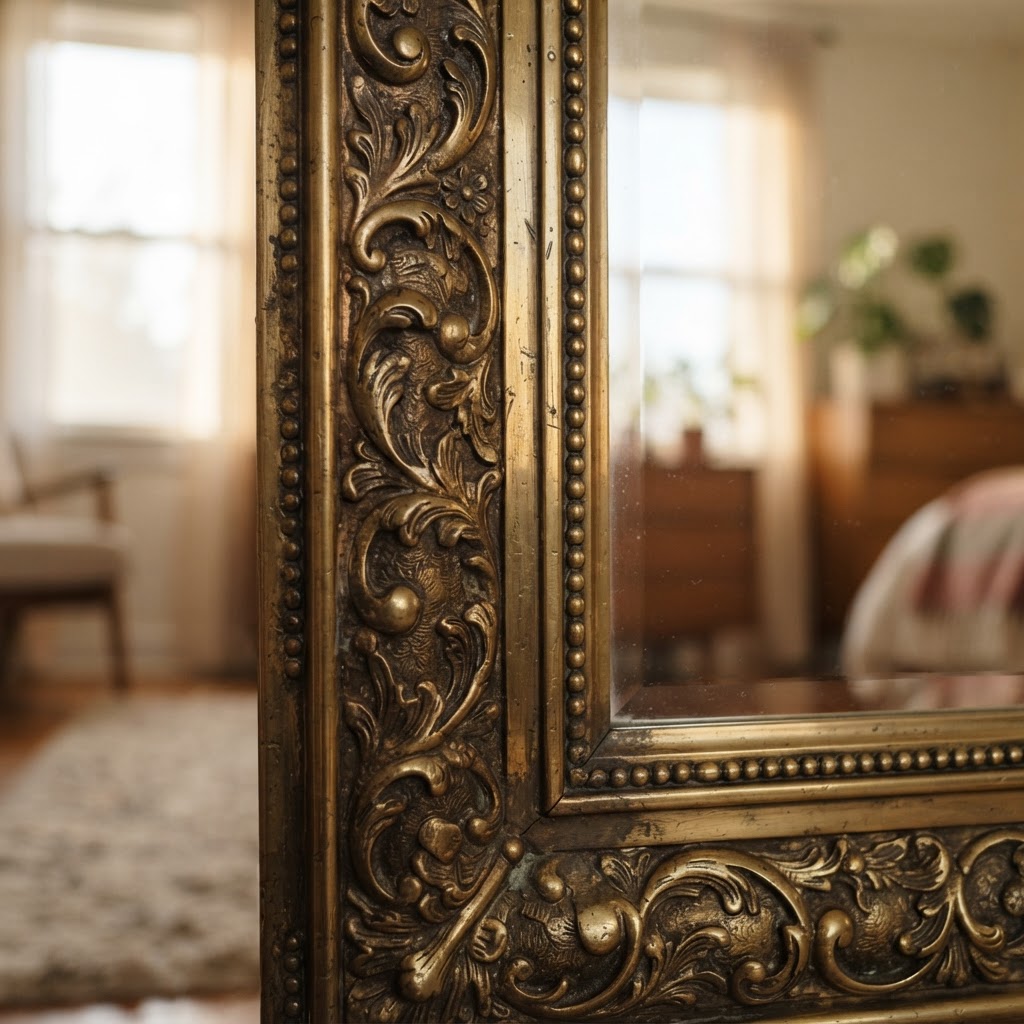
If mirrored wardrobes aren't your style, lean a large vintage or simple framed mirror against the wall. Leaning rather than hanging gives it a casual, lived-in feel and also lets you angle it to reflect the best parts of the room, whether that's a window, a lamp, or just more floor space. Trust me on this: go bigger than you think you need to. The mirror that seems almost too large is probably just right.
4. Stick to a Monochromatic Palette
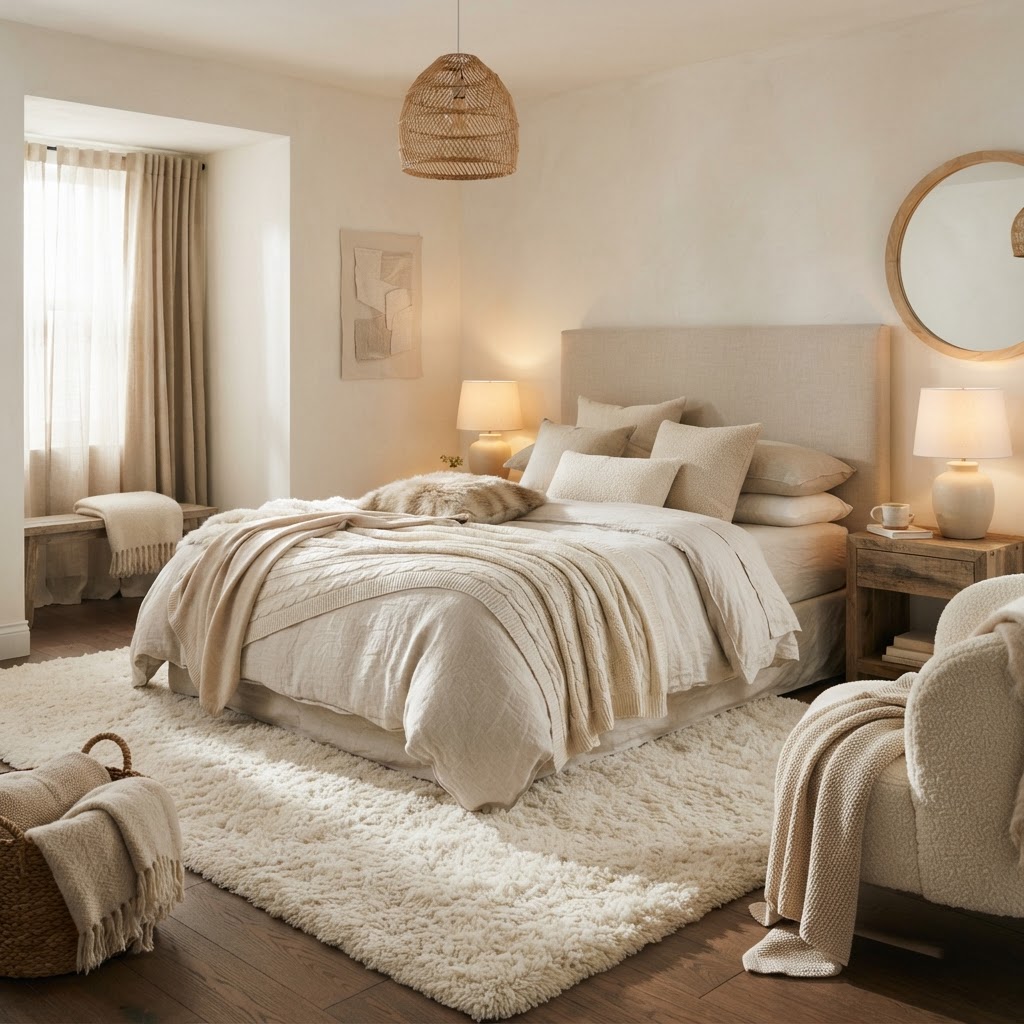
Color is one of the most powerful tools you have, and in a small bedroom, using it wrong can make the space feel genuinely suffocating. Lots of contrast, lots of different colors, lots of bold patterns: all of these things chop a room up visually. Your eye keeps jumping from one thing to the next, and that constant movement makes the space feel busy and small. A monochromatic palette does the opposite. It lets the eye travel smoothly around the room without stopping, which creates a sense of flow and openness that feels almost effortless.
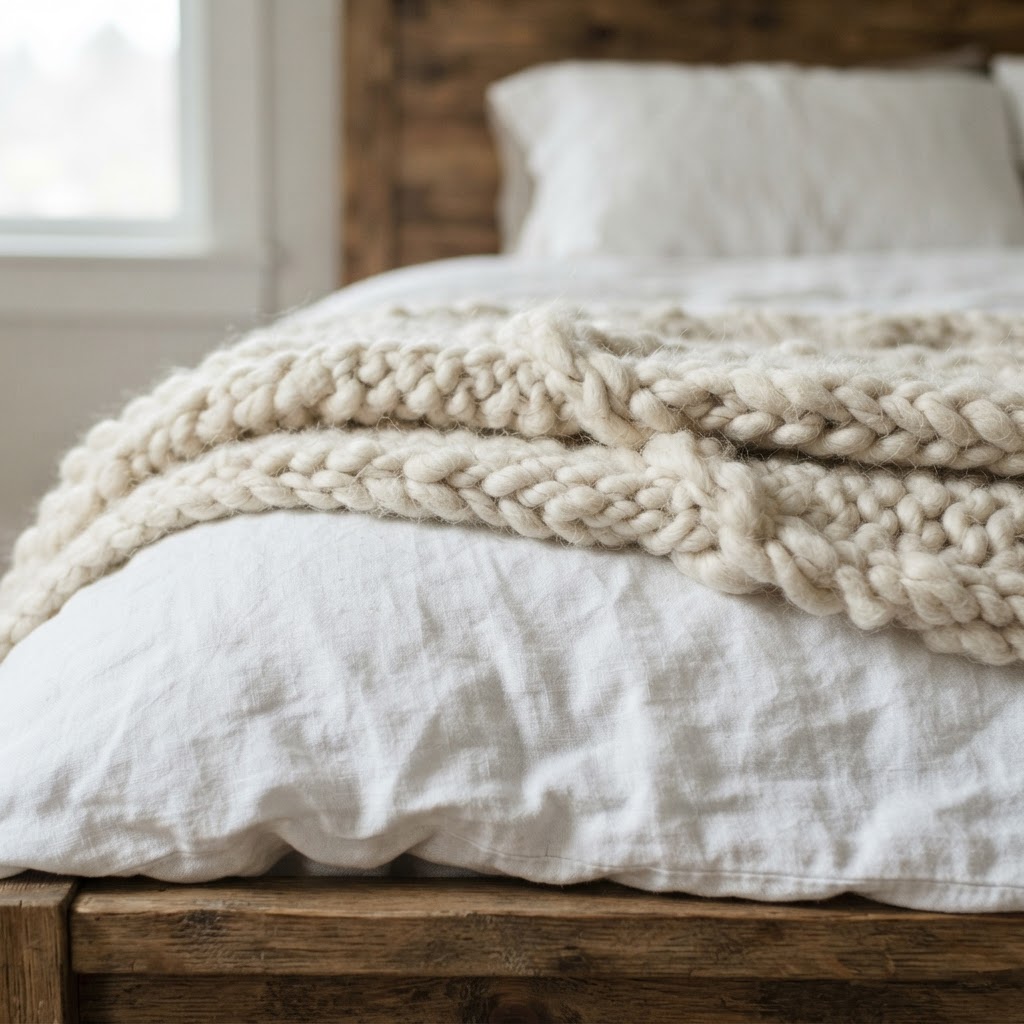
Monochromatic doesn't mean boring, and I really want to stress that because I know a lot of people hear "one color scheme" and picture a beige box. You're working within a single color family, but you're playing with texture, tone, and finish to keep things interesting. Think warm whites layered with cream linens, natural linen curtains, and a soft ivory rug. Or a soft sage green on the walls with slightly deeper olive bedding, muted green-gray throw pillows, and natural wood accents. The depth comes from variation within the palette, not from introducing contrast.
One of the smartest moves in a monochromatic small bedroom is painting the ceiling the same color as the walls, or just a shade lighter. Most people default to white ceilings no matter what color the walls are, but that high-contrast line where the wall meets the ceiling actually makes the ceiling feel lower. When the ceiling blends into the walls, the boundary disappears and the room feels taller and more continuous.
Don't forget about the floor in this equation either. If you have dark hardwood floors against very light walls, that contrast is working against you. A large area rug in a tone that bridges the gap between the floor and the walls softens that contrast and helps everything read as one unified space rather than a collection of separate surfaces competing with each other.
5. Keep Floors Clear of Clutter
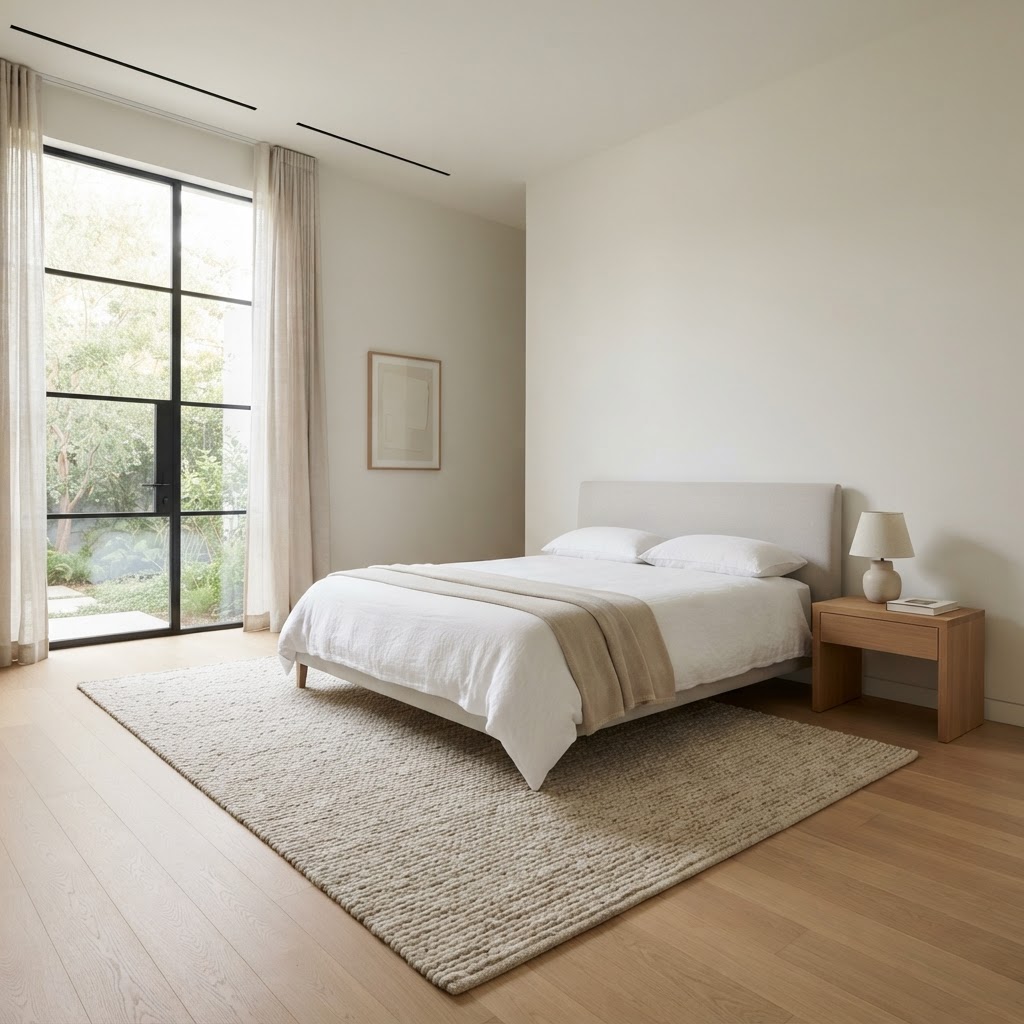
Okay, real talk: no amount of clever furniture arrangement or mirror placement will save a small bedroom that has stuff piled on the floor. The floor is the single biggest visual surface in any room. When it's clear and uninterrupted, the room feels open and calm. When it's covered with laundry piles, boxes, shoes, gym bags, and whatever else accumulates over time, the room feels chaotic and tiny regardless of its actual square footage.
I know this sounds more like a lifestyle tip than a design tip, but hear me out because there's real design thinking behind it. The amount of floor you can see directly affects how large a room feels. Studies on spatial perception consistently show that visible floor area is one of the strongest cues humans use to judge room size. So every bit of floor you reclaim by clearing clutter or finding smarter storage is directly translating into a room that feels bigger. It's not about being a neat freak. It's about strategic visual spaciousness.
The practical side of this means being intentional about storage from the start. Every item that lives in your bedroom needs a designated home that is not the floor. Hooks on the back of doors for bags and robes. A small bench with interior storage at the foot of the bed for extra blankets. Under-bed storage drawers or bins for off-season items. Proper shoe storage inside the closet so shoes aren't lined up along the baseboard eating up floor space. When everything has a place, keeping the floor clear stops feeling like a chore and starts feeling automatic.
- Install hooks behind the bedroom door for everyday bags, jackets, and accessories
- Use under-bed storage containers with lids to keep things dust-free and out of sight
- Opt for a storage ottoman or bench at the foot of the bed instead of a decorative one with no function
- Do a regular declutter pass, even monthly, to make sure things that don't belong in the bedroom aren't slowly migrating in
- Resist the urge to store things in the bedroom just because there's technically room for them there
And honestly, the psychological effect of a clear floor goes beyond just visual space. A tidy, open bedroom floor genuinely makes the room feel more like a sanctuary and less like a storage unit you also happen to sleep in. That shift in how the room feels is just as important as how it looks.
Final Thoughts
Here's what I really want you to take away from all of this: making a small bedroom feel bigger is not about expensive renovations or pulling off some complicated design scheme. It's about understanding how your eye moves through a space and making intentional choices that work with that, rather than against it. Low furniture, vertical storage, big mirrors, cohesive color, and clear floors. These five things together create a room that feels genuinely open, calm, and spacious, even if the actual square footage hasn't changed by a single inch.
Start with whichever one feels most achievable right now. Maybe it's a good declutter session to reclaim the floor. Maybe it's sourcing one large mirror. Small changes stack up fast when they're the right changes, and honestly, there's nothing quite like walking into your own bedroom and feeling like it suddenly got a whole lot bigger.
More in Interior
Stay Inspired
Subscribe for new essays on architecture, design, and the spaces that shape us.