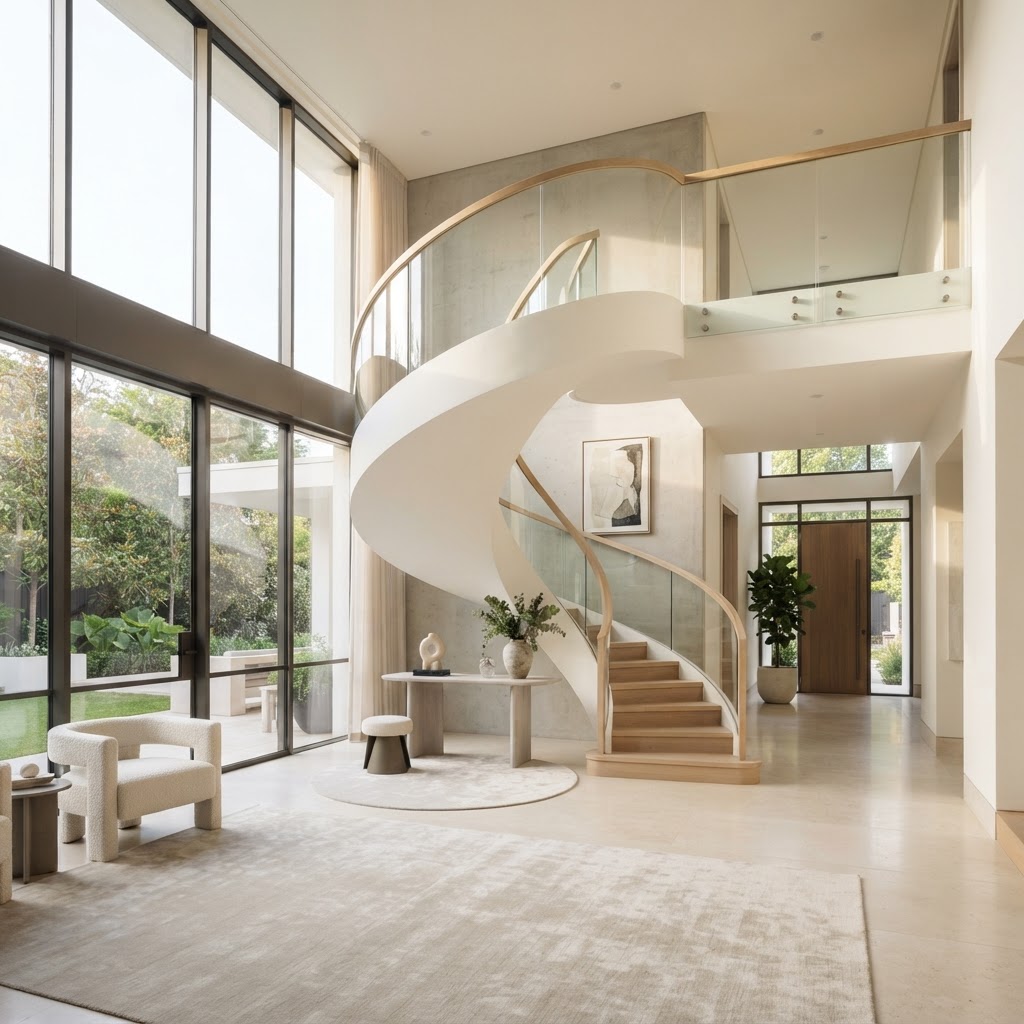
5 Staircase Designs That Will Totally Transform Your Home
Your staircase is more than just a way to get between floors. These five stunning designs prove that a thoughtful staircase can become the most memorable feature of your entire home interior.
The Sculptural Floating Staircase
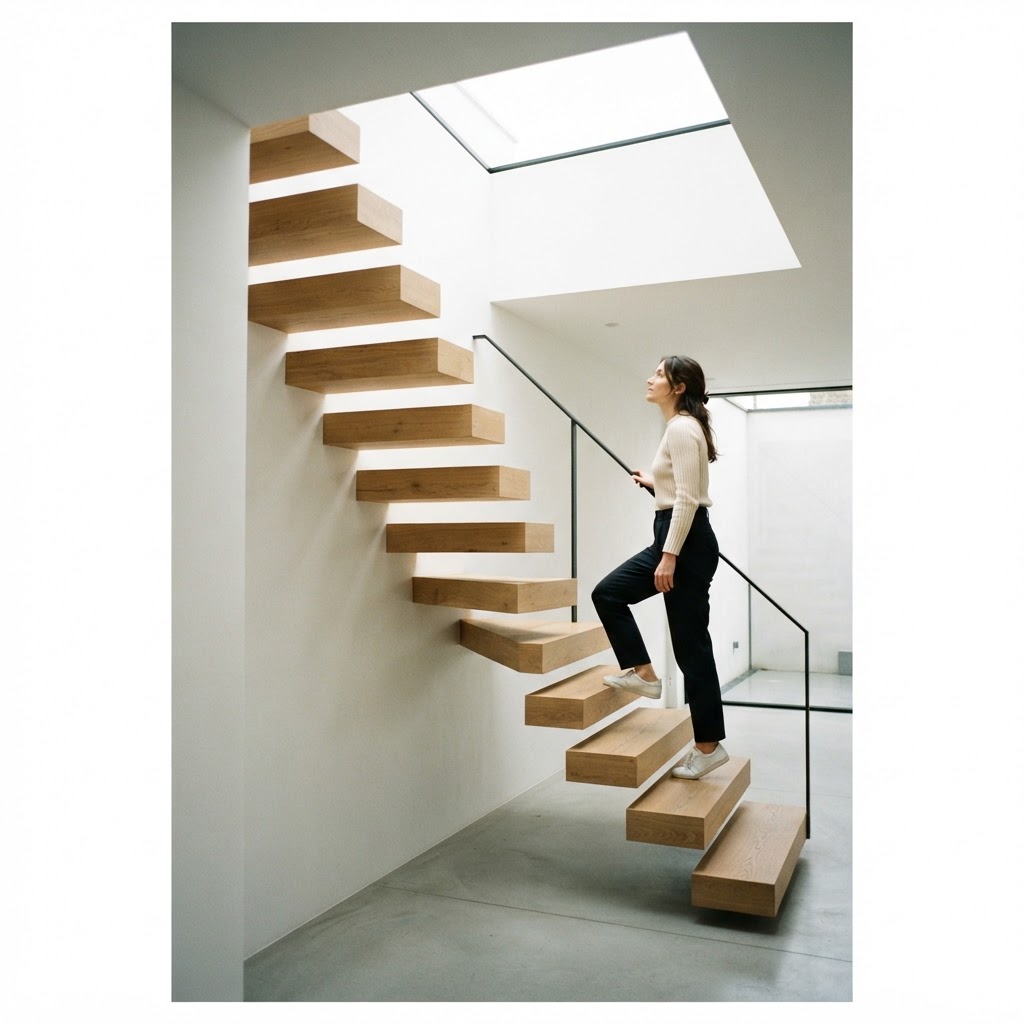
Honestly, if there's one staircase design that has genuinely changed the way we think about interior architecture over the past decade, it's the floating staircase. These things are not just functional. They're statements. Walk into a home with a well-executed floating staircase and your eyes immediately go there, like a magnet. It commands the space without being loud about it, which is a very difficult design trick to pull off.
Here's the thing about floating staircases: they work because they create visual lightness. Each tread appears to be suspended in mid-air, cantilevered from a central spine or attached directly into the wall. The absence of risers, those vertical panels you'd normally see between the steps, is what gives them that airy, almost weightless quality. It makes a room feel bigger. It lets light move through the space in ways a traditional staircase simply won't allow. And in smaller homes where every square foot counts, that's genuinely transformative.
The materials you choose here make a huge difference. Thick solid oak treads with a natural matte finish feel warm and grounded, which balances out all that visual lightness nicely. Marble or stone treads lean more sculptural and dramatic. Concrete is a bold choice that works beautifully in modern or industrial-leaning interiors. And if you want something that feels truly architectural, glass treads with LED underlighting are in a category of their own. Real talk, I've seen glass-tread floating staircases that look like something out of a gallery installation.
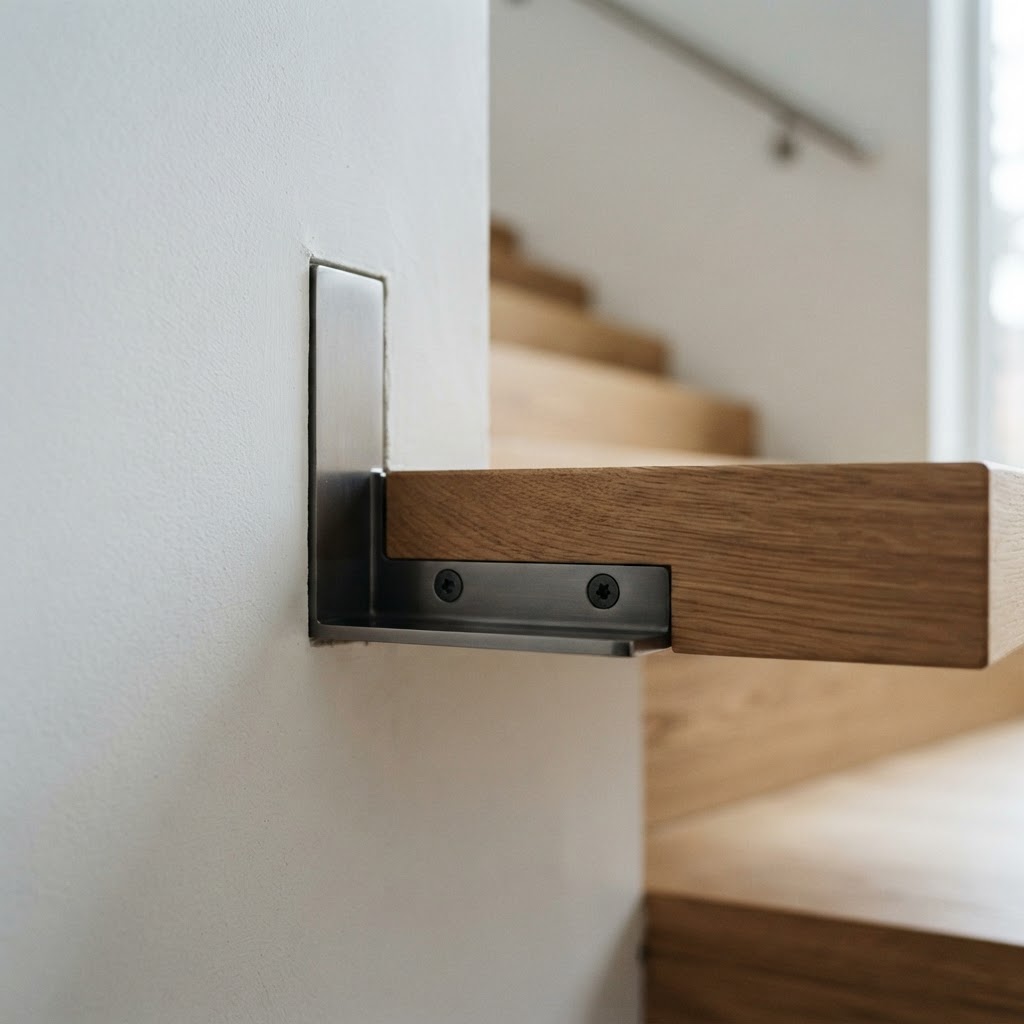
The railing situation on a floating staircase is equally important, maybe even more so. A thick steel cable railing keeps things clean and almost invisible. A single flat steel plate on one side, what designers often call a mono-stringer, is incredibly sleek. Glass panel railings are another great option because they maintain that see-through quality that makes the whole design sing. Whatever you pick, just make sure it doesn't clutter the visual simplicity that makes this design so special in the first place.
One thing worth knowing before you fall head over heels for this look: floating staircases are an engineering project as much as a design project. They need serious structural support, whether that's a robust steel spine hidden inside the wall or heavy-duty bracketing. You'll want a structural engineer involved early in the conversation, not as an afterthought. The build cost is higher than a conventional staircase, but trust me on this, when it's done right, it is absolutely worth every penny.
Classic Grandeur With A Modern Twist
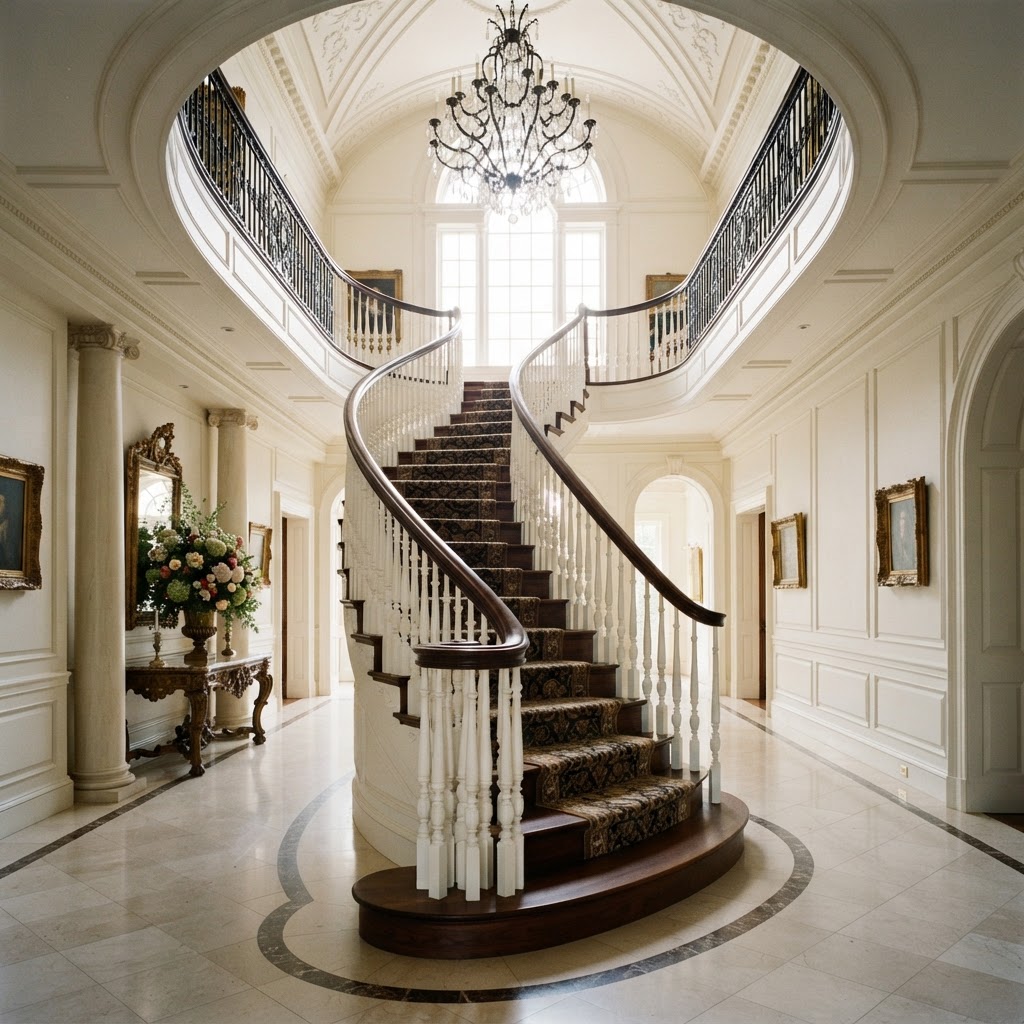
Look, some design ideas are classics for a reason. The grand curved staircase has been a showpiece in beautiful homes for centuries, and it is not going anywhere. But the version of it that's exciting people right now isn't your grandmother's ornate Victorian spiral. It's something cleaner, more refined, and much more livable. It's the classic silhouette stripped of fussiness and given a proper modern makeover.
Think about a sweeping curved staircase with a smooth plaster soffit underneath, painted in a single deep color. No carved spindles, no heavy timber newel posts. Instead, a slim powder-coated steel handrail that curves with the staircase, almost like a piece of jewelry against the wall. The treads might be solid walnut, or they could be carpeted in a thick boucle or a subtle wool runner in an earthy tone. The whole thing feels simultaneously grand and restrained. That's the balance that makes this design so compelling right now.
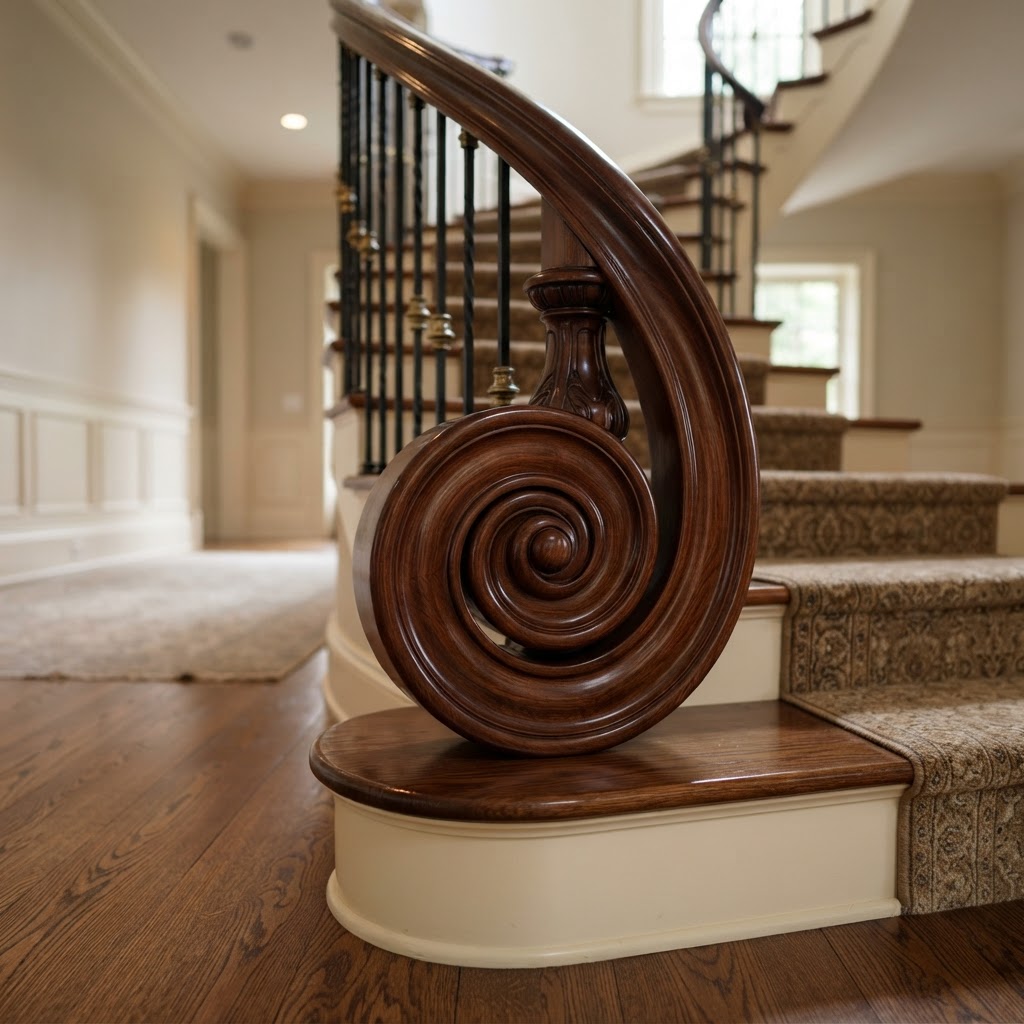
What really elevates this design is treating the underside of the staircase as a feature rather than an afterthought. So many people focus on the steps themselves and completely ignore the soffit. But that curved underbelly is genuinely one of the most beautiful architectural forms in a home. Plaster it smooth, paint it a contrasting color, or even apply limewash for a textured, organic feel. Add a few recessed lights that wash light across it, and suddenly you have something that looks like it belongs in an architectural digest.
- Material pairing: Combine white painted risers with dark stained treads for a high-contrast look that feels both classic and fresh
- Runner choice: A natural jute or sisal runner adds warmth and texture without competing with the staircase's form
- Railing update: Swap ornate wrought iron balusters for simple vertical steel rods to modernize a traditional curved shape instantly
- Lighting: Recessed step lights built into the risers create drama at night and are a practical safety feature too
And honestly, this is one of those designs that ages incredibly well. Trends come and go, but a beautifully proportioned curved staircase with quality materials and thoughtful detailing is going to look stunning in twenty years, just as it does today. It's an investment in architecture, not just decoration.
Industrial Chic Steel Structures
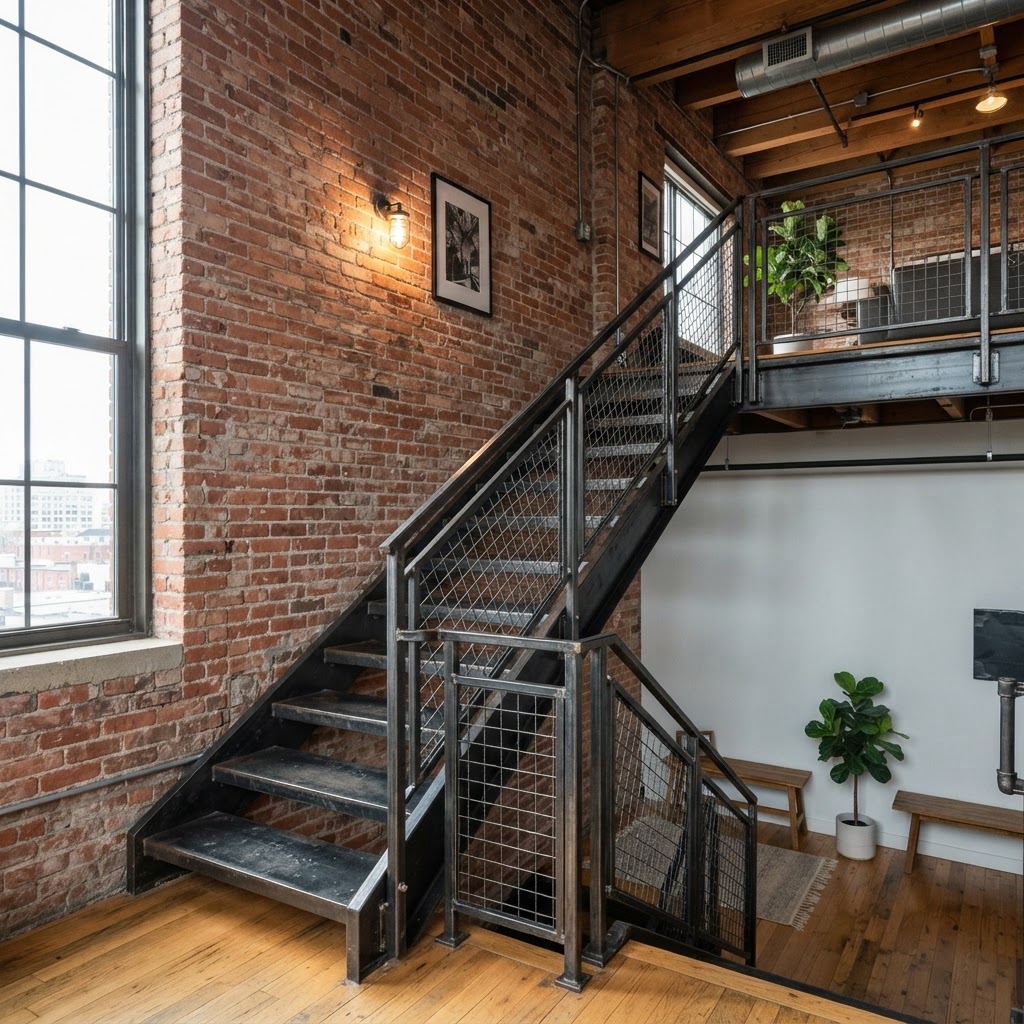
There is something deeply satisfying about a staircase that doesn't try to hide what it's made of. The industrial steel staircase is exactly that kind of honest, no-nonsense design. It shows its bones. The structural elements, the stringers, the brackets, the bolts, are all visible and celebrated rather than boxed in and concealed. And when you combine that raw steel framework with warm wood treads, the result is one of the most characterful staircase designs out there.
This style really came into its own through the loft conversion trend, where industrial bones were kept and celebrated rather than covered over with drywall and paint. But here's the thing: you don't need to live in a converted warehouse to pull this off. A steel staircase with open risers and chunky timber treads looks incredible in a contemporary new-build too. It adds rawness and personality to spaces that might otherwise feel a bit too pristine. It's the design equivalent of wearing a perfectly tailored suit with a well-worn leather boot. The contrast is the whole point.
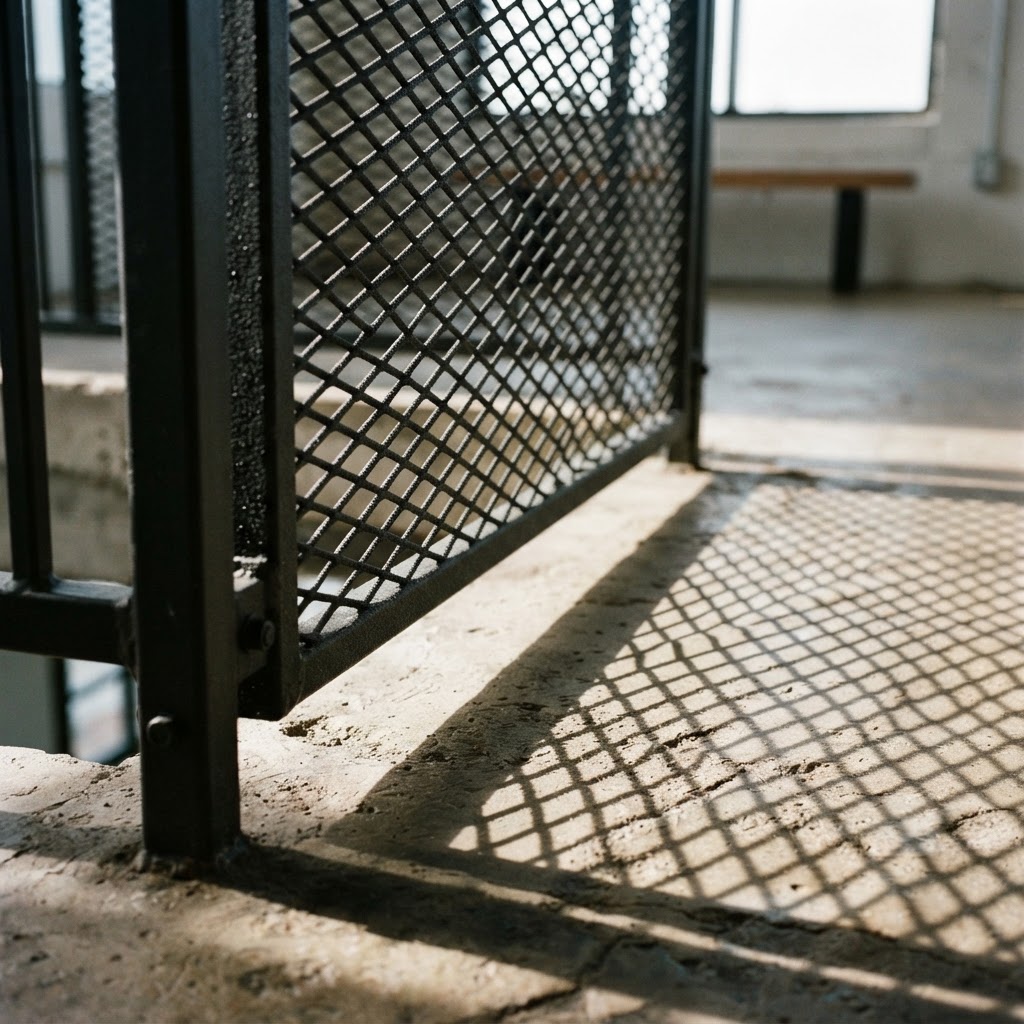
The finish you choose for the steel matters enormously. Matte black is the most popular option, and for good reason: it's bold, graphic, and incredibly versatile. Raw or blackened steel with a clear wax finish gives a more authentic industrial feel with visible grain and texture in the metal itself. Gunmetal grey is a softer option that works well in homes with a more neutral or Scandinavian-influenced palette. What I'd avoid is anything too glossy, it tends to cheapen the look and takes away that grounded, serious quality that makes this design so appealing.
For the treads, reclaimed timber is the absolute dream pairing. The knots, the grain variation, the aged patina, all of that plays beautifully against the precision of the metalwork. If you can't source reclaimed timber, a heavily brushed or fumed oak gets you close to that same feel. The treads should be thick, ideally 60mm or more, because the visual weight of the timber needs to balance the visual weight of the steel structure. Skinny treads on a chunky steel frame just look off.
Hidden Storage Staircases
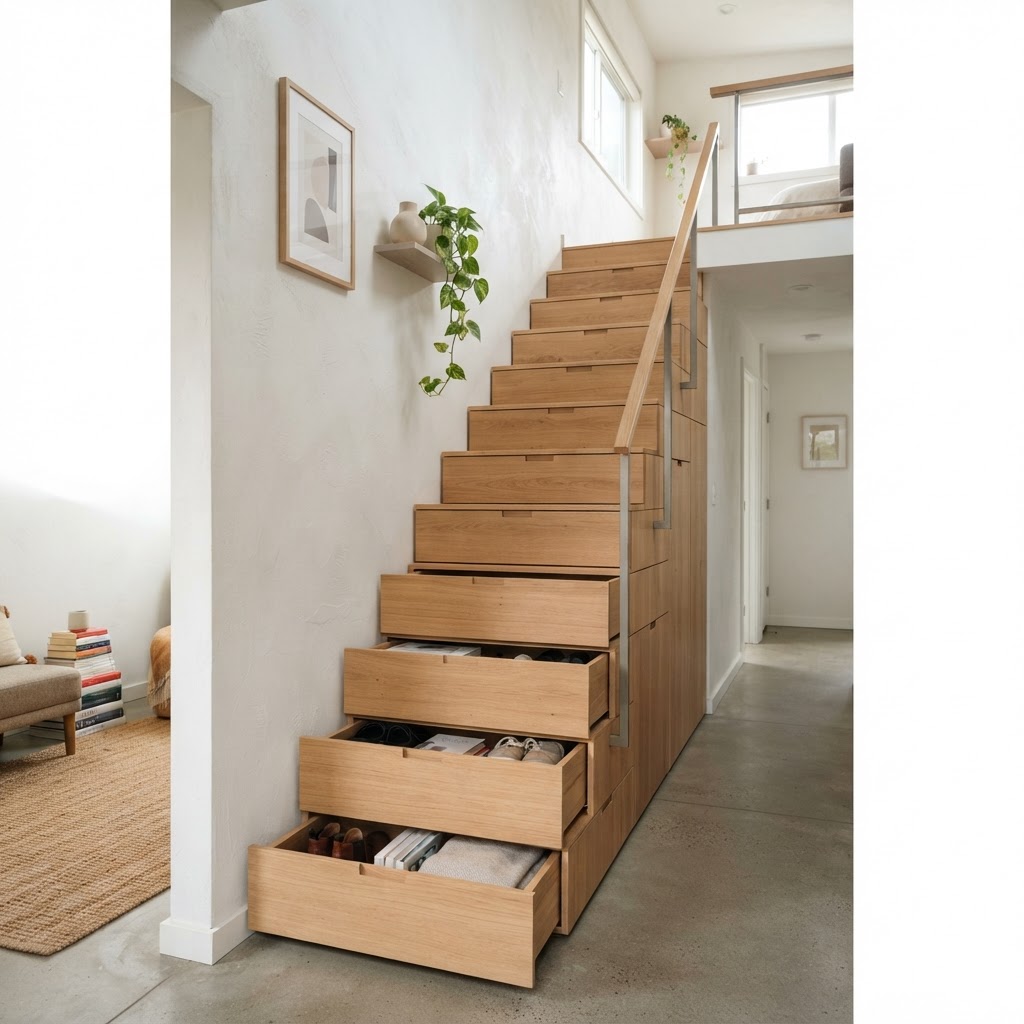
Okay, this one is for anyone who has ever looked at the dead space under their stairs and thought, there has to be a better way. Because there absolutely is. The storage staircase concept takes the wasted volume inside a conventional staircase structure and turns it into some of the most useful, best-looking storage you'll ever have in your home. And honestly, in an era where we're all trying to do more with less space, this design just makes so much sense.
There are two main approaches here. The first is drawer storage built directly into each tread riser, where the front face of each step pulls out to reveal a shallow but wide drawer. These are fantastic for shoes, toys, bed linen, sports kit, all the bulky awkward stuff that usually ends up stuffed into a cupboard somewhere. The second approach is using the entire cavity under the staircase as a built-in unit, with doors, shelves, and cubbies designed as a piece of fitted furniture that wraps around the staircase form. Both approaches can look absolutely stunning when done well.
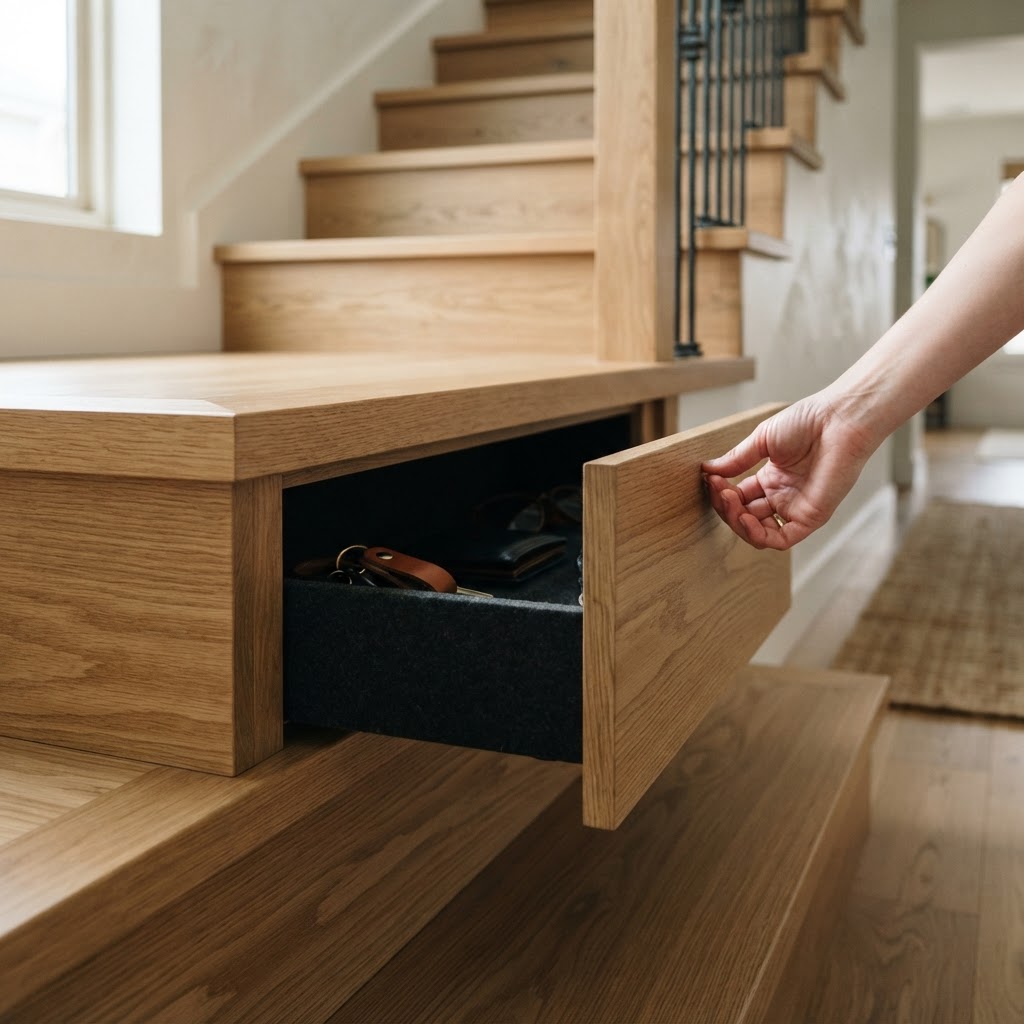
The key to making this look intentional rather than improvised is integration. The storage elements need to feel like they were designed alongside the staircase, not added to it as an afterthought. That means matching the drawer fronts or door faces to the finish of the staircase itself, painting everything the same color, using the same hardware throughout, and making sure the proportions are carefully considered. When it's done this way, you genuinely cannot tell that you're looking at a storage unit. It just looks like a beautifully designed staircase.
- Per-tread drawers: Best for shoes, seasonal accessories, or children's toys that need to be accessed frequently
- Under-stair cupboards: Ideal for vacuum cleaners, coats, and larger household items
- Open shelving: Works well in hallways where you want to display books or plants without a heavy built-in feel
- Pull-out wine storage: One of the cleverest uses of this space, especially if you have a tighter-angled staircase with good depth
Real talk, this might be the most practical entry on this entire list. Beautiful staircases are wonderful, but a beautiful staircase that also solves a genuine storage problem in your home? That's genuinely life-changing, especially for families or anyone living in a smaller property where square footage is precious.
The Artistic Tile Detail
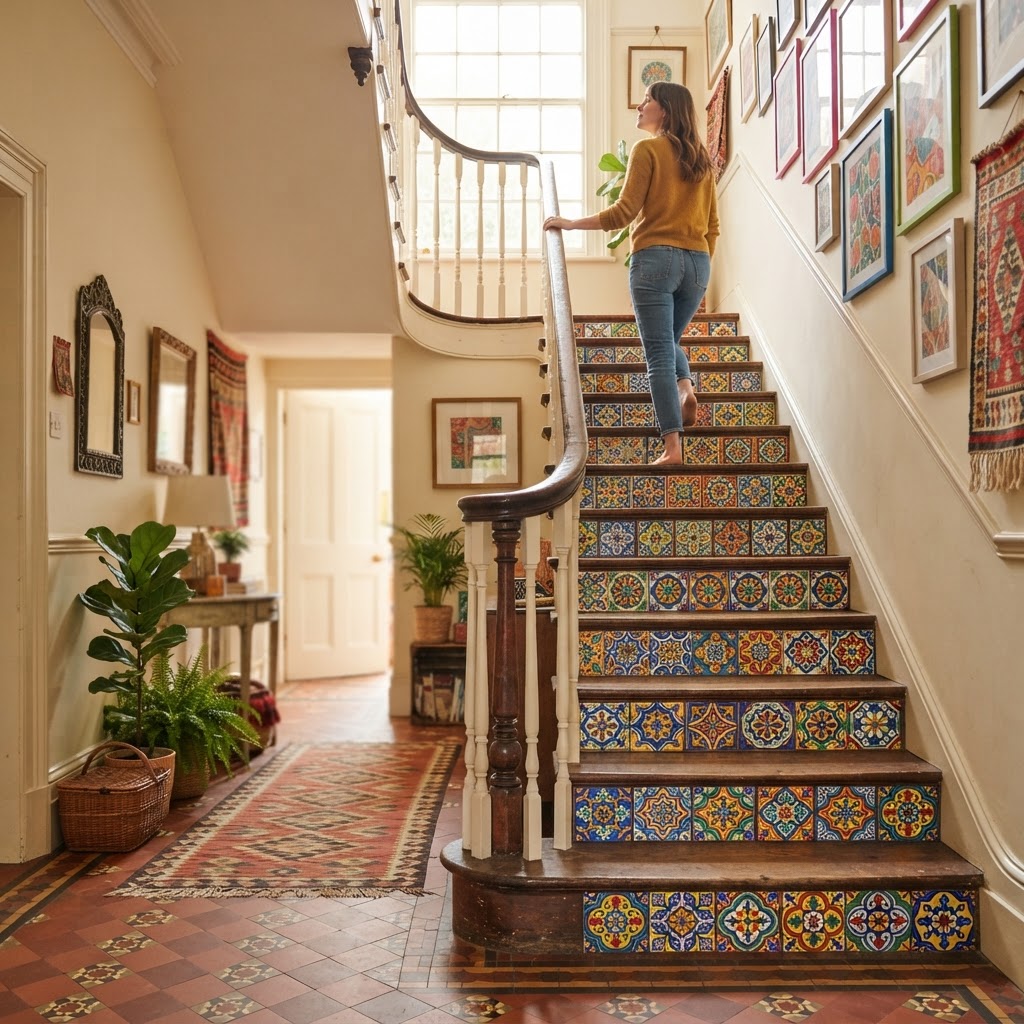
Here's something I genuinely love recommending because it delivers a massive visual impact for a relatively modest budget: tiling the risers of your staircase. If you're not familiar with this technique, the risers are the vertical faces between each tread, the parts that you usually see painted white or left as plain wood and never really think about. Tile them with something beautiful and your staircase transforms into a piece of art that you walk past every single day.
The tradition of decorative stair risers is ancient and global. You see it in Portuguese azulejo tiles, in Moroccan zellige, in Spanish hand-painted ceramics, in Mexican Talavera. These cultures understood something that a lot of contemporary Western interiors have forgotten: the staircase is a canvas. Every single riser is an opportunity. And when you treat it that way, the result is a staircase that tells a story, reflects a culture, or simply adds a layer of beauty and craft to your home that mass-produced fittings simply cannot replicate.
The approach can be as bold or as subtle as you like. Covering every riser in a single geometric tile pattern creates a rhythmic, graphic effect that feels contemporary and strong. Using a different tile on each riser, mixing complementary patterns within a coherent color palette, is more playful and eclectic and personally one of my favorite looks. For something softer, a single hand-painted floral or botanical motif repeated across all risers has a quiet, artisanal quality that feels incredibly considered. And if you're hesitant about committing fully, even a simple terracotta tile with a natural linen runner over the treads is genuinely gorgeous.
One practical note worth mentioning: make sure your tile installer is experienced with stair risers specifically. The grout lines need to be consistent, the adhesive needs to be appropriate for the movement that a staircase experiences over time, and the tiles themselves need to be properly sealed if they're in a porous encaustic or cement category. Done sloppily, this design looks messy. Done properly, it looks like the work of someone with real taste and a genuine love of craft.
"The staircase is one of the few architectural elements in a home that you interact with physically every single day. It deserves as much design attention as any other room in the house."
What makes the tiled riser approach particularly special in terms of this list is that it doesn't require you to replace your existing staircase. If the structure and the treads are in good condition, you're simply adding a decorative layer to what's already there. In terms of transformation per pound spent, this one genuinely punches way above its weight. You can completely change the character of your hallway and staircase for a fraction of the cost of a structural redesign.
Final Thoughts
Look, your staircase is not just a way to get from one floor to another. It's often the first architectural element people notice when they walk into your home, and it's one of the few things you interact with multiple times every single day. Giving it some serious design attention is one of the best investments you can make in your living space, both for how it feels to live in your home and for its long-term value.
Whether you go for the sculptural drama of a floating staircase, the timeless elegance of a modernized curved design, the raw honesty of an industrial steel structure, the clever practicality of built-in storage, or the artisanal beauty of tiled risers, the underlying principle is the same: treat this space with intention. Choose materials you genuinely love. Think about how light moves through the space. Consider how the design connects to the rest of your home. And don't be afraid to be a little bold.
Honestly, the best staircase designs are the ones that make you smile a little every time you use them. That's not a small thing. That's what good design is actually for.
More in Interior
Stay Inspired
Subscribe for new essays on architecture, design, and the spaces that shape us.