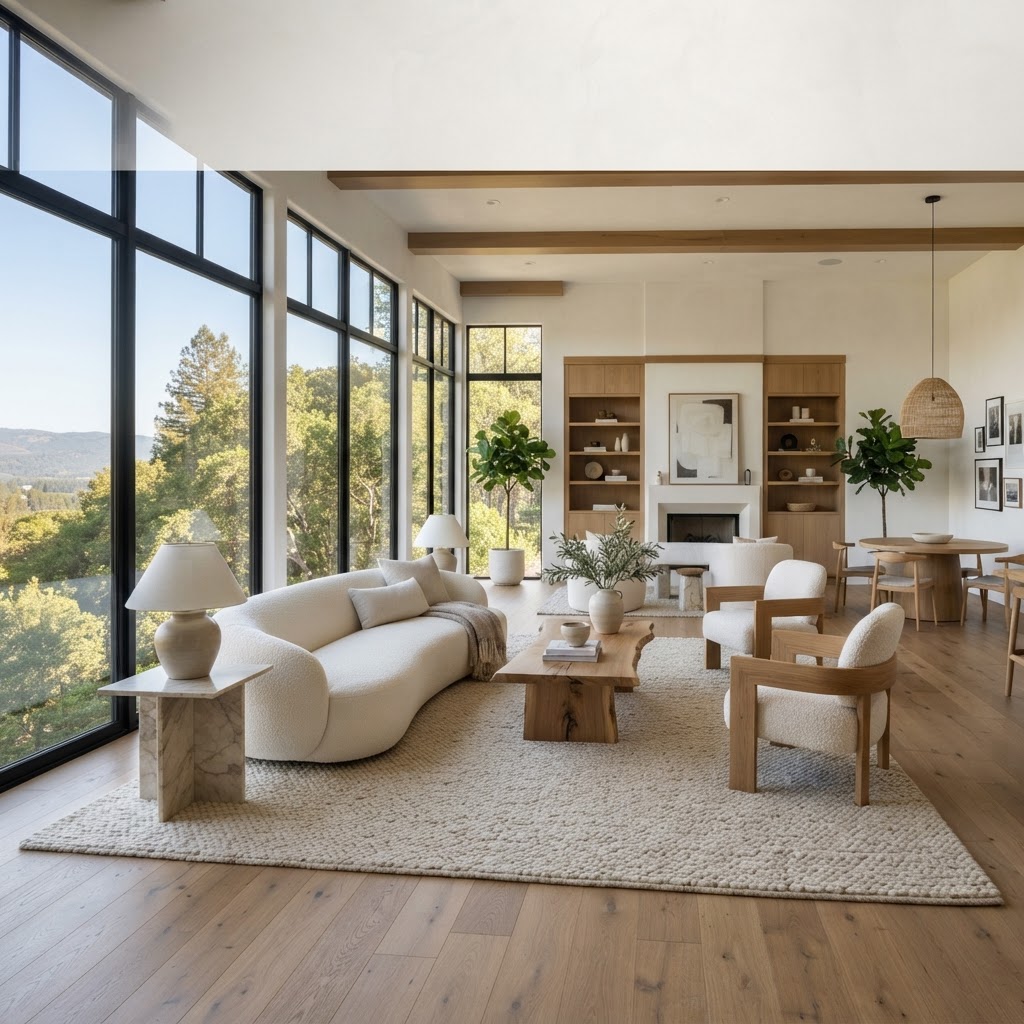
The Ultimate Guide to Choosing the Perfect Living Room Rug That Ties Everything Together
Finding the right rug is often the hardest part of styling a living room. We are breaking down everything you need to know about size, texture, and durability to help you find a piece that looks amazing and lasts for years.
Finding the Right Size for Your Space
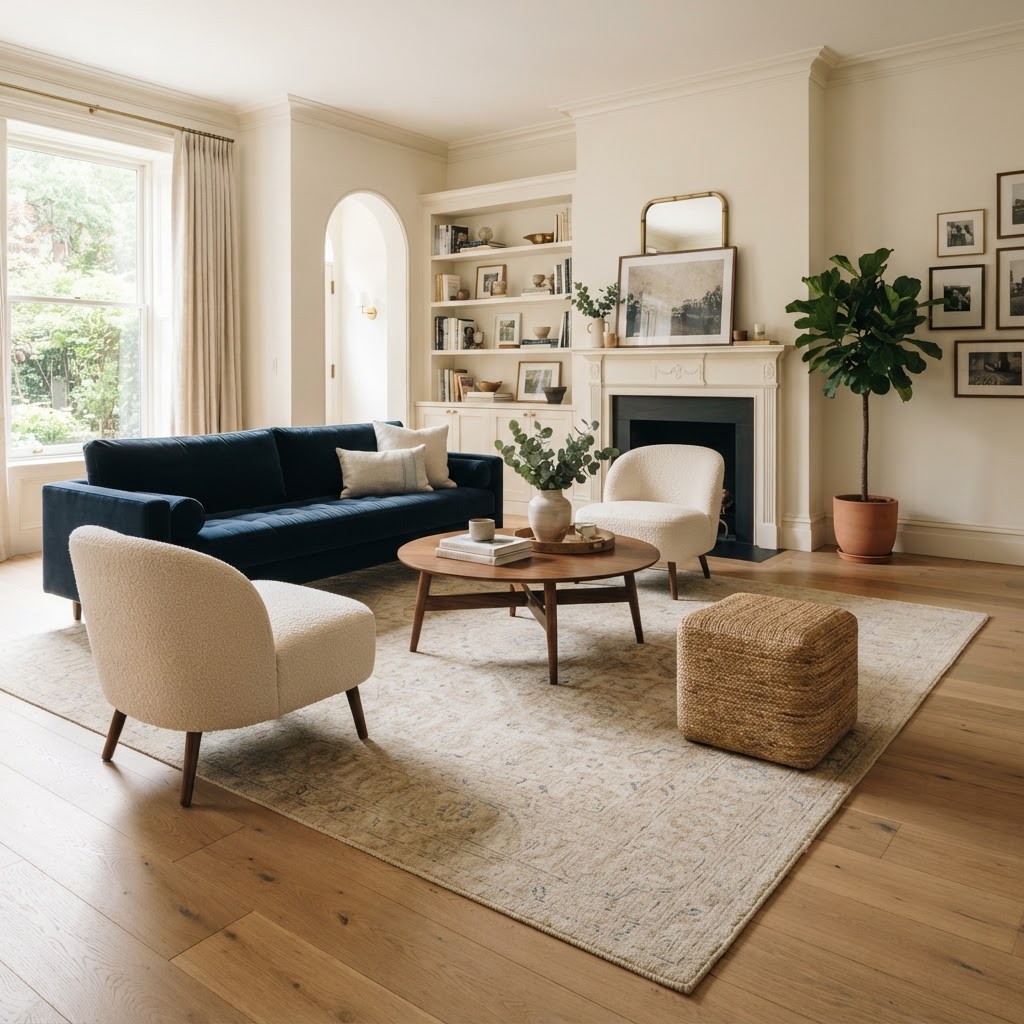
Honestly, this is where most people go wrong. They fall in love with a rug at the store, bring it home, lay it down, and it looks like a postage stamp floating in the middle of the room. Size is everything when it comes to rugs, and I cannot stress this enough: always go bigger than you think you need. The number one regret I hear from homeowners is that they wish they had sized up.
Here's the thing about living rooms specifically. You have a few different approaches you can take, and the right one depends on your furniture layout and how big the room actually is. The most classic and reliable approach is the "all legs on" method, where every piece of furniture that defines your seating area has all four legs sitting on the rug. This creates a cohesive, pulled-together look and makes the space feel intentional. For most average-sized living rooms, this means you probably need at least an 8x10 or even a 9x12.
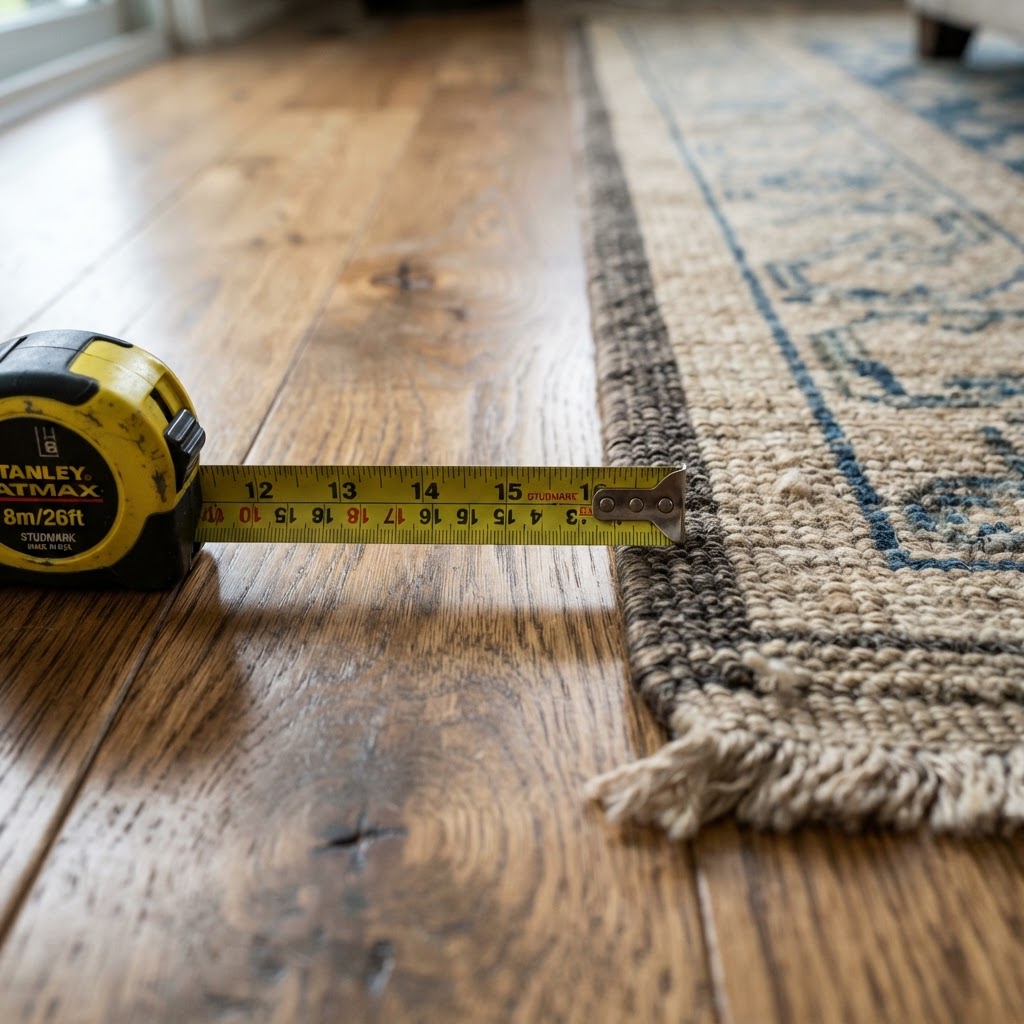
If budget is a concern, the "front legs on" approach is totally acceptable and widely used by designers. You place just the front legs of your sofa and chairs on the rug, which still visually connects the furniture to the rug without needing quite as large a piece. What you want to avoid at all costs is the floating rug situation, where the furniture is completely off the rug and it just sits there in the middle like an island going nowhere.
Before you buy anything, grab some painter's tape and map out the dimensions on your floor. Live with it for a day. Walk around it, sit on your sofa, see how it feels. This little trick has saved so many people from expensive mistakes. And remember, there should be roughly 18 inches of bare floor between the edge of the rug and the walls of the room. That border of exposed floor is what gives the rug room to breathe and makes the space look intentional rather than cramped.
Natural Fibers vs. Synthetic Durability
Real talk, this debate comes up constantly and people feel surprisingly strongly about it. I get it. There is something undeniably beautiful about a hand-knotted wool rug or a chunky jute piece that just cannot be replicated by a machine-made polypropylene option. But here is where I want you to pump the brakes before you commit to a $3,000 wool rug: think honestly about your lifestyle first.
Natural fibers like wool, jute, sisal, and cotton each bring something different to the table. Wool is the gold standard. It is naturally stain resistant to a degree, incredibly durable, soft underfoot, and it just gets better looking with age. A good wool rug can last decades if you take care of it. Jute and sisal are gorgeous for texture and that organic, earthy vibe, but they are not the most forgiving when it comes to spills. They absorb moisture easily and can be tricky to clean, so they work best in lower-traffic spaces or homes without small kids and pets.
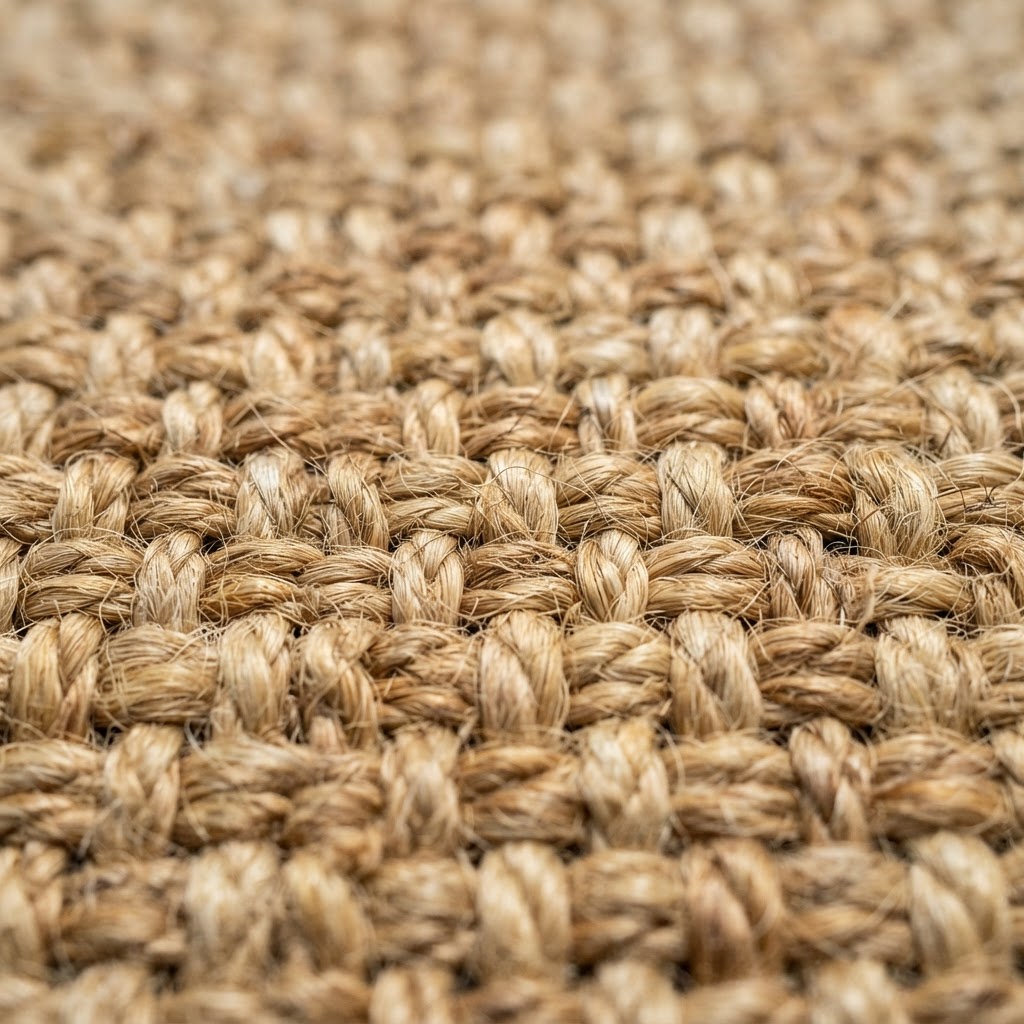
Synthetic rugs, particularly those made from polypropylene or polyester, have genuinely come a long way. I used to be a bit of a snob about them and honestly I had to check myself. Today's indoor-outdoor synthetic rugs are incredibly resilient, fade-resistant, easy to clean with a hose, and available in patterns and textures that look legitimately beautiful. If you have dogs, toddlers, or a partner who eats cereal on the couch, a high-quality synthetic might just be your best friend.
The sweet spot for a lot of families is a wool-blend rug. You get much of the warmth and look of natural wool combined with synthetic fibers that boost durability and make cleaning a little less stressful. Whatever you choose, always check the pile height too. A lower pile is easier to vacuum, holds up better under heavy furniture, and tends to work better in busier households. Higher pile feels incredible underfoot but traps more dirt and can flatten over time in heavily used areas.
Adding Depth with Pattern and Color
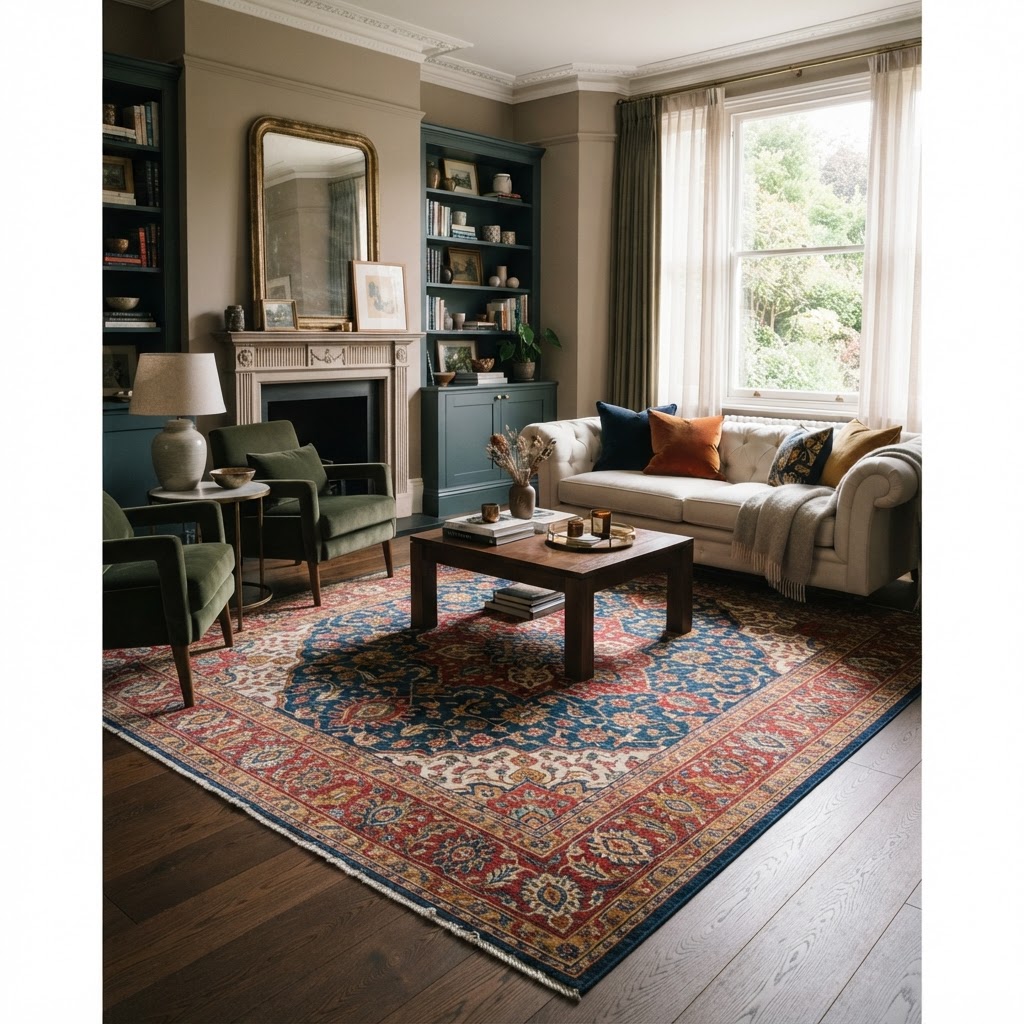
This is where it gets genuinely fun. A rug is one of the most powerful tools you have in a living room because it can introduce color, pattern, and visual texture all at once. And honestly, it is one of the most underutilized opportunities people have to take their space from fine to really special. Look, if every piece of furniture you own is a solid neutral, which describes about 80% of living rooms out there, your rug is the perfect place to be brave.
When it comes to pattern, the scale matters enormously. A large-scale geometric or a bold traditional medallion pattern works beautifully in bigger rooms with higher ceilings. In a smaller space, that same oversized pattern can feel overwhelming and choppy. Smaller-scale patterns, thin stripes, subtle tone-on-tone textures, or abstract designs tend to read as more restful and can actually make a smaller room feel larger. The key is contrast. If your floors are dark hardwood, a lighter rug will make the space pop. If you have light floors, you have more flexibility but a medium-toned rug gives the room some grounding weight.
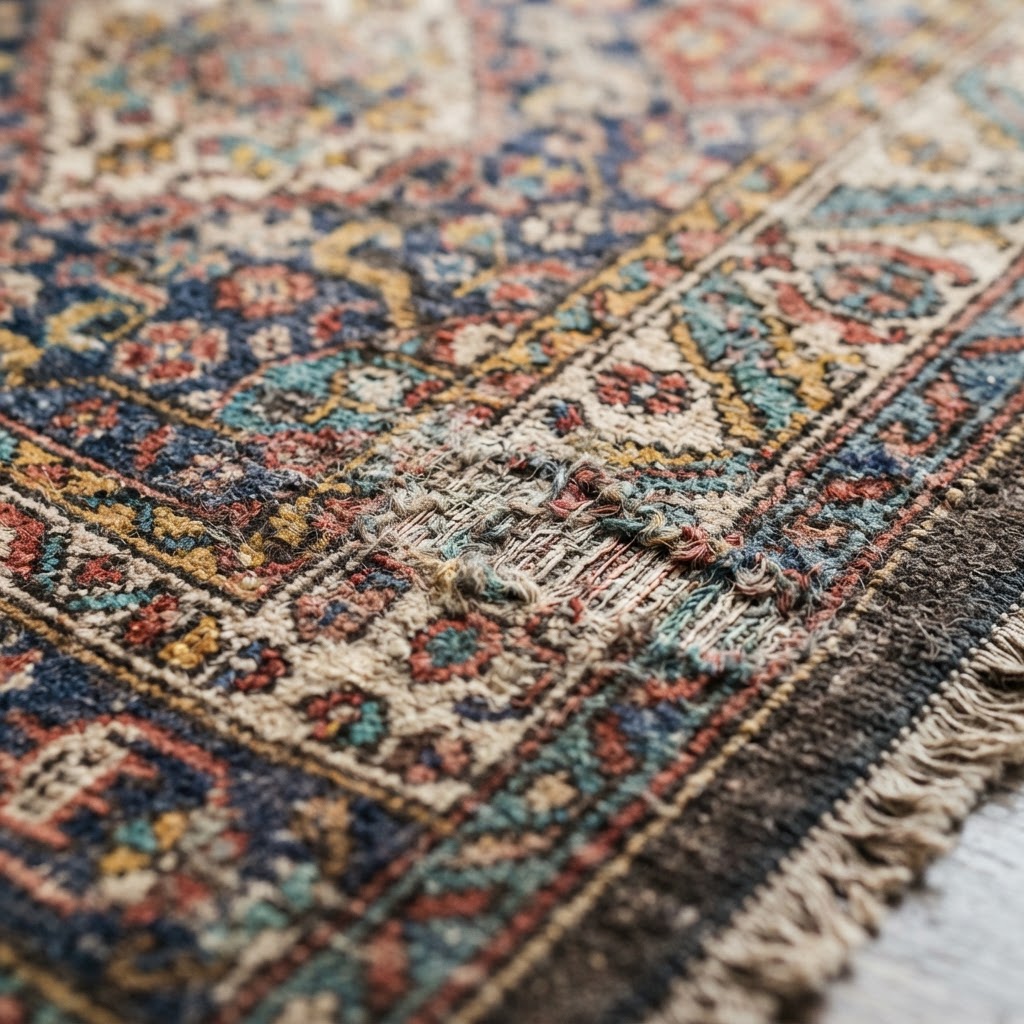
Here is one of my favorite tricks: use the rug to pull together accent colors that already exist in the room. Maybe you have dusty blue throw pillows and a terracotta ceramic vase on the shelf. Find a rug that holds both of those tones in its palette and suddenly the whole room feels like it was designed by someone who really knew what they were doing. It creates that cohesion that people notice without being able to explain exactly why the room feels so good.
- For neutral rooms: Choose a rug with at least two to three colors to add visual interest without overwhelming the space.
- For colorful rooms: A solid or low-pattern rug in a complementary tone lets the rest of the room breathe.
- For small spaces: Light colors and simple patterns create an airy, open feeling.
- For cozy spaces: Deep jewel tones and rich patterns add that layered, intimate warmth that makes a room feel lived-in and loved.
The Art of Rug Layering
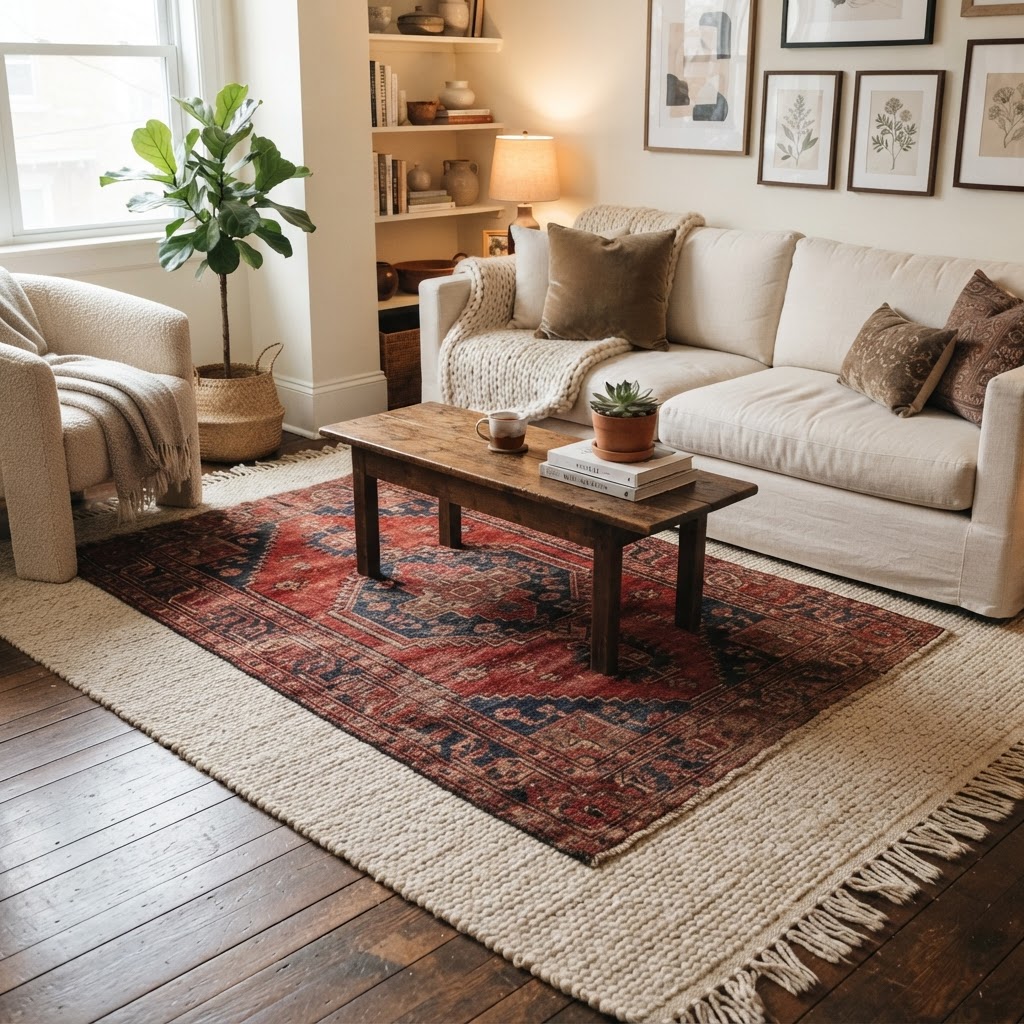
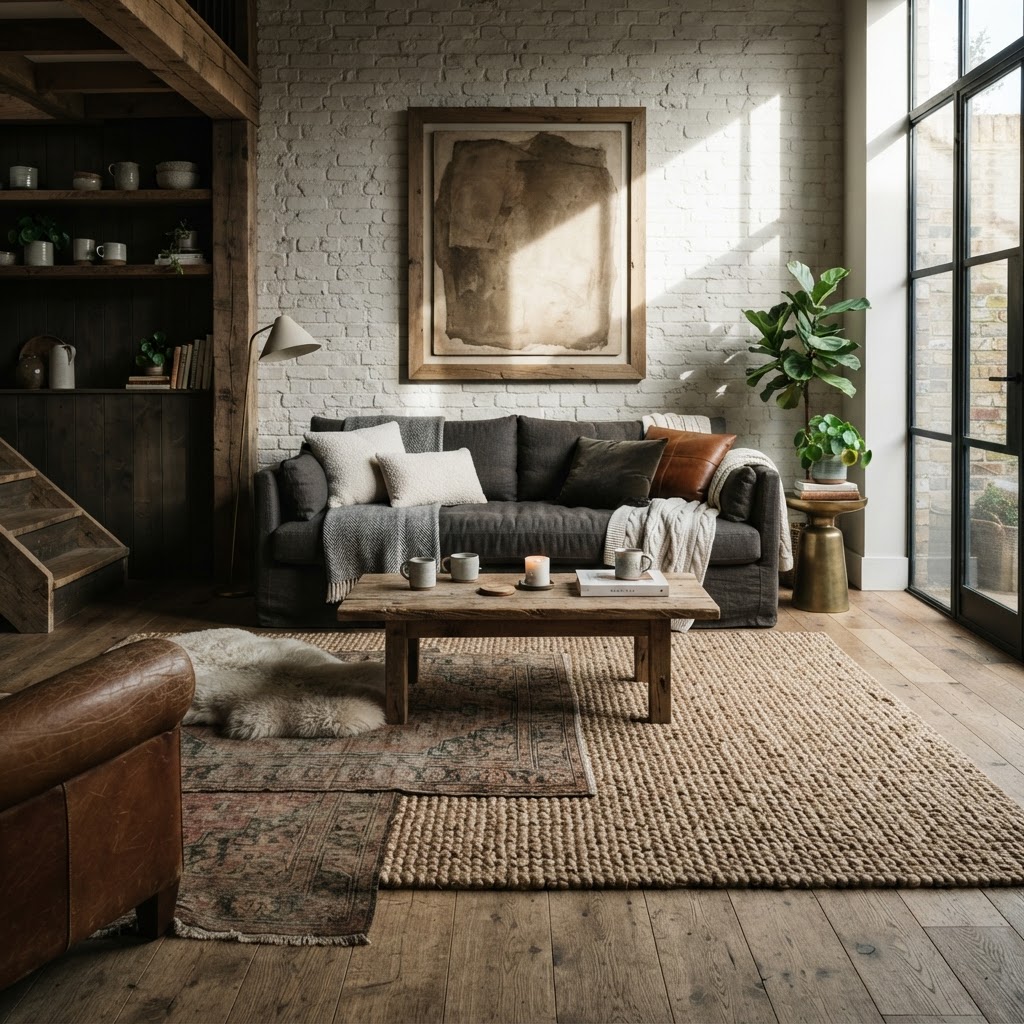
Okay, rug layering. If you have not tried this yet, I want you to seriously consider it because it is one of those styling moves that looks incredibly intentional and expensive but is actually quite accessible. The concept is simple: you place a larger, more neutral base rug down first and then layer a smaller, more decorative rug on top of it. The result is this rich, textural, collected-over-time look that feels warm and designed without being fussy.
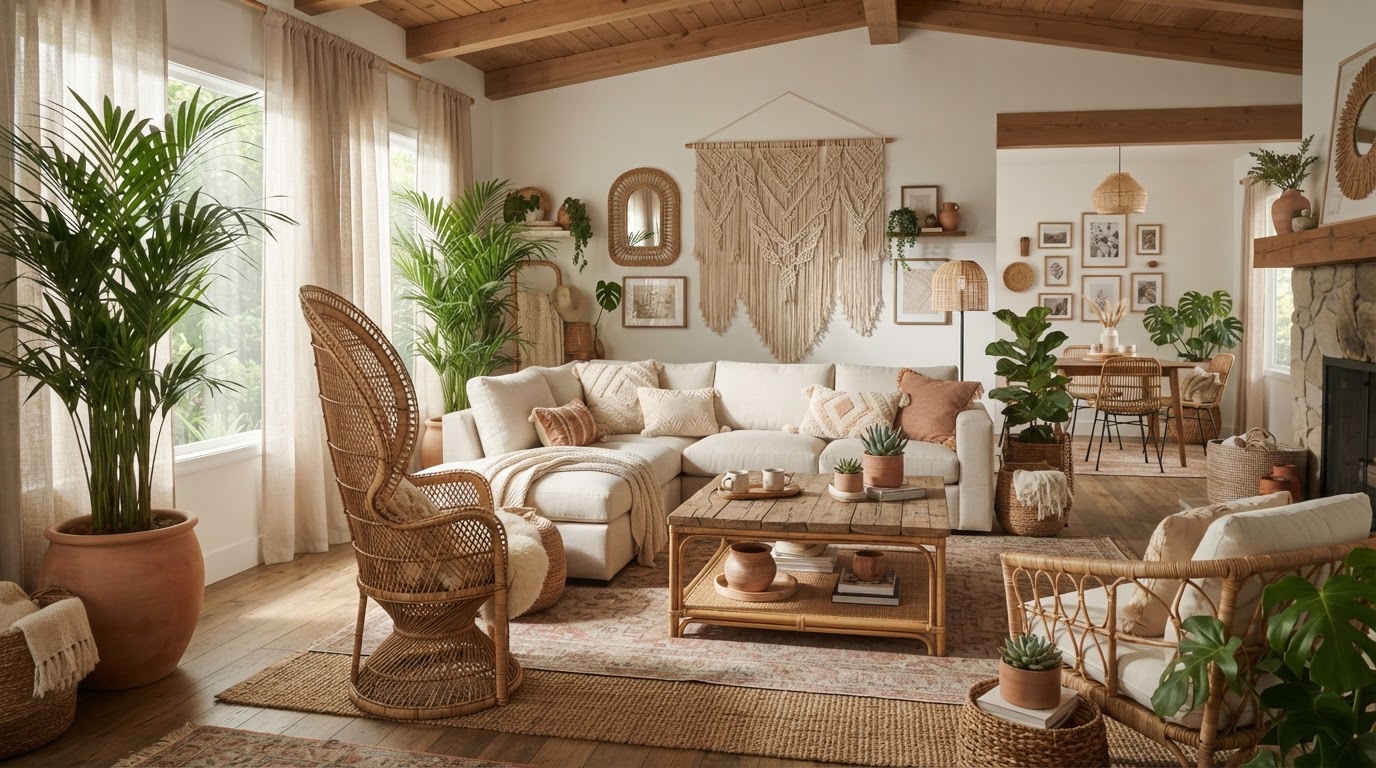
The classic combination that never fails is a flat-weave or natural fiber base rug, think jute or sisal, topped with a smaller vintage-style or patterned rug. The texture difference between the two is what makes it work. You want contrast in texture, and ideally in pattern as well. A very busy base rug under an equally busy topper is going to look chaotic. But a simple, neutral woven jute under a rich Persian-inspired runner or a bold geometric? That is the sweet spot.
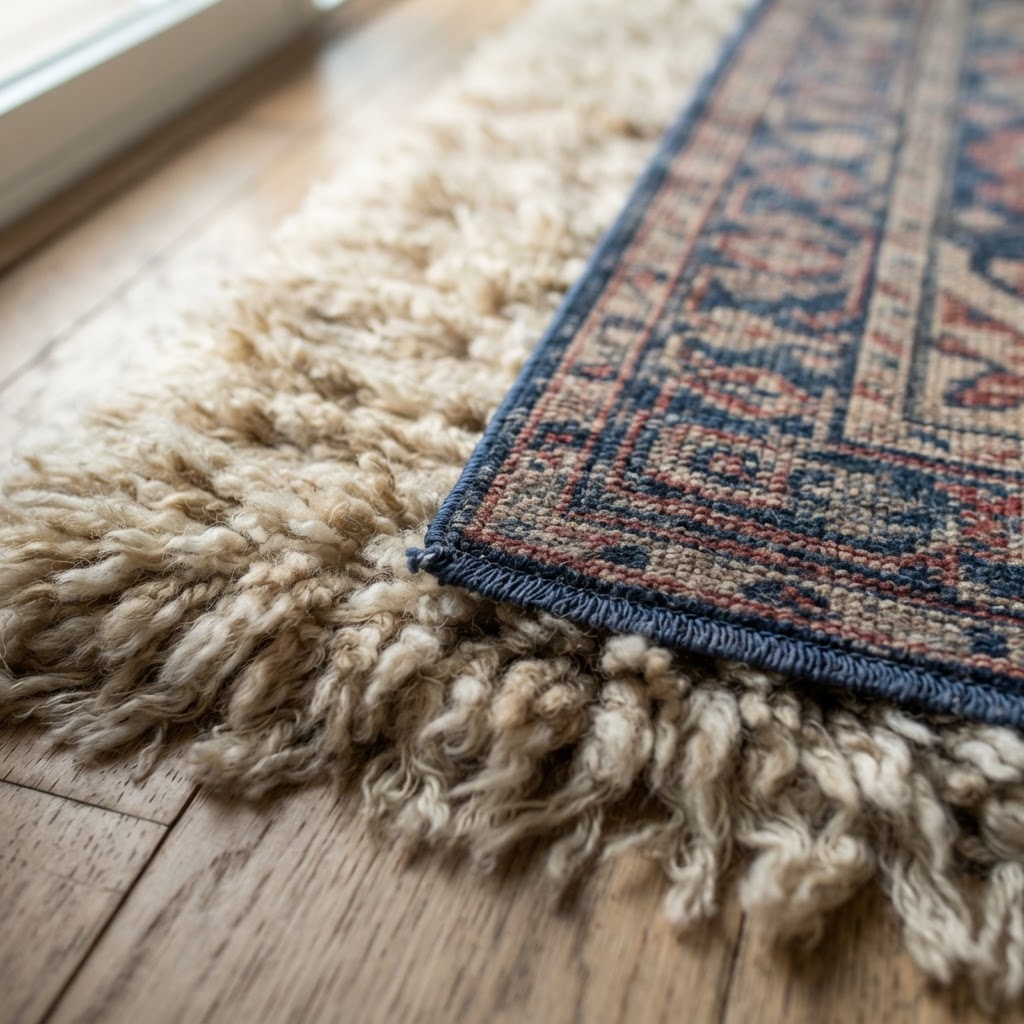
Layering is also a brilliant solution if you find a rug you absolutely love but it is a bit too small for your space. Rather than returning it and starting over, buy an inexpensive larger base rug and let your beloved piece become the topper. It solves the size problem while adding visual depth. Trust me on this one, it is a game changer for apartment living especially.
A few practical notes on layering: use a non-slip rug pad between the two layers to keep everything in place. There is nothing worse than a rug that shifts every time someone walks through the room. Also, the top rug should be centered within the bottom rug with even margins visible on all sides, typically somewhere between 12 and 24 inches of the base rug showing around the perimeter. Asymmetry here looks accidental rather than artistic.
High Traffic Solutions for Families
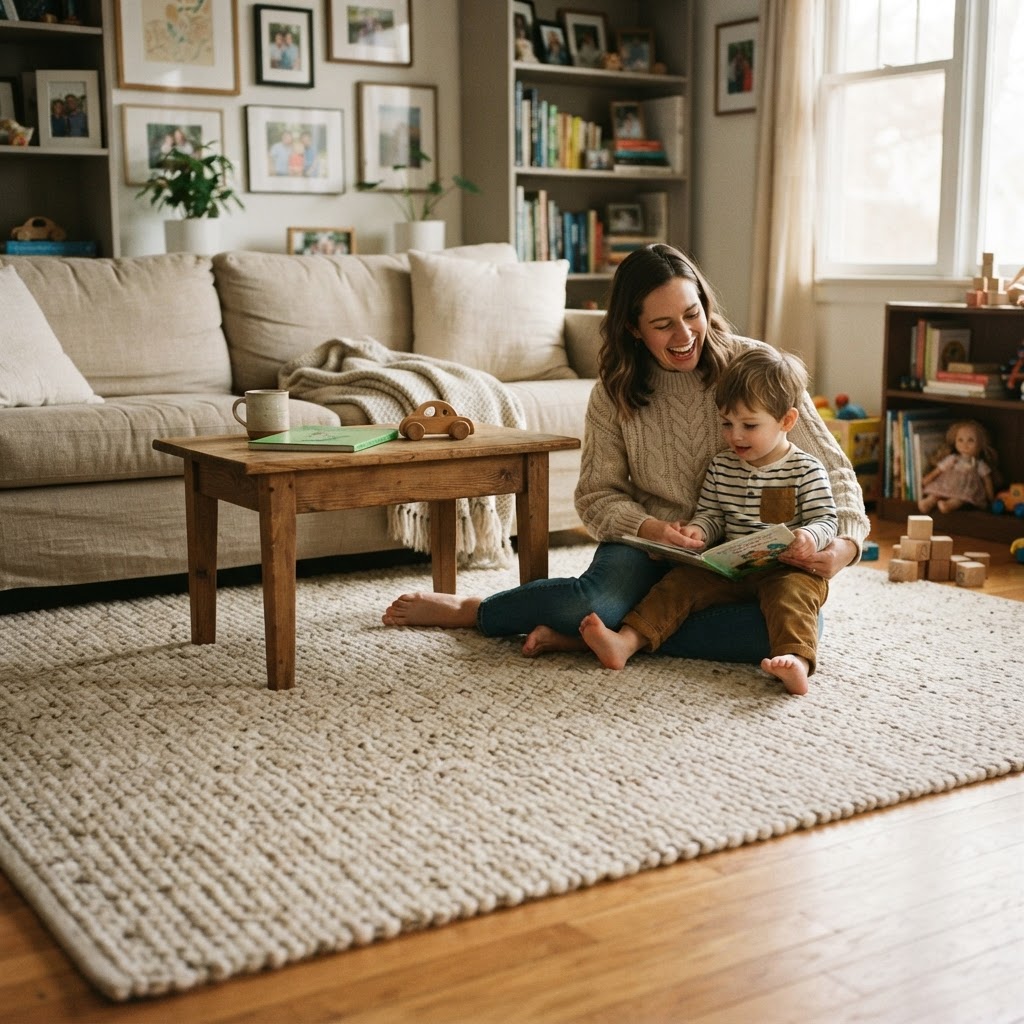
If you have kids, dogs, or just a household that actually lives hard in the living room, this section is for you. And look, I am not going to tell you that you need to sacrifice style for practicality because you absolutely do not. The key is just knowing which features to prioritize so you end up with something that looks great and survives real life.
First, go for low to medium pile. Longer pile rugs are cozy but they trap crumbs, pet hair, and debris like nobody's business. A shorter pile is dramatically easier to vacuum and keep clean. Second, consider darker tones and patterns over solid light colors. A busy pattern is incredibly forgiving because it hides dirt, stains, and wear between cleanings. A cream solid will show every footprint and spill within about 48 hours of living with children. Been there, learned that lesson the hard way.
Material-wise, the best performers for high-traffic family living rooms include:
- Polypropylene (indoor-outdoor rugs): Stain-resistant, fade-resistant, wipeable, and incredibly durable. Many are even hose-cleanable outdoors.
- Wool blends: More durable than pure wool, naturally resistant to soiling, and they age gracefully even with heavy use.
- Nylon: One of the most durable synthetic fibers available, holds color well and resists crushing under furniture.
- Flatweave cotton: Machine washable in many cases, easy to clean, and affordable enough to replace without heartbreak.
Also, and I feel strongly about this: invest in a good rug pad. It extends the life of your rug significantly, prevents slipping which is a real safety issue with kids running around, and adds a little extra cushion underfoot. A rug without a pad wears out faster and moves around constantly. It is not a glamorous purchase but it is worth every single penny.
The best rug for a family is the one you can clean without crying, live with without constantly worrying, and still love looking at after three years of real use.
Final Thoughts
Choosing a living room rug is genuinely one of the most impactful decisions you can make in a space. It affects how the room feels, how it looks, and honestly how much you enjoy spending time in it. Get the size right first, because that is the foundation everything else builds on. Then think about your real lifestyle honestly and choose a material that fits how you actually live, not how you wish you lived. From there, have some fun with color and pattern, experiment with layering if you are feeling adventurous, and do not forget to protect your investment with a quality pad underneath.
There is no single perfect rug that works for everyone. But there is absolutely a perfect rug for you, your space, your family, and your vision. Take your time, use that painter's tape trick before you commit, and trust your gut when something feels right. The rug that truly ties everything together is out there. You just have to know what to look for.
More in Interior
Stay Inspired
Subscribe for new essays on architecture, design, and the spaces that shape us.