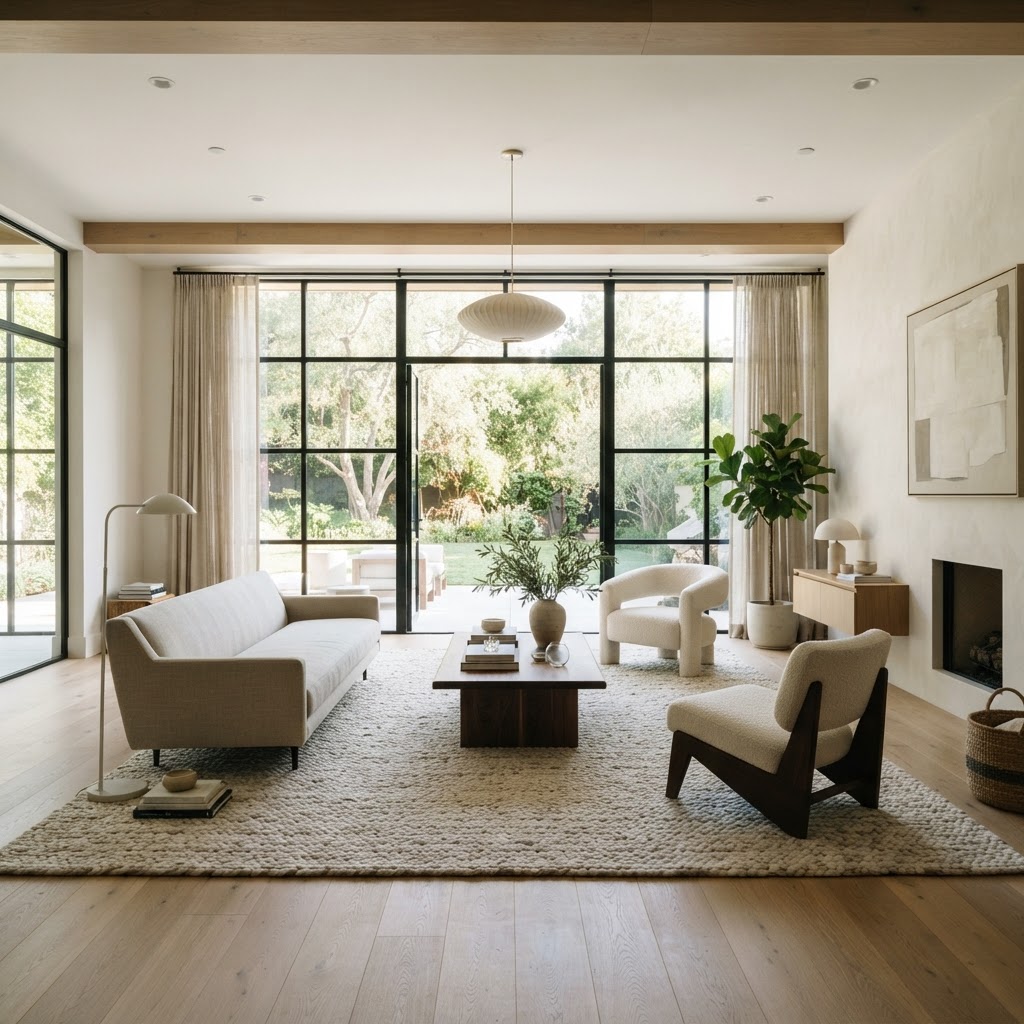
7 Rug Rules That Will Completely Transform Your Living Room
Picking the right rug can make or break your living room design. I am sharing my secret formula for choosing textures, sizes, and colors that ground your space beautifully.
The Golden Rule of Sizing
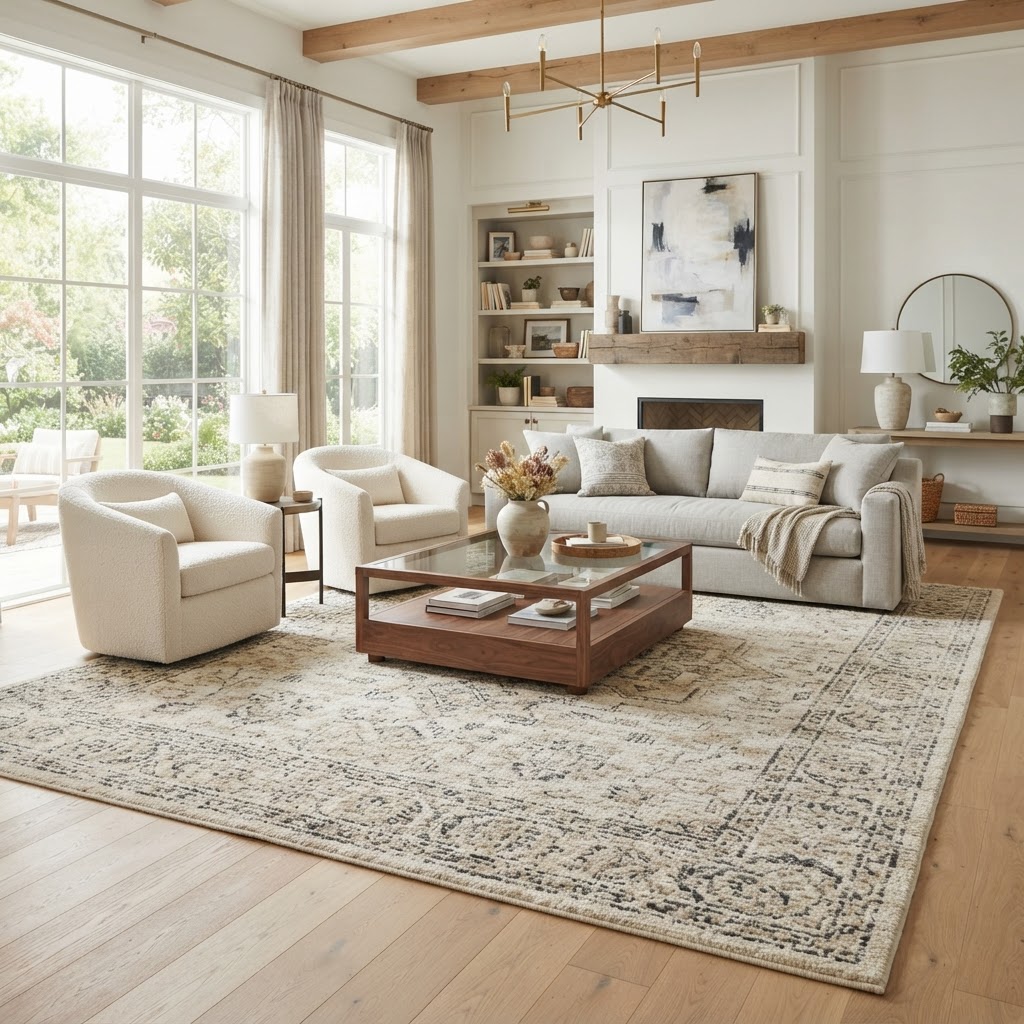
Honestly, if there's one thing I've seen go wrong in living rooms more than anything else, it's the rug size. People go too small. Every single time. You walk into what could be a gorgeous, well-put-together space and there's this tiny little rug floating in the middle of the floor like a postage stamp. It's one of those mistakes that sounds minor but completely undermines the whole room.
Here's the thing: a rug that's too small makes your furniture look like it's hovering awkwardly above the floor with no connection to anything. It fragments the space instead of unifying it. The rug's whole job is to anchor your seating area, to say "this is a zone, this is where we gather." A small rug just can't do that job, no matter how beautiful the pattern is.
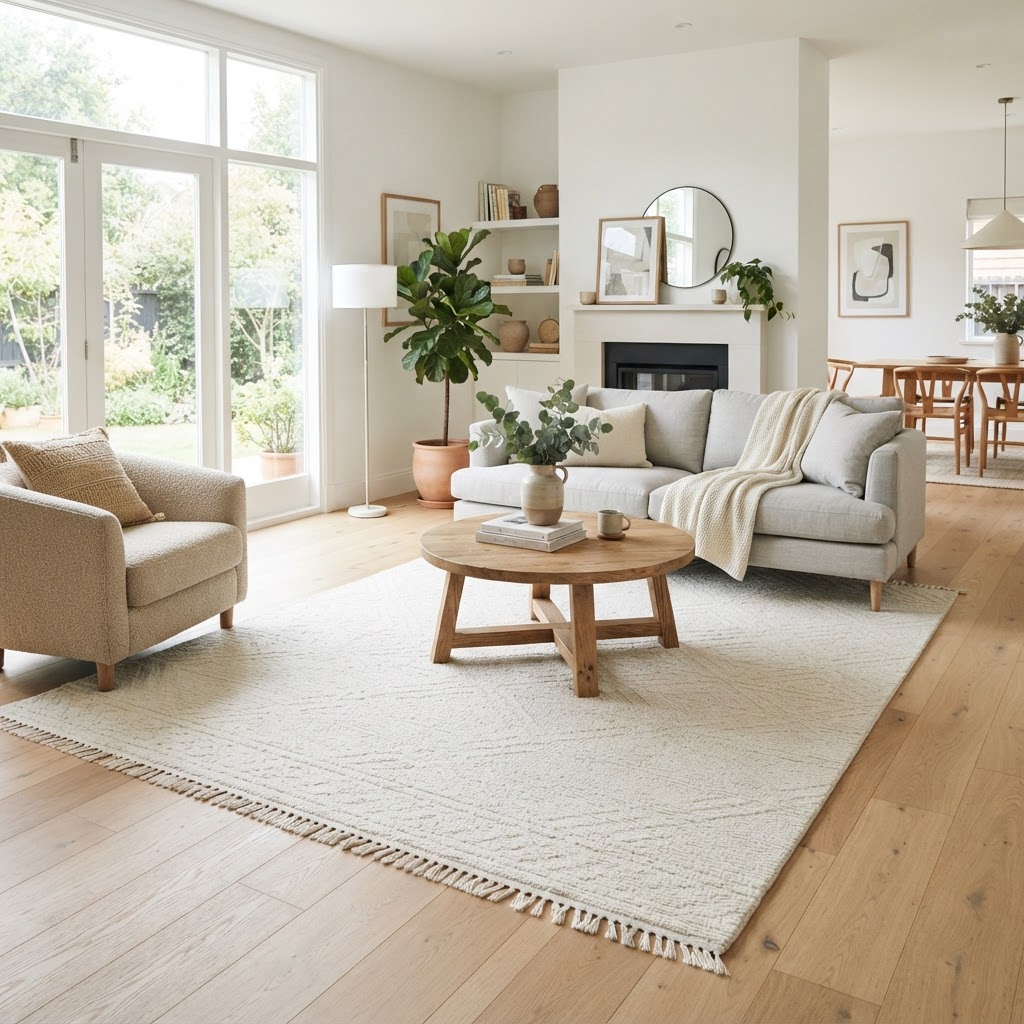
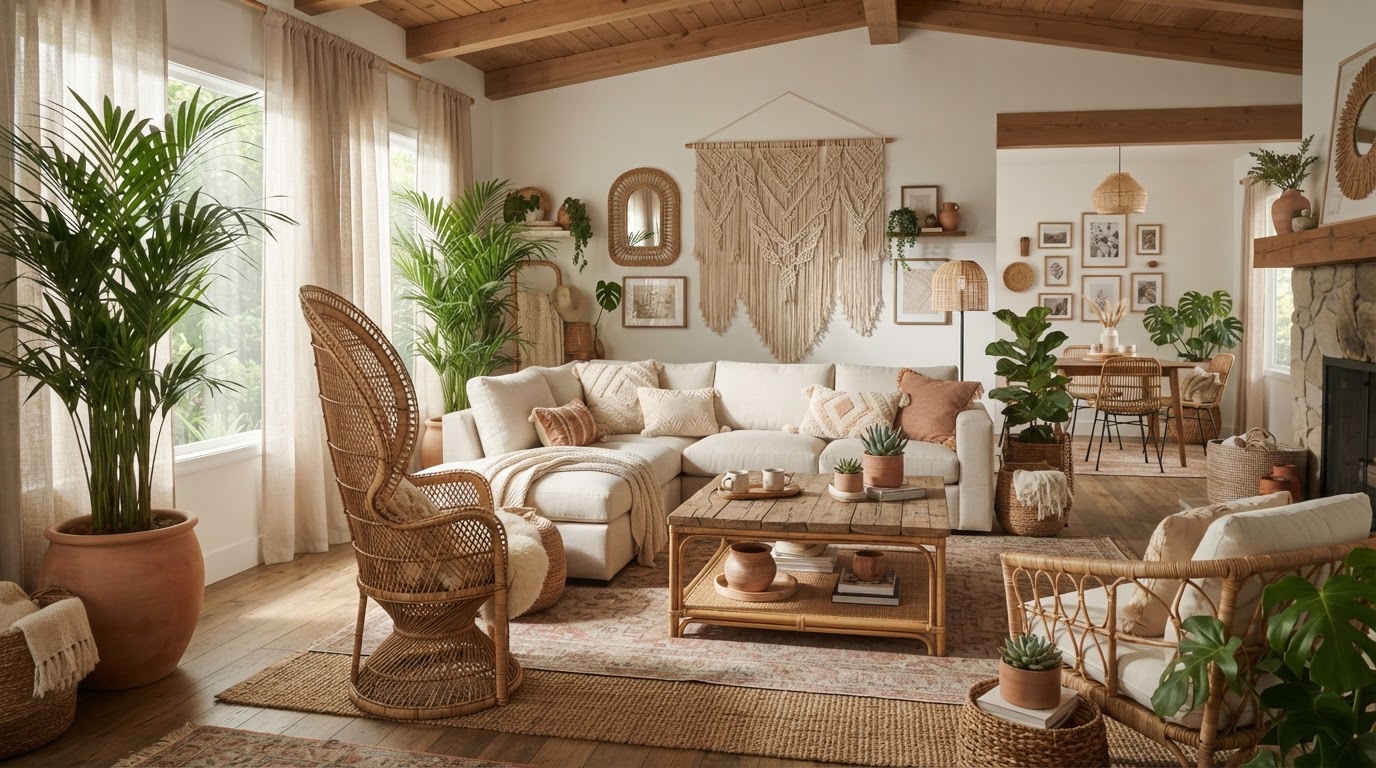
So what's the golden rule? In a living room, you want at least the front legs of every major piece of furniture sitting on the rug. That's the minimum. Ideally, all four legs of every sofa and chair are fully on the rug, which means you're typically looking at an 8x10 or even a 9x12 in most standard living rooms. Trust me on this: when you go up a size, the room suddenly feels intentional, pulled together, and actually bigger, which is the opposite of what most people expect.
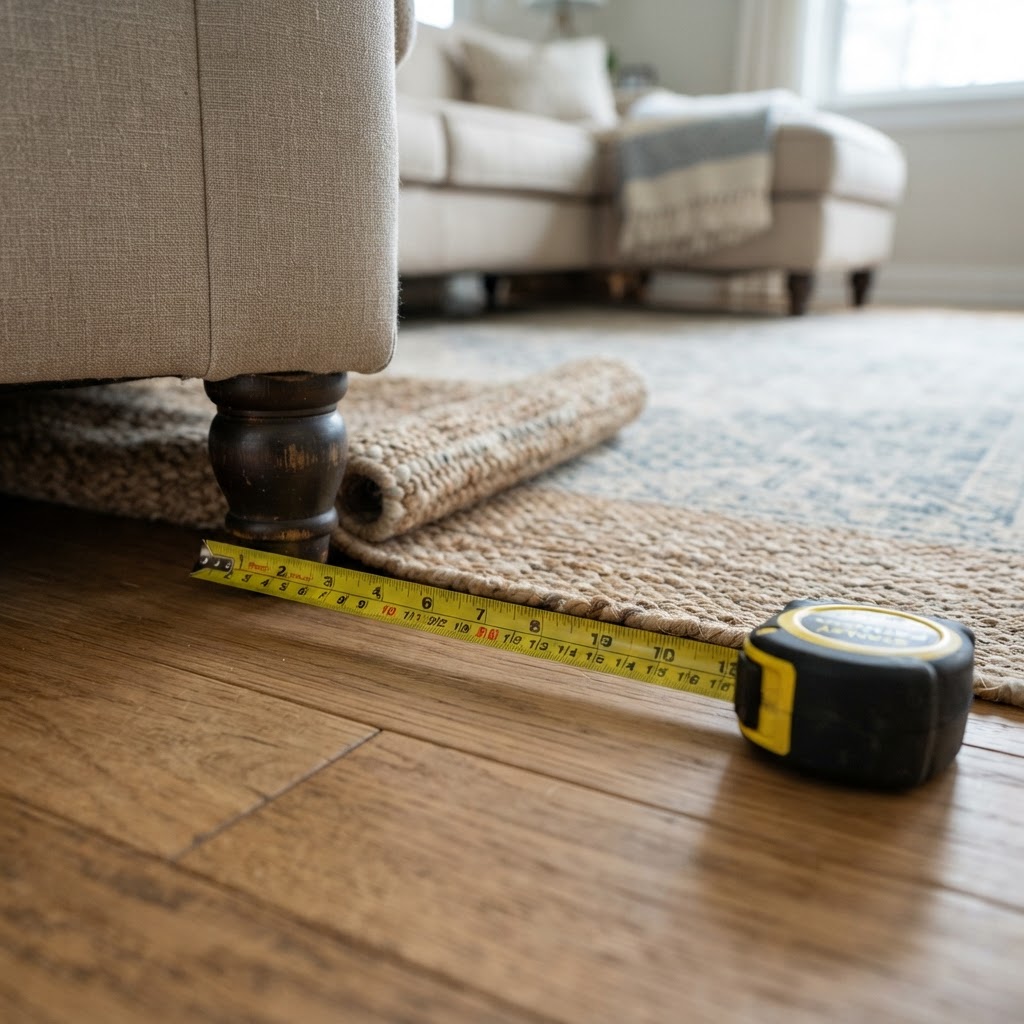
Before you shop, tape out the dimensions on your floor. Seriously, grab some painter's tape and mark out exactly where the rug would sit. Live with it for a day. Walk around it. See how it feels in relation to your sofa and chairs. This is a trick every interior designer uses before committing to a purchase, and it saves you from a very expensive mistake. Rugs are not cheap, and returns are often a hassle.
One more thing: always leave a border of bare floor visible around the rug. About 18 to 24 inches from the wall is the sweet spot in most rooms. If the rug goes wall to wall, it reads more like carpet. If the border is too wide, the rug looks stranded. That border of exposed hardwood or tile is what frames the rug and makes the whole composition work. Get the sizing right and everything else becomes so much easier.
Choosing the Right Material for Your Lifestyle
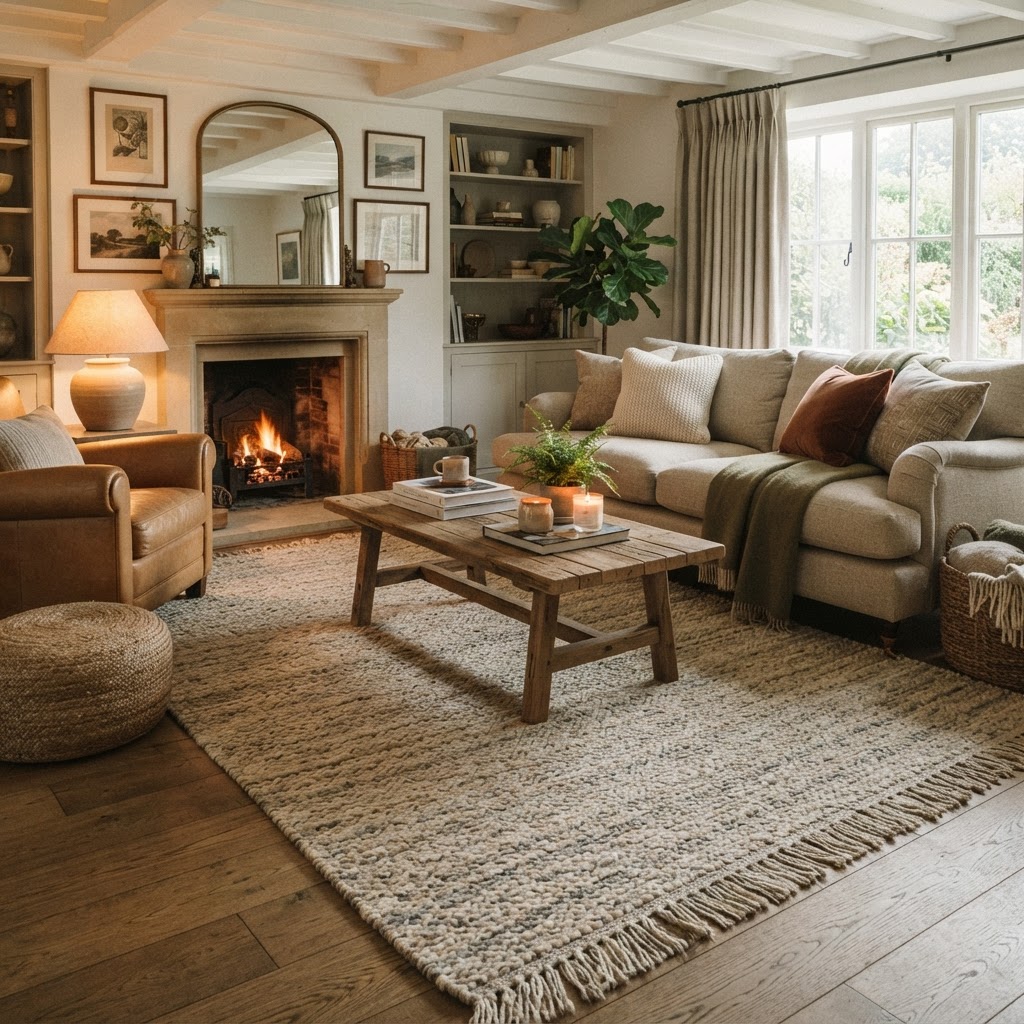
Look, this is where a lot of people get tripped up because they fall in love with something gorgeous in a showroom and completely forget about how they actually live. Do you have kids? Dogs that track mud in from the backyard? Do you eat on the couch? These are not questions to feel judged by, they're questions that determine whether you're going to love your rug in five years or want to burn it.
Wool is the gold standard and honestly, for good reason. It's durable, naturally stain-resistant, and it gets better looking with age if you treat it right. A good wool rug in a busy living room will outlast almost any other material. The downside is cost. Wool rugs are an investment, no question. But if you're planning to be in your home for a while, it's worth it. Wool also has this incredible natural softness and depth of color that synthetic materials just can't replicate.
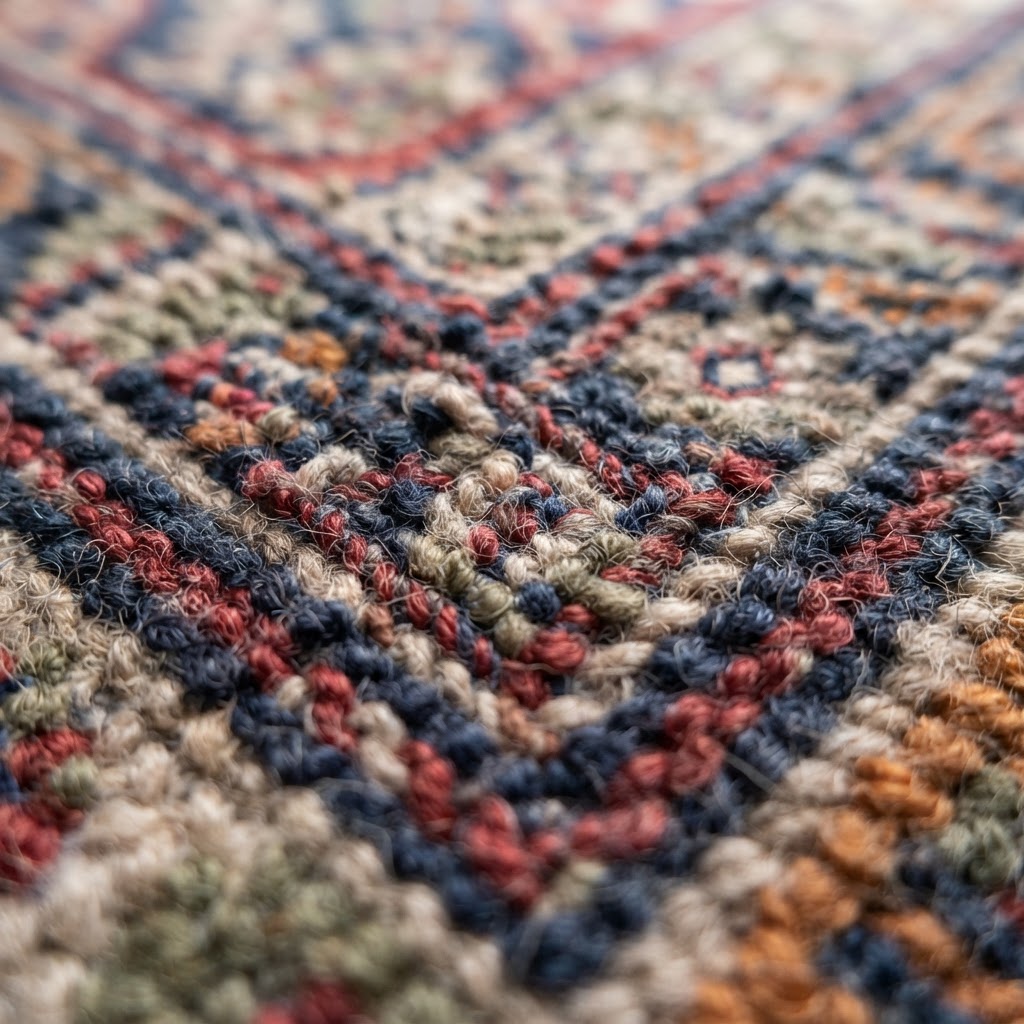
For high-traffic homes with kids and pets, polypropylene and other synthetic flatweaves are genuinely your best friends. They're stain-resistant, easy to clean, and much more affordable. You won't feel as heartbroken when the dog tracks something unidentifiable across it. And the quality of synthetic rugs has improved dramatically in recent years. There are some really beautiful options that don't look cheap at all.
- Wool: Durable, naturally stain-resistant, ages beautifully, best for lower-traffic or adult-only homes
- Polypropylene: Easy to clean, budget-friendly, great for families with kids and pets
- Jute and sisal: Natural, textural, eco-friendly, but not great for spills or high moisture areas
- Cotton: Soft, washable, affordable, better suited for lighter use or layering
- Viscose and silk blends: Stunning sheen and texture, but delicate and best kept for low-traffic, more formal spaces
Real talk: jute and sisal are having a major moment right now and they look incredible, but they're not forgiving with liquids. A spilled glass of wine on a jute rug is a bad situation. If you love that natural, organic look, consider using a jute rug as a base layer under a smaller, washable rug. Best of both worlds.
Layering Techniques for Added Depth
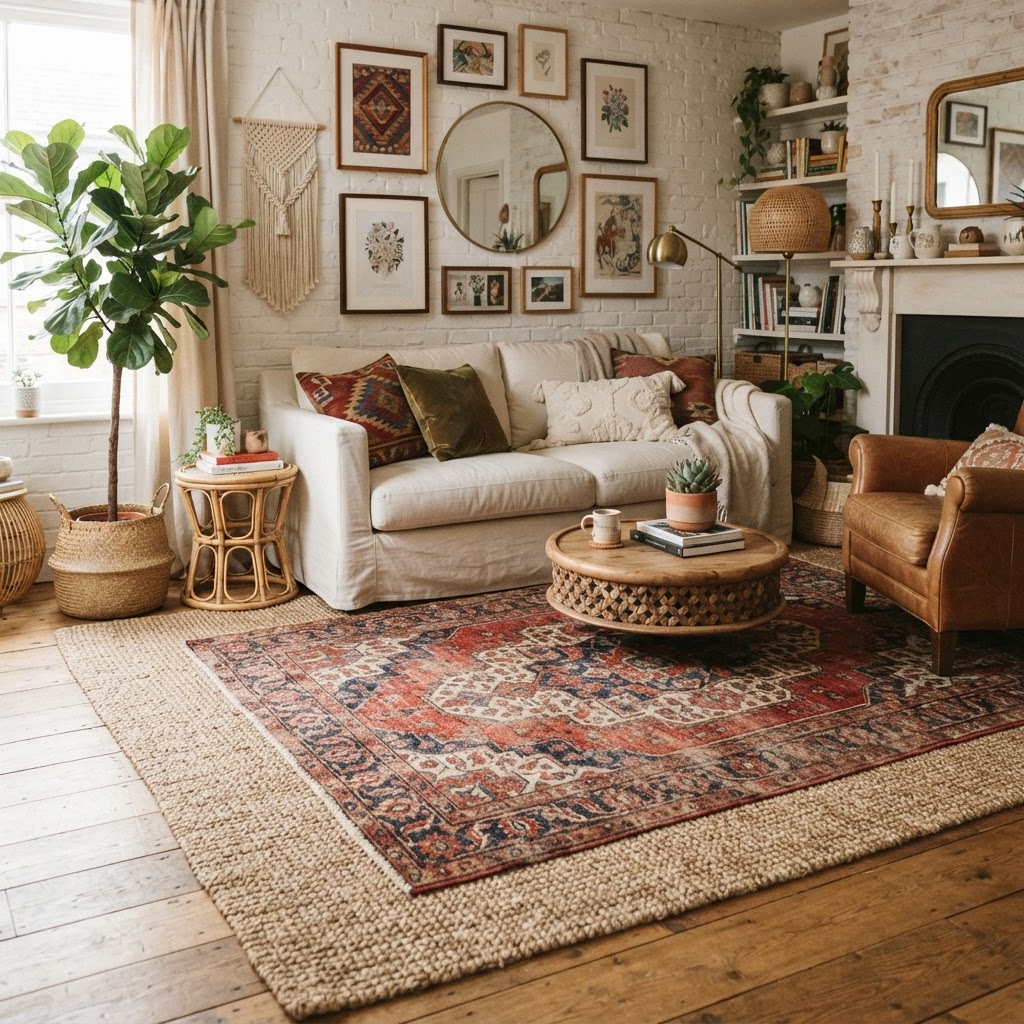
Rug layering used to feel like something only designers did in editorial shoots, but it's actually one of the most accessible ways to add texture, warmth, and personality to your living room without doing a full overhaul. And honestly, once you try it, you're kind of hooked. It changes the whole energy of a room.
The basic formula is simple: start with a large, neutral base rug, something flat-woven, natural fiber, or in a solid tone, and then layer a smaller, more decorative rug on top. The base rug does the heavy lifting in terms of sizing and anchoring the furniture, while the top rug gets to be the personality piece. This is actually a clever budget hack too, since you can put your money into a beautiful smaller rug and use a more affordable jute or sisal underneath.
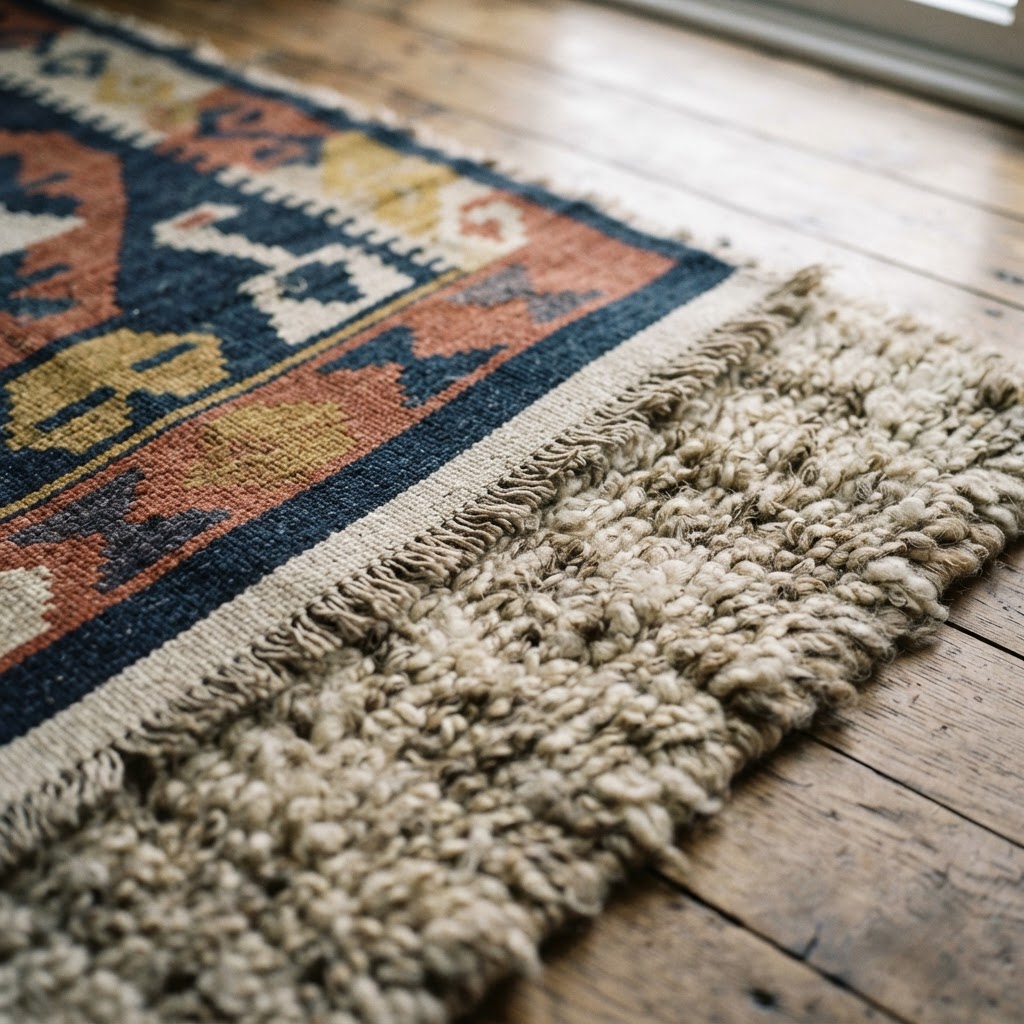
The key is contrast. You want the two rugs to complement each other without competing. A flat jute base under a plush Moroccan shag works beautifully. A simple striped cotton base under an ornate vintage Persian is stunning. What you want to avoid is layering two rugs with similar textures or similarly busy patterns, because then everything just muddles together and looks messy rather than intentional.
Placement matters a lot when you're layering. The top rug should be centered or slightly off-center in a way that feels deliberate. Don't just throw it on and call it a day. Think about how much of the base rug is showing on each side, whether it's framing the coffee table well, and whether the edges of the top rug are in a sensible place relative to your furniture legs. Also, use a rug pad under the bottom rug and, if needed, a little rug grip tape between the two layers to keep everything from shifting. Nothing kills the look faster than a rug that creeps and bunches up.
Finding the Perfect Pattern Balance
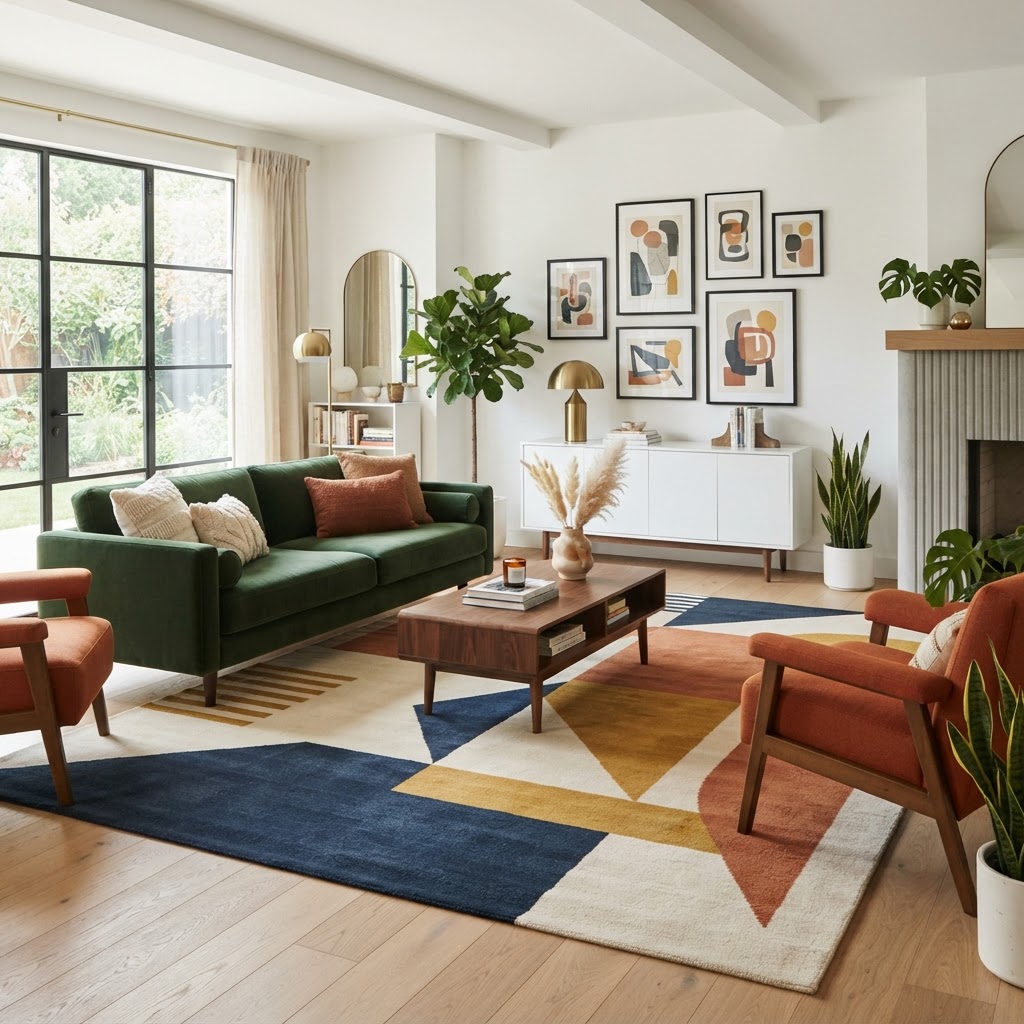
Here's the thing about patterned rugs: people either go all-in without a plan and create chaos, or they get so scared of patterns that they default to plain beige forever and their room ends up feeling flat and forgettable. Neither extreme is great. Pattern is one of the most powerful tools you have in a living room, and a rug is often the best place to introduce it because it's down on the floor, not competing directly with your walls or furniture at eye level.
The rule I always come back to is the scale rule. If your sofa has a patterned fabric, go with a rug that has a different scale of pattern. A large-scale geometric rug under a small-print upholstered sofa, for example, creates interest without visual noise. Mixing patterns of the same scale is where things get overwhelming. And if your sofa and chairs are solid, you have way more freedom with the rug. Go bold. A big vintage Persian or a graphic tribal print can carry the whole room.
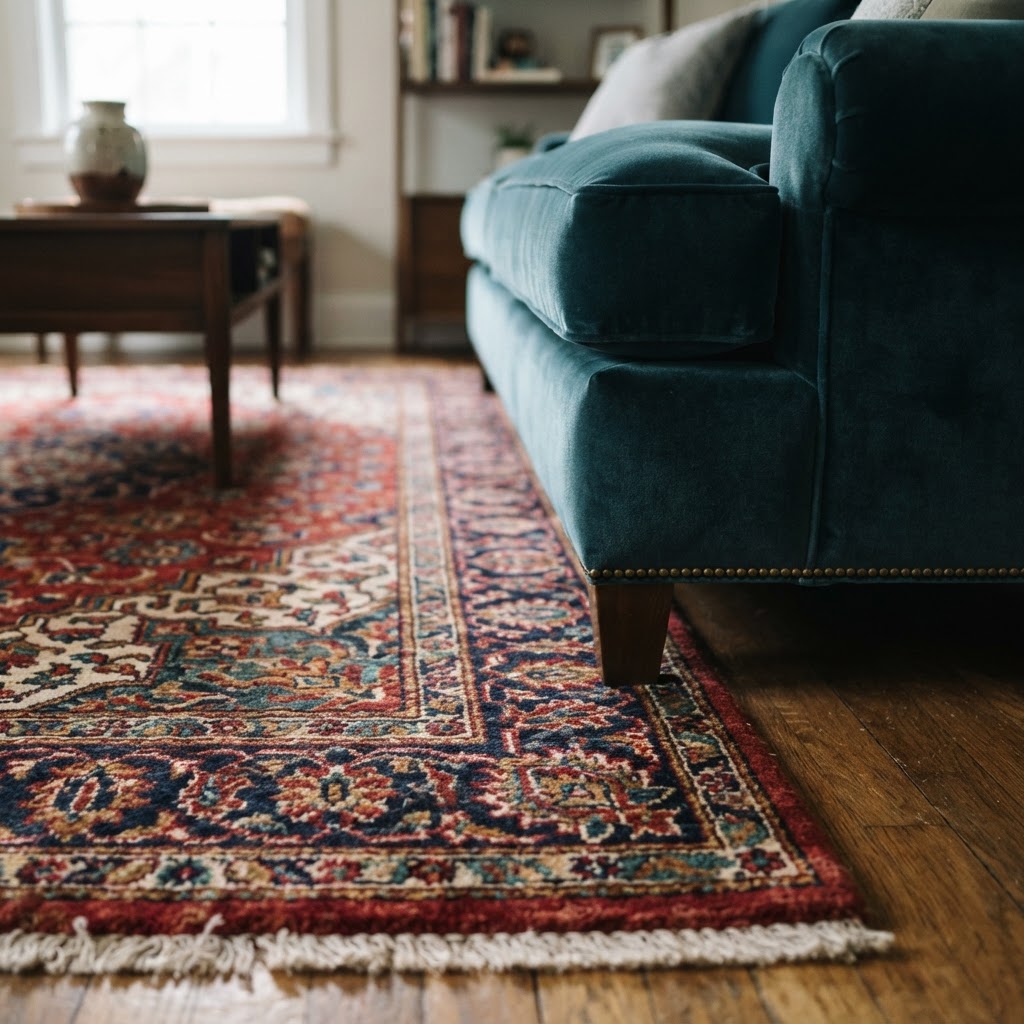
Color connection is the other piece of the puzzle. Your rug doesn't need to match anything exactly, but it should pull from the same color family or echo at least one or two tones that exist elsewhere in the room. If your curtains have a hint of terracotta, and there's terracotta in the rug, the room suddenly feels cohesive even if nothing else is matchy-matchy. This is how designers create rooms that feel collected and curated rather than thrown together.
"A rug is the one piece of decor that touches everything else in the room. Get the pattern right and the whole space locks into place."
One more tip: if you're nervous about committing to a bold pattern, look for rugs with a lot of negative space. A rug that's technically "patterned" but mostly open and airy in its composition gives you the interest of a pattern without the visual intensity. Abstract watercolor rugs, lightly printed geometric designs, and faded vintage-style rugs are all great options for people who want pattern but need a gentler entry point.
Cleaning and Maintenance Hacks
Okay, nobody loves talking about rug maintenance, but trust me on this, a little bit of regular care goes such a long way. A rug that's properly maintained not only looks better, it actually lasts years longer. And when you're talking about a piece you've invested real money in, that matters a lot.
The single most important thing you can do is vacuum regularly, but vacuum correctly. For high-pile and shag rugs, use the upholstery attachment or turn off the beater bar on your vacuum because the rotating brush can pull and fray fibers over time. For flatweave and low-pile rugs, a regular pass with a standard vacuum head is fine. Vacuum in the direction of the pile, not against it, to avoid distorting the fibers or pushing dirt deeper in.
For spills, the key is speed. Blot immediately, don't rub. Rubbing spreads the stain and pushes it deeper into the fibers. Blot from the outside of the spill toward the center to contain it. For most everyday spills, a mixture of cold water and a small amount of dish soap handles things beautifully. White wine on top of red wine is an old trick that actually works. Club soda is genuinely effective on fresh stains too.
- Rotate your rug every six months to ensure even wear and fading, especially in rooms with direct sunlight
- Always use a quality rug pad underneath. It protects the floor, keeps the rug from slipping, and cushions the fibers from constant compression
- Take your rug outside and beat it gently once or twice a year to release deep-set dust and debris that vacuuming misses
- For wool and delicate rugs, professional cleaning every one to two years is worth the cost. It extends the life of the rug dramatically
- If your rug develops curling edges, roll it in the opposite direction for a day or place heavy books on the corners to flatten them out
And here's a maintenance tip that surprises people: natural light is both a friend and an enemy to rugs. It brightens a space beautifully but over time it can fade colors unevenly if one side of the rug gets more sun than the other. Rotating regularly combats this, and if you have particularly precious or expensive rugs in a sun-drenched room, UV-filtering window film is genuinely worth considering. It's not glamorous, but neither is watching your beautiful rug fade to nothing in a few years.
Final Thoughts
Here's what it comes down to: the rug in your living room is doing more work than almost any other element in the space. It's defining the zone, setting the tone, connecting the furniture, and adding warmth and texture all at once. When you get it right, the whole room clicks. When you get it wrong, something just feels off even if you can't quite put your finger on why.
The good news is that these rules aren't complicated once you understand the reasoning behind them. Size up, choose materials that match your actual life, consider layering for depth and flexibility, use pattern with intention, and take care of what you've invested in. Do those five things and you will be genuinely amazed at how different your living room feels.
And honestly, don't be afraid to experiment. Rugs are more forgiving than most major decor decisions. They can be moved, layered, switched out with the seasons. Start with the sizing rule because that one is non-negotiable, and then give yourself permission to play with the rest. Your living room will thank you for it.
More in Interior
Stay Inspired
Subscribe for new essays on architecture, design, and the spaces that shape us.