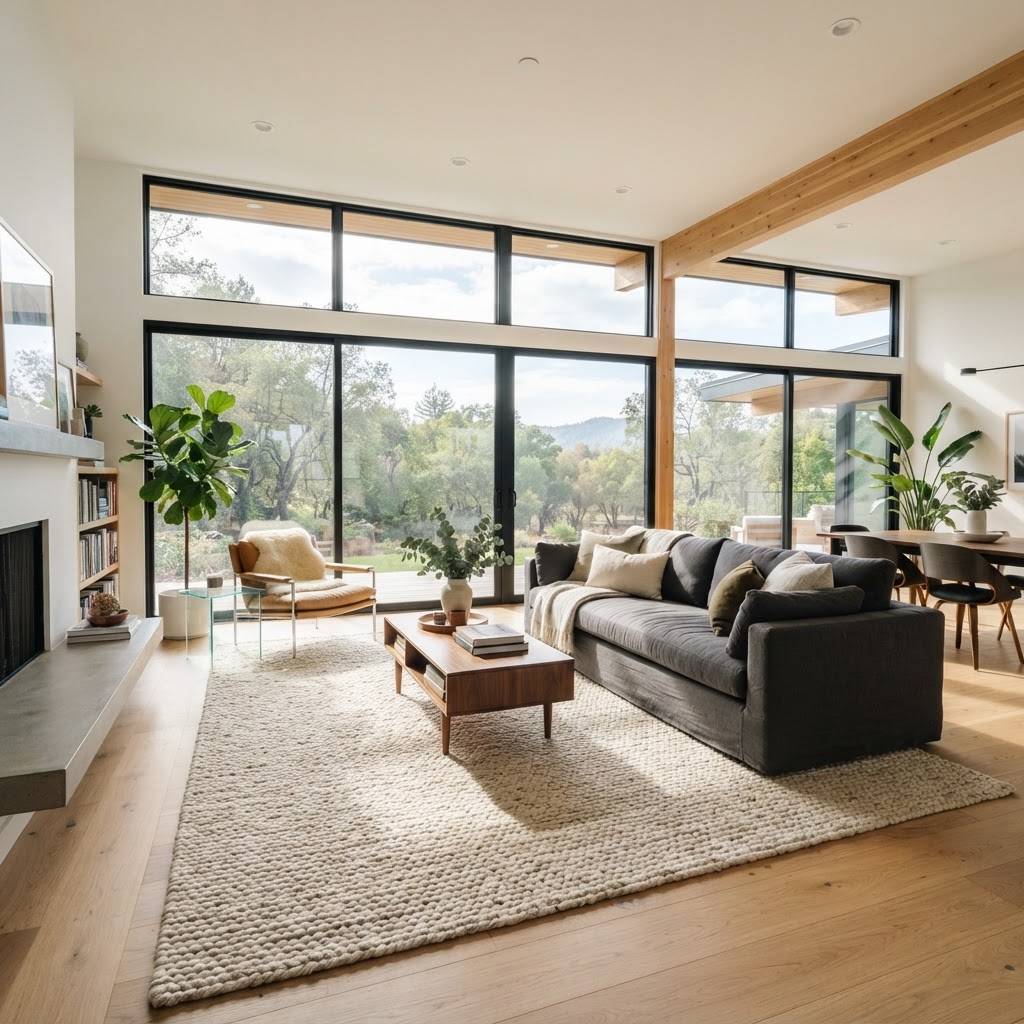
Stop Making These Rug Mistakes: How to Choose the Perfect Living Room Rug
Finding the right rug can completely transform the look and feel of your living room. We are breaking down the essential tips to help you select a piece that balances style and function in your home.
Finding the Perfect Size for Your Space
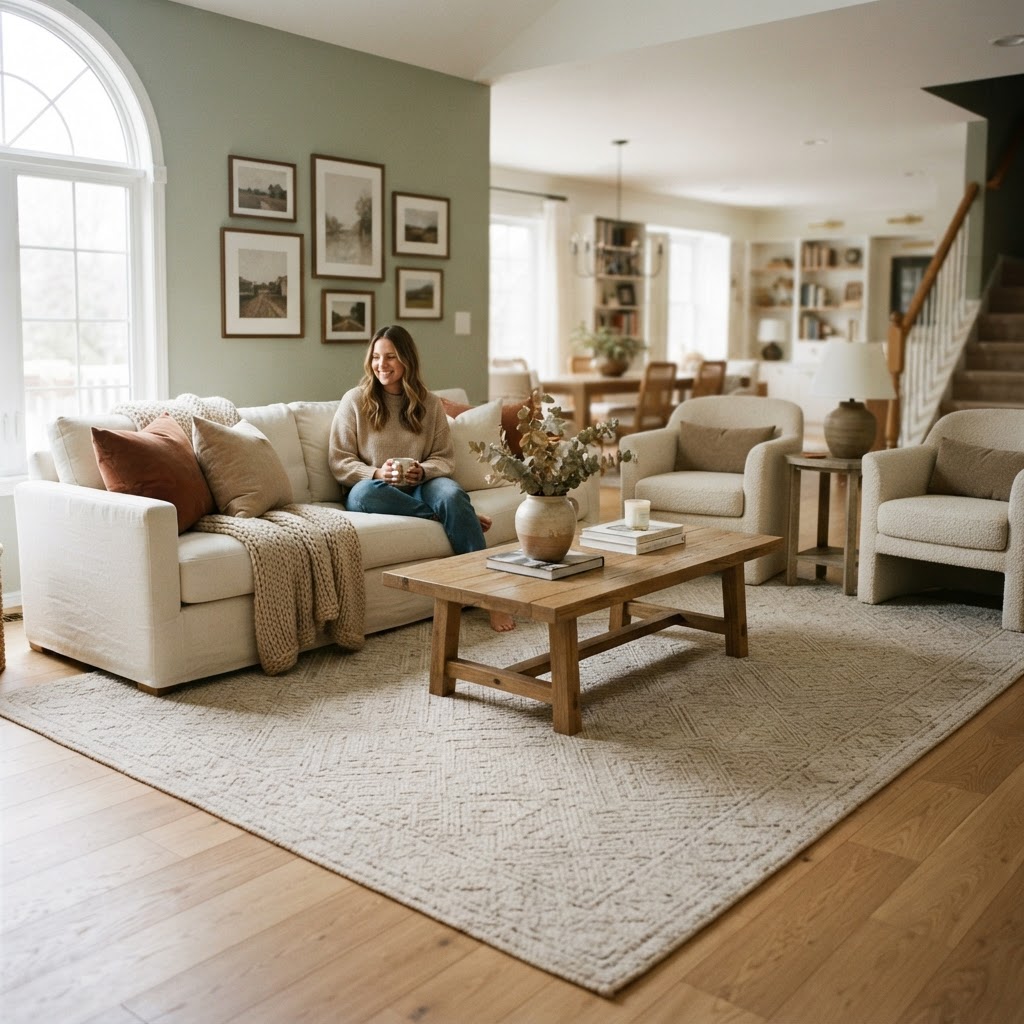
Okay, let's start with the mistake I see literally everywhere. Someone buys a beautiful rug, brings it home, and it ends up looking like a tiny little postage stamp floating in the middle of a massive room. Honestly, this is the number one rug mistake people make, and it is completely avoidable once you understand the basic rules of rug sizing.
Here's the thing: a rug that's too small will make your room feel disjointed and oddly chopped up. The furniture ends up looking like it has nothing to do with the floor, like everything is just randomly floating around. A properly sized rug, on the other hand, pulls the whole room together and creates that grounded, intentional look you see in magazine spreads. The golden rule for living rooms is that all your major furniture pieces, or at minimum the front legs, should be sitting on the rug. That's it. That's the rule. If your sofa legs are on the rug and your coffee table is fully on the rug, you're probably in good shape.
For most standard living rooms, you're looking at a minimum of an 8x10 rug, and honestly, a 9x12 is almost always better than you think it will be. When in doubt, go bigger. It's one of those counterintuitive things where people are afraid of too much rug, but the reality is that larger rugs make spaces feel more luxurious and more pulled together. Before you buy anything, tape out the dimensions on your floor with painter's tape. Live with it for a day. See how it feels. This sounds like extra work but it will save you from returning rugs, which is a massive headache.
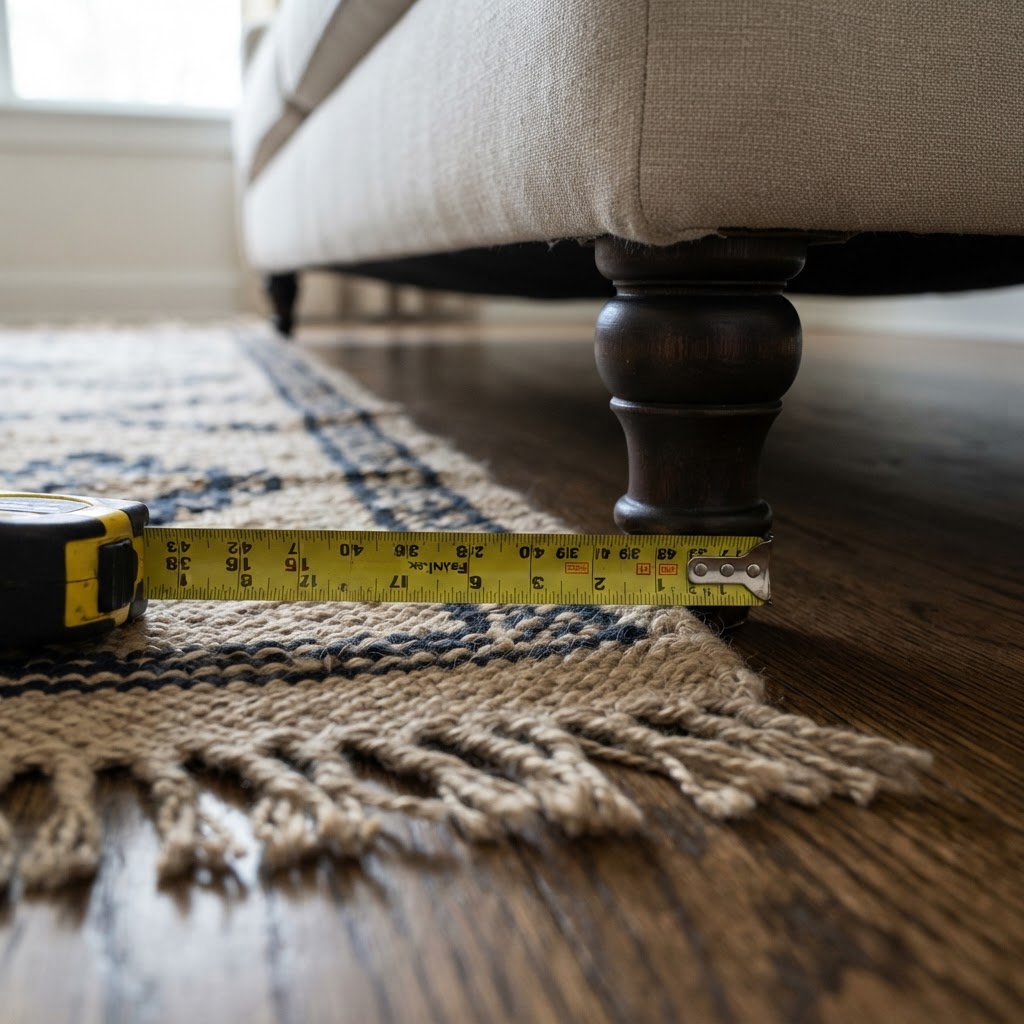
You also want to leave some breathing room around the edges. Ideally, you should have somewhere between 12 and 18 inches of bare floor showing around the perimeter of the rug. If you go right to the wall, the room starts to feel carpeted rather than curated. That little border of floor grounds the rug within the space and gives the eye a natural stopping point.
One more sizing tip that doesn't get talked about enough: if you have an open-plan space, use the rug to define a zone rather than trying to cover the whole area. Your living room rug should live strictly within the seating area. It tells guests where the conversation zone begins and ends, and it adds a ton of visual structure to an otherwise sprawling space. Get the size right first, then worry about everything else.
Material Matters: Performance vs Luxury
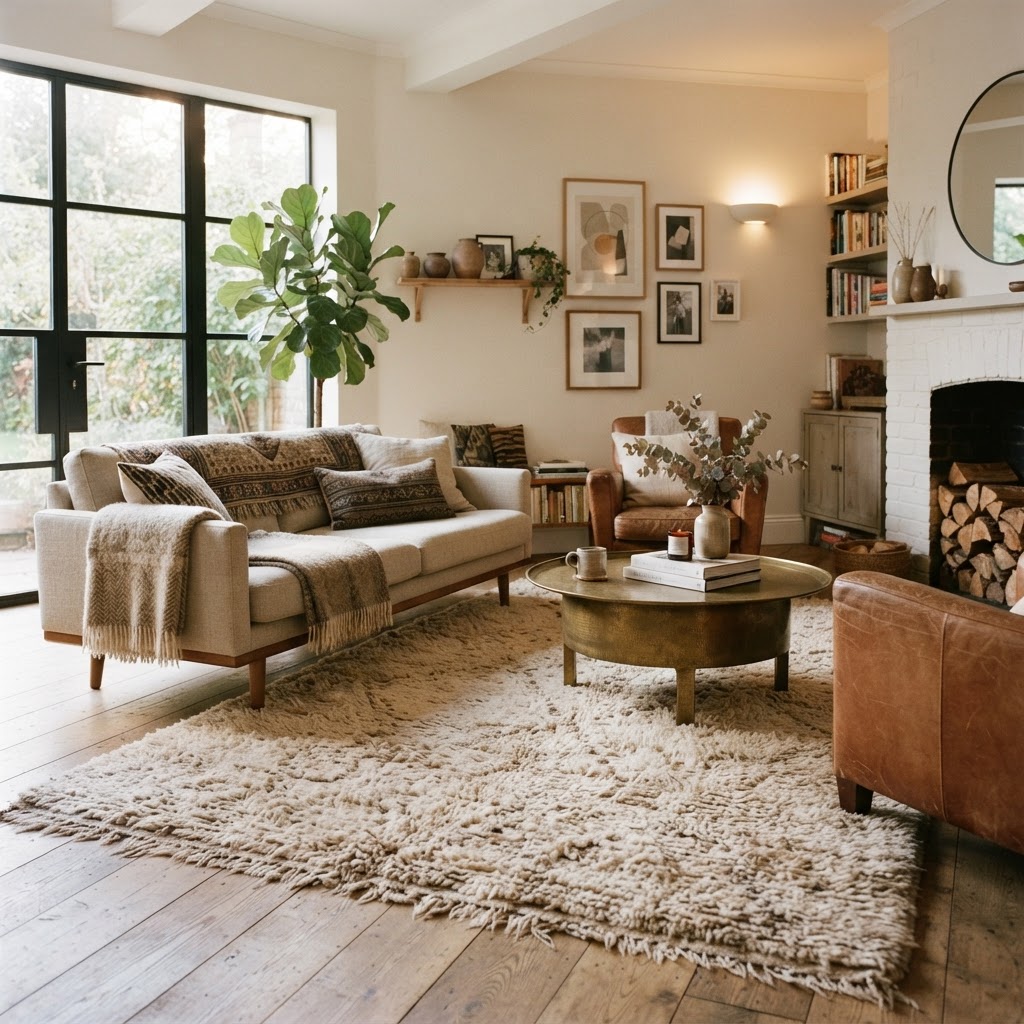
Real talk: the material of your rug is probably more important than the color or the pattern, and yet most people spend exactly zero time thinking about it before buying. They see something pretty online, click purchase, and then wonder why it looks wrecked after two years. Rug material is where you need to do your homework, because different fibers behave in dramatically different ways depending on how you actually live.
Let's break it down. Wool is the gold standard for living room rugs, and honestly it has been for centuries for good reason. It's naturally resilient, bounces back from foot traffic really well, has a beautiful depth of color, and is naturally stain-resistant to a degree. Yes, wool rugs cost more. But a quality wool rug that lasts 20 years is a far better investment than a cheap synthetic that looks sad after three. If you have kids or pets, look specifically for tightly woven wool or wool blended with nylon for extra durability.
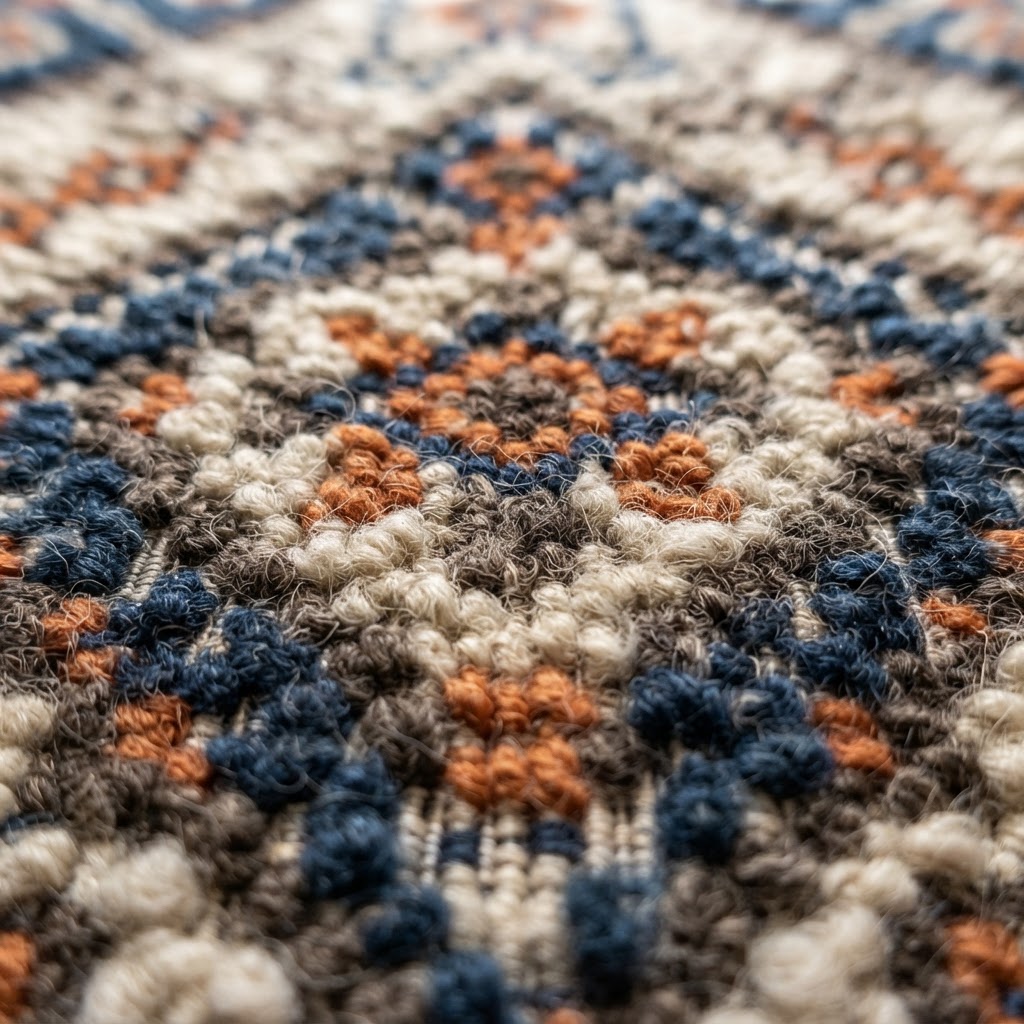
Now, jute and sisal are having a serious moment in interior design right now and for good reason. They add incredible warmth and texture, they photograph beautifully, and they're generally more affordable than wool. The downside? They're not great with moisture. Like, at all. If someone spills a glass of wine on a jute rug and it soaks in, you're probably dealing with a stain forever. These work best in lower-traffic areas or layered under another rug where they serve more of a textural base role.
- Wool: Best all-around choice for durability, texture, and longevity. Worth the investment.
- Polypropylene: The performance champion. Easy to clean, fade-resistant, and great for homes with pets and kids.
- Jute or Sisal: Gorgeous texture but sensitive to moisture. Better as a base layer or in low-spill zones.
- Viscose or Silk: Stunningly beautiful but very high maintenance. Reserve for formal spaces with low foot traffic.
- Cotton: Affordable and washable, but flattens quickly. Great for casual spaces but won't last as long.
Trust me on this one: think about your actual lifestyle before you fall in love with a specific material. There's no wrong answer here, only honest answers about how you live. A family with two dogs and a toddler needs a different rug than someone who lives alone and works from home. Choose accordingly and you'll be so much happier long-term.
Mastering the Art of Layering
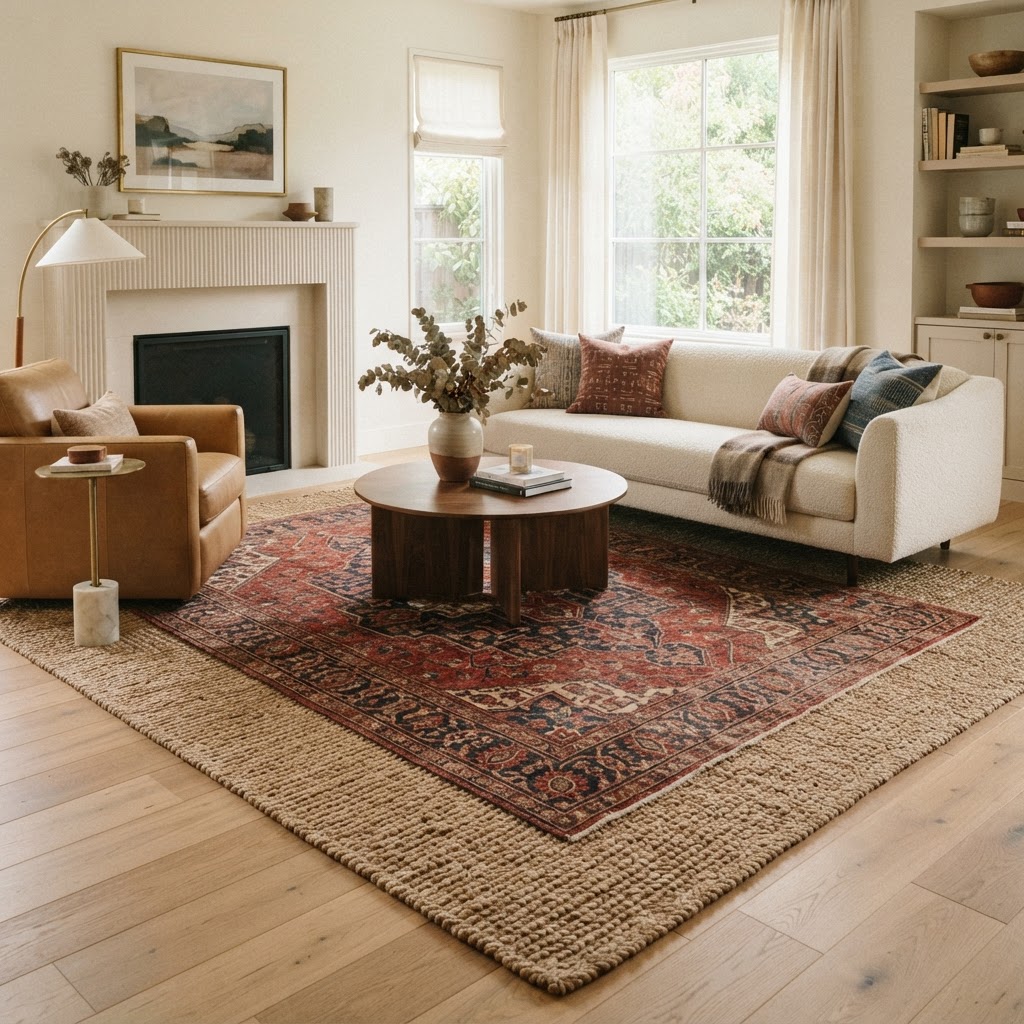
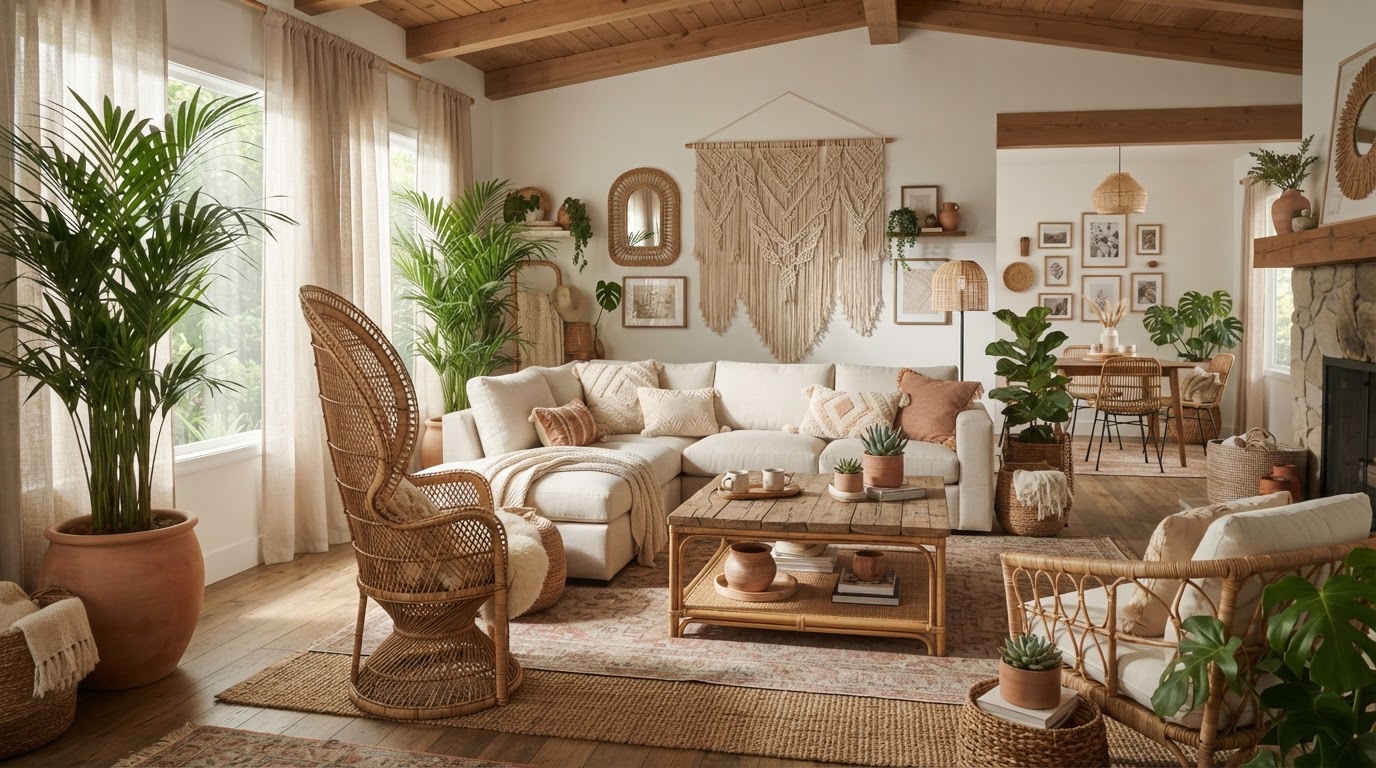
If you want your living room to look like it belongs in an interiors magazine, layering rugs is one of the best tools in your arsenal. Honestly, it took me a while to really commit to this look because it seems a little chaotic in theory. Two rugs? On top of each other? But when it's done right, it creates this incredibly rich, layered, collected-over-time feeling that is almost impossible to achieve any other way.
The basic formula for layering is simple: start with a large, neutral base rug. A flatweave jute or a simple sisal in a natural tone works perfectly here. It's basically the canvas. Then layer a smaller, more decorative rug on top, usually centered or slightly offset toward the seating area. The top rug gets to be the personality, the pattern, the color, the texture. This is where you get to have some fun without committing to covering an entire 9x12 area in a bold statement.
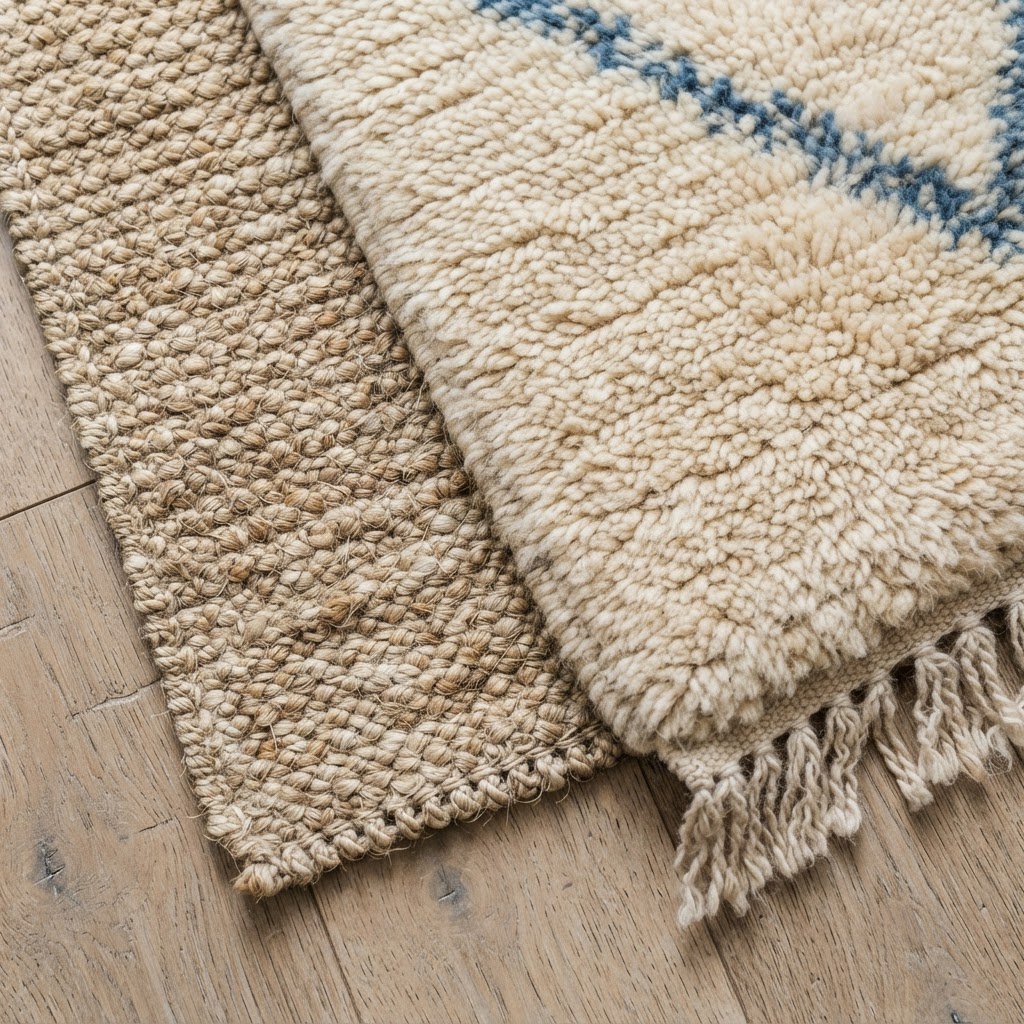
Scale is everything when you're layering. The base rug should be noticeably larger than the top rug, typically by at least two feet in each direction. If your base is a 9x12, your top layer might be a 5x8 or a 6x9. You want clear visibility of that bottom rug around the edges, otherwise the whole point is lost. Also, think about texture contrast. A flat, smooth base with a plush or high-pile top layer is a combination that works almost every single time.
"Layering rugs isn't a design hack, it's a design philosophy. It says the room was built slowly, with intention, and with a real eye for texture and dimension."
One practical note: make sure you use a good quality rug pad under your base rug, and consider using rug tape or a thin pad between the two layers to keep the top rug from sliding around. Nothing ruins the look faster than a rug that shifts every time someone walks through the room. Get the infrastructure right and the whole thing stays effortlessly in place.
Choosing Patterns That Last
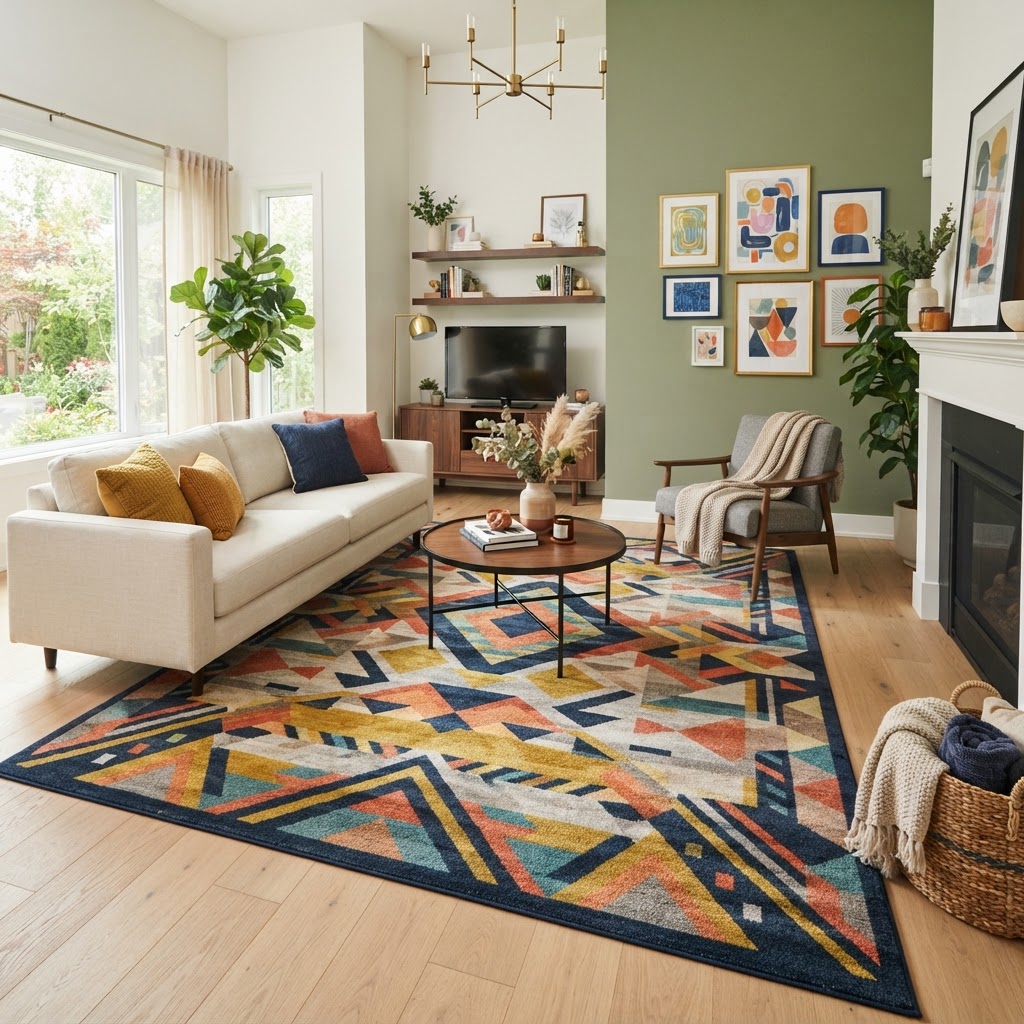
Here's where people either go too safe or too trendy, and both can get you into trouble. Playing it completely safe with a solid, colorless rug means your living room might feel a little flat and underdeveloped. But chasing every pattern trend means you're going to be sick of your rug in about eighteen months and right back to shopping again. The sweet spot is choosing patterns that have genuine staying power.
Geometric patterns in neutral tones are incredibly versatile and have been popular for decades without ever feeling dated. Think simple diamonds, subtle stripes, or classic grid patterns. These work because they add visual interest without demanding attention. They're the supporting cast, not the lead actor. If your sofa, pillows, and artwork are already doing a lot of visual work, a quieter geometric rug is almost always the right call.
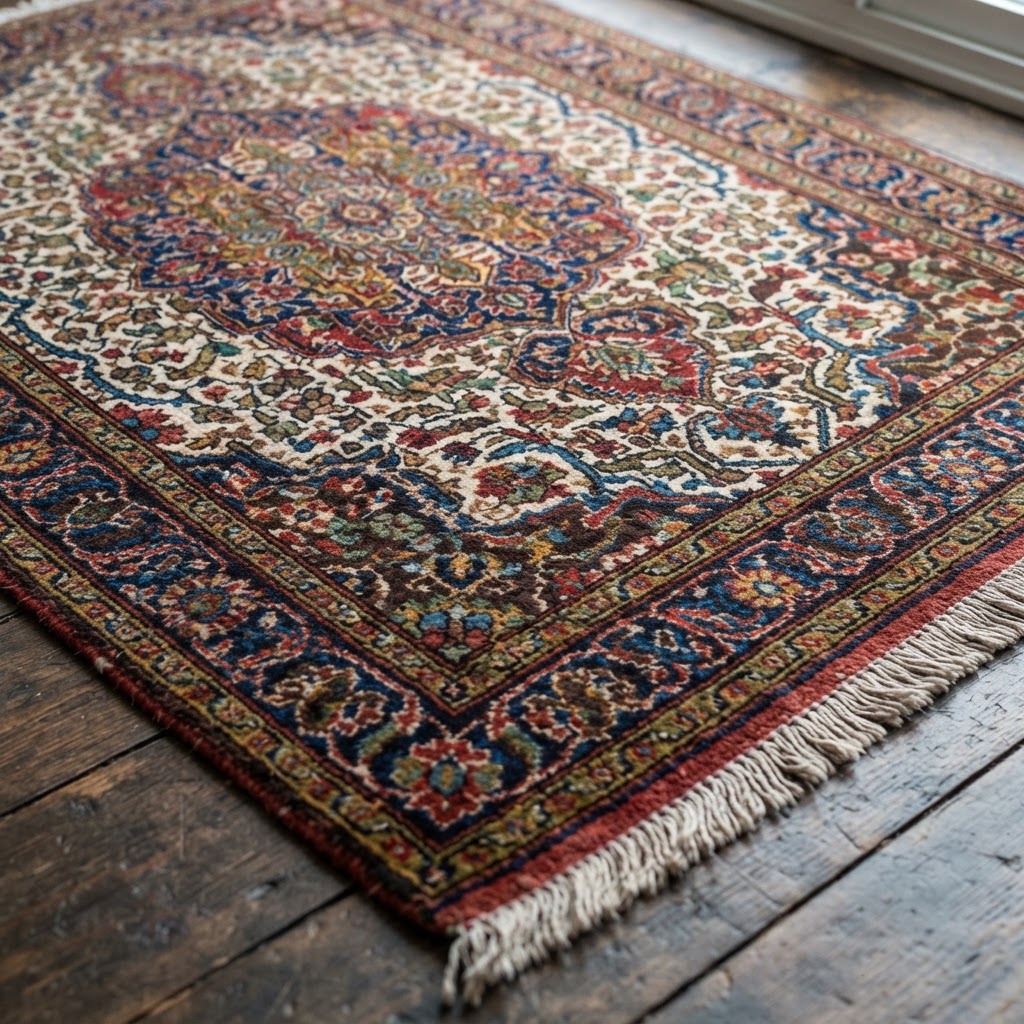
If you want something with more personality, traditional Persian or Moroccan-inspired patterns are genuinely timeless. They've been around for centuries and they'll be around for centuries more. A well-made Persian-style rug actually looks better as it ages, develops a patina, and tells a story. These are the rugs people pass down through families. That's the kind of longevity you want in a significant investment piece for your living room floor.
What to actively avoid? Ultra-trend-specific patterns. Anything that feels like it belongs strictly to this particular moment in design history is going to age poorly. Certain abstract watercolor effects, overly twee illustrated motifs, and aggressively maximalist patterns that feel tied to a specific social media aesthetic right now are exactly the kinds of things that look charming in a mood board and exhausting in real life after a year. Choose patterns you could see yourself living with for a decade. That's a useful filter.
Pro Tips for Rug Placement and Maintenance
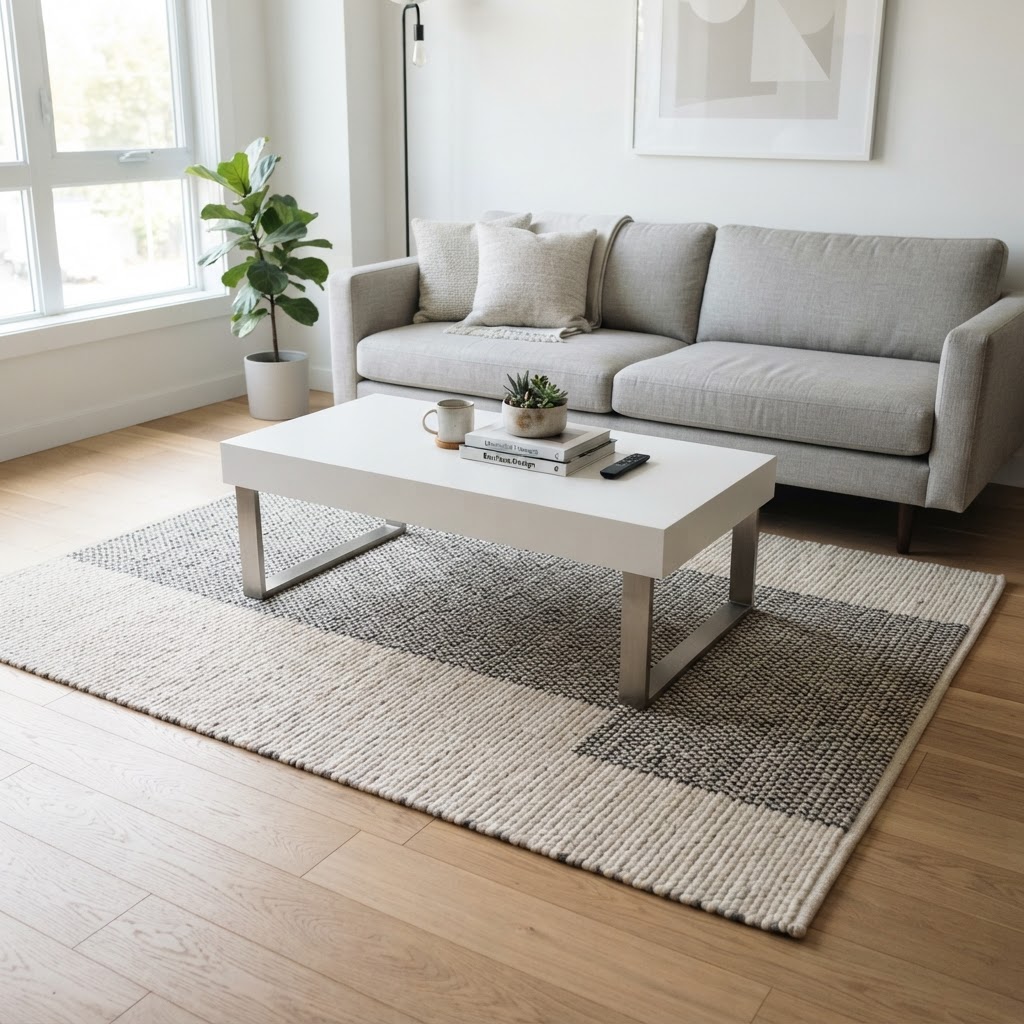
Look, you can get every other decision right and still mess things up with poor placement or neglected maintenance. These are the details that separate a room that looks incredible from a room that almost looks incredible. And honestly, most of this stuff is not complicated once you know it.
First, never skip the rug pad. I cannot stress this enough. A quality rug pad protects your floors, extends the life of your rug, adds cushioning underfoot, and most importantly keeps the rug from sliding and bunching. It's a relatively small additional cost that makes a huge practical difference. Get one that's slightly smaller than your rug, around an inch smaller on each side, so it stays hidden but still provides full coverage underneath.
For placement within the room, the center of the rug should generally align with the center of your seating arrangement, not necessarily the center of the room. This is a subtle but important distinction, especially in oddly shaped spaces or rooms where the furniture grouping is offset from the architectural center. Anchor the rug to the furniture, not to the walls.
- Rotate your rug every six to twelve months to ensure even wear, especially in high-traffic areas.
- Vacuum regularly but use a lower suction setting on high-pile rugs to avoid pulling out fibers.
- Address spills immediately by blotting, never rubbing. Rubbing pushes the liquid deeper and spreads the stain.
- Have area rugs professionally cleaned every one to two years depending on traffic levels.
- Keep rugs out of direct, prolonged sunlight or use window treatments to prevent fading over time.
And here's a tip that sounds obvious but gets overlooked constantly: make sure your rug is actually centered under the coffee table, not just approximately centered. Stand back, look at it from multiple angles, and adjust. A rug that's slightly off-center is one of those things that nags at you subconsciously even if you can't immediately identify why the room feels slightly off. Take the extra five minutes to get it right. Your future self will appreciate it every single day.
Final Thoughts
Choosing a rug for your living room is genuinely one of the most impactful design decisions you can make for the space. It sets the tone for everything else, defines the zone, adds warmth and texture, and tells the room's visual story. Get it right and the whole room clicks into place. Get it wrong and even the most beautiful furniture in the world can feel a little off.
The good news is that the mistakes people make are almost always the same ones, which means they're totally predictable and very much avoidable. Size up instead of down. Choose materials that suit your real life. Layer when you want depth. Pick patterns you'll still love in ten years. And take care of what you buy so it actually lasts. Follow these principles and you'll end up with a rug you genuinely love rather than one you're already quietly planning to replace.
Honestly, the best rug is the one that makes you happy every time you walk into the room. Start there and work backwards. You've got this.
More in Interior
Stay Inspired
Subscribe for new essays on architecture, design, and the spaces that shape us.