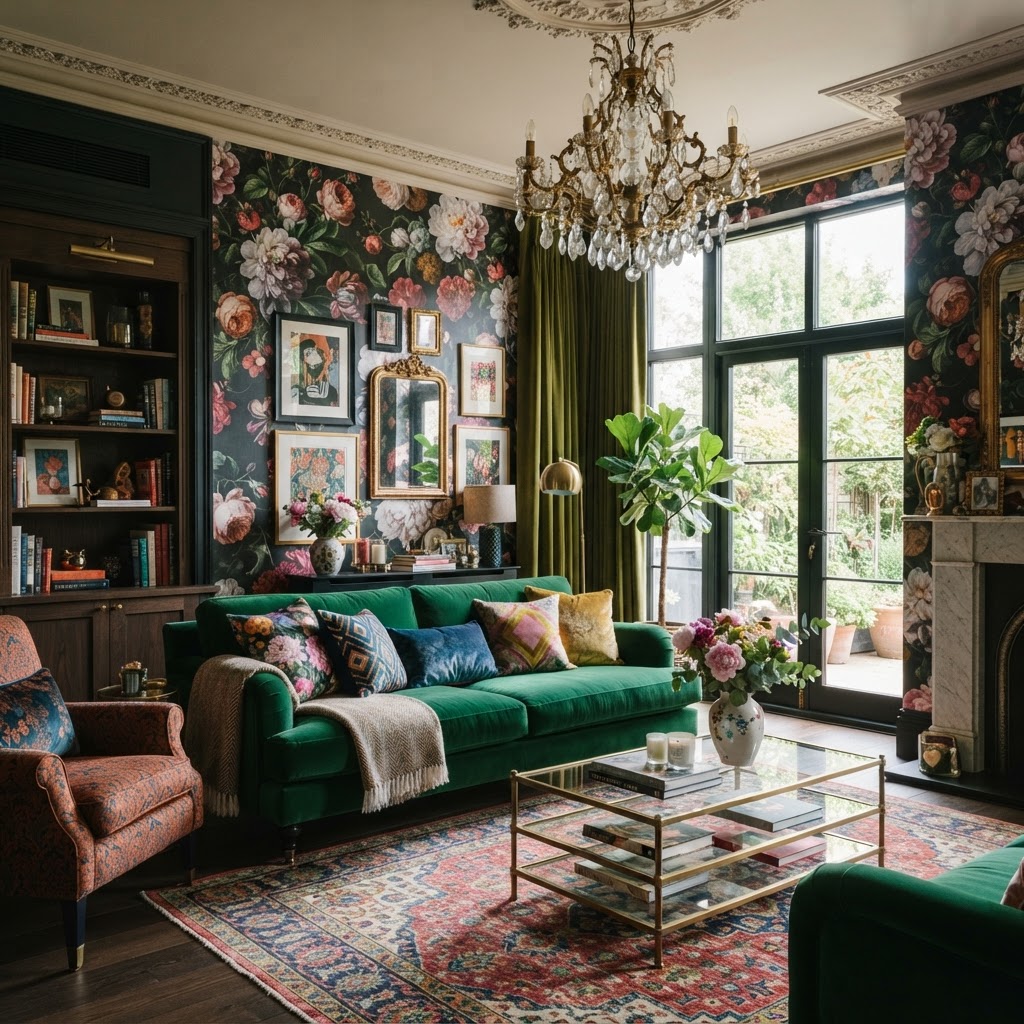
More Is More: Your Ultimate Guide to Mastering Maximalist Decor
Maximalism is all about embracing bold patterns and layered textures to make your home feel alive. This guide breaks down how to curate your collections and mix styles without making your space feel cluttered.
The Art of Layering Patterns and Textures
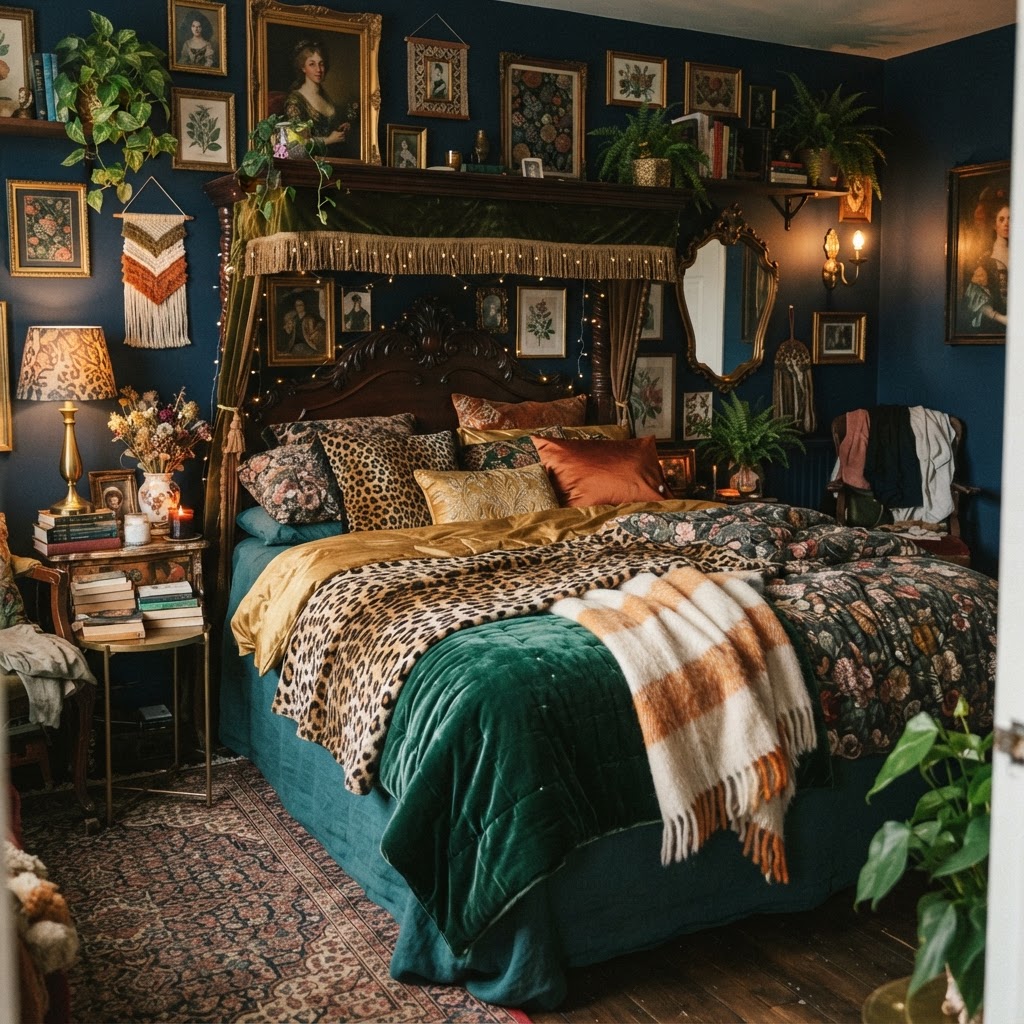
Okay, let's just get this out of the way: maximalism is not the same as making a mess. It's intentional. It's curated chaos, if you want to call it that. And honestly, the single most important skill you can develop as a maximalist decorator is learning how to layer patterns and textures without the whole thing falling apart visually. It sounds harder than it is, I promise.
Here's the thing about patterns: they need a relationship with each other. You can't just throw a bold geometric rug next to a floral sofa and a striped curtain and hope for the best. Well, you can, but you'll want to make sure they share at least one common color. That color is the thread that ties everything together. Think of it like a conversation between the different elements in the room. They don't have to agree on everything, they just have to be speaking the same language.
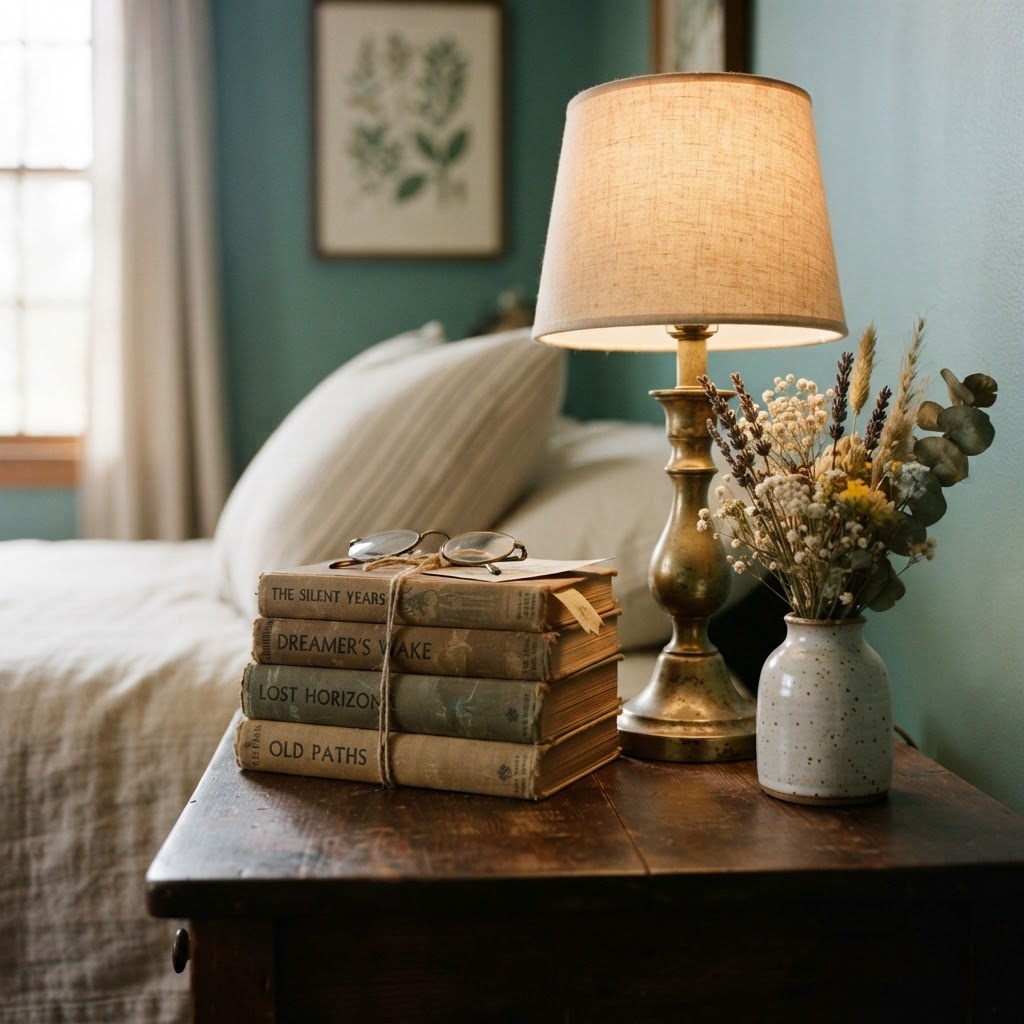
Texture is honestly just as important as pattern, maybe more so. When you mix velvet cushions with a chunky knit throw, a silk lampshade, and a jute rug, something magical happens. The room starts to feel rich and layered in a way that a single-texture space never could. Touch matters in interior design. People don't talk about that enough. A room that looks good and feels good to run your hand across is a room people want to stay in.
A solid rule of thumb: vary the scale of your patterns. Pair a large-scale botanical print with a smaller geometric and a very fine stripe. When everything is the same scale, even beautiful patterns compete in an exhausting way. Different scales give each pattern room to breathe, which is ironic in maximalism, but totally true. Mix at least three textures per room, and don't be afraid to go high contrast. Smooth against rough, shiny against matte. That contrast is exactly what makes the layering feel intentional rather than accidental.
- Start with a color anchor: Choose one or two colors that appear in every pattern you use, even just as an accent.
- Mix pattern scales: Large, medium, and small patterns together create visual rhythm.
- Layer at least three textures: Think soft, hard, and somewhere in between.
- Use solids as breathers: A solid-colored piece gives the eye a rest between busy patterns.
Curating Your Personal Gallery Wall
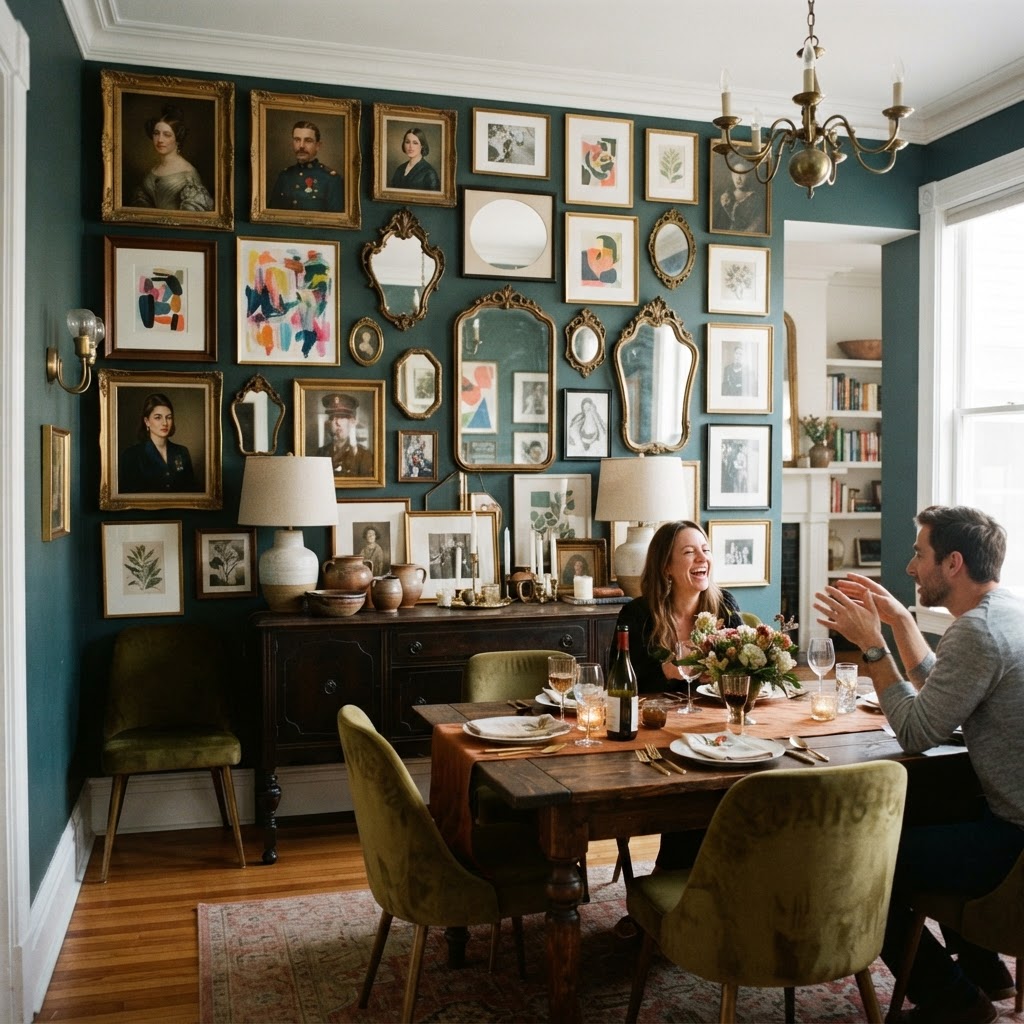
Real talk: a gallery wall done right is one of the most personal things you can put in a home. It's a visual autobiography. And in a maximalist home, the gallery wall isn't just one corner of the living room, it's a whole philosophy. It can climb up a staircase, wrap around a hallway, or take over an entire dining room wall. Go big or go home, as they say.
The mistake most people make is buying a gallery wall "set" where everything matches perfectly. Uniform frames, uniform sizes, coordinated prints. Look, I get the appeal, it feels safe. But safe is not maximalist. The beauty of a truly personal gallery wall comes from mixing original artwork with thrifted finds, family photos with vintage posters, bold oil paintings with delicate sketches. The variety is the point.
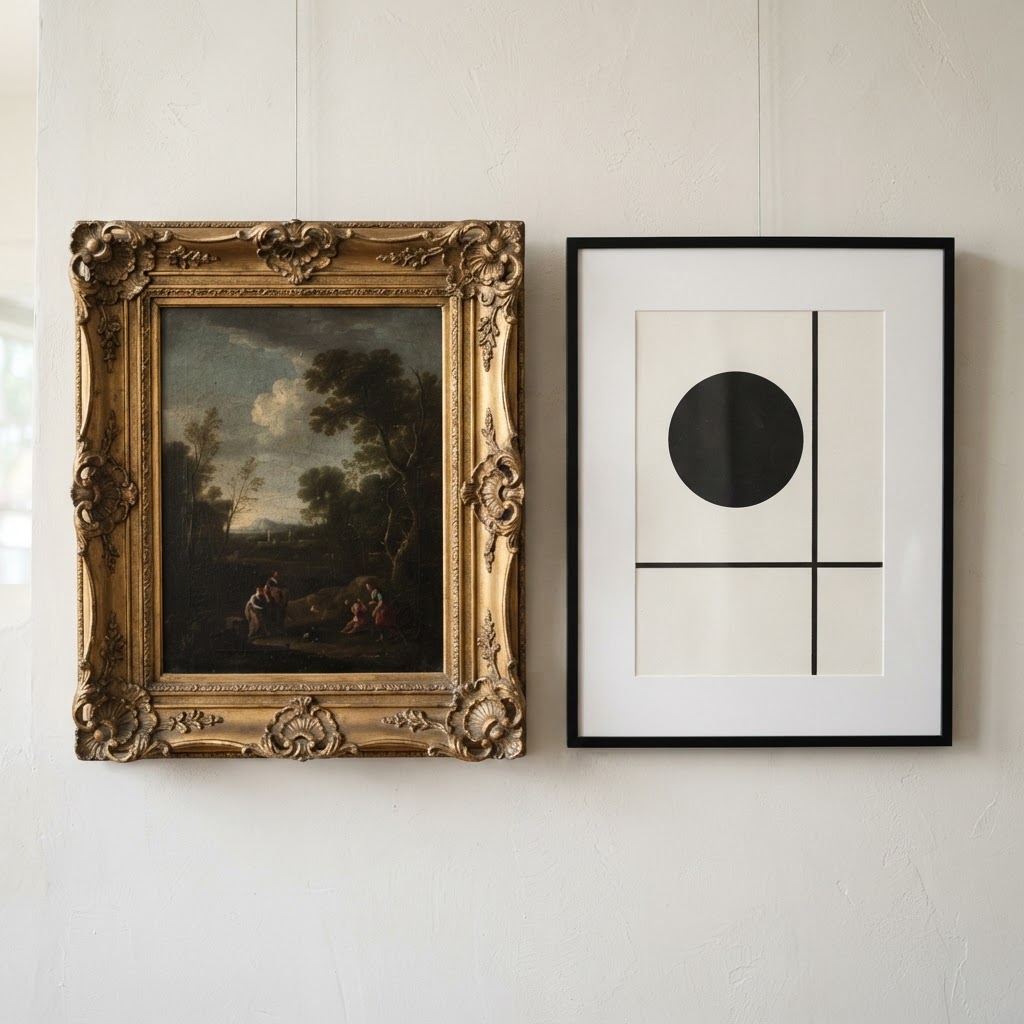
Here's how I like to approach laying out a gallery wall. First, gather everything you're considering and lay it all out on the floor. Live with the arrangement for a day or two before you start putting holes in the wall. Seriously, patience here saves so much frustration. Once you're happy with the layout, trace each piece on paper, cut them out, and tape the paper templates to the wall. This lets you adjust without any damage.
And honestly, don't limit yourself to flat artwork. Sculptural wall hangings, ceramic plates, woven textiles, even mounted natural objects like driftwood or pressed botanicals under glass can all live on a gallery wall in a maximalist home. The three-dimensionality adds another layer of texture to the room, which, as we just talked about, is always a good thing. Trust me on this one: the more personal and eclectic your gallery wall, the more people will stop and actually look at it.
"A gallery wall should feel like it took years to collect, even if it didn't. That sense of accumulated history is what makes a maximalist home feel lived-in and loved."
Embracing Bold Color Palettes
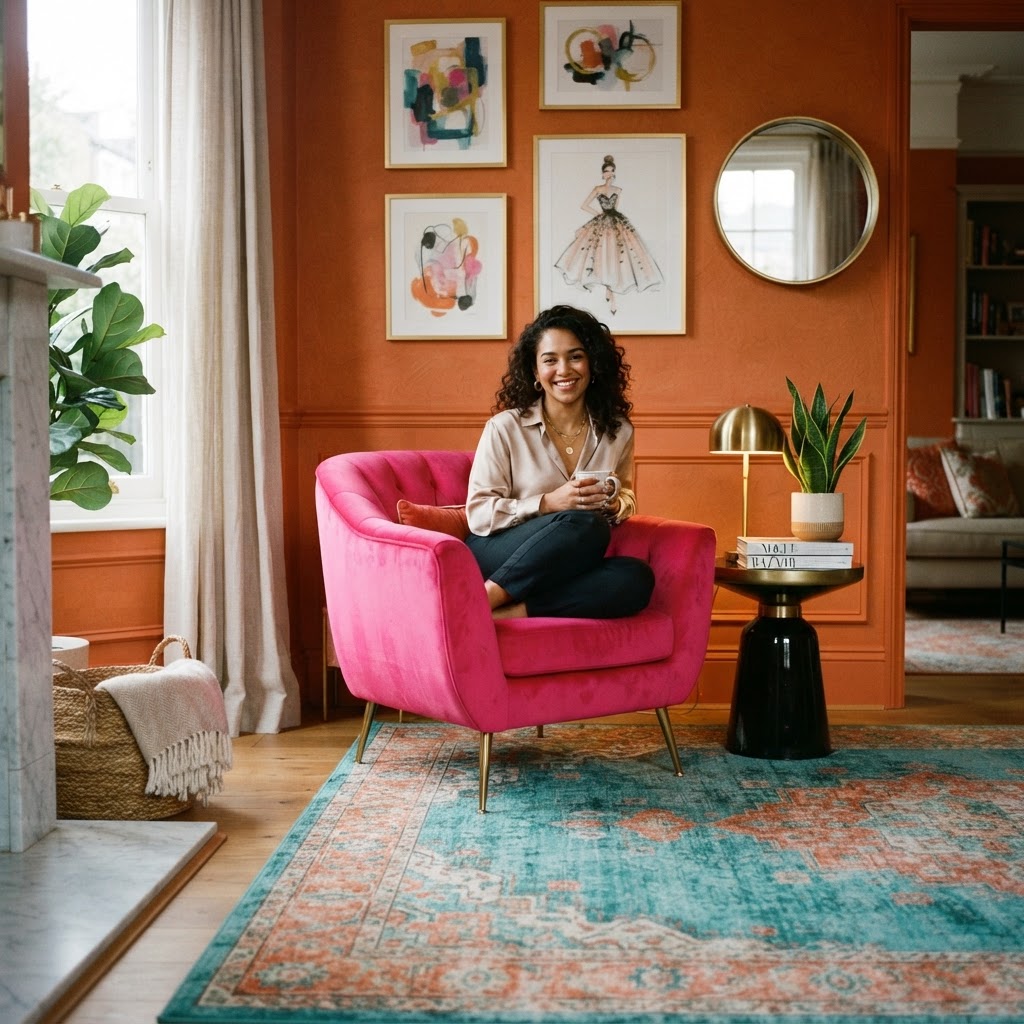
Color is where so many people lose their nerve. They get right up to the edge of something exciting and then pull back to greige. And look, I have nothing against neutral spaces, they're just not what we're doing here. Maximalism lives in color. Deep emerald greens, burnt sienna oranges, jewel-toned sapphires, rich burgundies. These are the colors that make a room feel like a place you actually want to spend time in.
The trick with bold color in a maximalist space is understanding the concept of color weight. Some colors feel heavy, some feel light, some feel warm, some feel cool. When you're loading a room with color, you need to distribute that weight thoughtfully. Put your darkest, heaviest colors low in the room, on rugs, lower walls, heavy furniture. Let lighter, brighter colors rise toward the ceiling. This keeps the room from feeling oppressive even when you've painted the walls a deep plum.
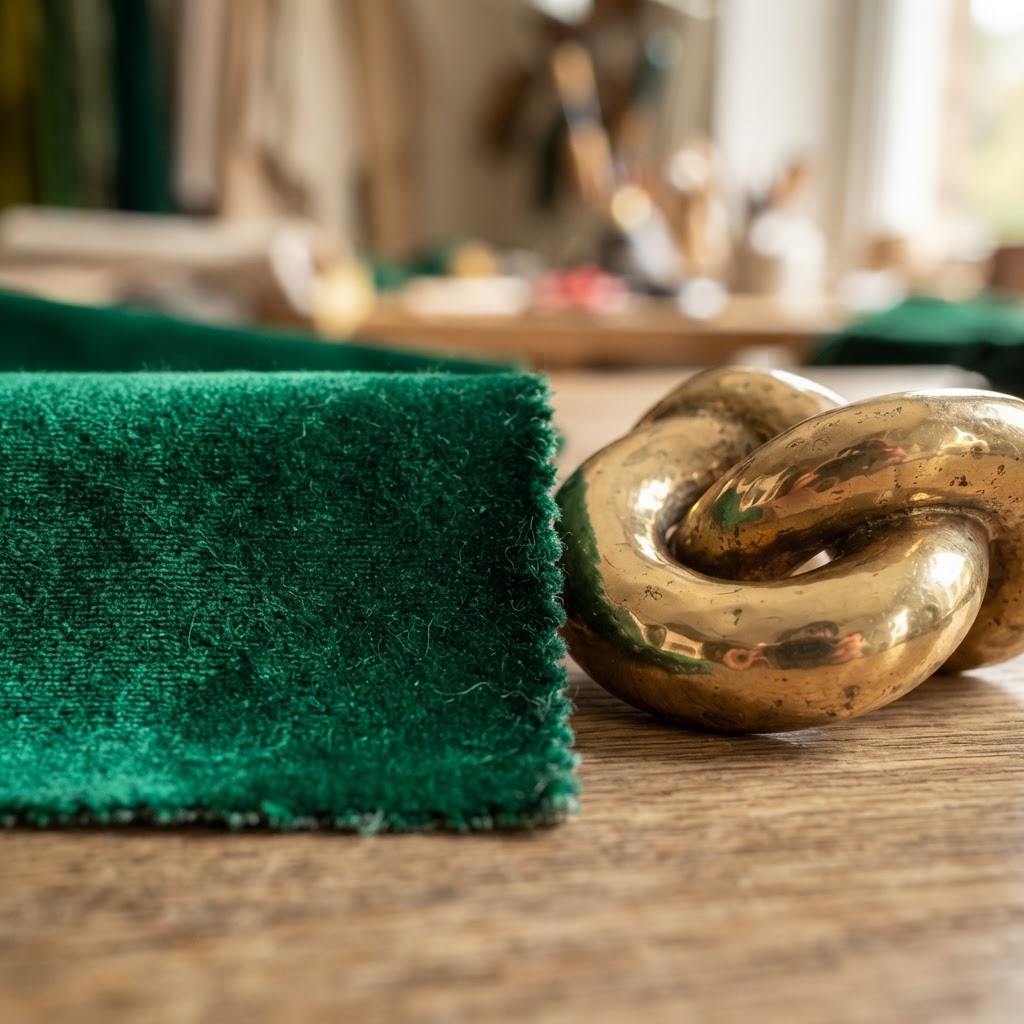
One approach I absolutely love is committing fully to a jewel-tone palette. Think of all the colors you'd find in a stained-glass window: deep teal, amethyst purple, ruby red, amber gold. These colors are naturally harmonious because they all share that same rich, saturated quality. Mix them freely, let them bounce off each other, and don't worry about things getting too loud. The saturation is what unifies them.
If you're newer to maximalism and bold color genuinely terrifies you, start with one dramatic room. A home library painted floor to ceiling in dark forest green with brass accents is a stunning entry point. Do the whole room in one bold color, including the ceiling, and furnish it in complementary tones. It's called color drenching and it's one of the most impactful design moves you can make without spending a fortune. Honestly, just paint. Paint is cheap and the results are extraordinary.
- Try color drenching: Paint walls, ceiling, and even trim in one deep, rich color for a cocooning effect.
- Use the 60-30-10 rule loosely: A dominant color, a secondary color, and an accent, but feel free to push those proportions.
- Warm and cool tones together: They create tension and energy, which is very maximalist.
- Don't forget the ceiling: The fifth wall is an underused opportunity for bold color.
Displaying Collections with Intention
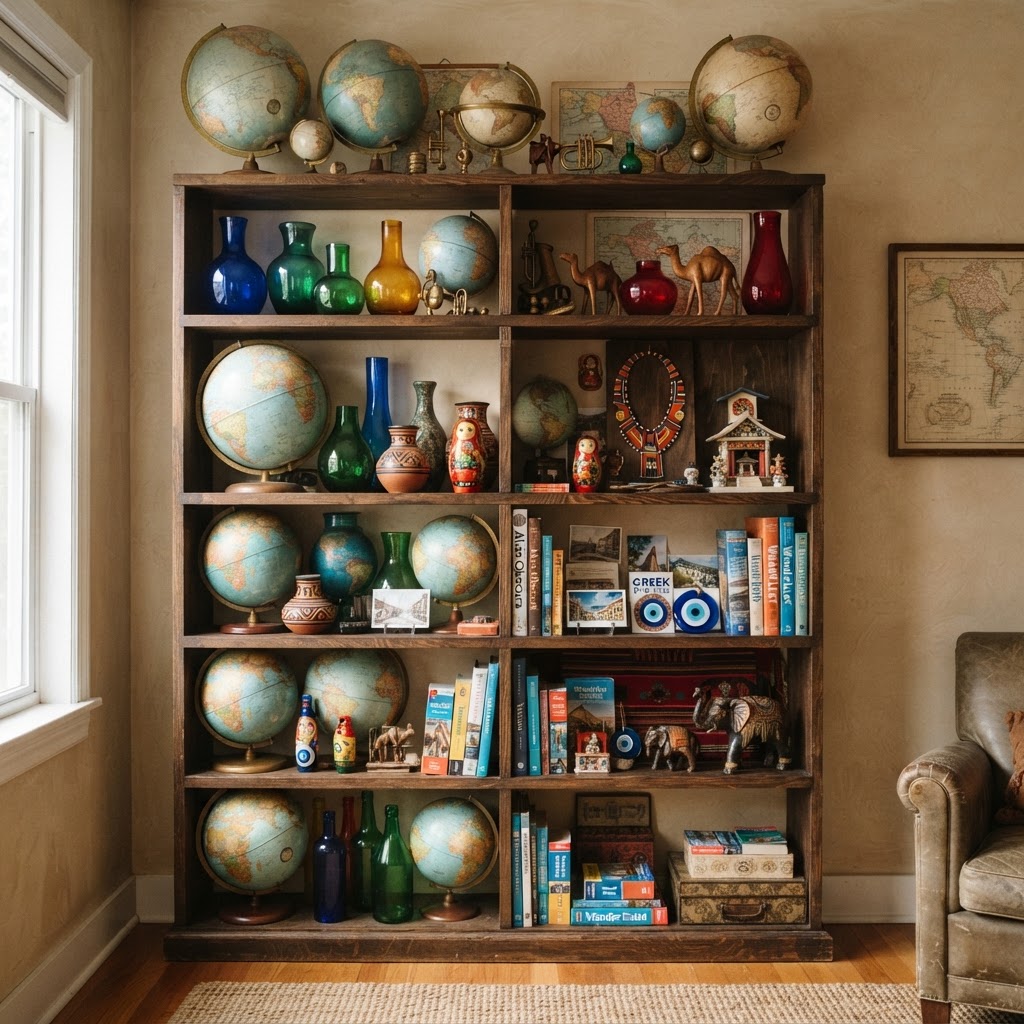
Here's something that separates a maximalist home from a cluttered one: intention. Every single collection in a well-designed maximalist space has been thought about, placed deliberately, and given a proper context. You're not just piling stuff on shelves. You're creating vignettes, little scenes that tell a story. There's a big difference and it's worth understanding.
Whatever you collect, vintage ceramics, antique books, found objects from travels, glass bottles, taxidermy, botanical specimens, the key is to group them in a way that creates visual cohesion. Group by color, by material, by era, or by size. Usually a combination works best. An all-white shelf of ceramics in varying shapes and textures reads as a curated collection. The same ceramics mixed randomly with unrelated objects just looks like a junk shelf. Same items, totally different result based purely on curation.
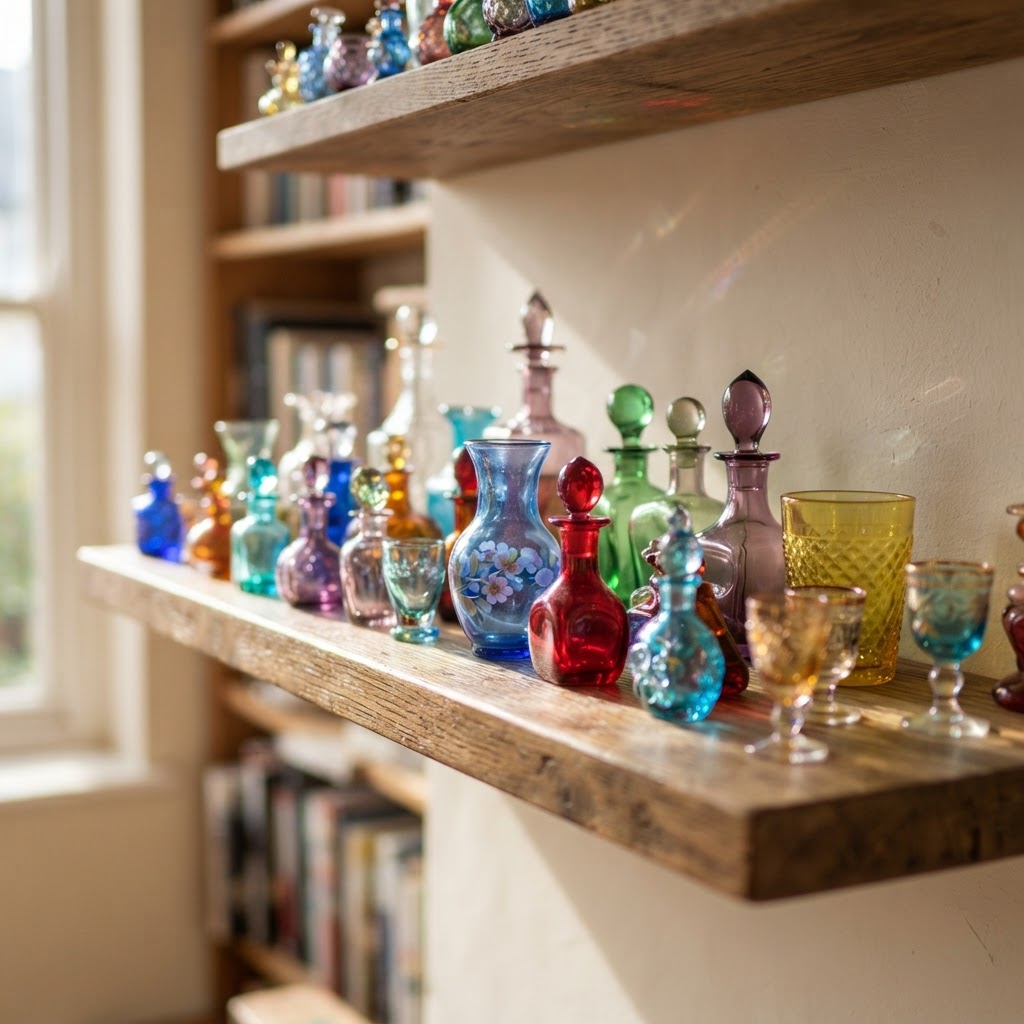
Height variation is something people consistently underestimate. When everything in a display is the same height, the eye has nowhere interesting to travel. Stack books to create risers, use decorative stands, prop things up, let some pieces hang off the edge of a shelf. Create a visual landscape with peaks and valleys. Group items in odd numbers, threes and fives, because odd groupings feel more natural and less rigid than even ones.
And here's something worth saying out loud: your collections should mean something to you. Maximalism at its best is deeply personal. It's not about buying lots of expensive things. It's about surrounding yourself with objects that carry meaning, memory, and story. The vintage camera from your grandmother, the pottery you bought on a trip years ago, the stack of books that shaped who you are. Those things together create a home that could only belong to you, and that is the whole point.
Furniture Choices for a Maximalist Home
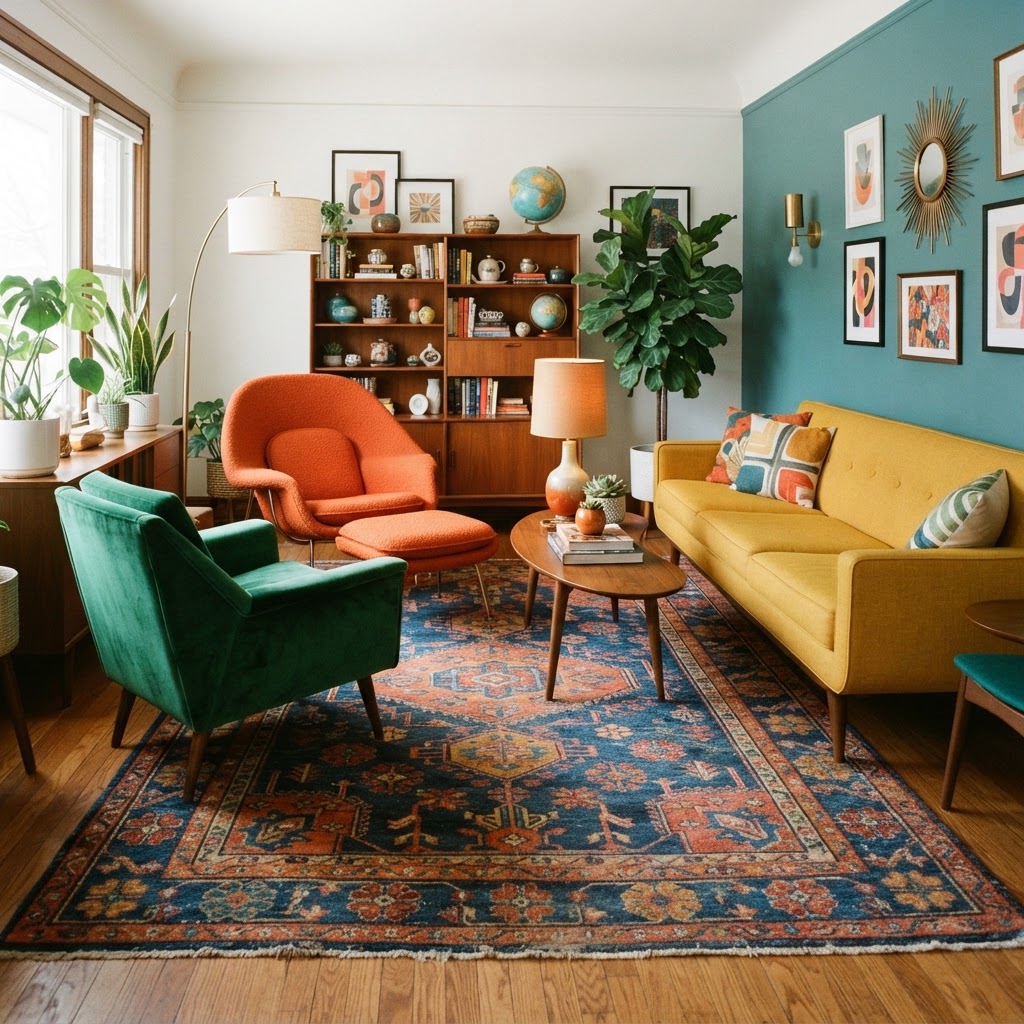
Furniture in a maximalist home needs to pull its weight. Every piece should be interesting on its own, even before you add all the layers around it. This is not the place for a basic beige sofa and a forgettable coffee table. Think carved wooden headboards, velvet Chesterfield sofas in unexpected colors, claw-footed armchairs, ornate bookcases, inlaid side tables. Furniture with history and character, whether it's genuinely antique or just has that feeling.
Mixing furniture styles is not only acceptable in maximalism, it's encouraged. A Victorian settee next to a mid-century side table next to an art deco cabinet sounds chaotic on paper but looks incredible in practice, as long as they're connected by color, scale, or material. The furniture should feel like it was gathered over time, not ordered as a matching set from a catalog. That mix of eras and styles gives a room depth and personality that simply cannot be faked.
Scale matters enormously here. In maximalism, you can go big with furniture because the room has the visual complexity to handle it. An oversized tufted sofa, a massive wooden dining table, a statement wardrobe that goes floor to ceiling. Big, confident furniture pieces anchor the room and give all the other layers something to orbit around. Don't be afraid of furniture that takes up serious real estate. In a maximalist space, it just works.
- Choose statement pieces first: Build the room around one or two truly special furniture items.
- Mix furniture eras freely: Victorian, art deco, mid-century and modern can all coexist beautifully.
- Go for upholstered pieces in unexpected colors or patterns: A floral velvet sofa changes everything.
- Don't shy away from ornate details: Carved legs, tufting, inlay work, fringe. These details matter in maximalism.
- Think about the patina: Furniture that shows its age adds authenticity and warmth to a maximalist interior.
Final Thoughts
Look, maximalism isn't for everyone and that's totally fine. But if you've ever walked into a richly decorated room and felt immediately at home, felt surrounded and held by color and texture and objects that tell stories, then you already understand the appeal on some level. The goal was never to have less. It was to have exactly what you love, displayed with care and confidence.
The rules we covered here, layering patterns with intention, building gallery walls that feel personal, committing to bold color, curating collections thoughtfully, and choosing furniture that has character, these aren't really rules at all. They're just tools. Use them as starting points and then trust your gut. Maximalism is one of the most forgiving design styles out there because the whole premise is that more is more. You're allowed to experiment, adjust, add, rearrange, and keep going until the room feels like you. That's the whole beautiful point of it.
More in Interior
Stay Inspired
Subscribe for new essays on architecture, design, and the spaces that shape us.