The Foolproof Guide to Mixing and Matching Throw Pillows Like a Pro
Struggling to style your sofa without it looking like a cluttered mess. Learn the simple design rules that will help you create a designer look with the perfect throw pillow combinations.
Start with a Hero Pattern
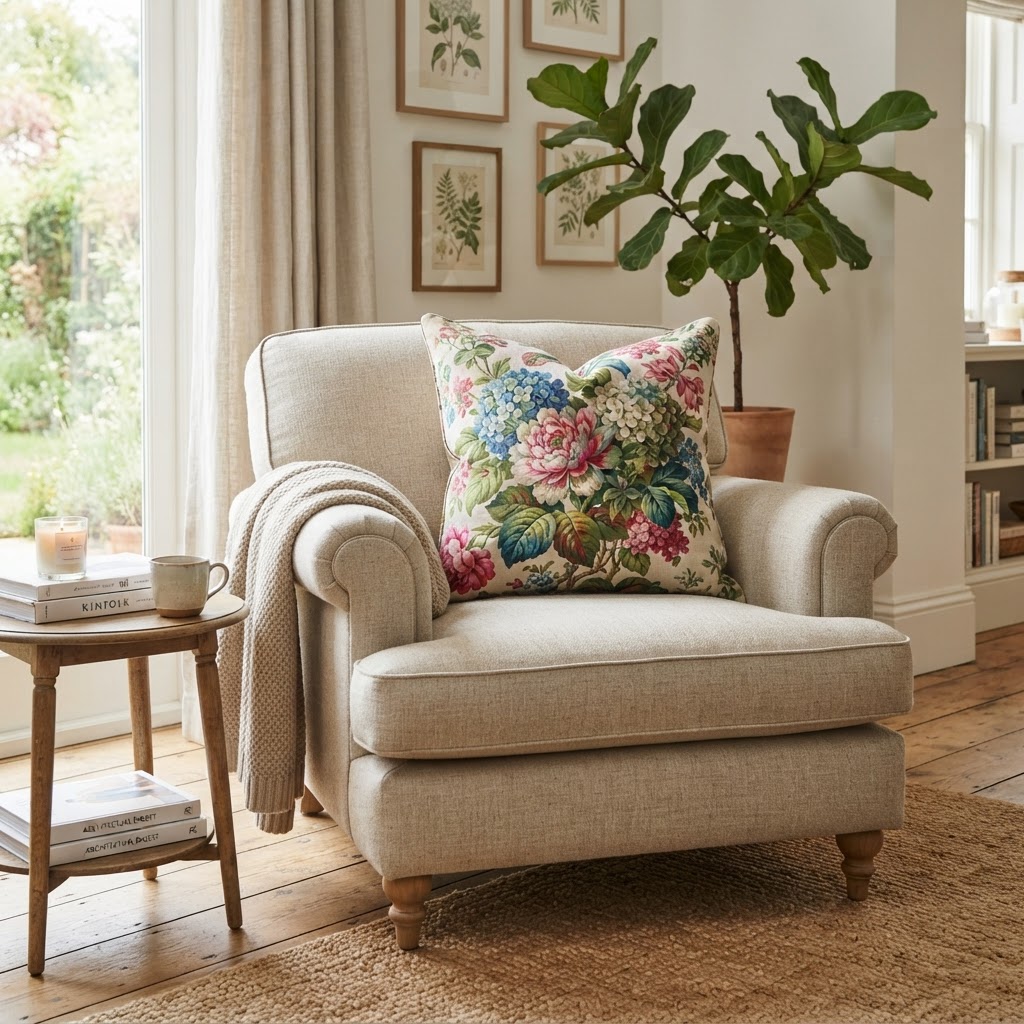
Okay, so here's the thing. Every great throw pillow arrangement starts with one anchor, one statement piece that basically calls the shots for everything else. Designers call it the "hero pattern," and honestly, once you understand this concept, the whole process of mixing and matching gets about ten times easier.
Your hero pattern is the pillow that has the most going on visually. Think a large-scale floral, a bold geometric, a dramatic ikat, or even a busy abstract print. It's the one that catches your eye first when you walk into the room. And here's why it matters so much: this single pillow is going to be your color guide, your mood setter, and your permission slip for every other pillow you bring in. Whatever colors show up in that hero pattern, those are the colors you get to play with for the rest of the arrangement.
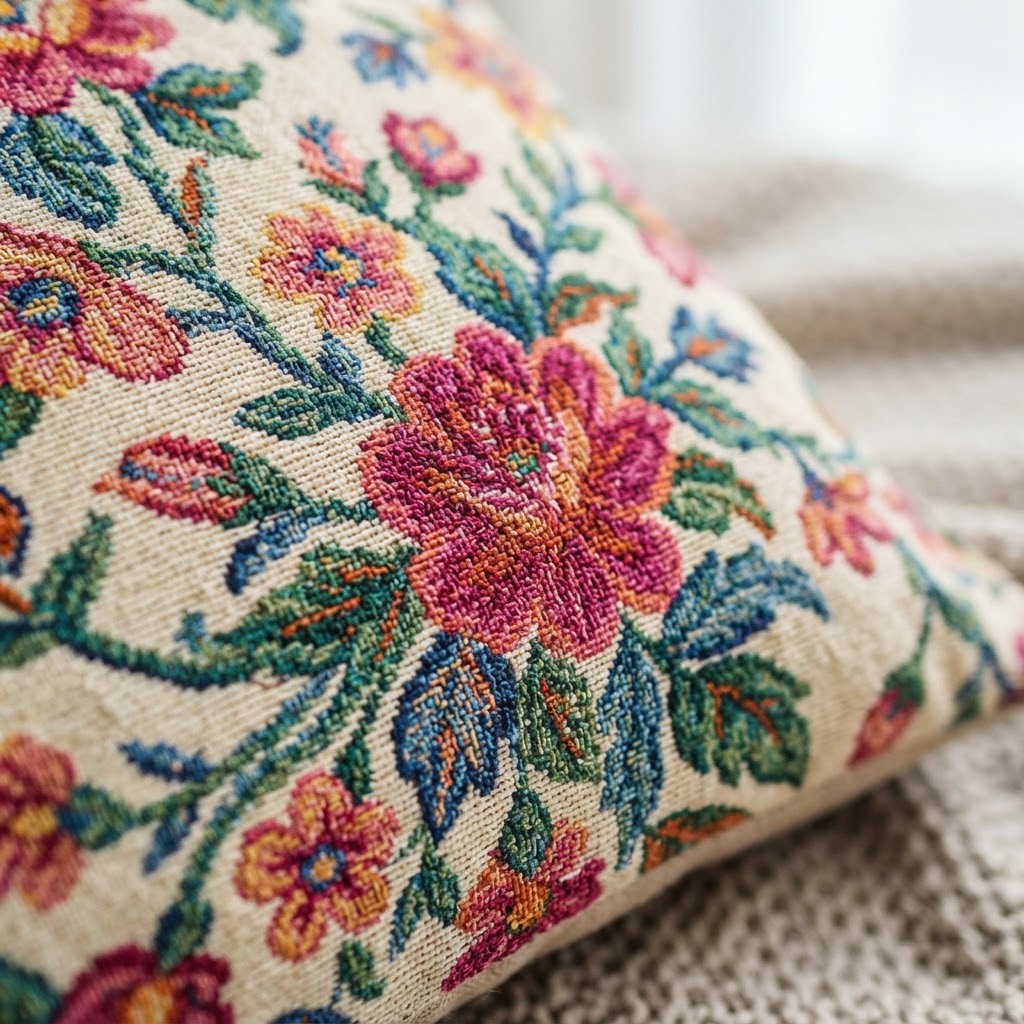
When you're shopping for your hero, don't be scared. This is not the time to play it safe. Real talk, the biggest mistake I see people make is choosing a timid pattern as their anchor and then wondering why the whole arrangement feels flat and forgettable. Go bold. Go interesting. Pick the pillow that makes you think, "Is this too much?" Because honestly, it probably isn't.
One practical tip: hold your hero pillow up against your sofa fabric before committing. You want there to be some contrast. If your sofa is a soft cream linen, a crisp navy and white geometric is going to pop beautifully. If your sofa is a deep charcoal, a warm terracotta and ochre pattern will sing. The hero should stand out, not disappear into the upholstery.
Once you have your hero locked in, take a good hard look at it and mentally note every single color in that print, even the subtle background tones. Those are your building blocks. Everything else you add to your arrangement should trace back to at least one of those colors. This is how professional stylists make it look so effortless. They're not guessing. They're pulling from the same palette over and over again.
Incorporate Complementary Solids
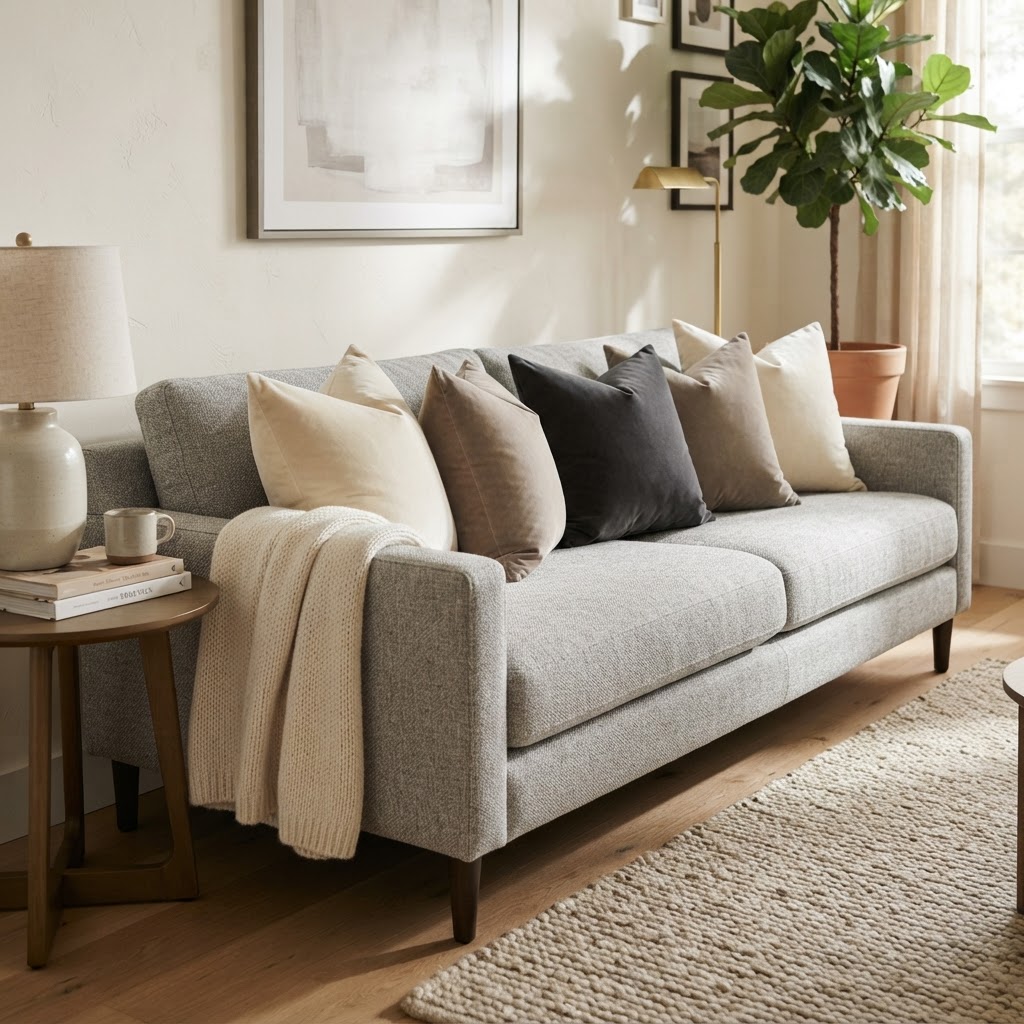
After you've nailed down your hero pattern, the next move is to bring in some solids. And look, I know solids can sound boring. But trust me on this, they are absolutely essential to making a mixed pillow arrangement feel polished rather than chaotic.
Solid pillows do two really important jobs. First, they give your eye a visual resting place. When everything is patterned, the whole arrangement becomes visually exhausting and nothing really stands out. Solids create breathing room. Second, they reinforce your color story. A solid pillow in a deep rust, pulled directly from your hero pattern, quietly ties everything together in a way that feels intentional and sophisticated.
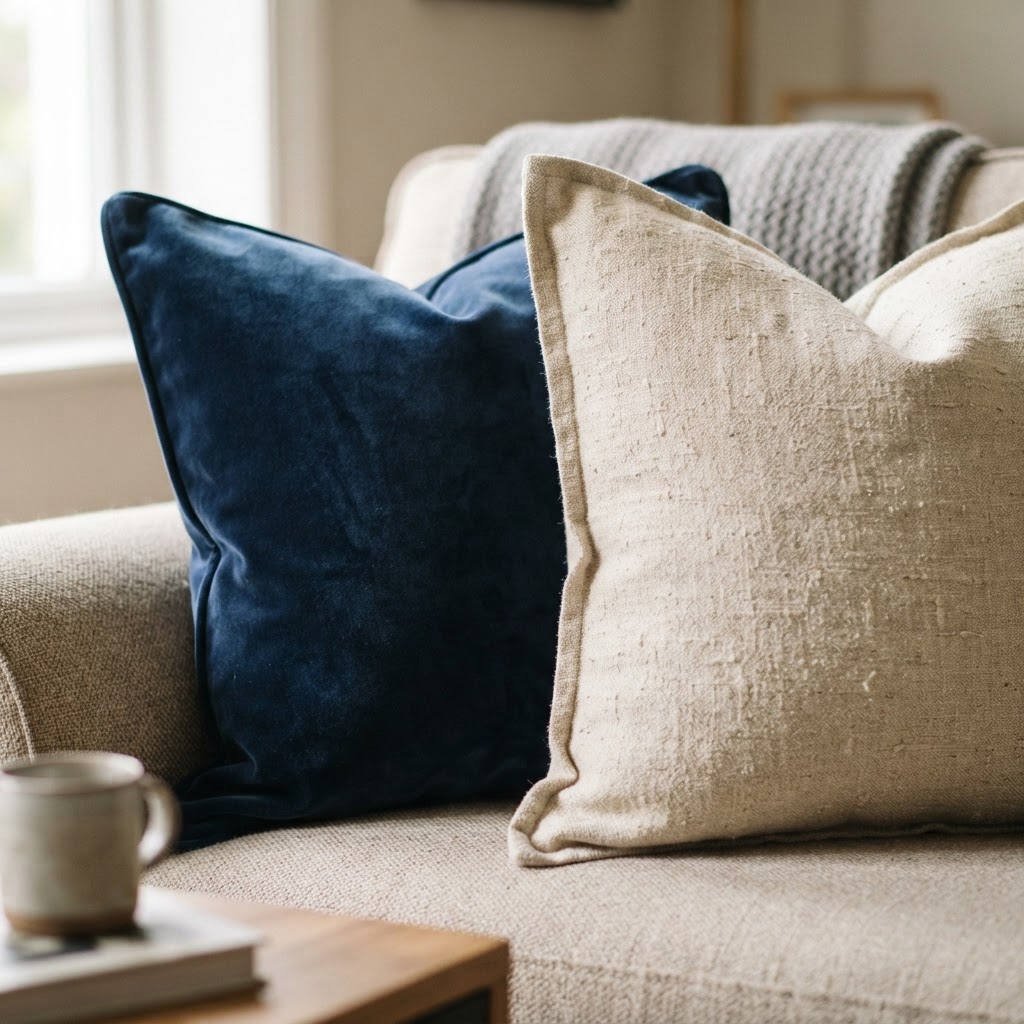
When picking your solids, here's a little formula that works really well. Choose one solid in a color that's dominant in your hero pattern, and one in a more neutral or muted tone, something like a warm oatmeal, a dusty sage, or a soft slate. The dominant color solid makes a confident statement, and the neutral solid keeps things from feeling too heavy or overdone.
- Go for depth over brightness: Saturated, slightly muted solids tend to look more expensive and intentional than bright primaries.
- Don't forget the sofa color: If your sofa is a strong color, at least one solid should be close to neutral to balance things out.
- Vary the fabric, not just the color: Two solid pillows in the same color but different fabrics, like a velvet and a linen, add richness without visual noise.
And honestly, don't underestimate a really good solid pillow. A chunky knit in a warm caramel, a butter-soft velvet in deep emerald, a perfectly washed linen in vintage white. These are the unsung heroes of a great pillow arrangement. They make everything else look better just by being there.
The Power of Texture Mixing
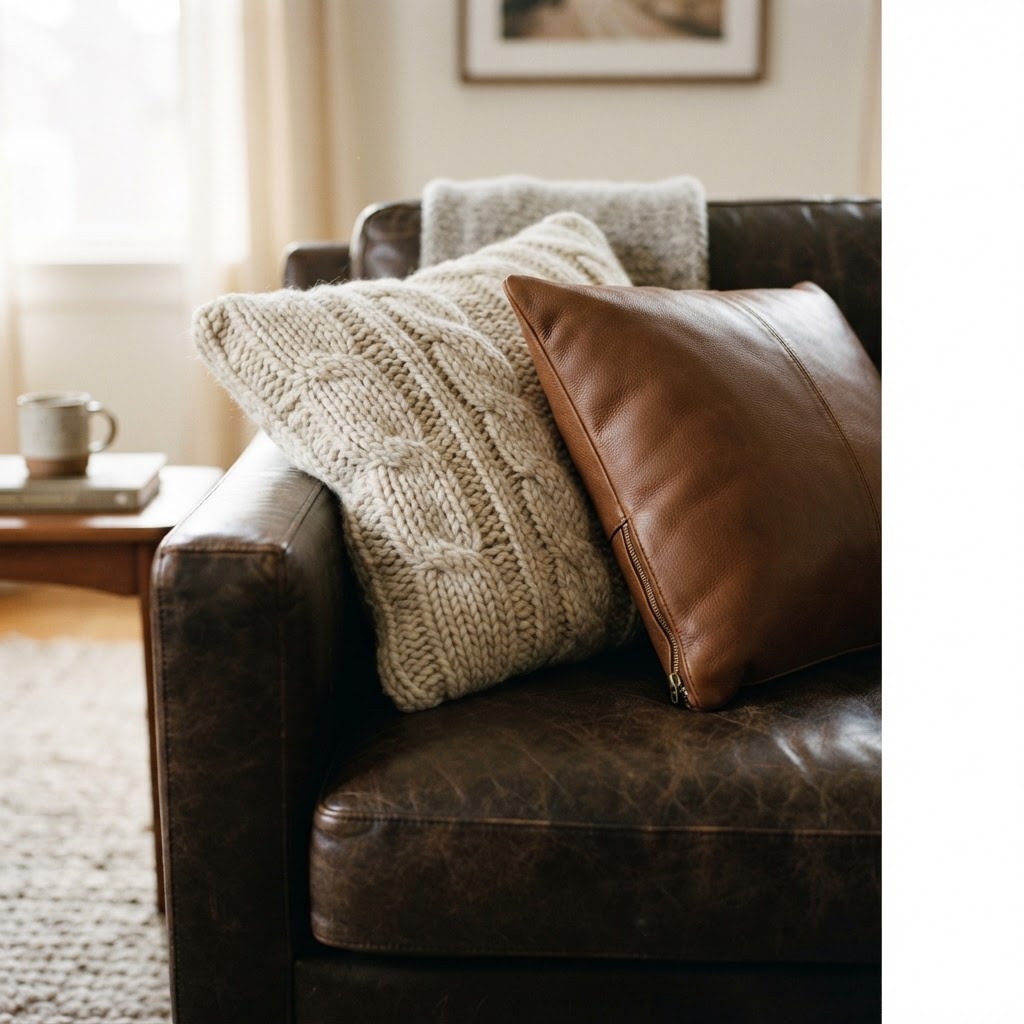
Okay, this is the part that most people skip, and it's honestly the secret sauce. Texture mixing is what separates a pillow arrangement that looks like it could be in a magazine from one that looks like you just threw a bunch of pillows on a couch. And the beautiful thing is, it works in literally any style, from minimalist Scandinavian to maximalist bohemian to sleek modern.
Think about what happens when you layer a nubby boucle pillow next to a smooth silk blend, next to a chunky woven cotton. Even if all three pillows were the exact same color, the arrangement would look interesting and layered and intentional. That's the magic of texture. It adds dimension that pattern alone just can't achieve. It makes you want to reach out and touch things, and in interior design, that tactile quality is everything.
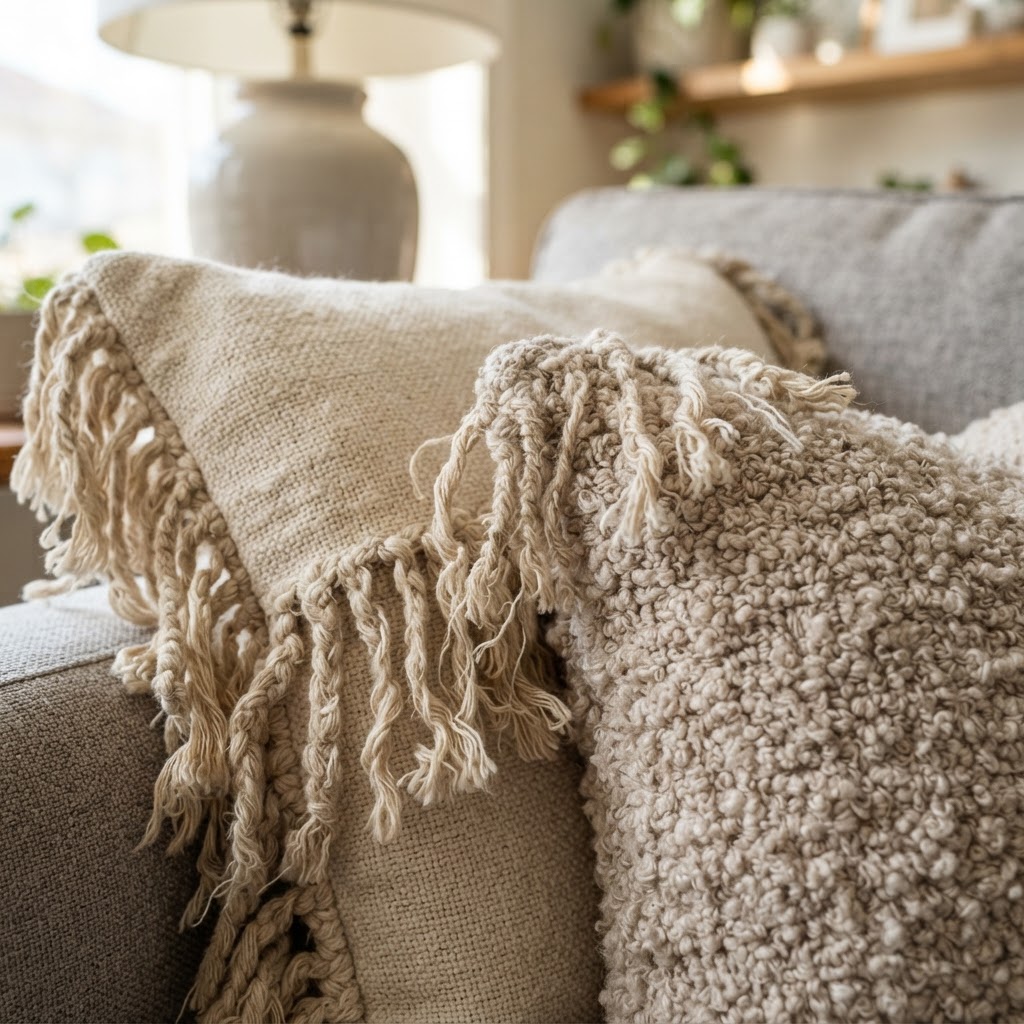
Here's a simple framework for texture mixing that works every time. Aim for at least three different fabric textures in your arrangement. You want something smooth or silky, something matte and natural like linen or cotton canvas, and something with genuine physical depth like velvet, bouclé, fringe, or a chunky knit. Those three categories cover your bases and give the arrangement that layered, lived-in luxury vibe.
"Texture is the quiet language of a room. Patterns speak loudly, but texture is what you feel, and feeling is what makes a space truly memorable."
Also worth knowing: texture can actually help you mix patterns more successfully. Two bold patterns can coexist much more peacefully if they're on very different fabric types. A geometric on a crisp cotton and a floral on a plush velvet read as distinct enough that they don't fight with each other. The texture essentially acts as a buffer. Smart, right?
Finding the Right Scale
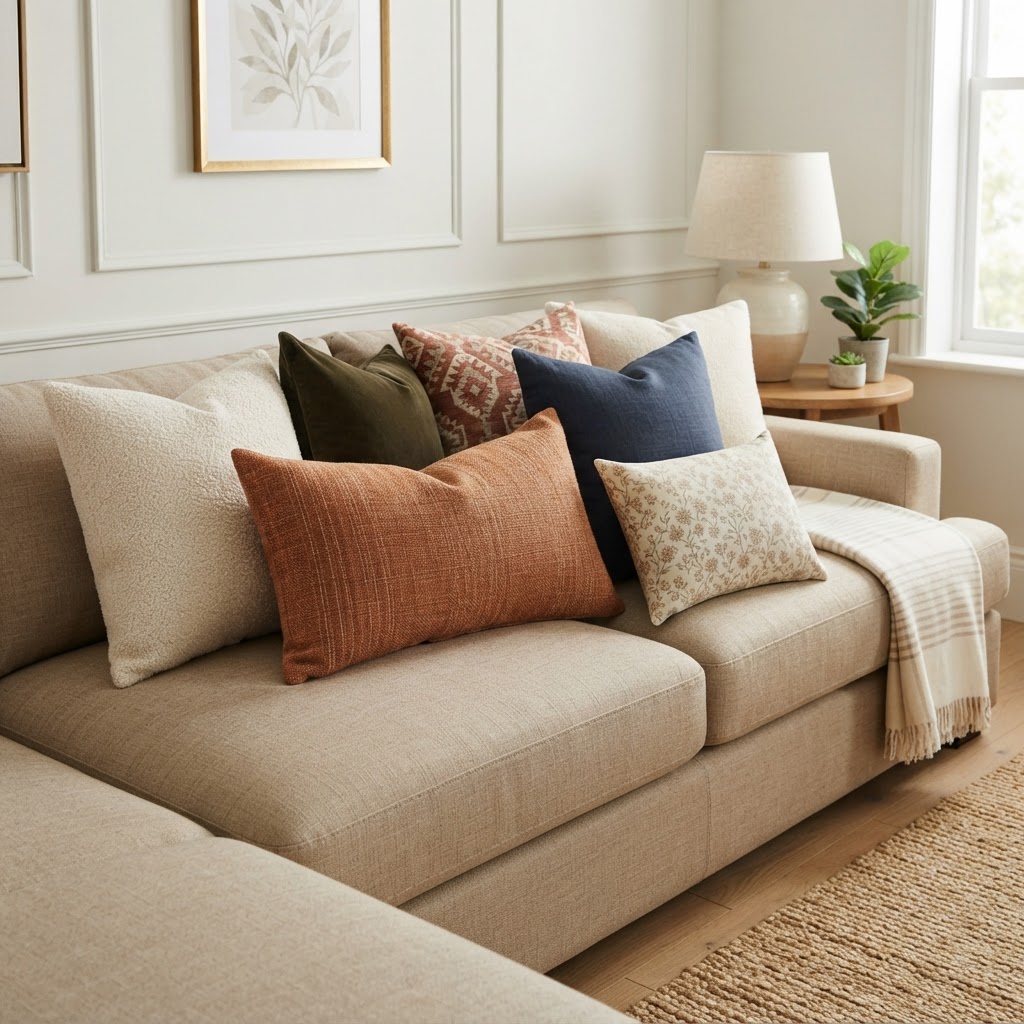
Scale is one of those concepts that sounds very technical and design-school-y, but honestly it comes down to something pretty simple. When you're mixing patterns, you need to vary the size of those patterns or else everything blurs together and looks like visual mush. A large-scale pattern needs to hang out with a medium-scale pattern and a small-scale pattern. That variation is what makes your eye bounce around the arrangement in a pleasing way.
Let's say your hero pillow has a big, sprawling botanical print with leaves the size of your hand. For your next patterned pillow, you'd want something with a noticeably smaller repeat, maybe a medium-scale stripe or a mid-sized geometric. Then if you're adding a third patterned pillow, go even smaller, like a tight little ditsy print or a fine stripe. This staircase of scale is a classic design principle and it works because it creates rhythm without confusion.
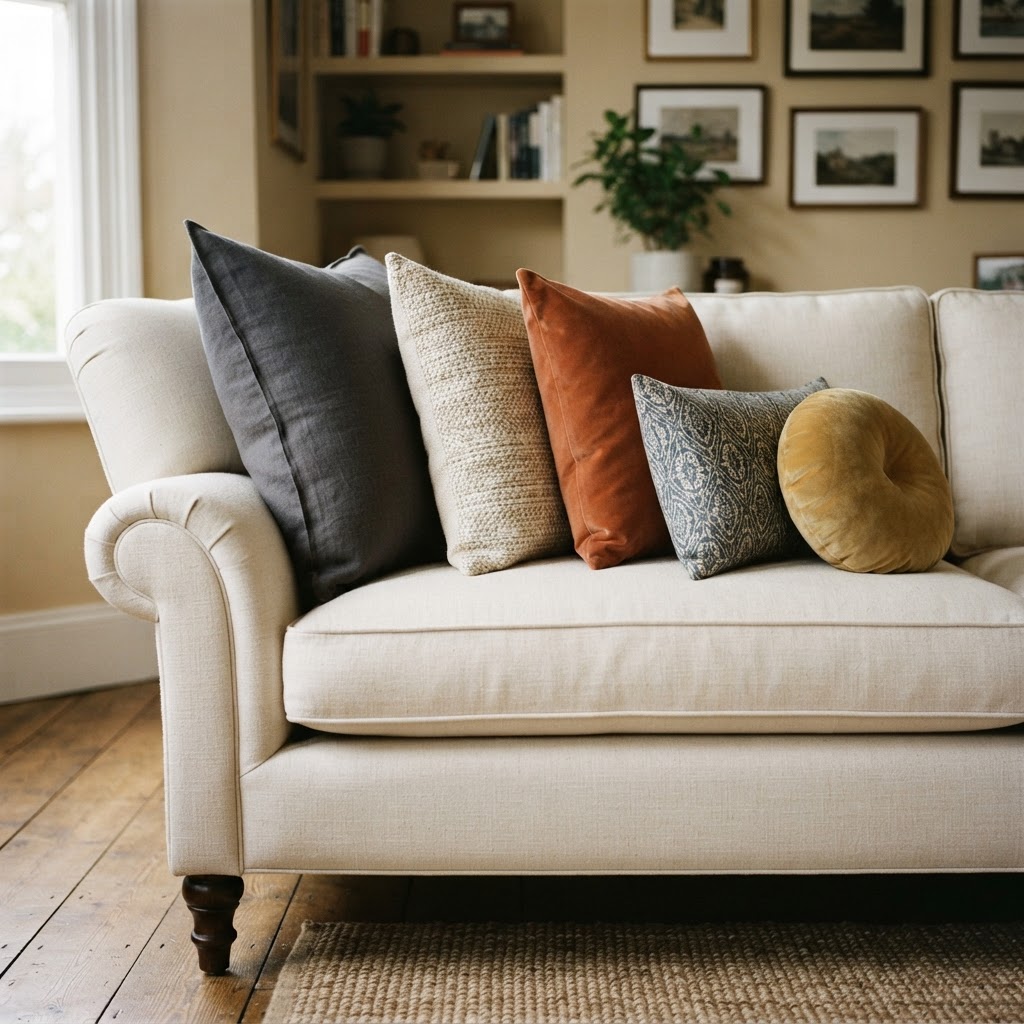
Size of the actual pillow matters here too, not just the pattern scale. Larger pillows, like your standard 22x22 or 24x24 squares, tend to carry bolder, larger patterns well. Smaller lumbar pillows, those rectangular ones, are perfect for smaller, more delicate prints or interesting solids with great texture. Using a big bold pattern on a tiny lumbar pillow often looks awkward because you can't really see the full repeat. Keep the scale of the pattern somewhat proportional to the size of the pillow itself.
- Large pillows (22" and up): Great for your hero pattern, large-scale prints, and statement solids.
- Medium pillows (18" to 20"): Ideal for mid-scale patterns, stripes, and textured solids that complement the hero.
- Lumbar pillows: Perfect for small prints, geometric accents, embroidery, or a solid in a pop color.
One more thing on scale: don't mix two large-scale patterns unless you really know what you're doing. It almost always creates competition rather than harmony. If you fall in love with two big, bold patterns, that's when your solid and texture pillows become even more important as peacekeepers in the middle.
The Rule of Odd Numbers
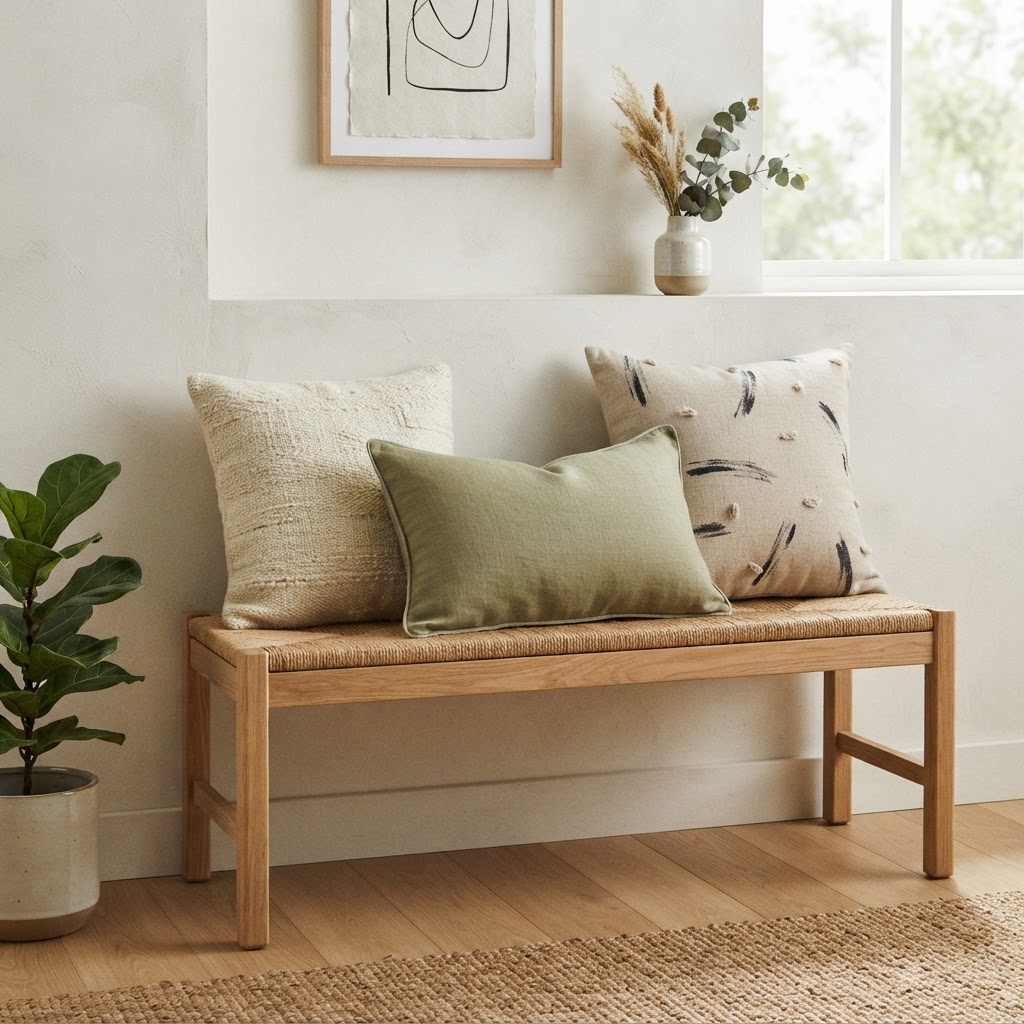
Alright, last rule, and this one is the easiest to remember. Odd numbers. Always odd numbers. Three pillows, five pillows, seven pillows. This is a principle that shows up everywhere in design and styling, from table arrangements to gallery walls, and it applies hard to throw pillows too.
Here's why it works. Even numbers of things create symmetry, and symmetry can feel formal, stiff, and a little predictable. Odd numbers create asymmetry, which our brains actually find more interesting and natural. Think about how flowers grow in nature, how rocks cluster in a garden, how items arrange themselves on a market table. It's rarely perfectly even. That slight imbalance is what reads as organic and effortless rather than staged and uptight.
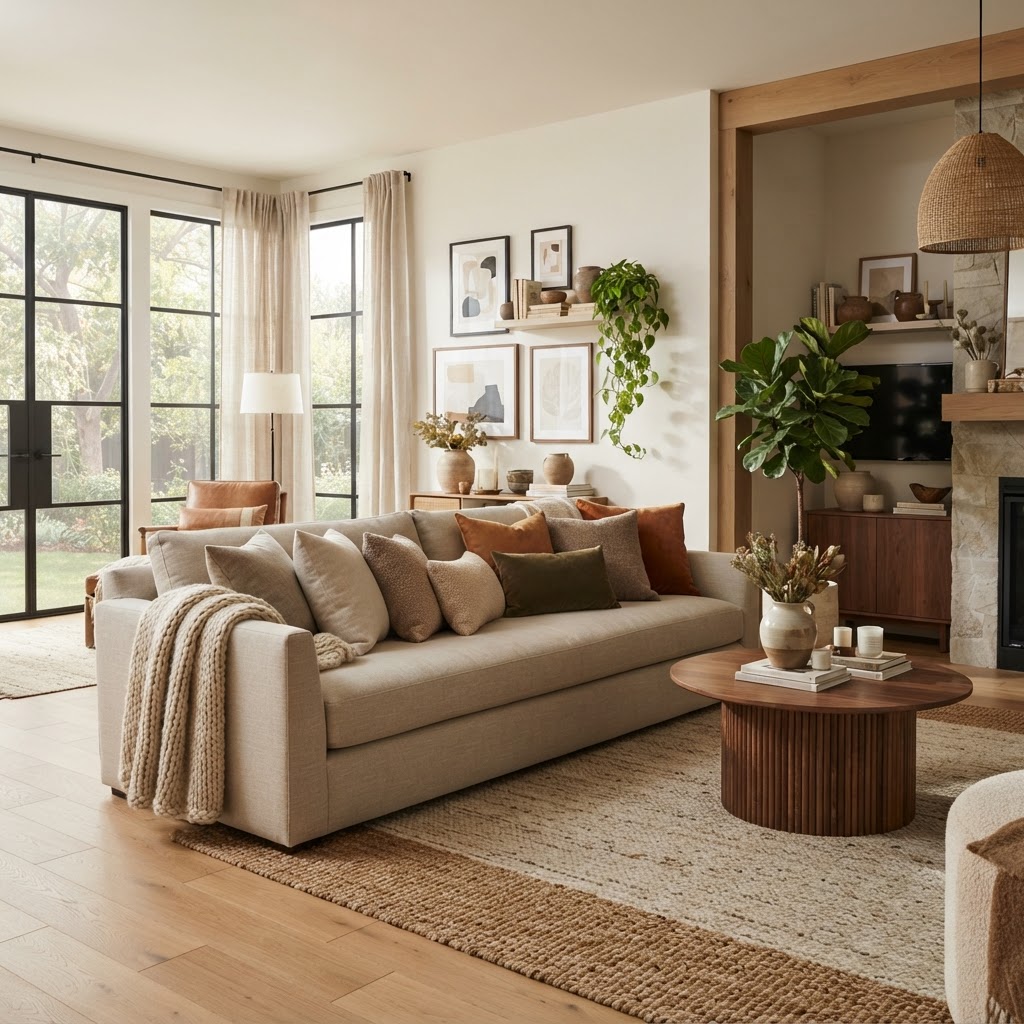
For a standard three-cushion sofa, a classic arrangement is five pillows total: two matching pillows on the outer edges, two different pillows moving inward, and one lumbar or accent pillow in the front center. This gives you that layered, styled look without going overboard. For a loveseat or smaller sofa, three pillows is the sweet spot. And for a sectional, you've got room to go up to seven or even nine, but keep the arrangement asymmetrical rather than mirrored.
If you really love symmetry, maybe because you have a very formal or traditional space, you can do even numbers but make sure at least one element breaks the mirror image. Like two matching pillows on each end, but a single statement lumbar in the center. That center pillow disrupts the perfect symmetry just enough to keep things from looking too rigid. Real talk, even the most classically decorated rooms benefit from at least one moment of asymmetry.
"Odd numbers create movement. Even numbers create stillness. In a living room where people gather and life happens, movement almost always wins."
Also, consider the physical arrangement. Don't just line pillows up in a straight row. Layer them. Put bigger pillows toward the back and smaller ones in front. Let them overlap slightly. That layering is what gives you that effortlessly styled look. It feels casual but considered, like someone who put in just enough thought to make it look like they didn't think about it at all.
Final Thoughts
Look, mixing and matching throw pillows is genuinely one of the most accessible and affordable ways to completely transform the feel of a room. And once you get these five principles down, it stops feeling like a guessing game and starts feeling like something you can actually trust yourself to do well.
Start with your hero pattern and let it lead the way. Bring in solids that reinforce the color story. Layer in textures that make people want to sit down and stay awhile. Vary your pattern scales so the arrangement has rhythm. And always, always group in odd numbers.
Honestly, the best part about throw pillows is that nothing is permanent. If something isn't working, you swap it out. You experiment. You try things. That's the joy of it. So stop overthinking, pick your hero, and start building. Your sofa is waiting.
More in Interior
Stay Inspired
Subscribe for new essays on architecture, design, and the spaces that shape us.