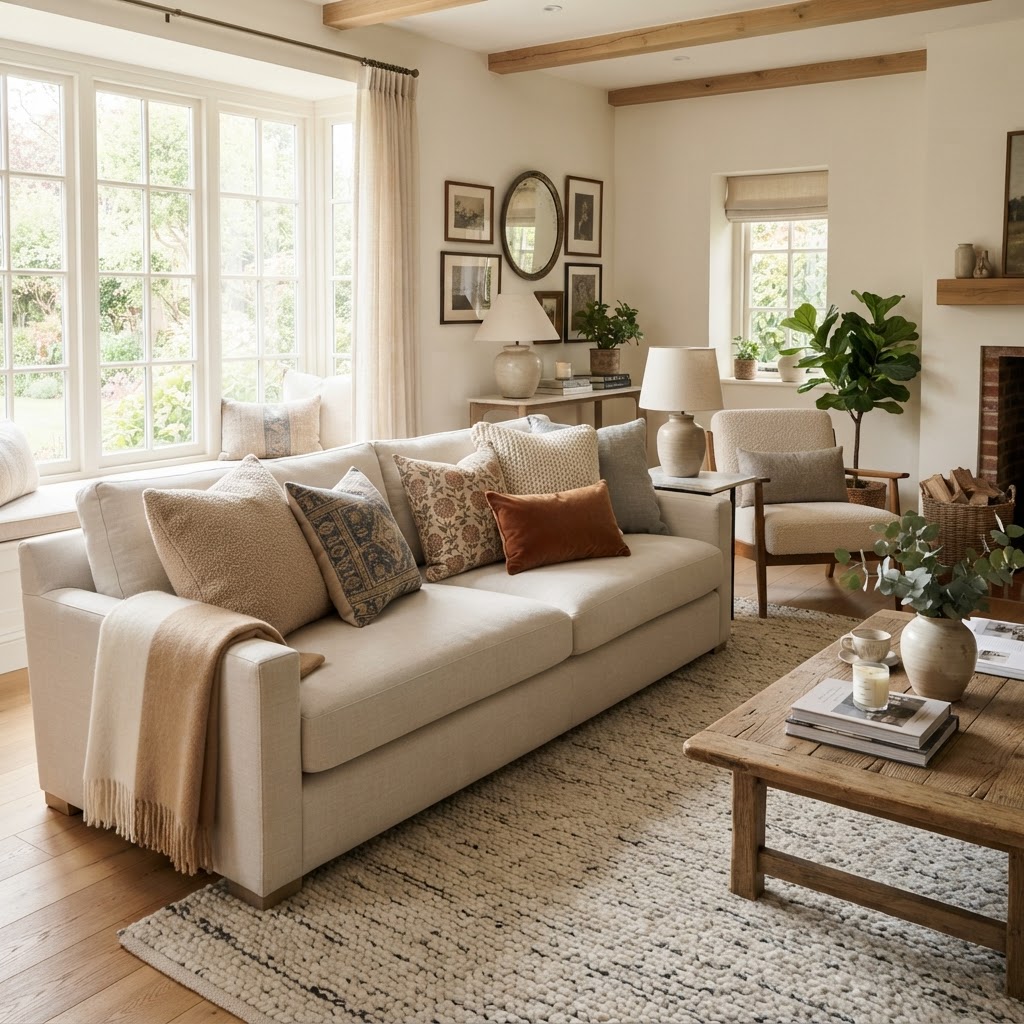
Mastering the Mix: How to Create Professional Throw Pillow Combinations
Struggling to find the right throw pillow pairings for your sofa. We are breaking down the simple rules of mixing patterns, textures, and scales to help you achieve a polished designer look in every room of your house.
The Golden Ratio of Scale
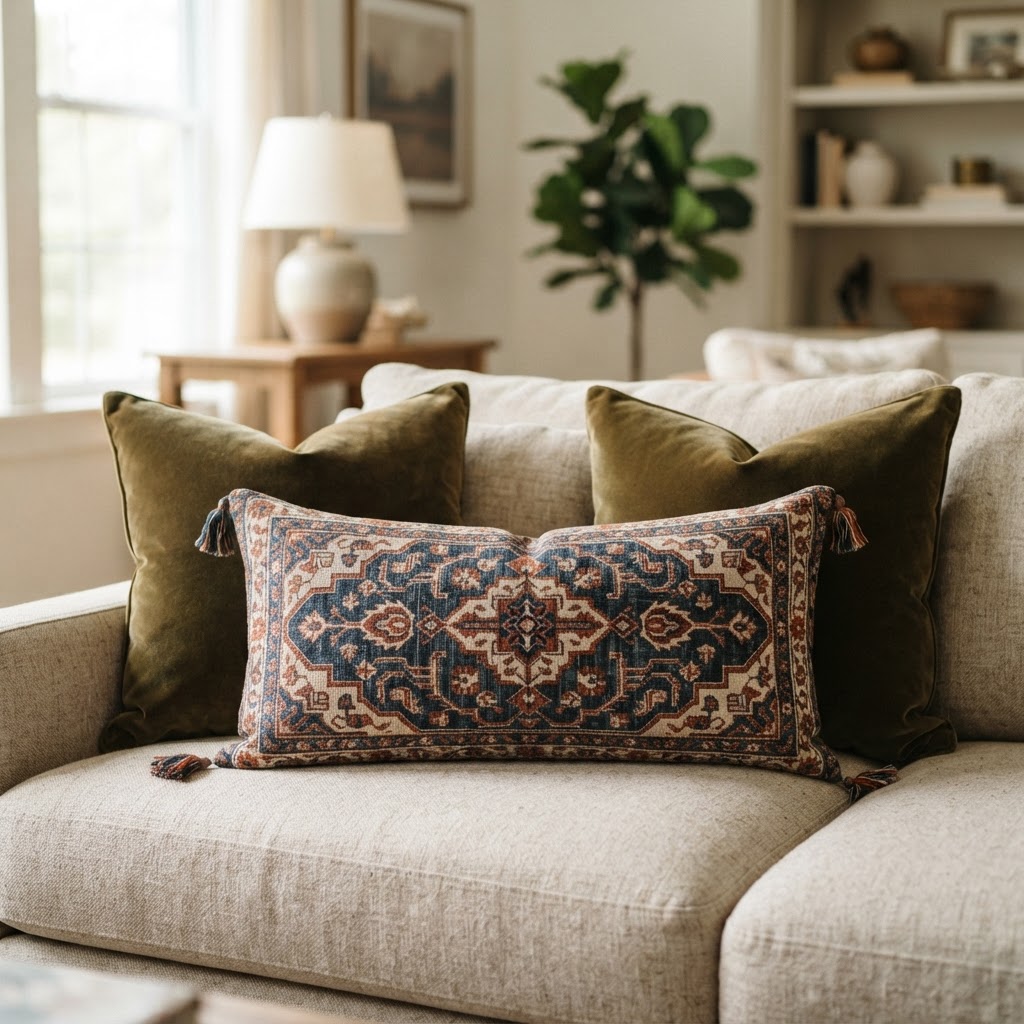
Okay, let's start with the thing that trips up almost everyone who's tried to style a sofa: scale. Honestly, this is the number one reason a pillow arrangement looks "off" even when you've picked beautiful pieces individually. Size matters here, and I don't mean that in a vague way. There are actual proportions that work, and once you understand them, you'll never look at a sofa the same way again.
The general rule most professional stylists follow is what I call the staircase approach: your largest pillows go in the back, medium ones in front of those, and if you're using a lumbar or a small accent pillow, it sits right at the front. Think of it like a descending pyramid. For a standard three-cushion sofa, a classic starting point is two 22-inch pillows on each end, two 18-inch pillows layered in front, and one lumbar or bolster pillow in the center. That's it. That formula works in literally every home I've ever styled.
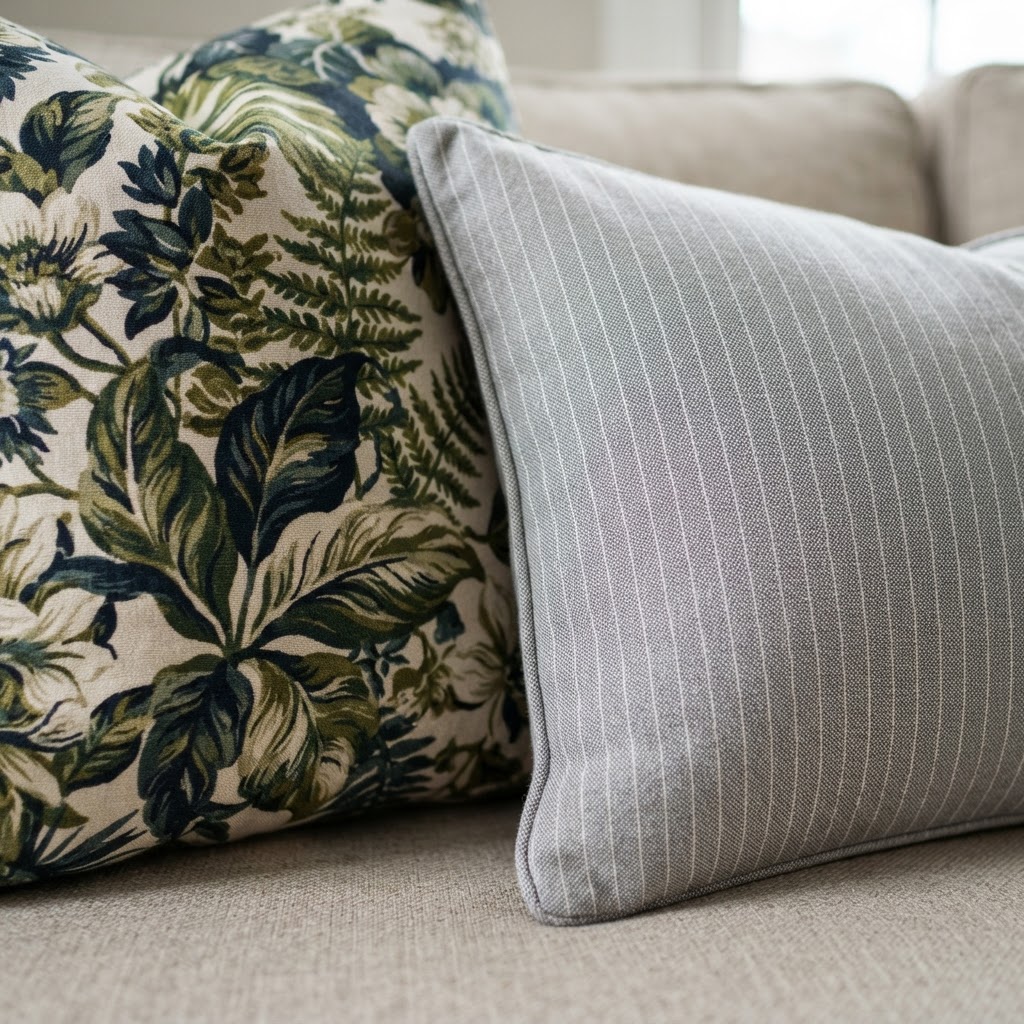
Here's the thing though: your sofa size matters too. A big sectional can handle 24-inch pillows at the back corners. A loveseat? Keep everything at 18 inches and under or the whole piece will look swallowed up. Scale is always relative. And real talk, one of the most common mistakes I see is people buying all the same size because it feels "safe." It's not safe. It's just flat. You want variety to create that visual rhythm that makes a room feel intentional rather than just assembled.
Don't overthink the math. Just remember: variety in size is your friend, and the biggest pillow should never be so enormous that it crowds out everything else. When in doubt, go one size smaller than you think you need. You can always add more. It's much harder to work with a sofa that's been overwhelmed by giant cushions that nobody can actually sit comfortably against.
Mastering Texture for Depth
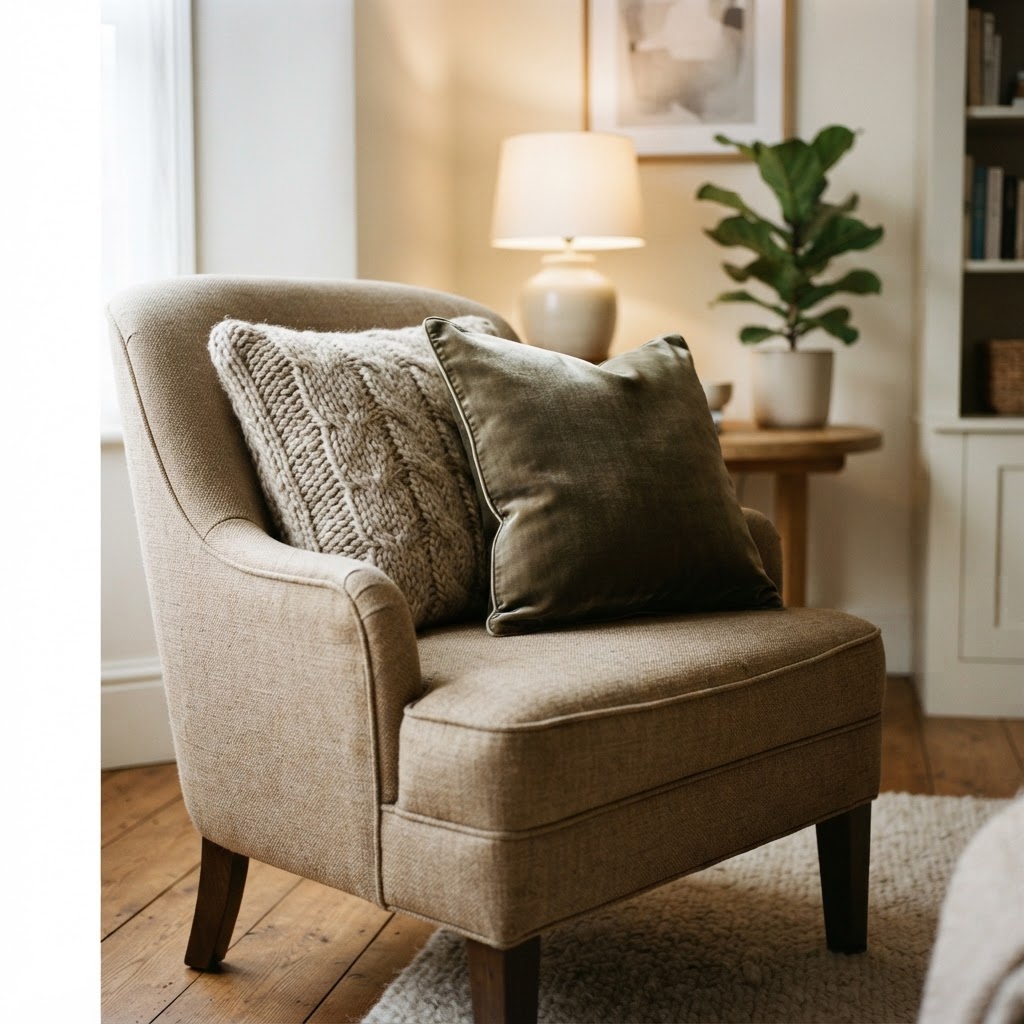
If scale is the structure, texture is the soul. This is genuinely my favorite part of pillow styling because it's where a flat, predictable arrangement transforms into something you actually want to reach out and touch. And that tactile quality? That's what makes a room feel warm and layered versus just decorated.
The trick is contrast. You want textures that feel different from each other, not just look different. A chunky knit next to a smooth velvet. A linen weave beside a shaggy faux fur. A flat printed cotton against an embroidered or beaded surface. When you mix tactile extremes, each individual piece gets to shine because it's not competing with something similar right next to it. Honestly, this single principle has transformed more living rooms than any color theory or layout trick I know.
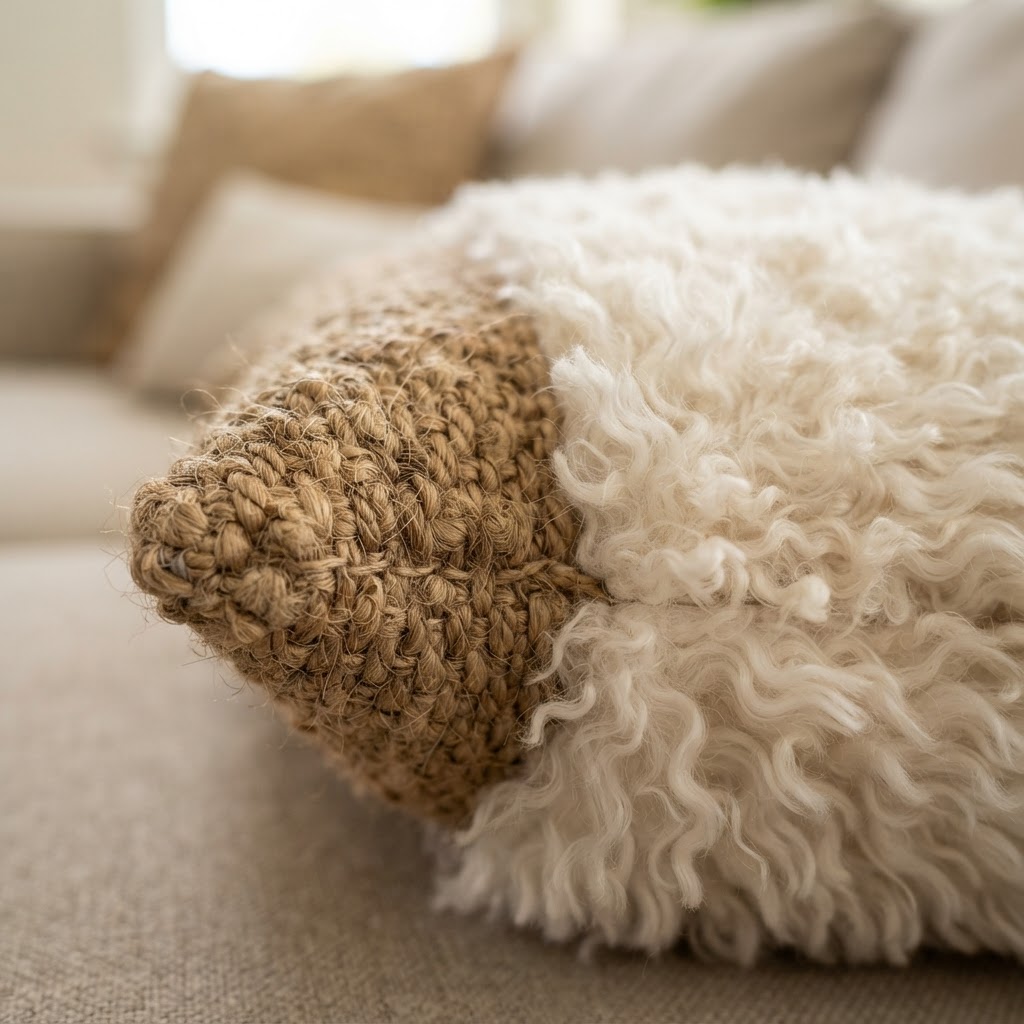
Here's a quick cheat sheet of textures that play well together:
- Velvet and linen: the classic pairing, luxurious but grounded
- Boucle and leather: especially gorgeous in a modern or transitional space
- Knit and silk: cozy and refined at the same time, great for bedrooms
- Jute weave and cotton canvas: very relaxed, perfect for coastal or bohemian rooms
- Embroidered and solid smooth: the embroidery becomes an art piece when it's surrounded by calm
One thing I always tell people: don't match your pillow fabric to your sofa fabric. If you have a linen sofa, don't pile it with linen pillows. You'll lose all the contrast and the whole arrangement will look monolithic. Your sofa is the canvas. The pillows are the paint. They need to be different enough to stand out against the background while still belonging to the same composition. Trust me on this, it makes a massive difference.
Building a Cohesive Color Palette
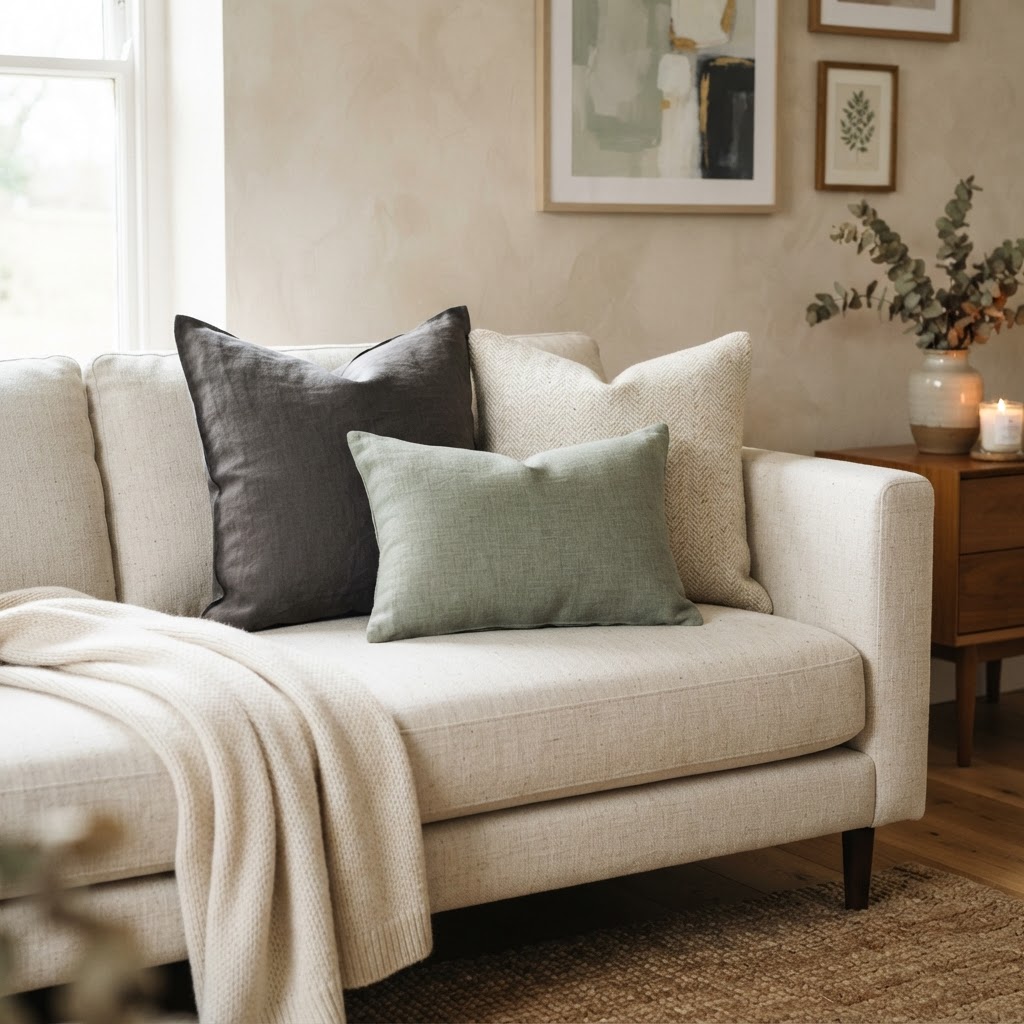
Color is where people panic. I get it. You're standing in a store holding a beautiful rust orange pillow and thinking "but will it work?" And then you put it back because you're not sure, and you end up with five beige pillows that are technically safe but completely lifeless. Sound familiar? Let's fix that.
The approach I use with almost every client is the 60-30-10 principle applied to pillows. Your dominant color (usually something neutral or already present in the room) takes up about 60 percent of your pillow arrangement. A secondary color takes up 30 percent. And then you have one accent color, something punchy or unexpected, at 10 percent. In practice on a sofa with five pillows, that might look like: two neutral pillows, two pillows in a coordinating mid-tone, and one bold accent. Simple. Balanced. Never boring.
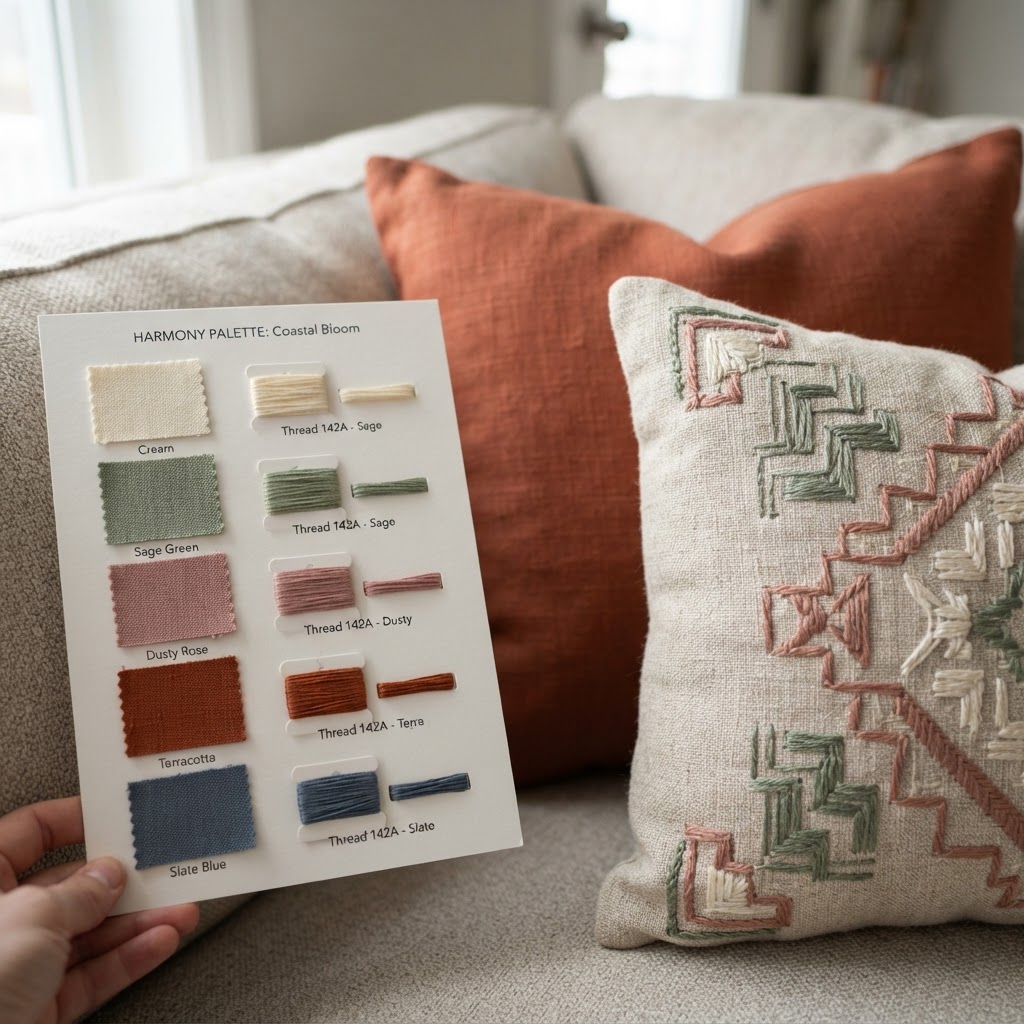
Look, the other thing people get wrong is thinking everything has to match exactly. Matching is not the goal. Harmonizing is the goal. Colors from the same family, or colors that share undertones, will feel cohesive even if they're technically different. A dusty rose, a terracotta, and a warm cream all share warm undertones and will feel like they belong together even though they're three distinct colors. Compare that to a cool gray, a warm mustard, and a forest green, which can look jarring unless they're carefully balanced.
And honestly, pull your palette from somewhere in the room. An area rug, a piece of art, even the curtains. The pillows should feel like they were chosen in conversation with the space, not imported from another room entirely. When a client says their pillows feel random, nine times out of ten it's because they bought them without looking at the room as a whole. Take a photo of your space before you shop. It sounds obvious but almost nobody does it.
The Shape Factor
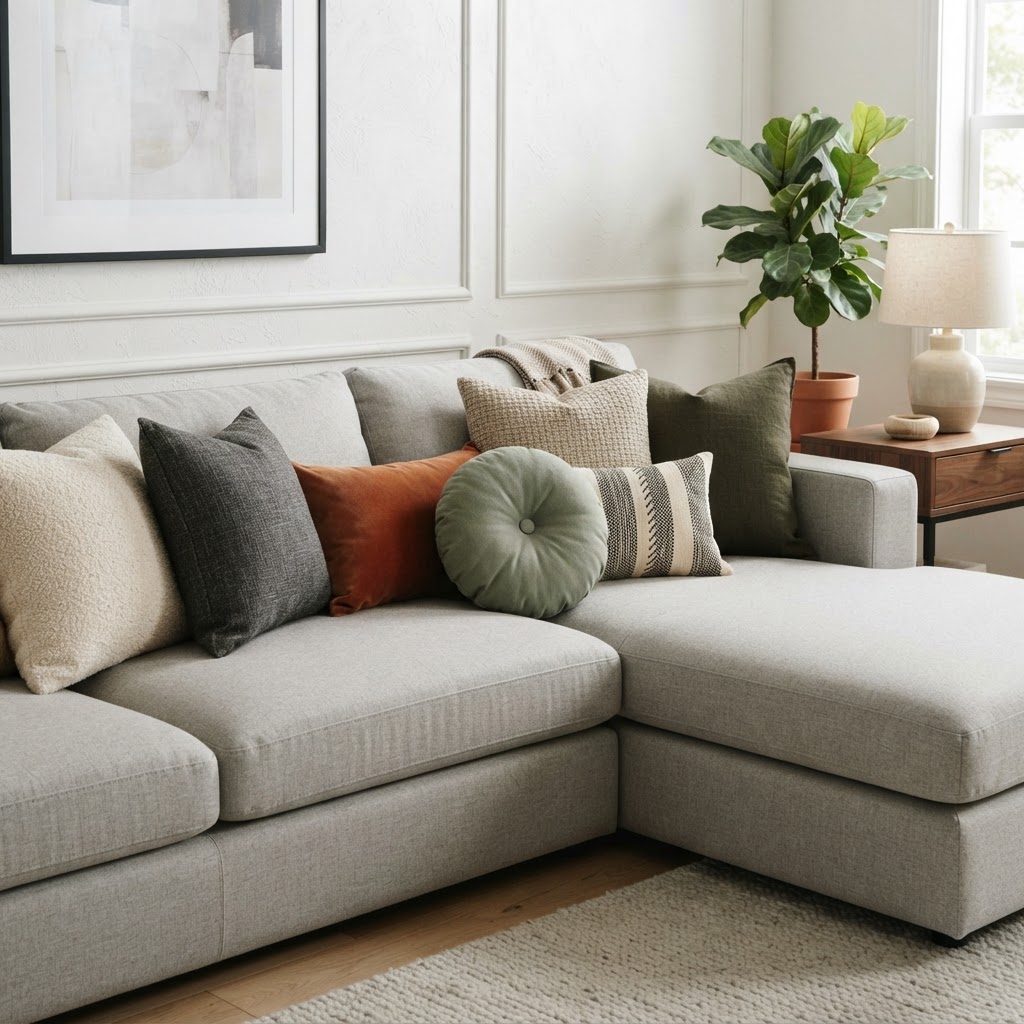
Most people only think about square pillows. And sure, squares are the workhorse of pillow styling. They're versatile, they layer well, and they're available in every size and fabric imaginable. But if your arrangement is all squares, you're leaving so much potential on the table. Shape variety is one of those details that separates a room that looks professionally styled from one that just looks "nice."
The lumbar pillow is your best friend here. A rectangular lumbar (usually around 14 by 22 inches) breaks up the uniformity of squares in a way that feels grounding and intentional. It creates a horizontal line that anchors the arrangement and also serves as a natural stopping point for the eye. Plus, in practical terms, a lumbar positioned in the center of a sofa is actually more comfortable to sit against than a stack of squares when you want to lean forward. Form and function, right?
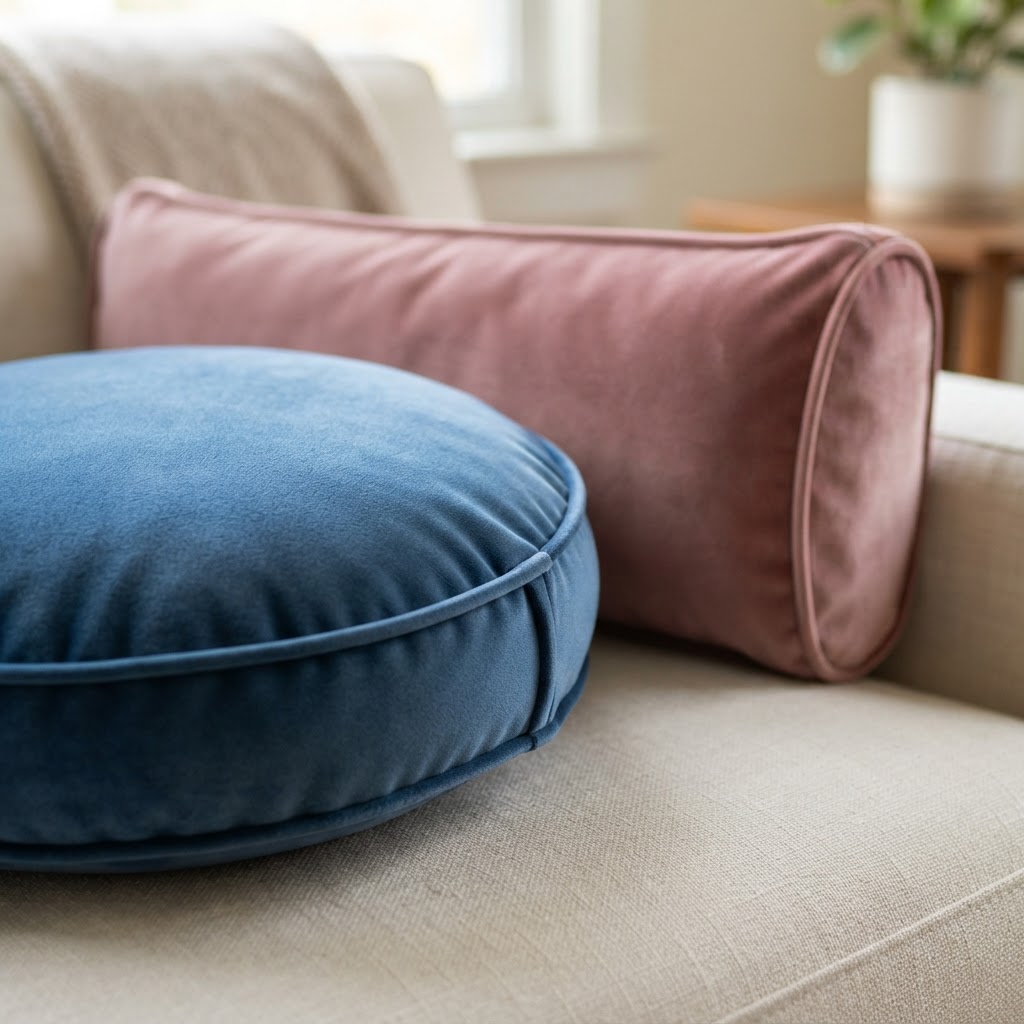
Beyond lumbars, consider:
- Round pillows: incredibly trendy right now and for good reason. They soften a rectilinear arrangement and work especially well on beds or accent chairs.
- Bolsters: more dramatic and architectural, perfect for a tailored or classic look.
- Oversized floor pillows: not technically for sofas, but throw one or two on the floor nearby and suddenly your living room feels curated rather than just furnished.
- Irregular or organic shapes: think cloud pillows or sculptural forms. These work beautifully as a single accent piece.
The key with shape variety is still to keep some restraint. You don't need every shape in one arrangement. Pick one or two "accent" shapes to work alongside your squares and you'll hit that sweet spot of interesting without chaotic. A sofa with two large squares, two medium squares, and one lumbar is a proven formula that works in almost any style of room. Start there and then experiment once you've got your eye trained.
How Many is Too Many
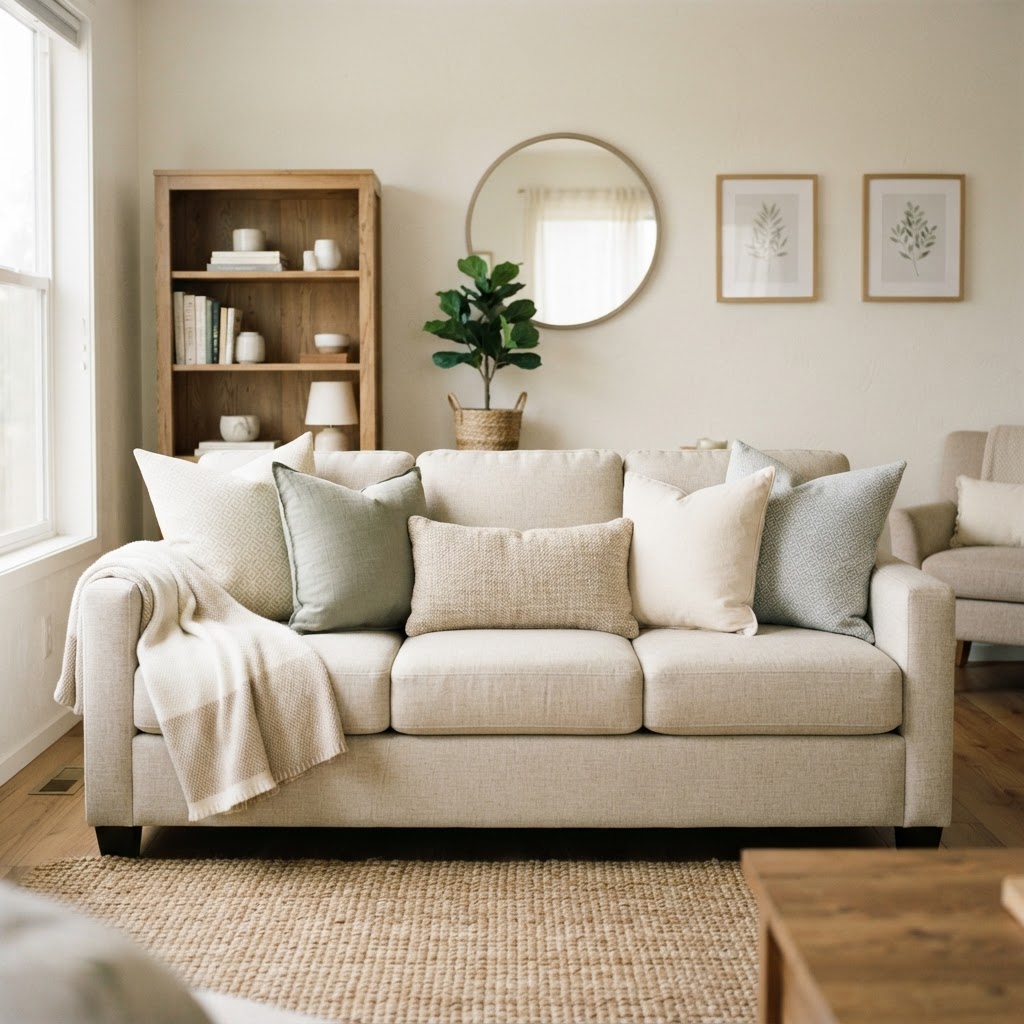
Real talk: this might be the most important section of this entire post. Because you can nail scale, texture, color, and shape, and still blow it by simply having too many pillows. Over-pillowing is a real thing and it makes spaces feel suffocating, high maintenance, and frankly a little unhinged. There, I said it.
Here are some rough numbers to work with. For a standard two-seater sofa or loveseat, two to four pillows is plenty. A three-cushion sofa can usually handle four to six pillows comfortably without becoming a pillow fortress. A large sectional has more room to play and can take six to eight pillows, but you have to be thoughtful about placement so they don't just pile up in one corner. Beds are their own thing entirely, and the rules loosen a bit there since you're building a visual layered look rather than a functional sitting arrangement.
The test I always use is simple: sit down on the sofa. Can you actually sit comfortably without moving a bunch of pillows first? If the answer is no, you have too many. The arrangement should be beautiful when you walk in and functional when you actually use the space. Pillows that are purely decorative and serve no practical purpose except to be moved before anyone can sit down are a design choice that your guests will quietly resent.
"A beautiful room should invite you in, not make you feel like you need to submit a seating request."
Less really is more with throw pillows. Here's the thing: a carefully chosen group of four or five pillows that are diverse in scale, texture, color, and shape will always outperform a crowd of ten mediocre ones. Edit ruthlessly. When you've laid everything out and it looks "almost right," the answer is almost always to take one away, not add another. The restraint is what makes it look professional.
Final Thoughts
Styling throw pillows is one of those things that sounds almost too simple to require this much thought, and yet it's one of the most transformative things you can do for a room without spending a fortune or calling a contractor. When it's done well, it just feels right. When it's done poorly, something nags at you every time you walk in, even if you can't quite articulate why.
The five principles we covered, scale, texture, color, shape, and quantity, aren't rigid rules. They're more like guidelines that give you a framework so you're not just guessing. Once you internalize them, you'll start seeing them at work everywhere: in magazine spreads, in hotels, in beautifully styled homes on social media. And then you'll start applying them instinctively. That's when the fun really starts.
Start with what you already have. Pull your pillows off the sofa and look at them individually, then try rebuilding the arrangement with these principles in mind. You might find you need to add one or two pieces or swap something out. But you might also find that a simple reshuffle and a willingness to remove a couple of pillows is all it takes. Honestly, it almost always comes back to editing. And that's a skill worth developing in every area of design.
More in Interior
Stay Inspired
Subscribe for new essays on architecture, design, and the spaces that shape us.