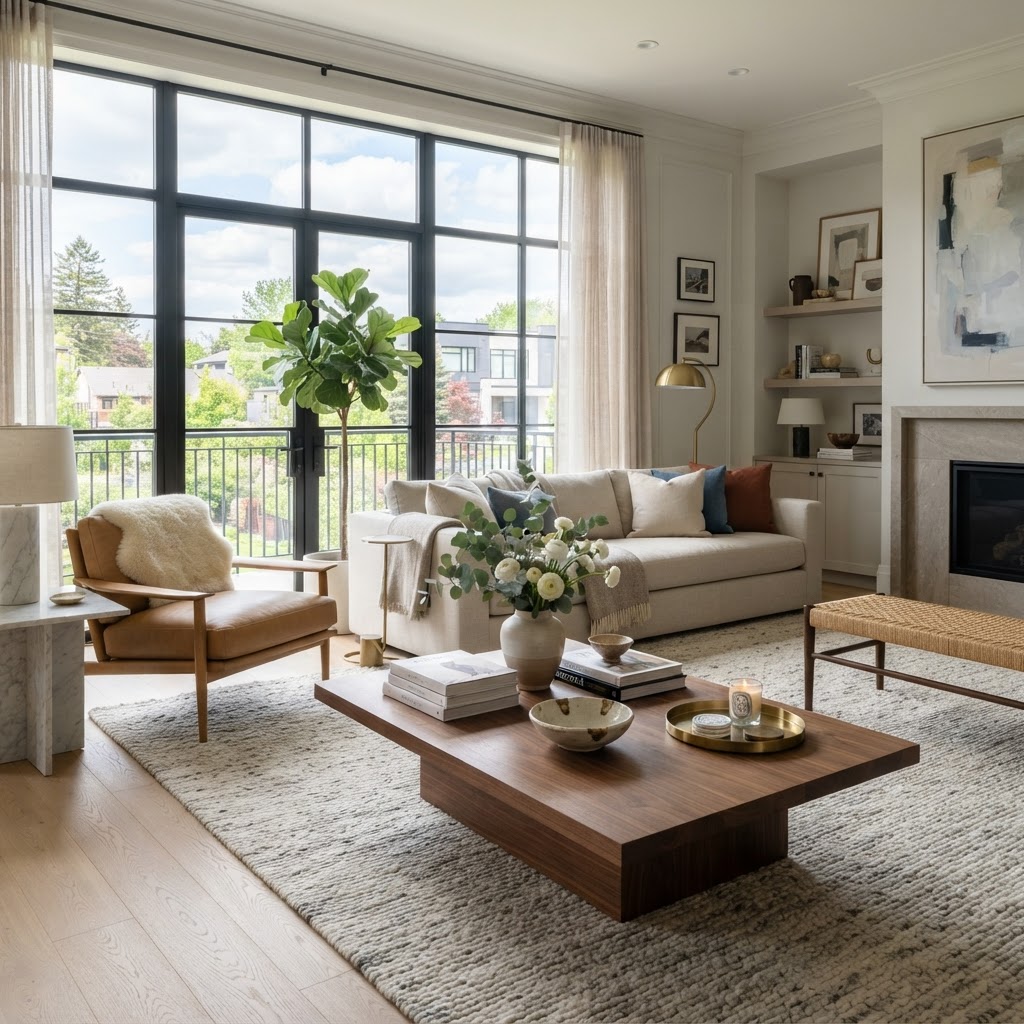
Master the Art of the Coffee Table: 5 Styling Secrets for a Pro Look
Transform your living room into a magazine worthy space with these simple styling tricks. Learn how to balance textures and heights to create a coffee table that is both beautiful and functional.
Start With a Solid Foundation
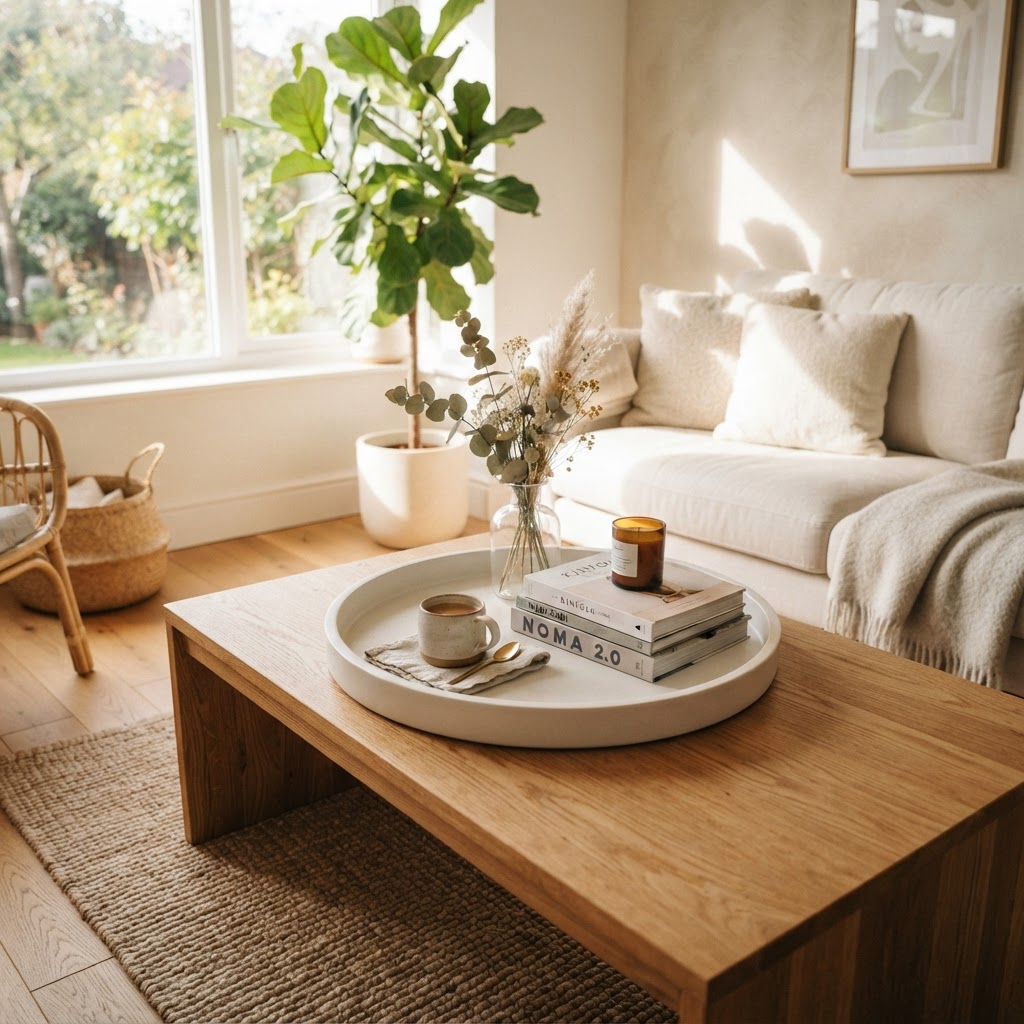
Okay, let's be real for a second. Most people walk up to their coffee table, plop down a candle and a remote control, and call it a day. And then they scroll through Instagram wondering why their living room doesn't look like that. Here's the thing: the secret isn't buying more stuff. It's about building a foundation that actually makes sense before you add anything else on top of it.
The foundation is your tray. Honestly, if there is one single piece of advice I'd give anyone who wants a coffee table that looks intentional and pulled together, it's this: get a tray. It doesn't have to be expensive. It can be a wooden one from a thrift store, a lacquered rectangular tray from a home goods shop, or even a woven rattan piece if you're going for something more organic. The tray does something almost magical. It corrals all your items and tells your eye where to look. Without one, things just sort of float around the surface and it reads as clutter no matter how nice the individual pieces are.
Think of the tray as your stage. Everything inside it becomes a curated little vignette. Everything outside it can be a secondary zone, like a stack of books off to the side or a sculptural object placed near the corner. This two-zone approach gives the table a sense of order without making it feel stiff or like nobody actually lives there.
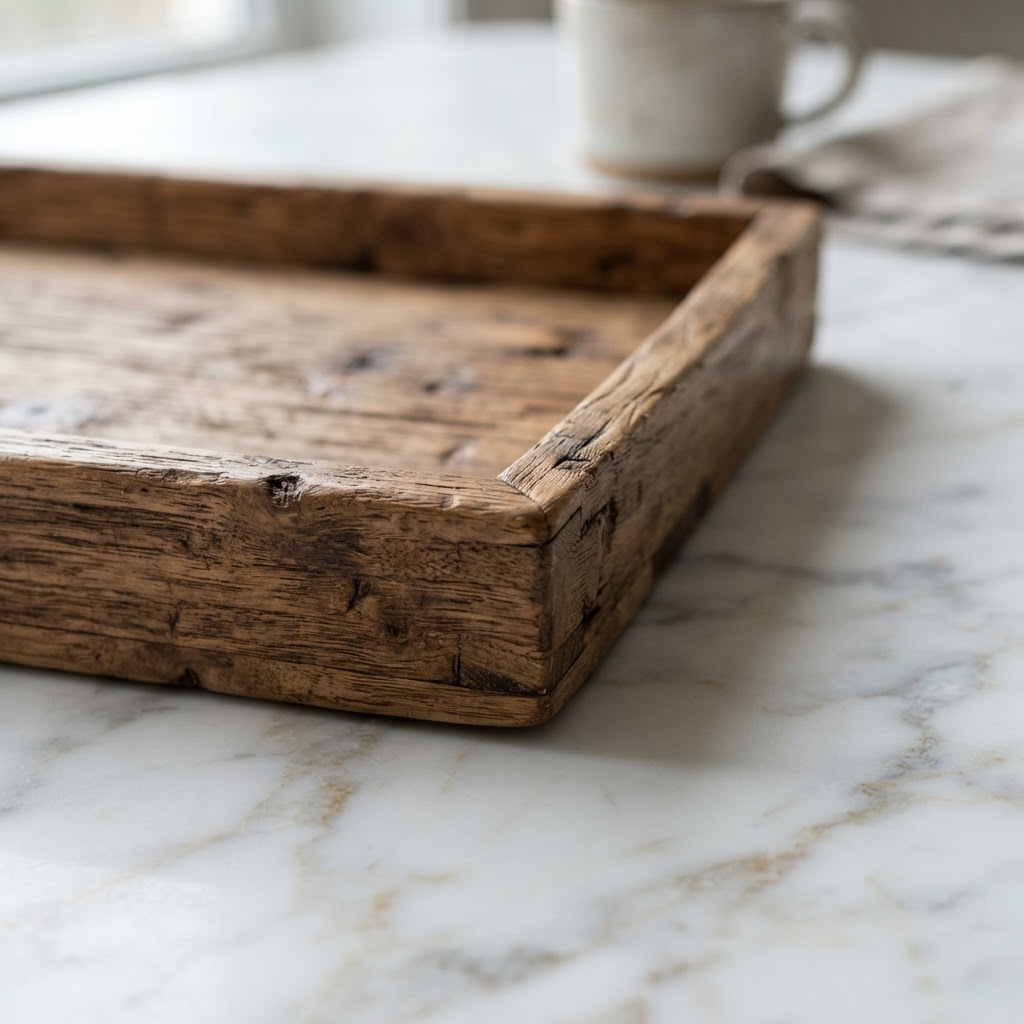
Also, pay attention to scale. If you have a large coffee table, a tiny tray is going to look a little lost. You want something that takes up roughly a third to half the length of the surface. And if your table is round, try a round or oval tray to echo that shape. Matching the geometry of your tray to your table is one of those small moves that professional stylists do almost subconsciously, and it makes a genuinely noticeable difference.
One more thing about foundations: consider your table's material and finish before you go wild with styling. A dark espresso wood table calls for lighter, airy objects to create contrast. A light marble or white lacquer surface? You've got more flexibility, but warm organic textures tend to look incredible against it. Read the table first, and let it guide what you put on top. Trust me on this, it saves you a lot of frustrated rearranging later.
Mix Your Heights and Shapes
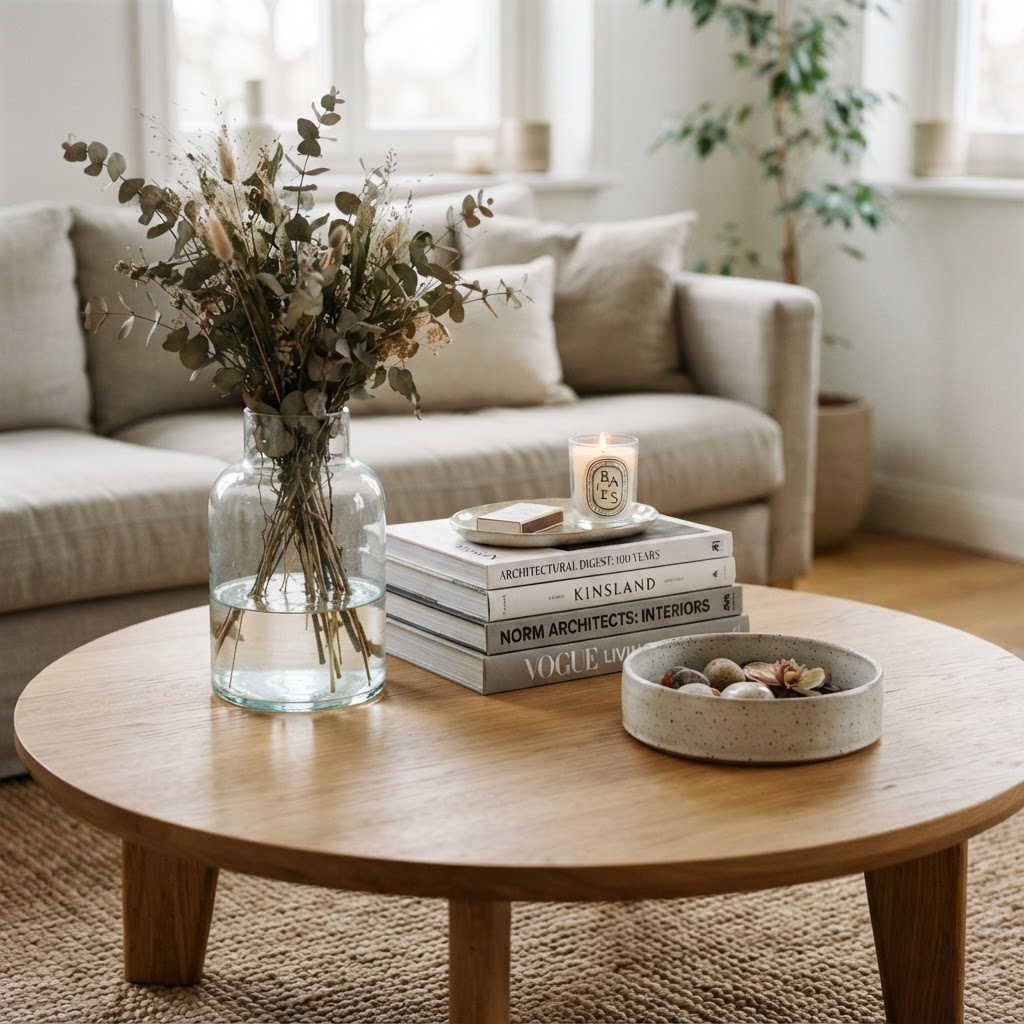
This is one of those styling principles that sounds almost too simple, but it's genuinely the difference between a flat, forgettable arrangement and one that looks dynamic and alive. Look, when everything on your coffee table is roughly the same height, the whole thing reads as one big boring blob. Your eye has nowhere to travel. It just sort of lands on the table and moves on.
What you want is a conversation between tall, medium, and low. Maybe you've got a tall, slender vase with some dried pampas or eucalyptus. Then a medium-height candle or small sculpture. Then something flat and low, like a stack of books or a decorative bowl. That range of heights creates what designers call visual rhythm, and it's the same principle at work in great floral arrangements, great bookshelves, and honestly most well-styled spaces in general.
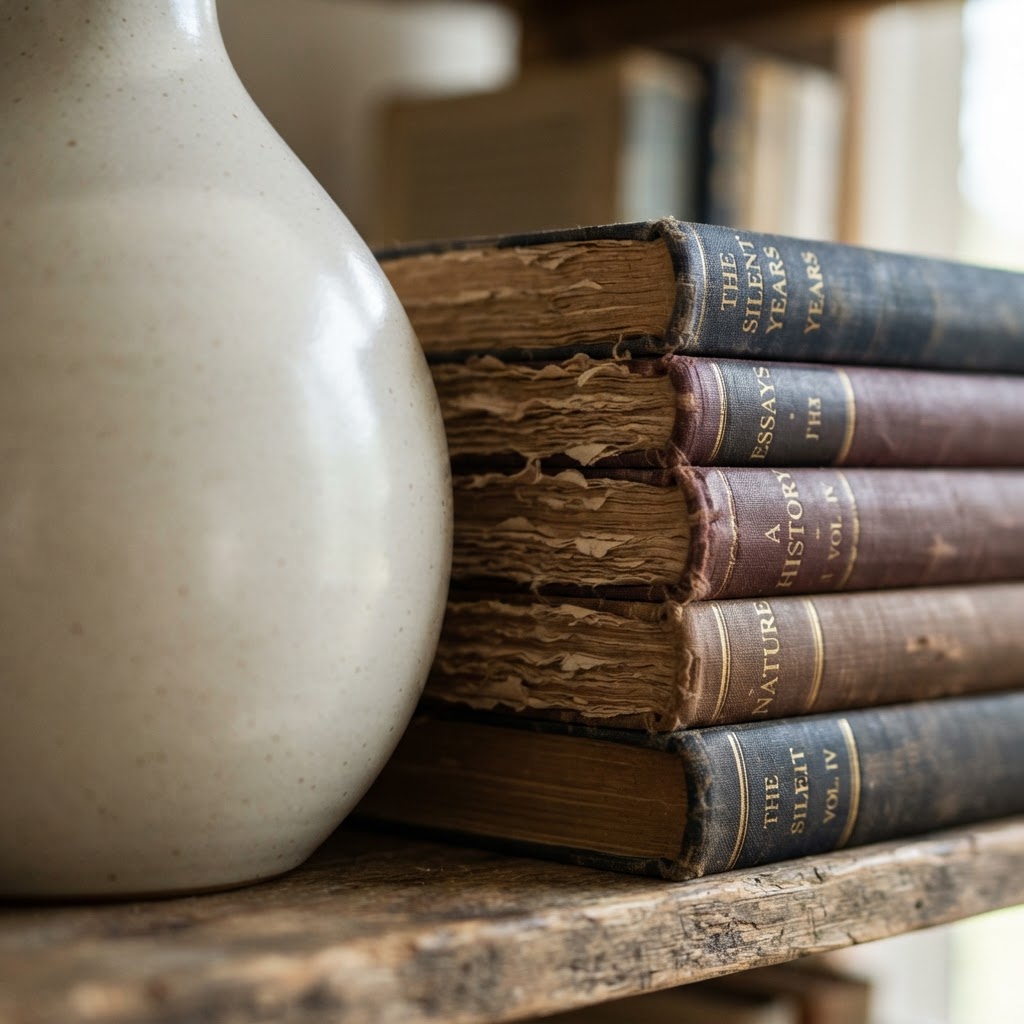
Shapes matter just as much as heights. Real talk: if everything is square or rectangular, your table is going to feel rigid and a little corporate. Mix in a round object, something with a curved edge, maybe a sphere or an irregularly shaped stone. The contrast between geometric and organic shapes adds tension in the best possible way. It makes the arrangement feel considered rather than random.
A practical formula that works almost every time: pick one tall element, one medium sculptural element with an interesting silhouette, and one low flat element that anchors the grouping. Place them in a loose triangle rather than in a straight line. That triangular placement is something interior stylists use constantly because it creates balance without symmetry, and asymmetry almost always looks more natural and effortless than a perfectly mirrored arrangement.
- Tall elements: vases, candlesticks, small potted plants, sculptural objects on pedestals
- Medium elements: candles, small figurines, decorative boxes, compotes
- Low elements: stacked books, trays, flat stones, decorative bowls laid flat
And honestly, don't be afraid to edit. More is not more here. Three to five objects in a well-considered grouping will almost always beat eight things crammed together. Give each piece room to breathe and it'll do its job properly.
Bring in Natural Elements
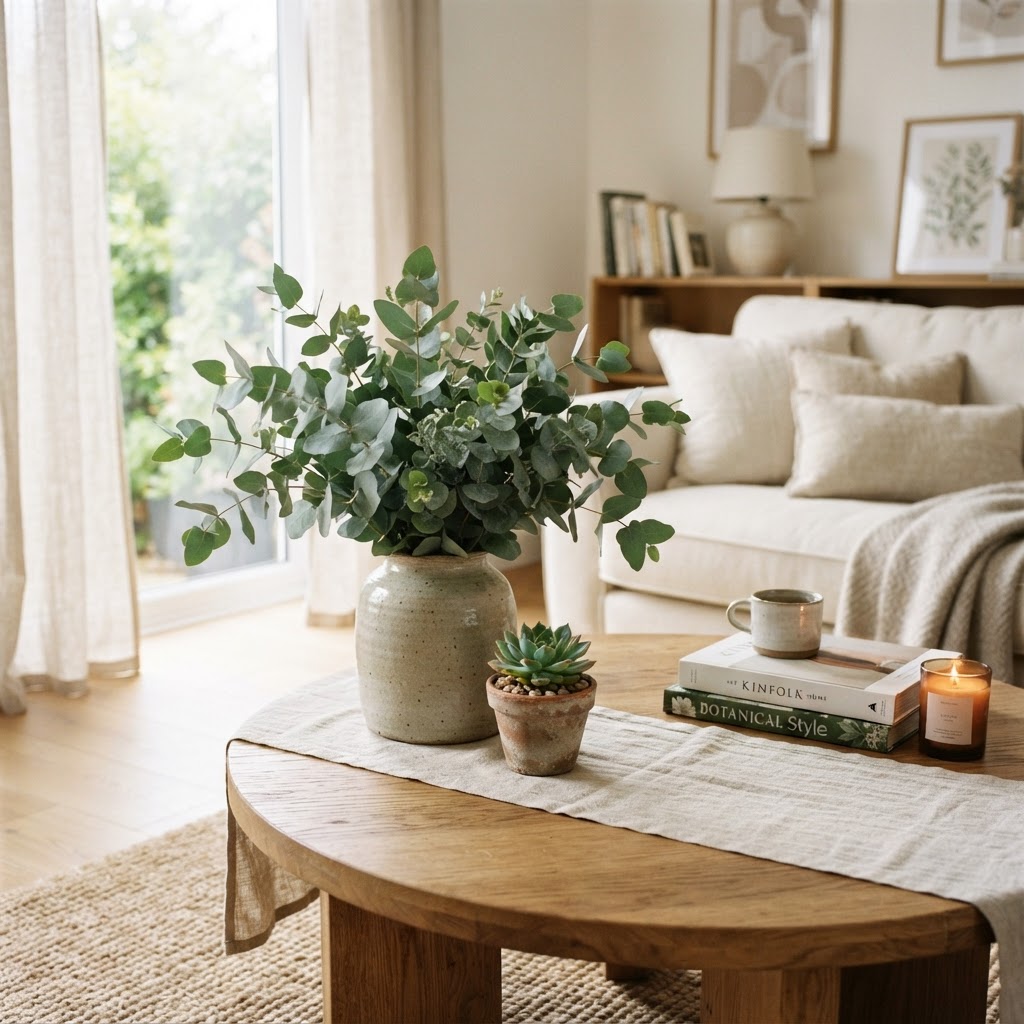
Honestly, nothing makes a styled space feel more alive than bringing in something from the natural world. It sounds a bit woo-woo but there's actual science behind it. Humans respond to natural materials in a way we just don't respond to entirely synthetic ones. Wood, stone, plants, water, woven fibers, dried botanicals. They add a layer of warmth and texture that no amount of decorative objects from a big box store can replicate on their own.
For a coffee table specifically, greenery is your best friend. A small potted succulent, a trailing plant in a pretty ceramic pot, a little bunch of fresh flowers in a bud vase, even a single stem in a narrow glass vessel. Any of these options immediately make the whole arrangement feel fresher and more lived in. If you're worried about keeping plants alive, dried botanicals have become incredibly chic over the last few years. Dried pampas grass, preserved eucalyptus, dried cotton stems, lunaria. They last forever, they photograph beautifully, and they add incredible texture.
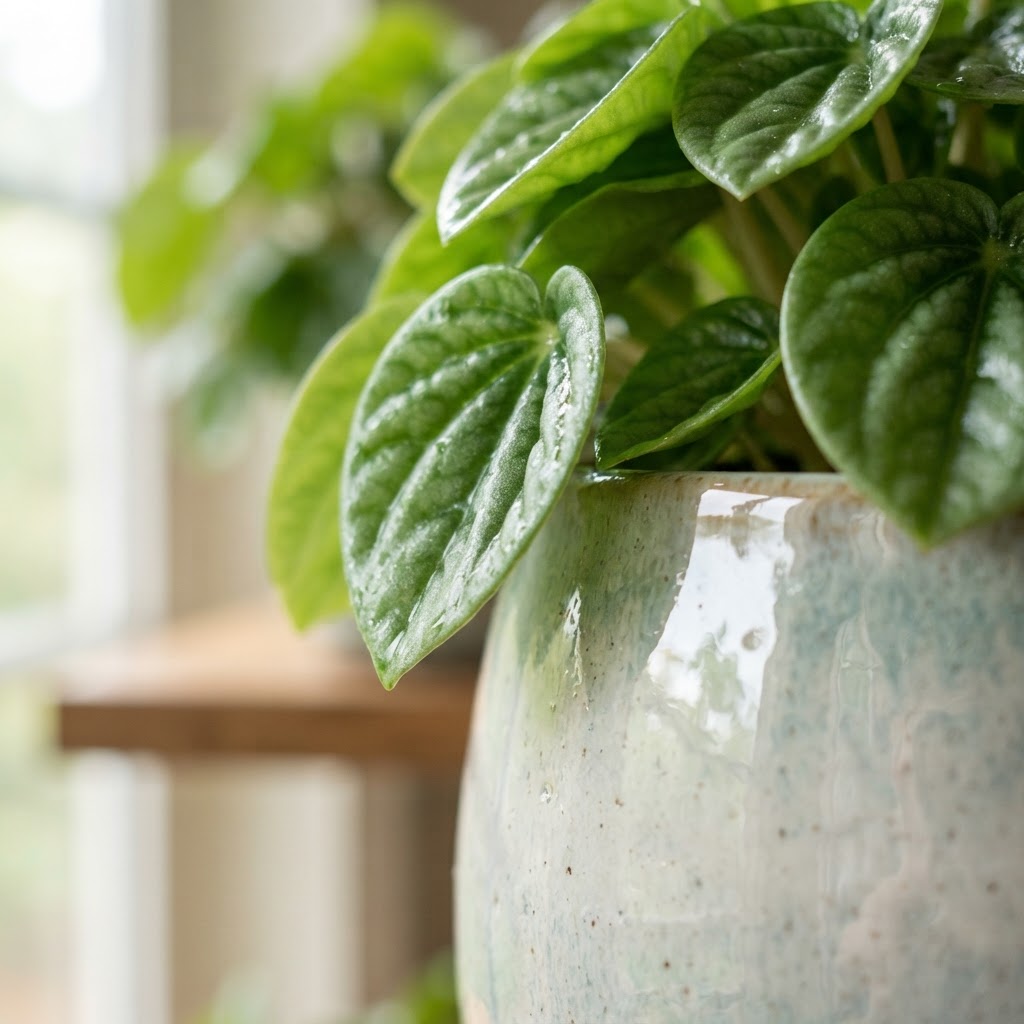
Beyond plants, think about stone and wood. A piece of agate, a smooth river stone, a small chunk of raw quartz, a little wooden carved object. These things have natural variation and imperfection baked into them, and that imperfection is exactly what makes a styled table feel authentic rather than catalog-perfect. A table that looks too perfect, where everything is shiny and new and identical in finish, kind of gives off model home energy, and that's not a compliment.
Texture is also a big part of this. Woven rattan trays, linen-wrapped boxes, rough stone coasters, unglazed ceramic bowls. Mixing textures within your arrangement adds depth that you can almost feel just by looking at it. Combine something smooth and reflective with something matte and rough. Pair a glossy ceramic vase with a raw wood object. That push and pull between textures is what gives a well-styled coffee table its richness.
Layer Your Books Thoughtfully
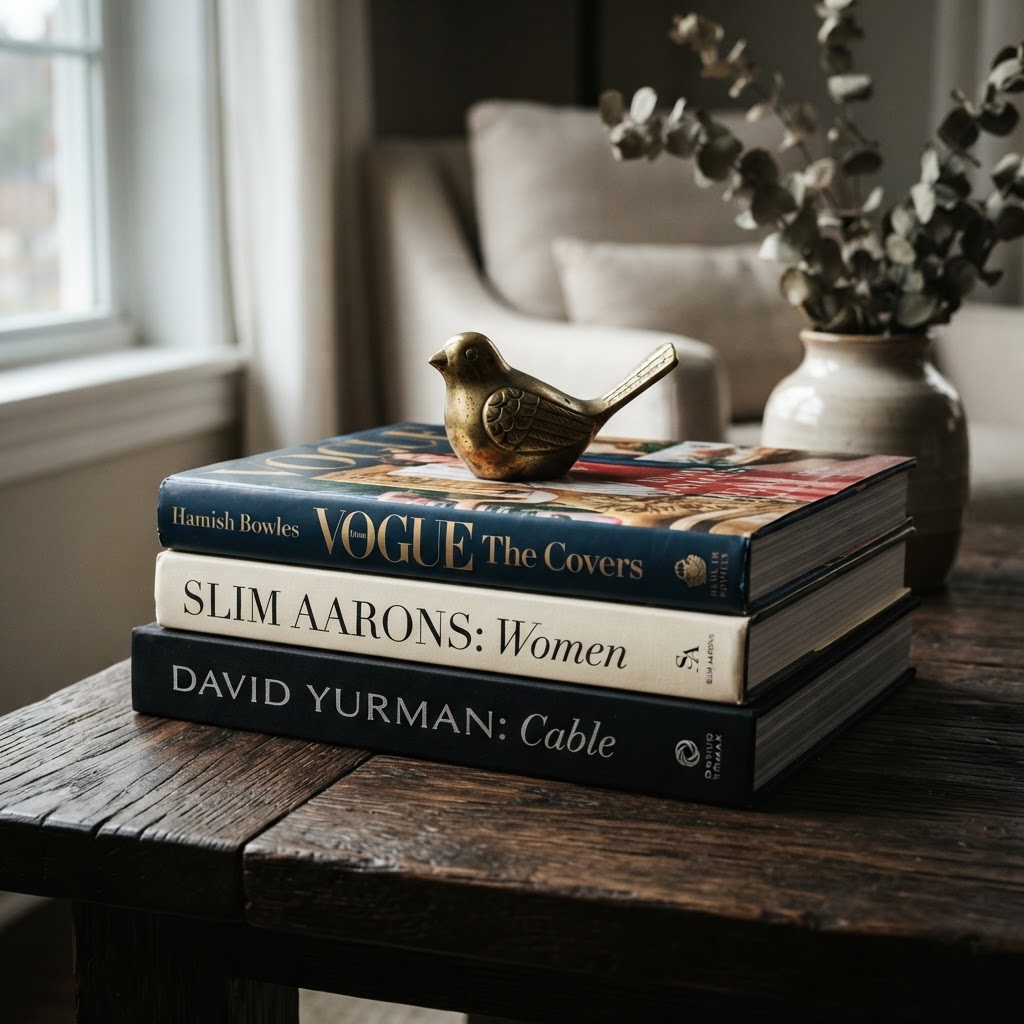
Coffee table books are one of those styling tools that get a little bit of eye-rolling in some circles, but here's the thing: when done right, they are genuinely one of the most effective and personal elements you can put on a coffee table. They add height, color, texture, and personality all at once. The key is doing it thoughtfully rather than just grabbing whatever's lying around.
Start by thinking about the spines and covers. Most stylists remove the dust jackets from coffee table books to reveal the cleaner, usually more elegant covers underneath. A linen-covered hardback in a muted tone stacked with a couple of other similar books is going to look infinitely more polished than a pile of books with loud, busy dust jackets all fighting for attention. That said, if you have a book with a cover that genuinely adds color or visual interest to your arrangement, by all means keep it. Just be intentional about it.
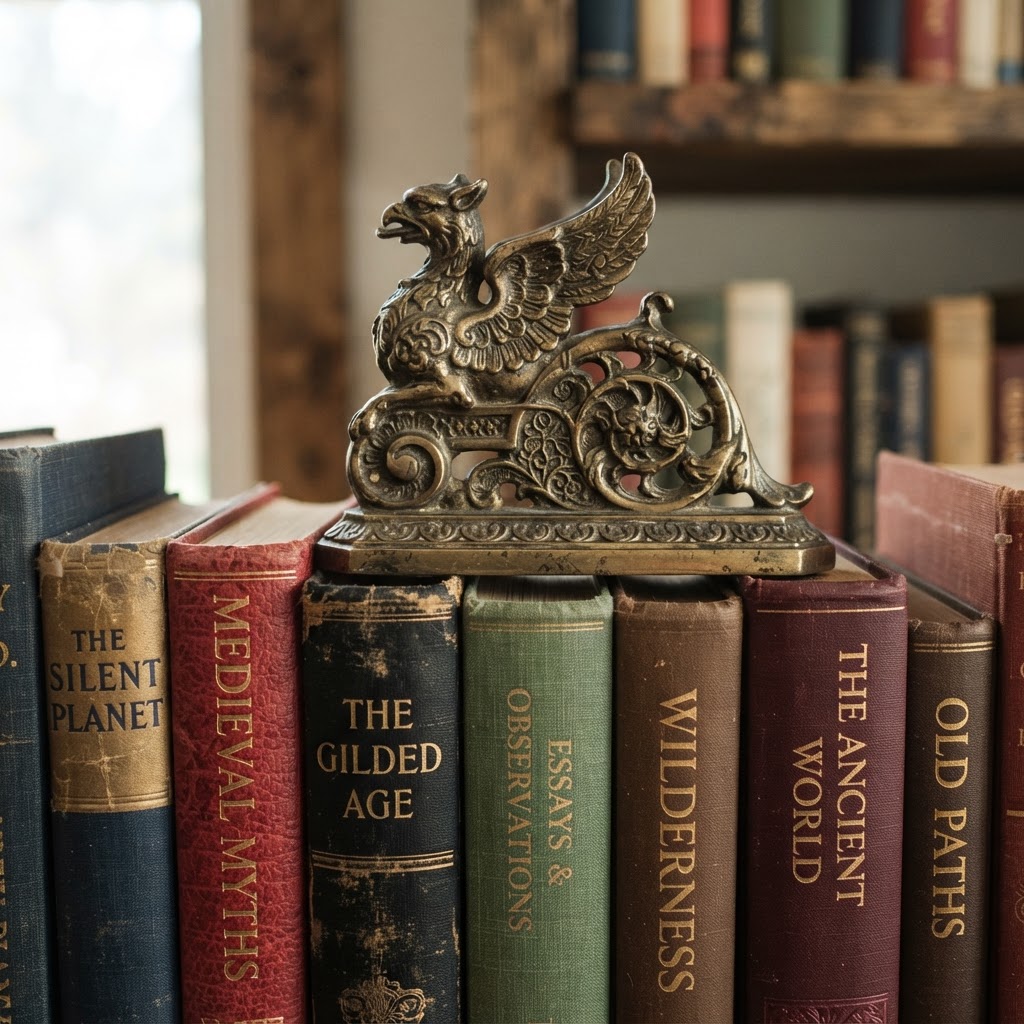
Stack your books horizontally, not vertically. This is non-negotiable for coffee table styling. A horizontal stack of two or three books becomes a little platform, a mini pedestal that you can use to elevate another object on top of. Put a small candle or an interesting stone on top of your book stack. Suddenly you've added height to a low element and created a layered moment that looks intentional and polished.
In terms of how many books, two to four works well for most coffee tables. One looks a bit lonely. More than four tends to look heavy and overwhelming unless you have a very large surface. And vary the sizes. A larger, wider book on the bottom with a slightly smaller one on top creates a more interesting stack than books of identical size. These small details add up to a lot.
- Remove dust jackets to reveal cleaner, more elegant covers
- Stack horizontally, always, for styling purposes
- Use stacks as pedestals for candles, sculptures, or objects
- Vary book sizes within your stack for more visual interest
- Choose books that reflect something you actually care about, not just what looks pretty
Don't Forget the Personal Touch
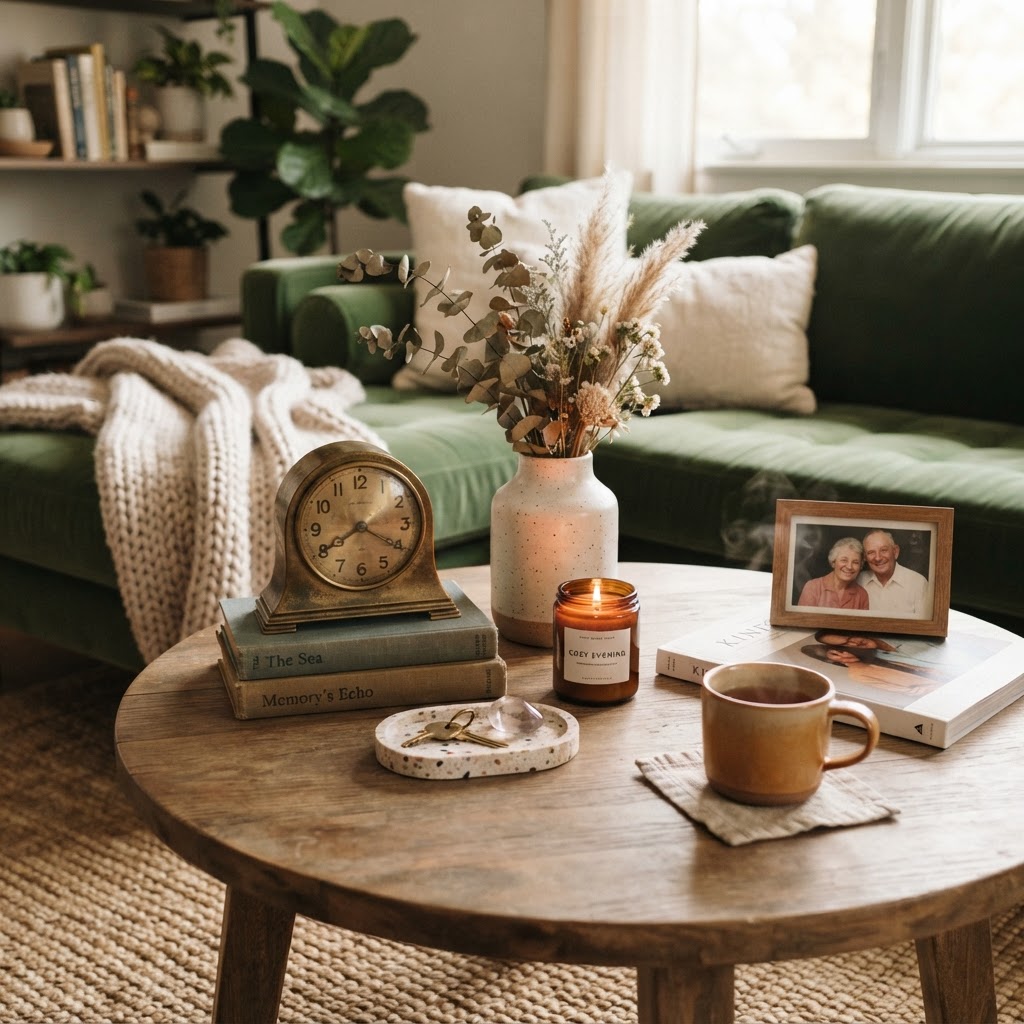
Look, this is the part that a lot of people skip because they're so focused on making things look "right" that they forget to make it feel like theirs. And here's the thing about a coffee table that looks like it came straight off a mood board with zero personal connection: it feels kind of empty. Like a stage set. Perfectly arranged, totally soulless.
The personal touch is what elevates a coffee table from styled to meaningful. It's the small object you picked up on a trip abroad, the tiny ceramic your kid made in art class that you think is secretly better than most things in galleries, the vintage lighter that belonged to your grandmother, the weird little brass figure you found at a flea market because it made you laugh. These things tell a story about who you are, and that story is what makes a space genuinely inviting and interesting.
The trick is editing. Not every personal object needs to be on the table at once. Pick one or two things that have real meaning to you and work them into the arrangement. Let them be the heart of the whole thing. Surround them with the more polished, purposely chosen pieces that give the table its structure, and let those personal objects be the wild card, the thing that makes someone pick it up and ask about it. That's the best kind of conversation starter in a home.
Also, your coffee table is allowed to evolve. Real talk: the most beautifully styled homes I've ever visited are not the ones where everything is frozen in place like a museum. They're the ones where you can tell things shift around a little, where a new book appears, where someone brought in a branch from the garden and stuck it in a vase, where there's a half-burned candle that got used and enjoyed. A little bit of life and wear and change is not a problem to fix. It's actually the point.
Give yourself permission to swap things out seasonally, or even more often if you feel like it. In winter, bring in darker, warmer elements, deep greens, amber glass, heavier textures. In summer, lighten it up. Fresh flowers, something bright, something that feels breezy. The coffee table is one of the easiest surfaces in your home to restyle, and it's a low-stakes place to experiment with your personal aesthetic and see what resonates.
Final Thoughts
Styling a coffee table well is genuinely one of those skills that gets easier the more you do it, and it pays off in a big way because it's one of the first things people see when they walk into your living room. It sets the tone for the whole space. But the real secret, the one that ties all five of these tips together, is that good styling is about intention. It's not about spending a lot of money or following trends or having perfectly matched pieces. It's about making choices on purpose, understanding why you're putting something where you're putting it, and leaving room for your actual life to exist on the surface too.
Start with a strong foundation. Play with height and shape. Bring in nature wherever you can. Use books smartly as both decor and pedestals. And always, always leave room for at least one thing that is genuinely, authentically yours. Do those five things and your coffee table is going to look like you hired someone, even though all you really did was slow down and think about it for a few minutes. That's the whole game, honestly.
More in Interior
Stay Inspired
Subscribe for new essays on architecture, design, and the spaces that shape us.