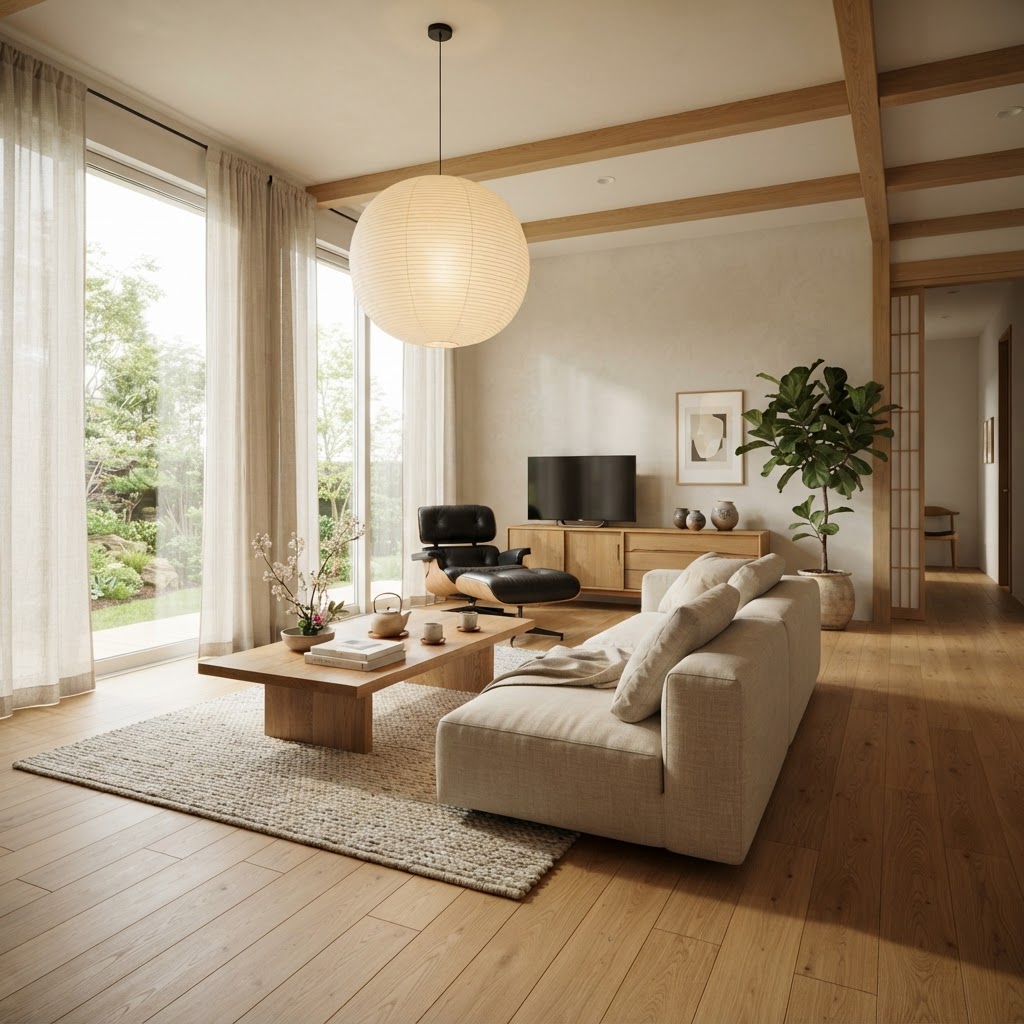
Japandi Style 101: How to Create a Warm and Minimalist Home
Discover how to blend Japanese simplicity with Scandinavian functionality to create a serene living space. This guide shows you exactly how to master the Japandi aesthetic without losing your personal touch.
The Core Philosophy of Japandi
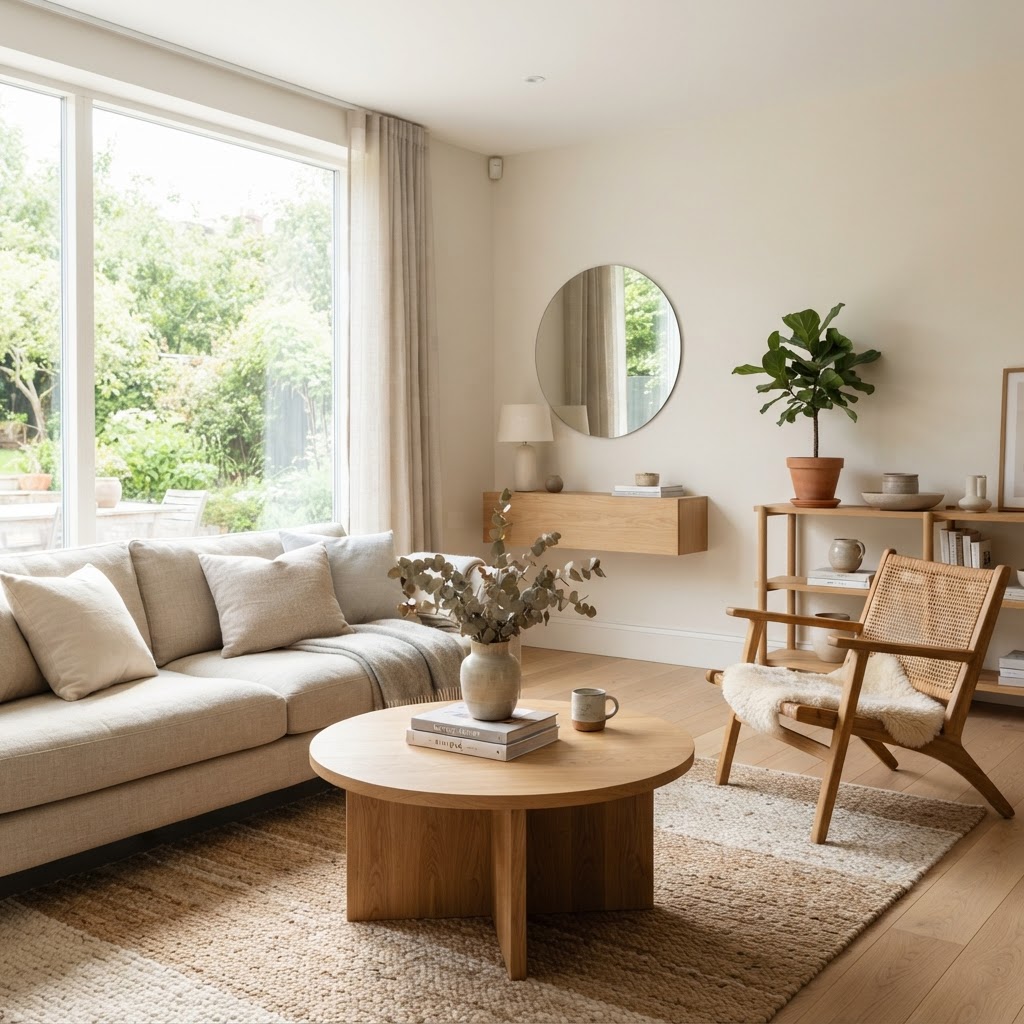
Okay, so before we dive into paint colors and furniture shopping, let's talk about what Japandi actually is. Because here's the thing: it's not just a mood board aesthetic you pin on Pinterest and forget about. It's genuinely a design philosophy rooted in two very different but surprisingly compatible cultural traditions. Japanese minimalism, with its reverence for empty space and natural imperfection, meets Scandinavian hygge, that cozy, human-centered warmth that makes a home feel like a deep exhale. Together they create something that's both calming and livable. Not cold. Not sterile. Just quietly, beautifully intentional.
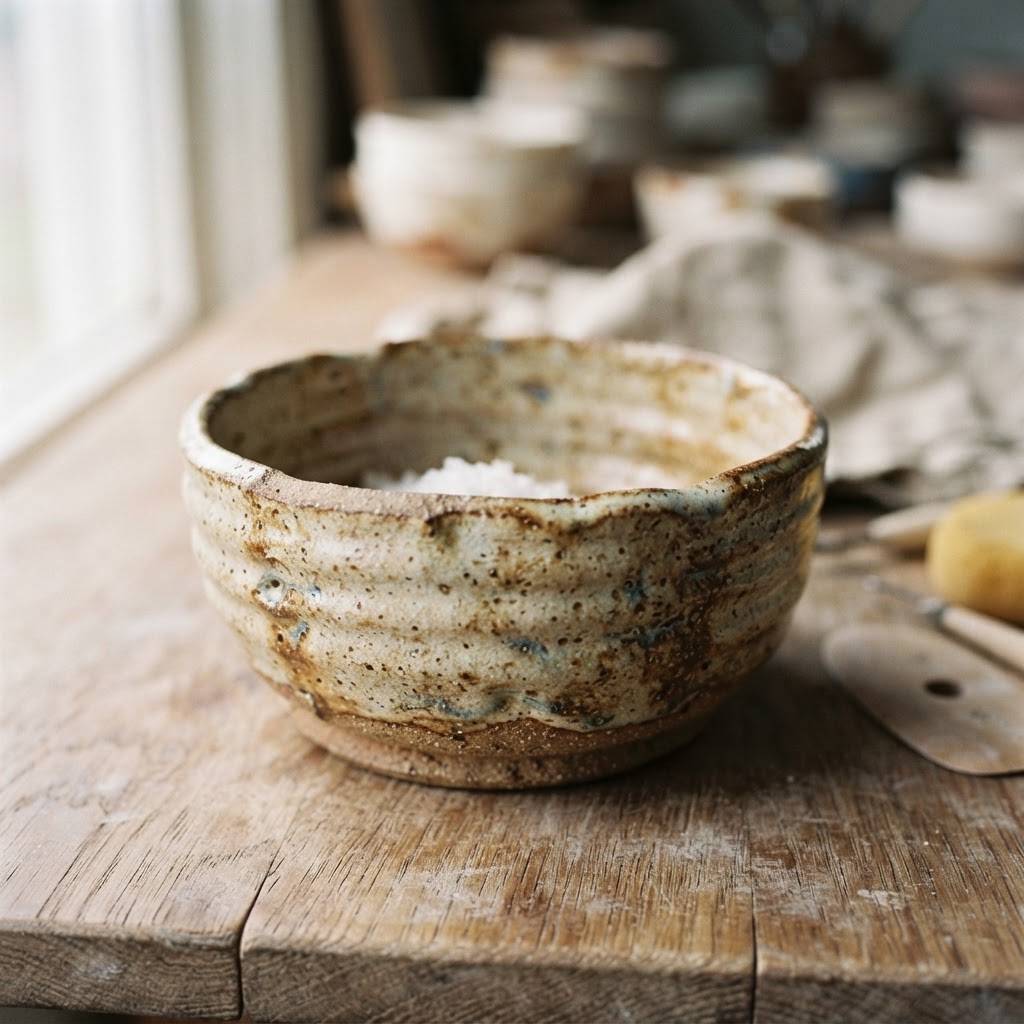
The Japanese side of this equation draws heavily from the concept of wabi-sabi, which is basically the art of finding beauty in imperfection and transience. A ceramic mug with an uneven glaze. A linen throw that's been washed so many times it's soft as butter. A wooden shelf that shows the grain and the knots rather than hiding them. Wabi-sabi says: things don't need to be perfect to be beautiful. And honestly, as someone who has lived in spaces that felt like showrooms, I can tell you that philosophy is a relief.
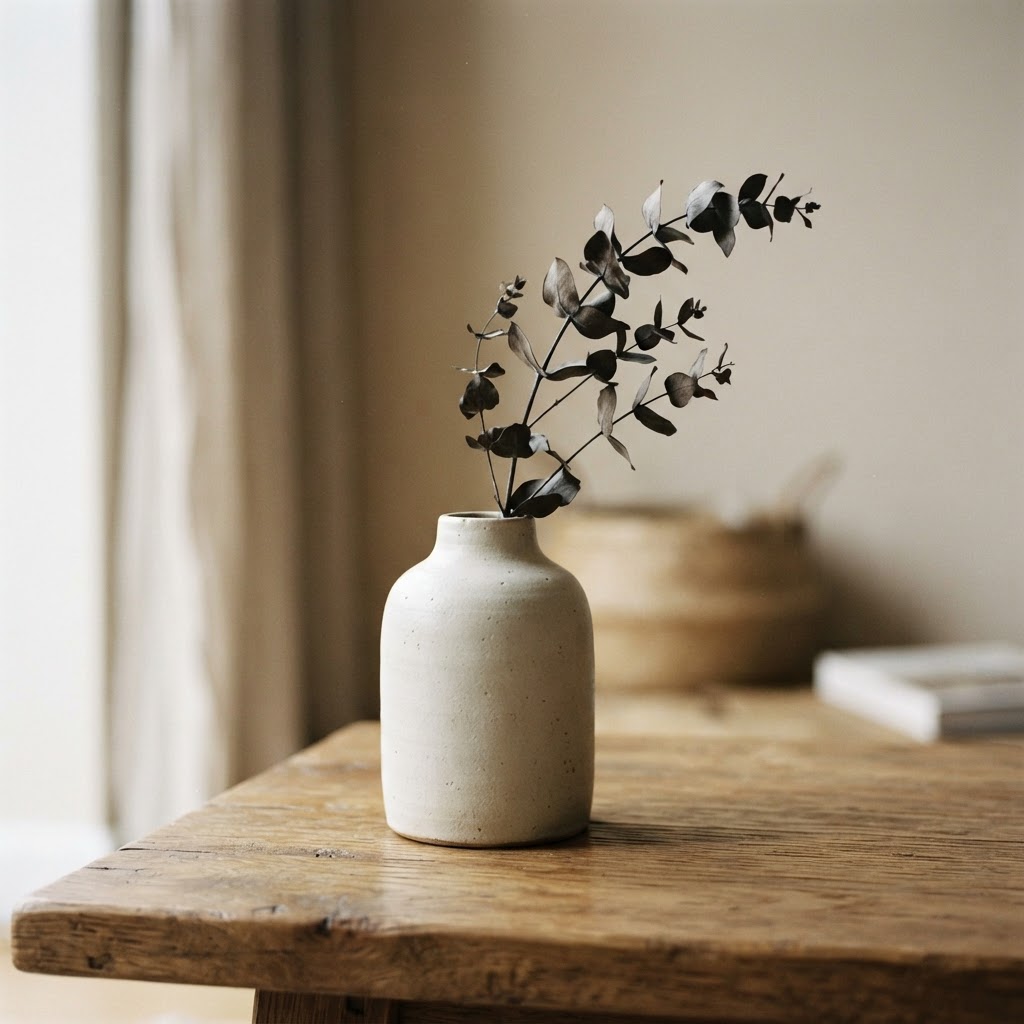
The Scandinavian influence brings in hygge (pronounced roughly "hoo-gah"), which is less about objects and more about atmosphere. It's the warmth of candlelight on a rainy afternoon. The satisfaction of a well-worn reading chair. The feeling that your home is genuinely glad you're in it. When you layer these two philosophies together, you get Japandi: purposeful restraint paired with genuine warmth. Less stuff, but the stuff you have actually means something.
The core principle to keep in your head as you design is this: every element should earn its place. Not in a stressful, perfectionist way, but in a mindful one. You're not decorating to impress guests. You're building a space that supports how you actually want to live. That shift in thinking changes everything about how you shop, how you arrange a room, and what you choose to keep or let go.
Essential Color Palettes for a Calm Home
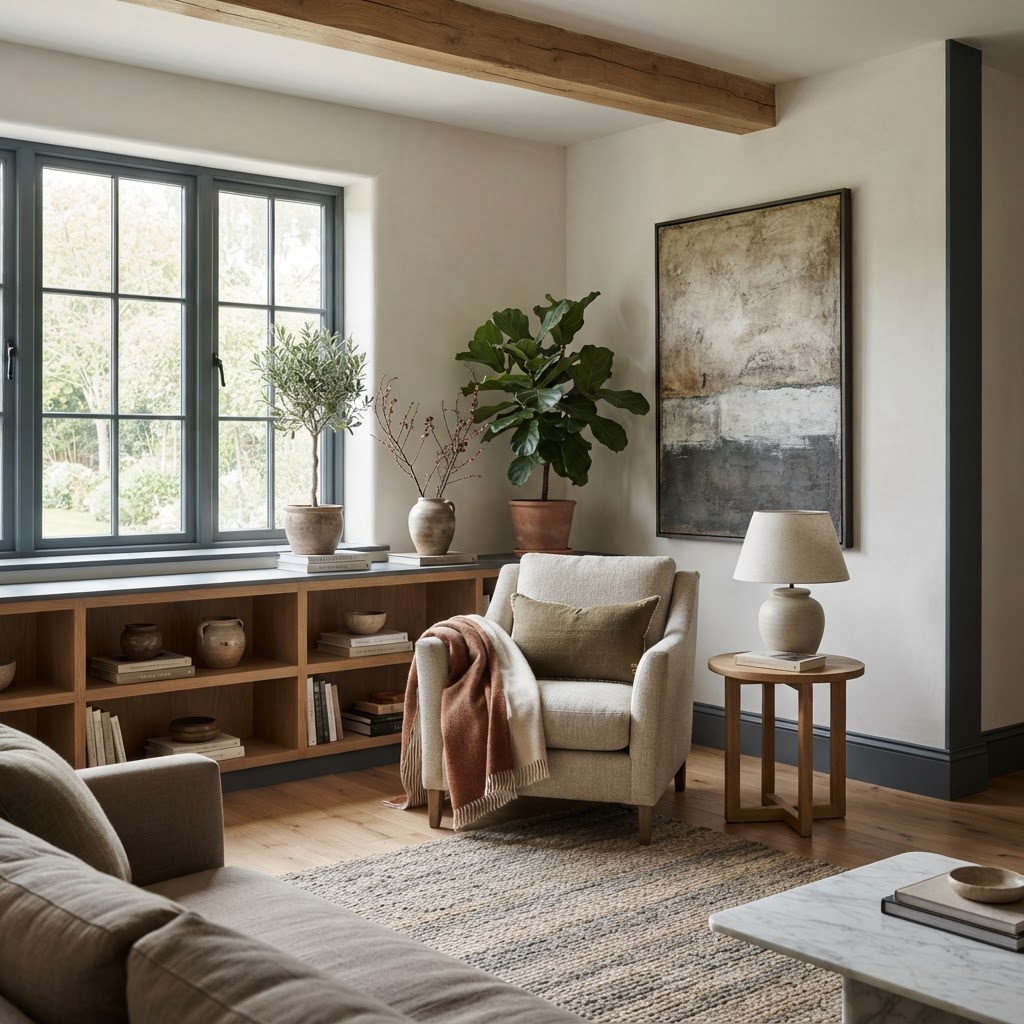
Color is where a lot of people get tripped up with Japandi. They see minimalist and immediately think stark white walls and gray everything, which, look, that works for some people, but it can also feel like you're living inside a cloud. The Japandi palette is actually much warmer and more nuanced than that. Think muted, earthy tones that feel like they came from the natural world rather than a paint factory.
Your foundation colors should be soft and grounded. We're talking warm whites, creamy off-whites, dusty sage greens, muted clay terracottas, and deep charcoal grays that lean slightly warm rather than cold. These are the colors you put on walls and large surfaces. They're quiet. They don't demand attention. And that's exactly the point because in a Japandi space, the materials and textures do the visual heavy lifting, not the colors.
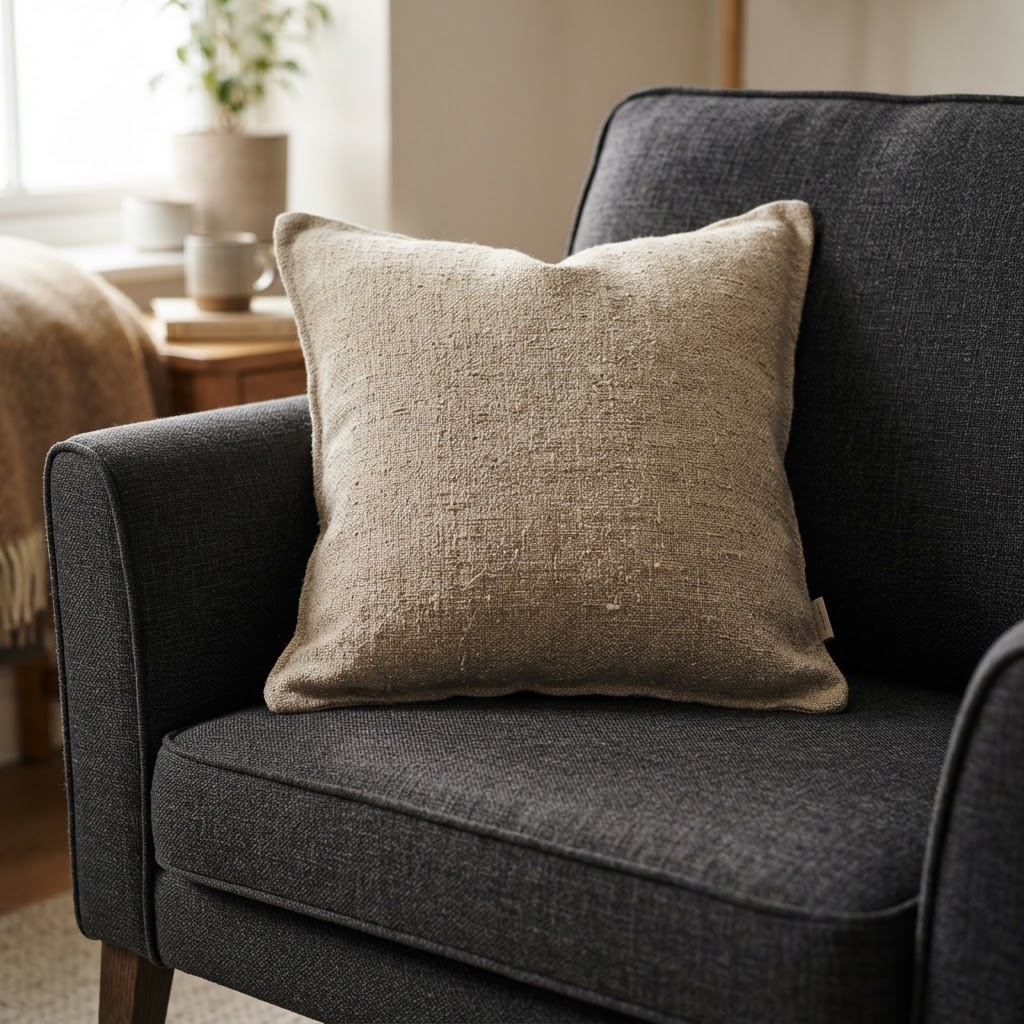
Accent colors exist in Japandi, but they're used with real restraint. A single deep indigo cushion. A small terracotta pot with a plant on the windowsill. A dark walnut wood frame against a pale wall. These accents are like punctuation in a sentence: necessary, but not excessive. A good rule of thumb is the 60-30-10 principle, where 60% of your room is your main neutral, 30% is a secondary tone, and 10% is an accent. It keeps things visually cohesive without being boring.
One thing I genuinely love about the Japandi palette is how forgiving it is in different light conditions. These colors shift beautifully throughout the day. That warm greige wall looks golden in morning light and moody and cozy by lamplight at night. You're not fighting your color choices depending on the hour. Trust me on this, choose your paint in physical samples and live with them for a few days before committing.
Selecting Furniture That Blends Both Worlds
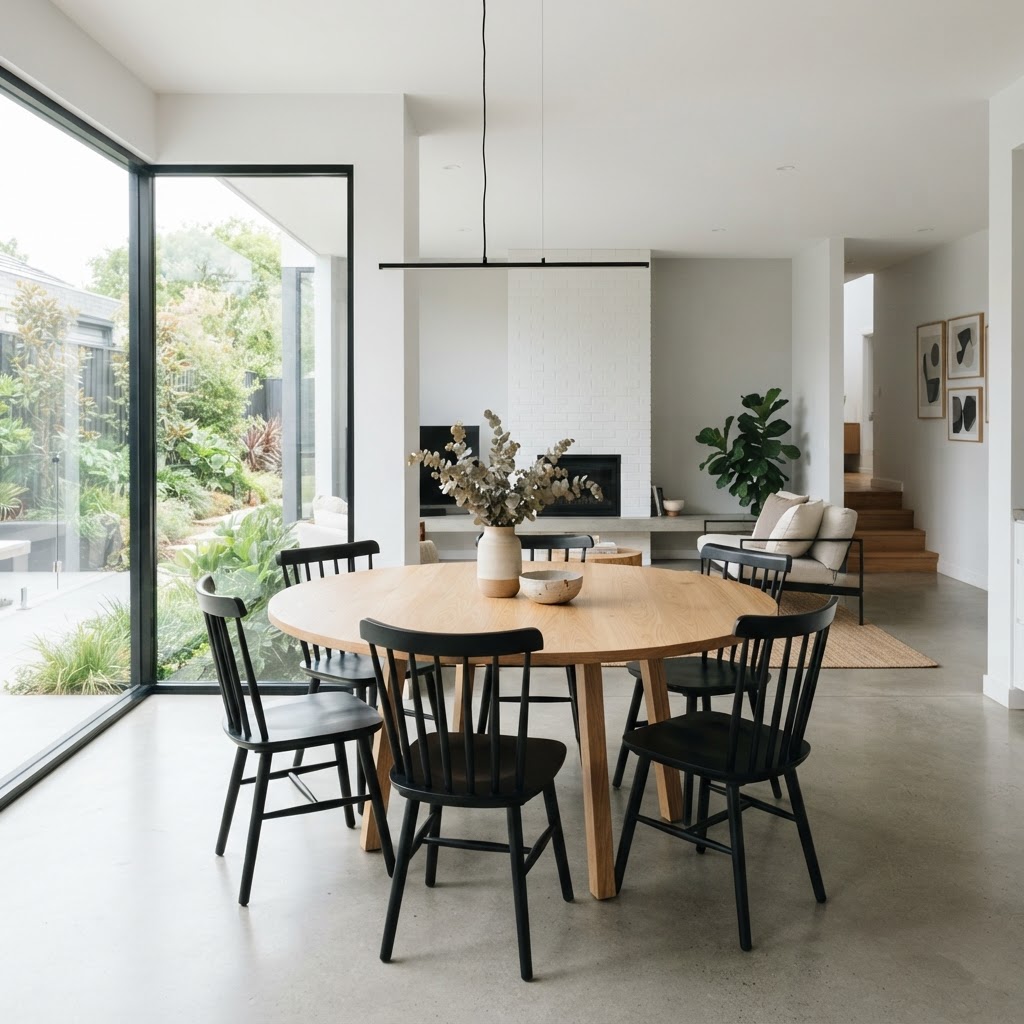
Furniture is where the real Japandi magic happens, and honestly it's also where people either nail it or completely miss the mark. The key is understanding that both Japanese and Scandinavian design traditions share a deep respect for craftsmanship and natural materials, particularly wood. But the way they use those materials is slightly different, and finding the intersection is the sweet spot.
Japanese furniture tends to sit lower to the ground. Think platform beds, low dining tables, floor cushions. There's a groundedness to it, almost like the furniture is reminding you to stay connected to the earth. Scandinavian furniture, on the other hand, often features that iconic tapered leg look, clean lines, functional form. When you blend these, you get furniture that is low-profile and uncluttered, with honest construction and natural materials that show rather than hide what they're made of.
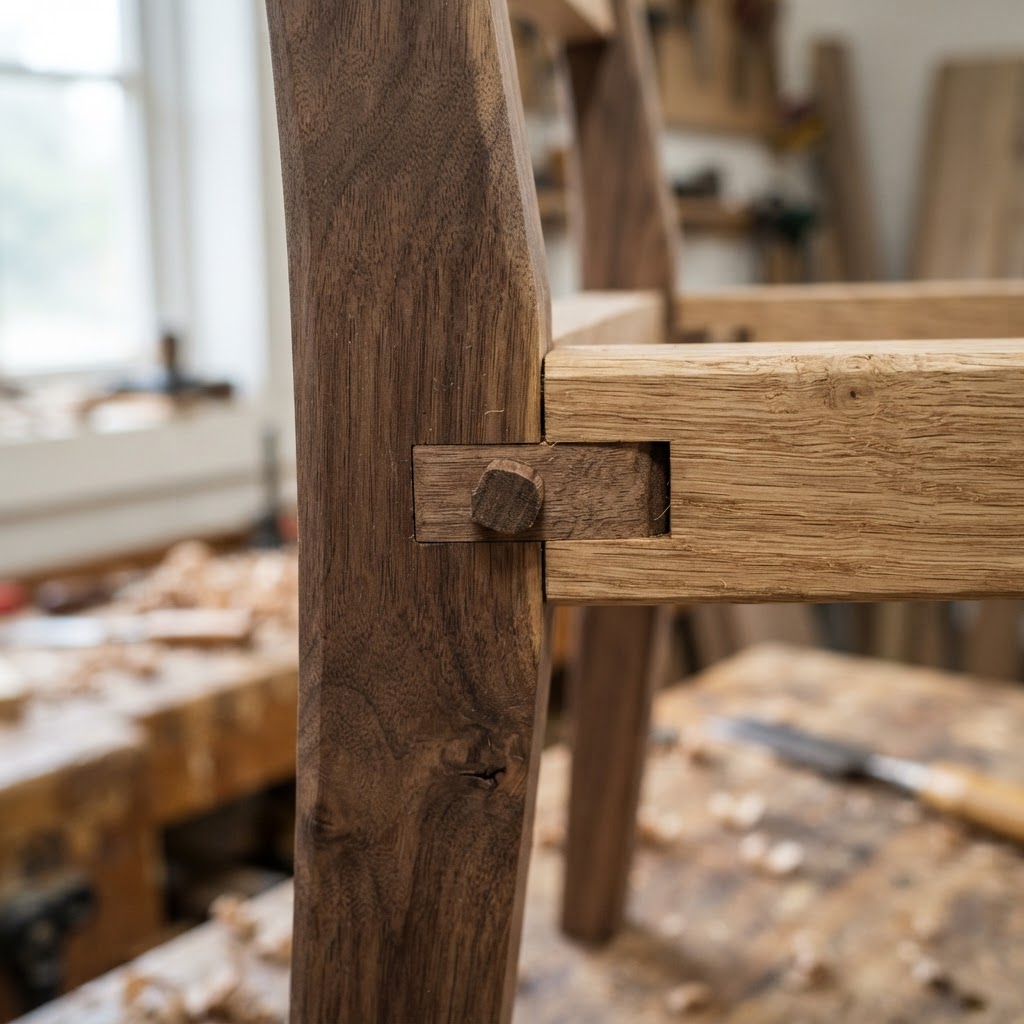
Here's what to look for when shopping:
- Wood tones that feel warm but not orange. Ash, oak, and walnut are your friends. Avoid anything that looks lacquered or overly shiny.
- Clean silhouettes without excessive ornamentation. No carvings, no fussy details. The beauty should come from the material itself.
- Furniture that serves a real function. A bench that doubles as storage. A side table that's also a small stool. Japandi spaces don't have room for purely decorative furniture.
- Upholstery in natural, tactile fabrics. Linen, cotton, wool. Nothing synthetic if you can help it. The texture matters as much as the color.
- Pieces that feel like they'll last decades. This is not fast furniture. Buy less, buy better.
Real talk: you don't need to replace everything at once. In fact, the most authentic Japandi spaces I've seen are ones where pieces have been accumulated slowly and thoughtfully over time. Start with one anchor piece, maybe a beautiful solid wood dining table or a low platform bed frame, and build around it. Patience is part of the philosophy.
Mindful Decor and Sustainable Materials
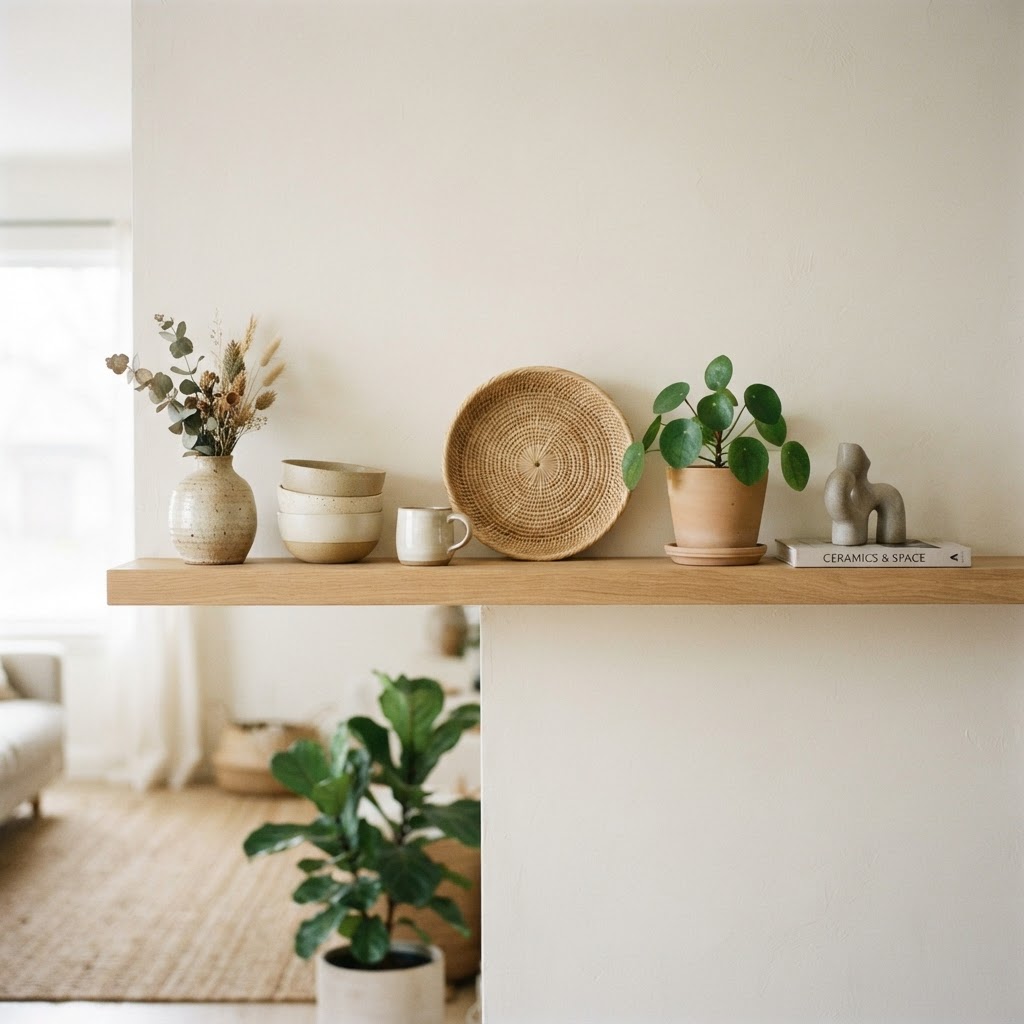
Decor in a Japandi space is where a lot of people overthink things. They get anxious about having "enough" stuff on the shelves, or whether their space looks too bare. Here's the thing: in Japandi, negative space is not emptiness. It's breathing room. It's intentional. A shelf with three carefully chosen objects is infinitely more powerful than one crammed with trinkets, no matter how individually beautiful those trinkets are.
When it comes to materials, sustainability isn't just a trend here, it's baked into the philosophy. Both Japanese and Scandinavian design traditions have long histories of using local, natural, and renewable materials. Bamboo, rattan, raw linen, unbleached cotton, reclaimed wood, hand-thrown ceramics, stone, and natural clay are all completely at home in a Japandi space. These materials have texture, warmth, and a sense of history that synthetic alternatives simply cannot replicate.
Plants deserve a special mention here. Greenery is a cornerstone of Japandi decor, but again, restraint is key. One large fiddle-leaf fig in a corner. A small bonsai on a windowsill. A trailing pothos on a high shelf. Plants bring life, texture, and a connection to the natural world that no decorative object can match. Just don't go overboard and turn your living room into a jungle, unless that's genuinely your vibe, in which case, carry on.
For art and wall decor, think simple and meaningful. A single large-format print. A piece of calligraphy. A small collection of framed botanical illustrations hung with intention. The goal is for your eye to land somewhere and rest, not to bounce around looking for somewhere to settle. And honestly, if something doesn't have a story or a feeling attached to it, it probably doesn't belong on your wall.
Lighting Techniques for a Cozy Atmosphere
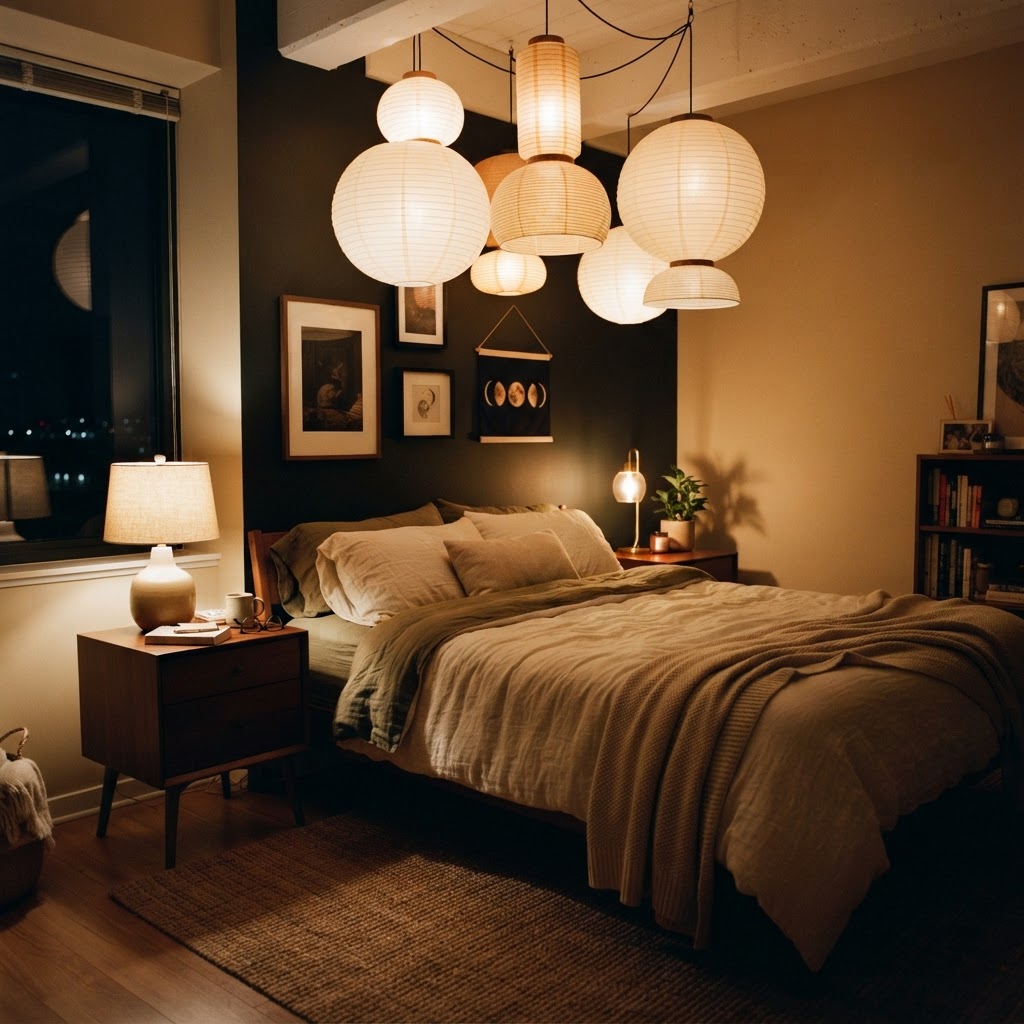
Lighting might be the single most underestimated element in any interior design scheme, and in Japandi spaces it's absolutely critical. You can have the perfect palette, the most beautiful furniture, and the most carefully chosen decor, but if your lighting is wrong, the whole thing falls flat. Harsh overhead lighting will kill the warmth of a Japandi space faster than anything. It flattens surfaces, washes out warm tones, and makes everything feel like an interrogation room.
The Japandi approach to lighting is all about layers. You want multiple light sources at different heights, all working together to create a warm, enveloping glow rather than one single harsh light source. Think about it in three tiers: ambient lighting for the overall room, task lighting for functional areas like reading nooks or kitchen counters, and accent lighting to highlight textures, plants, or architectural details.
For ambient light, warm-toned bulbs are non-negotiable. Anything in the 2700K to 3000K range will give you that golden, candlelight-adjacent warmth that Japandi spaces are known for. Avoid anything over 4000K, which starts to read as clinical and cold. Paper lanterns, rattan pendants, and simple linen shades are all excellent fixture choices that add texture while diffusing light beautifully.
Candles are not optional in a Japandi home. Real talk. A few simple pillar candles or a cluster of tea lights on a wooden tray can transform the atmosphere of a room in ways that no light fixture can fully replicate. There's something about real flame that signals to your nervous system that it's time to slow down, and that's entirely the point of this whole design philosophy.
Natural light deserves its own mention too. Japandi spaces prioritize it wherever possible. Keep window treatments light and minimal: sheer linen curtains that filter rather than block. Let the quality of daylight change throughout the day and become part of your decor. The way afternoon sun moves across a wooden floor or a rough plaster wall is genuinely one of the most beautiful things a home can offer you, and it costs absolutely nothing.
Final Thoughts
Here's what I want you to take away from all of this: Japandi is not a checklist. You can't just buy a bamboo tray and a neutral linen throw and call it done. It's a shift in how you think about your home and what you want it to do for you. It's about choosing less, choosing better, and creating a space that genuinely supports your wellbeing rather than just looking good in photos.
Start small. Pick one room, or even one corner of a room, and apply these principles there. Get the lighting right. Choose one beautiful natural material. Clear the clutter and sit with the empty space for a moment before filling it back up. You might find that the space itself starts to tell you what it needs, and what it doesn't. That's the real magic of Japandi, and honestly, once you feel it, it's pretty hard to go back.
More in Interior
Stay Inspired
Subscribe for new essays on architecture, design, and the spaces that shape us.