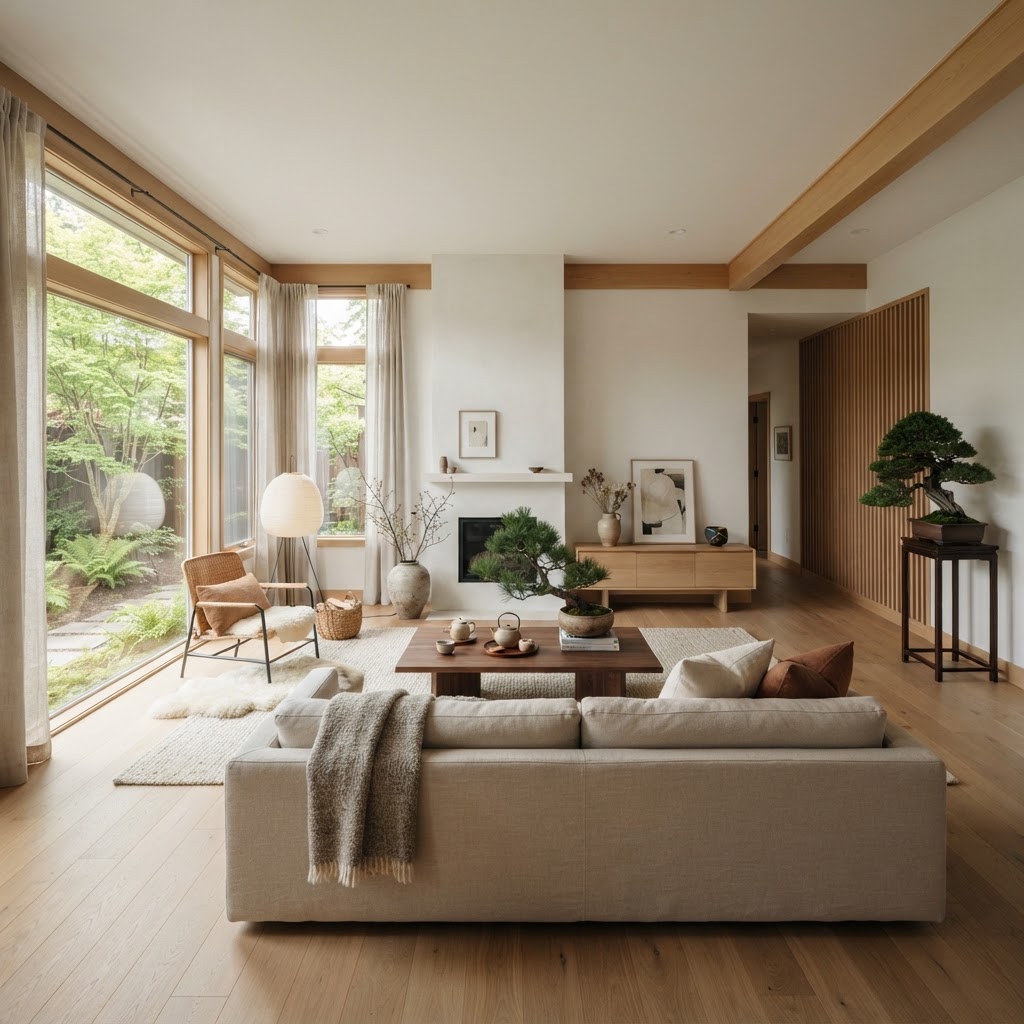
Japandi Style: The Ultimate Guide to Creating a Calm and Minimalist Home
Discover how to blend Japanese rustic minimalism with Scandinavian functionality to create a serene living space. This guide covers everything you need to know about mastering the Japandi look in your own home.
Understanding the Core Principles of Japandi
Okay, so if you've been anywhere near interior design content in the last few years, you've definitely heard the word "Japandi" thrown around a lot. And honestly, for good reason. It's not just another trend that's going to feel dated in three years. Japandi is a genuine design philosophy, and once you really understand what it's about, it kind of changes the way you see your whole home.
At its core, Japandi is the marriage of Japanese and Scandinavian design traditions. Which, when you first hear it, sounds a little random. But here's the thing: these two cultures actually share a surprisingly deep set of values when it comes to how spaces should feel and function. Both traditions prize simplicity, craftsmanship, and a deep respect for natural materials. Japanese design brings the concept of wabi-sabi, which is essentially the beauty found in imperfection and impermanence. Scandinavian design brings hygge, that warm, cozy feeling of contentment. Together, they create something genuinely special.
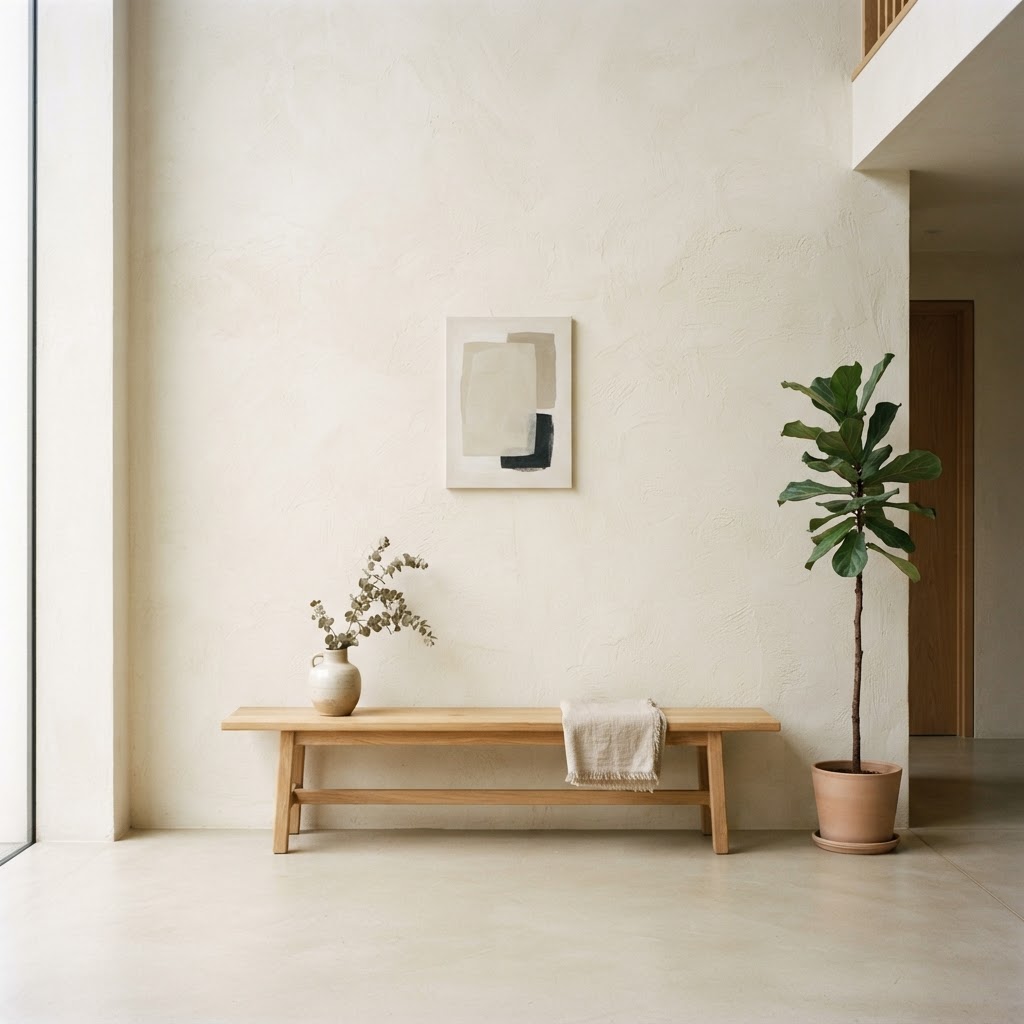
The principles you need to internalize before you buy a single piece of furniture are these: intentionality, function, restraint, and warmth. Every object in a Japandi space earns its place. There's no decorating just to fill a wall or a shelf. Real talk, this is actually harder than it sounds if you're someone who loves collecting things. But the payoff, a space that genuinely feels calm when you walk into it, is absolutely worth the discipline.
Japandi also leans hard into the idea that beauty lives in the handmade and the natural. Rough-edged ceramics, visible wood grain, linen that looks slightly lived-in. These are not flaws. They are the whole point. If you're expecting a space that looks like a sterile hotel lobby, that's not Japandi. Think more like a very calm, very considered home where everything has a story and a purpose.
Mastering the Japandi Color Palette
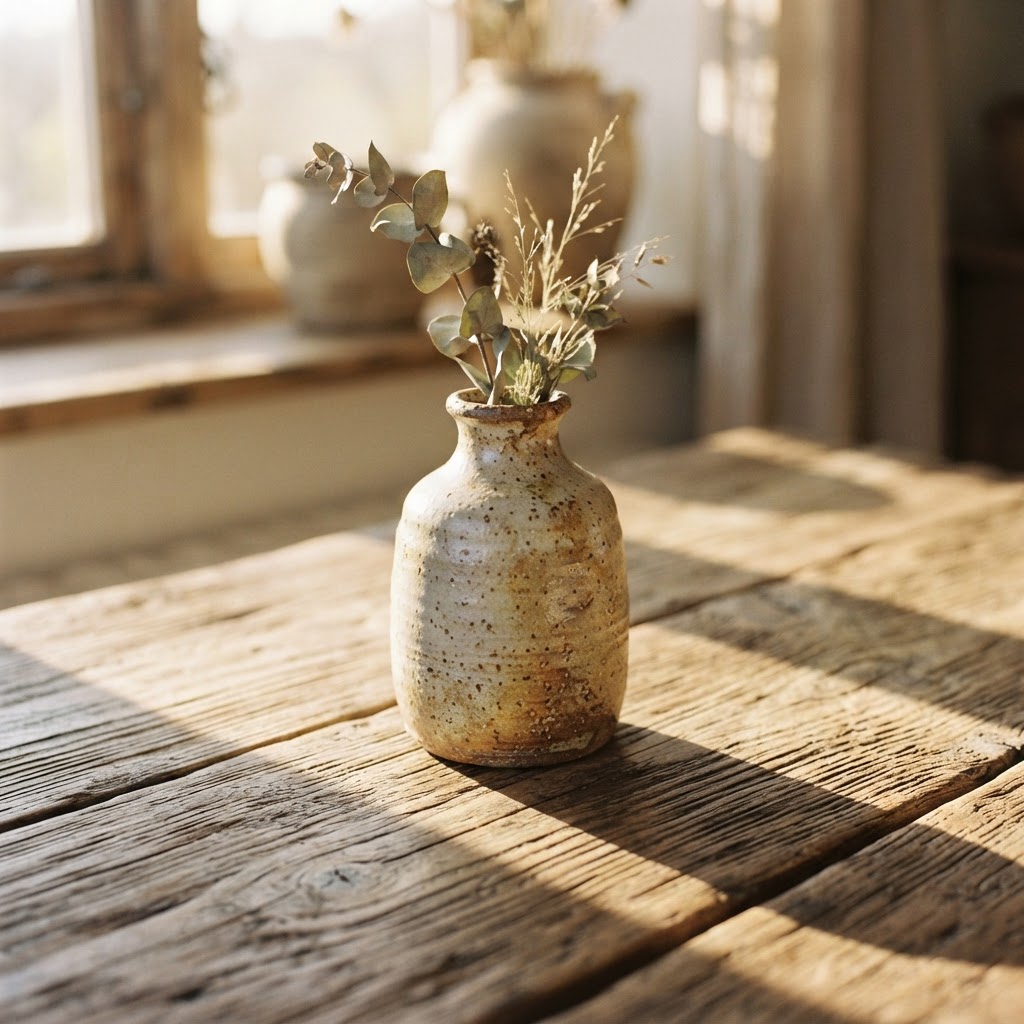
Color is where a lot of people get tripped up with Japandi, and honestly I get it. The palette is subtle, and subtle is hard to get right. Too warm and it slides into rustic farmhouse territory. Too cool and it starts feeling cold and clinical. The sweet spot is this really beautiful range of muted, earthy, almost dusty tones that feel neither stark nor fussy.
Your base colors should be soft and neutral. Think warm whites, creamy off-whites, pale greys with a slight warm undertone, and sandy beiges. These are your wall colors, your large upholstered pieces, your bedding. They create that quiet backdrop that the whole style depends on. From there, you layer in your mid-tones: dusty sage green, muted terracotta, soft clay, warm charcoal. These are your accent pieces, your cushions, your smaller furniture items.
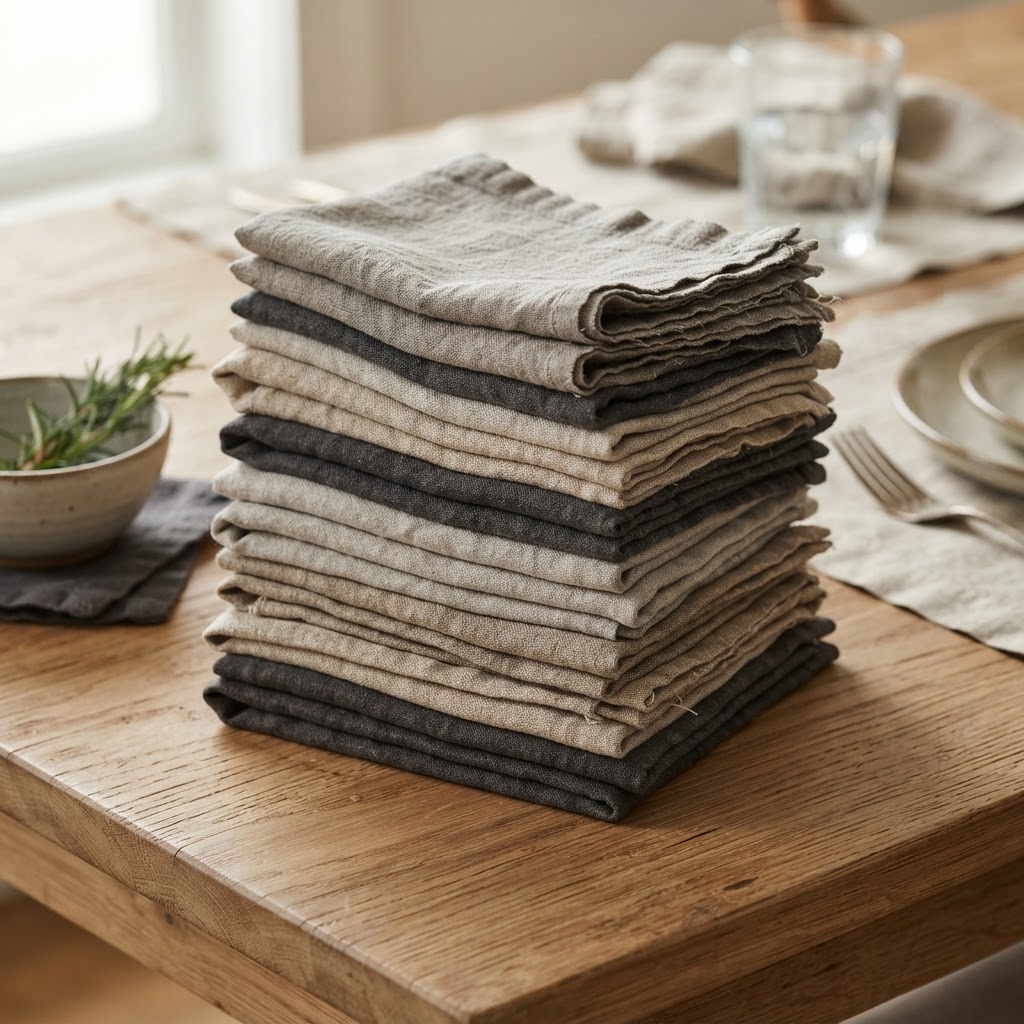
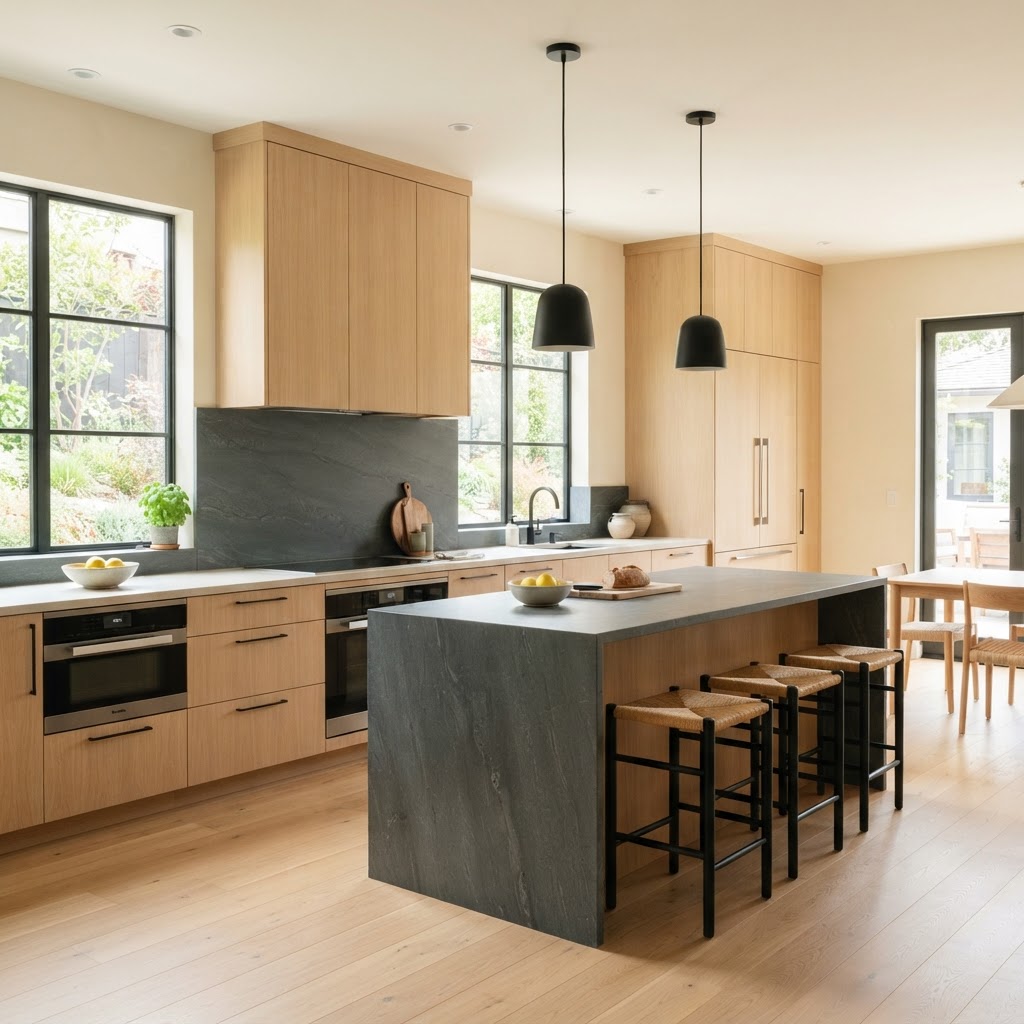
Here's the thing about dark tones in Japandi: don't be afraid of them. A deep charcoal, a near-black, or a very dark forest green used deliberately can add incredible grounding to a space. Japanese design in particular is comfortable with darkness in a way that Scandinavian design sometimes isn't. A dark accent wall, a black-framed window, or a piece of furniture in deep walnut stain can anchor a room beautifully.
The one rule I'd really push you to follow is this: keep your palette cohesive and tight. Pick three to five colors max and stick to them throughout the space. Japandi rooms feel calm because there's no visual noise. Too many competing tones, even all of them neutral, creates a restlessness that undermines the whole vibe. Trust me on this one. Edit ruthlessly.
- Base layer: warm white, cream, pale greige for walls and large pieces
- Mid tones: dusty sage, soft clay, muted terracotta for accents and textiles
- Dark anchors: charcoal, deep walnut, near-black for grounding elements
- Natural tones: raw linen, unbleached cotton, natural wood to bridge everything
Selecting Furniture That Blends Function and Form
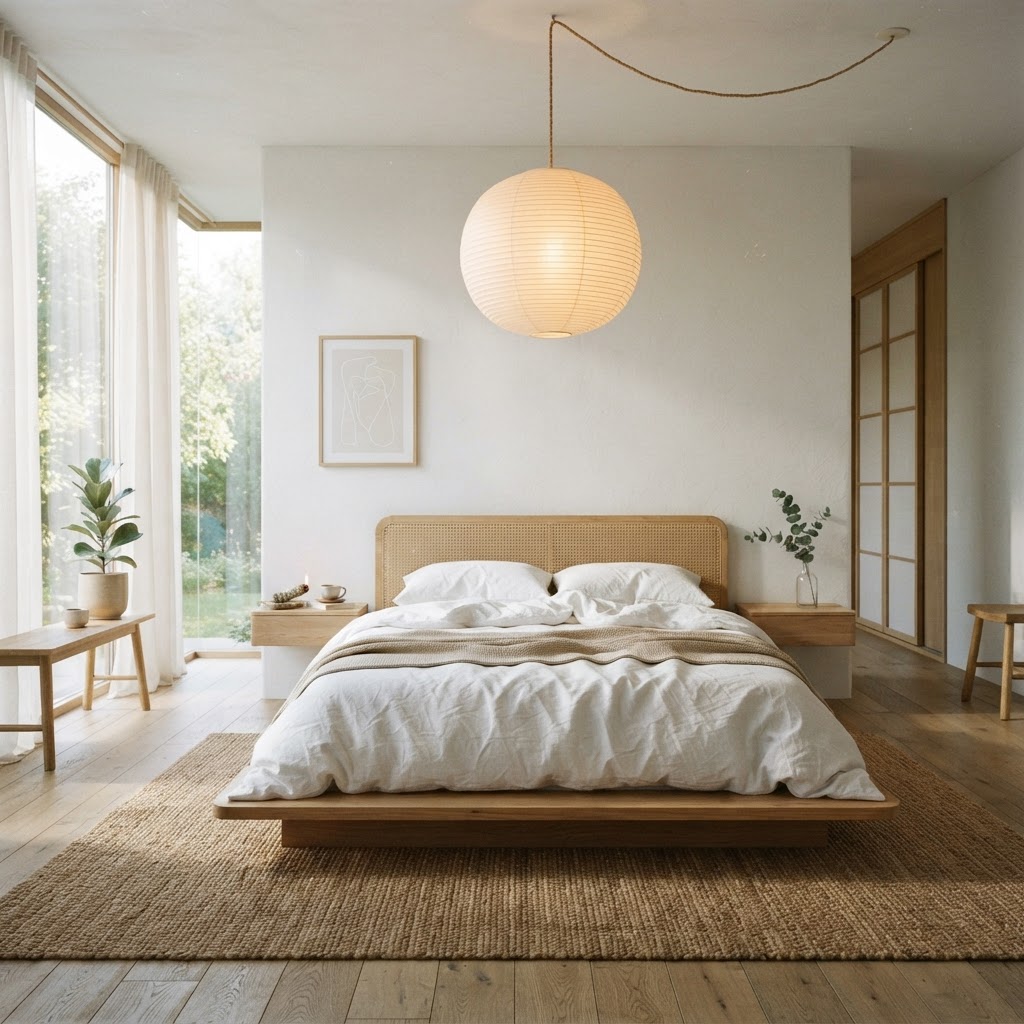
Furniture selection is honestly where Japandi either comes together or falls apart. You can nail the color palette and still end up with a space that feels off because the furniture is wrong. So let's talk about what you're actually looking for.
The silhouette is everything. Japandi furniture tends to be low to the ground, which has roots in traditional Japanese interior design where life happens closer to the floor. Think low sofas, platform beds, coffee tables with short legs. This lowness does something really interesting to a room: it makes the ceiling feel higher and the space feel more open and airy. Combined with clean, simple lines and the absence of ornamental details, it creates a sense of visual quiet that is genuinely hard to achieve any other way.
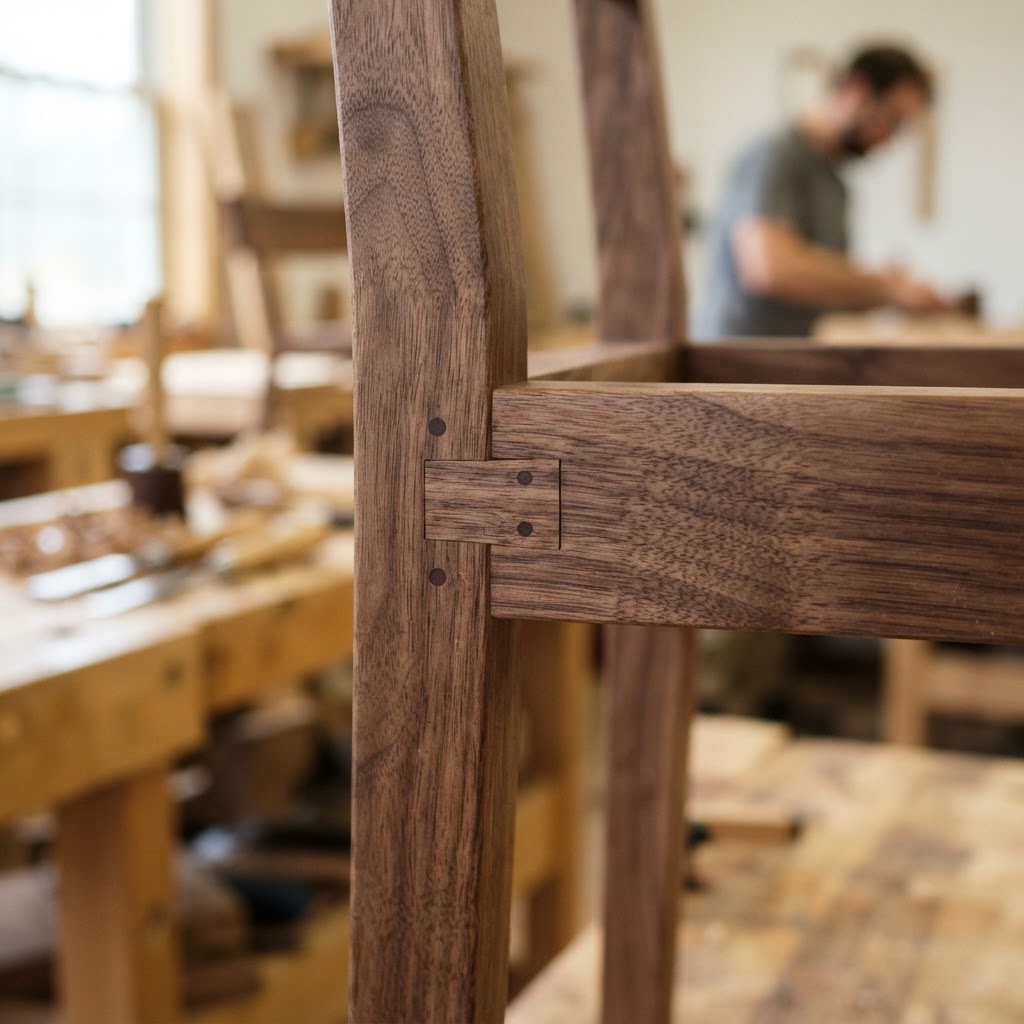
Materials matter enormously here. Wood is your best friend, and specifically wood that shows its grain and natural character. Light woods like ash, birch, and light oak have that Scandinavian feel. Darker woods like walnut, teak, and bamboo lean more Japanese. Honestly, mixing them carefully can work beautifully. Pair a light wood dining table with walnut chairs, for example. The contrast, when it's subtle, adds depth.
Beyond wood, look for furniture with natural stone elements, rattan or woven details used sparingly, and metals in matte finishes, particularly matte black or brushed brass. Avoid anything shiny, chrome-heavy, or overly decorative. Japandi furniture should look like it was made by someone who cared about the craft, not churned out by a factory trying to look impressive.
And storage, look, this is a big one. Japandi spaces are uncluttered because everything has a place. Invest in furniture that does double duty: ottomans with storage inside, beds with built-in drawers, sideboards with plenty of hidden compartment space. The less you can see on surfaces, the better. Visible clutter is the enemy of calm, and calm is literally the whole point of this style.
Textiles and Decor for a Cozy Finish
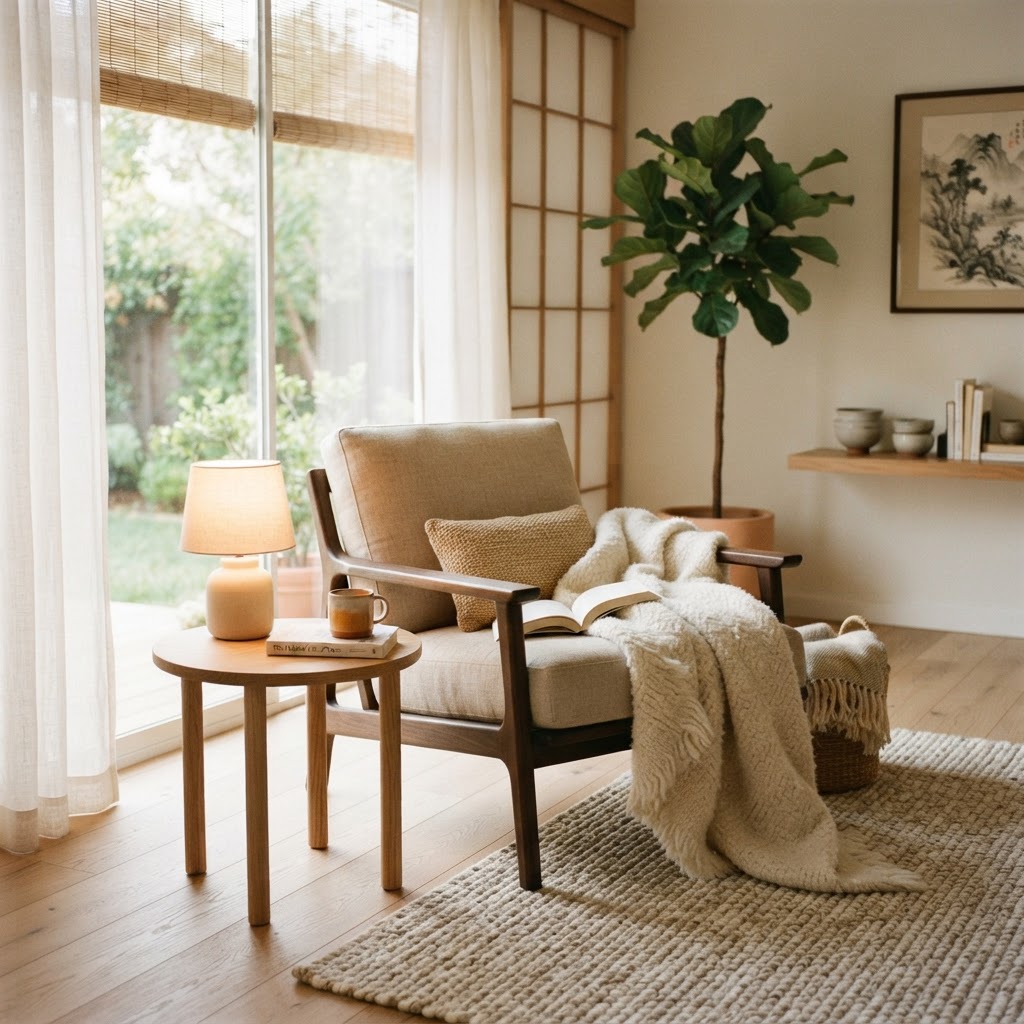
Here's where a lot of people think Japandi falls short: coziness. Because when you hear "minimalist", you sometimes picture cold, hard, empty rooms that look great in photos but feel terrible to actually live in. That's not Japandi. And the reason it avoids that trap is textiles. Good, thoughtful textiles are what separate a beautiful Japandi space from an uncomfortable one.
The key is natural fibers and layers. Linen is arguably the most quintessential Japandi textile. It wrinkles naturally, it has texture, it gets softer with every wash, and it photographs beautifully. Use linen for your curtains, your bedding, your cushion covers, even your throws. Cotton is also great, particularly in heavier weaves. Wool adds warmth and that slightly rough, handmade quality that wabi-sabi loves. Avoid synthetic fabrics where you can. They just don't have the same feel, literally or visually.
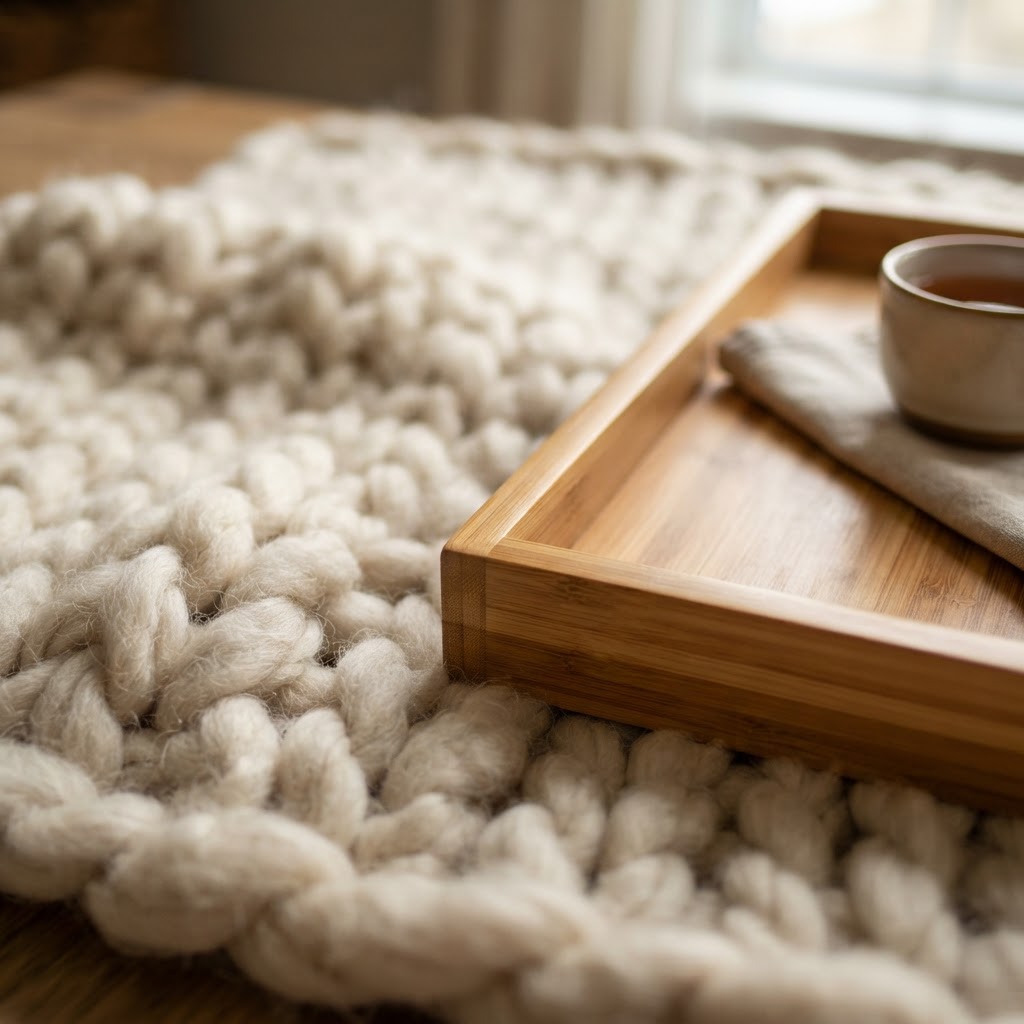
For decor, the principle is: fewer things, better things. A single handmade ceramic vase on a shelf is infinitely more powerful than a collection of ten cheap decorative objects. Think about what you're actually drawn to and what has meaning to you. A piece of pottery from a local maker, a single sculptural candle holder, one piece of art that you genuinely love. These are the things that should live on your surfaces.
Rugs are a huge part of making a Japandi space feel warm and grounded. Go for natural materials like jute, wool, or cotton in simple patterns or solid tones. A chunky-weave wool rug in a warm oatmeal or grey under a low sofa situation does so much heavy lifting for a room. It adds texture, warmth, and a sense of definition to the seating area without screaming for attention. That quiet usefulness is exactly what you want from every element in this style.
Bringing Nature Indoors with Subtle Accents
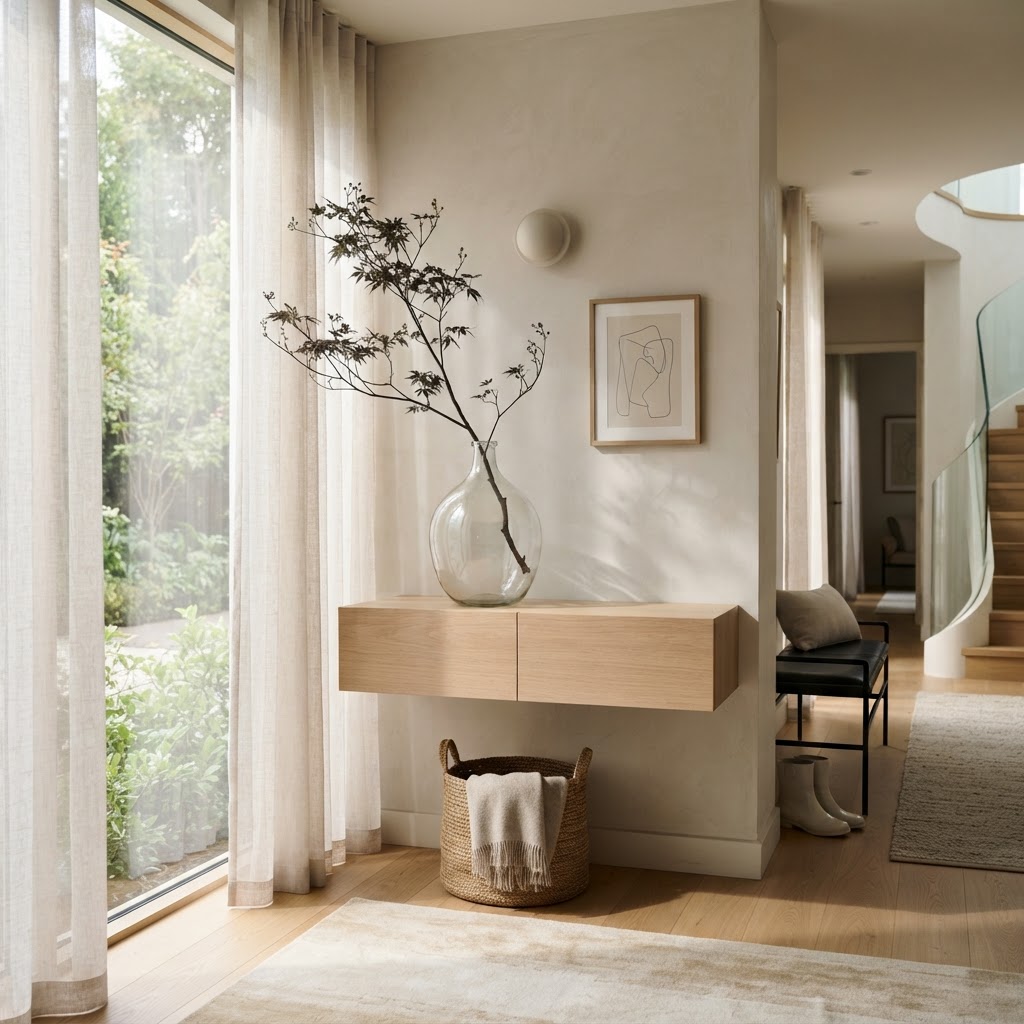
Both Japanese and Scandinavian design have a deep, almost philosophical connection to the natural world. In Japan, there's a concept called satoyama, a harmony between humans and nature, and it shows up in interiors through the careful, considered use of natural elements. In Scandinavian design, bringing the outdoors in is practically a survival mechanism given the long dark winters. In Japandi, these two impulses combine into something really beautiful.
Plants are an obvious starting point, but there's a right and wrong way to do this. A Japandi space doesn't look like a jungle. It looks like a home where nature has been invited in thoughtfully. A single sculptural plant in a ceramic pot can do more for a room than ten plants scattered around randomly. Think about plants with strong, interesting silhouettes: a fiddle leaf fig, a snake plant, a monstera, a simple bamboo arrangement. Bonsai trees, if you have the patience for them, are deeply in keeping with the Japanese side of this aesthetic.
Beyond plants, think about other natural elements that can ground a space. A smooth river stone used as a decorative object on a shelf. A piece of driftwood acting as a small sculpture. A branch of dried pampas grass in a tall vase. Raw linen curtains that let soft natural light filter through. These things sound simple, and they are, but they create a connection to the natural world that genuinely affects how a space feels to be in.
Lighting deserves a special mention here. Natural light is the gold standard, and in a Japandi space you want as much of it as possible. Keep window treatments light and airy. For artificial lighting, go warm and diffused. Paper lanterns are a classic Japanese choice. Wooden or rattan pendant shades are perfect. Avoid harsh overhead lighting in favor of lamps, candles, and warm-toned bulbs. The quality of light in a Japandi room should feel like late afternoon sun coming through a window. Soft, golden, easy.
- Sculptural plants: choose one or two statement plants over many small ones
- Natural objects: stones, driftwood, dried botanicals used sparingly as decor
- Warm lighting: paper lanterns, wooden pendants, candles and warm-toned bulbs
- Raw materials: stone, bamboo, unfinished wood surfaces that show natural texture
- Water elements: a simple bowl of water or a small indoor fountain for calm ambience
Final Thoughts
Honestly, what I love most about Japandi is that it's not really about following rules. It's about developing a different relationship with your home and the things in it. Once you start thinking about intentionality and function, about imperfection as beauty, about restraint as a form of generosity to yourself, you start making different choices. And those choices, over time, add up to a space that genuinely supports how you want to feel every day.
You don't have to redo your entire home overnight. Start with one room, or even one corner. Clear the clutter, bring in one beautiful natural material, fix your lighting, and see how it feels. I think you'll be surprised by how much a few considered changes can shift the energy of a space. That's the quiet power of Japandi, and once you feel it, it's pretty hard to go back.
More in Interior
Stay Inspired
Subscribe for new essays on architecture, design, and the spaces that shape us.