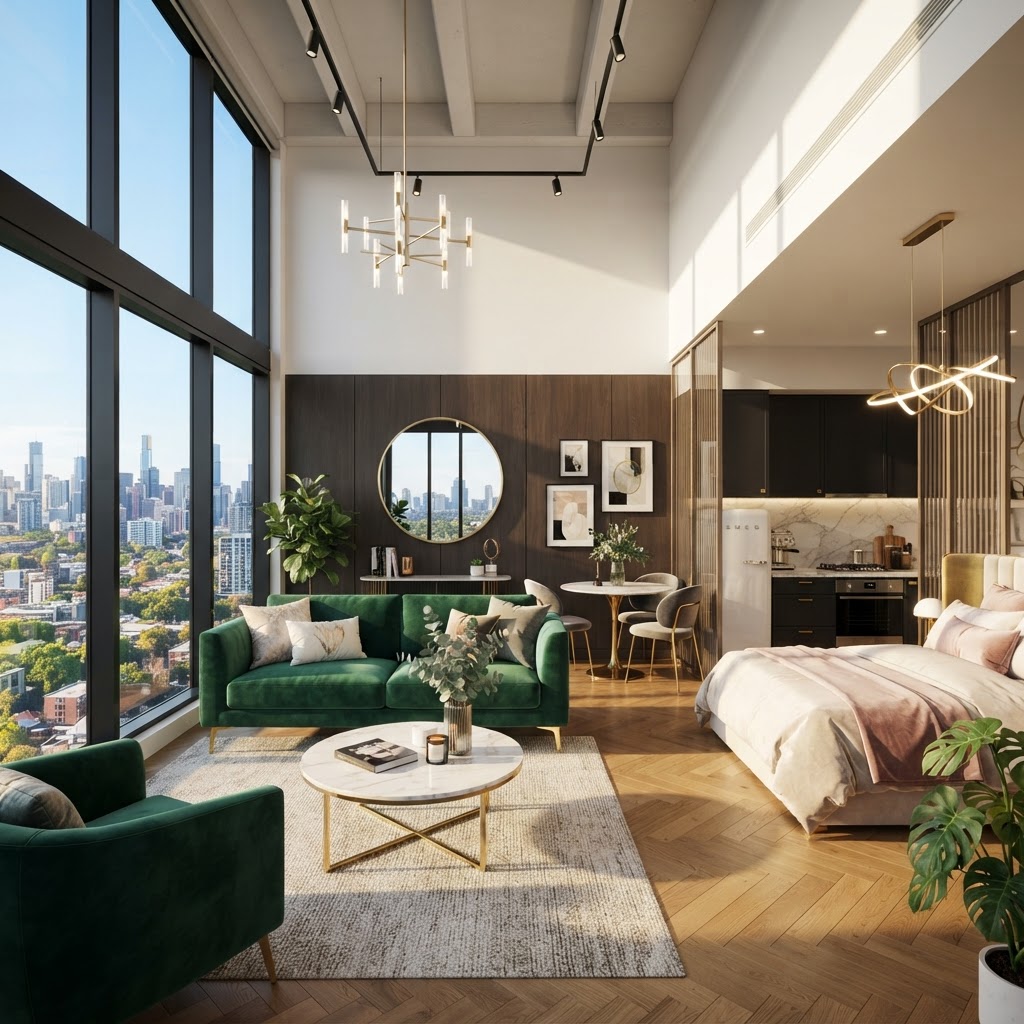
Small Space Big Luxury: 5 Styling Secrets That Make Your Apartment Feel Expensive
Living in a compact apartment does not mean you have to compromise on elegance. We explore five simple design tricks that instantly elevate your small home to look like a high end boutique hotel.
Embrace Floor to Ceiling Curtains
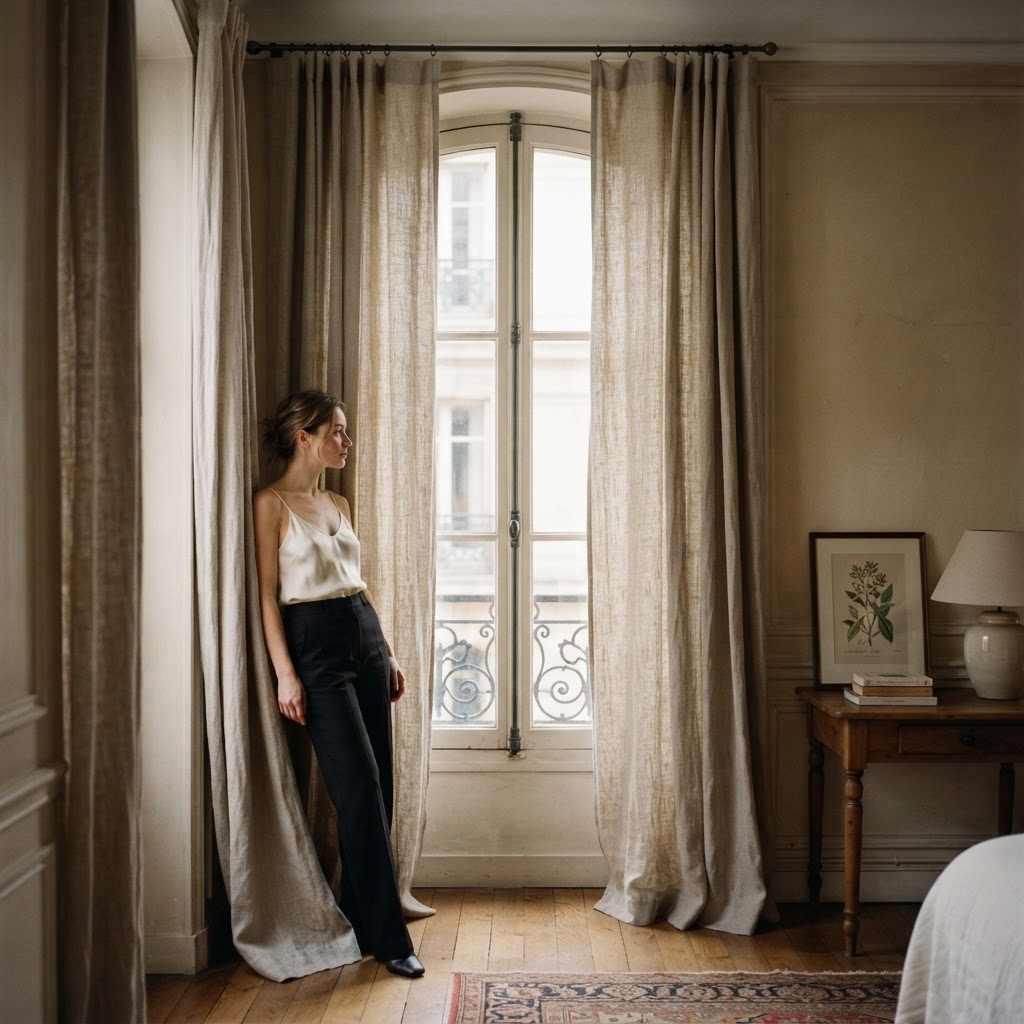
Honestly, this is the single biggest game-changer I've ever discovered for small apartments, and it costs way less than most people think. If you're hanging your curtains right above the window frame, you are leaving so much visual potential on the table. Like, so much. The trick that designers have been using forever is to mount the curtain rod as close to the ceiling as possible and let the fabric drape all the way to the floor. That's it. That's the secret.
Here's the thing about curtains hung at ceiling height: your eye naturally follows the vertical line upward, which makes the room feel taller than it actually is. It's a visual trick, sure, but it's one that genuinely works every single time. I've seen it transform a cramped studio apartment into something that felt almost loft-like. The ceiling doesn't change, the square footage doesn't change, but the feeling of the space changes completely.
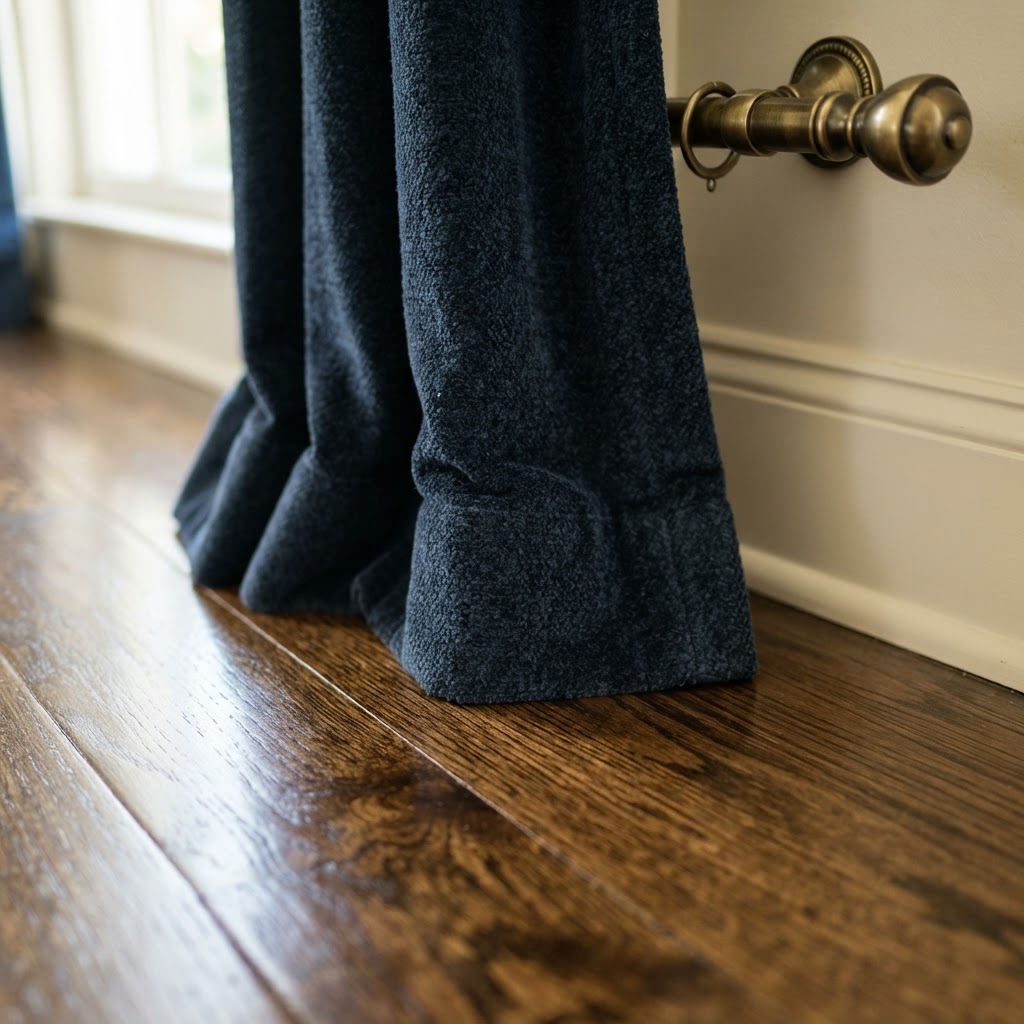
When it comes to fabric, go heavier than you think you need to. Linen, velvet, or a good quality cotton with some body to it will puddle beautifully on the floor and hold its shape. Sheer polyester panels from a discount store are going to look exactly like that, discount. You don't have to spend a fortune, but invest in something with weight. And real talk, even IKEA's heavier linen-blend curtains look genuinely expensive when hung correctly.
Color matters too. Curtains in a tone similar to your wall color create a seamless, enveloping effect that makes the room feel intentional and considered. That's the word I keep coming back to: intentional. Expensive-looking spaces always look like someone thought about every decision carefully. A contrasting curtain can work, but it chops the wall visually and can shrink the room. Stick with tonal or go slightly deeper for drama, but keep it in the same family.
- Mount the rod 4 to 6 inches below the ceiling, not above the window frame
- Choose panels that are at least 2 to 2.5 times the width of your window for full, luxurious drape
- Let the fabric just kiss the floor or puddle slightly for that editorial look
- Avoid busy patterns in small rooms, solid or subtle textures read as more elevated
Choose Statement Lighting
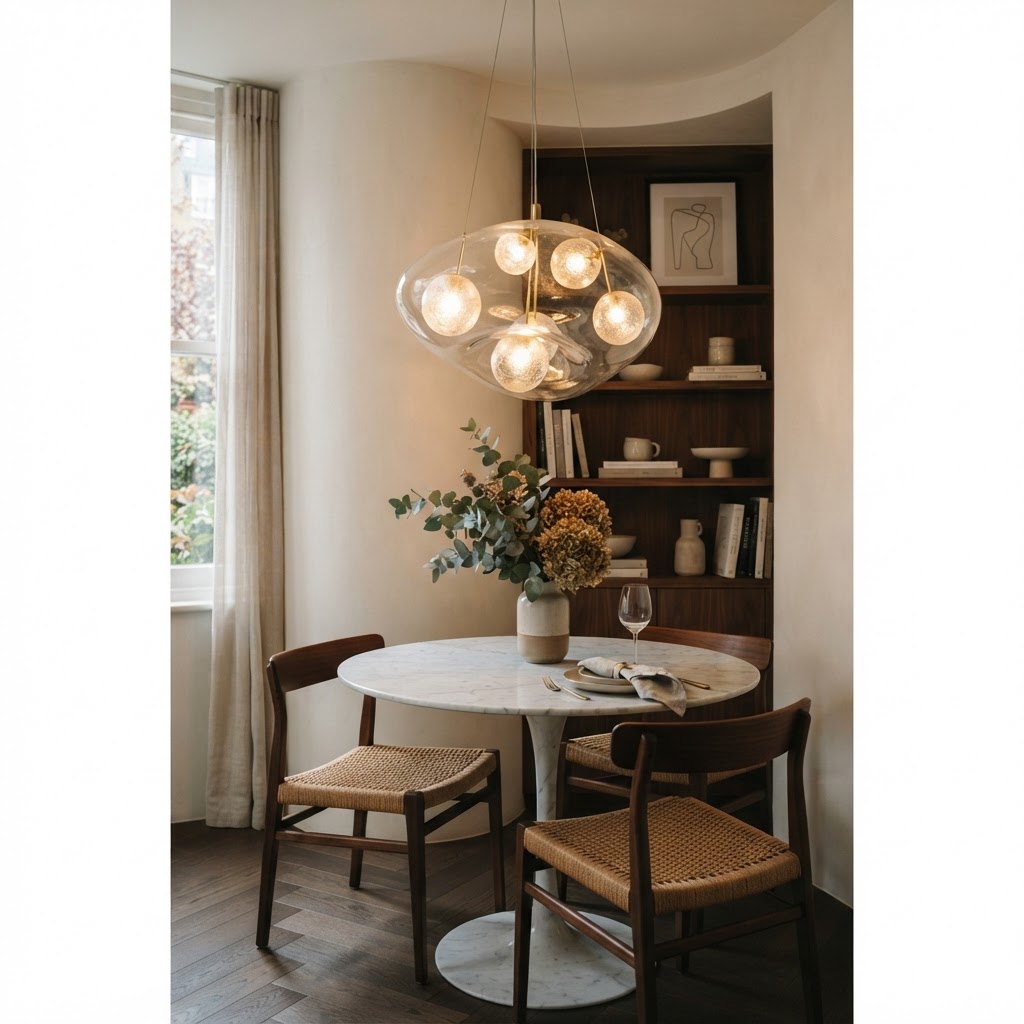
Look, bad lighting will ruin a beautiful room every single time. I cannot stress this enough. And in a small apartment, the lighting situation is often the very first thing that betrays a space as feeling cheap or unfinished. That builder-grade flush mount that came with your unit? It needs to go. Or at the very minimum, it needs company in the form of layered light sources that actually do something interesting.
Statement lighting is one of those things where you can spend a lot or a surprisingly little amount and still get a big impact. The key is scale and placement. In a small living room or studio, a dramatic pendant or chandelier hung from the ceiling does something remarkable. It draws the eye up, it creates a focal point, and it signals that someone with taste lives here. A small, insignificant overhead light does the opposite. It makes everything feel flat and afterthought-y.
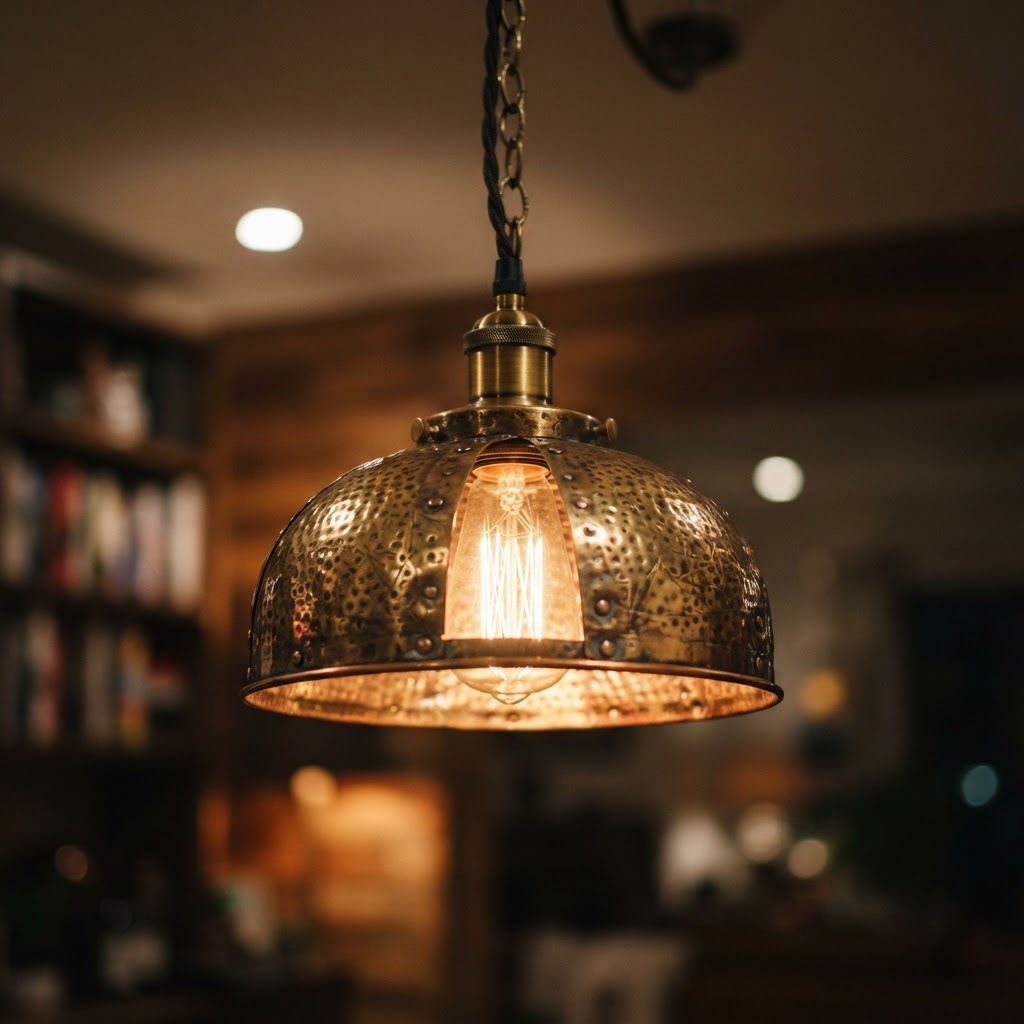
Here's my rule of thumb: every room needs at least three light sources. Overhead, mid-level like a floor lamp or table lamp, and something low like a small lamp on a console or shelf. When you layer light this way, you create depth and warmth that makes a space feel genuinely cozy and considered. It's the difference between a hotel room that feels luxurious and a motel room that feels functional.
And honestly, the bulb temperature matters as much as the fixture itself. Warm white bulbs in the 2700K to 3000K range make everything look better, including you. Cool white or daylight bulbs in a living space are a crime against ambiance. Swap them out immediately. This is a five dollar fix that has an outsized impact on how expensive and intentional your space feels.
"Lighting is the jewelry of a room. Get it right and everything else looks better. Get it wrong and nothing else matters."
The Power of Monochromatic Color Palettes
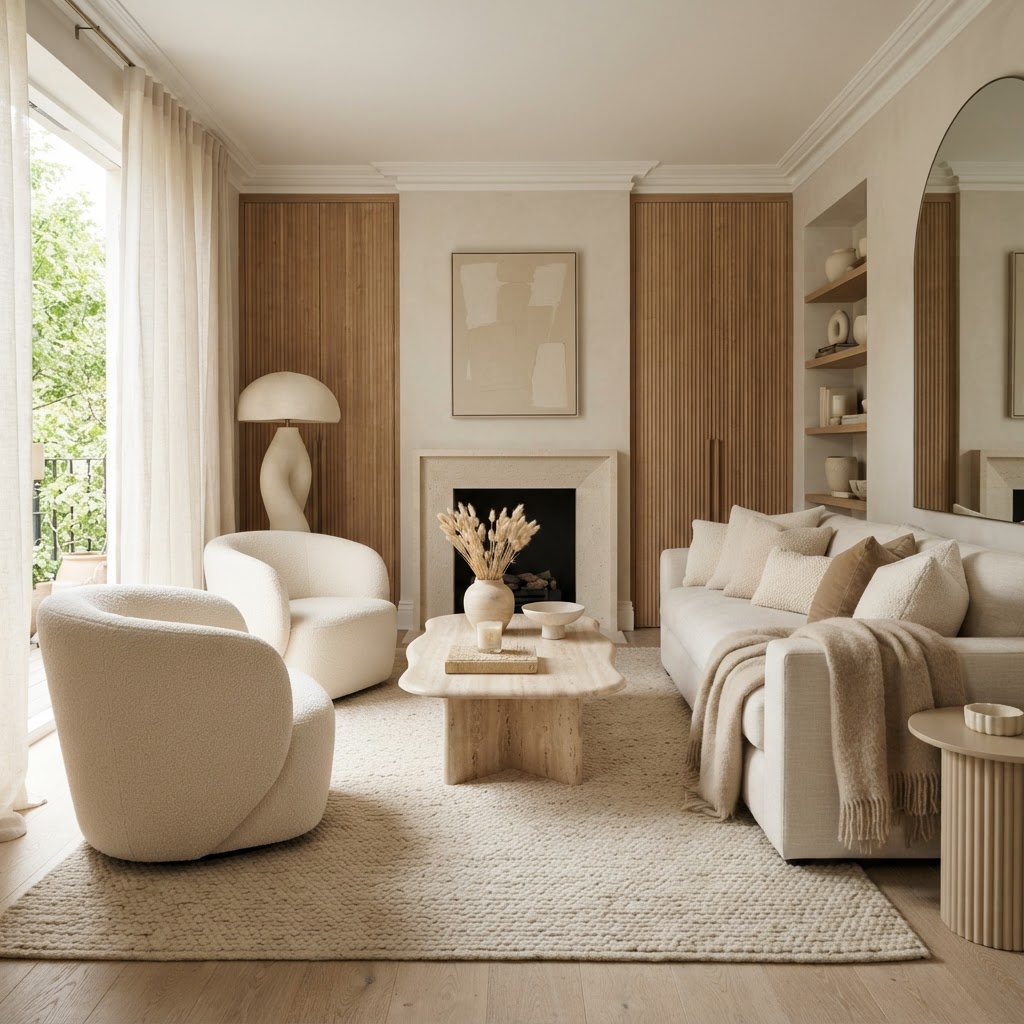
This one surprises people every time I bring it up, because the common advice for small spaces is to go white or very light to make things feel bigger. And yes, light colors do help. But the real luxury move, the thing that makes a space feel genuinely curated and high-end, is committing to a monochromatic palette throughout the entire room. Not just the walls. Everything.
Think about it this way: when you walk into a space and your eye has to jump between a cream sofa, dark wood floors, a navy rug, green plants, and a terracotta throw, your brain is working overtime processing all those competing visual signals. That mental busyness makes the space feel smaller and more chaotic. But when everything sits within the same color family, varying only in tone and texture, your eye glides through the room effortlessly. And effortless is what expensive looks like.

Trust me on this: the secret to making a monochromatic palette feel rich rather than boring is texture. Layer matte against shiny, rough against smooth, nubby against sleek. A cream linen sofa, a cream boucle throw, cream walls with a slight eggshell sheen, and a natural jute rug that reads as warm beige. They're all in the same family, but they are visually dynamic because the surfaces behave differently in light. That interplay is what makes a room feel sophisticated.
- Choose one base color and work within three to four tones of it
- Vary texture aggressively to add visual interest without adding visual noise
- Include both matte and reflective surfaces to keep things dynamic
- You can use one accent color, but keep it small in proportion, a vase, a book stack, a candle
- Plants are the exception to the rule and almost always work as a fresh counterpoint
Use Large Scale Art to Define Zones
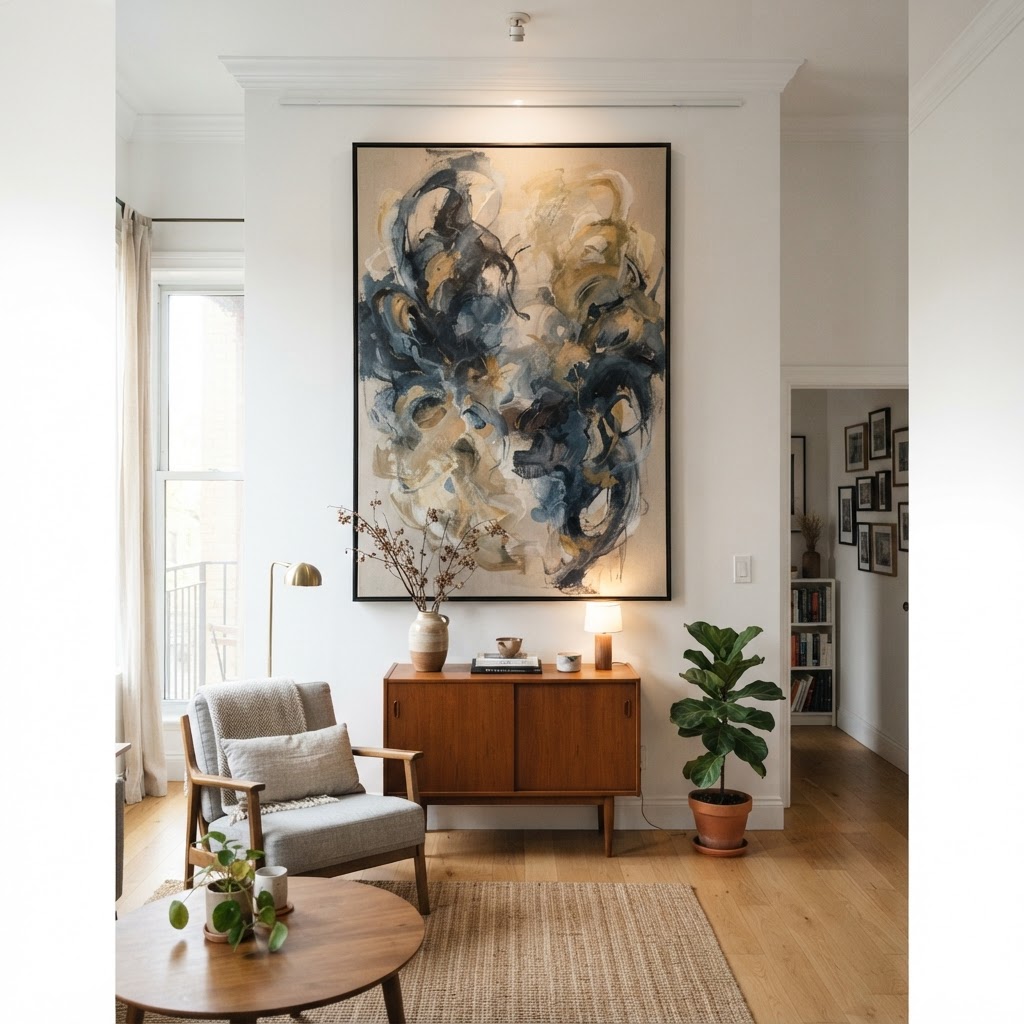
Real talk: a single large piece of art does more for a small apartment than a gallery wall of ten small pieces ever will. I know the gallery wall trend has had a long run, and I understand the appeal, but in a small space it adds visual clutter rather than visual interest. One big, confident piece of art says "I know what I'm doing." A dozen small frames arranged nervously on a wall says something else entirely.
In a studio or open-plan apartment, art is one of the most effective tools you have for defining different zones without building walls. A large canvas or framed print behind your sofa tells anyone walking in that this is the living area. A piece hung above a small desk signals a workspace. Art anchors furniture arrangements and gives each zone a sense of purpose and intention. Without it, furniture can float awkwardly in an open space with no visual logic.
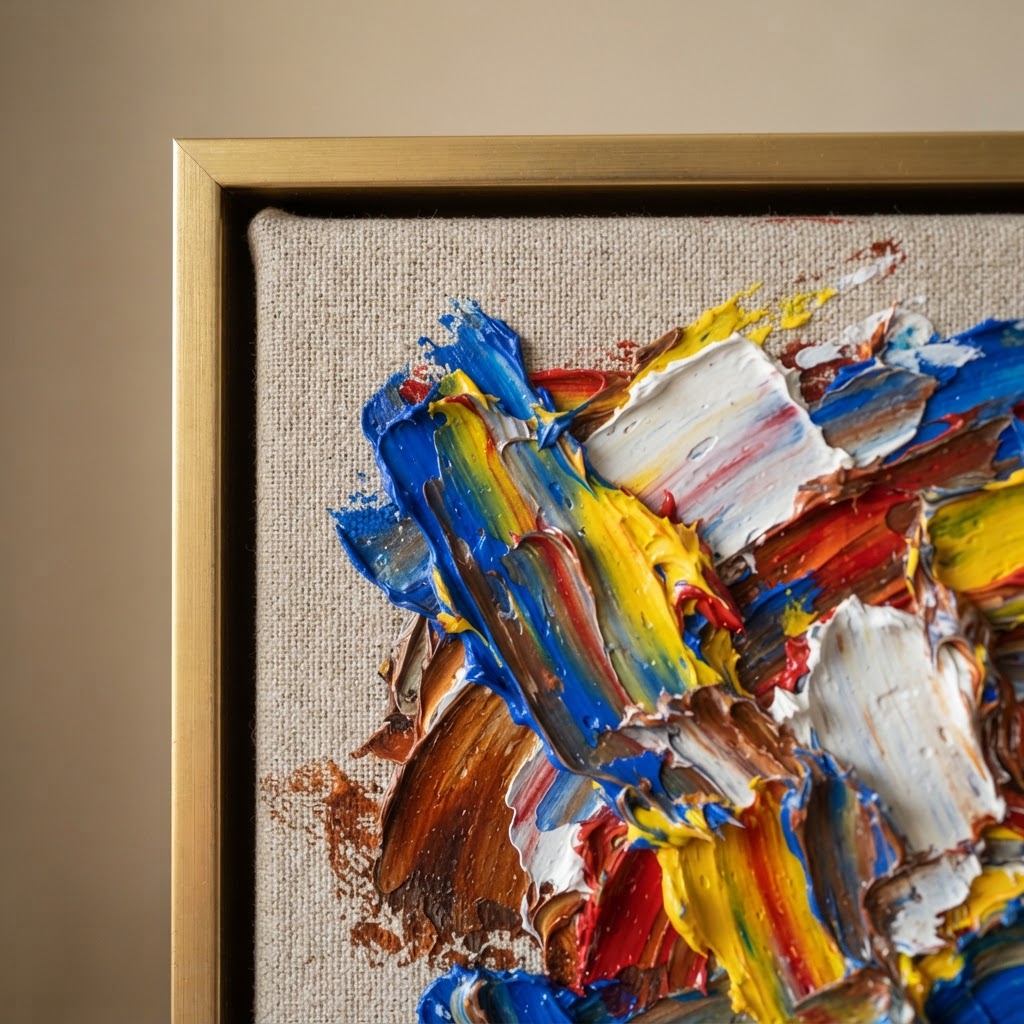
And here's the thing about buying art for a small apartment: you genuinely don't have to spend a lot. Society6, Desenio, and even Etsy have incredible large-format prints that cost a fraction of what original art would. A 40x50 inch print in a simple frame looks genuinely incredible. The scale is what creates the impact, not the price tag. Frame it in a deep, simple frame, hang it properly centered and at the right height, which is eye level at the center of the piece, and it will look like you spent serious money on it.
"In a small space, one bold statement beats ten timid ones every single time. Commit to the large scale and watch everything fall into place."
Incorporate Reflective Surfaces
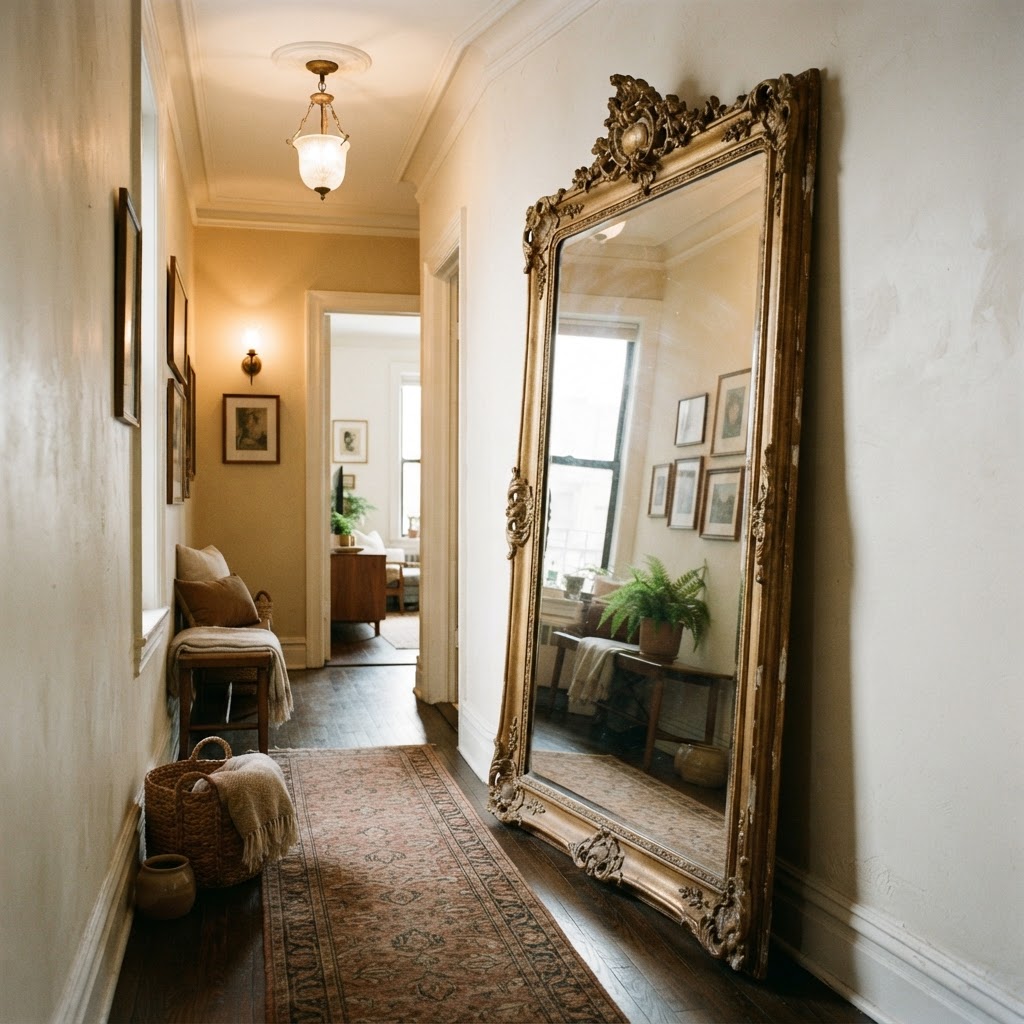
Reflective surfaces are one of those tools that designers have been reaching for since forever, and with very good reason. Light bouncing around a room makes it feel bigger, brighter, and more alive. In a small apartment where natural light might be limited, strategically placing mirrors and incorporating metallic or glossy elements can quite literally transform how much light you're working with.
A large mirror is the most obvious move, and it's a good one. But don't just stick a mirror anywhere. Think about what it's going to reflect. A mirror that reflects a window doubles the light in the room and creates the optical illusion of a second window or even a view. A mirror that reflects a blank wall just gives you more of the same. Placement is everything. Lean a large mirror against a wall rather than hanging it too high, and angle it slightly so it catches both light and the most interesting parts of the room.
Beyond mirrors, think about incorporating other reflective elements throughout the space. A lacquered side table, a metallic lamp base, glass vases, brass or gold hardware on furniture, a coffee table with a glass or mirrored top. None of these things are expensive in isolation, but together they create a sense of light and shimmer that reads as genuinely luxurious. It's about having enough of these elements that they become a characteristic of the space rather than a random afterthought.
- Position your largest mirror to reflect a natural light source
- Choose one metal finish and stick to it throughout, mixing metals rarely looks intentional in small spaces
- Glass-topped furniture adds reflection without visual weight, great for small rooms
- Even glossy paint on a ceiling bounces light downward beautifully
- Mirrored or metallic picture frames add subtle shimmer without being over the top
One thing I want to emphasize here: restraint is key. There's a version of this that tips into Vegas hotel territory, and that's not what we're going for. The goal is considered reflection, not maximum reflection. A few well-placed pieces that catch the light and bounce it around is the sweet spot. You want guests to feel that the room is luminous and spacious, not to clock exactly why and feel like they're in a funhouse.
Final Thoughts
Here's what I want you to take away from all of this: making a small apartment feel expensive and luxurious is not about spending a lot of money. It's about understanding how visual perception works and using it to your advantage. Every single tip in this post is rooted in the same principle: your eye follows lines, light, and visual weight, and you can control all of those things with relatively modest changes and investments.
Start with the curtains because that one change alone will shock you with how much it shifts the feel of a room. Add in a statement light fixture, simplify your color palette, anchor your zones with large-scale art, and sprinkle in some reflective surfaces. None of these things require a renovation or a massive budget. They require thought and intention. And honestly, that's what luxury really is at its core, not the price tag, but the evidence that someone genuinely cared about every decision they made.
Your apartment is worth that level of care. Even if it's rented. Even if it's small. Especially if it's small.
More in Interior
Stay Inspired
Subscribe for new essays on architecture, design, and the spaces that shape us.