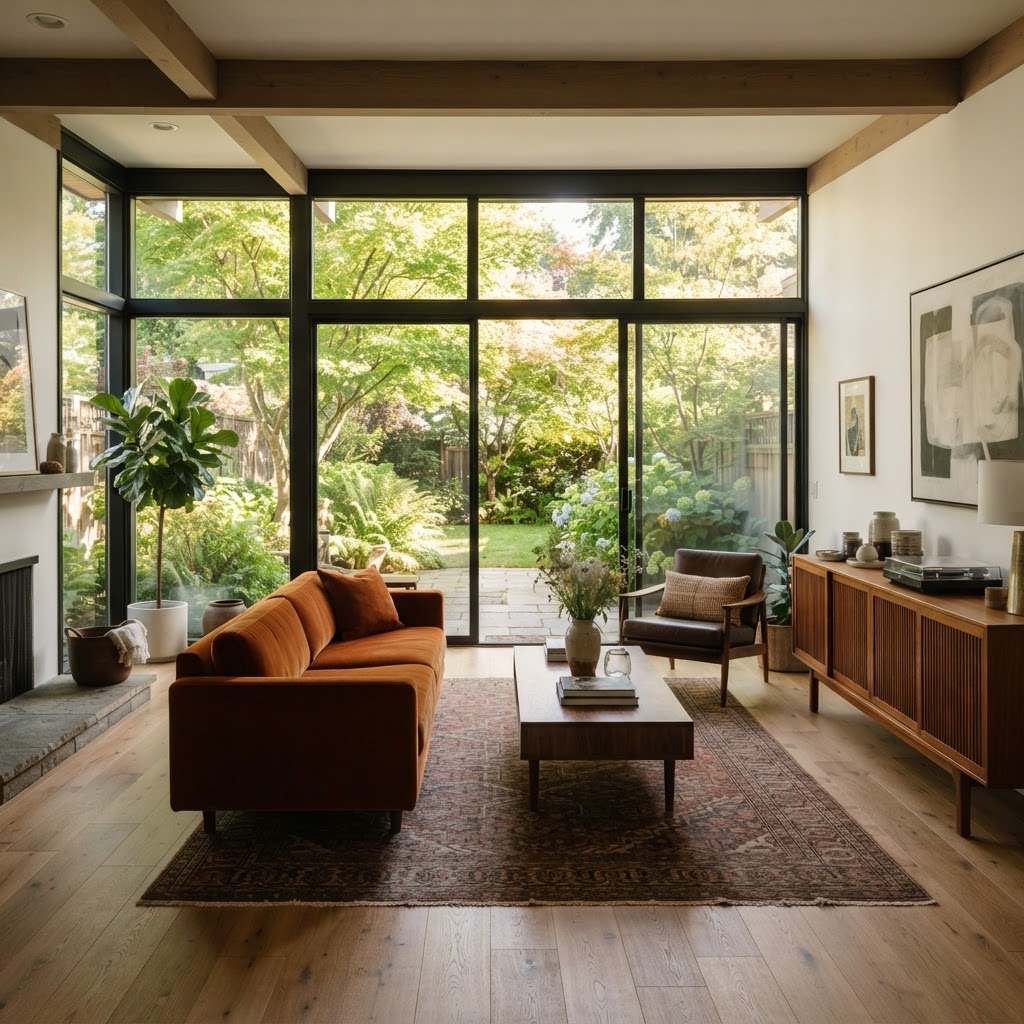
Mid-Century Modern Mastery: The Ultimate Guide to Achieving That Iconic Look
Discover how to blend form and function with our comprehensive guide to mid-century modern design. We break down the key elements you need to create a timeless home that feels both nostalgic and fresh.
Understanding the Foundation of Mid-Century Design
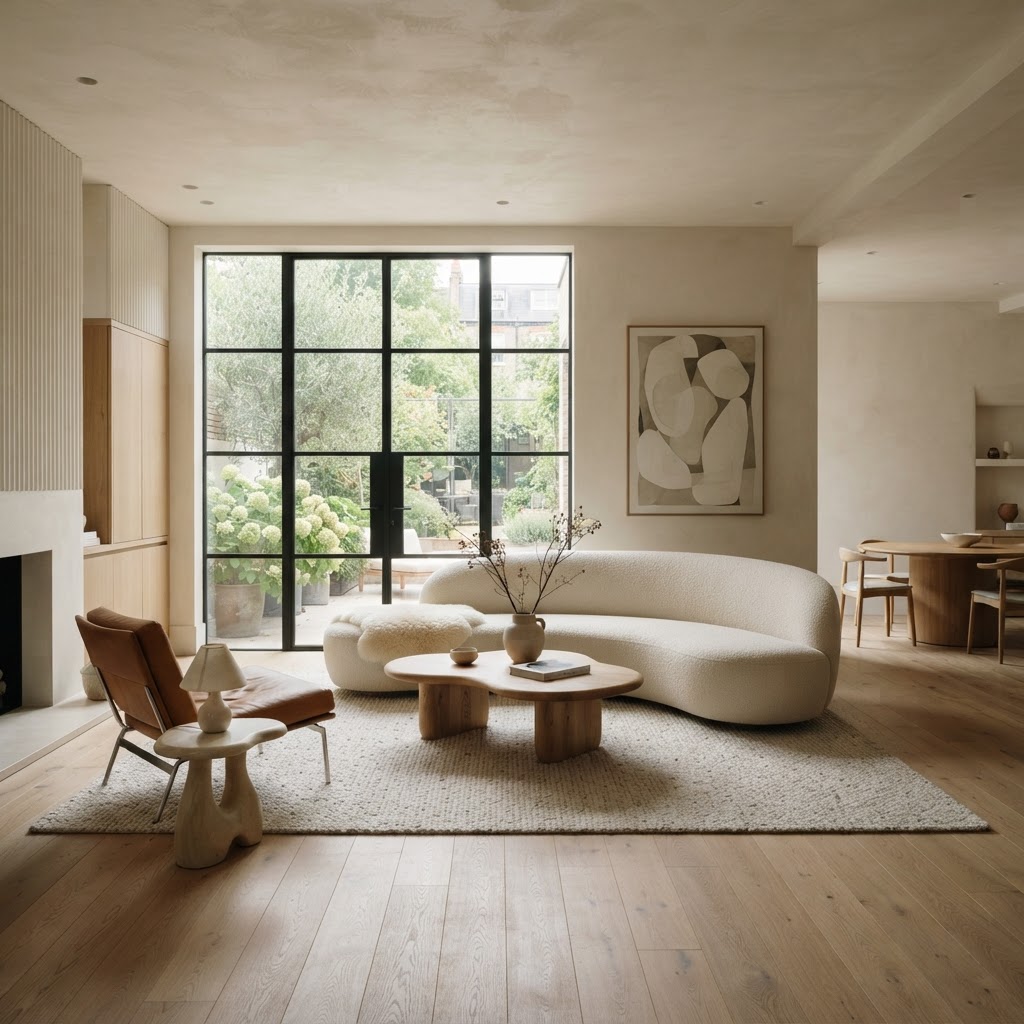
Before you go out and buy an Eames chair or slap some walnut veneer on everything in sight, you really need to understand why mid-century modern looks the way it does. Honestly, this is where most people go wrong. They see the aesthetic on Pinterest and they start copying surface details without grasping the underlying philosophy, and the result feels like a costume rather than a coherent space.
Mid-century modern, roughly spanning from the 1940s through the late 1960s, was a direct response to the world that came before it. Designers were reacting against ornate Victorian excess and the rigid formality of earlier 20th-century styles. Here's the thing: these were people who had lived through war, who had watched the world modernize at a dizzying pace, and they wanted their homes to reflect optimism, functionality, and a kind of honest simplicity. Every curve, every material choice, every open floor plan had a reason behind it.
The foundational principles boil down to a few core ideas. Form follows function is the big one. Nothing is decorative just for the sake of it. Clean lines, minimal ornamentation, and a strong connection between indoor and outdoor spaces define the bones of the style. Natural materials like wood, leather, and stone sit comfortably alongside new industrial materials like molded plastic and fiberglass, because the designers of this era were genuinely excited about what technology could do.
Real talk: if you walk into a room and everything feels fussy or cluttered, you've lost the plot entirely. Mid-century spaces breathe. They have negative space. The furniture sits low to the ground, the sightlines are open, and there's a sense of ease that you feel before you even consciously notice what's in the room. That feeling is the goal. Everything else is just the means to get there.
So before you buy a single piece, sit with your space and think about its bones. High ceilings, large windows, open layouts, these are your best friends. If you're working with a more awkward space, that's totally fine, but understanding the foundation helps you make smarter decisions about where to spend your energy and your budget.
The Iconic Furniture Pieces Every Home Needs
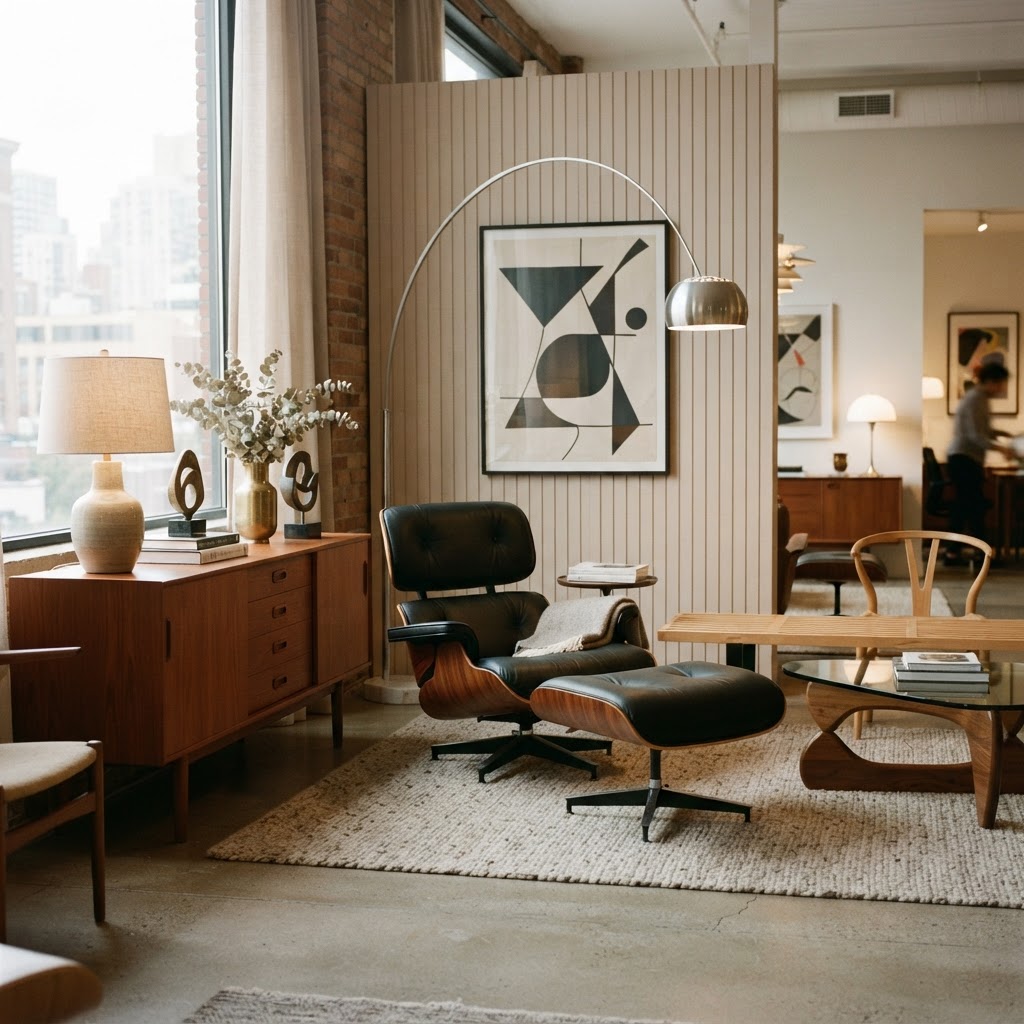
Look, I'm not going to pretend you can do mid-century modern without talking about furniture, because furniture is basically the whole show here. This style is defined by some of the most recognizable pieces in the entire history of design, and for good reason. These pieces work. They're comfortable, they're beautiful, and a surprising number of them are still in production today.
The Eames Lounge Chair and Ottoman is the obvious starting point. Charles and Ray Eames designed it in 1956, and it remains one of the most coveted pieces of furniture on the planet. If you can invest in one authentic or high-quality reproduction piece, make it this one. It anchors a room immediately. Similarly, the Tulip Chair by Eero Saarinen, the Barcelona Chair by Mies van der Rohe, and the Egg Chair by Arne Jacobsen are all pieces that carry enormous visual weight and instantly communicate the era you're channeling.
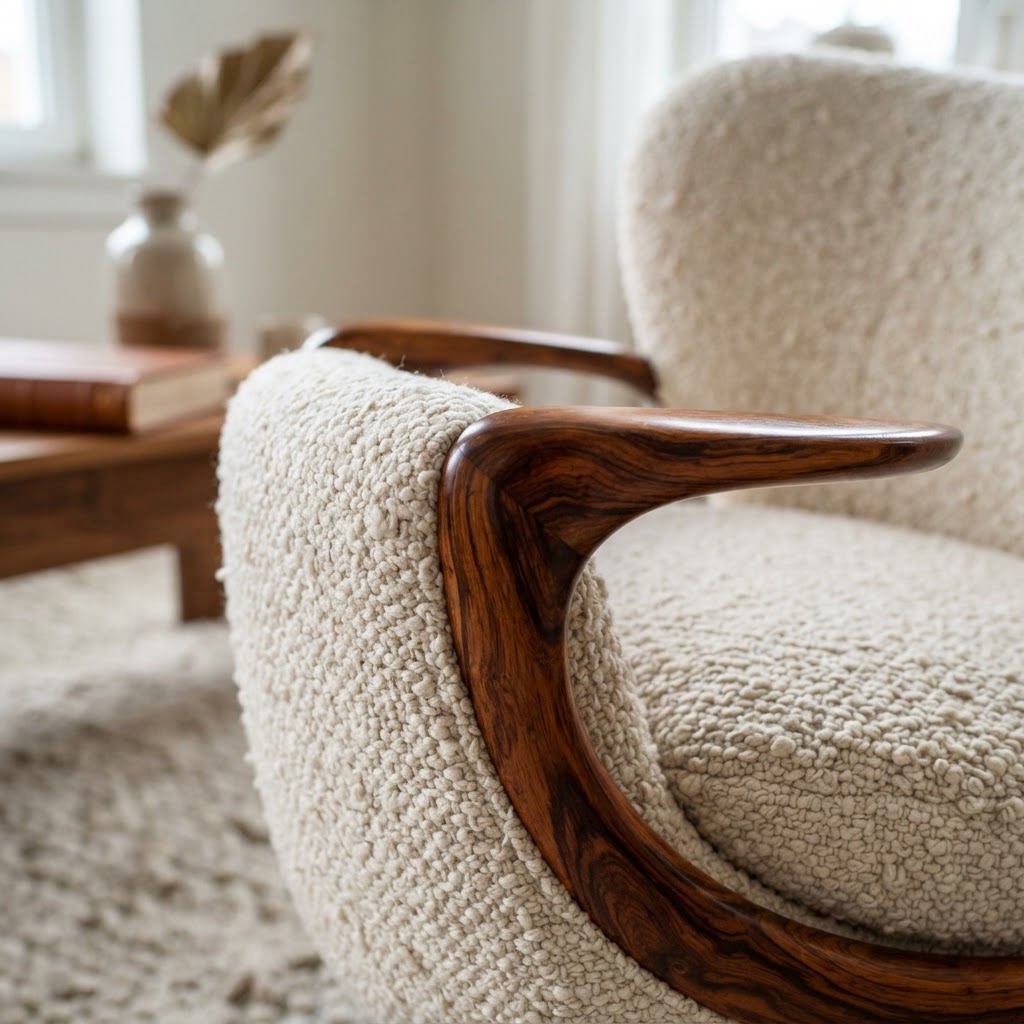
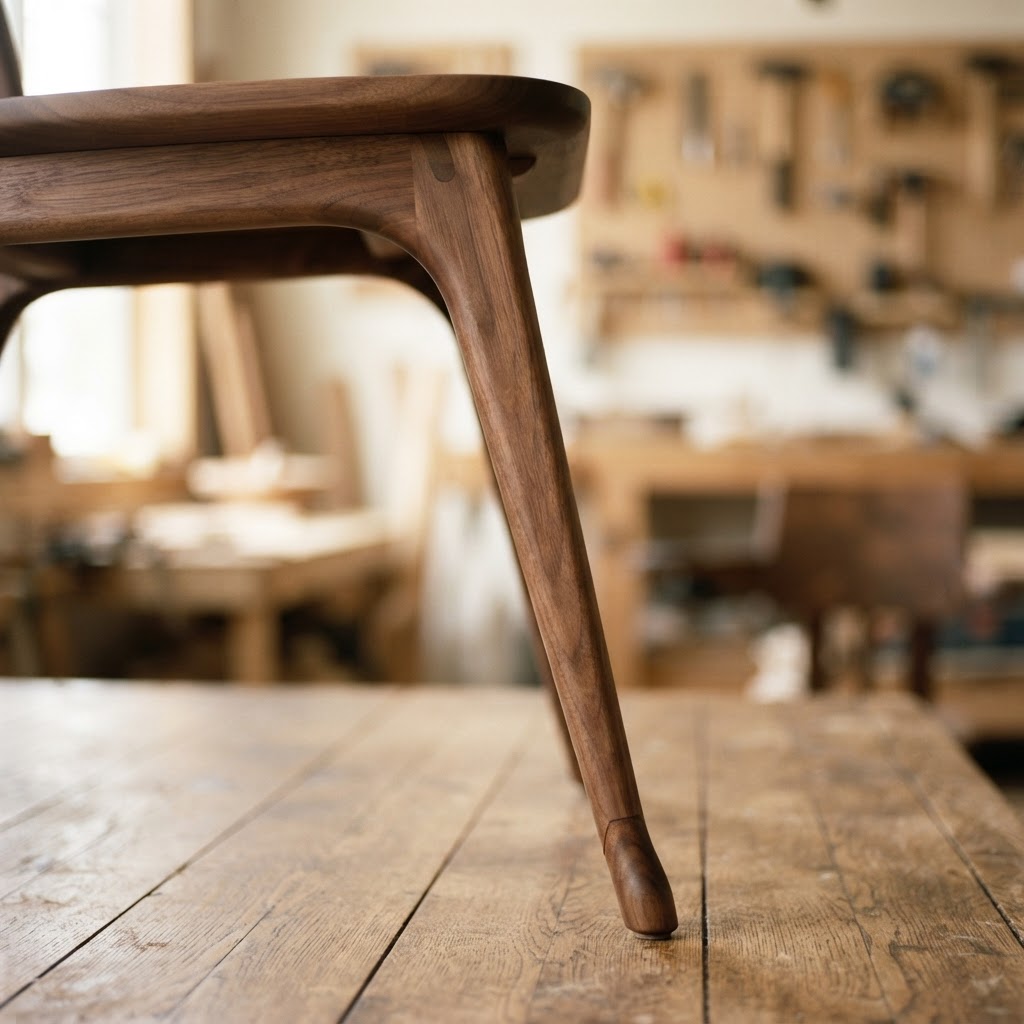
But here's where I want to push back a little on conventional wisdom. You don't need to fill your entire home with museum pieces or even premium reproductions. Honestly, some of the best mid-century spaces I've seen mix one or two investment pieces with clever vintage finds from thrift stores and estate sales. The key characteristics to look for when you're hunting: tapered legs, low profiles, organic shapes, and quality materials like solid walnut, teak, or rosewood.
- Sofas: Look for low-slung, clean-lined sofas with tight upholstery and exposed wooden legs. Avoid anything with skirts or heavy rolled arms.
- Storage: Credenzas and sideboards are essential. The longer and lower the better. Hairpin legs are a bonus.
- Tables: Organic shapes are your friend here. Kidney-shaped coffee tables, tulip bases, and anything with a sculptural quality fits right in.
- Chairs: Mix seating types. A sculpted accent chair next to a more streamlined sofa creates the kind of collected-over-time feeling that makes a space feel real.
Trust me on this: resist the urge to match everything perfectly. Mid-century modern done well has a slightly curated, slightly eclectic quality that tells a story. It should feel like you actually live there, not like a showroom floor.
Mastering the Mid-Century Color Palette
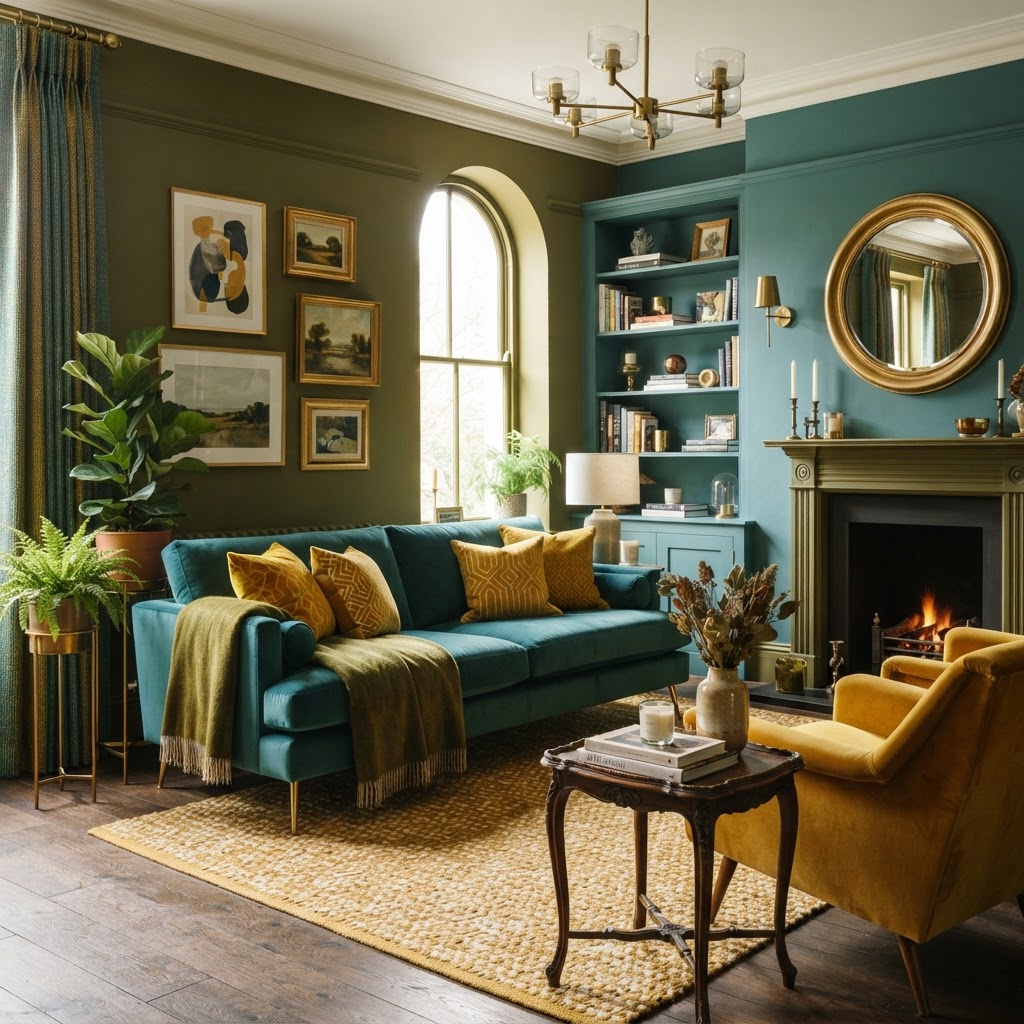
Color is where a lot of people either nail this style or absolutely fumble it. And honestly, I get it, the mid-century palette can feel counterintuitive if you've grown up in a world of greige walls and white kitchens. This era was not afraid of color. But it used color in a specific, intentional way that's worth understanding before you start painting walls.
The base palette is warm and grounded. Think warm whites, creamy off-whites, warm tans, and caramel browns. Walnut wood tones are everywhere, and they set a warm, rich baseline that everything else plays off of. On top of that foundation, the mid-century designers loved earthy, slightly muted tones: olive green, burnt orange, mustard yellow, terracotta, and a particular shade of teal that's become almost synonymous with the era.
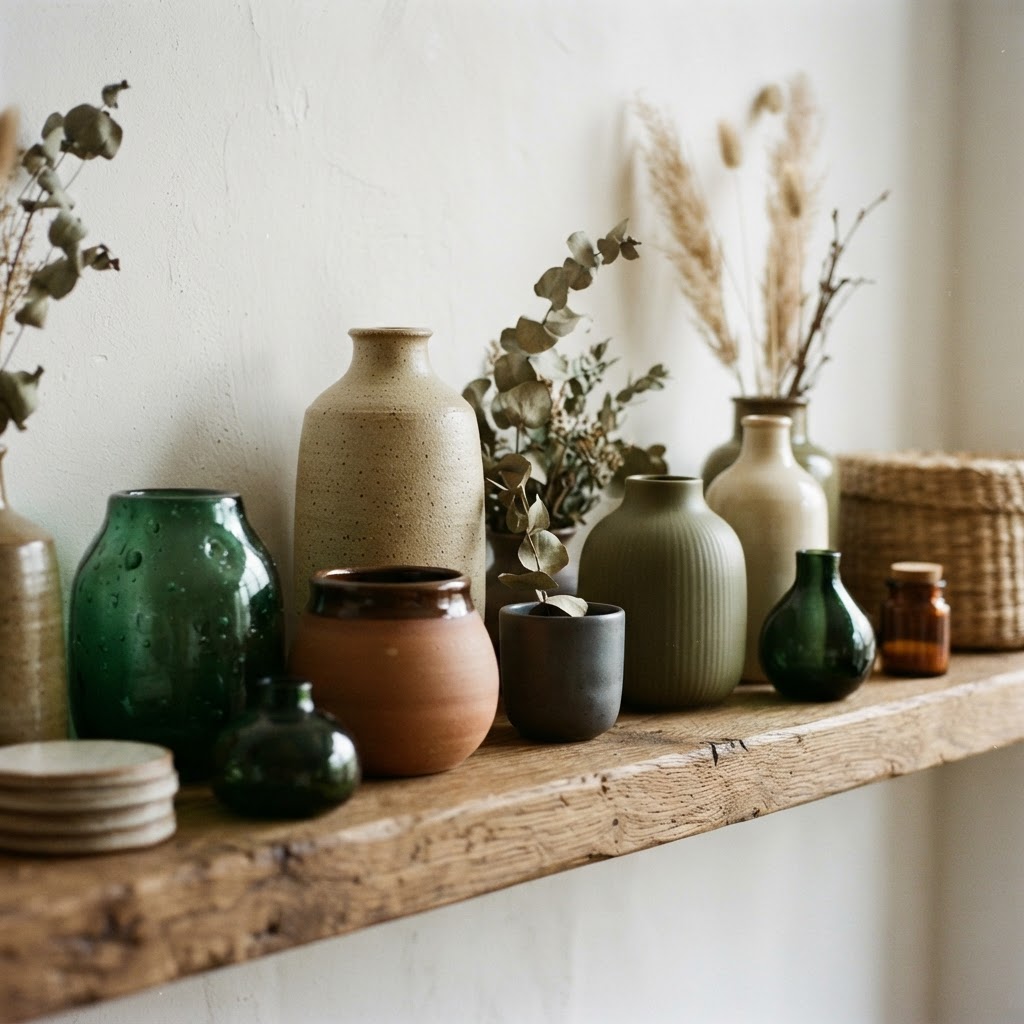
Here's the thing about those accent colors: they work because they're used with restraint. A mustard yellow sofa against warm white walls and a walnut credenza is stunning. Paint every wall mustard yellow and throw in orange curtains and terracotta cushions and suddenly you're living in a 1970s nightmare. The bolder colors should be accents, not the main event.
Some practical guidance on actually applying this in your own home:
- Start with warm white or a soft greige on walls. Benjamin Moore's White Dove or Pale Oak are both excellent choices.
- Introduce your primary wood tones through furniture, letting that warm brown anchor the space.
- Pick one bold accent color, just one, and use it consistently but sparingly through textiles and a few accessories.
- Black is used as a graphic accent, in lamp bases, table legs, or thin-framed artwork, to add contrast and definition.
And honestly, don't underestimate the power of a well-chosen accent wall. A deep olive green or a rich teal on a single wall behind your primary seating area can transform an ordinary room into something that feels genuinely considered and cohesive.
Lighting as Art: Statement Fixtures
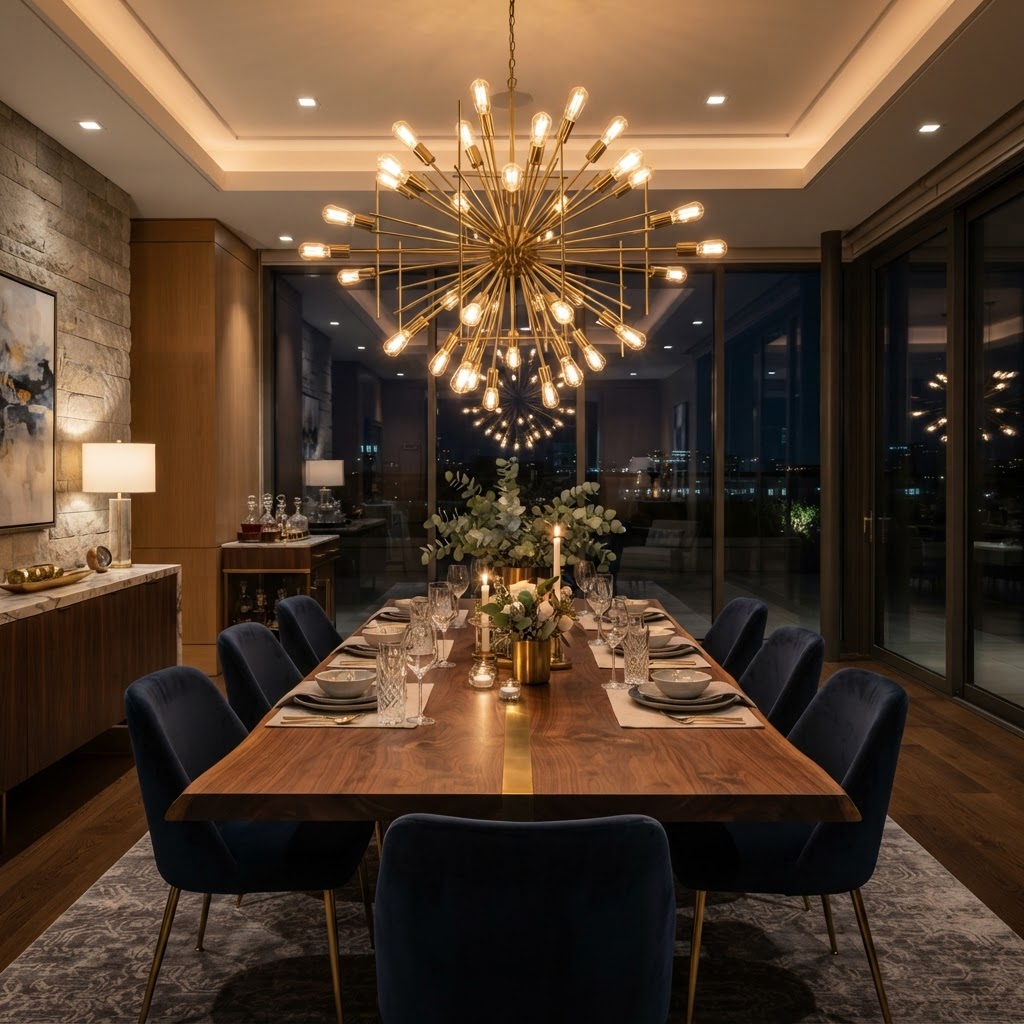
If furniture is the backbone of mid-century design, lighting is its personality. Seriously, this is one of the most underestimated elements in any interior, but in a mid-century space it's absolutely critical. The designers of this era treated light fixtures as sculpture. They weren't just functional objects, they were artistic statements that could define the entire mood and character of a room.
The shapes you're looking for are organic, sculptural, and often slightly unusual. Sputnik chandeliers with their starburst form reference the space age optimism of the era. Tripod floor lamps with cone or drum shades are a staple. The Arco lamp by Castiglioni, with its massive arc reaching over a seating area from a marble base, is one of the most dramatic and beautiful pieces ever designed for residential use. These are pieces that stop you in your tracks.

Beyond the statement pieces, think about layering your light sources. Mid-century interiors avoid harsh overhead lighting wherever possible. A combination of floor lamps, table lamps, and a single sculptural pendant or chandelier creates the warm, layered glow that makes these spaces so inviting. Use warm bulbs, always. Cool white LED bulbs will absolutely kill the vibe, no matter how perfect your furniture selection is.
Materials to look for in mid-century lighting include brass, brushed gold, black powder-coated metal, and natural materials like rattan and wood. The Nelson Bubble Lamp, originally designed by George Nelson in 1952, is still one of the best ceiling fixtures you can buy for this style, and it works in almost any room. If you're on a budget, the good news is that mid-century lighting is extremely well-represented at every price point, from genuine vintage finds to solid contemporary reproductions.
Adding Life with Retro Textiles and Patterns
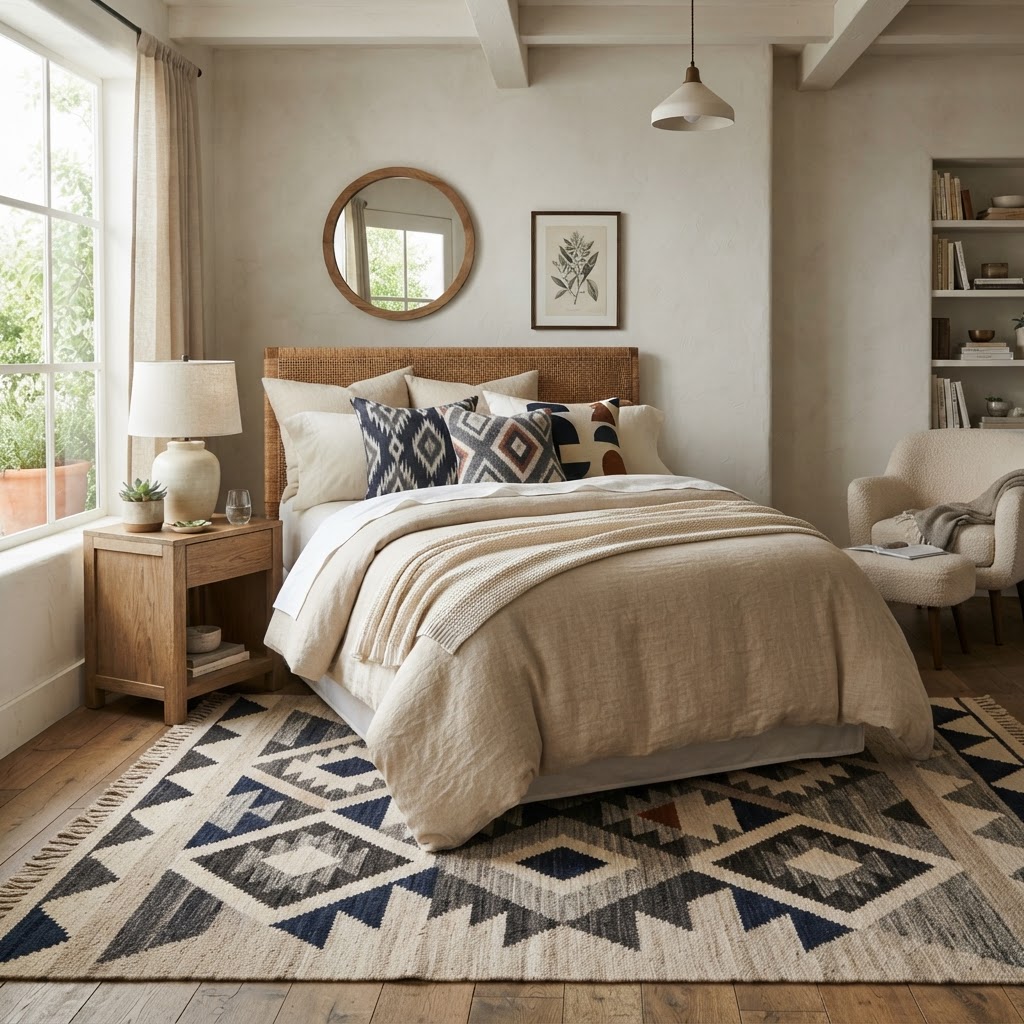
Okay, so you've got your furniture sorted, your palette dialed in, and your lighting doing something genuinely beautiful. Now comes the layer that most people rush through or ignore entirely, and that's textiles. Real talk: textiles are what make a space feel finished. They add warmth, texture, and that human quality that turns a well-designed room into an actual home.
Mid-century textiles are bold and graphic without being chaotic. Geometric patterns, abstract prints, and organic botanical motifs are all period-appropriate and still look incredible today. Think about the textiles you might have seen in a Palm Springs vacation home from 1962: large-scale geometric weaves, bold stripes, abstract prints that reference both nature and modernist art. These patterns were meant to be seen, not hidden, so don't be shy about using them.
For rugs, look for flatweave wool rugs with geometric patterns or simple abstract designs. A large, well-chosen area rug is genuinely one of the most powerful tools you have in any room. It anchors the furniture, defines the space, and if you choose the right one, it can tie together every other element in the room almost effortlessly. Shag rugs also have a legitimate place in this aesthetic, particularly in bedrooms and more intimate spaces.
- Throw pillows: Mix geometric prints with solid accent colors. Keep the scale varied but the palette cohesive.
- Curtains: Floor-length, simple panels in solid colors or subtle textures. Avoid heavy drapes or anything fussy.
- Throws: Chunky knit or woven throws in mustard, burnt orange, or olive add texture without visual noise.
- Upholstery: Boucle, tweed, and textured wool fabrics are extremely period-appropriate and have had a massive resurgence lately for good reason.
One thing I'd encourage you to think about is mixing a few natural plant elements in with your textiles and accessories. Large-leafed plants like monsteras, fiddle-leaf figs, and bird of paradise plants are practically synonymous with mid-century interiors at this point, and for good reason. They soften the clean lines of the furniture, add organic life to the space, and reinforce that connection to the natural world that was so central to the design philosophy of the era. A well-placed plant can do more for a room than almost anything else, and honestly, they're the most affordable design element on this entire list.
Final Thoughts
Mid-century modern is one of those rare design styles that manages to feel simultaneously timeless and completely of its era. It rewards understanding. The more you know about why it looks the way it does, the better your decisions become, and the more cohesive and genuinely beautiful your space will be.
Don't rush it. Build the look slowly, invest where it counts, hunt for vintage pieces, learn to see quality, and above all, trust your instincts. A space that reflects your actual taste and personality, filtered through the principles of this extraordinary design movement, will always be more compelling than a perfectly assembled showroom replica. That's the whole point, honestly. Make it yours.
More in Interior
Stay Inspired
Subscribe for new essays on architecture, design, and the spaces that shape us.