The Art of Layering: How to Mix and Match Throw Pillows Like a Pro
Struggling to make your sofa look pulled together. I am breaking down the foolproof formulas for styling throw pillows that look professional and intentional in any room.
The Rule of Three for Symmetry
Okay, let's start with the foundation. If you've ever looked at a beautifully styled sofa on Pinterest and wondered why yours just never quite looks like that, I can almost guarantee the answer comes down to grouping. The rule of three is one of those design principles that sounds almost too simple, but honestly, it works every single time. Our brains are wired to find odd numbers more visually interesting than even ones. Three pillows, five pillows, seven pillows. Never four. Never six. Trust me on this.
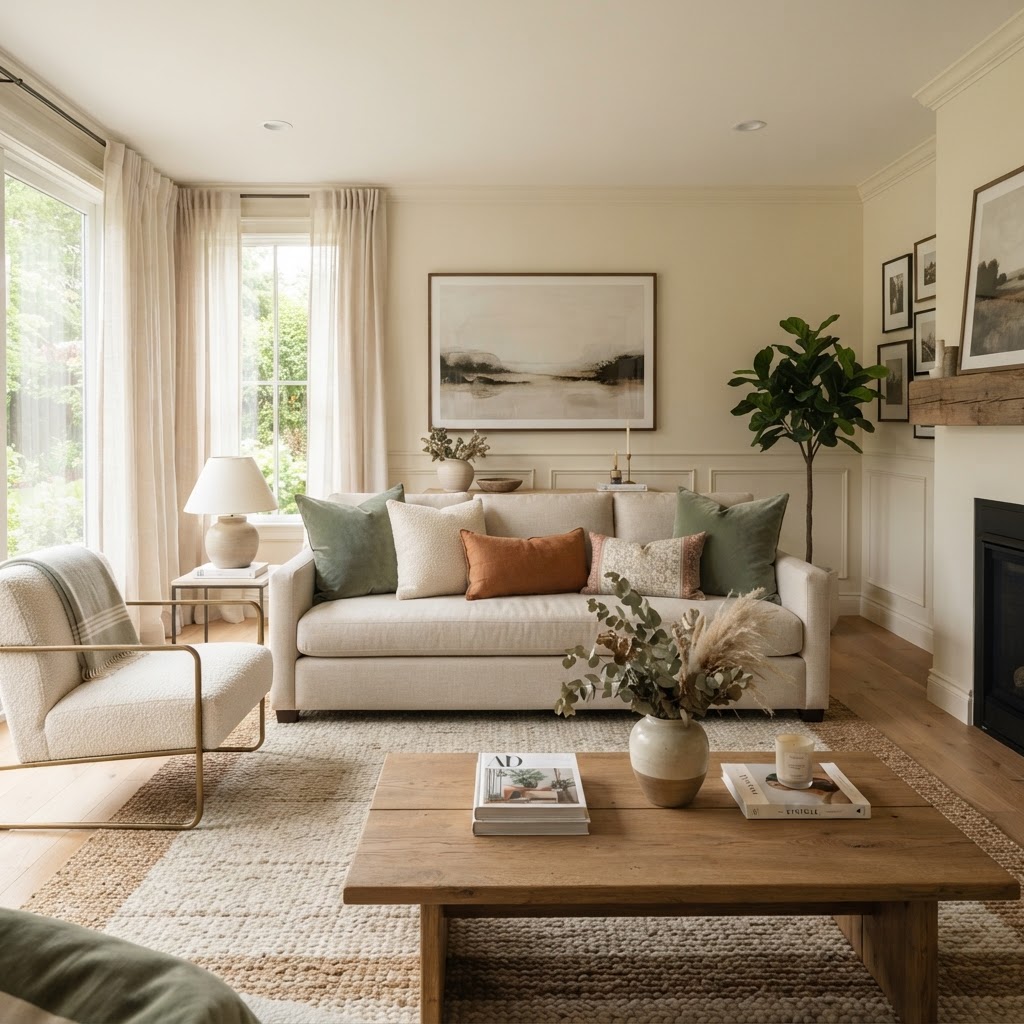
For a standard sofa, the sweet spot is usually five pillows arranged in a deliberate layered setup. You'd go with two larger pillows in the back, two medium ones in front of those, and then one smaller accent pillow or a lumbar right at the center front. That front pillow is doing a lot of work. It ties the whole composition together and gives your eye a place to land. Without it, everything feels weirdly unresolved, like a sentence that just trails off.
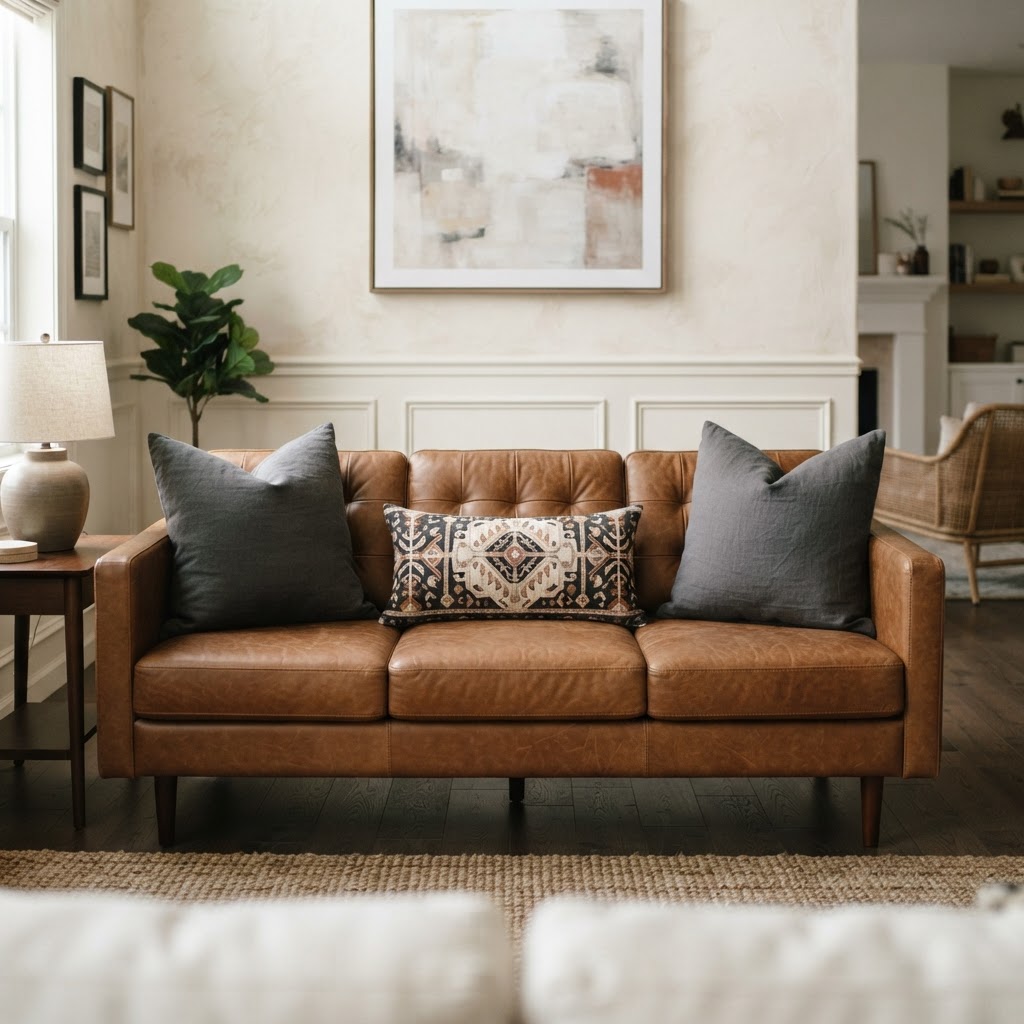
Now, symmetry doesn't mean identical. Real talk, perfectly matching pillows on both sides can actually look a little stiff and showroom-y. What you're going for is balanced symmetry, meaning both sides feel roughly equal in visual weight even if the pillows aren't carbon copies of each other. So maybe your left side has a deep navy lumbar and your right has a similarly sized geometric in navy and cream. Same weight, different personality. That's the move.
One more thing worth mentioning: the rule of three also applies to chairs and beds. A bedroom with three pillows shoved against the headboard, layered from large to small, will almost always look more intentional than two pillows sitting flat and lonely. Start counting your pillows in groups of odd numbers and you'll immediately start seeing a difference. It sounds gimmicky until you try it once and can't unsee it.
Mastering Scale and Pattern Mixing
Here's the thing that trips most people up: they're afraid of mixing patterns. They'll grab five pillows in the same solid color and wonder why it looks boring. Or, on the other end of the spectrum, they mix four bold prints and the sofa looks like it's having a full identity crisis. The secret is scale variation, and once you understand it, you'll never struggle with this again.
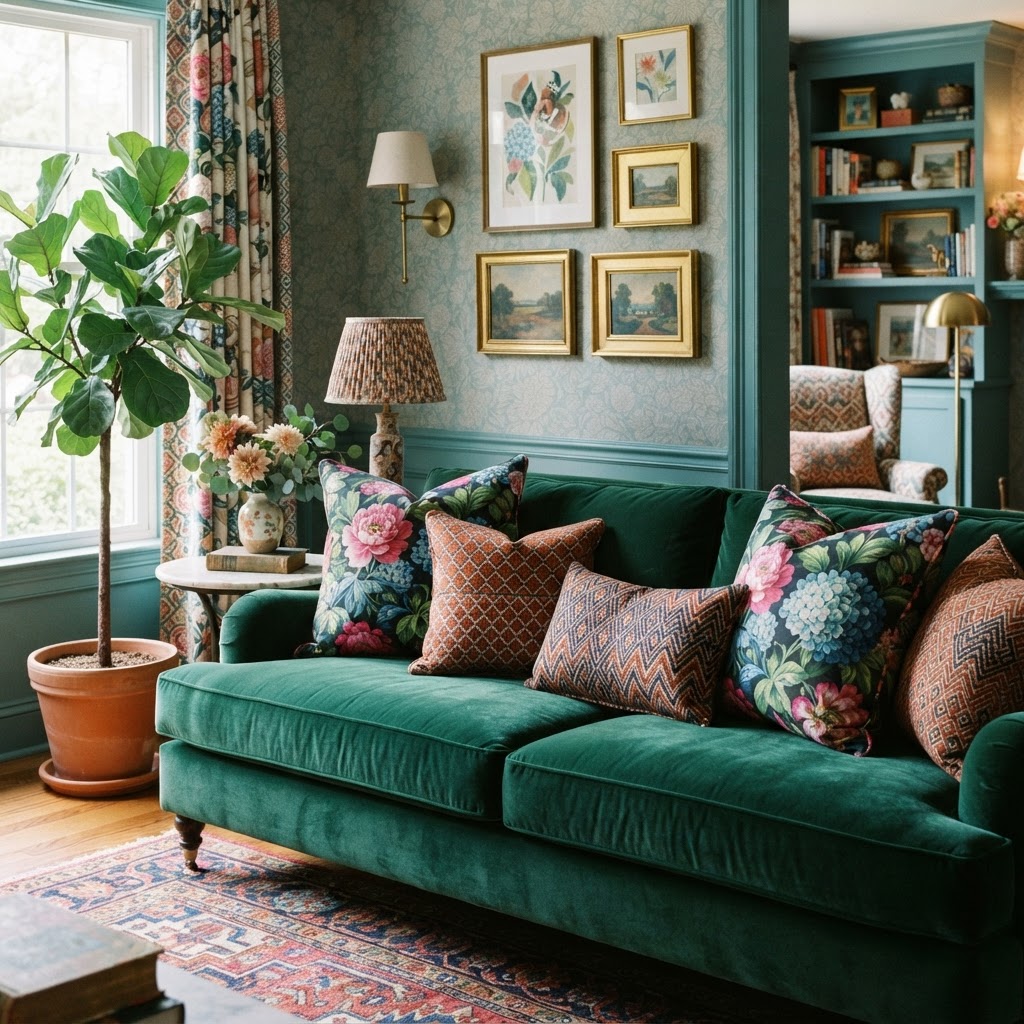
The basic framework goes like this. Pick three patterns that vary dramatically in scale: one large-scale print, one medium-scale pattern, and one small-scale or geometric. A big oversized floral, a medium stripe, and a tiny houndstooth, for example. As long as they share at least one color in common, they will work together. That shared color is the thread that makes the combination feel curated rather than random. You don't need a designer's eye for this. You just need to follow the formula.
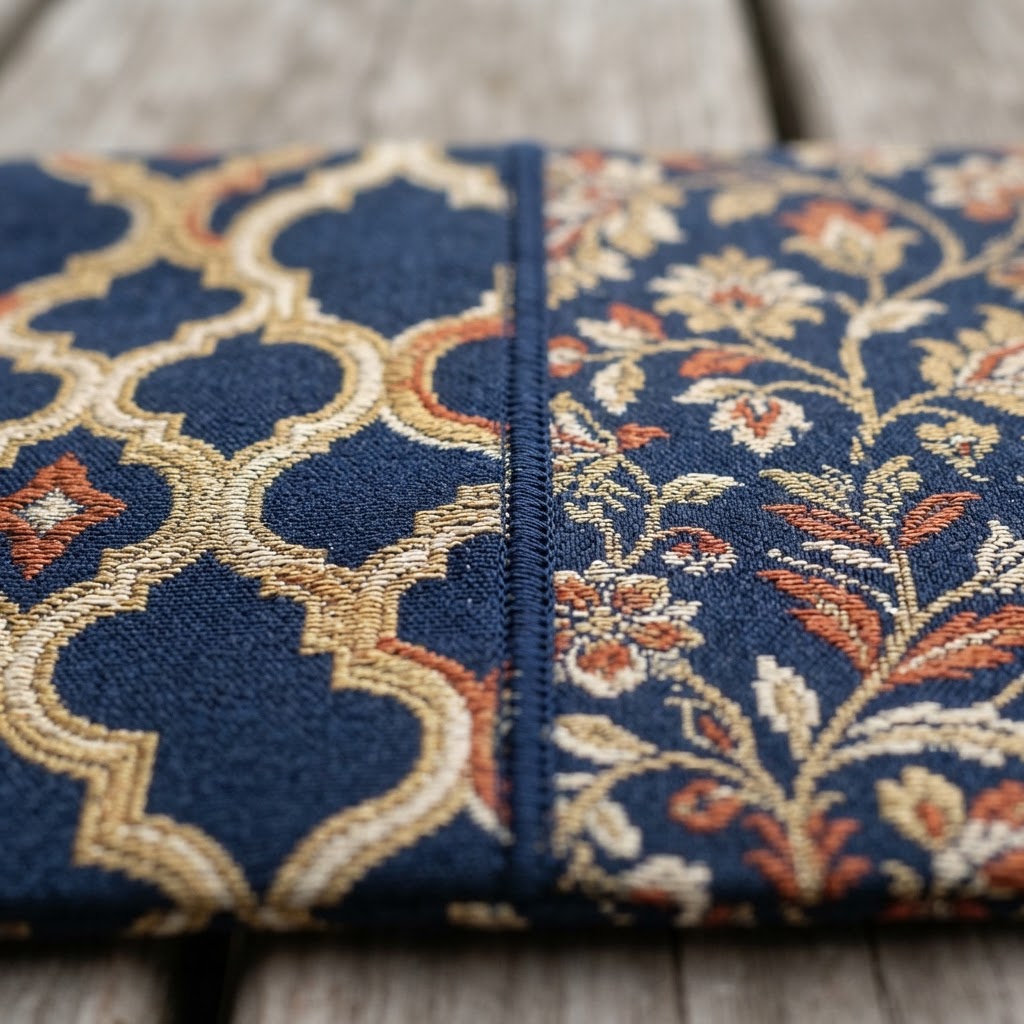
A classic combination that honestly never fails: a large botanical or abstract in your dominant color, a medium-scale stripe in a complementary neutral, and a solid or near-solid with interesting texture. That last one is key. You don't want all five pillows to be busy. Including a solid or texture-only pillow gives the eye somewhere to rest between the patterns. Think of it like white space in graphic design.
And look, if you're genuinely nervous about jumping into full pattern mixing, start with just two patterns and one solid. That trio is beginner-friendly and still looks incredibly polished. Sticking to a consistent color palette across all three will do most of the heavy lifting. Once you feel more confident, you can layer in a fourth or fifth pillow and build from there. This stuff gets easier the more you play around with it, and honestly, the playing around is half the fun.
Focusing on Texture for Depth
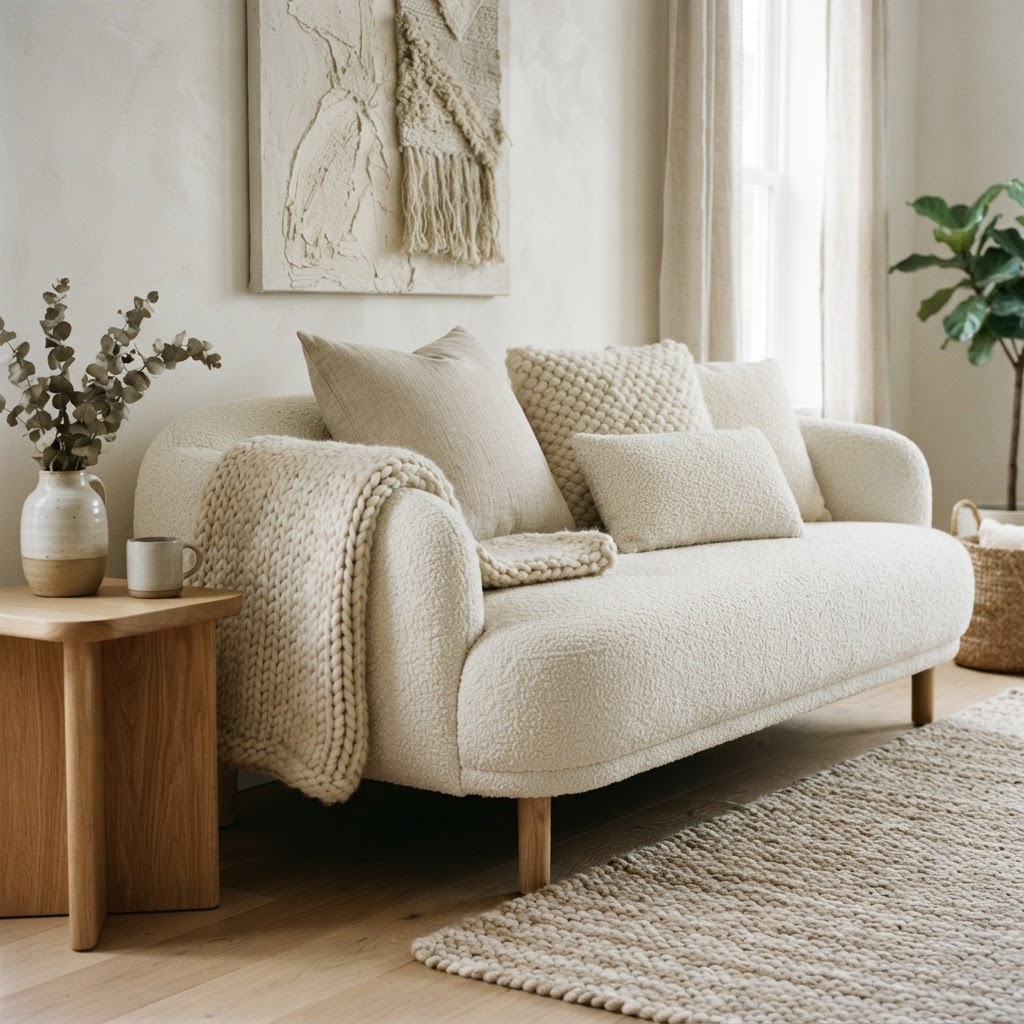
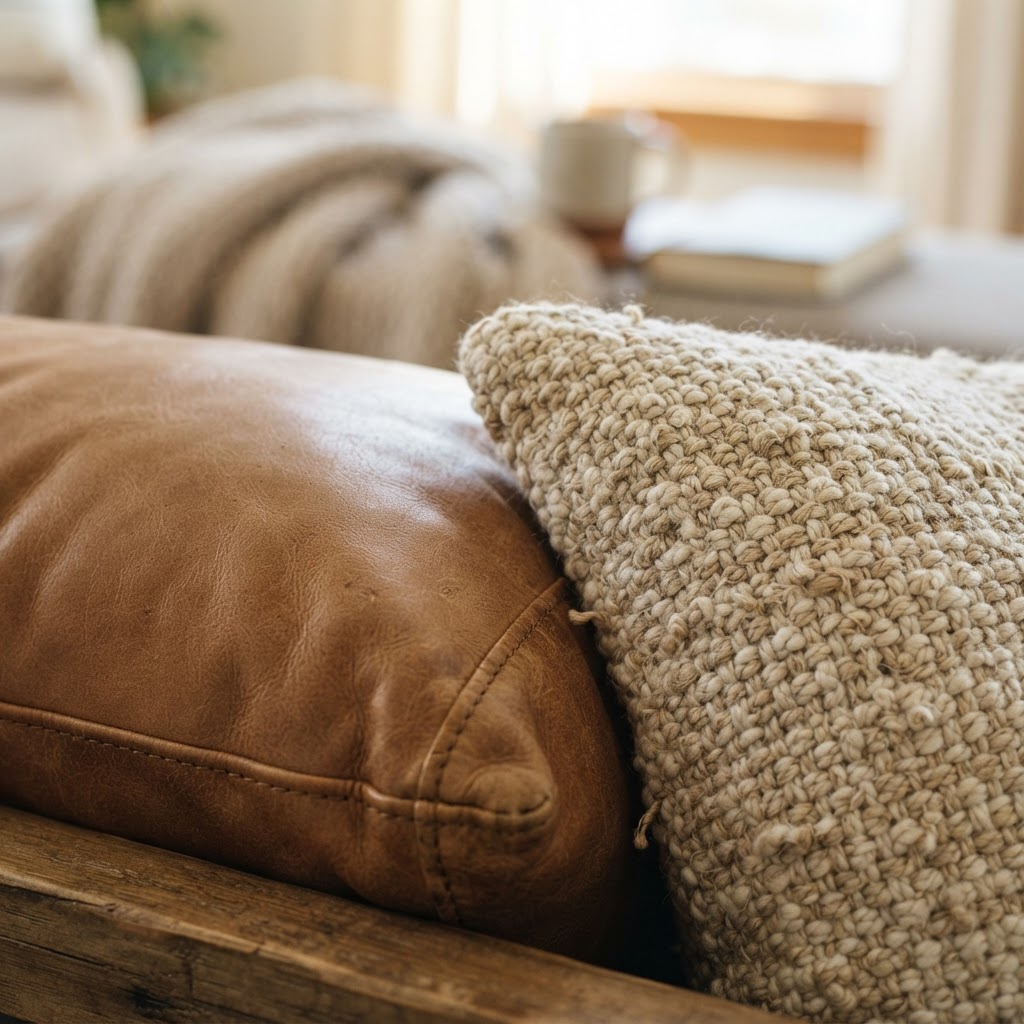
Texture is honestly the most underrated element in pillow styling, and I will die on this hill. Color and pattern get all the attention, but texture is what makes a pillow arrangement feel warm, layered, and genuinely inviting rather than flat. You can have a completely monochromatic pillow setup in all white and beige and it will still look rich and interesting if you're mixing your materials well. Velvet next to linen next to chunky knit. That contrast is everything.
Let me give you some combinations that work beautifully in practice. A smooth silk or velvet pillow next to a nubby boucle creates instant contrast. A flat cotton canvas pillow gains a lot when placed beside something with embroidery or fringe. Even something as subtle as a pillow with a woven geometric versus a pillow with a printed geometric creates enough textural difference to feel layered. The prints might look similar from across the room, but up close there's a richness to it that just feels expensive without actually being expensive.
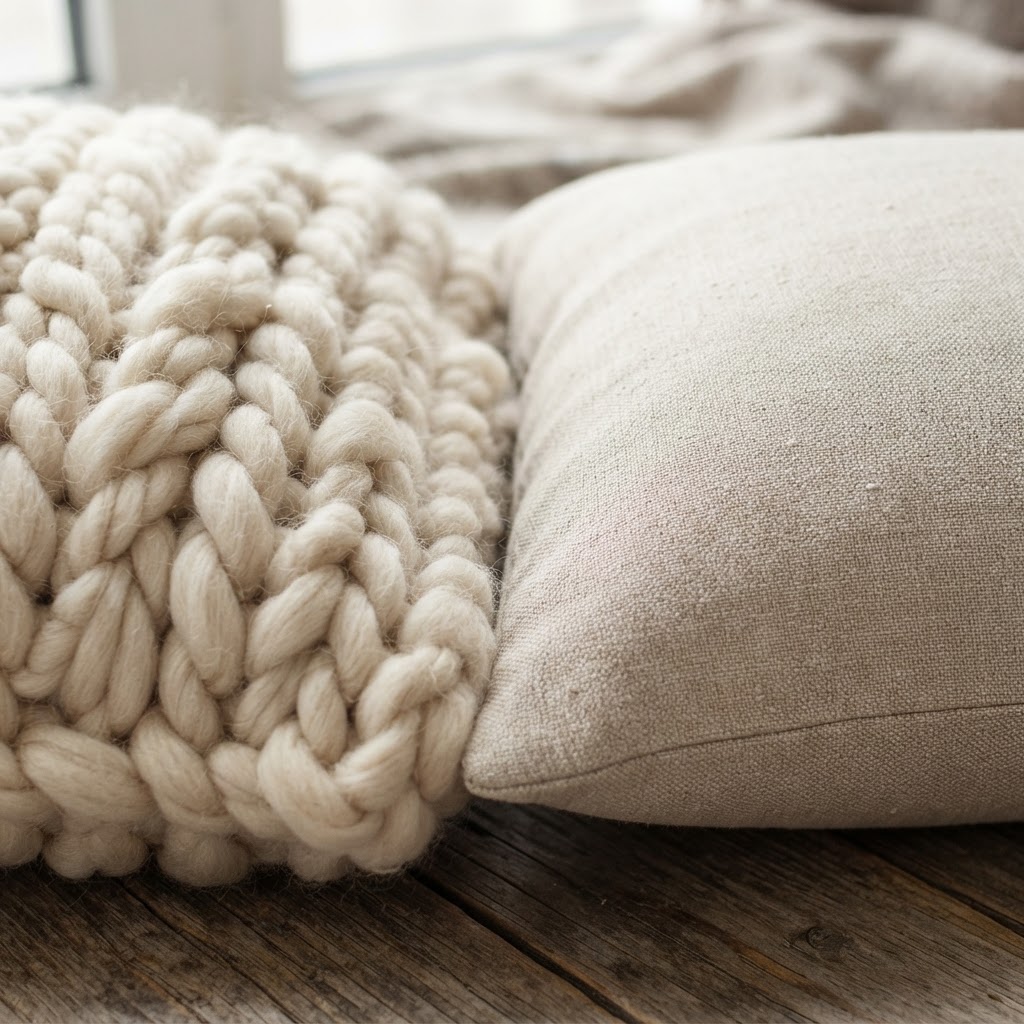
Seasonally, texture is also your best friend for transitioning a space without buying all new pillows. Swap in heavy knit or faux fur pillows in the fall and winter, then trade them out for lighter linen or cotton ones in spring and summer. You can keep the same color story and just change the materials. It's one of those low-effort, high-impact moves that makes your home feel seasonally intentional without requiring a total overhaul every few months.
- Velvet: Luxurious and reflective, catches light beautifully, works in almost any style of room.
- Linen: Casual, breathable, and effortlessly relaxed. Perfect for layering in warmer months or more laid-back spaces.
- Boucle: That curly, textured weave that everyone is obsessed with right now, and for good reason. It adds warmth without weight.
- Chunky knit: Cozy, tactile, and very seasonal. Best in fall and winter arrangements.
- Embroidered or beaded: Great as an accent piece to add artisanal detail and something a little unexpected.
The goal is to think of your pillow collection like a fabric swatch board. You want a range of surfaces and finishes, not just a range of colors. When someone sits on your sofa, they should want to reach out and touch everything. That's how you know you've nailed the texture game.
Incorporating Pops of Color
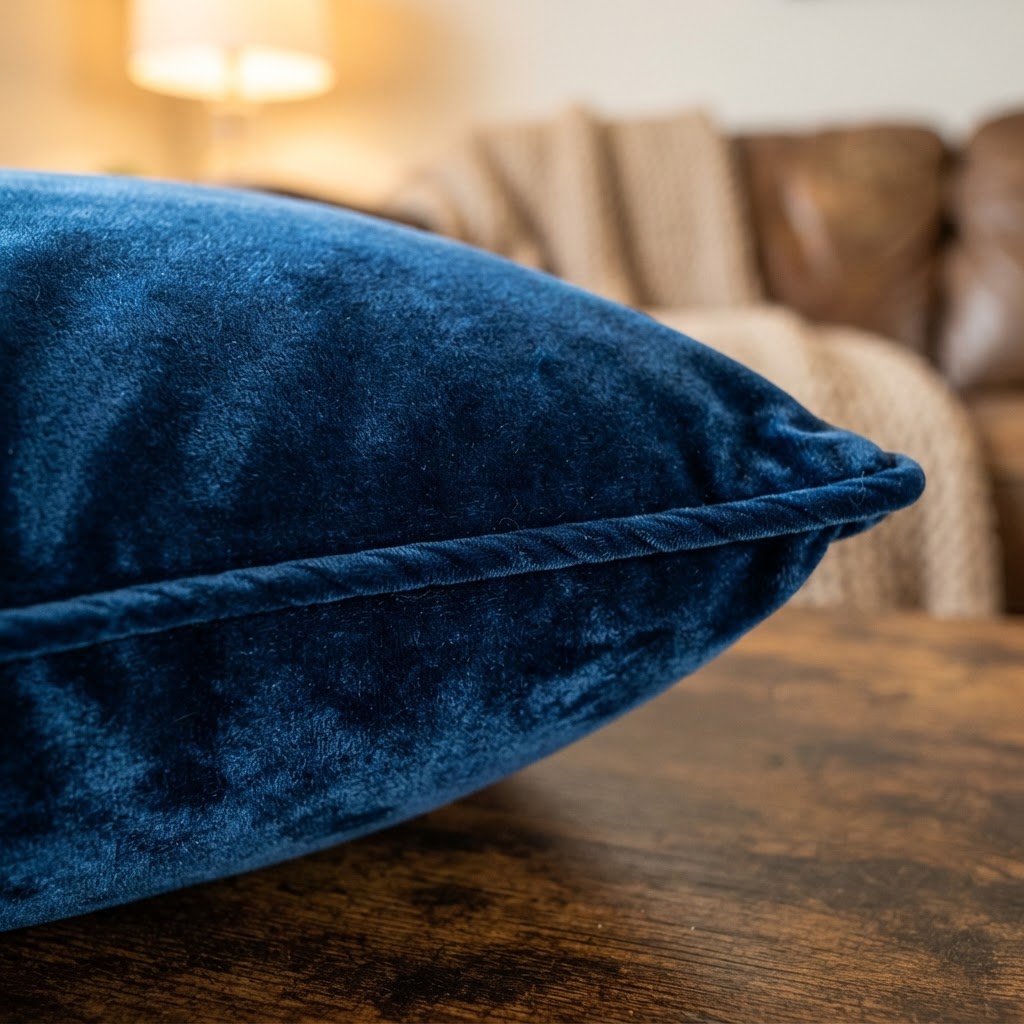
Color is where people either get really timid or go completely overboard. Honestly, both extremes are avoidable if you just follow a simple approach. Start with your room's existing color story, meaning whatever colors already show up in your rug, artwork, curtains, or furniture, and pull from those. Your pillows shouldn't introduce completely foreign colors into a room. They should echo and amplify what's already there.
That said, a pop of color is often exactly what a neutral room needs to feel alive. A creamy beige sofa with a bunch of beige and white pillows can look serene but also a little flat. Drop in one or two pillows in a deep terracotta, a moody sage green, or an inky navy and suddenly the whole sofa comes to life. The key word there is one or two. The pop only works because it's contrasting against the neutrals. If you add five colorful pillows to a neutral sofa, you no longer have a pop, you just have a colorful sofa.
"Your accent pillow should feel like punctuation at the end of a sentence, a deliberate, well-placed statement that gives the whole arrangement meaning."
A great trick for working with color is to repeat it at least twice in the room. If you're using a rust orange pillow on the sofa, make sure rust orange shows up somewhere else in the space, even if it's just a small vase or a few books on a shelf. That repetition is what makes a color feel intentional rather than random. Without it, even a beautiful pillow can feel like it landed there by accident.
And look, you don't have to commit to a color permanently. Pillows are one of the cheapest and easiest ways to test a color in a space before you paint a wall or buy a new rug. Buy two throw pillows in that color you're curious about, live with them for a few weeks, and see how you feel. If you love it, lean into it more. If it drives you crazy, swap them out for something else. Low stakes, high reward.
Selecting the Right Inserts
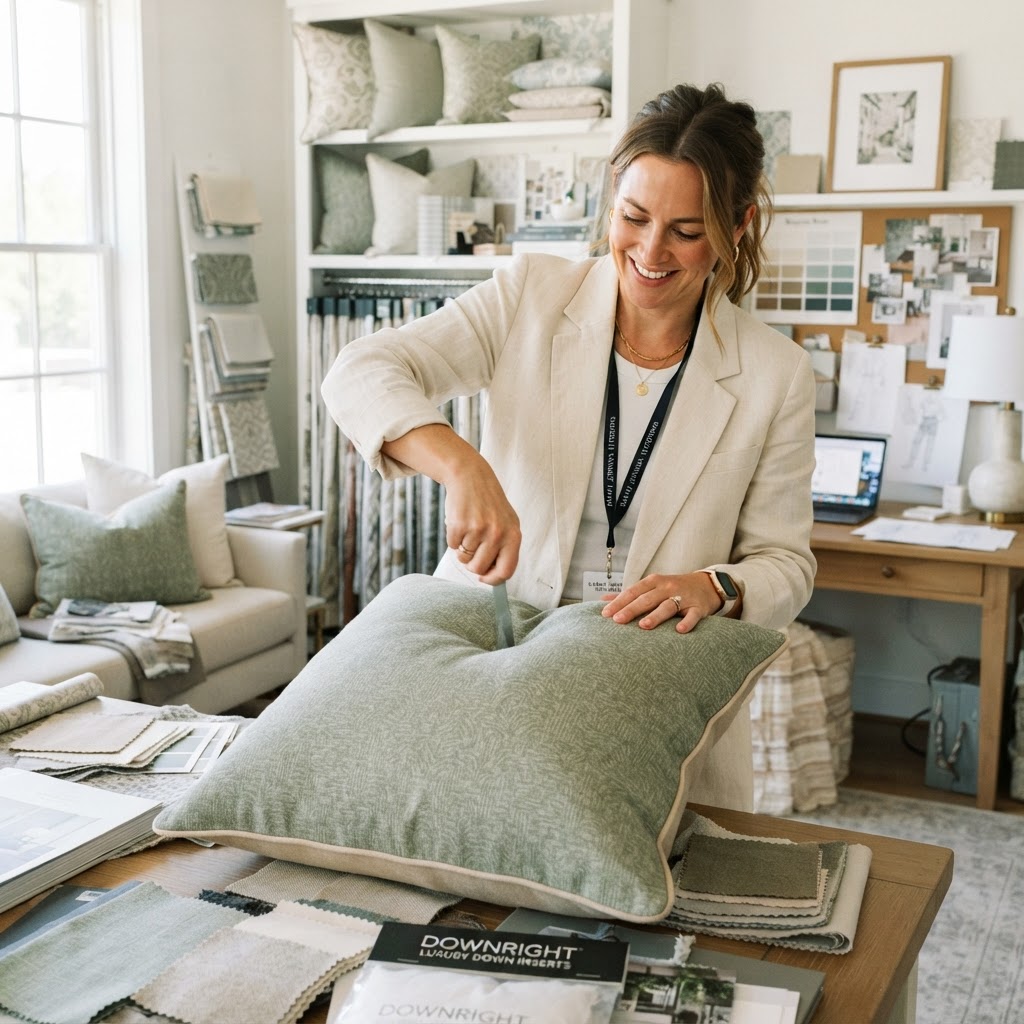
Nobody talks about this enough, and I think it's because it feels like a boring, behind-the-scenes detail. But real talk, the insert is what separates a designer-looking pillow from a sad, deflated one. You can have the most beautiful pillow cover in the world, fill it with a cheap poly insert, and it will look bad. Full stop. This is one of those places where spending a little more money actually makes a noticeable difference.
Down or down-alternative inserts are the gold standard for throw pillows. They're soft, they have that gorgeous plump look, and they hold their shape well when you fluff them. The general rule is to go one size up from your cover. So if your pillow cover is 18x18 inches, use a 20x20 inch insert. That extra size fills the cover completely, prevents that sad floppy look at the corners, and gives you that full, luxurious pillow shape that looks so good in photos and in real life.
- Down inserts: The best feel and look, but require more maintenance and aren't allergy-friendly for everyone.
- Down-alternative: Great for allergy sufferers, still achieves that soft, full look. Look for higher fill weights.
- Poly-fill: Budget-friendly but tends to go lumpy over time. Fine for decorative-only pillows that won't get much use.
- Feather inserts: Good middle ground, a little more structure than down, and typically more affordable.
One more thing to know: pillow inserts that are too small for their covers will shift around, bunch up in the corners, and wrinkle the fabric in unflattering ways. Going up in insert size also helps you achieve that coveted "karate chop" look, where you press down the center of the pillow to create a slight depression. That little styling detail is what makes a sofa look intentionally designed rather than just thrown together. It's the finishing touch that serious pillow people swear by, and once you start doing it, you won't be able to stop.
Final Thoughts
Styling throw pillows well isn't really about following strict rules. It's about understanding a few guiding principles and then having the confidence to trust your instincts. Start with odd numbers, vary your patterns by scale, layer your textures thoughtfully, use color with intention, and invest in good inserts. Do those five things and you will have a sofa that genuinely looks styled, warm, and lived-in in the best possible way.
The other thing I want you to take away from this is that pillow styling is forgiving. You can move things around, swap covers seasonally, try new combinations, and change your mind completely. Nothing is permanent. That's actually one of the most joyful things about working with pillows as a design element. They're low commitment, high impact, and endlessly customizable. So go play around with it. Rearrange things. Buy that pattern you're not sure about. The worst that can happen is you learn something about your own taste, and that's never a bad thing.
More in Interior
Stay Inspired
Subscribe for new essays on architecture, design, and the spaces that shape us.