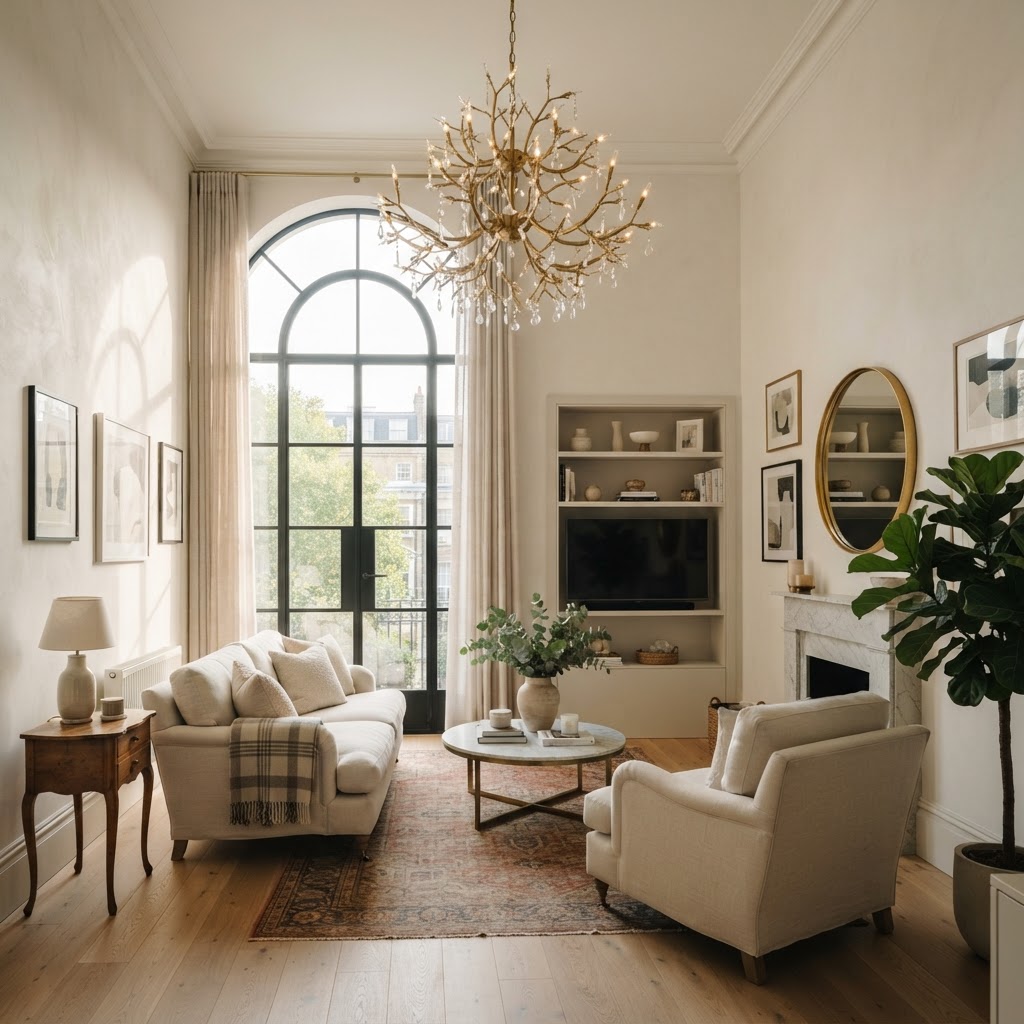
5 Small Apartment Decorating Ideas for a More Considered Space
A connected palette, better lighting, well-scaled art, considered curtains and lighter-looking furniture can help a small apartment feel more put together.
A small apartment can feel more considered without replacing everything in it. Start with the part that feels unresolved: too many unrelated colours, a dark corner, an empty wall or furniture that crowds the floor. These five ideas are ways to edit the room around what is already useful.
The images in this article are AI-generated concepts used to illustrate design directions.
1. Connect the colours you already have
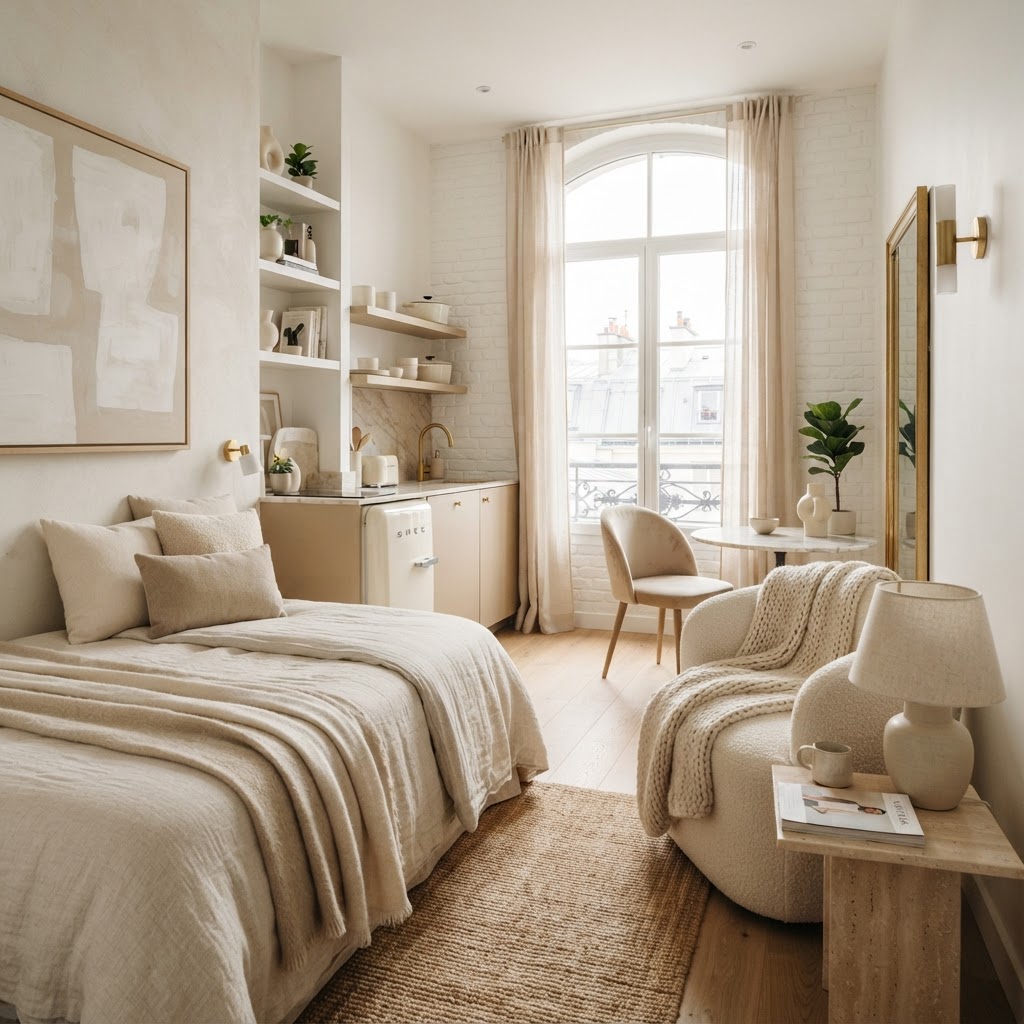
Choose one existing feature as the starting point: the sofa, the floor or a rug you want to keep. Pull a small palette from it and repeat those colours in a few details. A warm brown in the floor might reappear in a frame or cushion, while a quieter wall colour gives the group some breathing room.
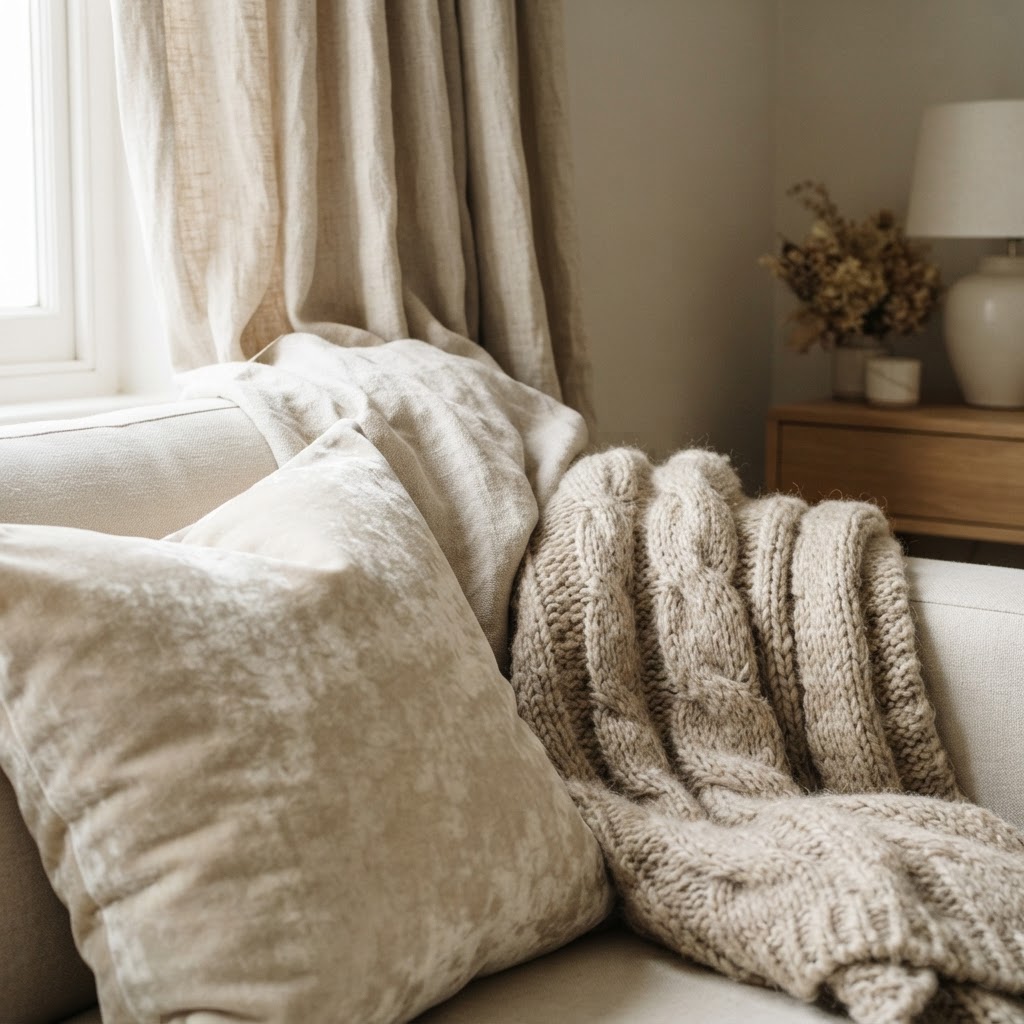
Move small objects between rooms before buying anything. Sometimes a lamp or textile already in the apartment creates the missing connection. Photograph the room in daylight to see whether the colours relate across the whole space.
There is no need to make everything beige or perfectly matched. The point is to make deliberate choices. For patterned textiles, this pattern-mixing guide explains how scale and colour can work together.
2. Put light where the room is used
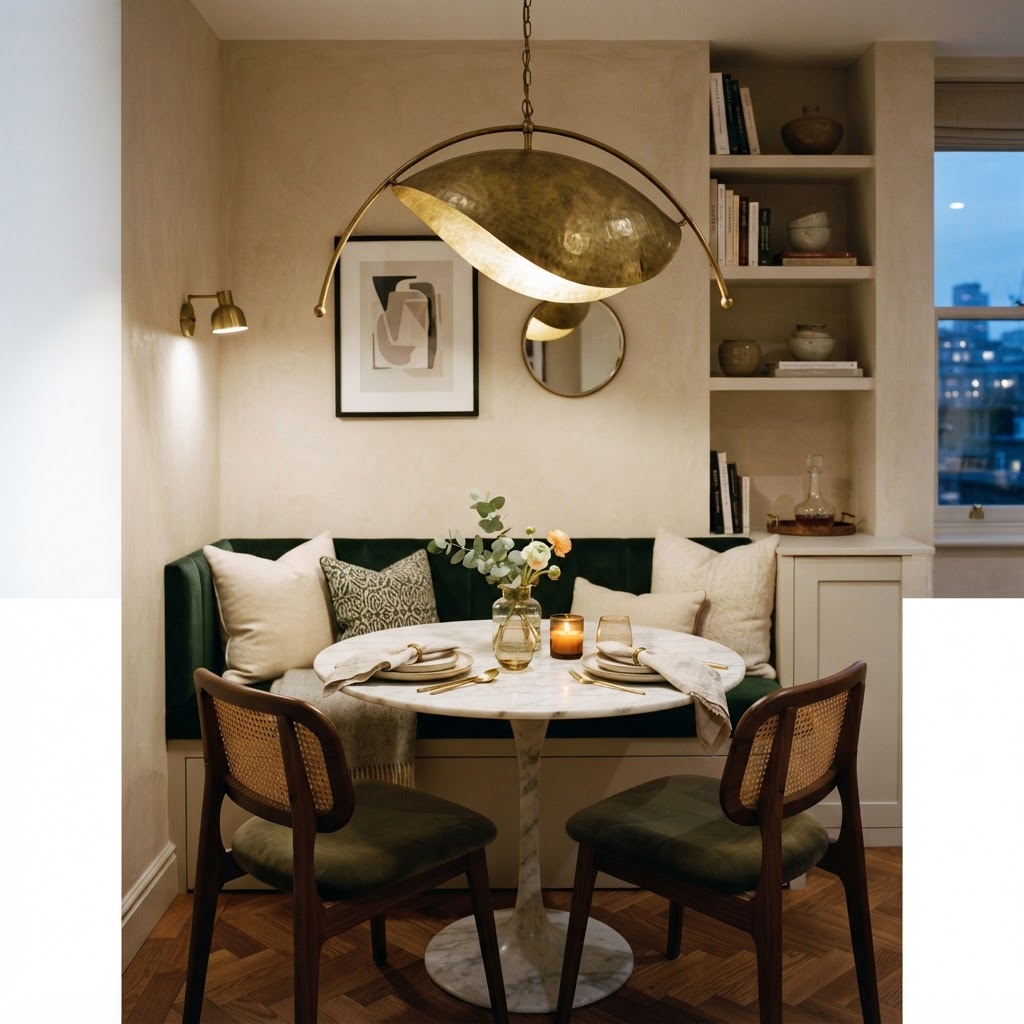
One ceiling light may leave a reading chair or the side of a sofa feeling separate from the rest of the room. A table lamp or floor lamp can make that particular spot more inviting. Choose the location from the activity, then choose the fixture.
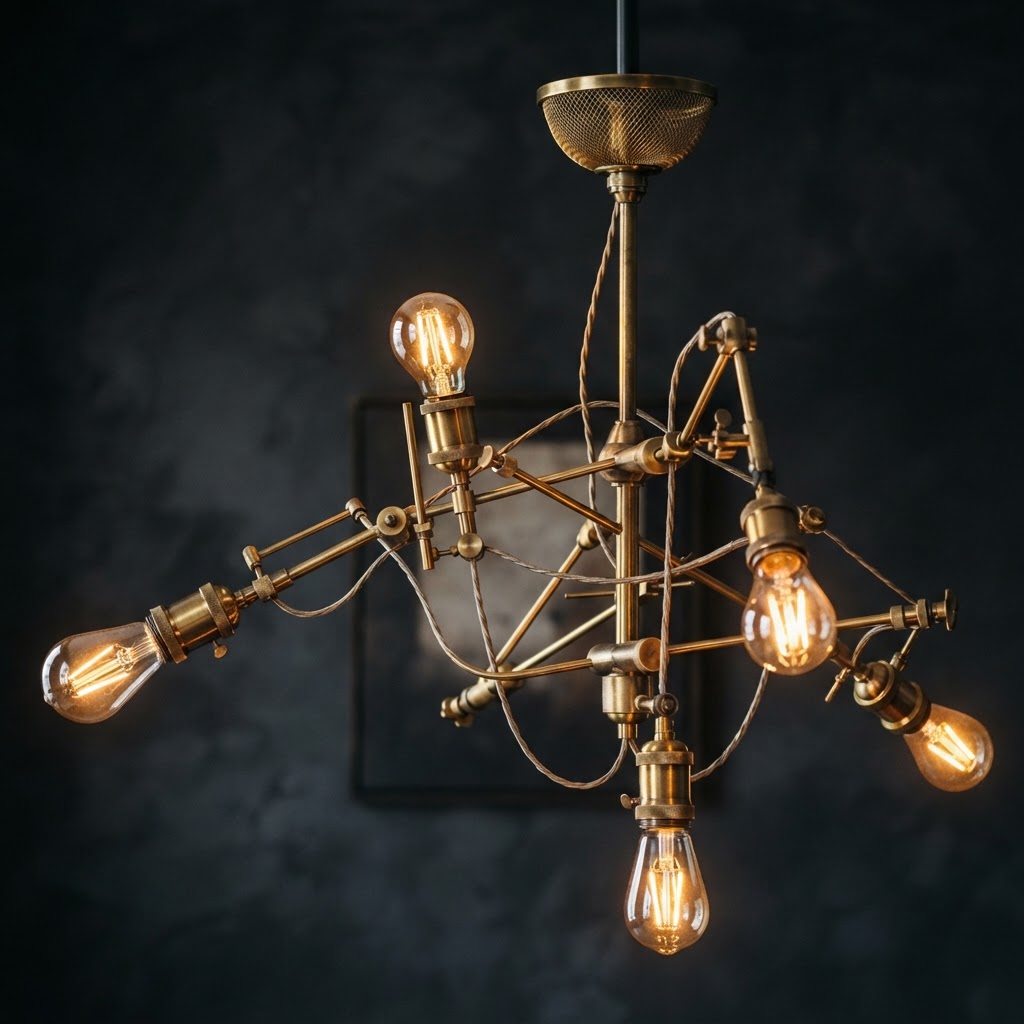
Before buying a statement pendant, look at it in relation to the table, ceiling and surrounding furniture. A striking fitting can become the focus, but a smaller, well-positioned lamp may solve the actual problem more simply.
For a rental, a plug-in option may suit the brief better than a permanent alteration. Check the tenancy terms before drilling or changing fittings, and have fixed electrical work handled by a qualified professional. Plan cable routes so the arrangement remains practical.
3. Test the size of art before committing
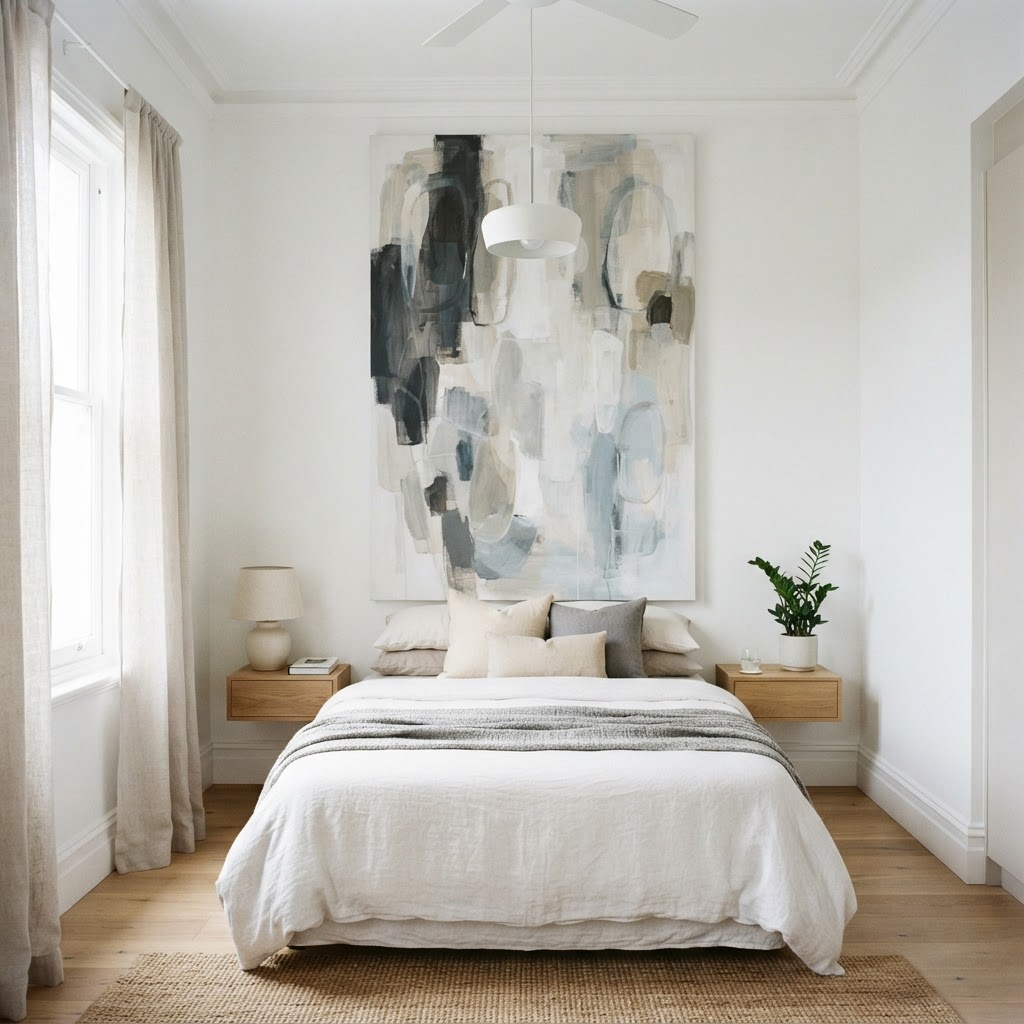
A single larger piece can give an otherwise scattered wall a clear focal point. It does not need to be expensive. A print, a photograph or a textile can work if its scale and framing suit the room.

Mark the proposed outline on the wall with removable paper, using a fixing method that is safe for the finish. Look from the doorway and from the seat opposite. This makes it easier to judge the size than holding up a small online product image.
A large work is not automatically the right answer. A compact wall beside a door may suit a smaller piece or a carefully grouped collection. Leave enough space around switches, shelves and furniture for the composition to feel intentional.
4. Let curtains relate to the whole wall
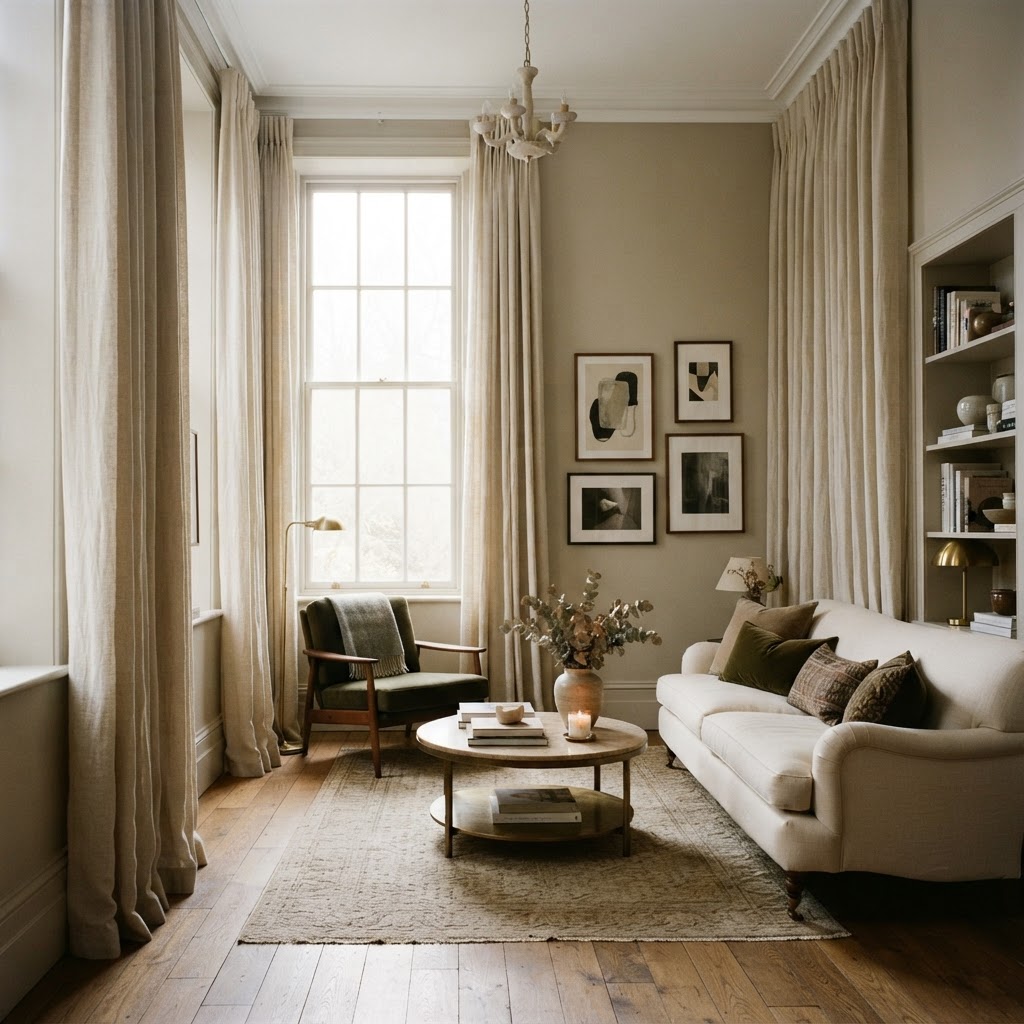
The position and length of curtains affect how a window reads within the room. Hanging them higher can emphasise the vertical line, but the wall, ceiling and adjacent furniture should guide the choice. Test the proposed line before installing hardware.
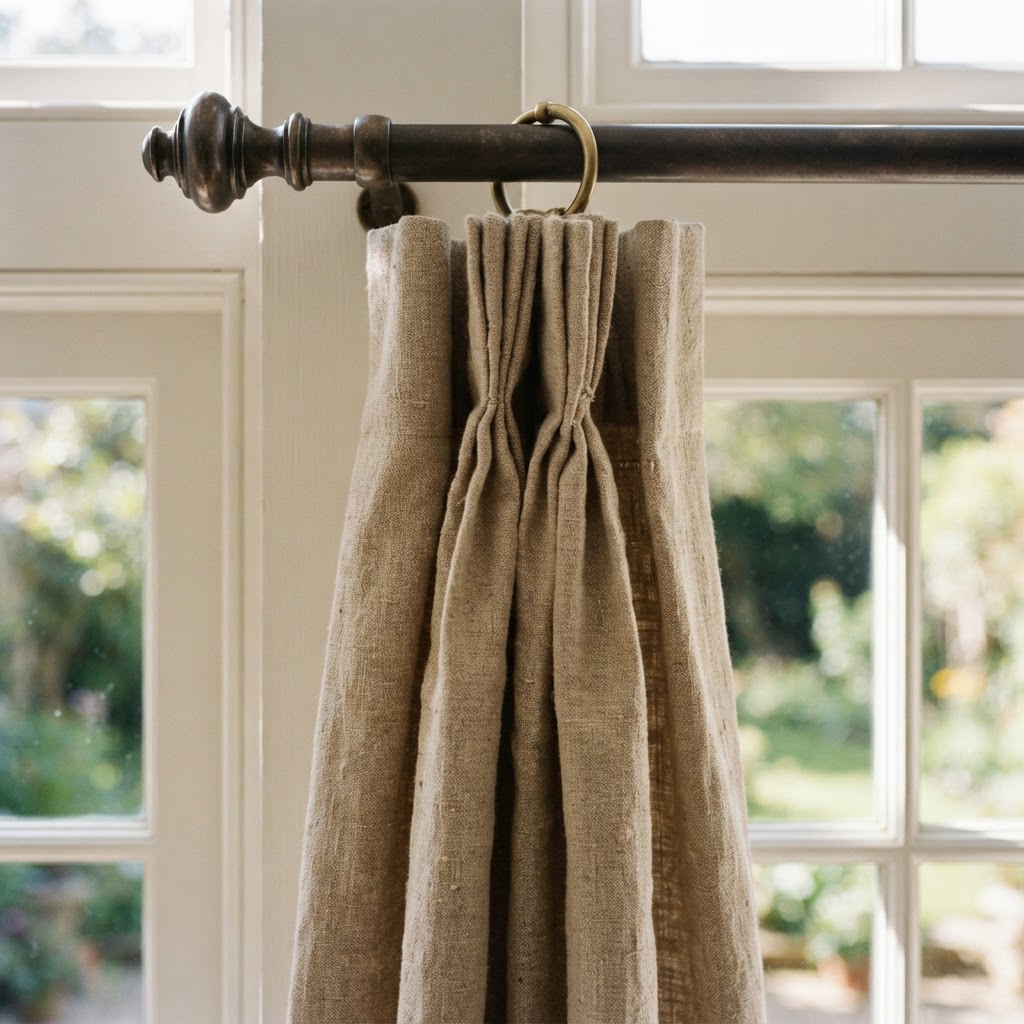
Choose a fabric sample in the actual room and consider how it looks both open and closed. A soft, light textile gives a different effect from a dense, dark one. Check the product's care instructions and the practical space needed for the curtain stack.
Floor-length curtains may be unsuitable beside a heater, a work surface or an awkward door opening. A simpler blind can be the more comfortable everyday choice. Aim for a considered fit rather than applying the same curtain formula to every window.
5. Balance visible floor with the storage you need
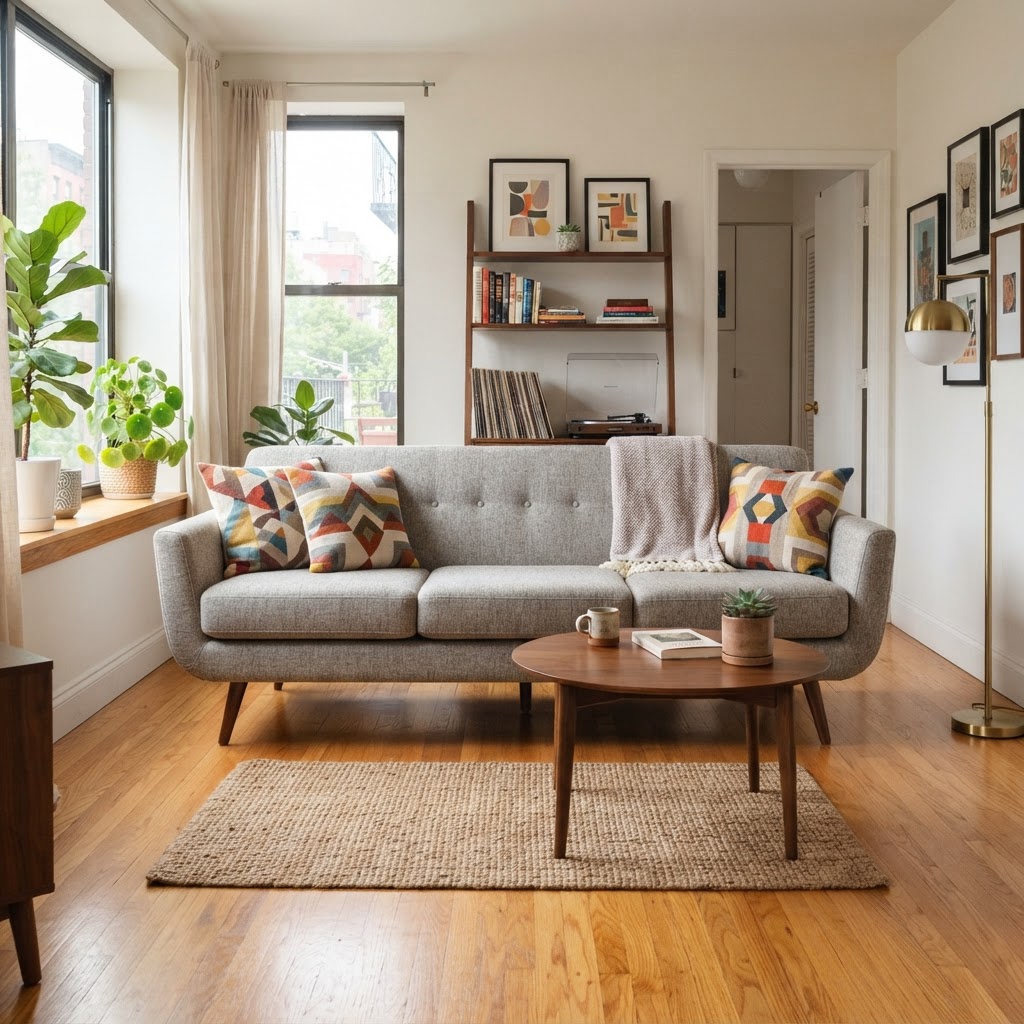
A chair or sofa on visible legs can make a furniture group look lighter by leaving some floor in view. The effect is visual; it does not create extra usable space. Compare the whole footprint rather than choosing by silhouette alone.
If closed storage is essential, a solid cabinet may be a better decision than an airy-looking piece that leaves clutter exposed. Balance it with a lighter chair or a clear area nearby. Different pieces can solve different problems in the same room.
Before replacing furniture, measure it and mark the proposed footprint on the floor. Walk through the room and test the everyday route to the window, sofa and cupboards. Keep the change that improves how the apartment works as well as how it photographs.
More in Interior
Stay Inspired
Subscribe for new essays on architecture, design, and the spaces that shape us.