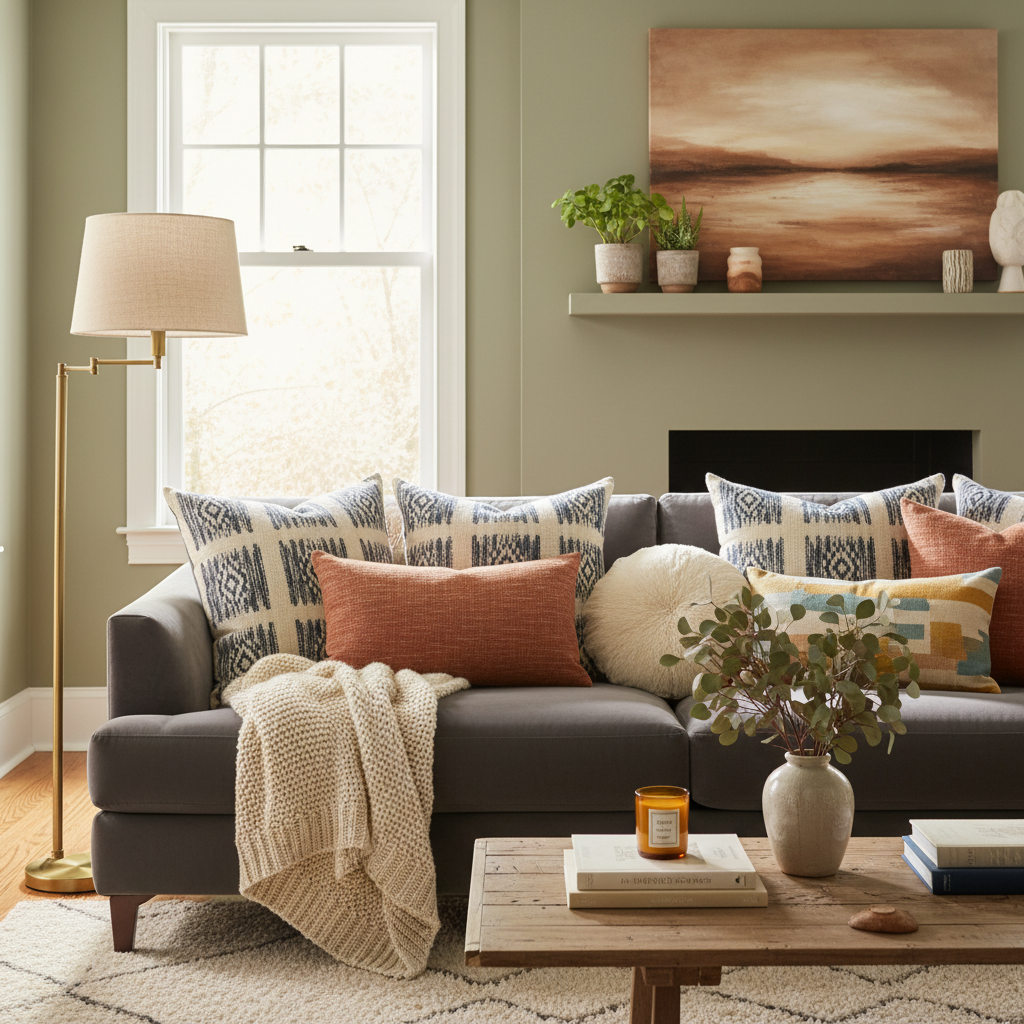
Mix and Match: Fabulous Throw Pillow Combinations for Every Room
Explore stylish throw pillow combinations to elevate your home decor. This guide offers tips and inspiration for creating cohesive and inviting spaces with just the right mix of patterns and textures.
The Classic Combo: Neutrals and Textures
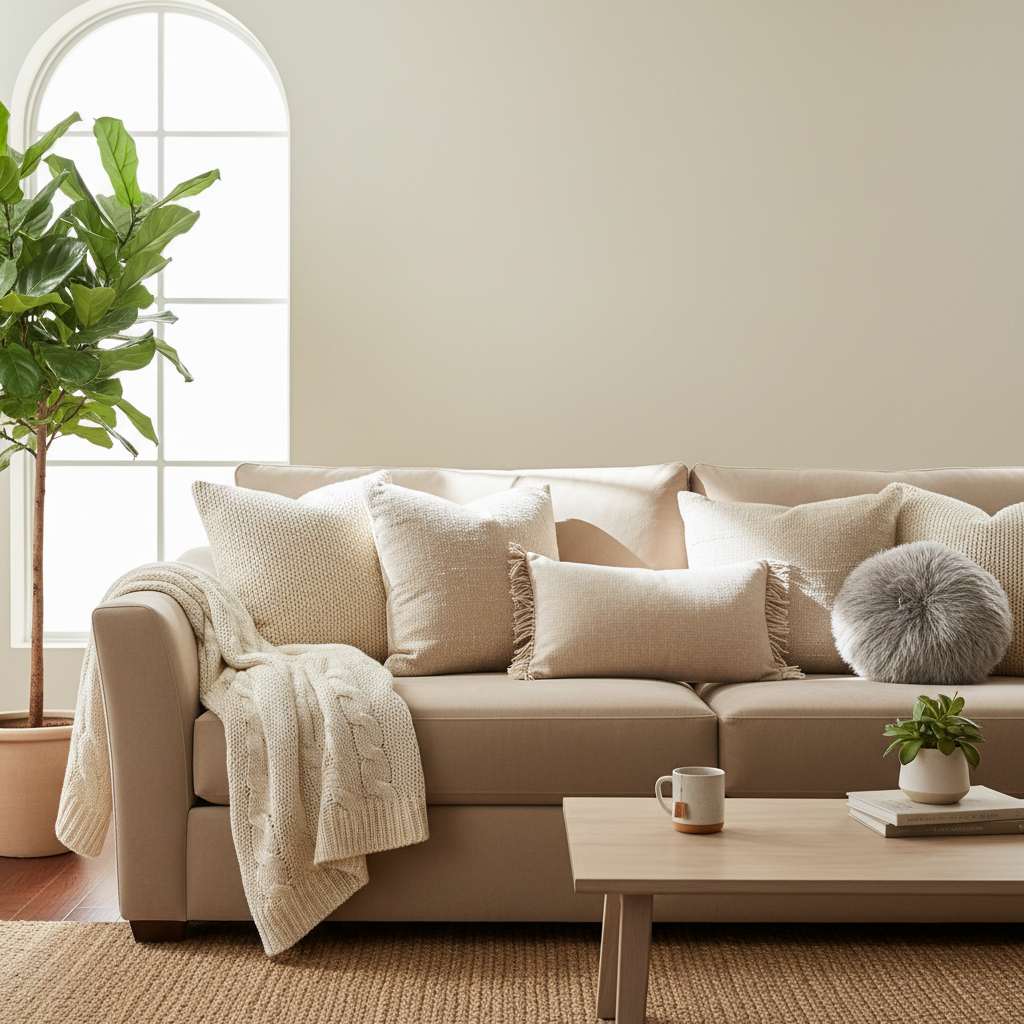
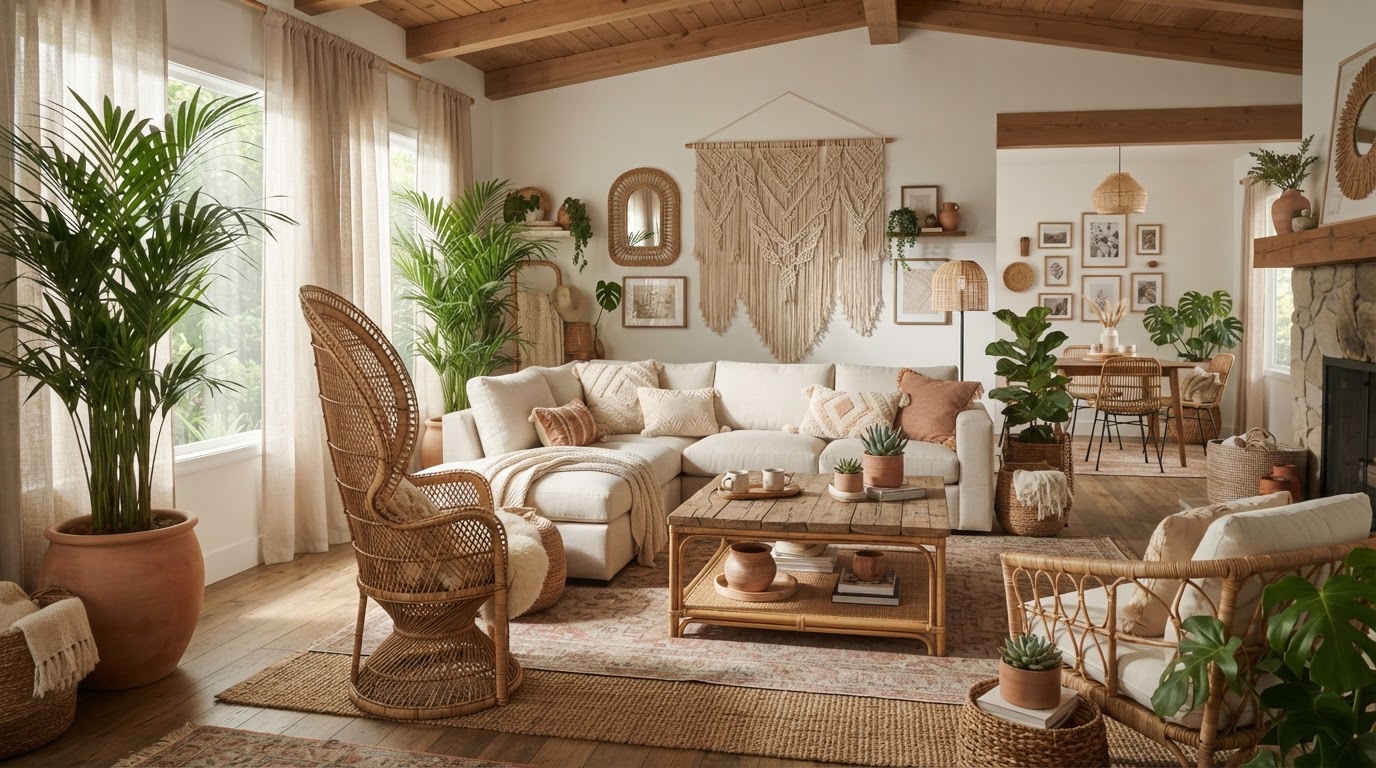
Okay, let's start with the combo that honestly never goes out of style. Neutrals and textures. I know, I know, it might sound like the "safe" choice, but trust me on this, when you do it right, it's anything but boring. The secret is mixing materials in a way that creates visual interest without relying on color to do all the heavy lifting.
Think about layering a chunky knit pillow alongside a smooth linen one, then throwing in something with a subtle woven pattern. The variety in how light bounces off different surfaces is what makes this combination feel expensive and intentional. We're talking bouclé, velvet, cotton canvas, and washed linen all coexisting on the same sofa without a single argument. That's the dream, right?
Here's the thing about working with neutrals: your palette should still have range. Don't just grab everything in the same exact shade of beige and call it a day. Layer warm whites with oatmeal tones, add a stone gray, maybe a soft taupe. The tonal variation is doing more work than you think. A good rule of thumb is to stick to three or four shades within your neutral family and then let the textures create the contrast.
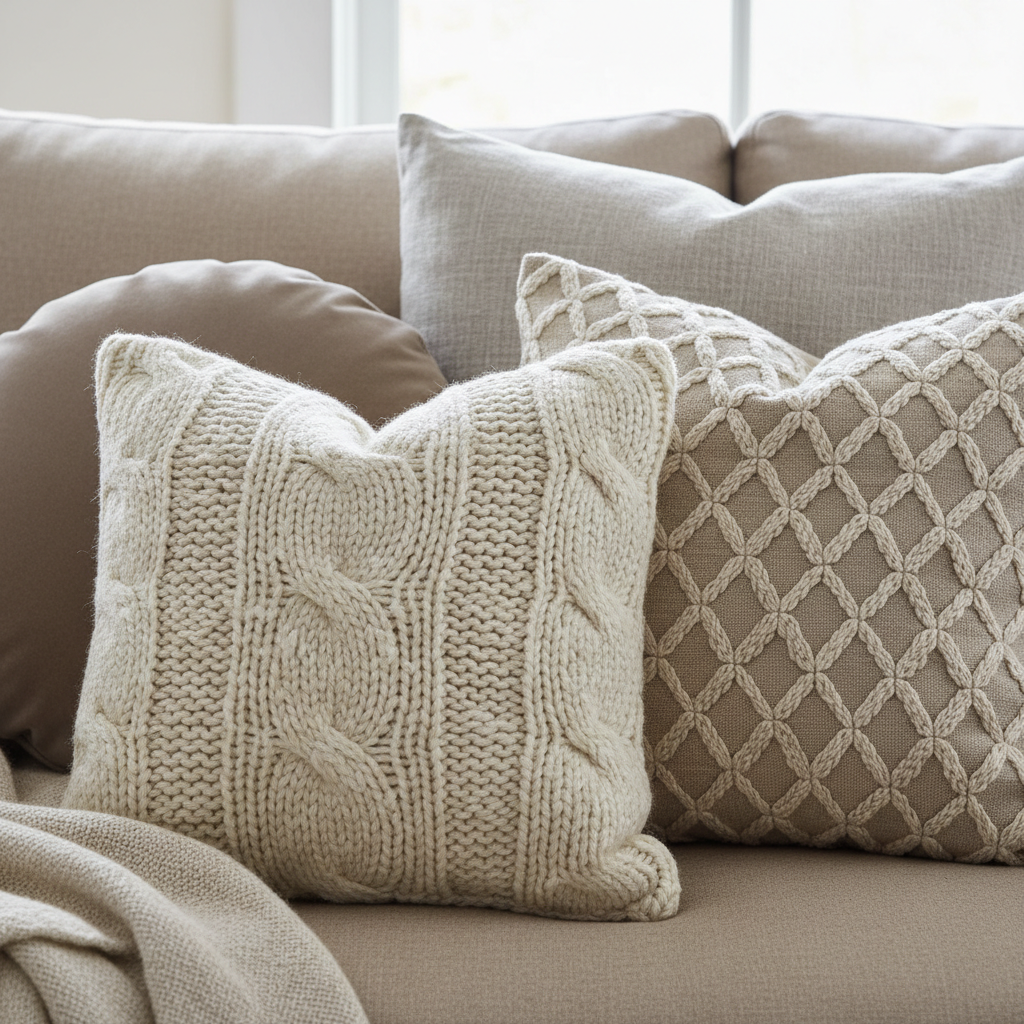
Size matters too, and I mean that genuinely. Mixing pillow sizes within a neutral arrangement adds another layer of depth. Try a large 24-inch square at the back, a 20-inch in the middle, and a smaller lumbar in front. That staggered approach gives the whole setup a relaxed, lived-in quality that feels curated rather than matchy-matchy.
- Bouclé and linen: an incredibly tactile pairing that works on sofas and beds alike
- Velvet and cotton canvas: the sheen of velvet against the matte flatness of canvas creates instant contrast
- Chunky knit and smooth sateen: perfect for a cozy, hygge-inspired bedroom setup
- Waffle weave and faux fur: wildly underrated combination for autumn and winter arrangements
Real talk, this is the combination I always recommend to people who are new to decorating with pillows and feel overwhelmed by pattern mixing. Start here. Get comfortable layering textures in a neutral palette and you'll build the confidence to push further. It's like learning to walk before you run, except the running part is way more fun.
Vibrant Patterns: Go Bold or Go Home
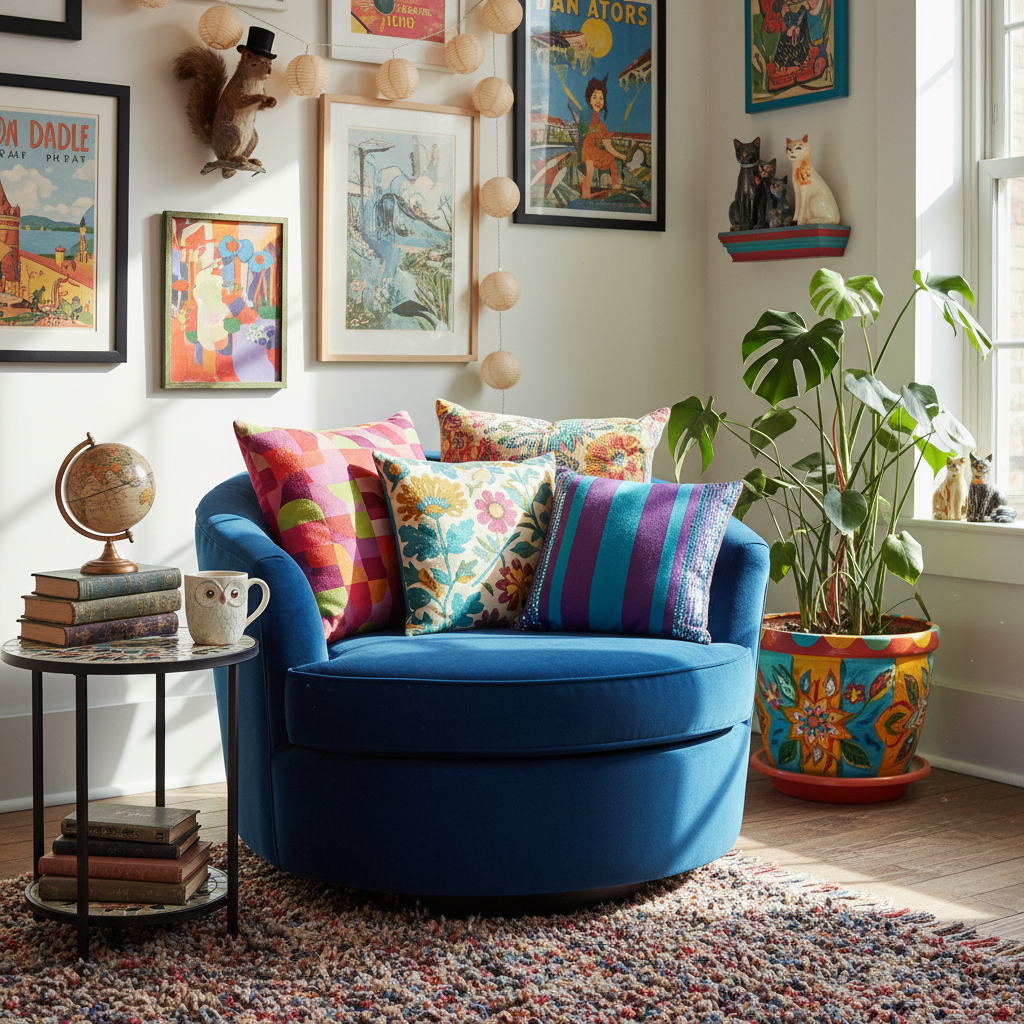
Alright, this is where things get really fun. If the neutral and texture combo is the foundation, bold patterned pillows are the personality. And honestly, so many people are scared of this approach when they absolutely shouldn't be. The trick to pulling off a vibrant, pattern-heavy pillow arrangement isn't luck. It's understanding scale and color relationships.
The golden rule of pattern mixing is this: vary your scales. If you've got a large geometric print, pair it with a small-scale floral or a delicate stripe. When every pattern is competing at the same visual size, things start to look chaotic in a bad way. But when you intentionally contrast a large bold print with something intricate and small, your eye moves around the arrangement in a way that feels dynamic and alive.
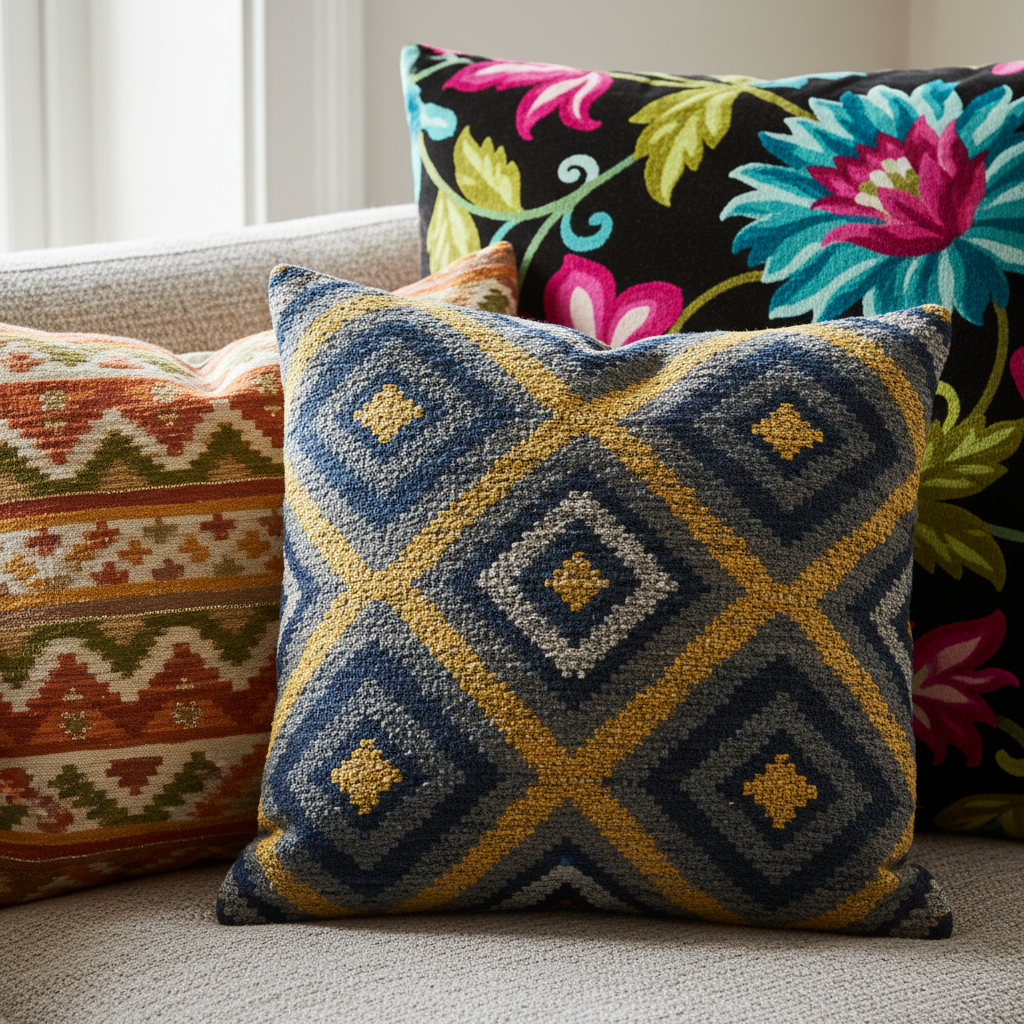
Here's the thing that most people miss: even in the most colorful, pattern-heavy arrangement, there needs to be a shared color thread. Pick one or two colors that appear across all your pillows, even in small doses. Maybe it's a mustard yellow that shows up in the geometric, the stripe, and the abstract print. That repetition is the thing that ties everything together and makes it look intentional rather than accidental.
- Ikat and stripe: a pairing with serious global-inspired energy that works beautifully in boho and eclectic spaces
- Abstract print and classic plaid: surprisingly harmonious when they share at least one color
- Large floral and geometric: scale contrast at its finest, especially in jewel tones
- Block print and solid with texture: a solid pillow in one of the pattern's accent colors acts as a visual rest stop
And look, don't be afraid to include a solid pillow in the mix. A single solid in a strong, saturated color acts as a breather between the busier prints. It's not a cop-out. It's actually a sophisticated design move that professionals use all the time. Think of it as punctuation in a sentence. Without it, everything just runs together.
Monochrome Magic: Shades of One Color
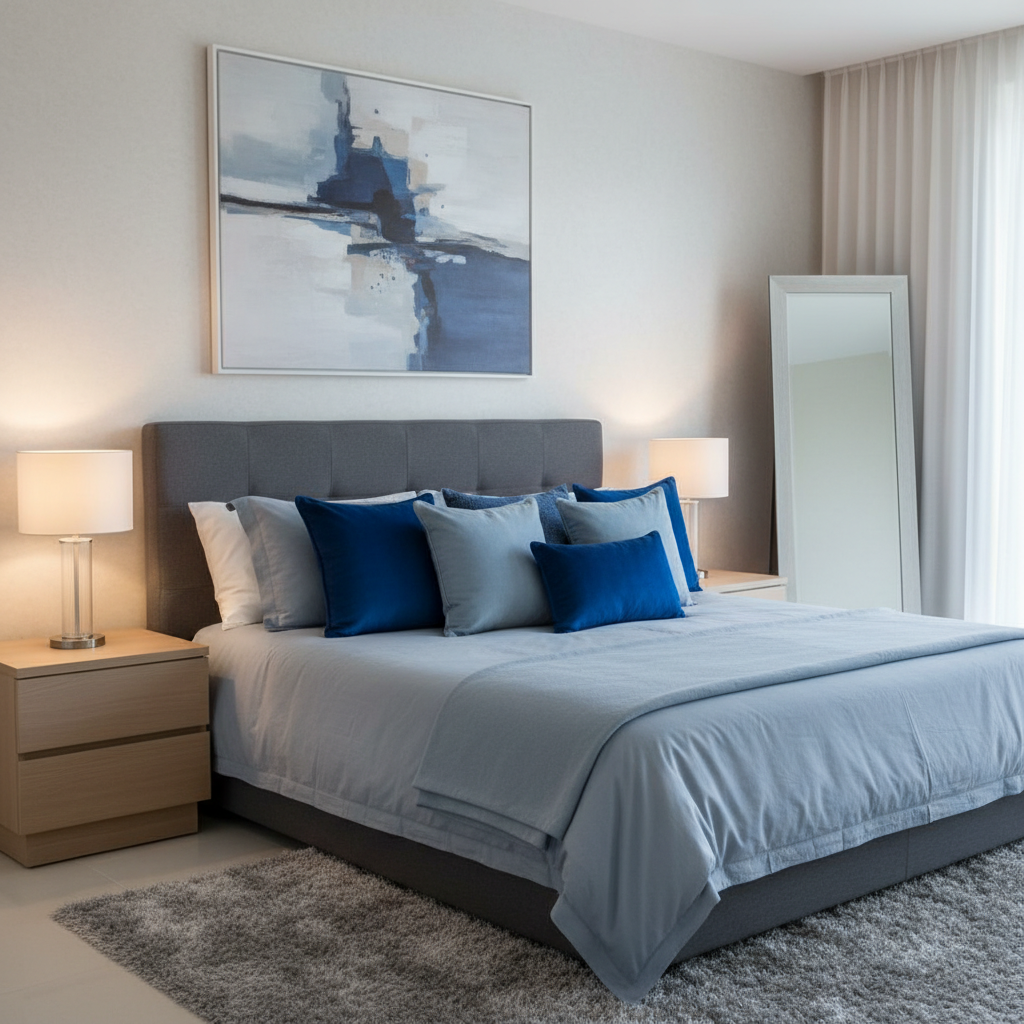
Honestly, monochrome pillow styling might be the most underestimated approach in the whole game. When done well, it looks seriously high-end. The idea is simple: you pick one color family and work through its full range, from the palest tint all the way down to a deep, saturated shade. The result is a cohesive, immersive arrangement that feels almost architectural in its confidence.
Let's say you're working with blue. You might start with a pale powder blue linen, move into a mid-tone cornflower with a subtle pattern, add a rich navy velvet, and finish with a deep indigo lumbar. That range across a single sofa is quietly stunning. It communicates sophistication without trying too hard, and that's the vibe we're all chasing, isn't it?
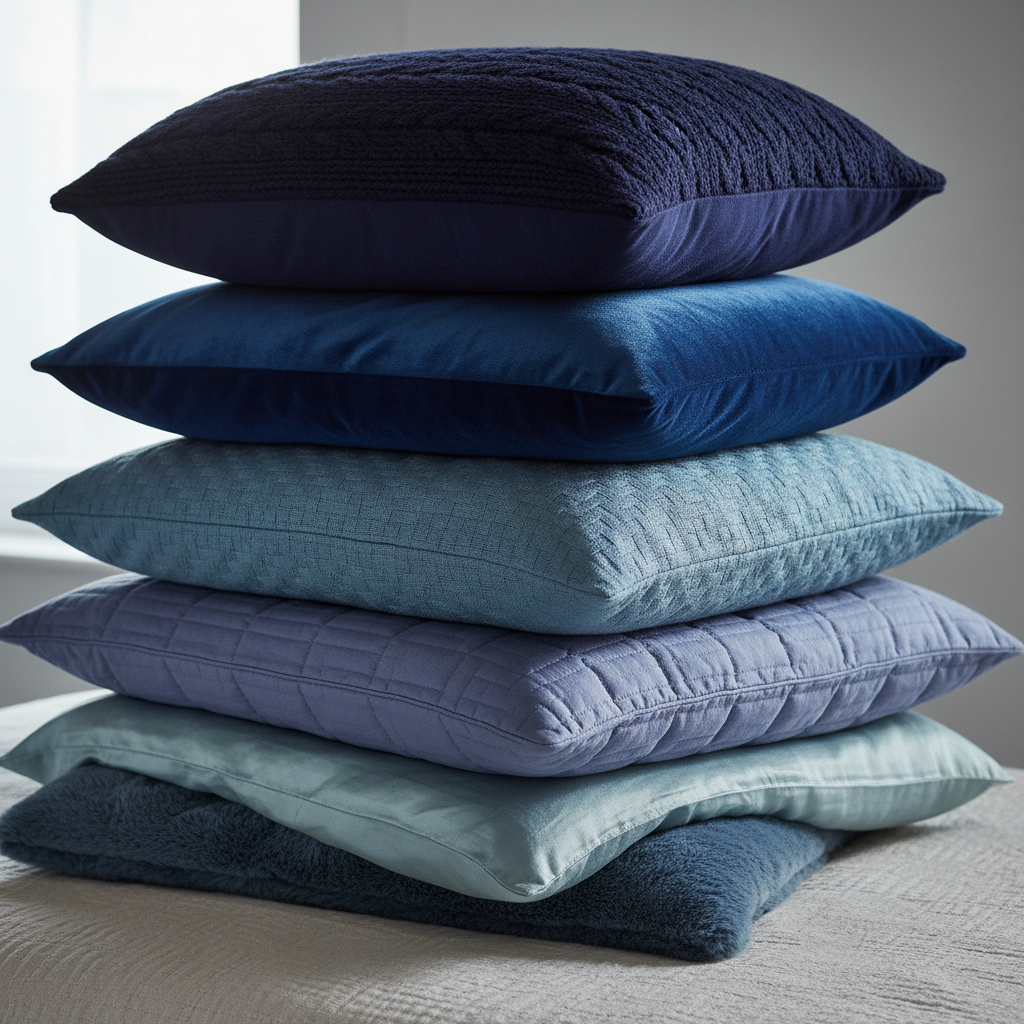
The key to keeping monochrome from feeling flat is, again, texture. When you remove color contrast from the equation, texture becomes your best friend. A matte finish next to a glossy one, a rough weave next to a silky smooth surface. These tactile differences carry all the visual weight that color would otherwise handle. Without varied textures, a monochrome arrangement can look dull and one-dimensional. With them, it looks like something out of a design magazine.
"A monochromatic scheme is not about matching. It's about harmonizing. There's a big difference between the two, and that difference is everything."
Try this approach in a bedroom for a particularly dreamy effect. Dusty rose from blush to deep mauve, or warm terracotta from pale peach to burnt sienna. These earthy, tonal bedroom setups feel incredibly restful and grown-up. And look, it's also a super forgiving approach when you're shopping because you don't need to hit an exact color match. You just need to stay in the family.
Seasonal Flare: Pillows for Every Occasion
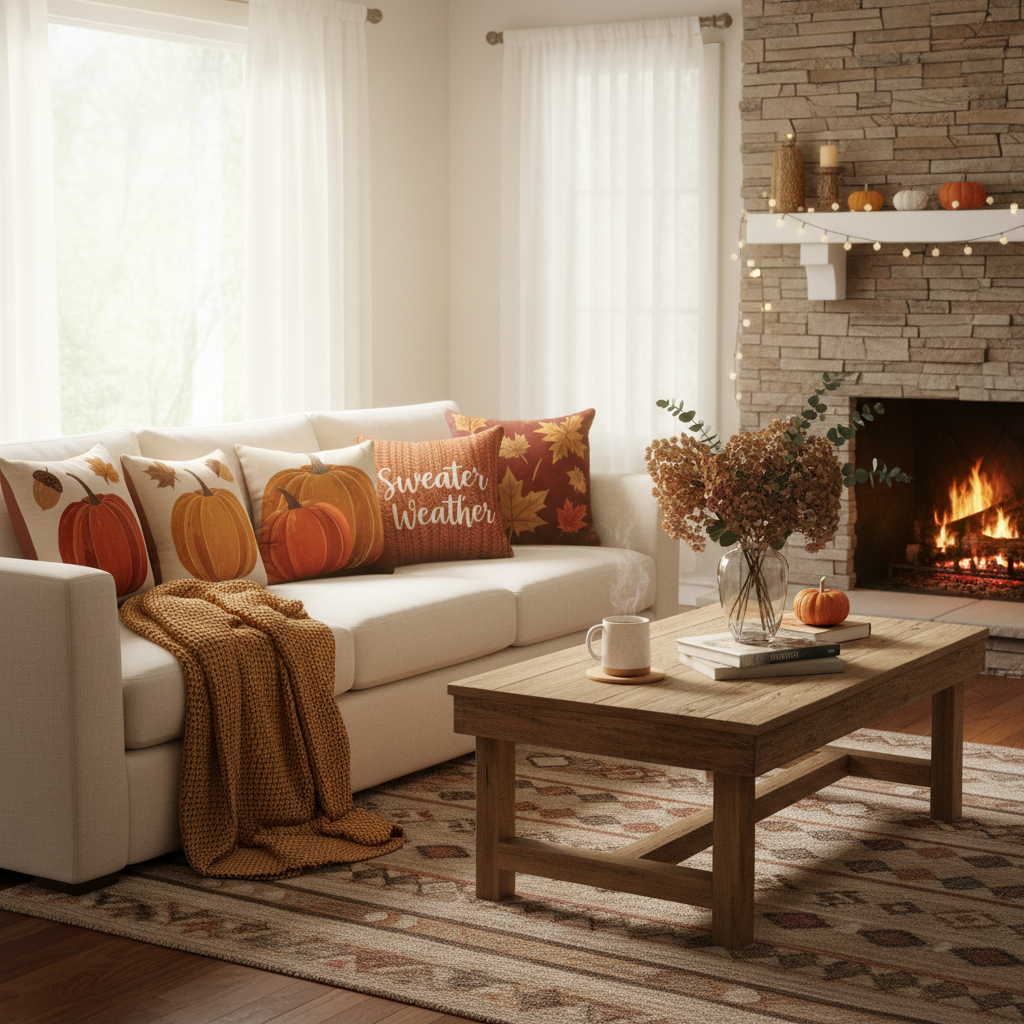
Here's the thing about seasonal pillow swaps: they're genuinely one of the most affordable and impactful ways to refresh your home throughout the year. You don't need to redecorate your entire living room every season. A few well-chosen pillows can completely shift the mood and energy of a space in under ten minutes. I'm not exaggerating.
For spring and summer, think light and airy. Crisp whites and soft greens, breezy linens and light cottons, maybe a cheerful botanical print or a simple stripe in a sunny yellow. The goal is to make the room feel fresh and light-filled, like you just threw open all the windows. Layering a few of these lighter pieces over your year-round base pillows is all it takes.
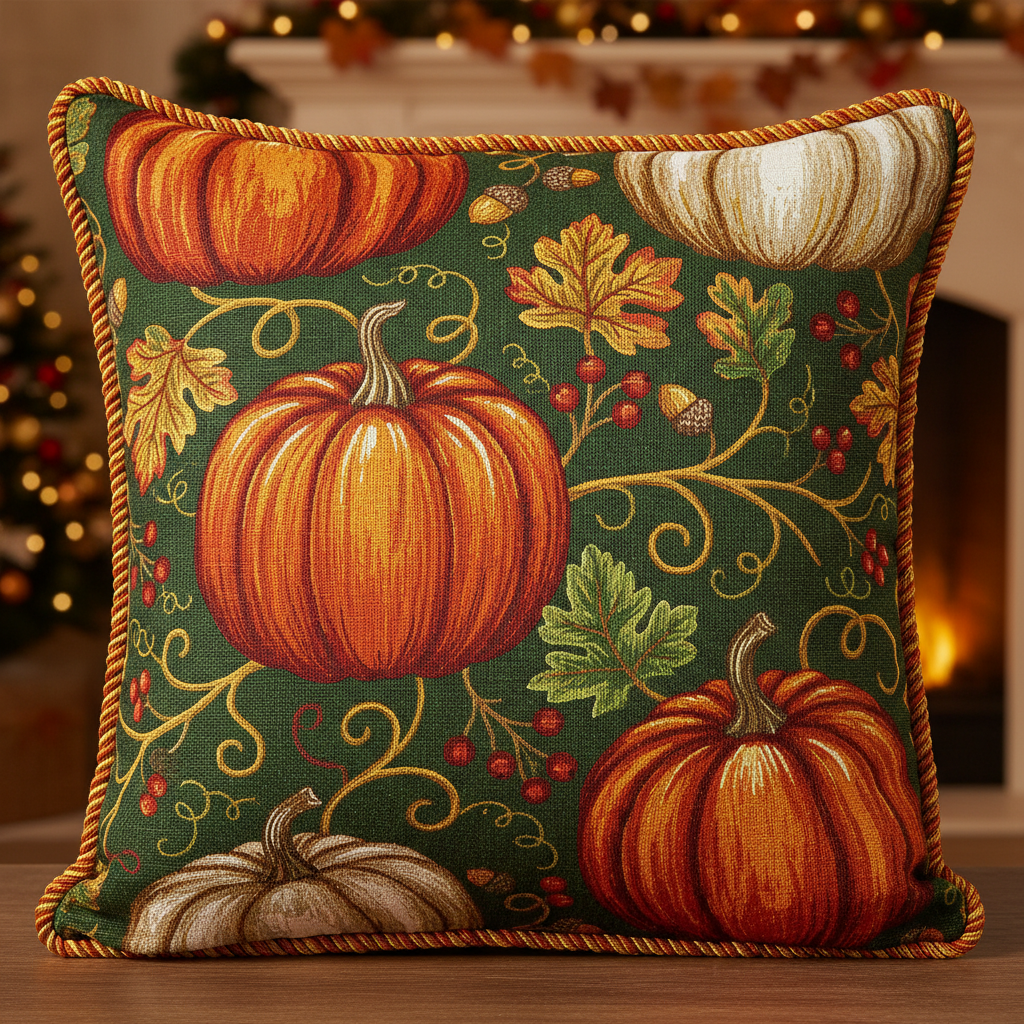
Autumn is honestly my personal favorite season for pillow styling. Rust, amber, deep forest green, warm chocolate brown. Rich velvets and chunky knits start coming back out and suddenly your sofa looks like the coziest place on earth. Add a plaid or a houndstooth and you've basically created a vibe that makes everyone want to sit down with a hot drink and stay for hours.
- Spring: botanical prints, pale greens, blush pinks, light linen textures
- Summer: coastal stripes, bright solids, breezy cotton, aqua and coral tones
- Autumn: rust, amber, plaid, chunky knit, deep velvet in jewel tones
- Winter: faux fur, metallic accents, deep burgundy, icy blues, festive embroidery
The smartest way to approach seasonal pillows is to invest in a solid base collection that works year-round, then buy a small rotating selection for each season. Store them in vacuum bags under the bed between rotations. Trust me on this, it keeps everything fresh and you'll genuinely look forward to swapping them out. It becomes a little ritual that makes each season feel distinct inside your home.
Layering Techniques: Creating Depth
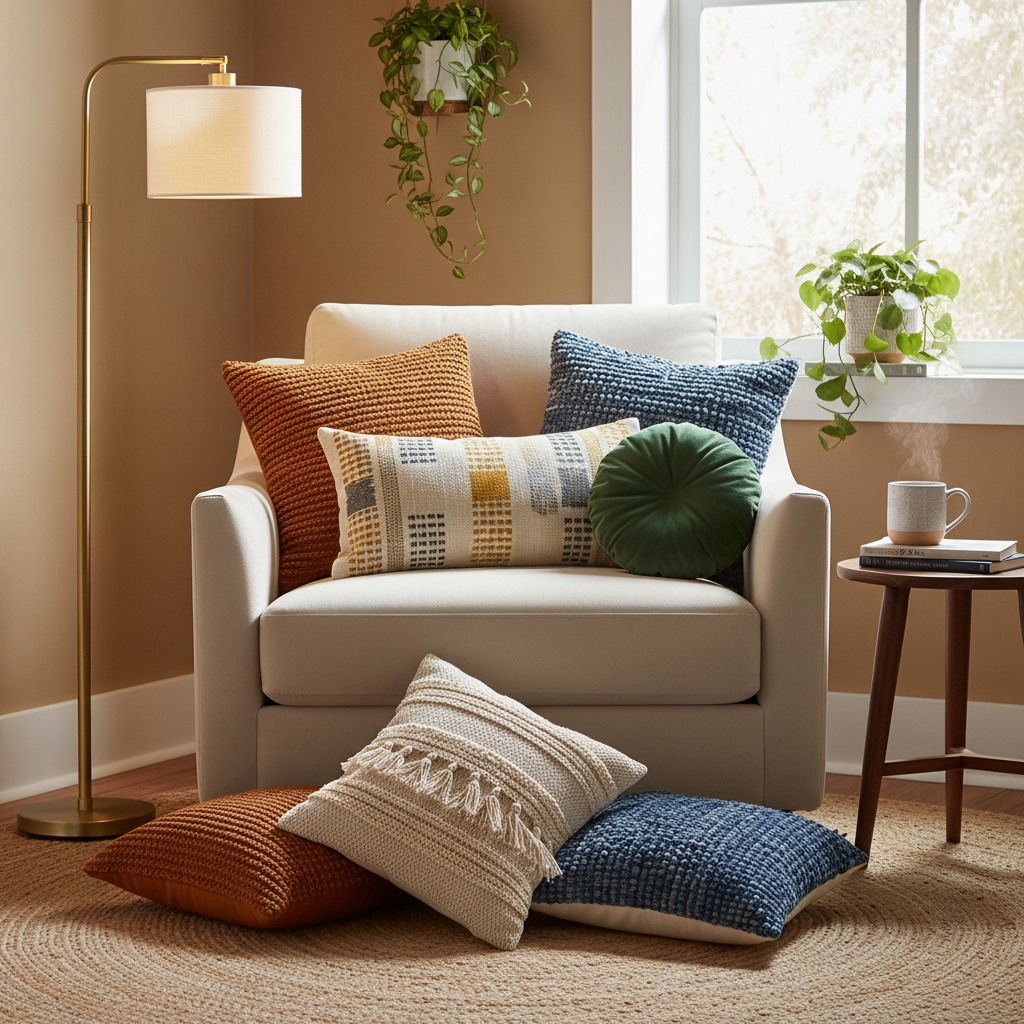
Real talk, this is the section where everything comes together because it doesn't matter how great your individual pillows are if you don't know how to layer them. Layering is what separates a sofa that looks styled from a sofa that just looks like it has pillows on it. And honestly, it's not complicated once you understand a few core principles.
Start from the back and work forward. Your largest pillows go at the back, leaning against the sofa back or the headboard if you're on a bed. These anchors the whole arrangement and give you a backdrop to layer against. Medium-sized pillows come next, slightly overlapping the large ones. Then your smallest pieces, whether that's a 16-inch square or a lumbar, come in front and create that final layered dimension.
Here's where a lot of people get tripped up: they treat throw pillows like they're trying to fill every available inch of space. And look, overstuffing is a real problem. You want negative space. Letting some of the sofa or bedding show through actually makes the arrangement look more intentional. A tight, crammed-in cluster of pillows just looks like you don't have anywhere else to put them.
- The 3-2-1 rule: three large pillows at the back, two medium in front of those, one lumbar or small square at the very front
- Odd numbers: arrangements with odd numbers of pillows almost always look more natural and dynamic than even numbers
- Lean, don't stack: pillows that lean slightly rather than sitting perfectly upright look more relaxed and inviting
- Vary the inserts: down inserts give a softer, more lived-in look while firmer inserts create a more structured arrangement
- Karate chop the top: that signature indent at the top of a pillow is a designer move that makes everything look intentionally styled
And honestly, don't be scared to rearrange. Great pillow styling isn't something you set once and leave forever. It shifts as you sit on the sofa, as the season changes, as your mood changes. The best-looking pillow arrangements are the ones that get touched and adjusted and loved on a regular basis. That's what makes a house feel like a home rather than a showroom.
Final Thoughts
Here's the honest truth: there are no hard rules when it comes to throw pillows. The guidelines I've shared throughout this post are starting points, not commandments. The real goal is to create a space that feels genuinely like you, something that's comfortable and considered and reflects your personality rather than just a trend you saw on a feed somewhere.
Start with one approach that resonates with you, maybe the safe and satisfying neutral-and-texture combo, or maybe you're ready to go all in on the bold patterns from day one. Either way, give yourself permission to experiment and, more importantly, to make mistakes. A wrong pillow choice is a completely fixable problem. That's the beautiful thing about working with accessories.
What I hope you take away from this is that throw pillows are one of the most powerful and accessible tools in your decorating arsenal. They're relatively affordable, they're endlessly changeable, and they can completely transform the feel of a room in a way that few other elements can. So go layer, mix, match, and most importantly, have fun with it. Your sofa is waiting.
More in Interior
Stay Inspired
Subscribe for new essays on architecture, design, and the spaces that shape us.