The Ultimate Guide to Mid-Century Modern Style (And How to Get the Look)
If you love the clean lines and warm woods of retro interiors, you are in the right place. This complete guide breaks down exactly what mid-century modern style is and how you can bring it into your own home. We cover everything from iconic furniture to the perfect color palettes.
What Exactly is Mid-Century Modern?
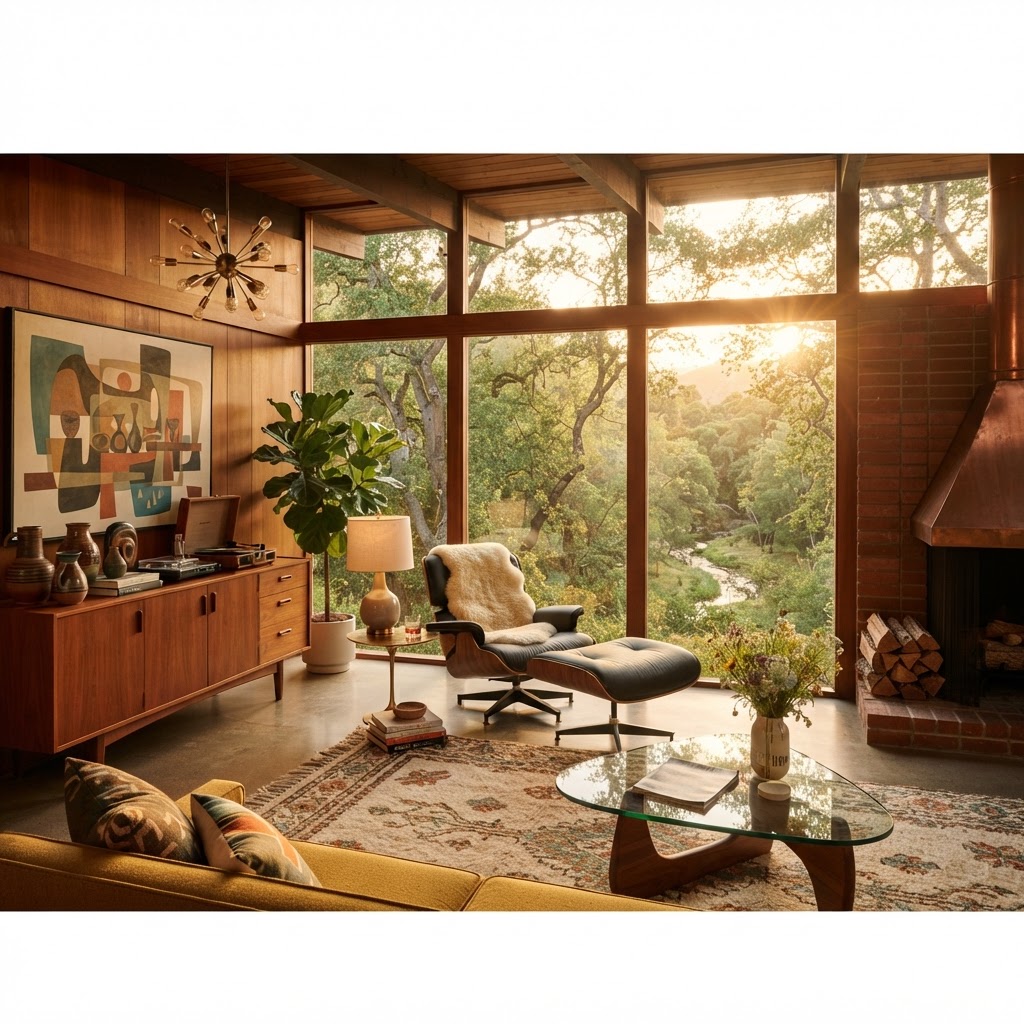
Okay, so before we dive into anything practical, let's actually talk about what mid-century modern is, because it gets thrown around a lot and honestly, people mean slightly different things when they say it. At its core, MCM refers to a design movement that flourished roughly between the mid-1940s and the late 1960s. Think post-World War II optimism, a generation that was genuinely excited about the future and wanted their homes to reflect that energy. It was clean, it was forward-thinking, and it was refreshingly uncluttered at a time when maximalism had basically been the default for decades.
The movement was heavily shaped by a group of designers and architects who were, to put it plainly, a little obsessed with making beautiful things accessible. Names like Charles and Ray Eames, Eero Saarinen, Florence Knoll, Hans Wegner and Arne Jacobsen were pushing the boundaries of what furniture could look like and how it could be made. New materials, new manufacturing techniques, and a genuine belief that good design should be democratic. Not just for the wealthy. For everyone. That philosophy is honestly a big part of why MCM feels so relevant even now.
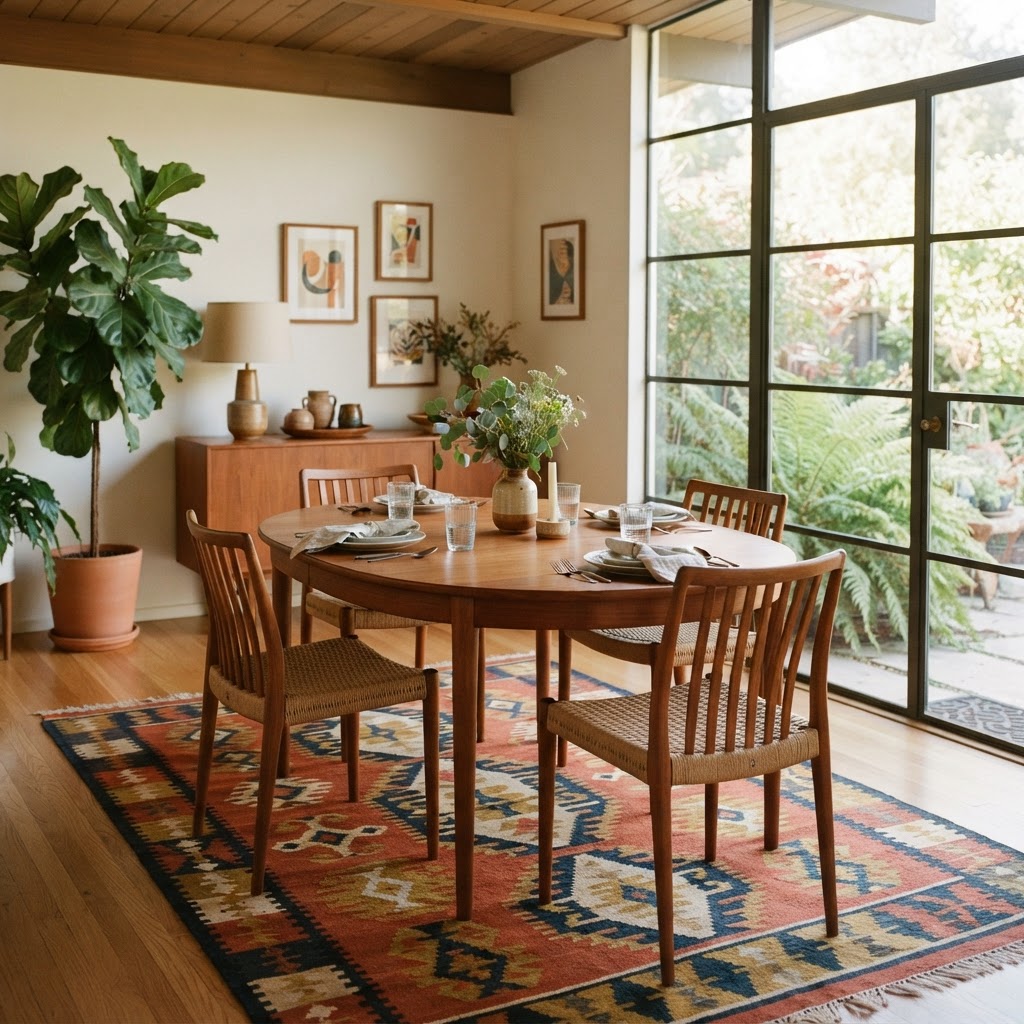
Here's the thing that trips a lot of people up: mid-century modern is not a single rigid look. It spans Scandinavian minimalism, American modernism, and even some organic and futurist influences. What ties it all together is a commitment to function, an honest use of materials, and a certain visual lightness. Rooms breathe. Furniture doesn't try to dominate. Everything feels intentional without feeling uptight. And that balance, honestly, is what keeps people coming back to it decade after decade.
If you've ever looked at a photo of a well-designed MCM living room and felt a weird sense of calm, that's not an accident. The design principles baked into this style are almost scientifically good for the brain. Less visual clutter, more connection to nature, honest craftsmanship. It's the kind of design that ages incredibly well, which is exactly why your grandmother's walnut credenza is now worth three times what she paid for it.
The Key Elements of MCM Furniture
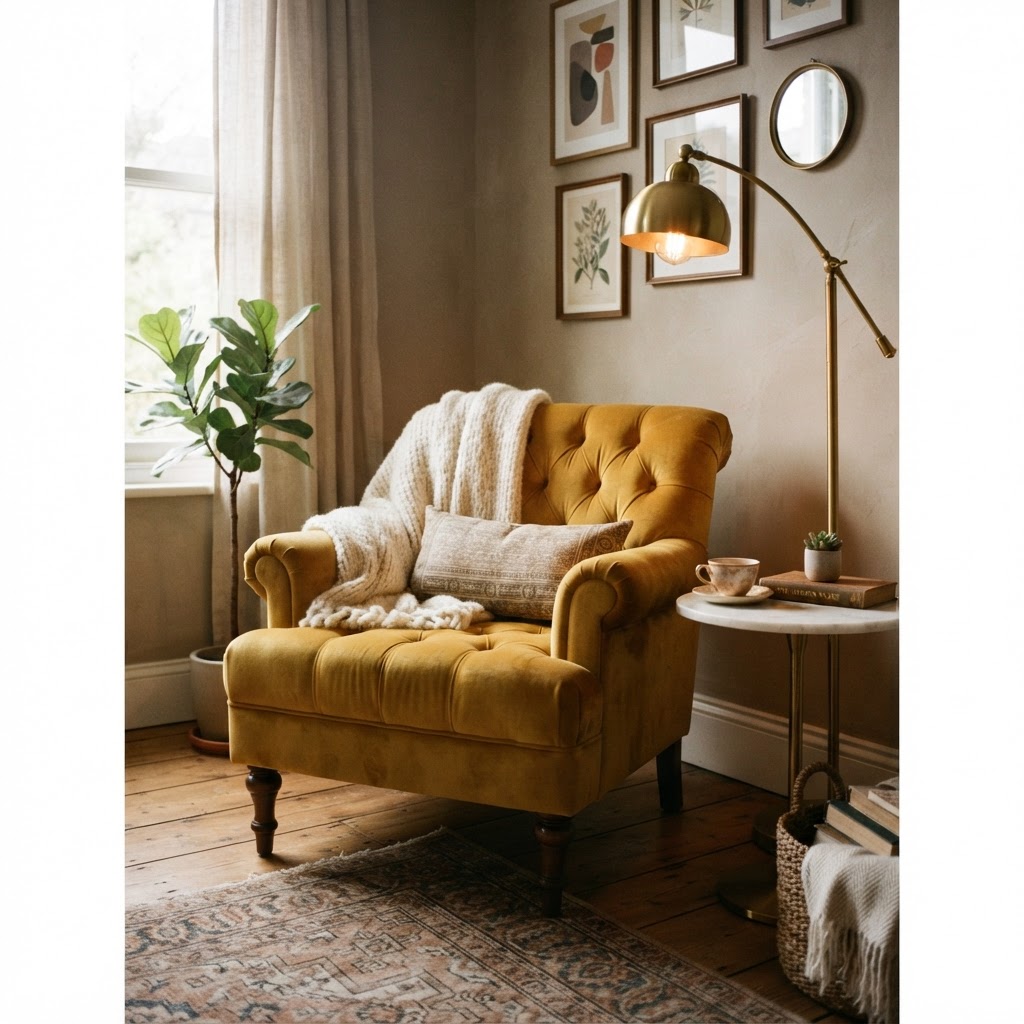
Let's talk furniture, because this is where MCM really earns its reputation. The silhouettes are instantly recognizable even to people who wouldn't know a tulip chair from a Barcelona chair. There's something almost universal about the visual language. And once you understand the core principles, you'll start spotting MCM pieces everywhere, from thrift stores to high-end design boutiques.
The single most recognizable feature? Tapered legs. Seriously, put tapered wooden legs on almost anything and it immediately reads as mid-century. Sofas, coffee tables, sideboards, bed frames. The legs lift the furniture off the floor visually, creating that sense of lightness I mentioned earlier. A piece that sits flat on the ground feels heavy and grounded. A piece on tapered legs seems almost to float. That's intentional design doing its job quietly in the background.
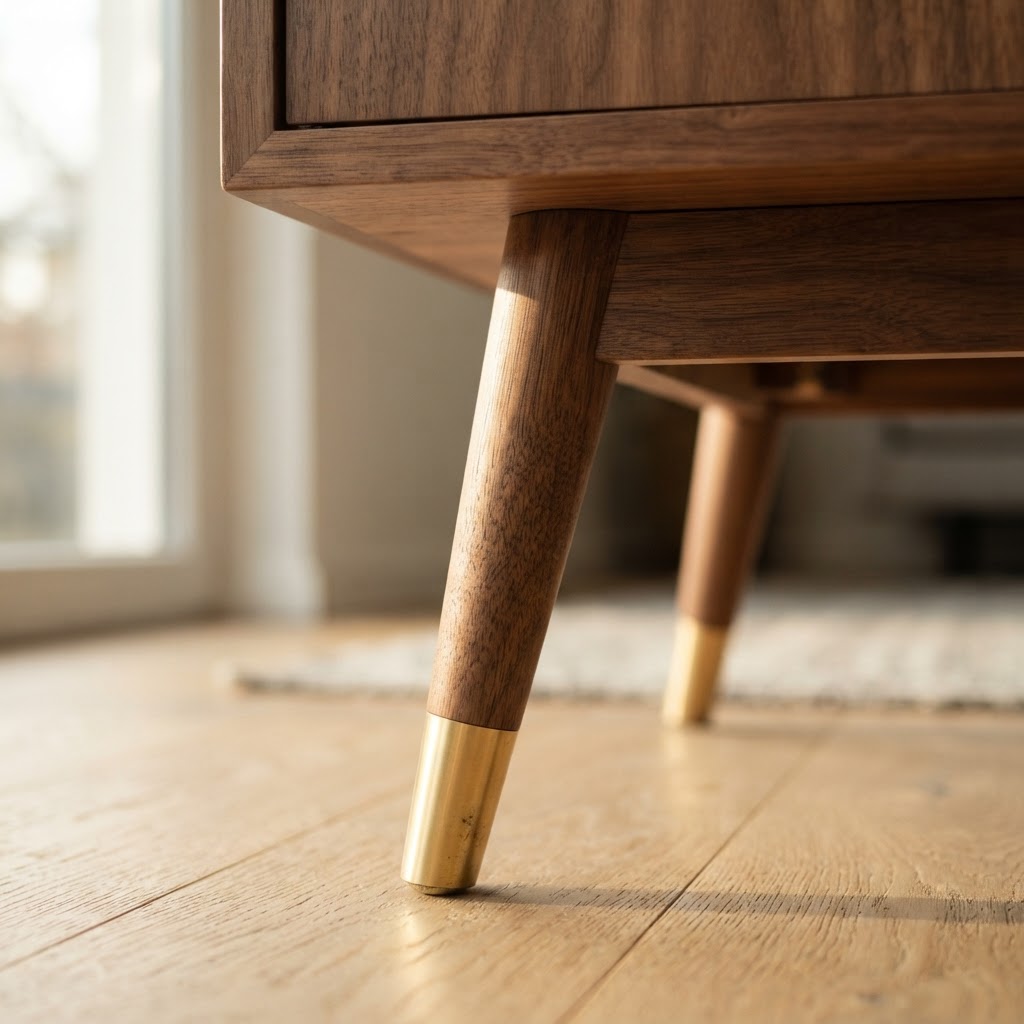
Beyond the legs, look for these defining furniture characteristics:
- Clean, unornamented lines: No carved embellishments, no fussy details. The shape itself is the statement.
- Organic and geometric shapes mixed together: Think of the kidney-shaped coffee table or the egg chair. MCM isn't afraid of a curve, but it uses them with purpose.
- Low-profile proportions: Sofas sit closer to the ground. Beds have low frames. Everything has a horizontal quality that makes ceilings feel higher and rooms feel more expansive.
- Multifunctional and modular pieces: Storage that doubles as display. Shelving that divides rooms. The MCM designers were practical people.
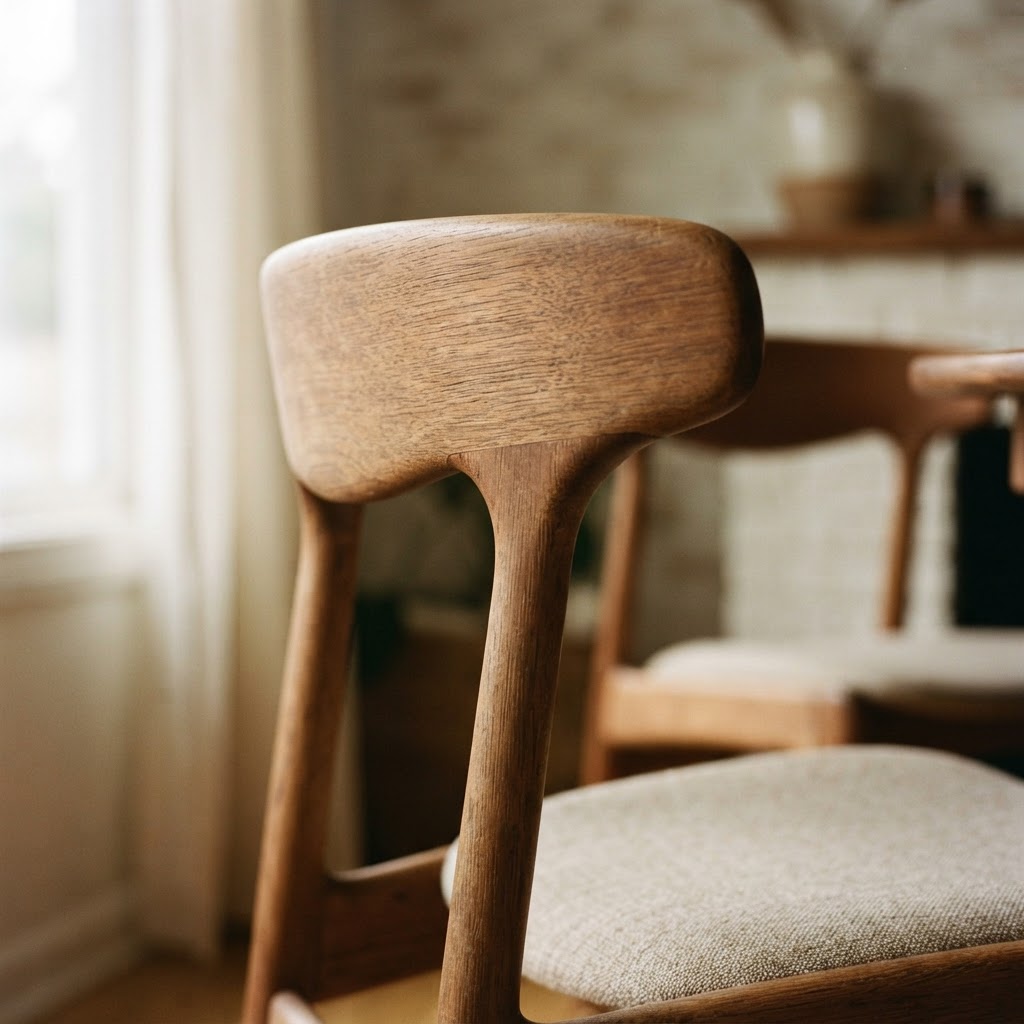
- Handcrafted quality with an honest finish: Wood grain is celebrated, not hidden. Seams on upholstery are visible and purposeful. Nothing pretends to be something it's not.
Real talk: you don't need to spend a fortune to incorporate MCM furniture. Some of the best finds are vintage pieces from estate sales or well-curated thrift stores. A beat-up teak sideboard with great bones can be cleaned up and refinished for a fraction of the cost of a reproduction. The originals have something that even the best replicas can't quite capture, a kind of warmth and patina that only comes with age and use.
Colors and Materials that Define the Look
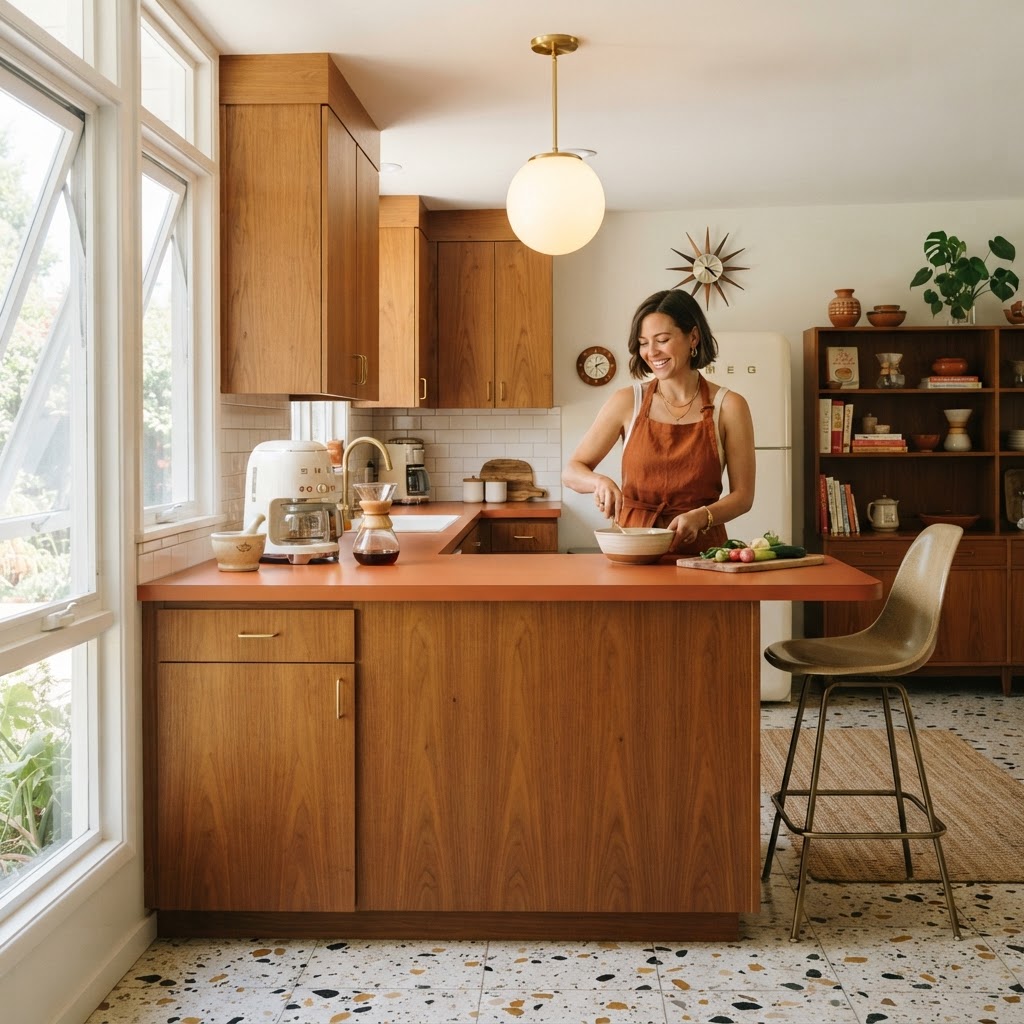
The color palette of mid-century modern is honestly one of my favorite things about it. It manages to be warm and inviting without being fussy, bold without being aggressive. There's a reason that avocado green and burnt orange have had so many comebacks. When used right, those colors feel alive in a way that a lot of contemporary palettes simply don't.
The backbone of any MCM color scheme starts with warm neutrals: creamy whites, warm beiges, and earthy browns. These come largely from the wood tones that are central to the style. From there, you layer in accent colors that were drawn heavily from nature and from the optimism of the era. Mustard yellow, terracotta, sage green, teal, rust, and that signature warm orange. These aren't timid colors, but they're used with enough restraint that they never overwhelm a space.
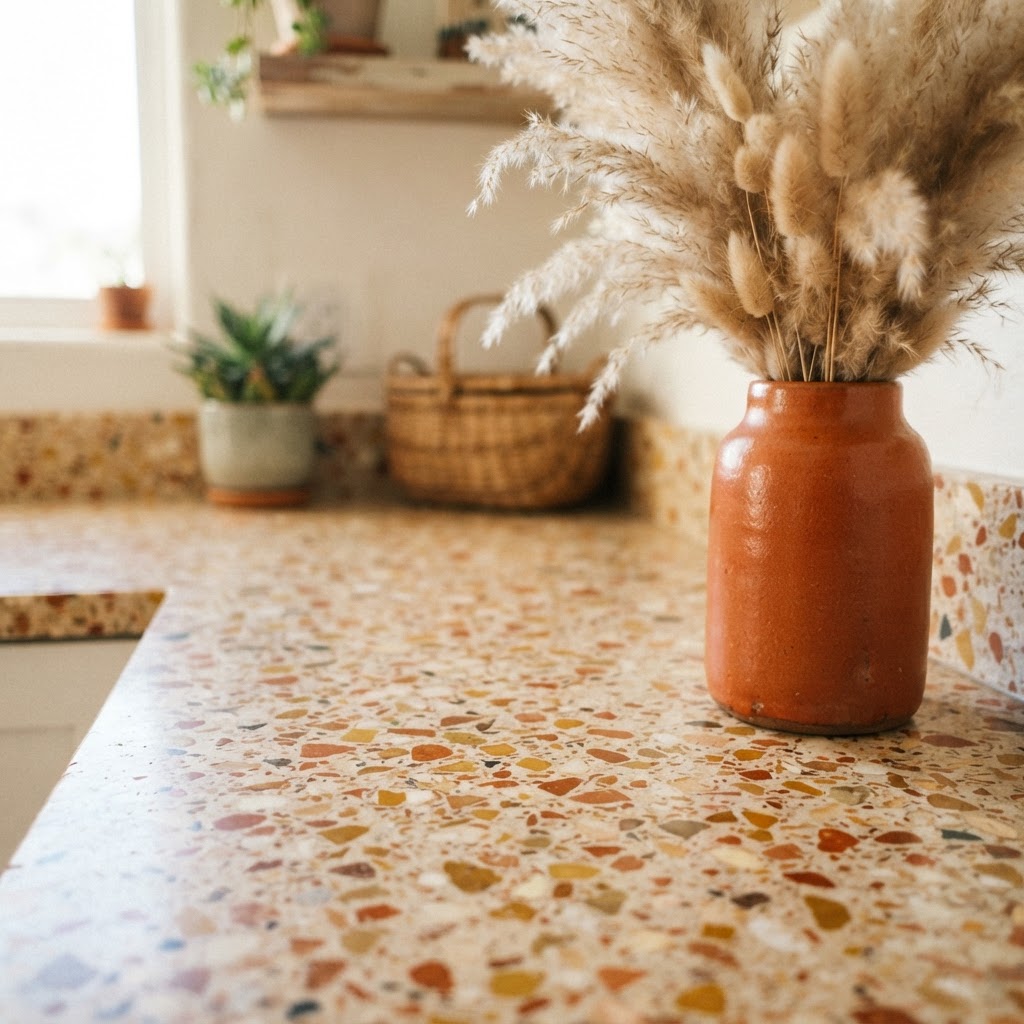
Materials are just as important as colors, maybe more so. The MCM movement was deeply committed to using materials honestly, which means you'll see a lot of:
- Teak, walnut, and rosewood: These warm, richly grained woods are the backbone of the aesthetic. Walnut especially has become almost synonymous with mid-century design.
- Molded plywood and fiberglass: The Eames chair exists because of innovations in molded plywood. These materials let designers achieve organic shapes that weren't possible before.
- Leather and wool upholstery: Natural fabrics in warm, muted tones. Tweed, boucle, and textured weaves all fit beautifully.
- Brass and chrome accents: Hardware and light fixtures in these metals add just the right amount of gleam without going glam.
- Terrazzo and concrete: Especially for flooring and surfaces. These materials have texture and character without demanding attention.
The key is layering these elements so they feel cohesive and warm. A walnut credenza against a warm white wall, accented with a mustard yellow ceramic lamp and a teal throw pillow. That's the recipe. Simple, but intentional. And honestly, that intentionality is what separates a great MCM room from one that just looks like a collection of old furniture.
Bringing Nature Indoors: The MCM Approach
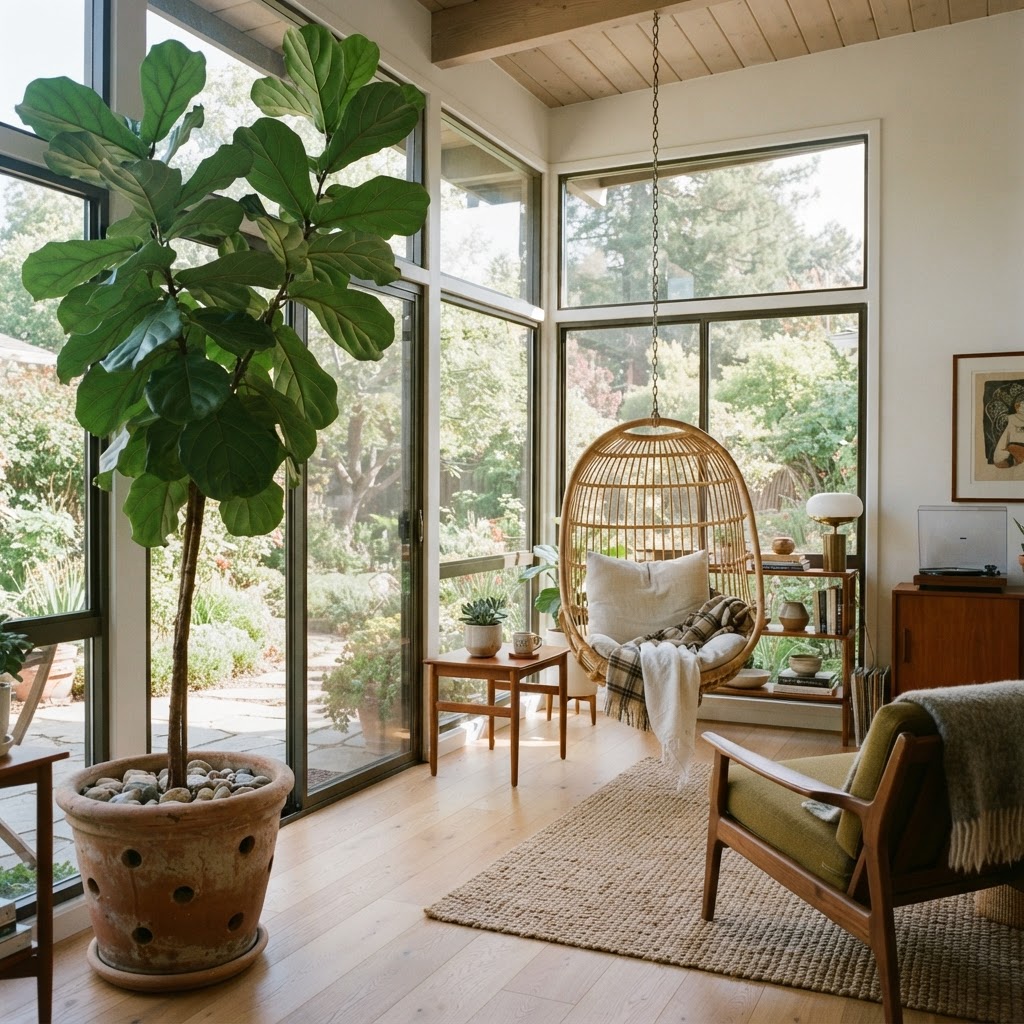
One of the things I find most beautiful about mid-century modern design is its relationship with the natural world. This wasn't incidental. The architects and designers of this era were deeply influenced by the idea that humans belong in connection with nature, and they built that connection directly into their work. Frank Lloyd Wright called it organic architecture. The Scandinavian designers called it something closer to a way of life. Whatever you call it, the results are stunning.
In terms of architecture, the MCM approach to nature meant large expanses of glass, floor-to-ceiling windows, sliding glass doors opening onto patios, and open floor plans that drew the eye straight through the interior to the landscape beyond. The boundary between inside and outside was deliberately blurred. Light was not a luxury. It was a fundamental design element. If you're working with an MCM-influenced home or trying to bring that spirit into an older space, maximizing natural light is absolutely your first priority.
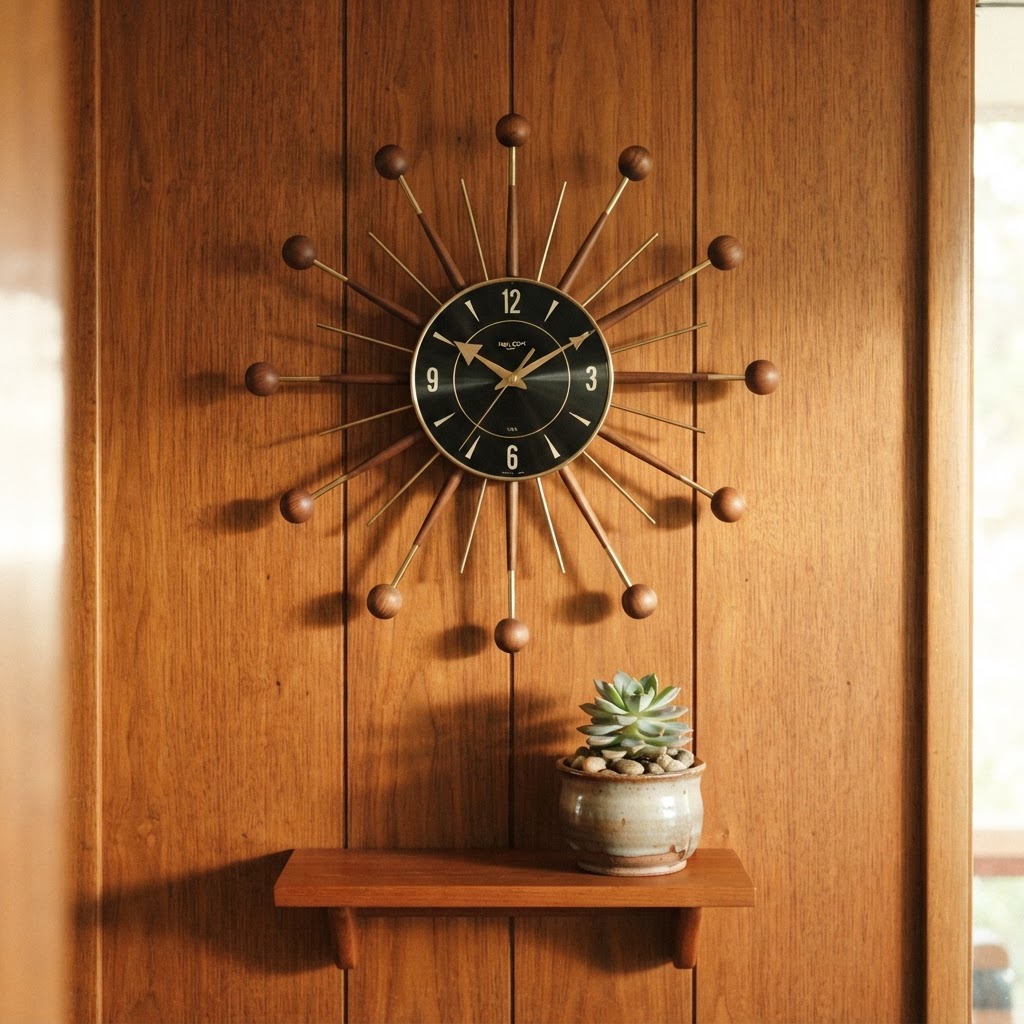
Inside the home, the connection to nature shows up in a few really specific and practical ways. Plants are a big one. The MCM interior almost always features plants, and not as an afterthought. Large-leafed tropicals like fiddle leaf figs, split-leaf philodendrons, and bird of paradise plants are period-appropriate and add incredible visual drama. Even a collection of smaller plants on a windowsill or a simple cactus on a teak shelf adds that essential organic quality.
Natural textures are equally important. Jute rugs, rattan accent pieces, linen curtains, and woven baskets all contribute to that layered, grounded feeling. The goal is to make the space feel connected and alive, not sterile. And trust me on this: a room that combines clean MCM lines with genuine natural materials has a warmth to it that no amount of decorative styling can fake. It's something you feel when you walk in.
5 Easy Ways to Update Your Space Today
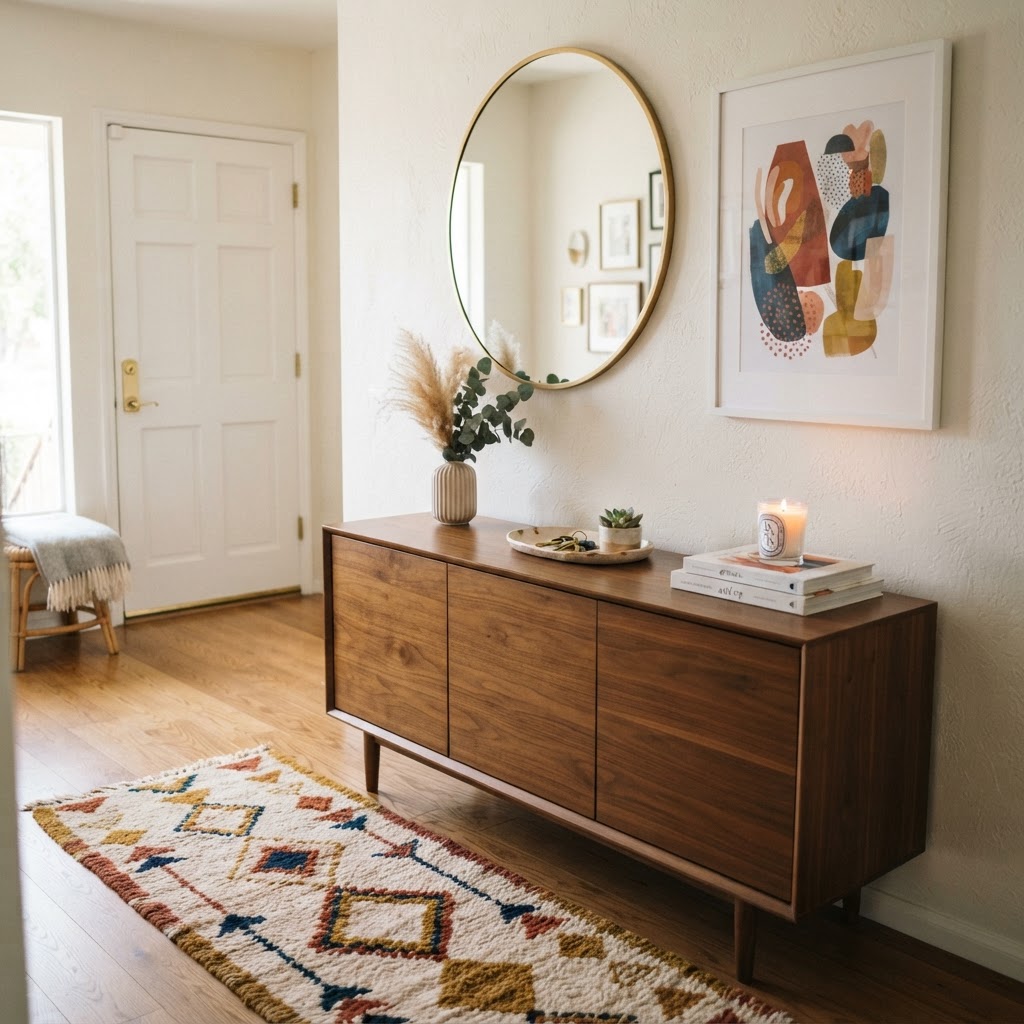
Look, not everyone is in a position to renovate their home or buy all new furniture. And honestly, you don't need to. Mid-century modern is one of the most accessible design styles to incorporate gradually, piece by piece, because the individual elements are so recognizable and so widely available. Here are five ways to start right now, without blowing your budget or your weekend.
1. Swap Out Your Hardware
This is the lowest-effort, highest-impact move in the book. Replacing dated cabinet and drawer hardware with brushed brass or matte black pulls in simple, geometric shapes instantly shifts the vibe of a kitchen or bathroom toward MCM territory. We're talking a few hours of work and maybe fifty dollars. The transformation is genuinely surprising. Clean, tapered bar pulls or rounded mushroom knobs in warm metal tones are the ones to look for.
2. Add a Statement Light Fixture
MCM lighting is unmistakable and it's having a serious moment right now, which means there are great options at every price point. A Sputnik chandelier, a Noguchi-inspired paper pendant, or a simple arc floor lamp can reframe an entire room. Lighting is often underestimated as a design tool, but it's honestly one of the fastest ways to signal a distinct aesthetic. Replace a generic flush-mount ceiling fixture with something sculptural and watch the room change around it.
3. Introduce a Warm Wood Piece
If you can only do one thing, let it be this. Find a piece of teak or walnut furniture, even something small like a side table, a small shelf, or a picture frame. The grain and warmth of these woods is so intrinsically MCM that a single piece can anchor an entire room's direction. Check estate sales, Facebook Marketplace, and thrift stores. The good stuff is out there and it's often affordable if you're willing to do a little hunting.
4. Edit Ruthlessly
Here's the thing about MCM: it depends on breathing room. One of the most powerful things you can do is simply remove things. Take out the extra decorative objects, clear off surfaces, and resist the urge to fill every corner. MCM rooms feel calm and intentional because they are calm and intentional. Negative space is not emptiness. It's a design choice. Take a critical look at what you actually love in your space and give those pieces the room to be seen properly.
5. Layer in the Right Textiles
A geometric-patterned rug, a boucle throw, or a set of mustard yellow cushions can do a remarkable amount of work. Textiles are one of the easiest things to swap out and one of the most effective for establishing a mood. Look for abstract patterns, bold geometric prints, and earthy solid colors. Avoid anything too floral or too contemporary minimal. The sweet spot for MCM textiles is bold but warm, graphic but never cold. Get that right and your seating area will feel like a completely different room.
Final Thoughts
Mid-century modern has genuinely stood the test of time, and I think the reason is pretty simple: it was designed by people who cared deeply about both beauty and function, and who believed those two things should never have to fight each other. The result is a design language that feels as fresh today as it did seventy years ago. Maybe fresher, honestly, given how much visual noise we're all swimming in these days.
You don't have to commit to a full MCM overhaul to benefit from its principles. Start small. Pick one section of a room and apply the ideas here. Warm woods, clean lines, natural light, a plant, a bold accent color. See how it feels. My guess is you'll be hooked, and you'll start seeing mid-century possibilities everywhere you look, which is both a gift and a very expensive problem to have.
The style rewards patience and intention. Take your time, curate carefully, and don't rush to fill every space. The rooms that really nail MCM are the ones that feel lived-in and loved, not staged. And that, more than any specific piece of furniture or color on the wall, is what this design movement has always been about.
More in Interior
Stay Inspired
Subscribe for new essays on architecture, design, and the spaces that shape us.