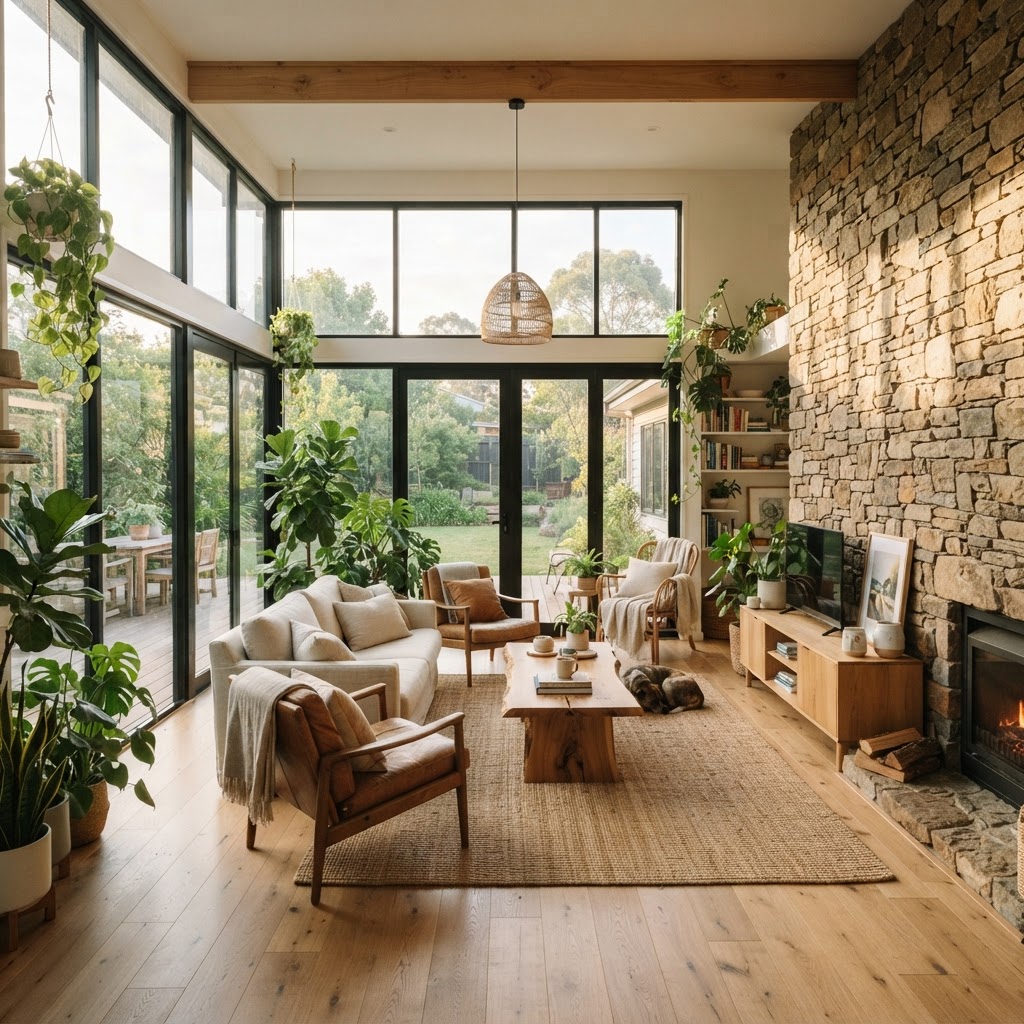
The Ultimate Guide to Biophilic Design: How to Bring Nature Indoors and Boost Your Mood
Want to bring the calming power of nature into your home? This complete guide to biophilic design will show you how to blend natural light, organic materials, and greenery to create a space that feels good and looks beautiful. Discover simple ways to transform your interiors into a relaxing natural oasis.
What is Biophilic Design?
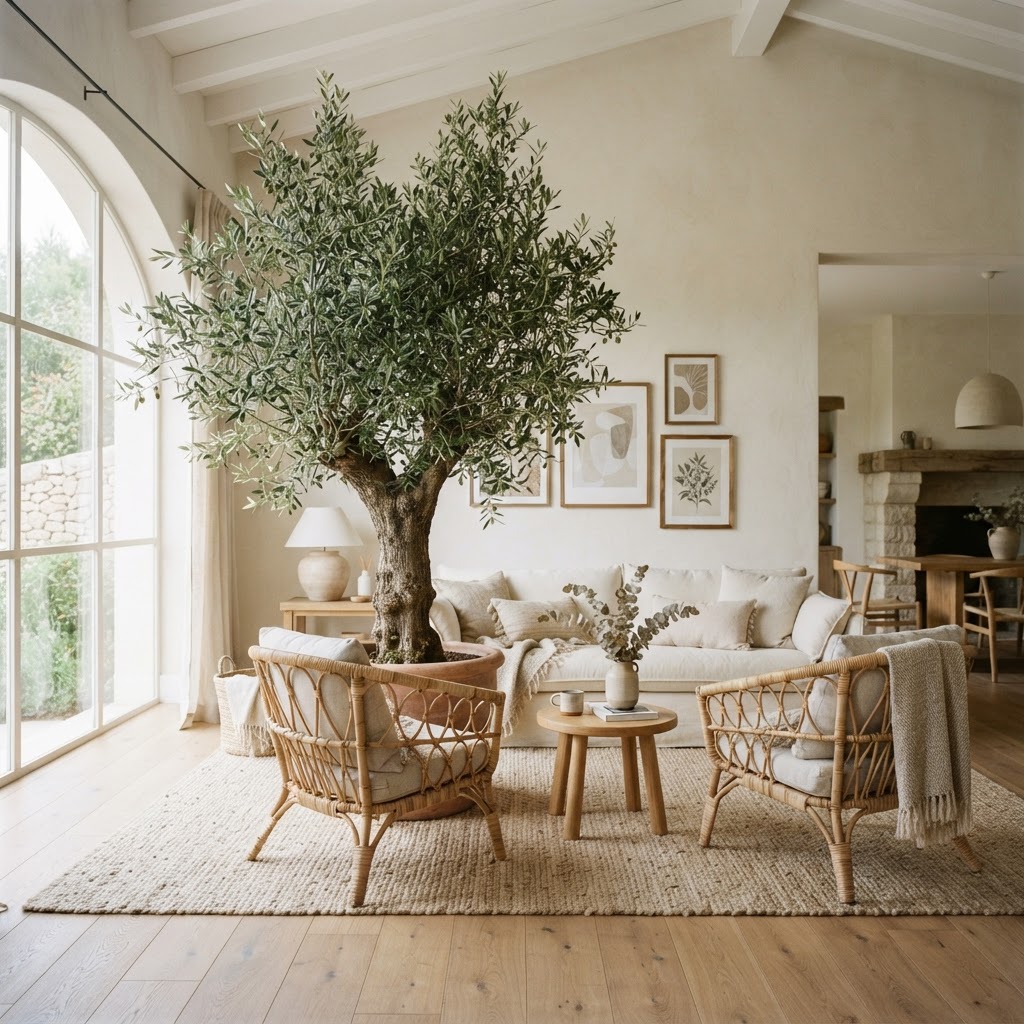
Okay, so let's start at the very beginning, because "biophilic design" is one of those terms that gets thrown around a lot in interior design circles, and half the time people nod along like they totally get it when, honestly, it can feel pretty abstract. Here's the thing though: once you understand what it actually means, you'll start seeing it absolutely everywhere, and you'll want it in your own home immediately.
Biophilic design is the practice of connecting people to nature within the built environment. The word "biophilia" literally means love of living things, a concept made famous by biologist E.O. Wilson back in the 1980s. Wilson argued that humans have an innate, deeply wired need to connect with other living systems and the natural world. We didn't evolve in office buildings and concrete apartments. We evolved outside, surrounded by trees, water, light, and living creatures. And our nervous systems? They still remember that.
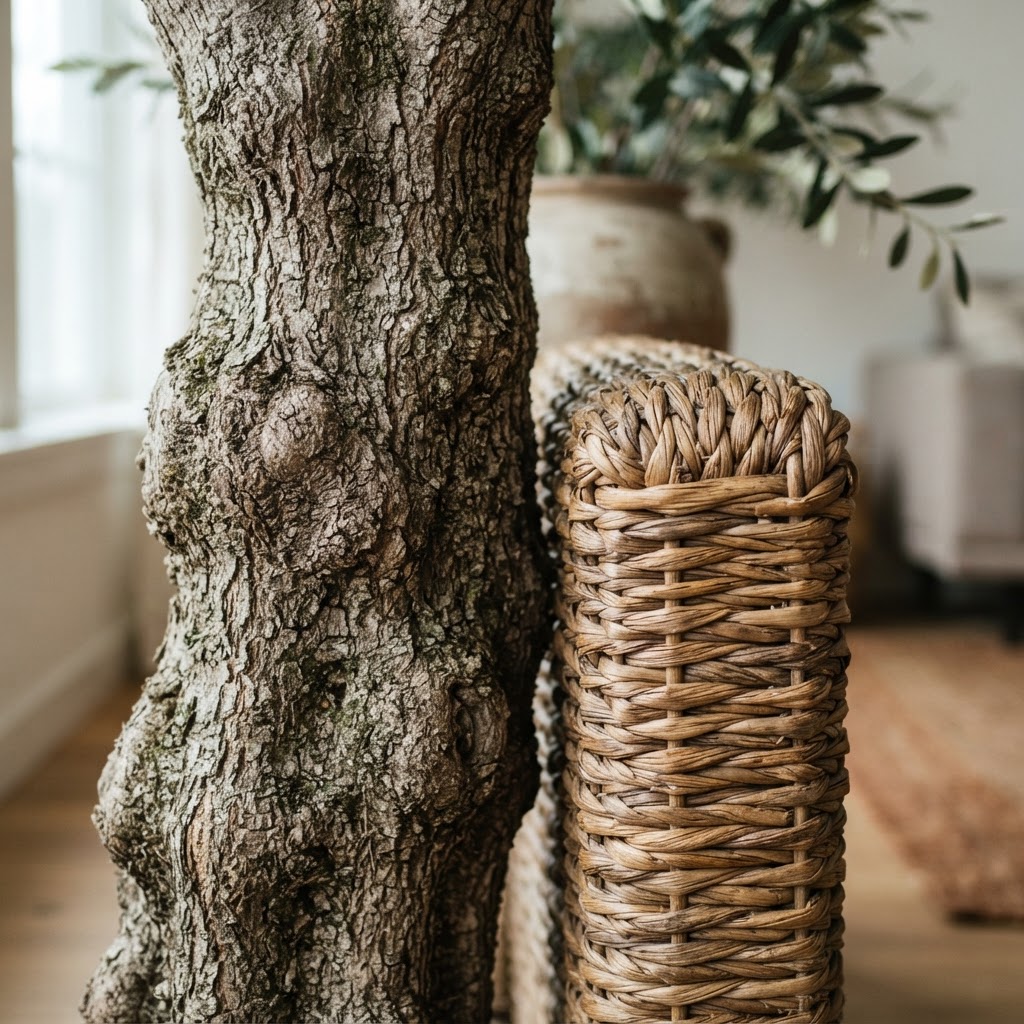
When designers apply biophilic principles, they're not just slapping a houseplant in the corner and calling it a day. Real biophilic design is holistic. It considers natural light, airflow, organic materials, views of nature, sounds of water, and even the psychological effect of spatial variety. It's about making a space feel alive, because alive spaces make us feel alive too.
The research behind this is genuinely compelling. Studies have shown that incorporating natural elements into workplaces and homes can reduce cortisol levels, lower blood pressure, improve concentration, and even speed up recovery from illness. One famous study found that hospital patients with window views of trees recovered faster than those staring at a brick wall. That is wild when you think about it. Nature isn't just nice to look at. It is literally medicine.
So whether you're redesigning your entire home or just trying to make your apartment feel less like a shoebox, biophilic design gives you a real framework for doing that intentionally, not just decoratively.
Maximizing Natural Light and Air
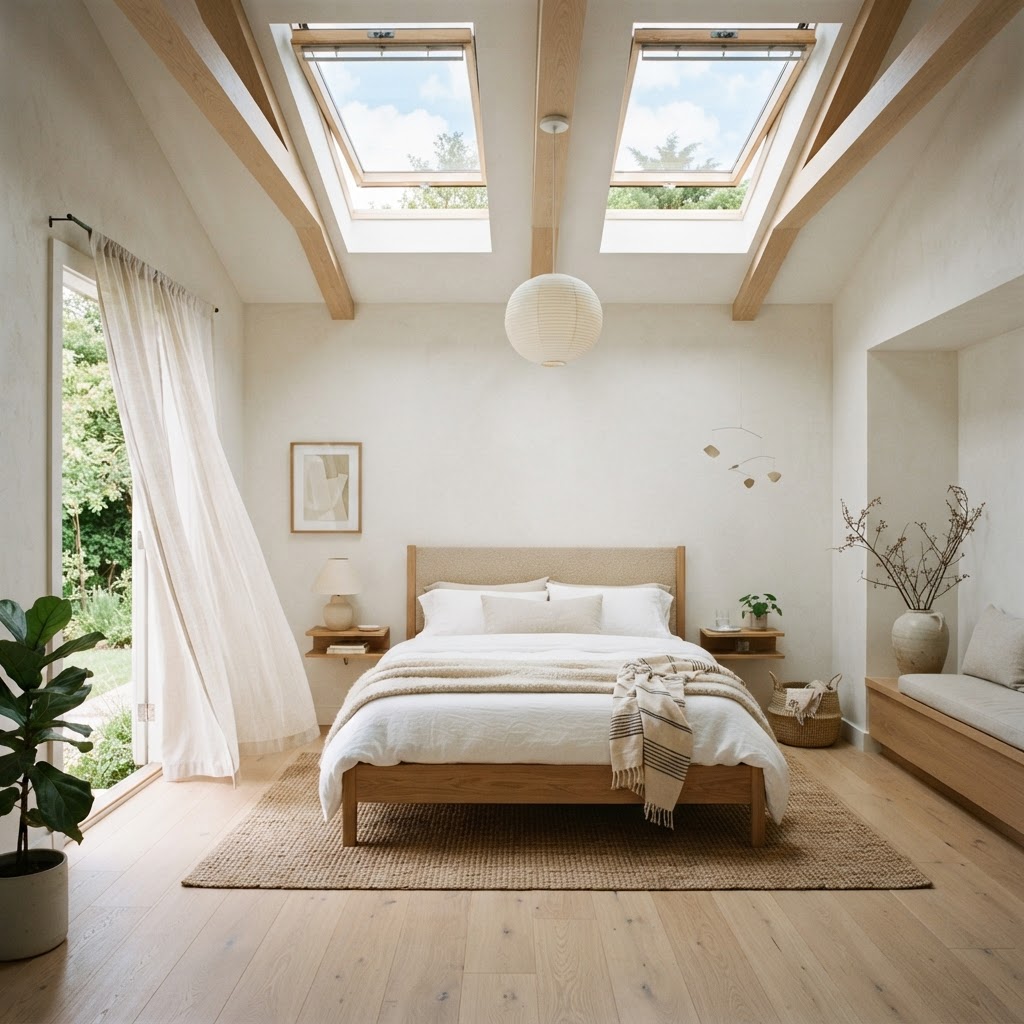
If there is one thing I'd tell someone just starting out with biophilic design, it's this: light first, everything else second. Natural light is the single most impactful element you can bring into a space. It regulates your circadian rhythm, affects your serotonin production, and fundamentally changes how a room feels. Artificial light, no matter how well designed, cannot fully replicate what sunlight does to a space or to your brain.
Start by taking a hard look at what's blocking your light. Heavy curtains, poorly placed furniture, overgrown plants outside the window, even dark paint colors can all diminish how much natural light actually penetrates your space. Pull back those drapes. Swap heavy fabrics for sheer linen panels. Arrange furniture so it doesn't create a wall between your windows and the rest of the room. These small shifts make a genuinely surprising difference.
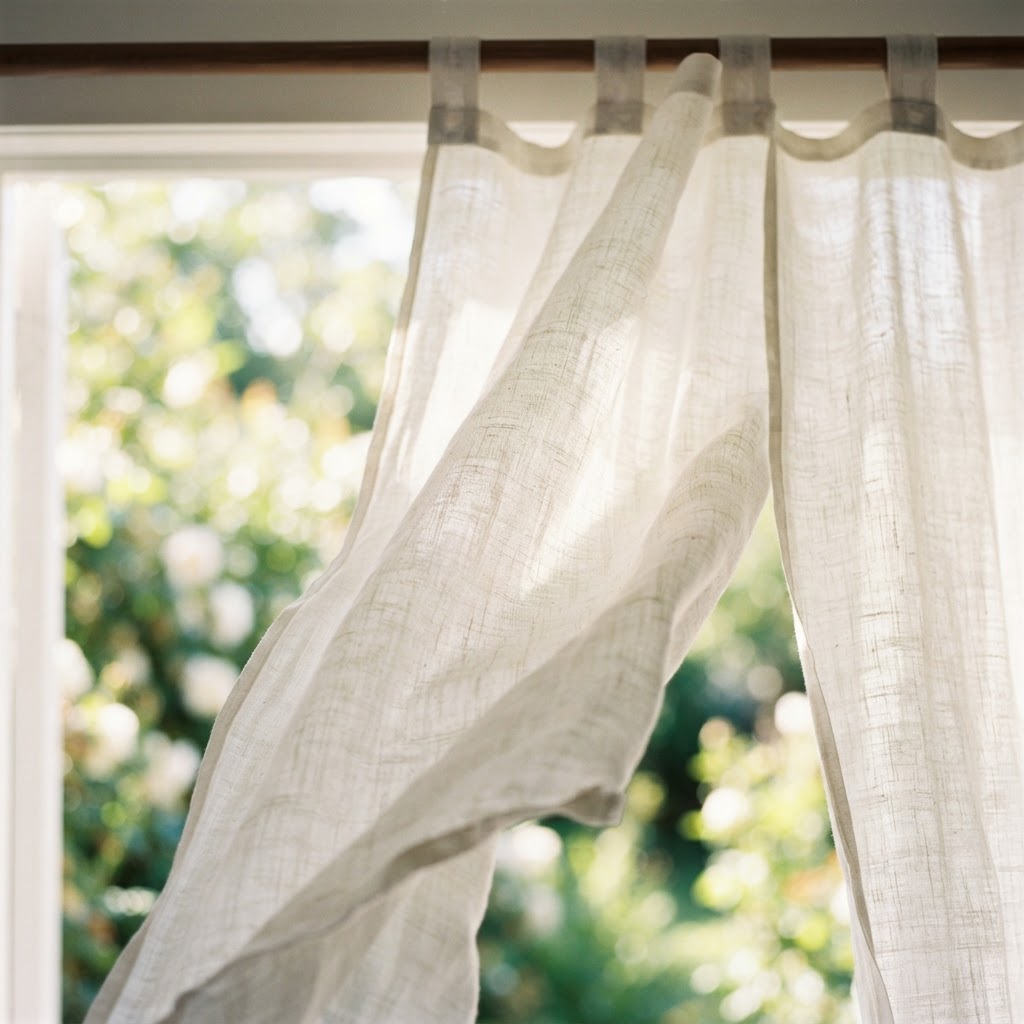
Now let's talk about air, because it's equally important and honestly a lot more overlooked. Good airflow and ventilation are core to biophilic design. Fresh air reduces indoor pollutants, regulates temperature naturally, and again, connects us to the outside world in a sensory way. If you can design for cross-ventilation, where windows on opposite sides of a room allow air to flow through, do it. Even in apartments, opening a window on one side and a door on another creates a satisfying, natural breeze.
For those doing a full renovation or working with an architect, skylights are absolutely worth considering. They bring in diffused, overhead light that mimics the open sky, and in bathrooms or corridors that never see direct sun, they can be completely transformative. Clerestory windows, those narrow horizontal windows placed high on a wall, are another brilliant solution for bringing in light without sacrificing wall space or privacy.
"Sunlight does not nourish the body alone. A room filled with natural light changes the entire emotional register of a space, making it feel generous, warm, and alive."
Honestly, think of light and air as the foundation of everything else you'll do with biophilic design. Get these two right and the rest of your efforts will land so much harder.
Incorporating Organic Materials and Textures
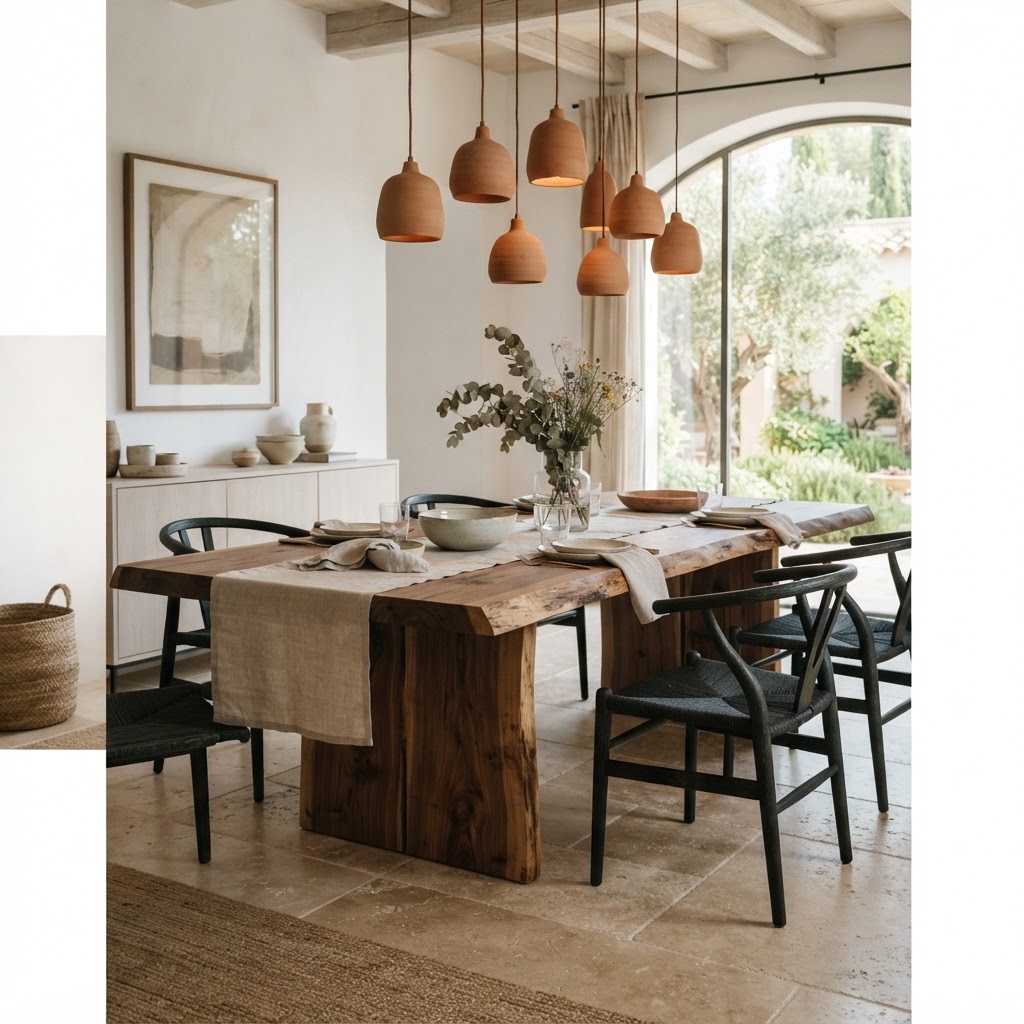
Here's where biophilic design gets really tactile and really fun. The materials you choose for your home send constant, low-level sensory signals to your brain, and natural materials send signals that feel like comfort, safety, and calm. It's not just aesthetic preference. There's a physiological response happening when you run your hand along a rough-hewn oak table or feel the cool solidity of a stone countertop.
Wood is the obvious starting point, and for good reason. Few materials carry the warmth and visual complexity that wood does. The grain patterns, the knots, the slight variations in color, these are all examples of what designers call "fractal patterns," which are patterns that repeat at different scales and are found throughout nature. Our brains are literally wired to find these patterns pleasing and calming. So go for wood with visible grain. Embrace the imperfections. That heavily processed, uniformly smooth veneer loses most of the magic.
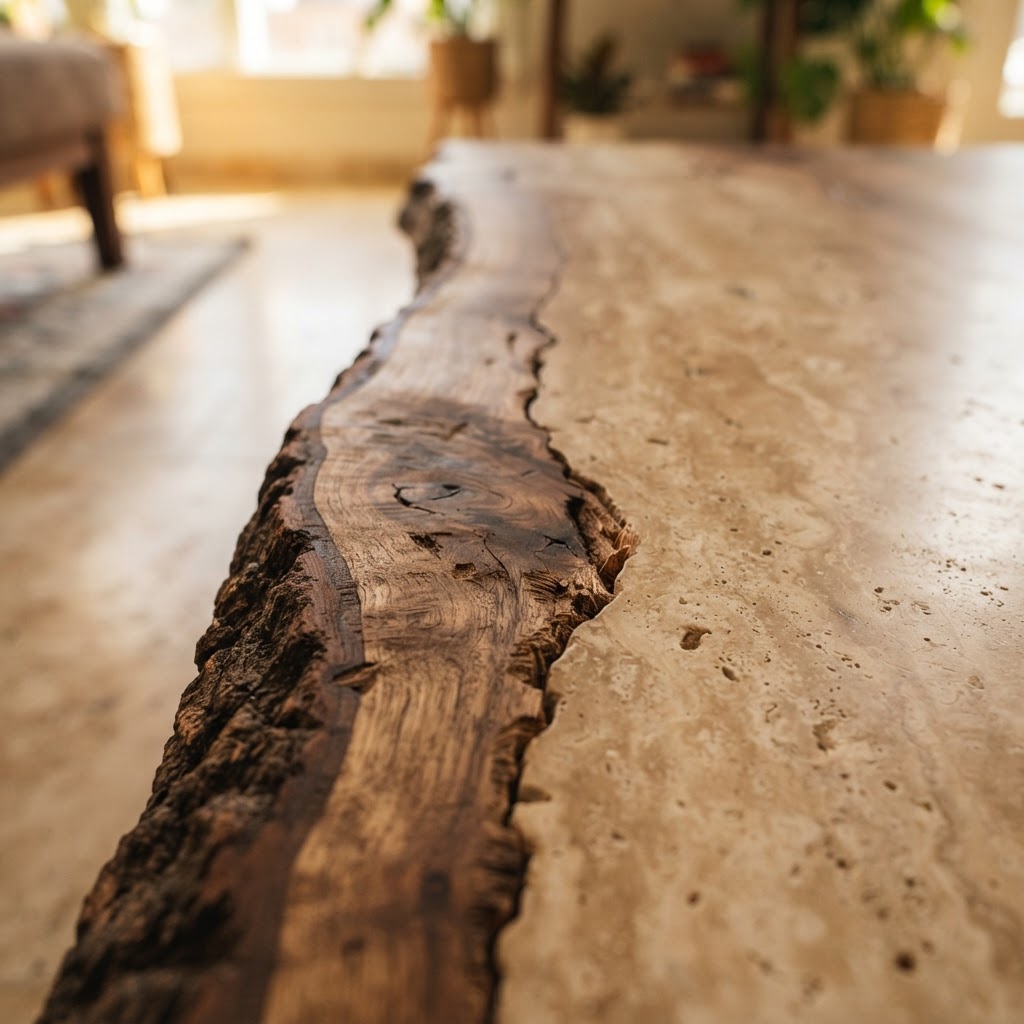
Stone and clay are equally powerful. Exposed brick, concrete with an organic finish, terracotta tiles, rammed earth walls. these materials ground a space and bring the outdoors in at a very elemental level. They also age beautifully, which matters because nature itself ages beautifully. A stone surface that develops a patina over time tells a story, and that story makes a home feel lived-in and real.
Don't underestimate textiles either. Natural fibers like linen, cotton, jute, wool, and rattan bring texture and softness that synthetic materials simply can't replicate. Layer a jute rug over timber floors. Throw a chunky wool blanket over a linen sofa. Use woven rattan in lampshades or pendant lights. These small choices accumulate into something that feels genuinely rich and connected to the earth.
- Wood: Choose visible grain over heavily processed finishes. Raw, oiled, or lightly stained is always better than plastic-coated laminates.
- Stone: Marble, slate, limestone, and travertine each bring their own personality. Even stone-look tiles work if they have realistic texture.
- Clay and terracotta: Incredible for flooring, tiles, and decorative objects. They regulate humidity slightly and feel wonderful underfoot.
- Natural textiles: Linen, wool, cotton, jute, and sisal bring softness and layering that synthetic fabrics just can't match.
- Bamboo and rattan: Lightweight, sustainable, and visually warm. Great for furniture, lighting, and accessory details.
The Power of Indoor Plants and Living Walls
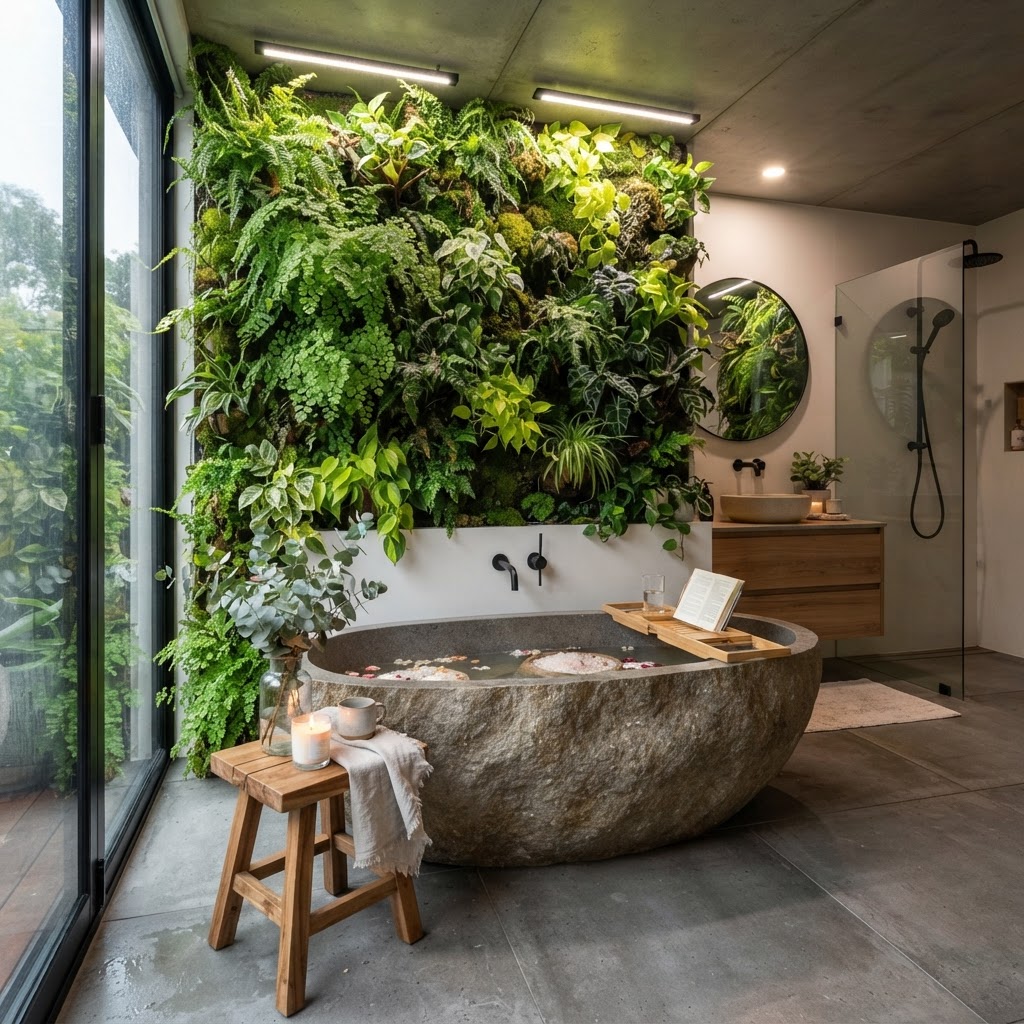
Real talk: plants are the most accessible biophilic design tool available to literally everyone, whether you own a five-bedroom house or rent a studio apartment. And yet so many people treat them as an afterthought, buying one small succulent and shoving it on a shelf. I want to encourage you to think bigger, because when plants are used with real intention, they change the entire energy of a space.
Start with scale. A single large plant, think a fiddle leaf fig, a monstera deliciosa, or a mature bird of paradise, makes more of an impact than ten small ones scattered around. Large plants draw the eye, soften hard architectural lines, and create a genuine sense of lushness. Place them in corners, beside windows, or as a statement piece in an entryway where they can be the first thing you see when you walk in.

Living walls, also called green walls or vertical gardens, are the more ambitious version of this idea, and they are absolutely stunning when done well. A living wall can cover an entire feature wall in a living room, a bathroom, a lobby, even an outdoor entertaining space. They act as natural air purifiers, improve acoustics by absorbing sound, regulate humidity, and visually, they are unlike anything else in interior design. If you've ever walked into a restaurant or hotel with a living wall and felt an immediate sense of calm and wonder, that's biophilia doing its thing.
If a full living wall feels too ambitious, consider a smaller modular version using wall-mounted planters. These are far more achievable for a home setting and still deliver a vertical plant moment that reads as intentional and designed rather than incidental. For beginners, pothos, philodendrons, and ferns are nearly indestructible and grow enthusiastically in most indoor conditions.
One thing people always ask about is air purification. Yes, plants do filter indoor air, but honestly the mood and aesthetic benefits are the bigger win for most homes. NASA's famous clean air study showed that you'd need a lot of plants to make a measurable difference to air quality in a sealed space. Still worth doing for all the other reasons, but keep your expectations grounded on the scientific side.
Mimicking Nature's Forms and Patterns
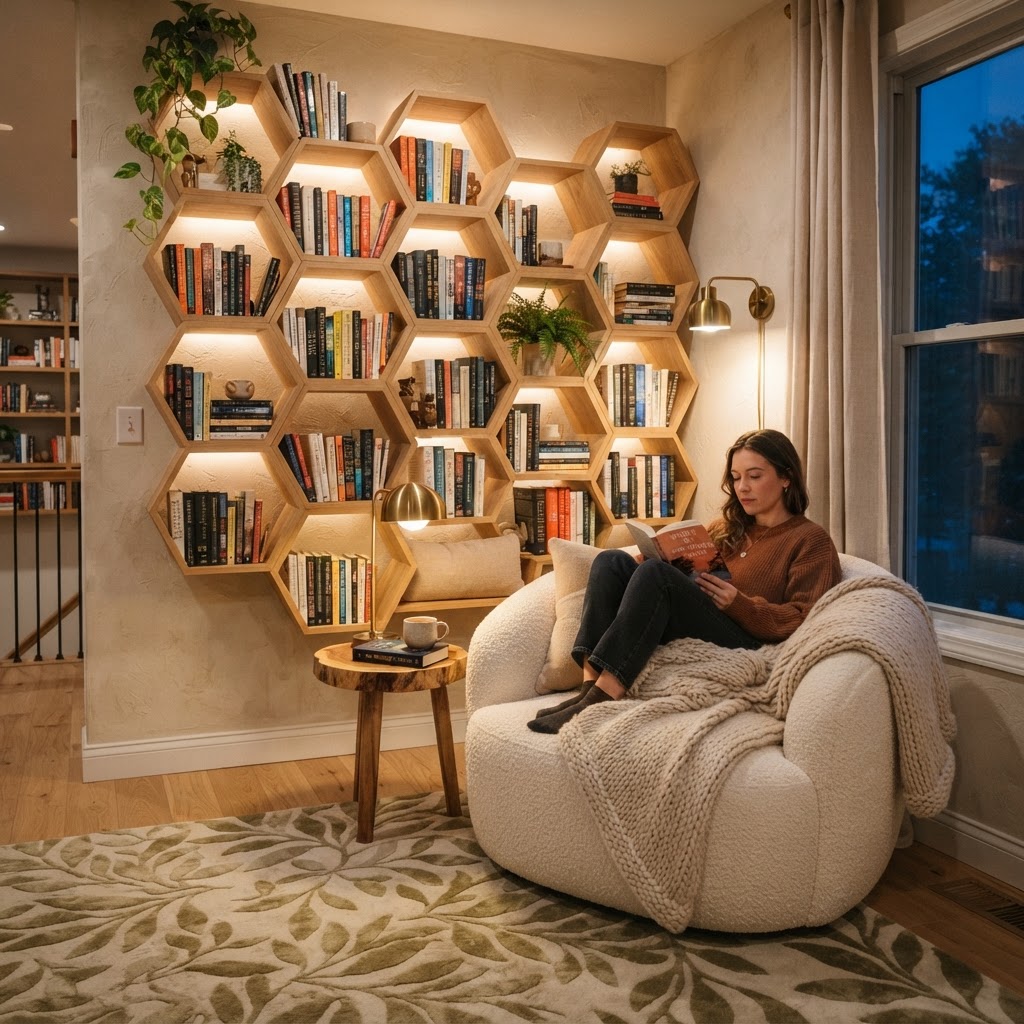
This is the subtlest and perhaps most sophisticated layer of biophilic design, and honestly it's the one that separates spaces that feel good from spaces that feel truly extraordinary. Nature doesn't really do straight lines, sharp corners, or rigid grids. Think about a riverbed, a leaf's vein structure, a honeycomb, or a shoreline. Everything is curved, irregular, layered, and endlessly varied. When we bring those principles into architecture and interior design, something clicks at a very deep level.
Biomorphic design is the specific term for shapes and forms that reference natural organisms. Curved sofas, arched doorways, rounded coffee tables, organic-shaped light fixtures, these all function on a biophilic level. They feel approachable and calming in a way that sharp-cornered furniture simply doesn't. The curved sofa trend that exploded in recent years isn't just aesthetics, it's our collective craving for softness and organic form working its way into mainstream design.
Fractal patterns are equally important here. As mentioned earlier, fractals are self-similar patterns that repeat at different scales, and they're everywhere in nature. Tree branches, coastlines, snowflakes, the spiral of a nautilus shell. Research by physicist Richard Taylor has shown that viewing fractal patterns at the same density found in nature produces a measurable relaxation response in the brain, reducing stress by up to 60 percent. That is not a small number.
- Curved architecture: Arched windows, doorways, and niches soften a space dramatically and echo natural forms.
- Organic furniture shapes: Look for pieces with rounded edges, irregular silhouettes, and forms that reference nature rather than geometry.
- Fractal wallpapers and textiles: Botanical prints, branching patterns, and leaf motifs work on a biophilic level, not just a decorative one.
- Water features: The sound and movement of water is one of the most powerful biophilic triggers available. Even a small tabletop fountain counts.
- Natural color palettes: Greens, earthy terracottas, warm ochres, soft blues, and sandy neutrals reference nature's own palette and promote calm.
And look, you don't need to redesign your entire home to incorporate these ideas. Swap a square mirror for an organic-shaped one. Add a throw pillow with a botanical print. Choose a pendant light that looks like it grew rather than was manufactured. These are small decisions, but cumulatively they shift the entire feeling of a space toward something that feels natural, warm, and deeply right.
Final Thoughts
Biophilic design isn't a trend. It's a return to something fundamental about how humans are built to live. We spend around 90 percent of our lives indoors now, and our bodies and minds genuinely feel that disconnection from nature. The good news is that we have more tools than ever to close that gap, from the way we orient our windows to the materials we choose for our floors, to the living wall in the hallway that greets us every morning.
You don't have to do all of this at once. Pick one element, start with light, or add one significant plant, or swap a synthetic rug for a jute one, and pay attention to how it changes how the space feels. My bet is you'll want to keep going. That's the thing about biophilic design: once you start tuning into it, you can't stop noticing it everywhere, and you'll never settle for a space that feels disconnected from the living world again.
Trust me on this. Your home should feel alive. And it absolutely can.
More in Sustainable
Stay Inspired
Subscribe for new essays on architecture, design, and the spaces that shape us.